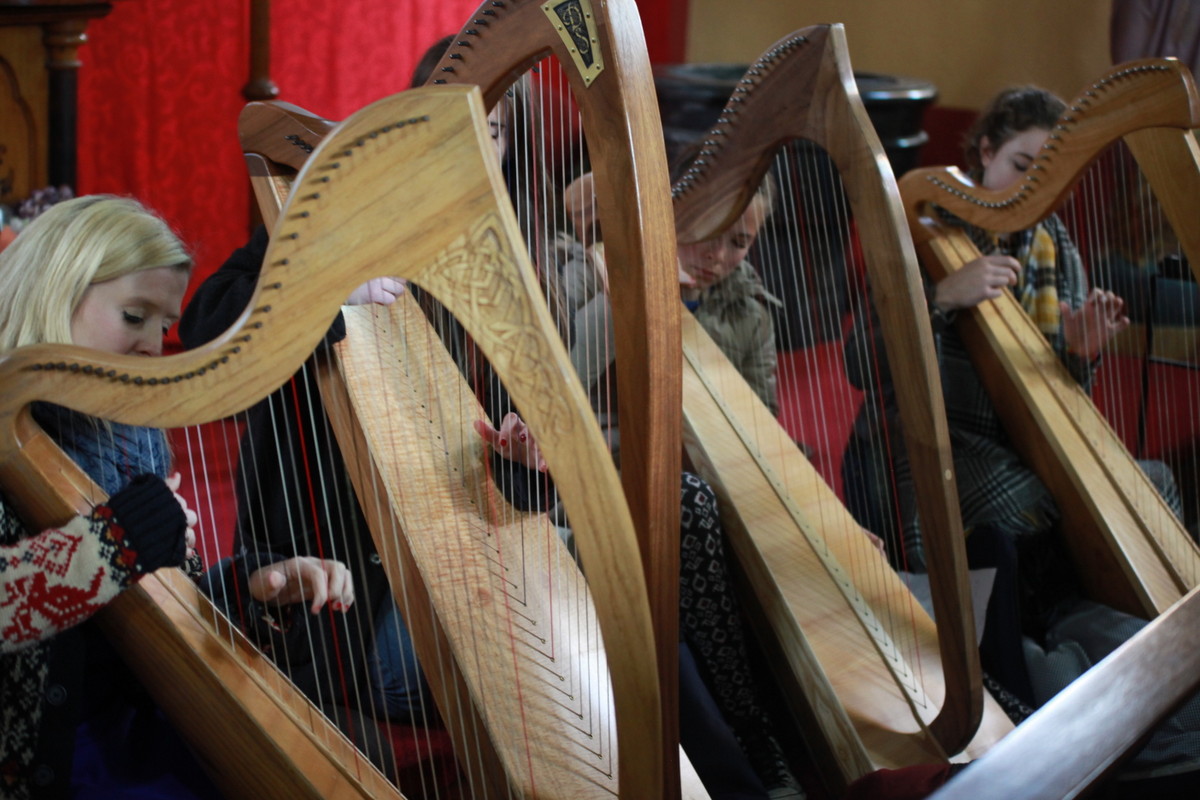
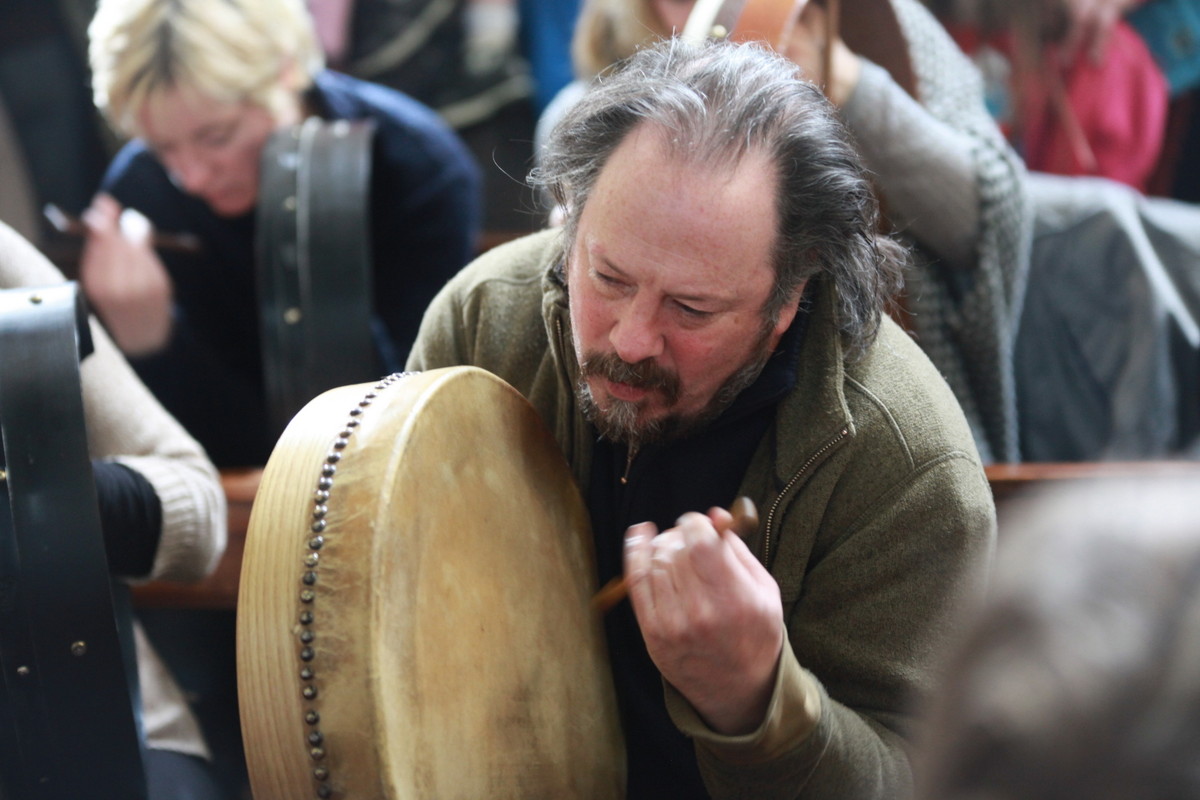
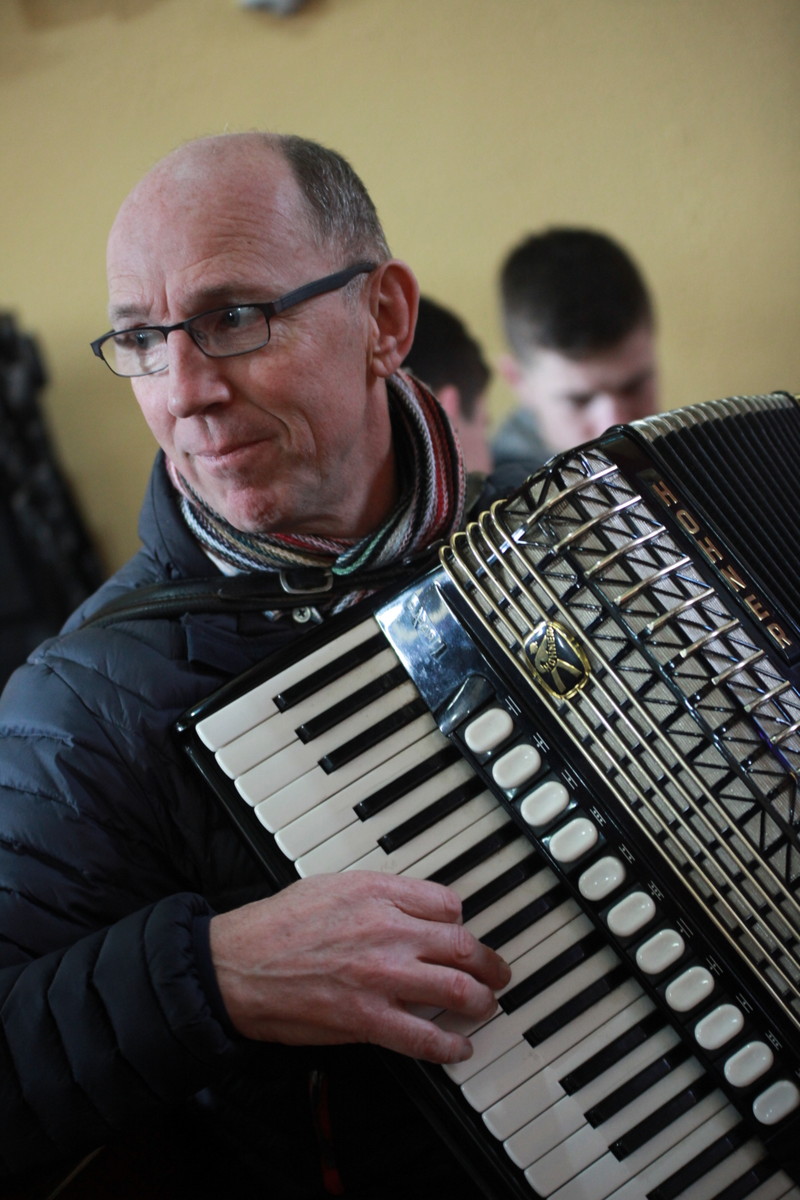
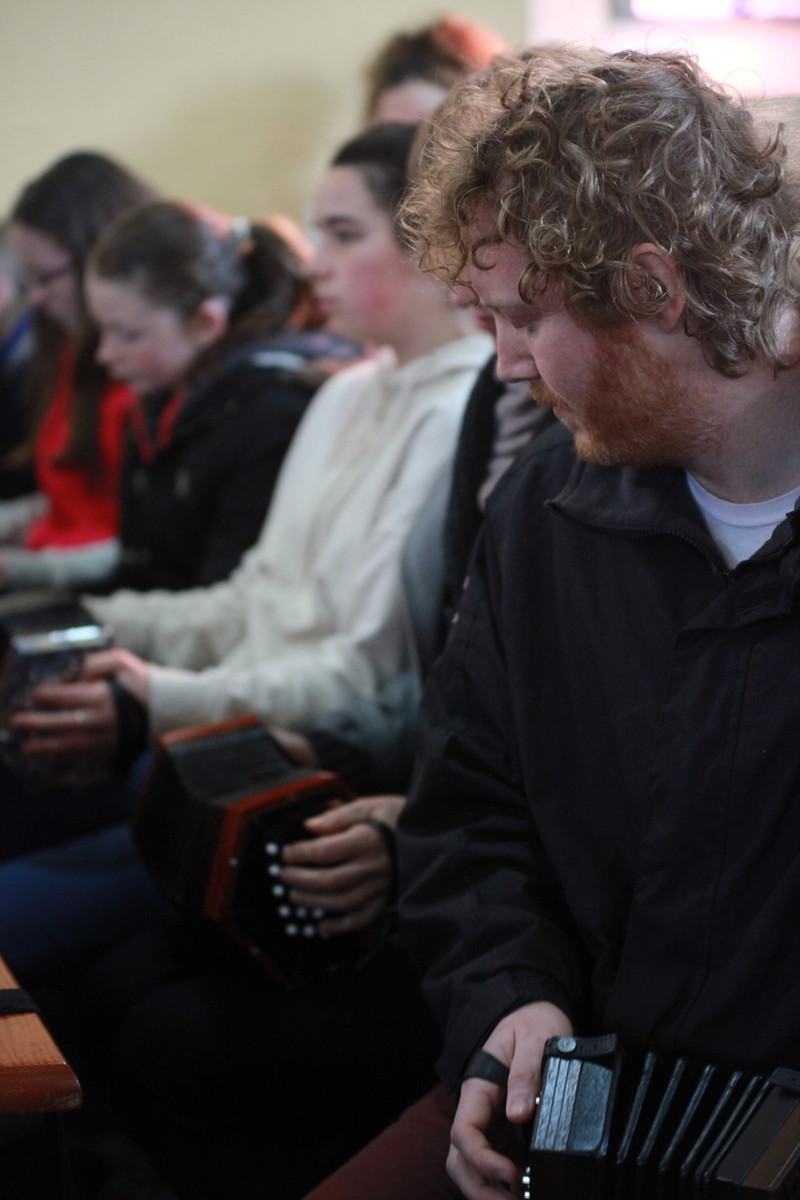
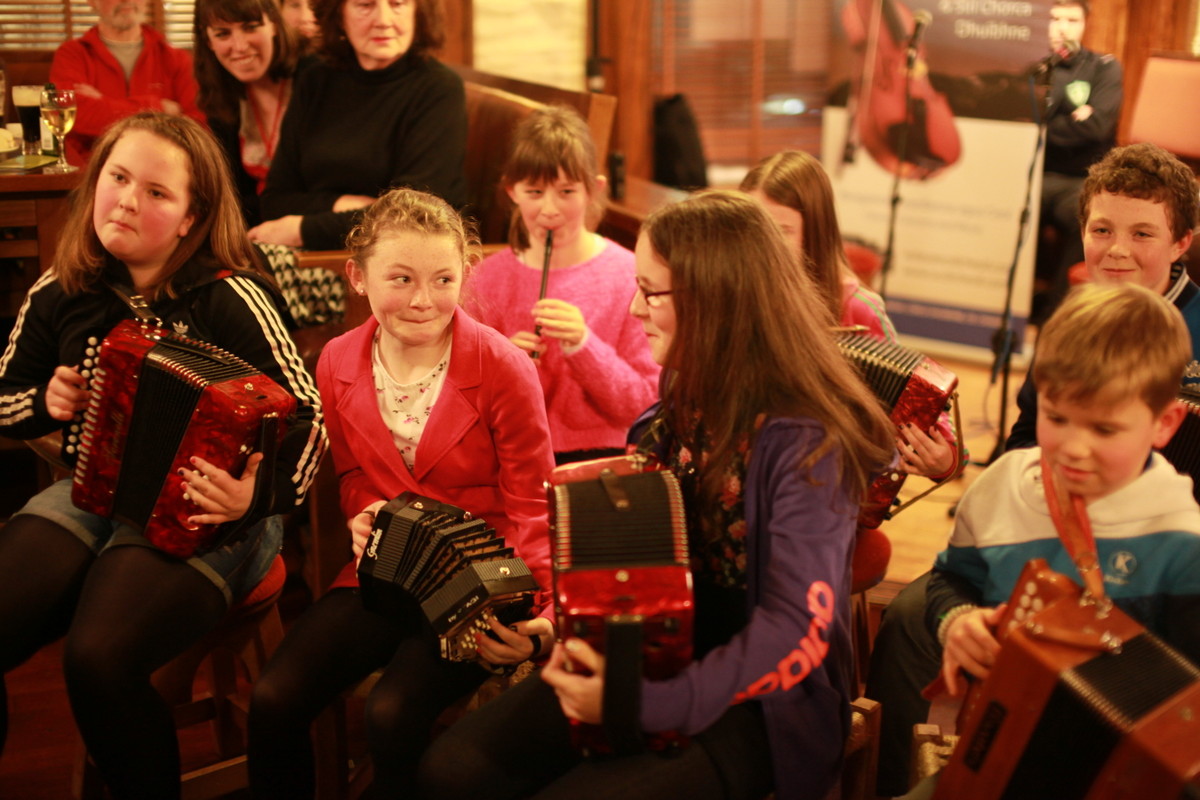
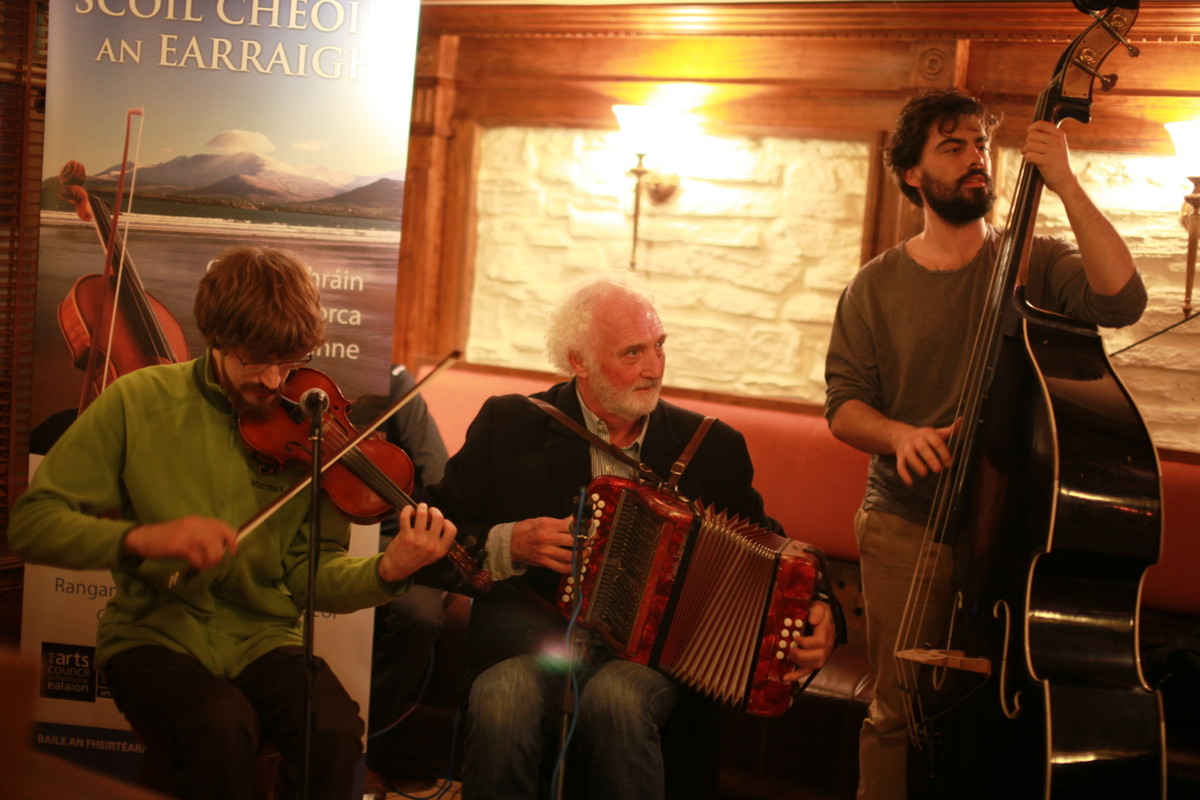
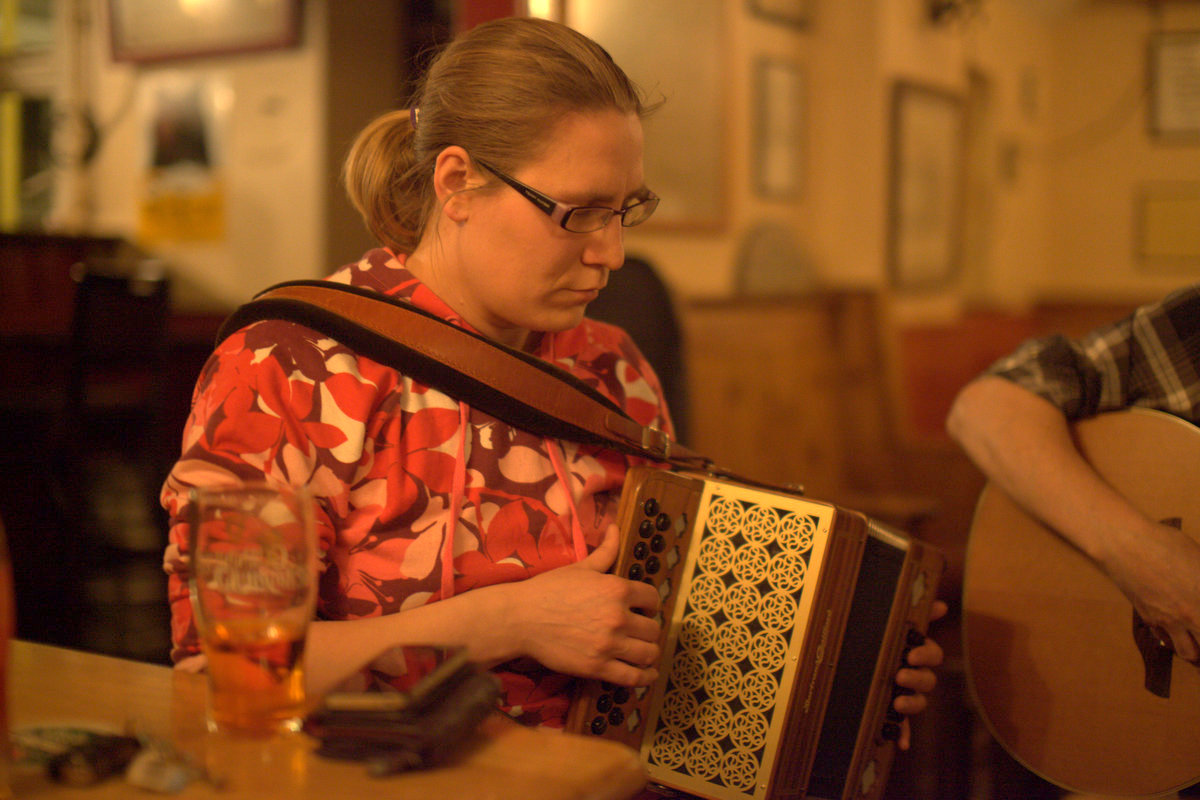
Posts Tagged With: Sessions

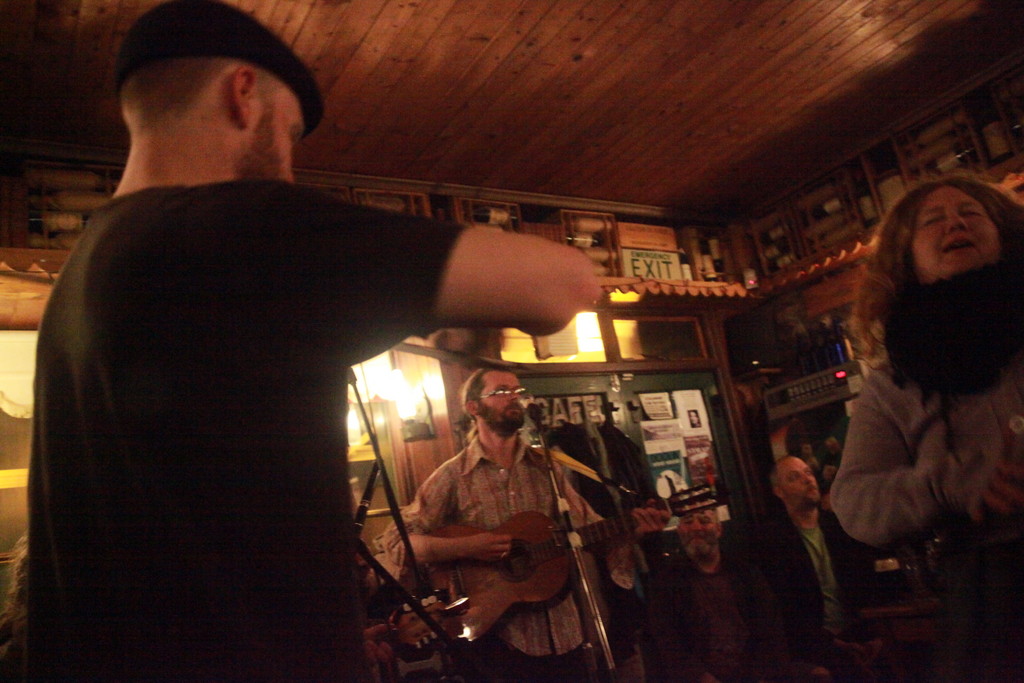
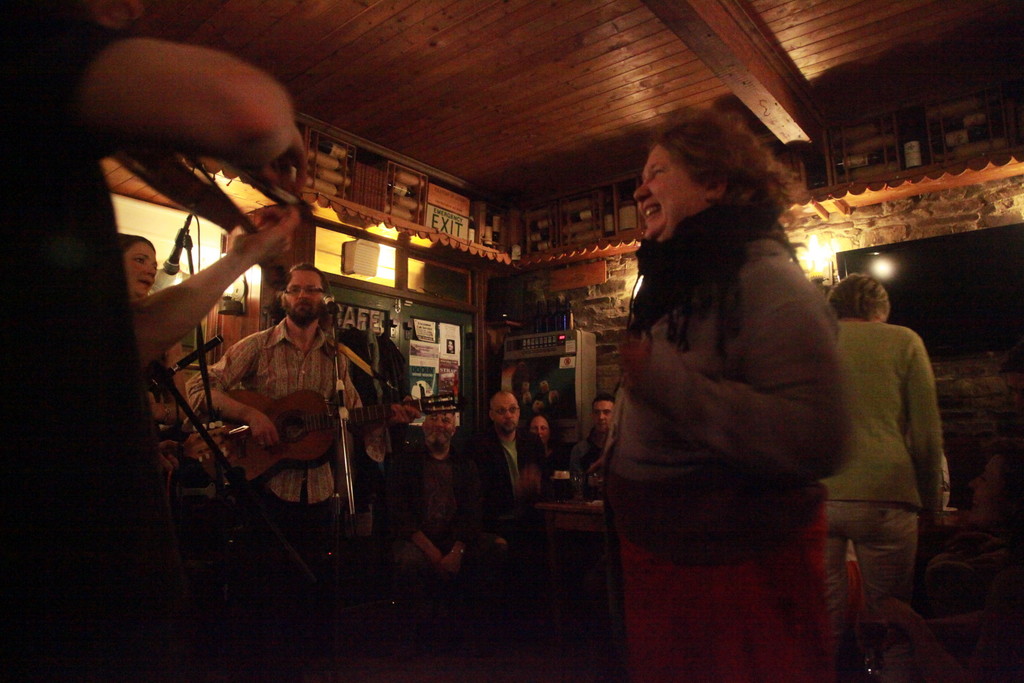
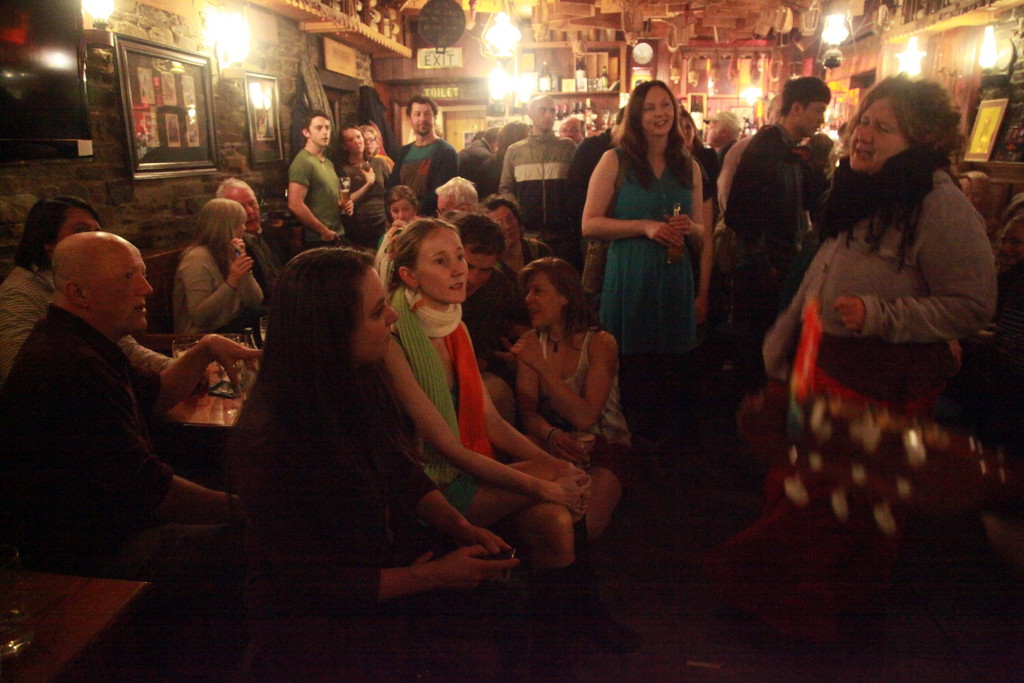
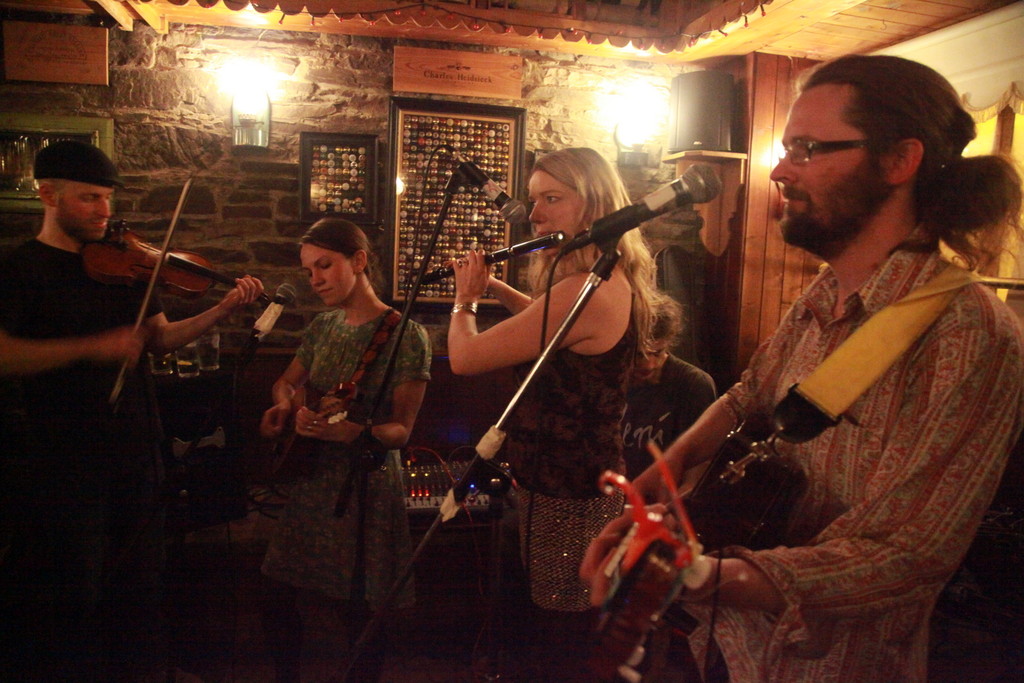
Fleadh Nua 2015 Day 3

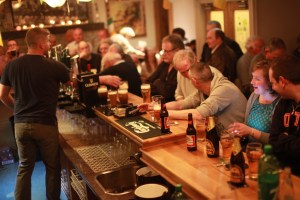
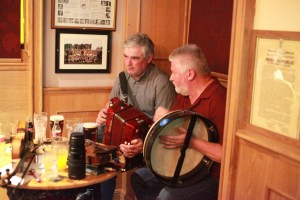
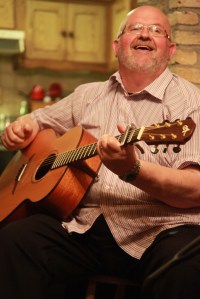
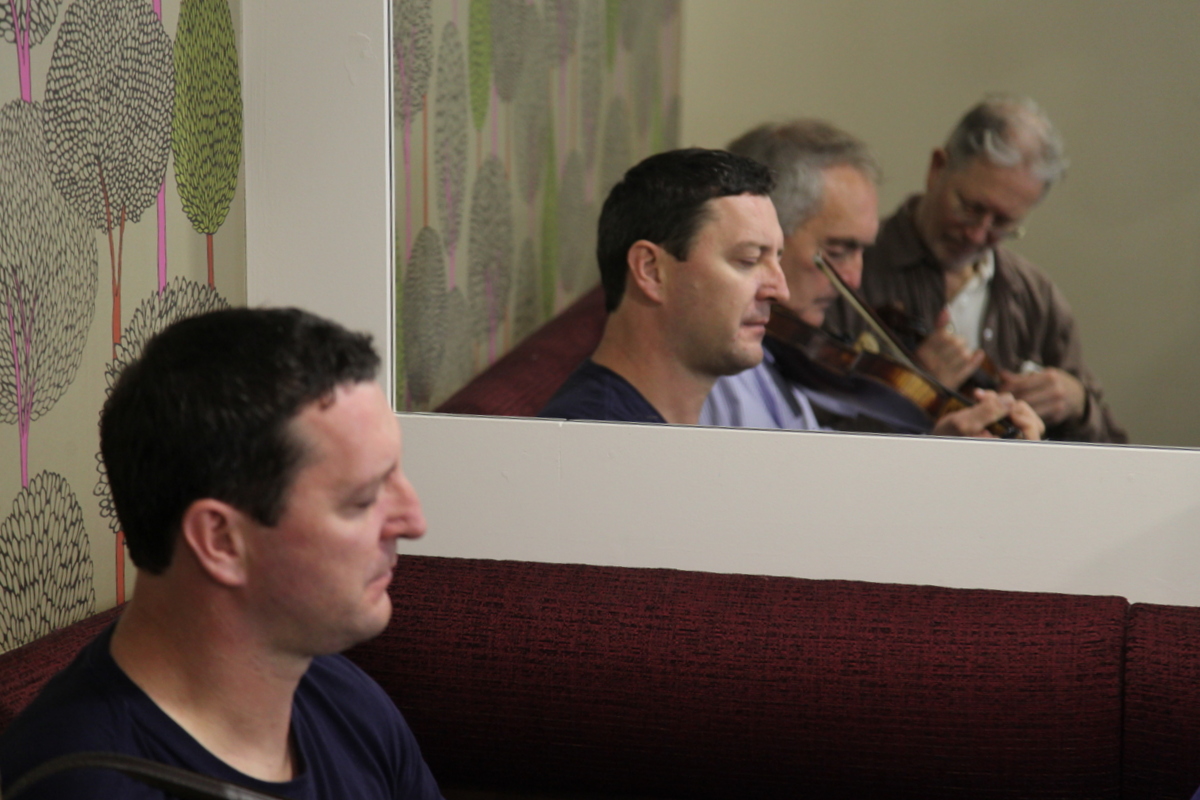
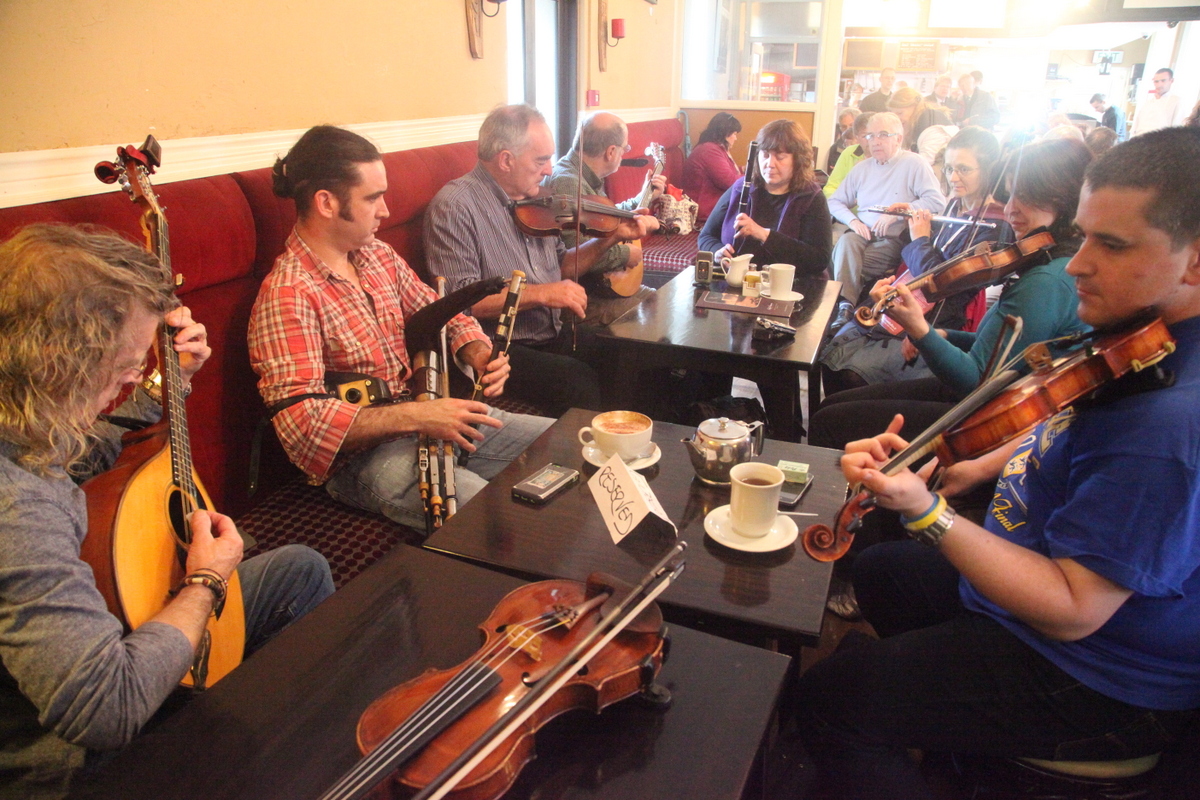
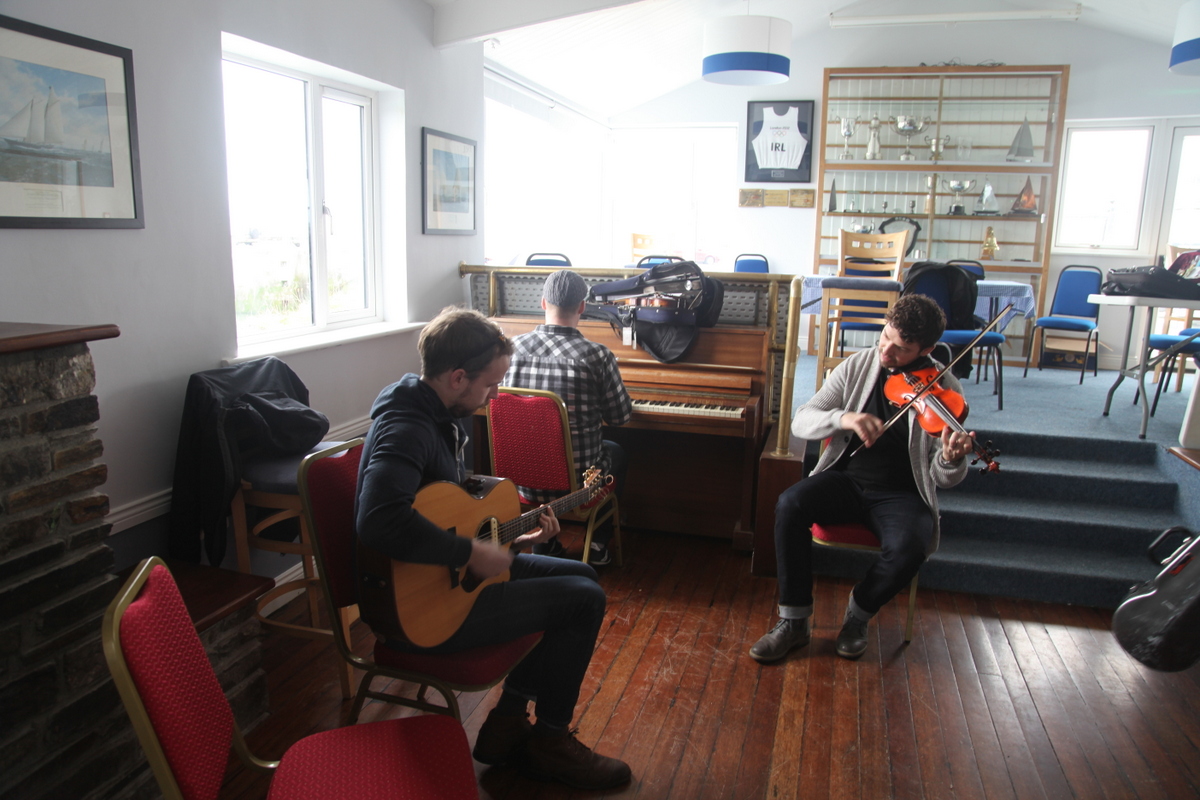
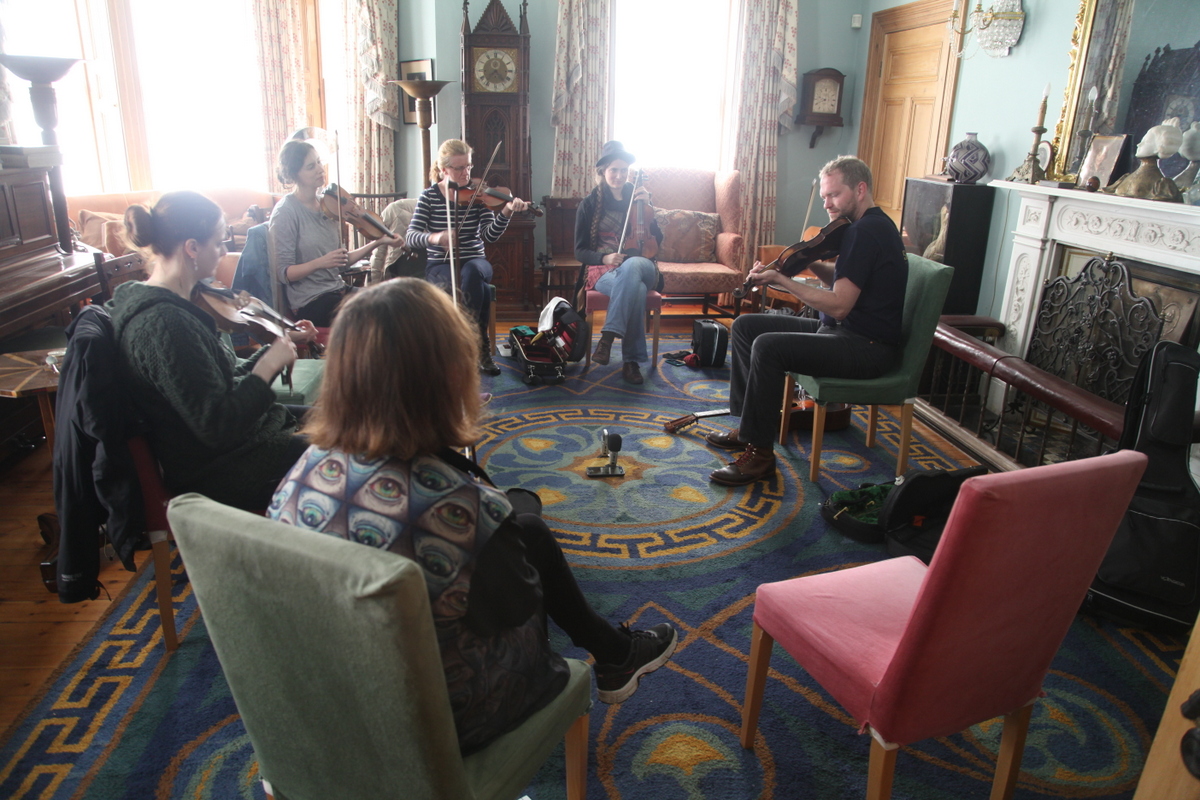
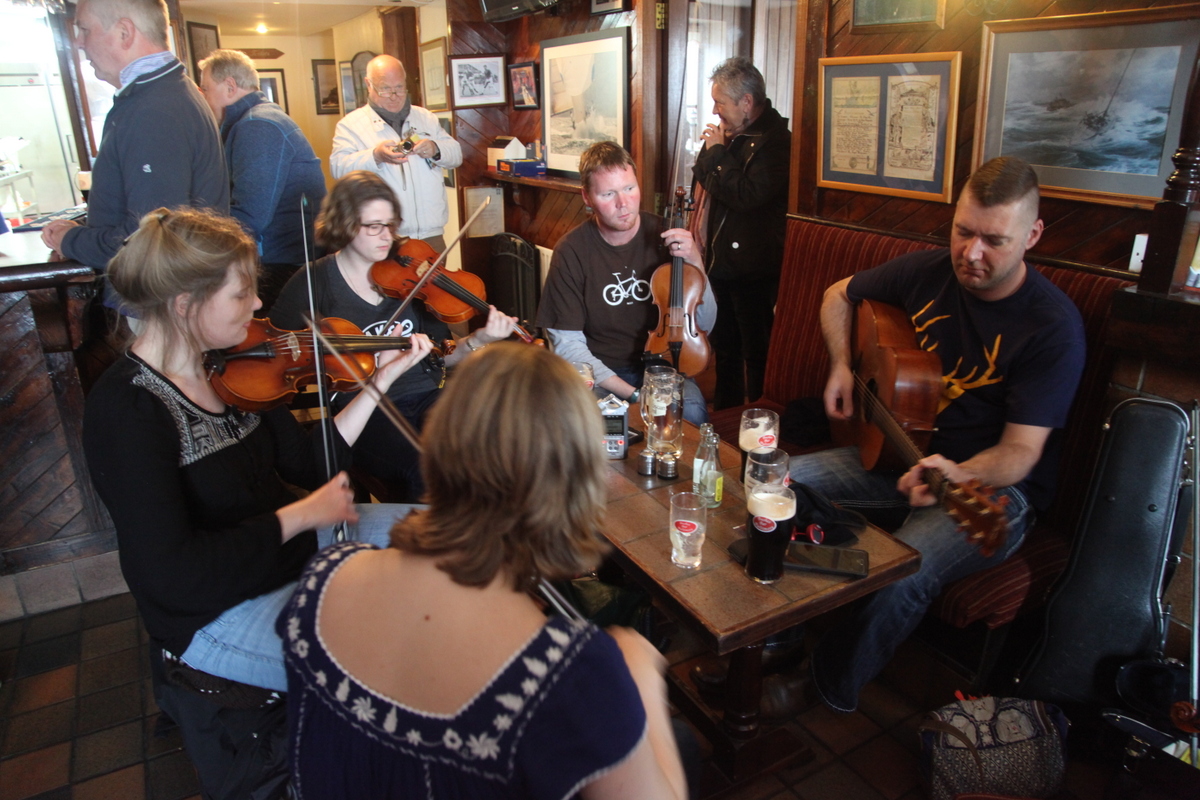
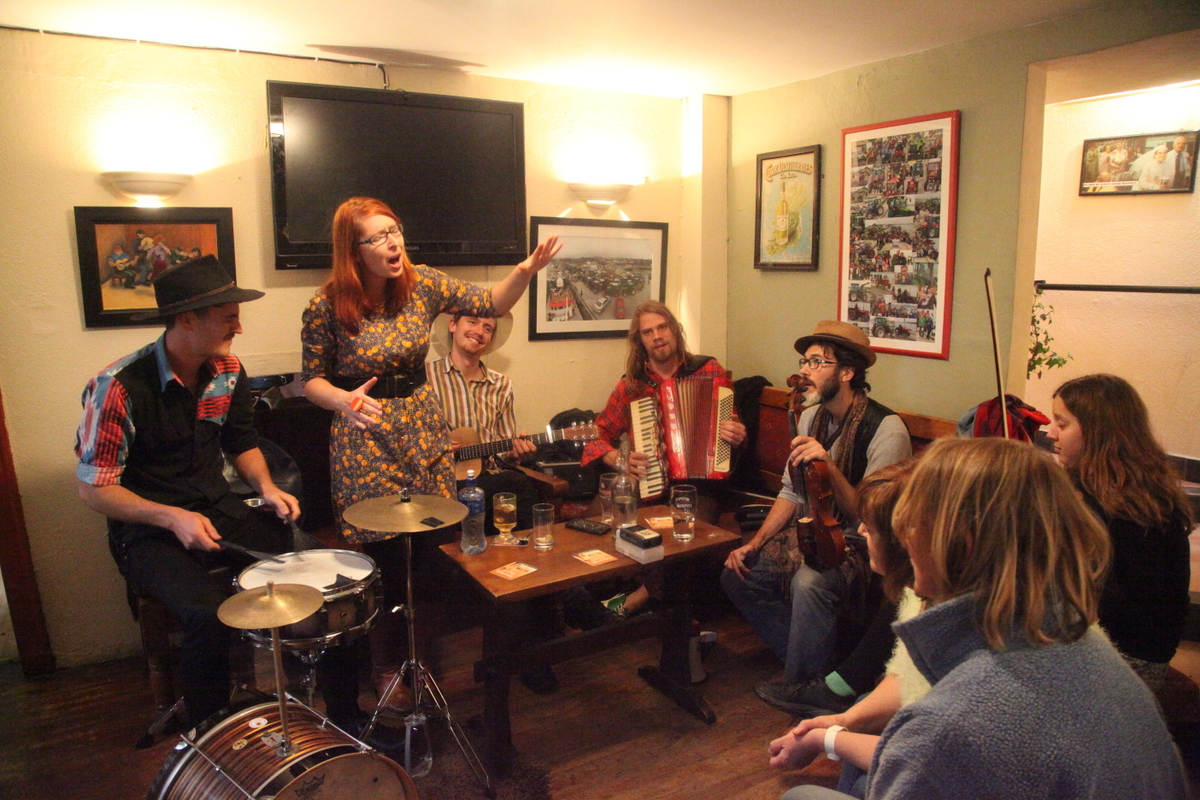
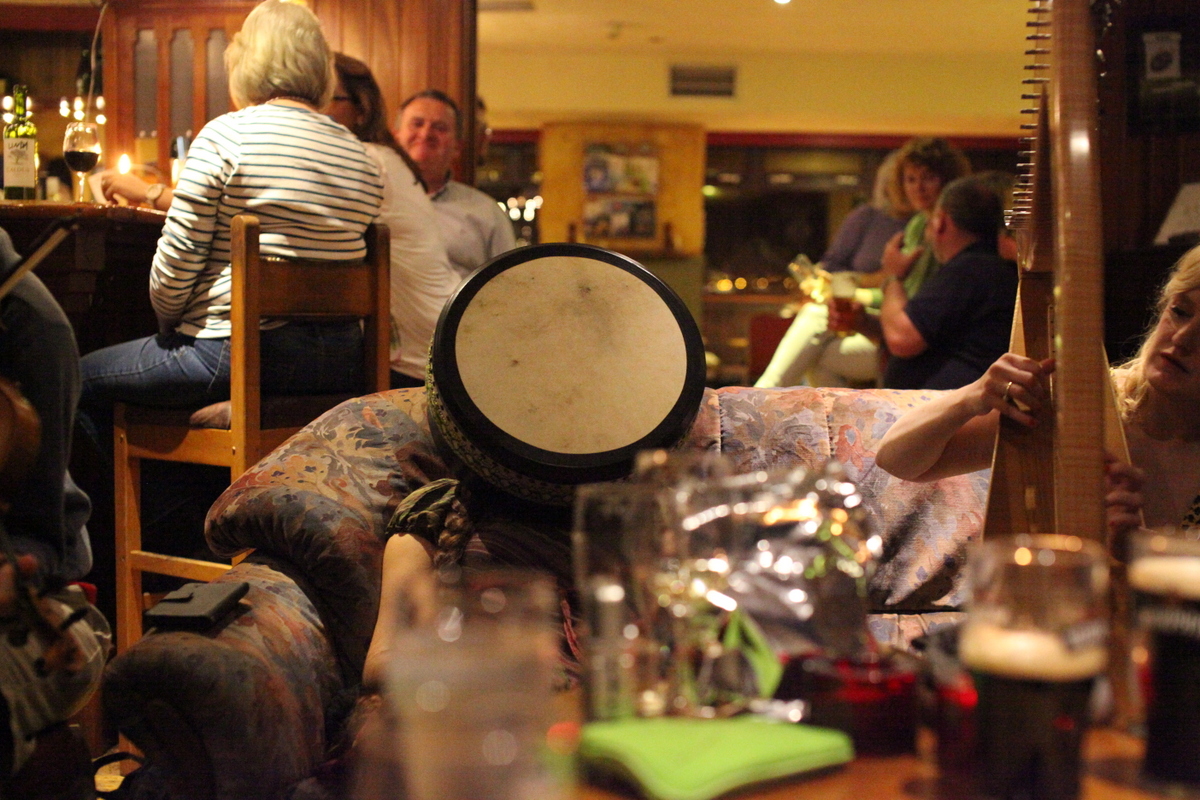
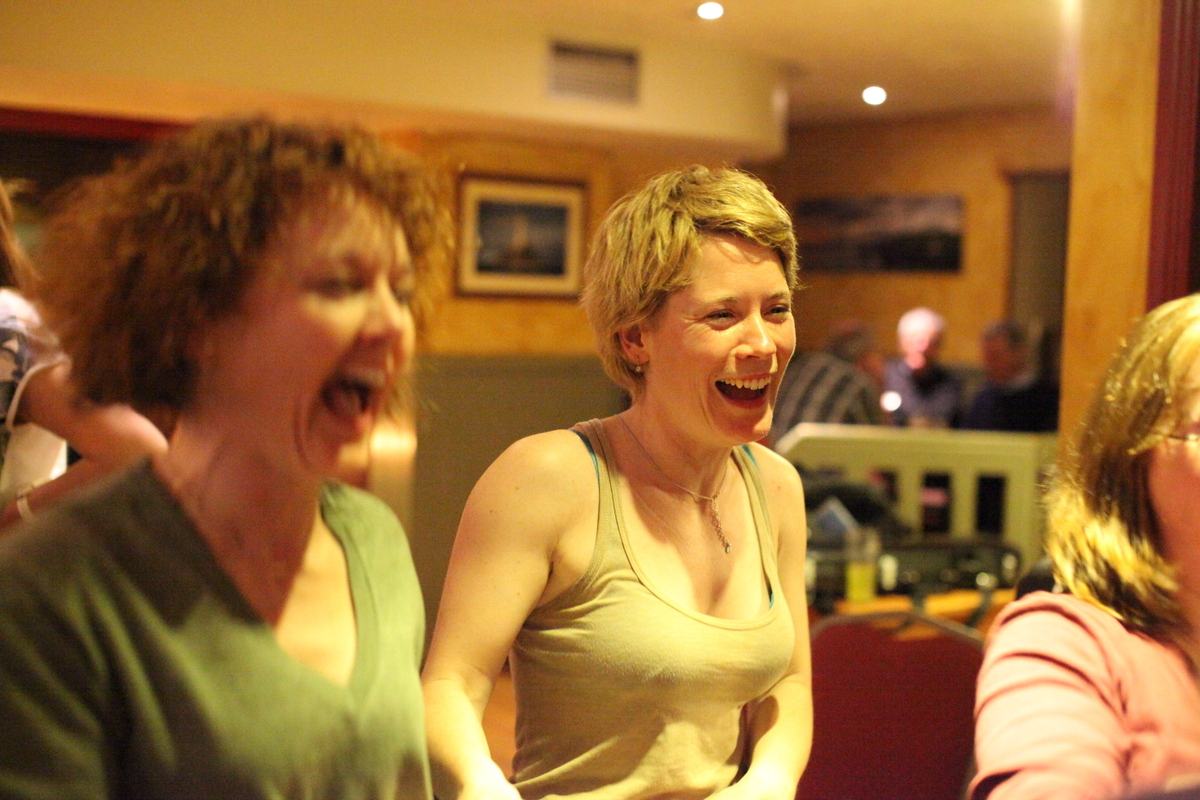
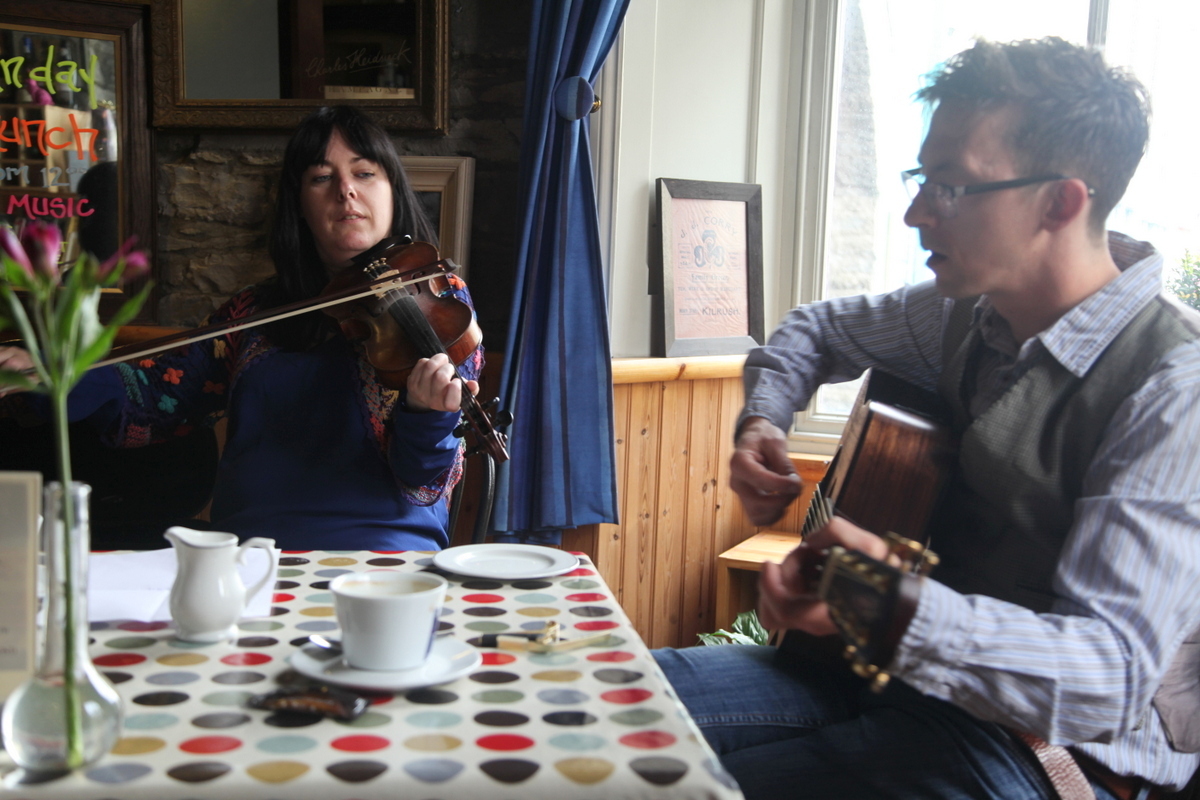
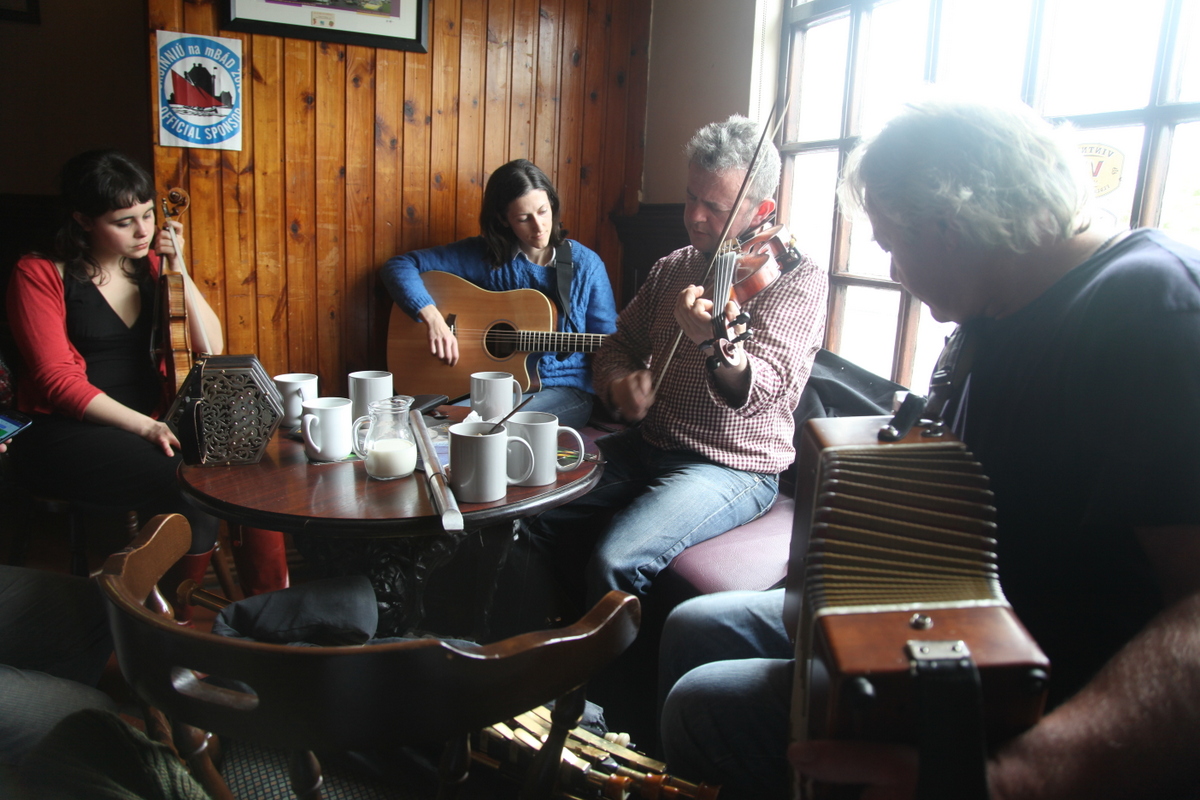
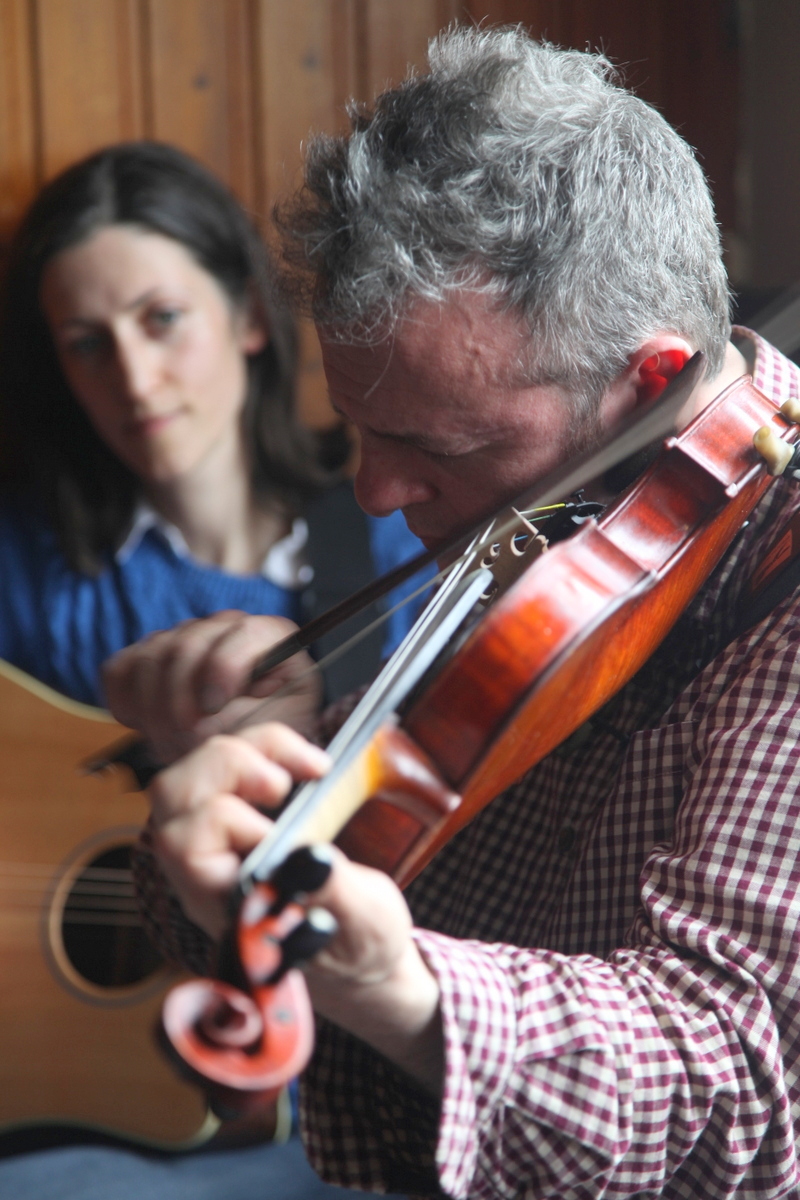
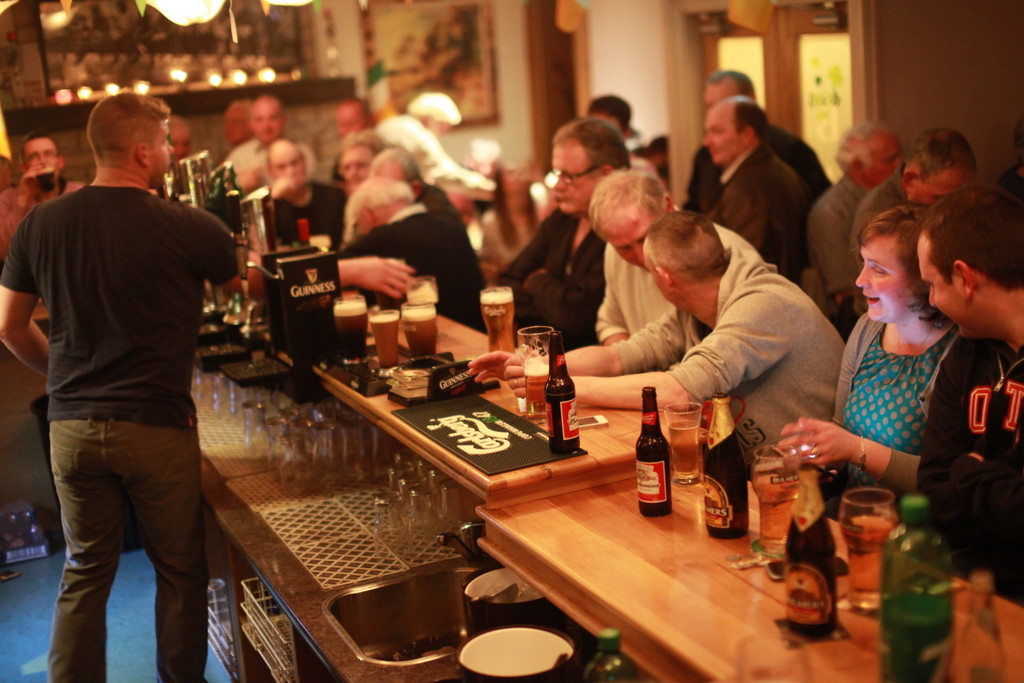
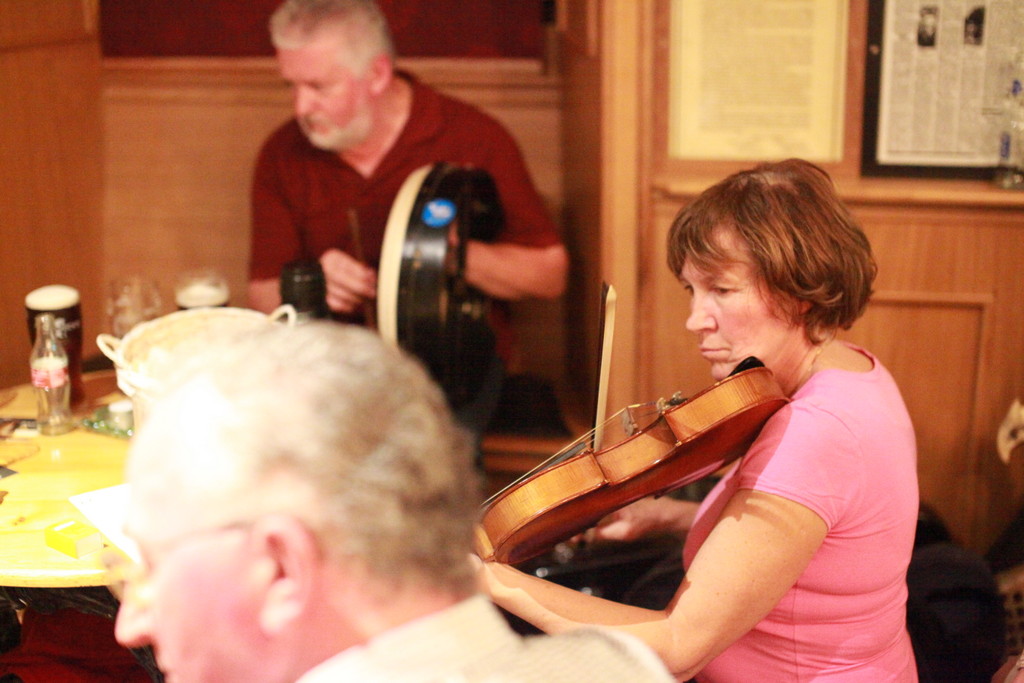
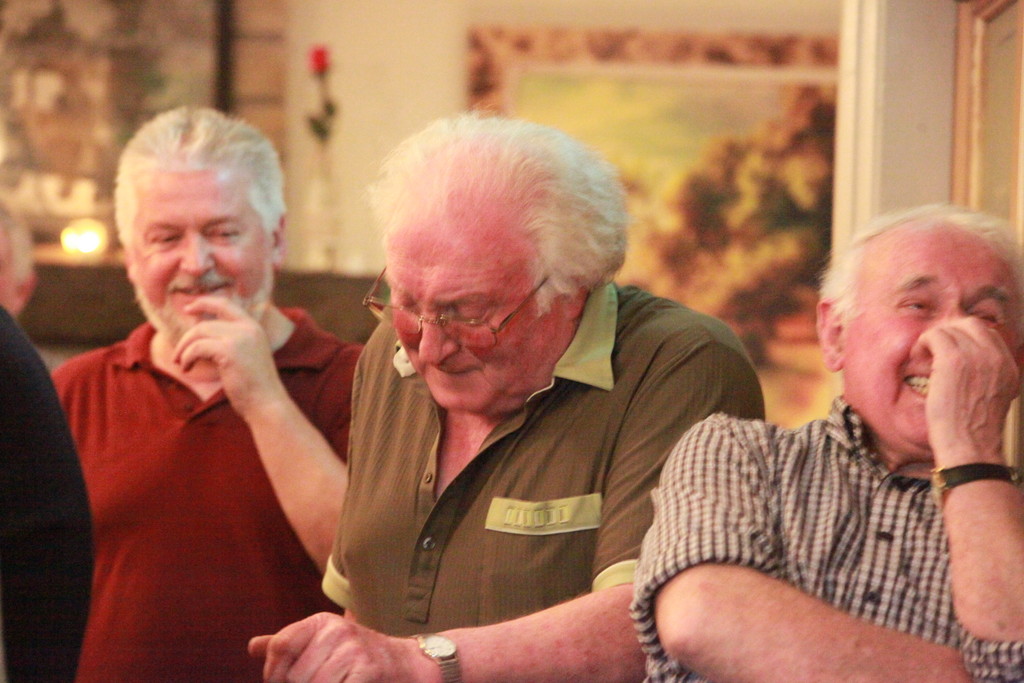
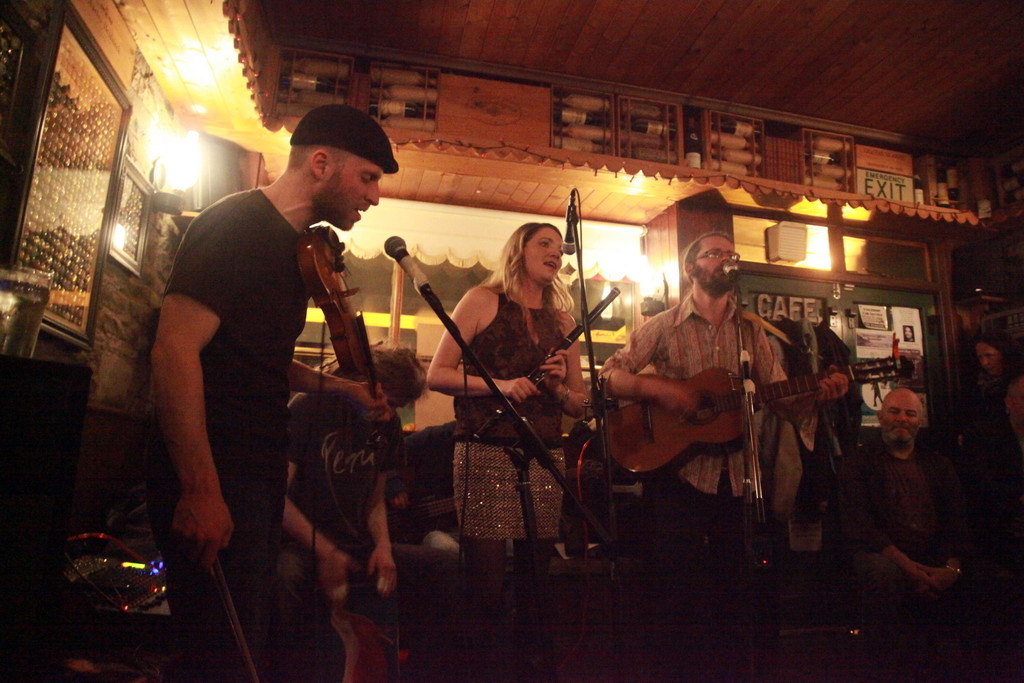
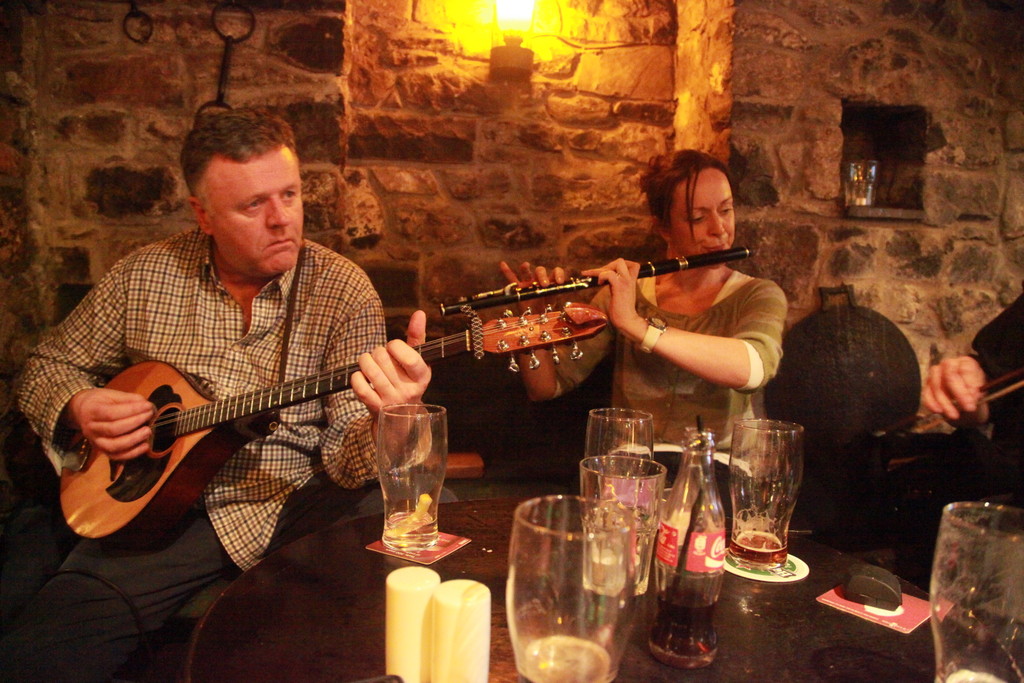
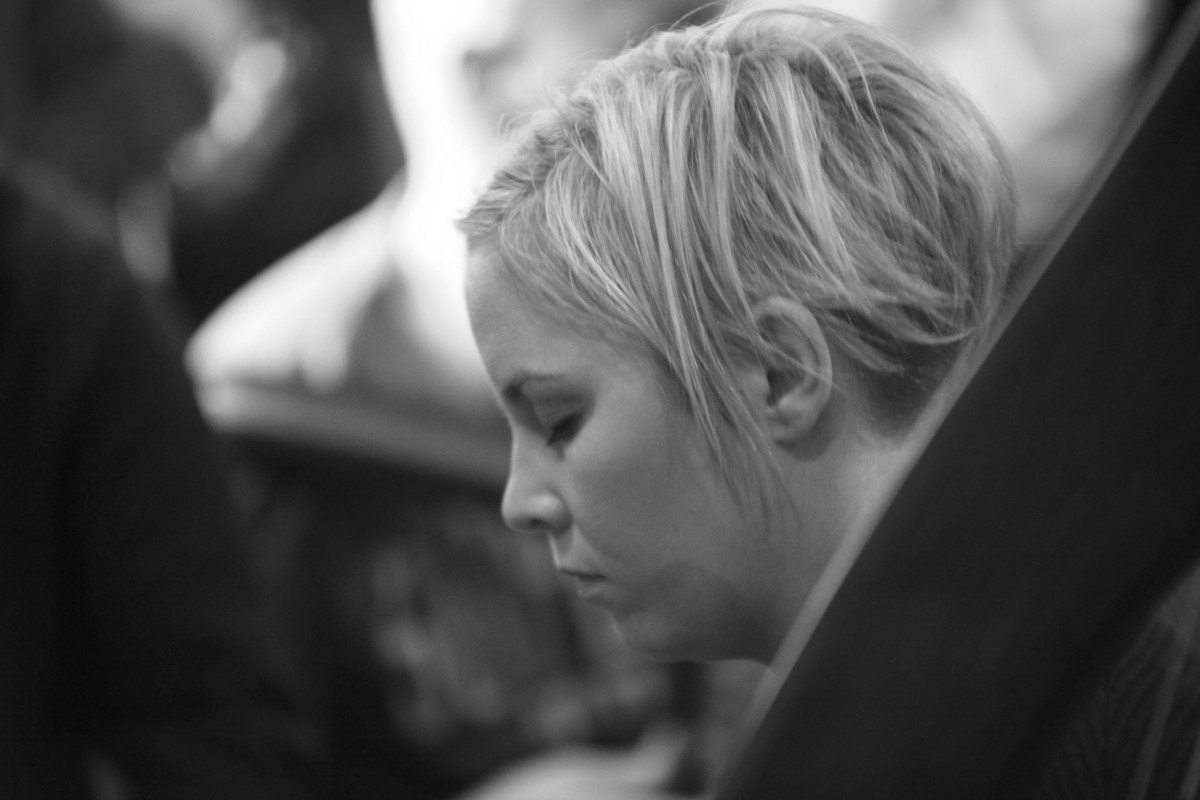
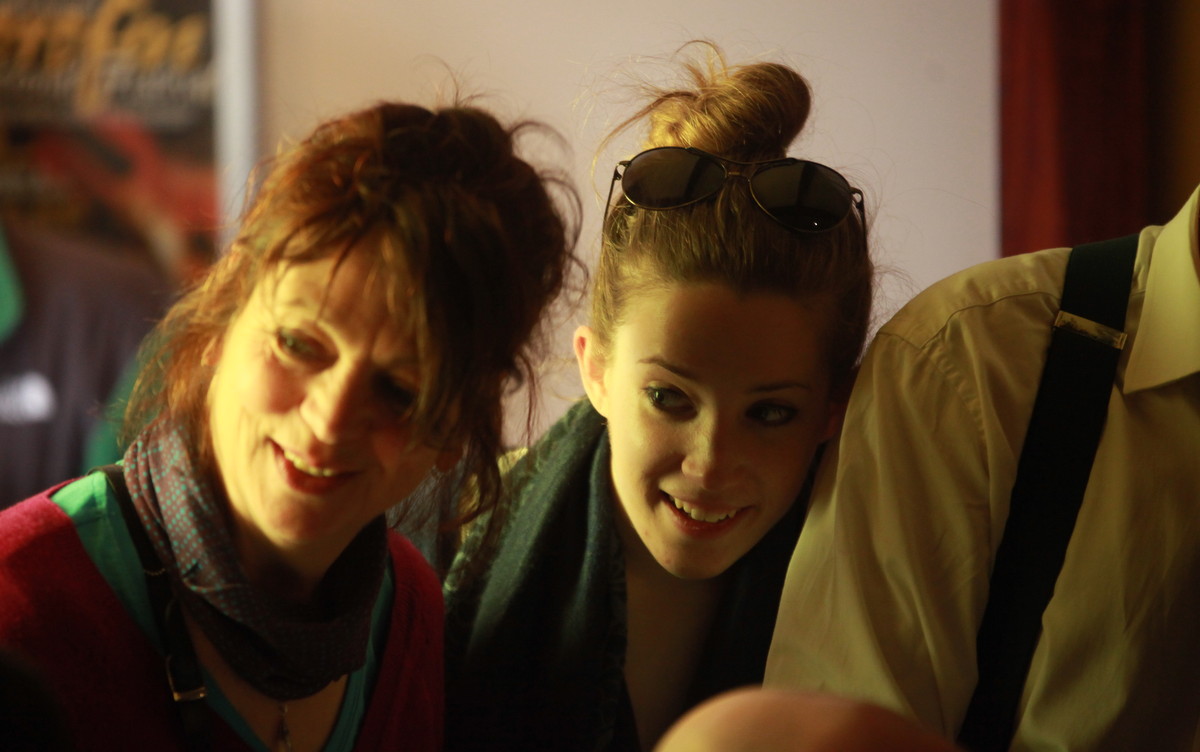
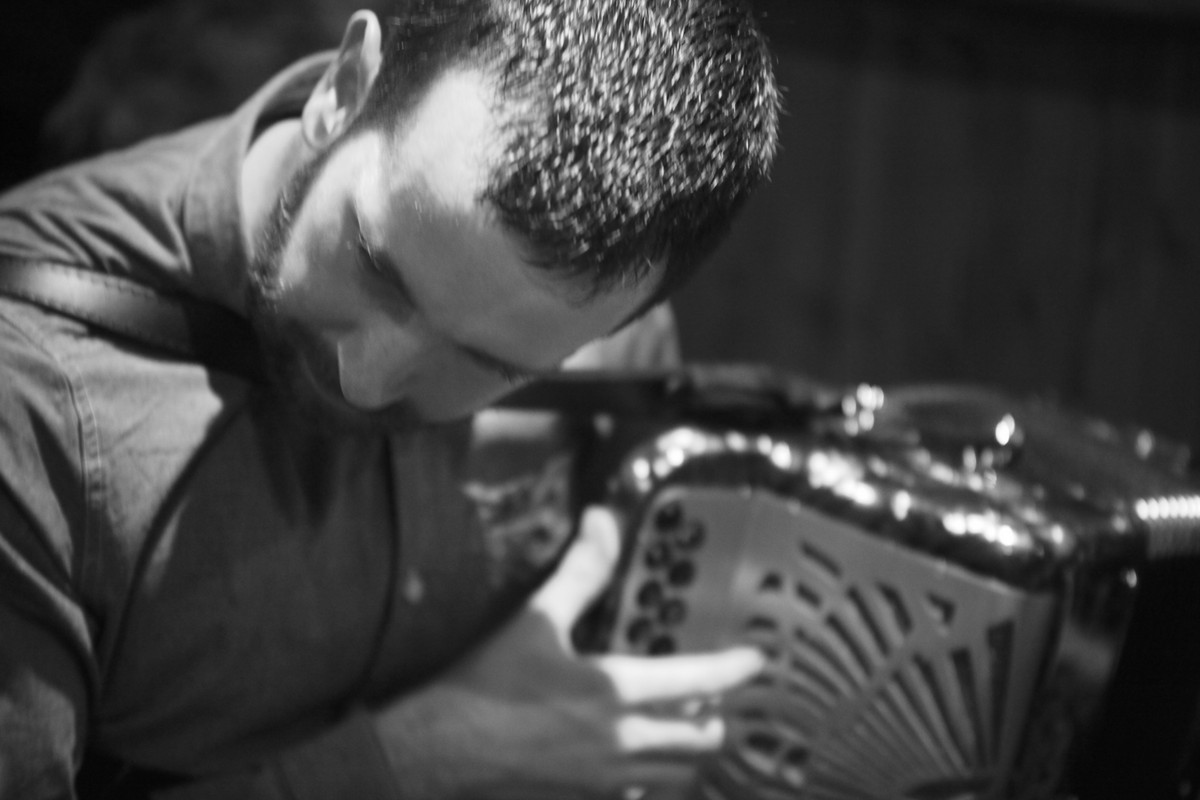
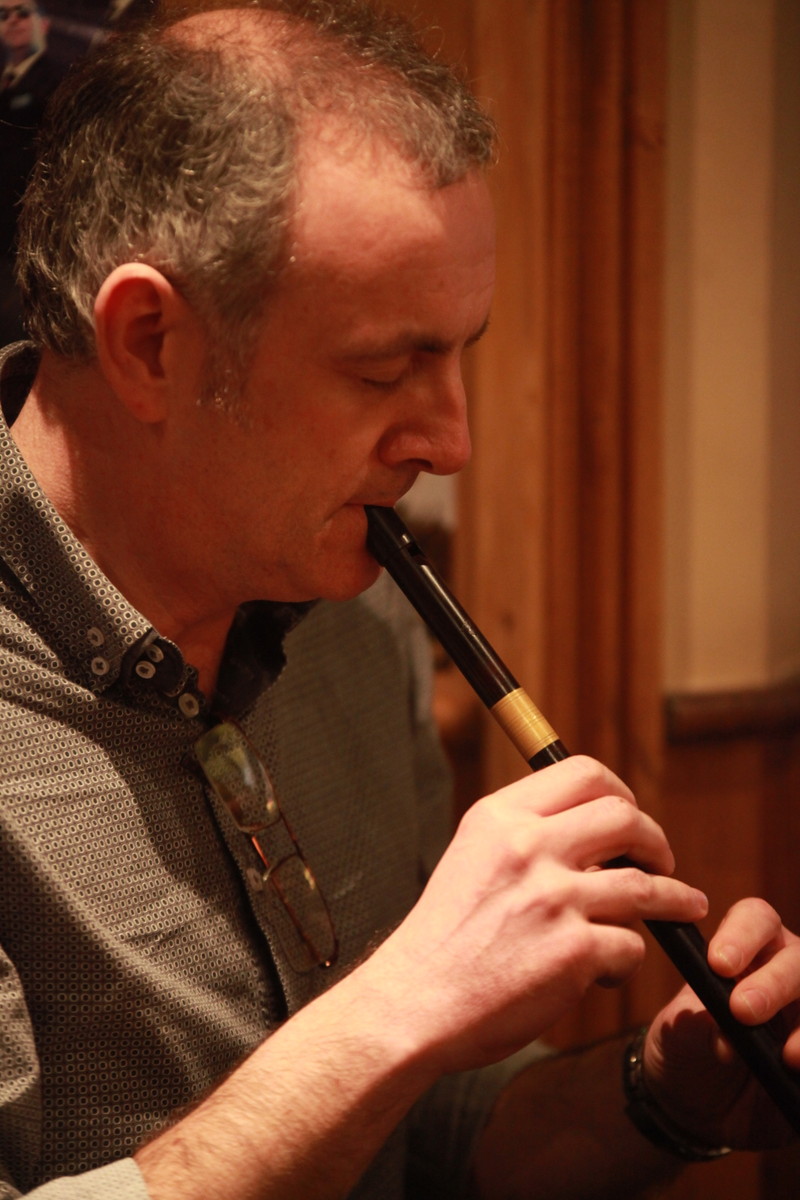
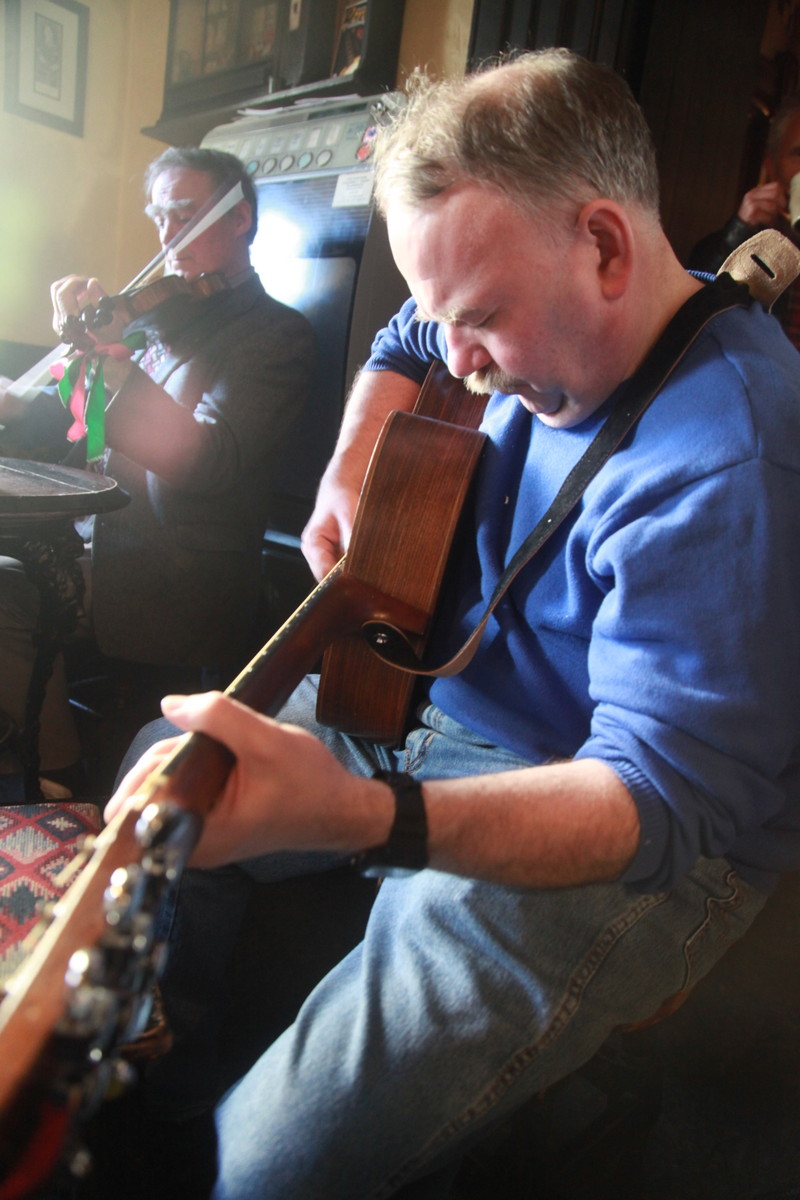
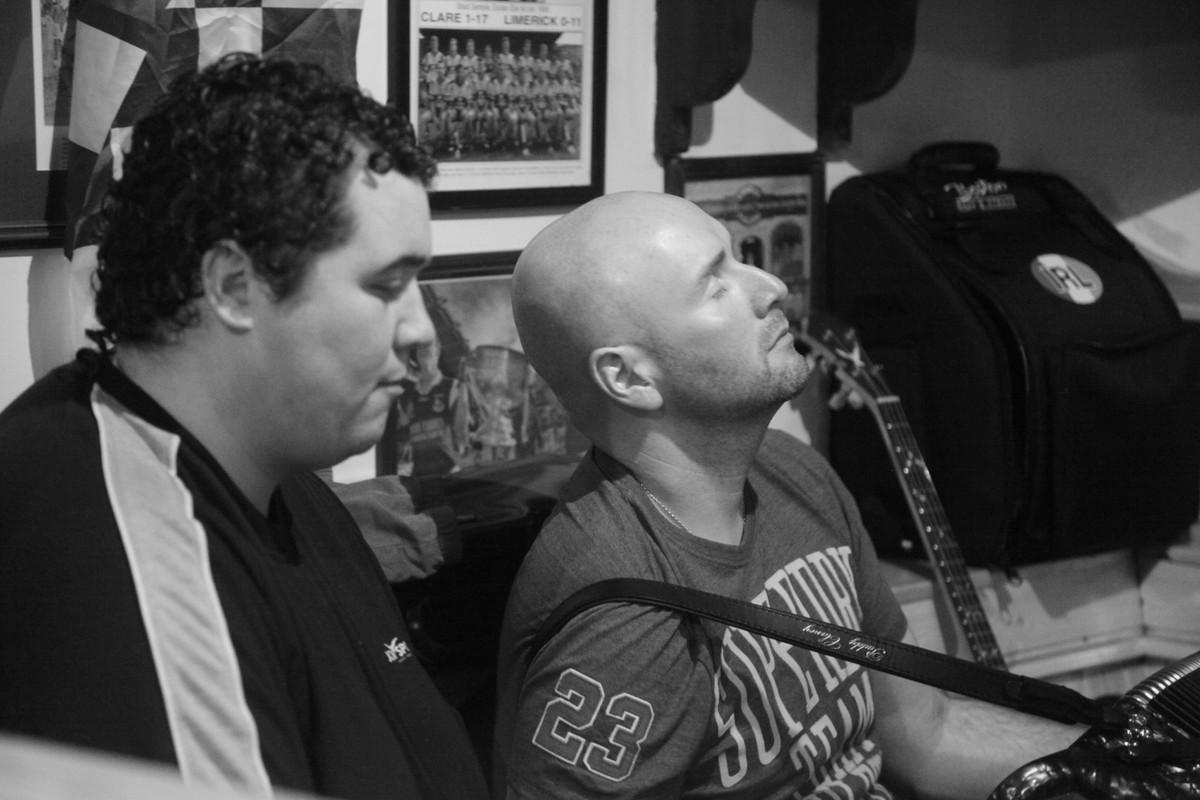
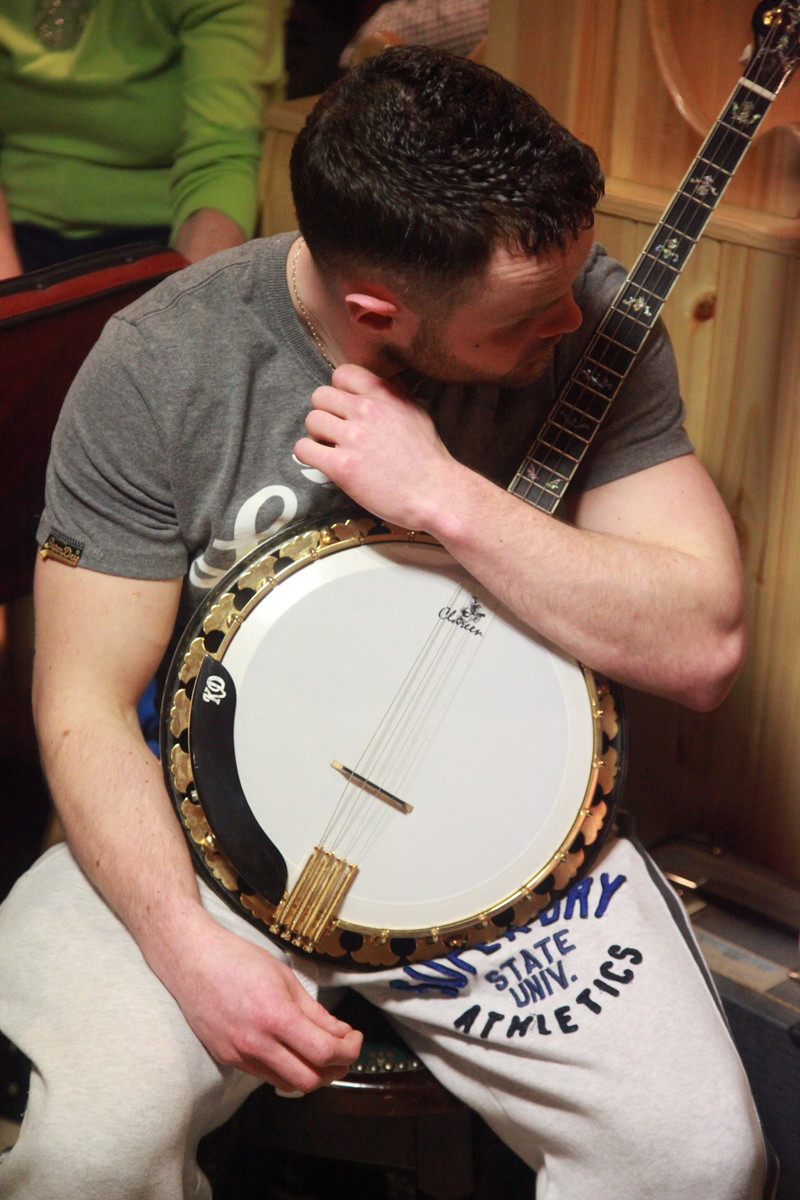
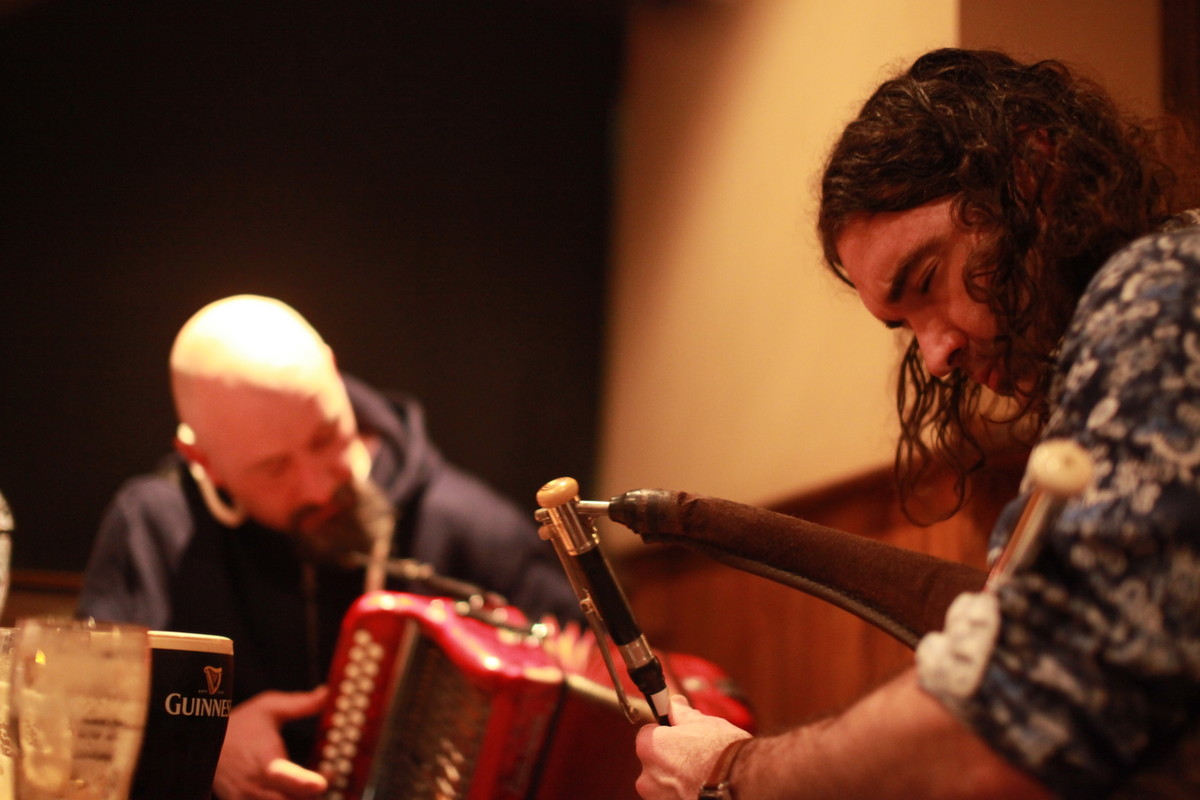
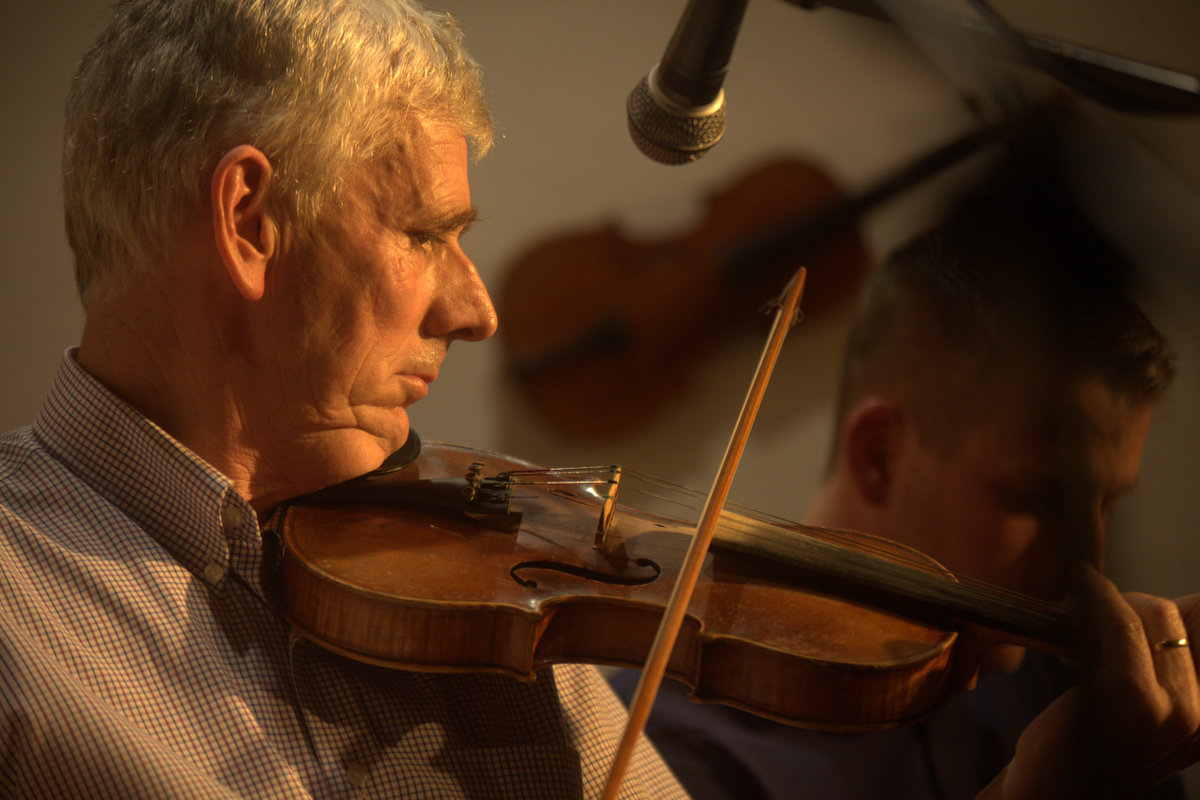
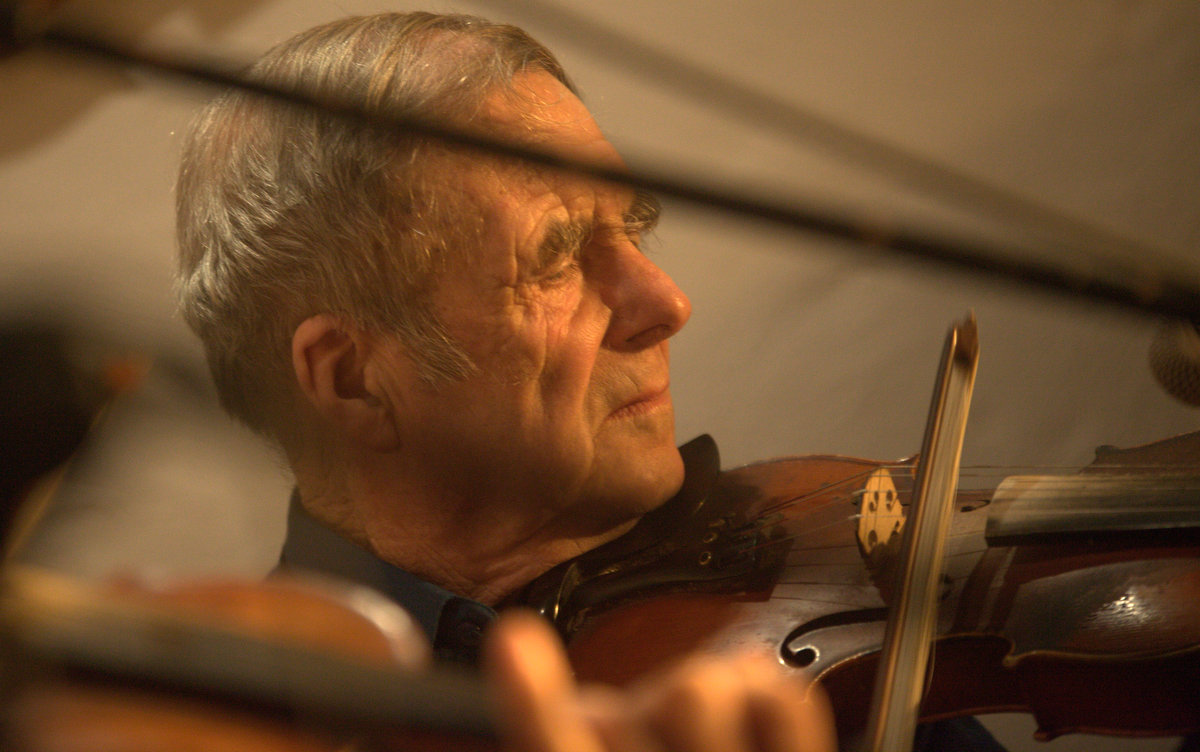
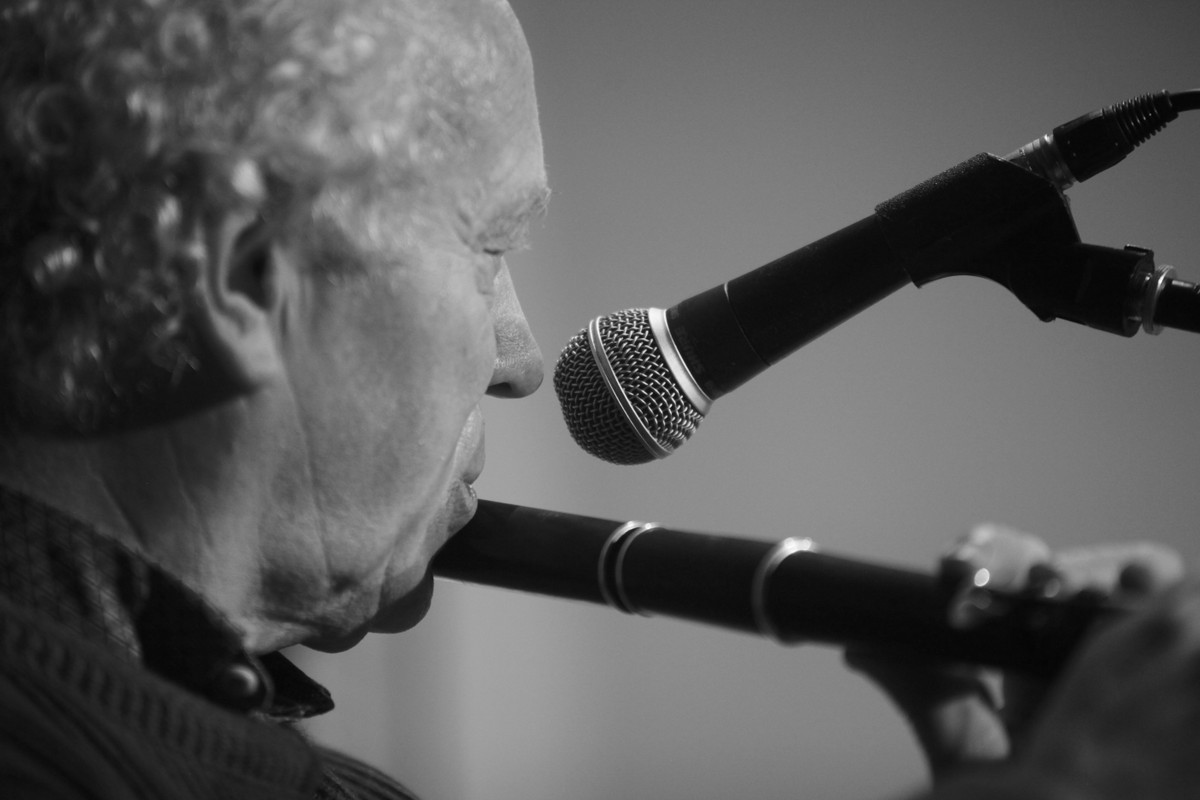
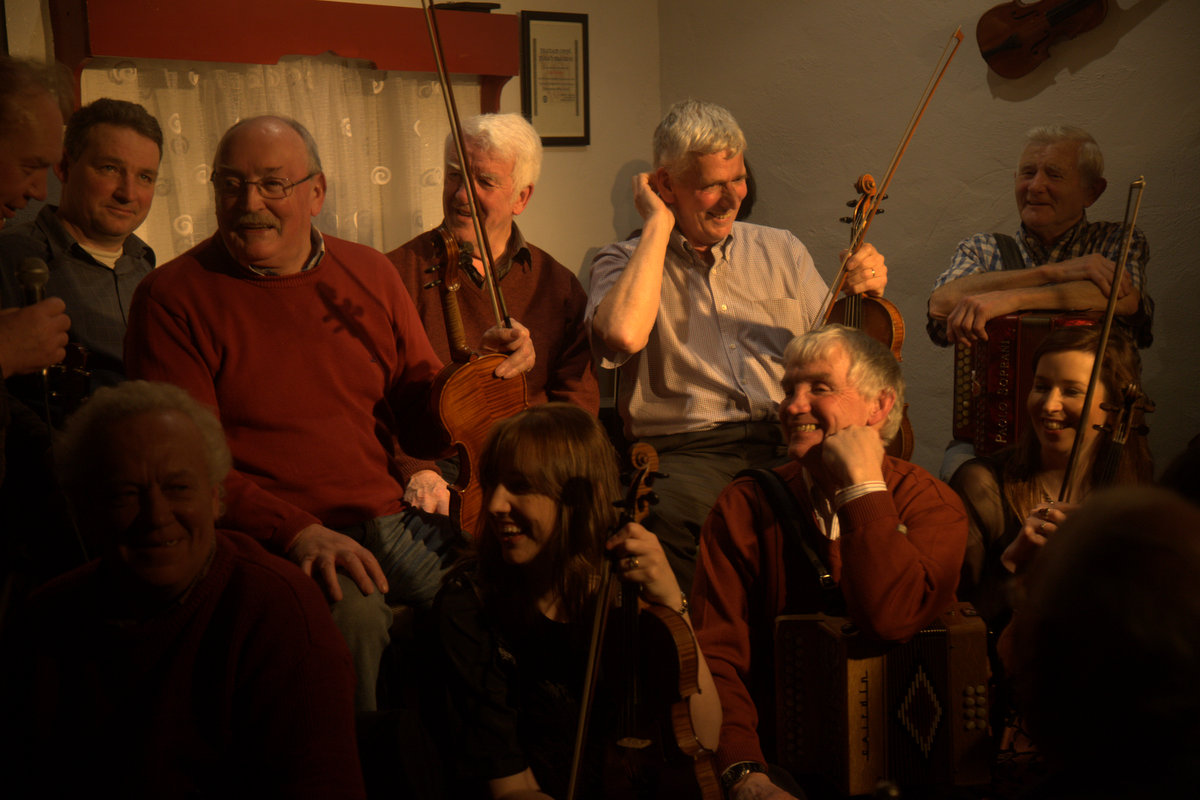
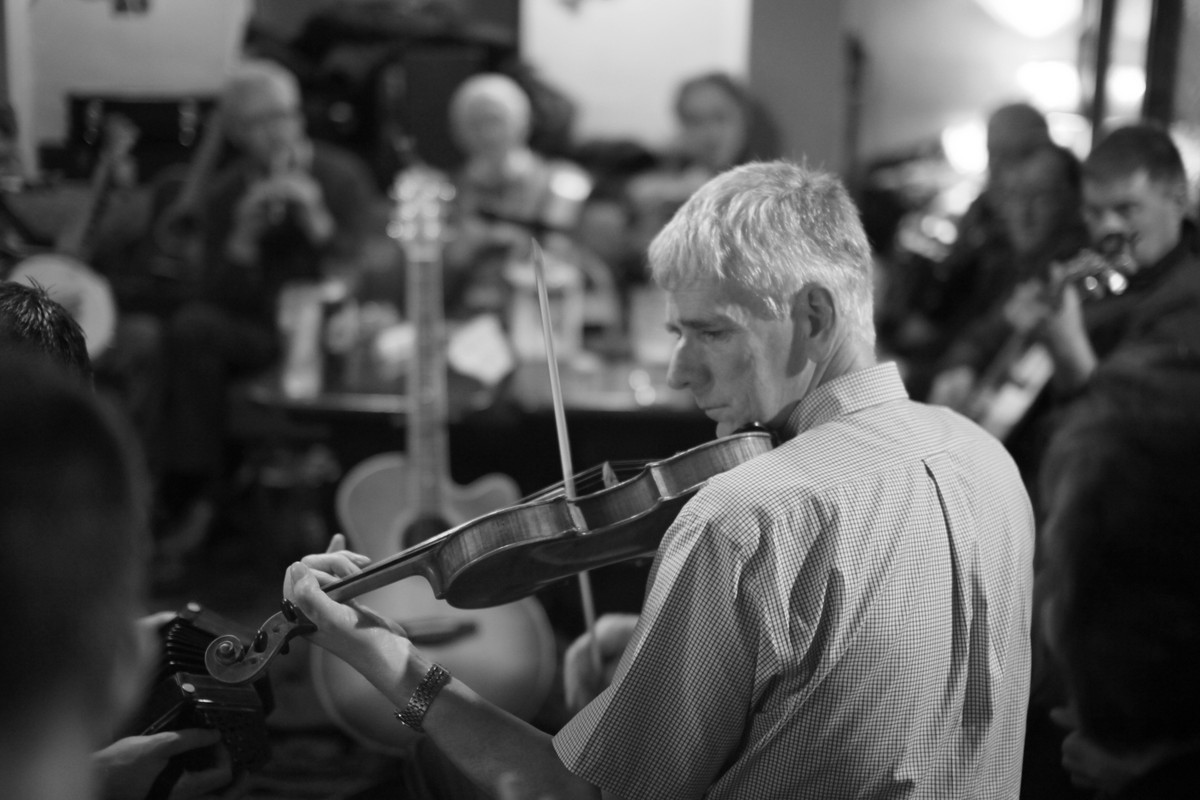
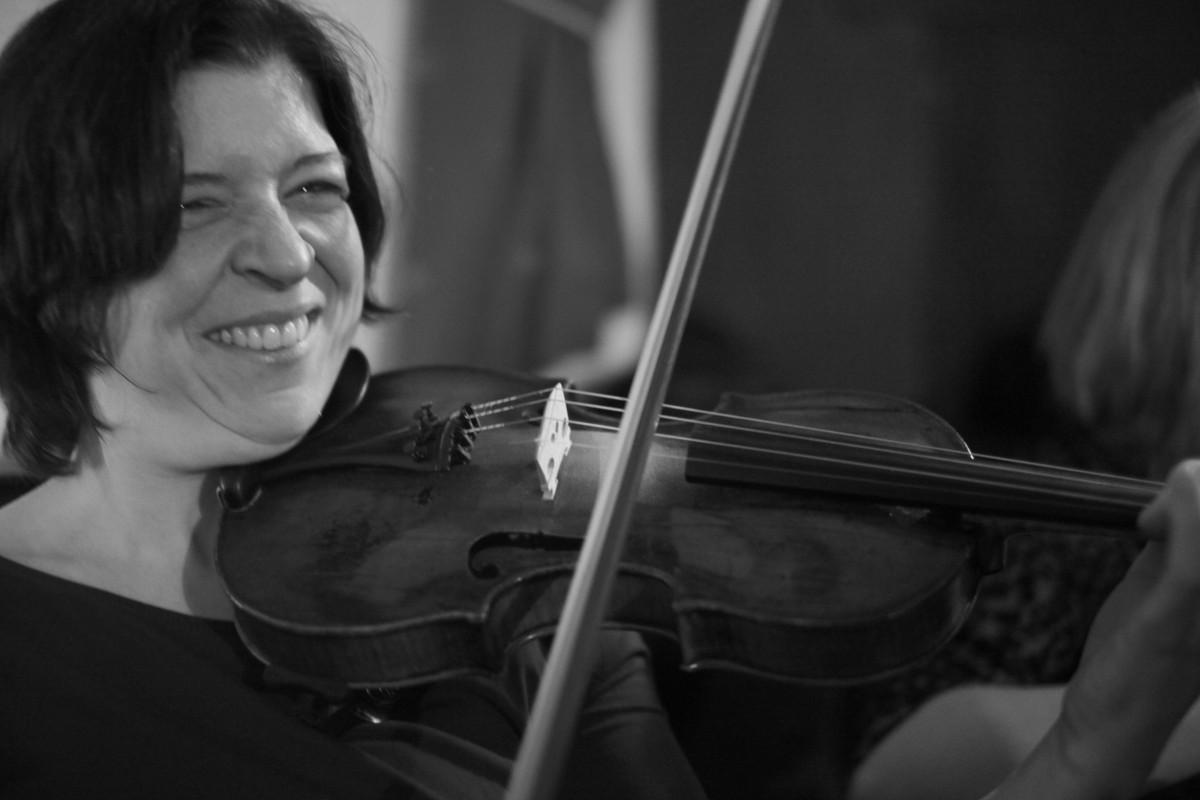
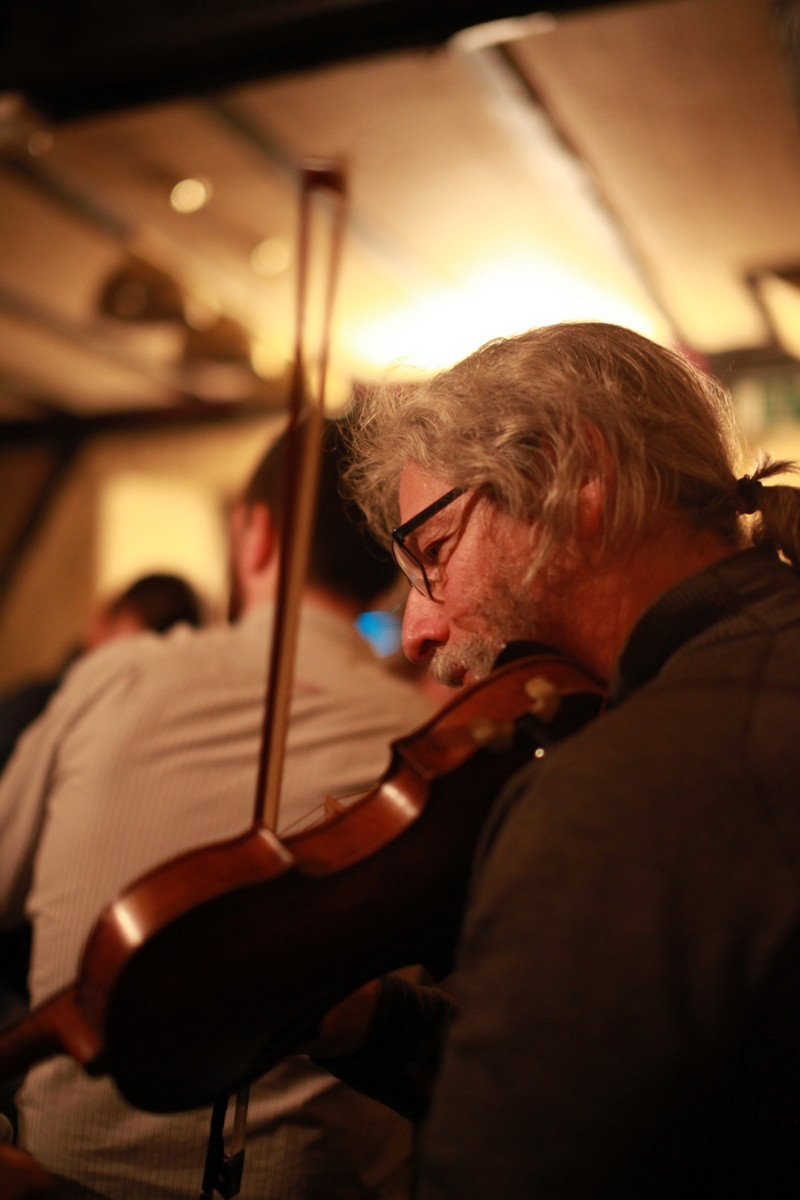
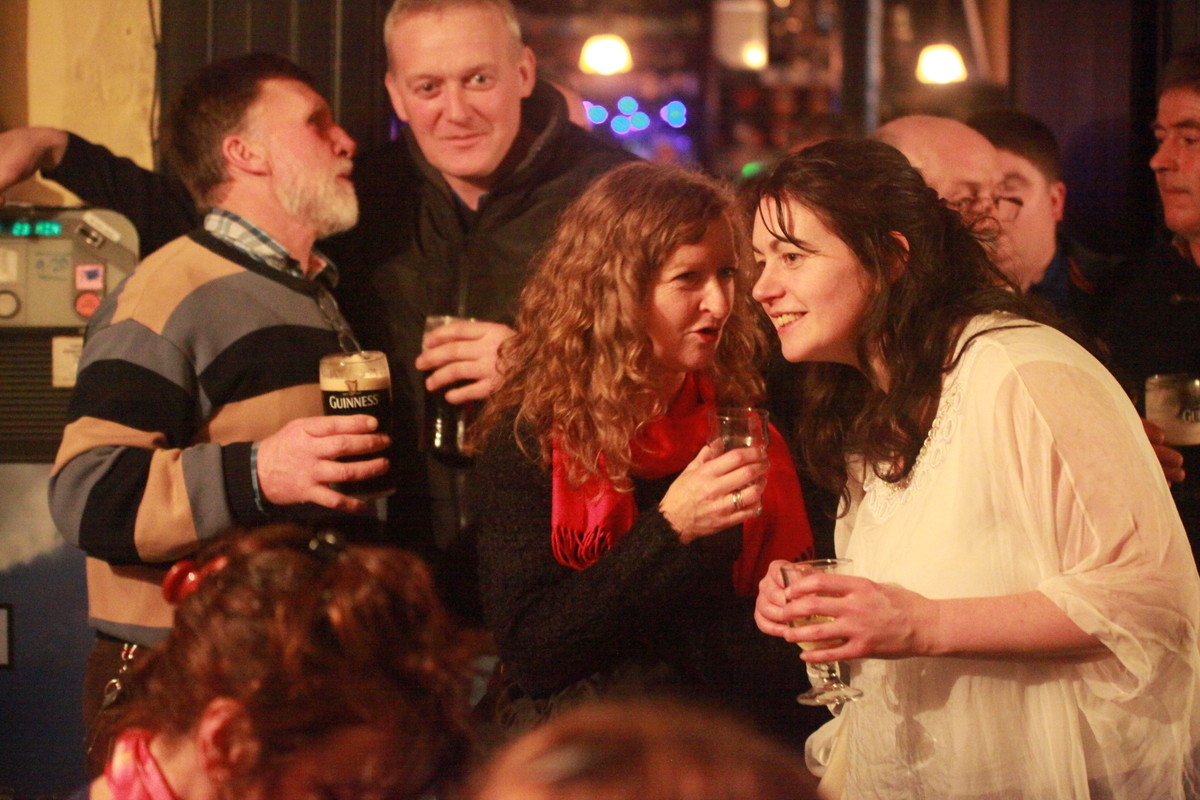
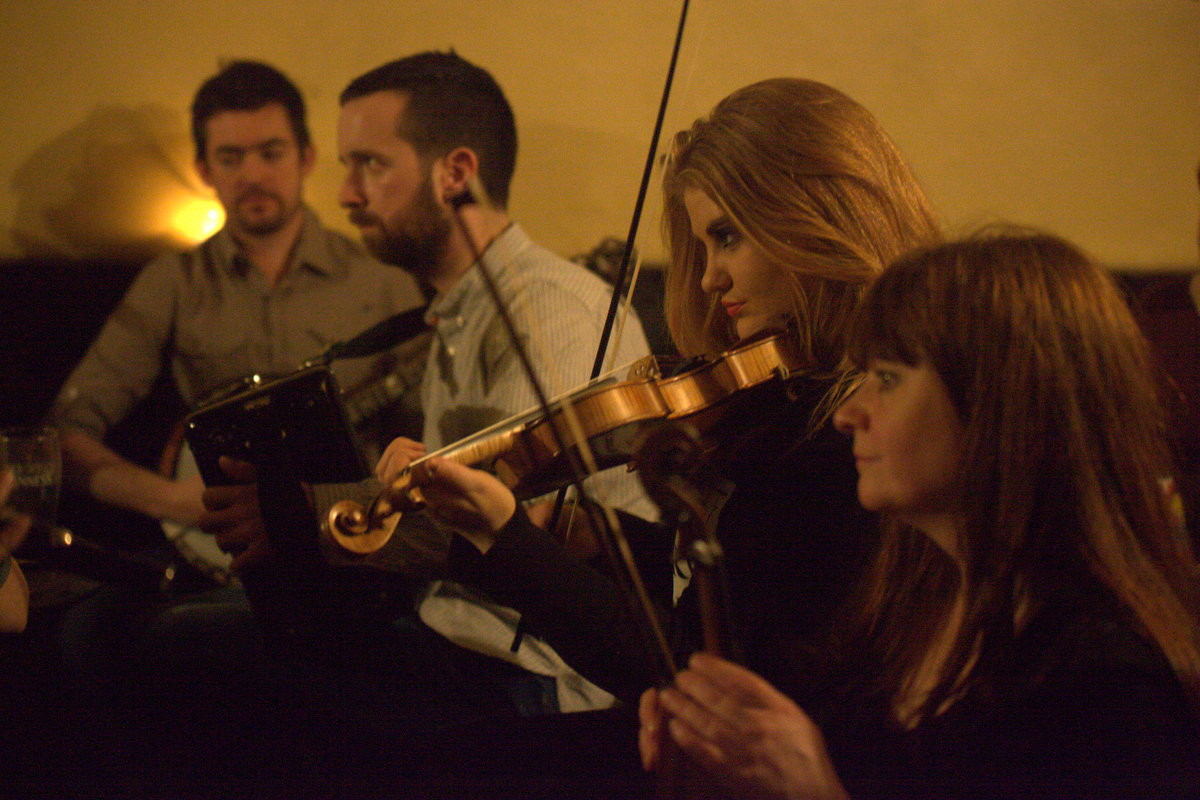
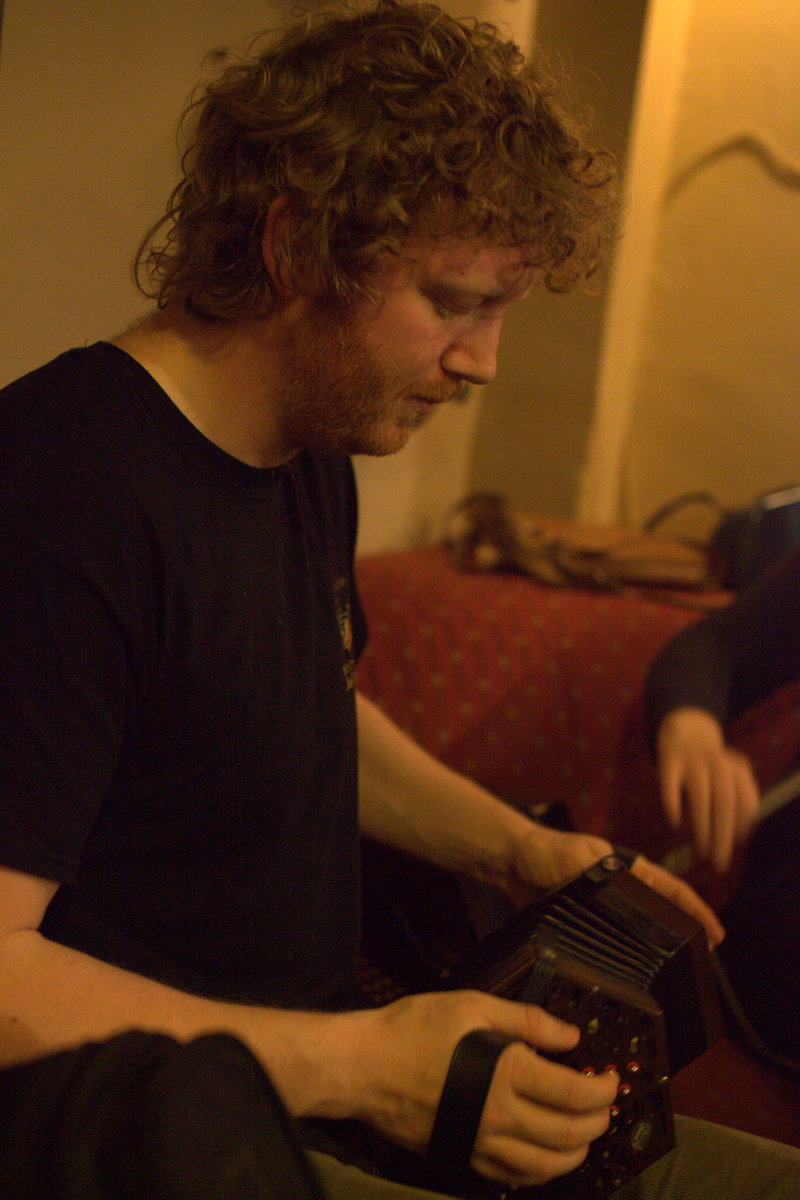
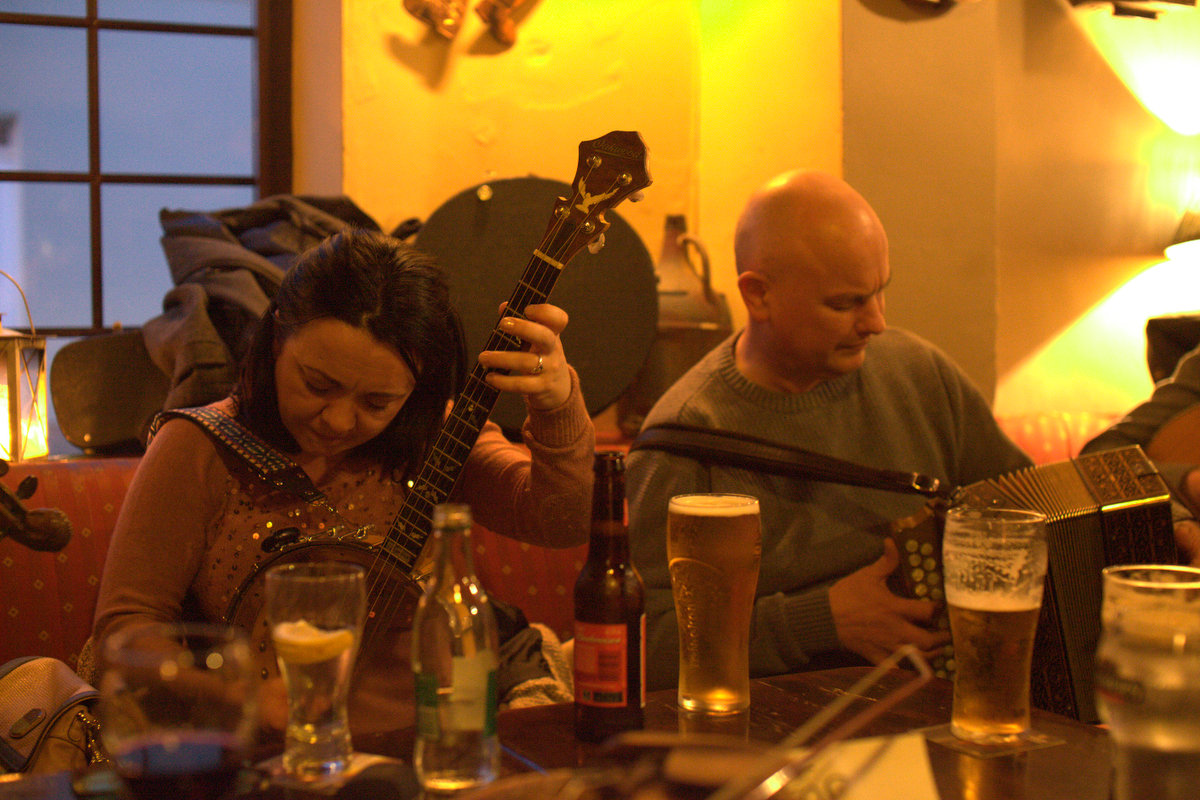
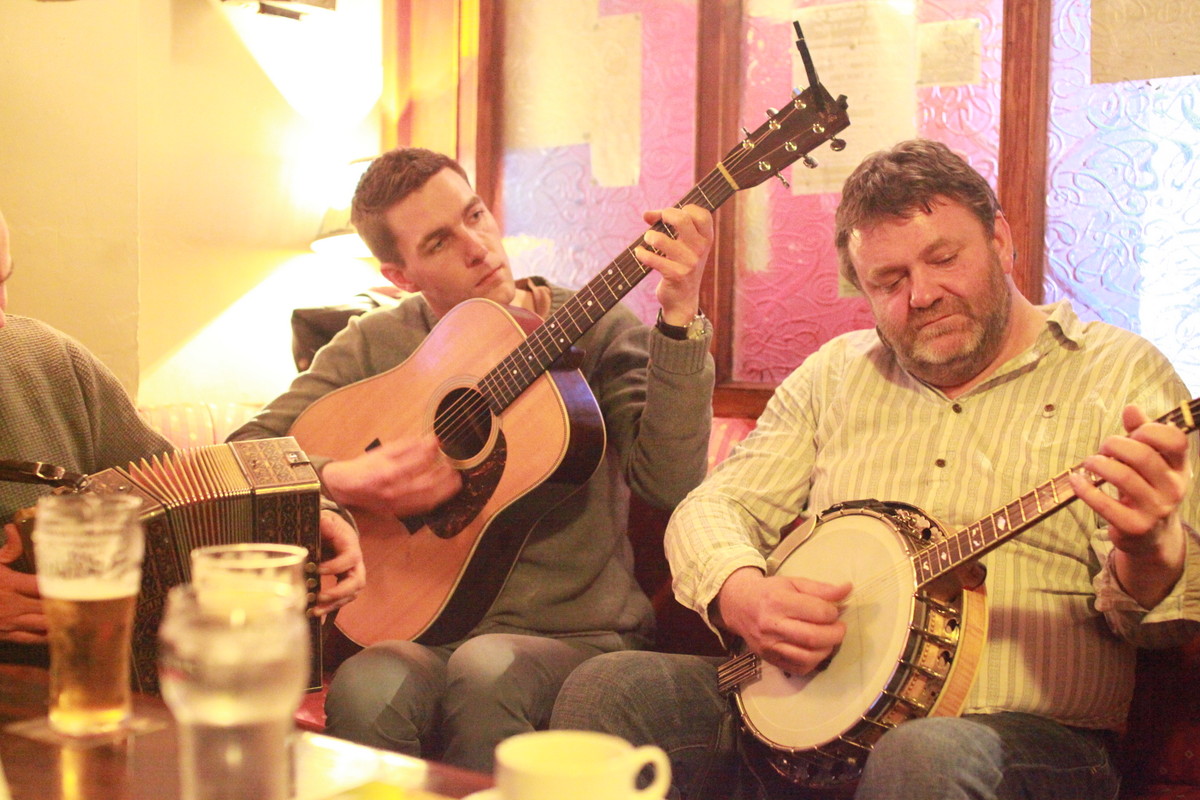
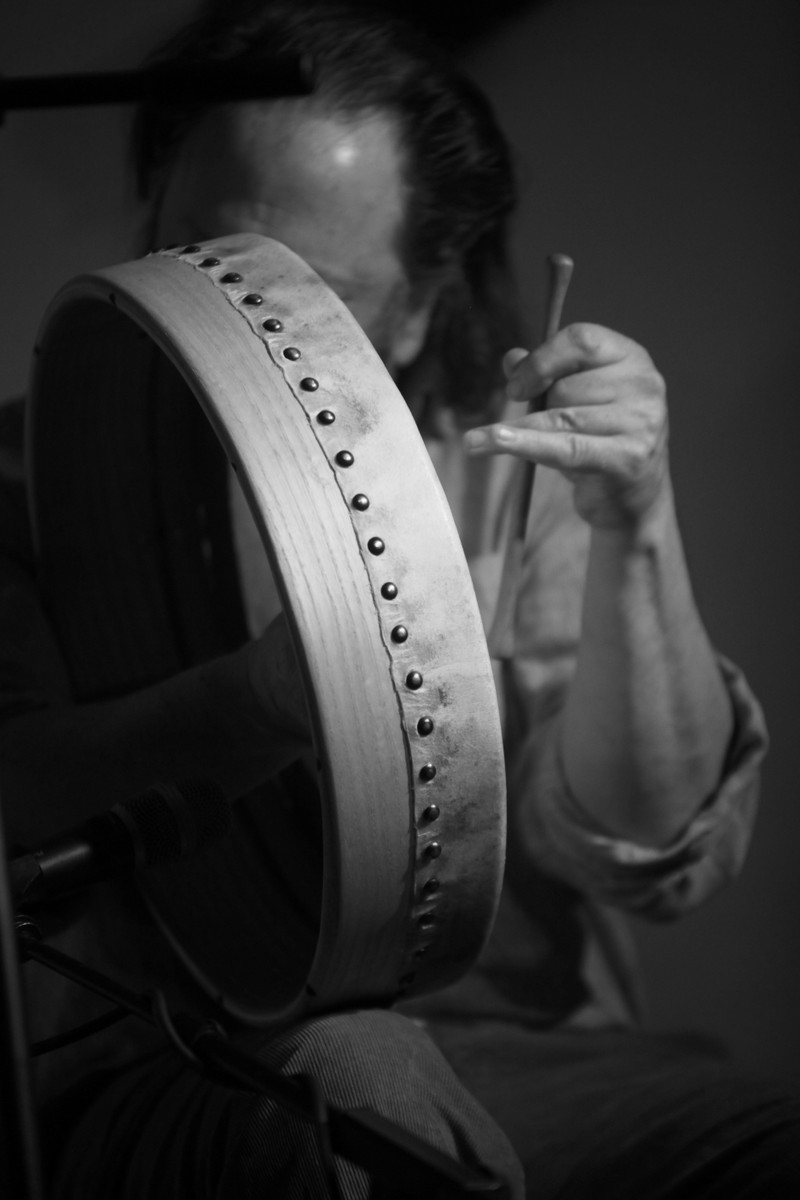
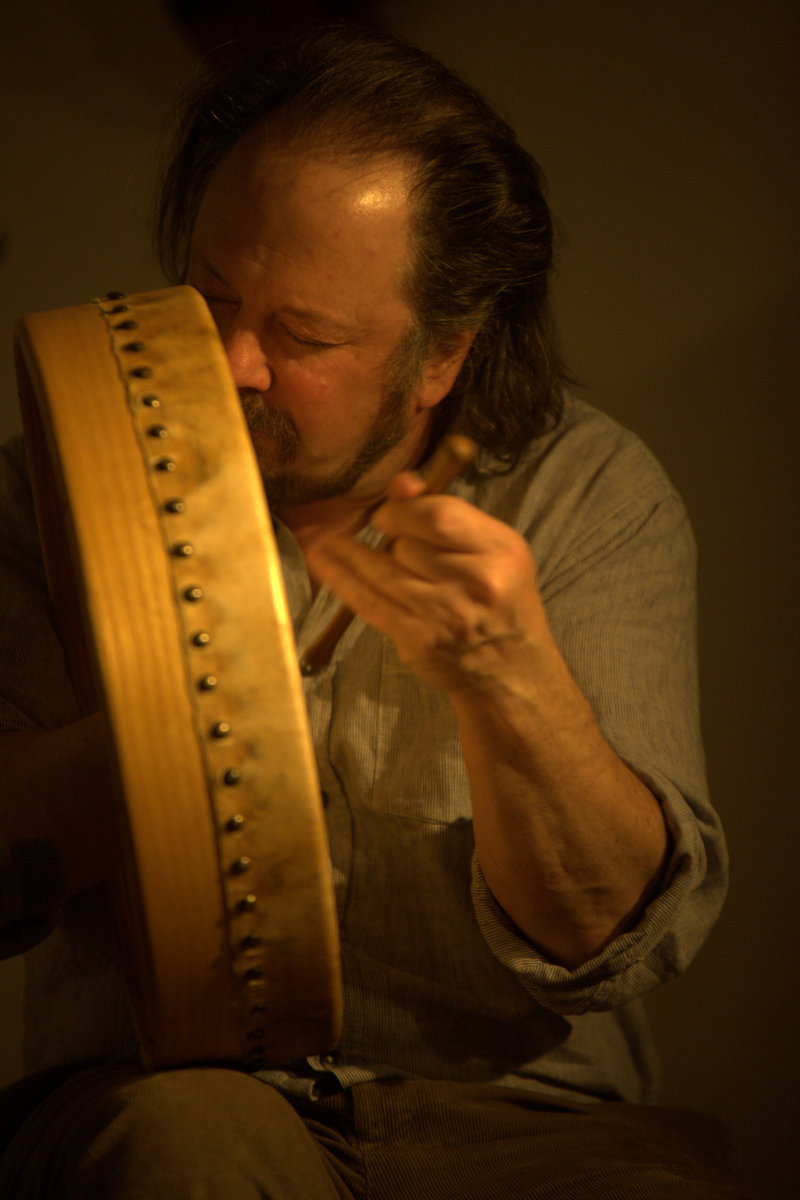
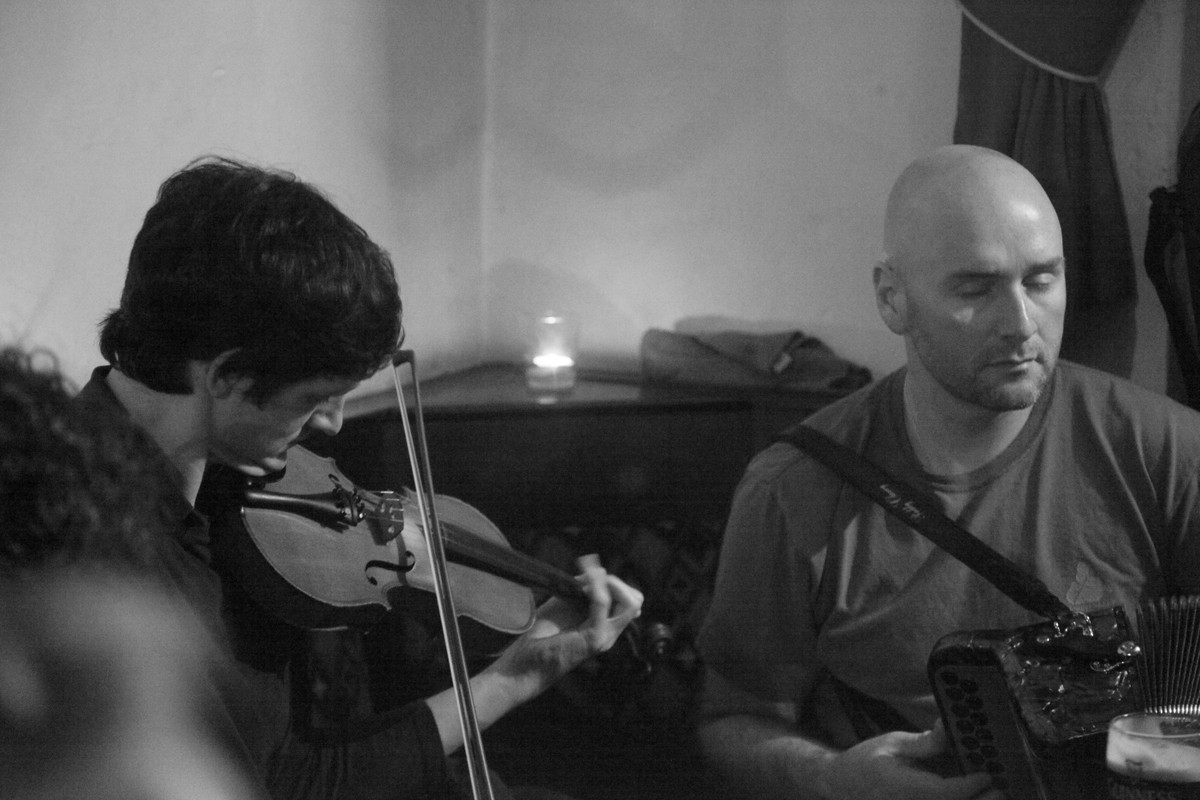
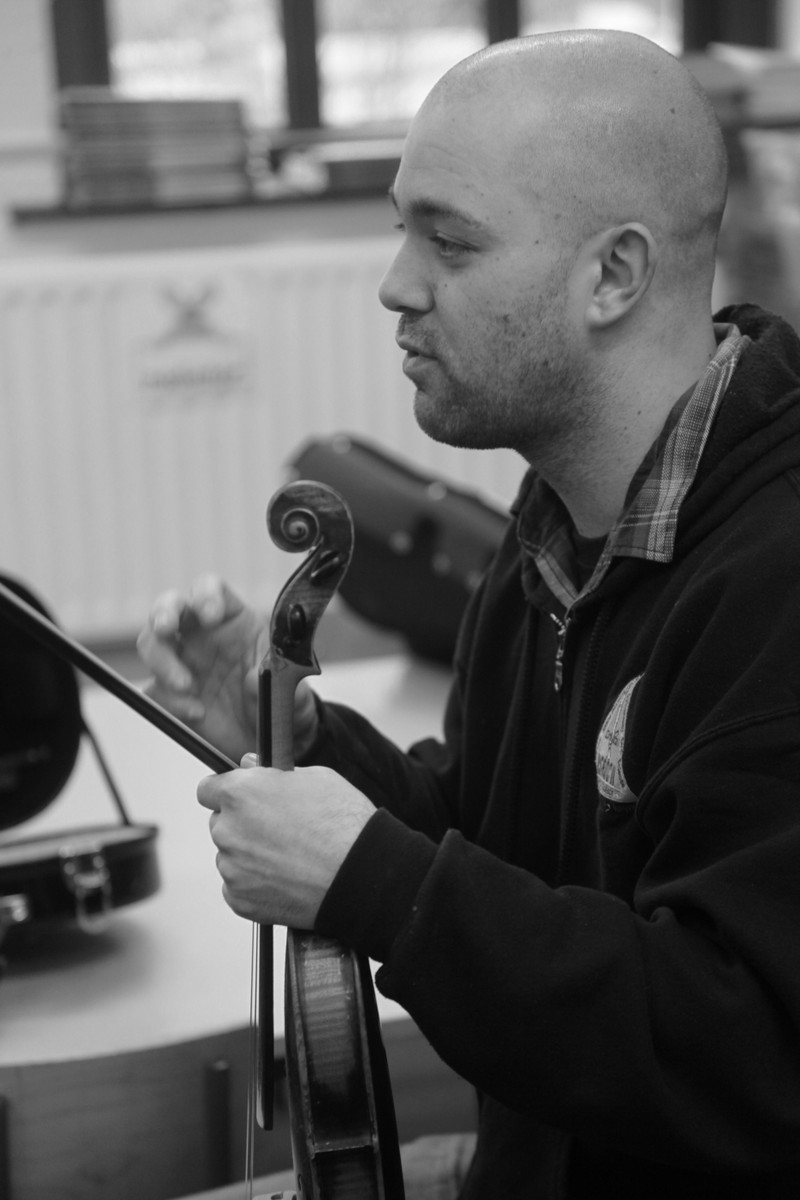
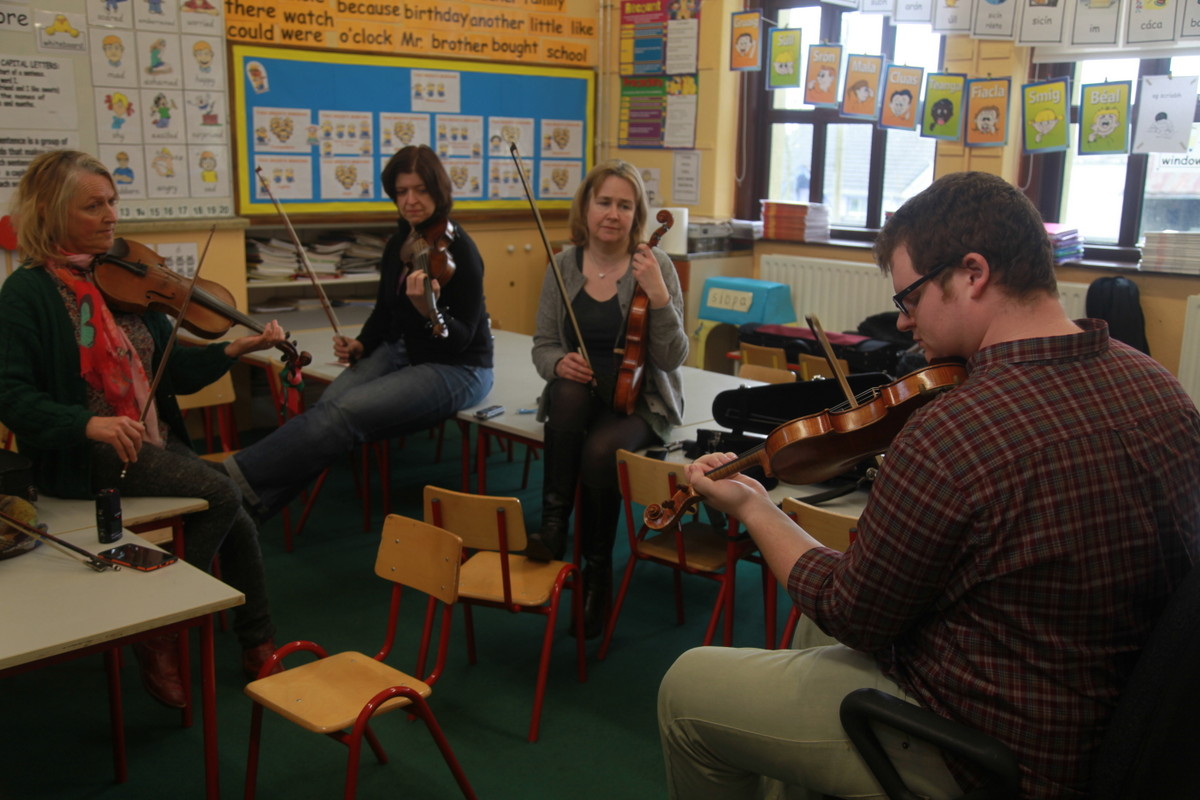
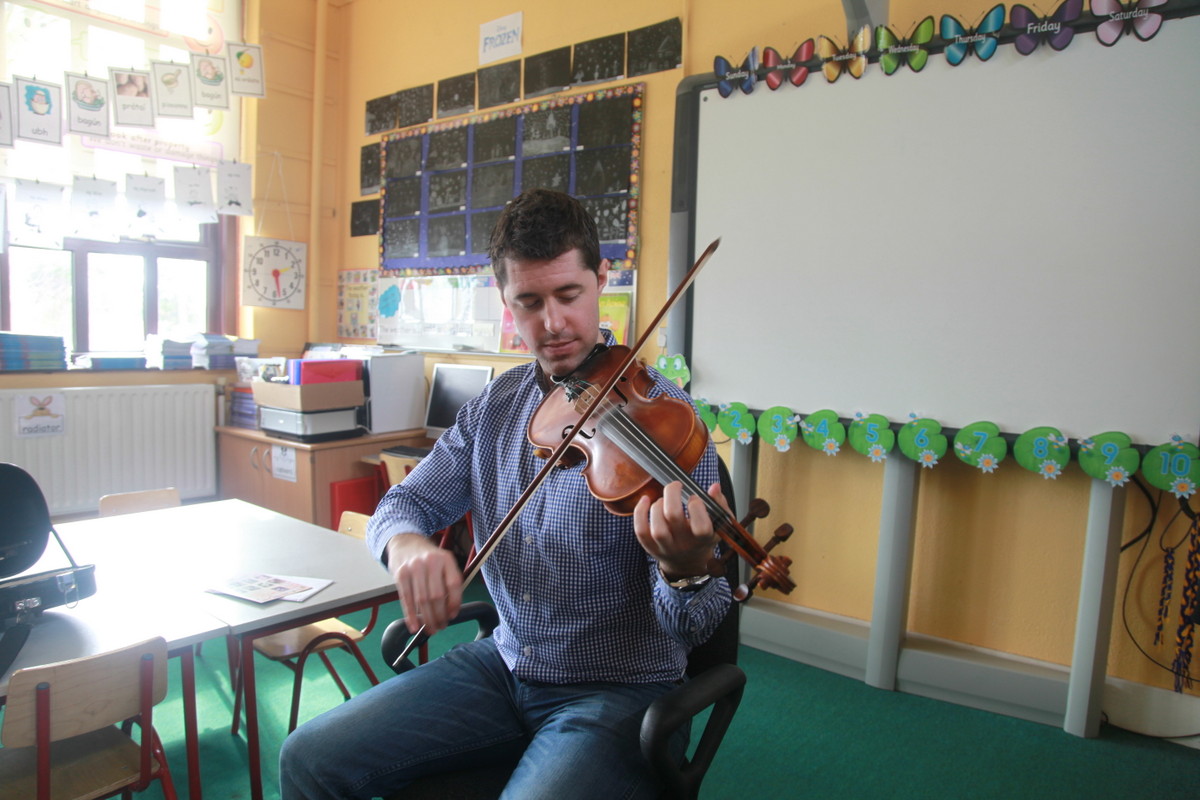
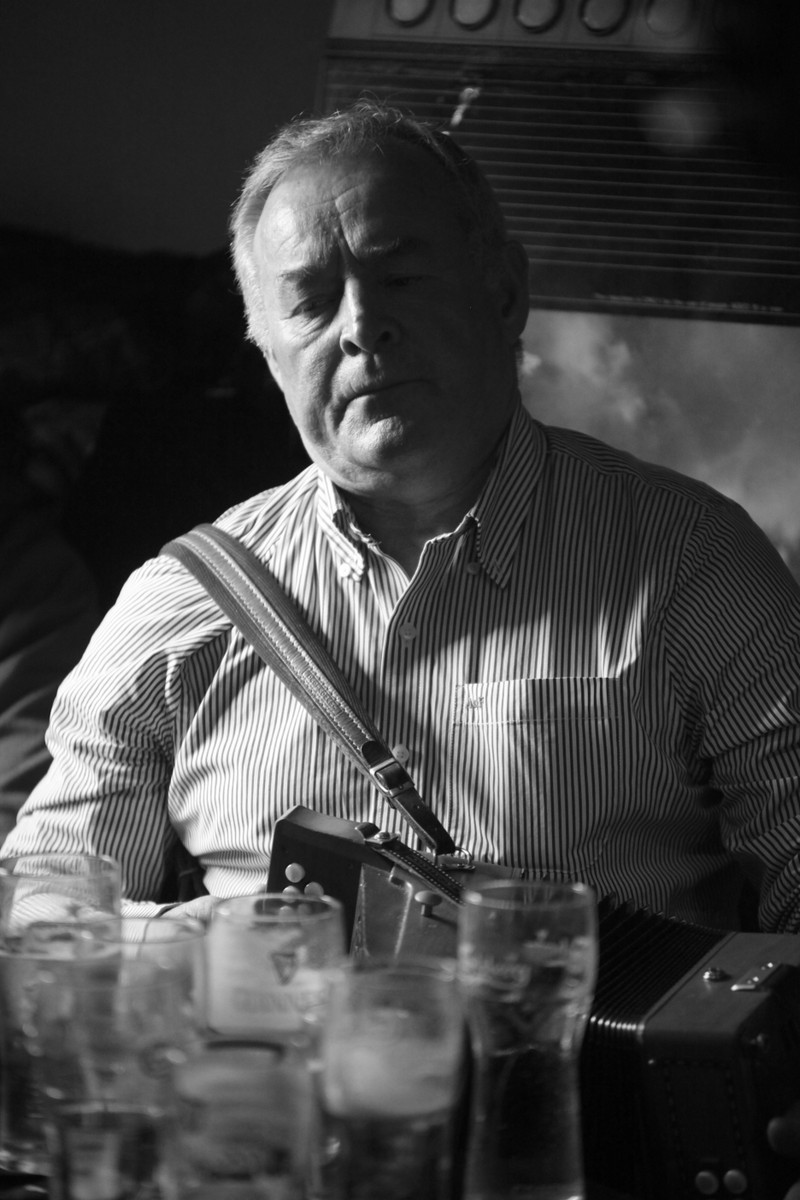
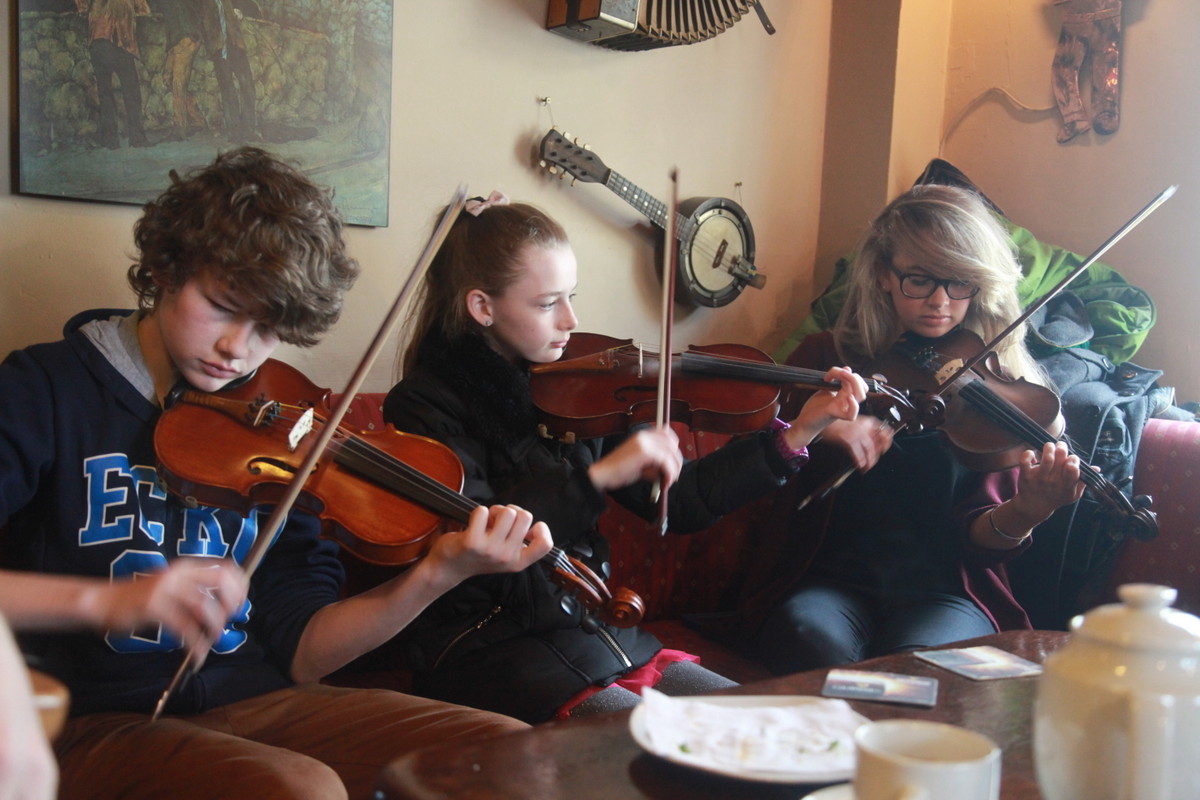
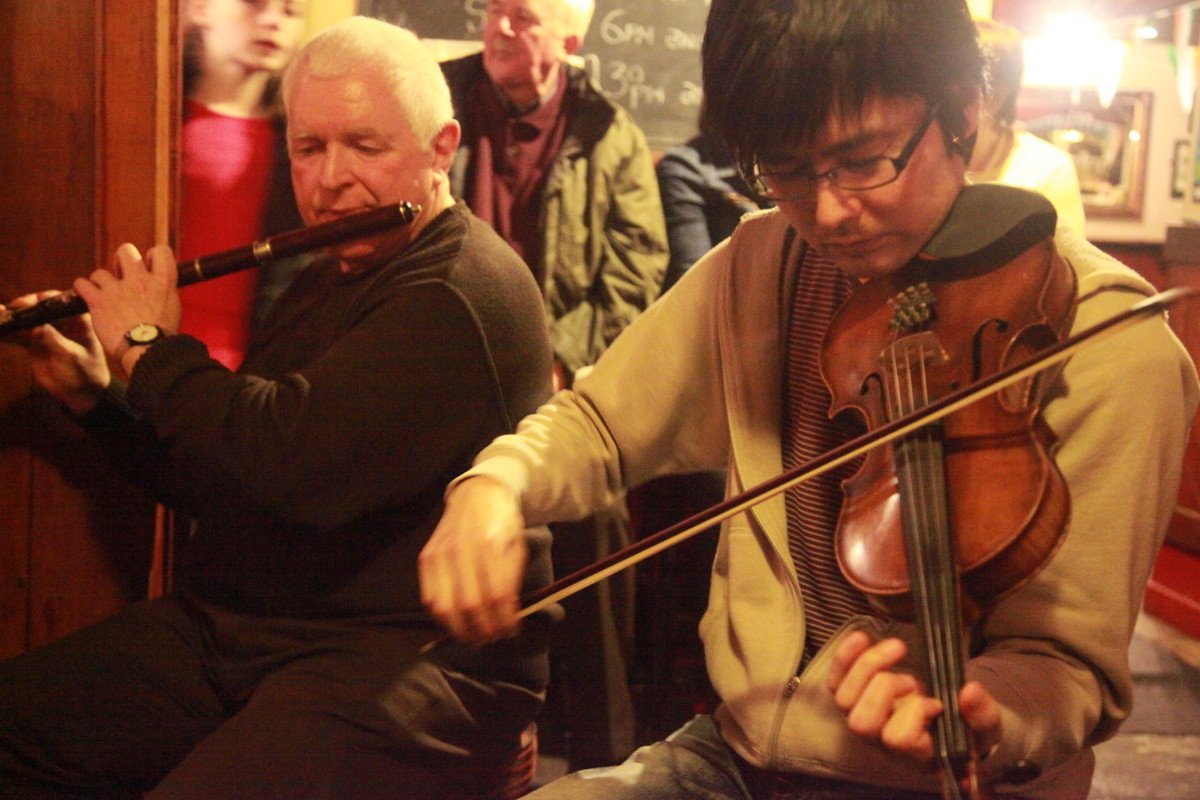
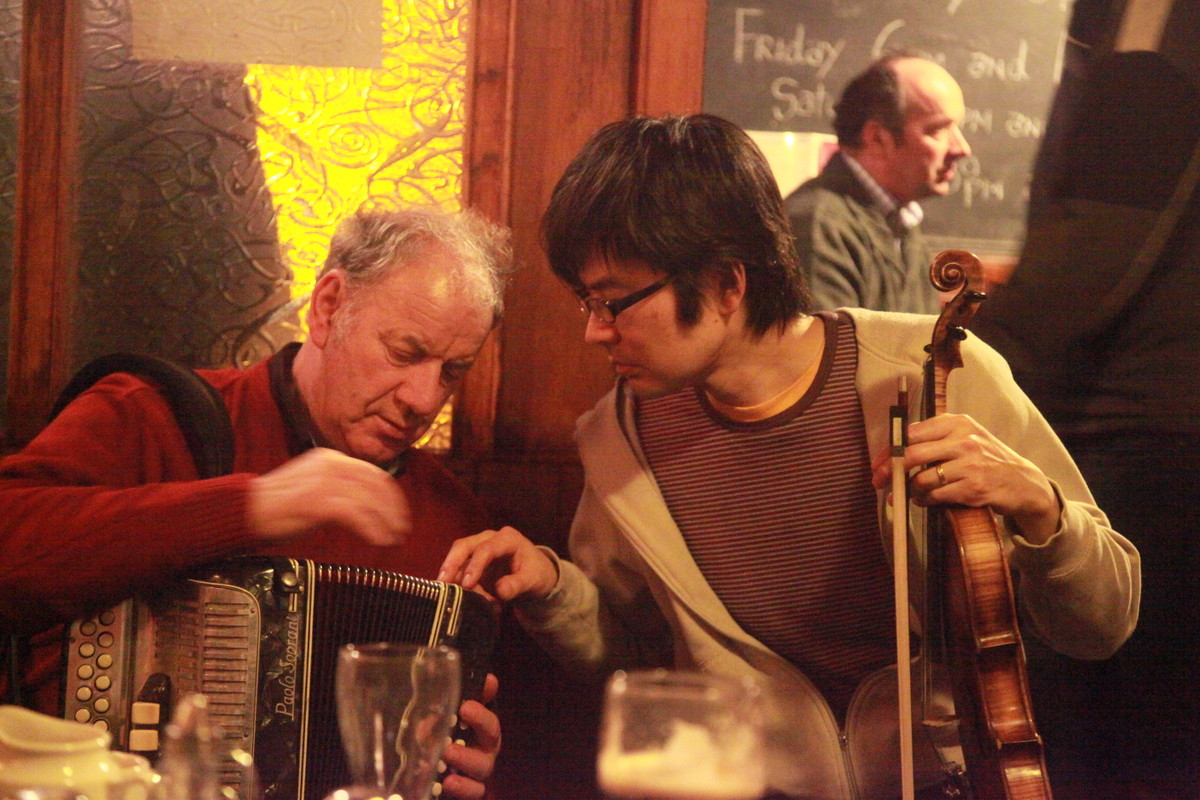
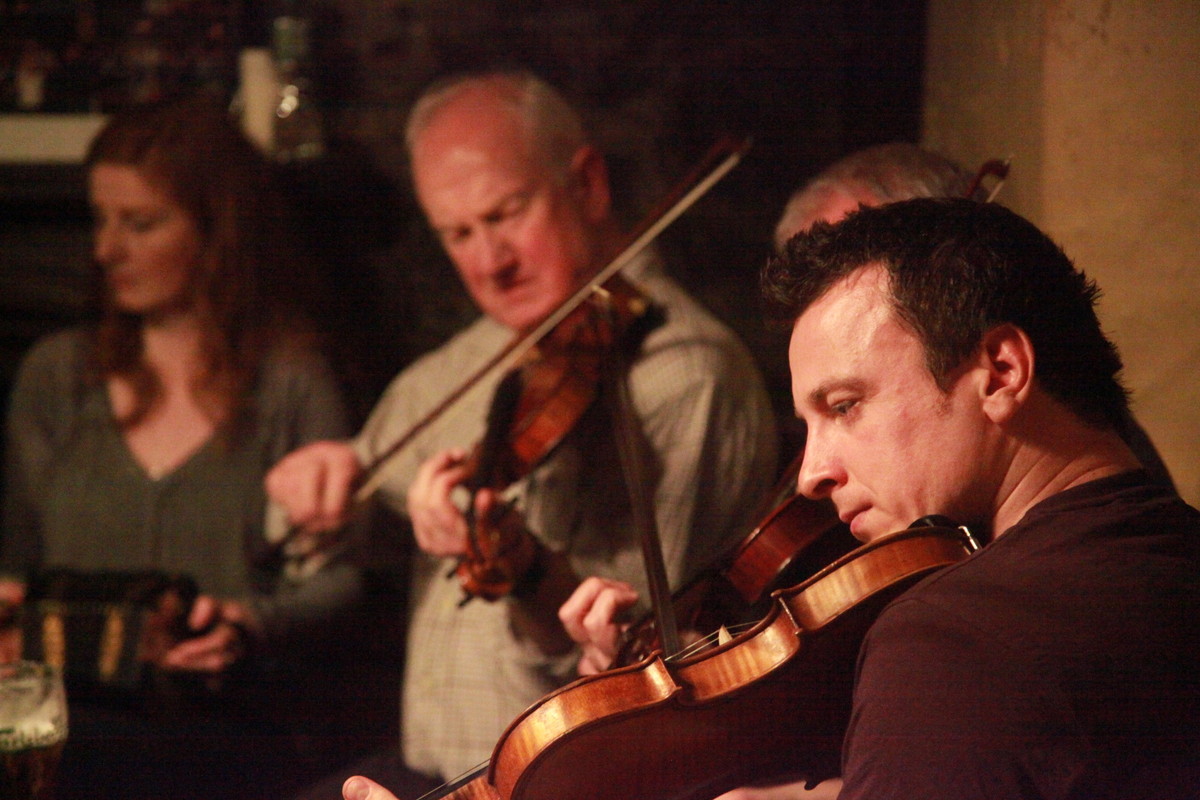
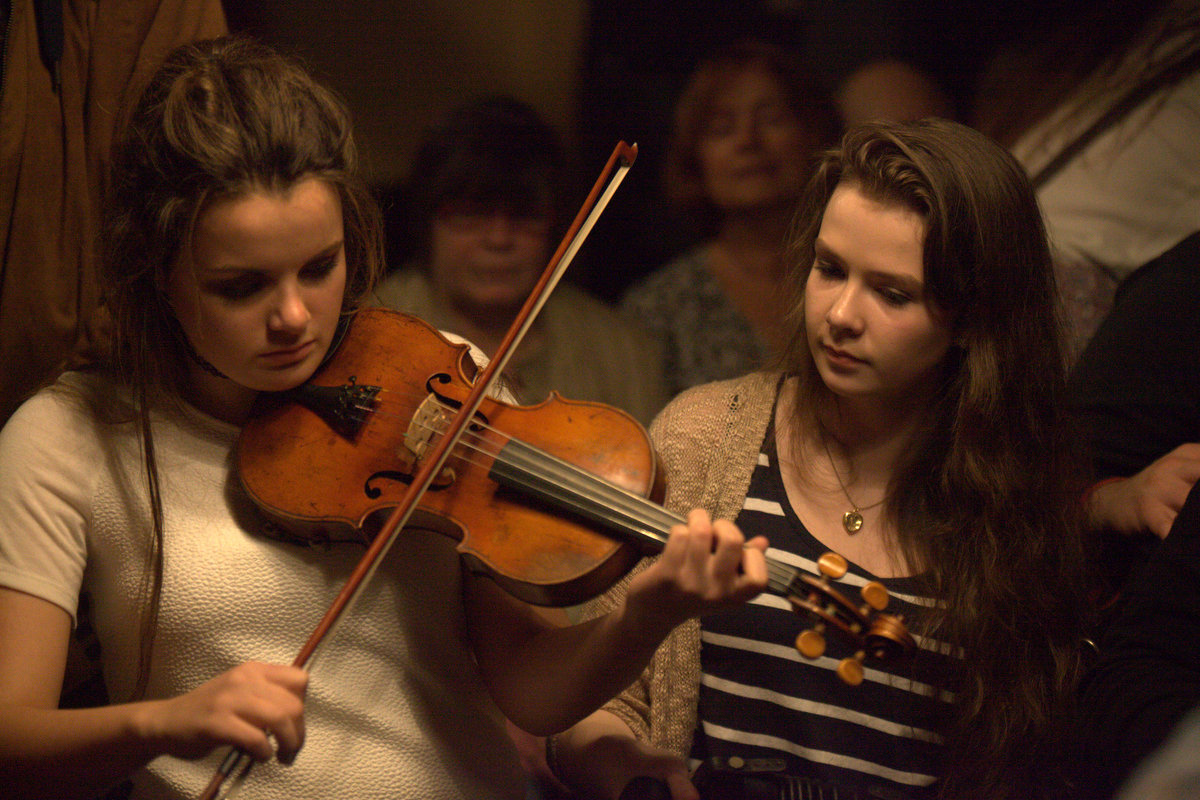
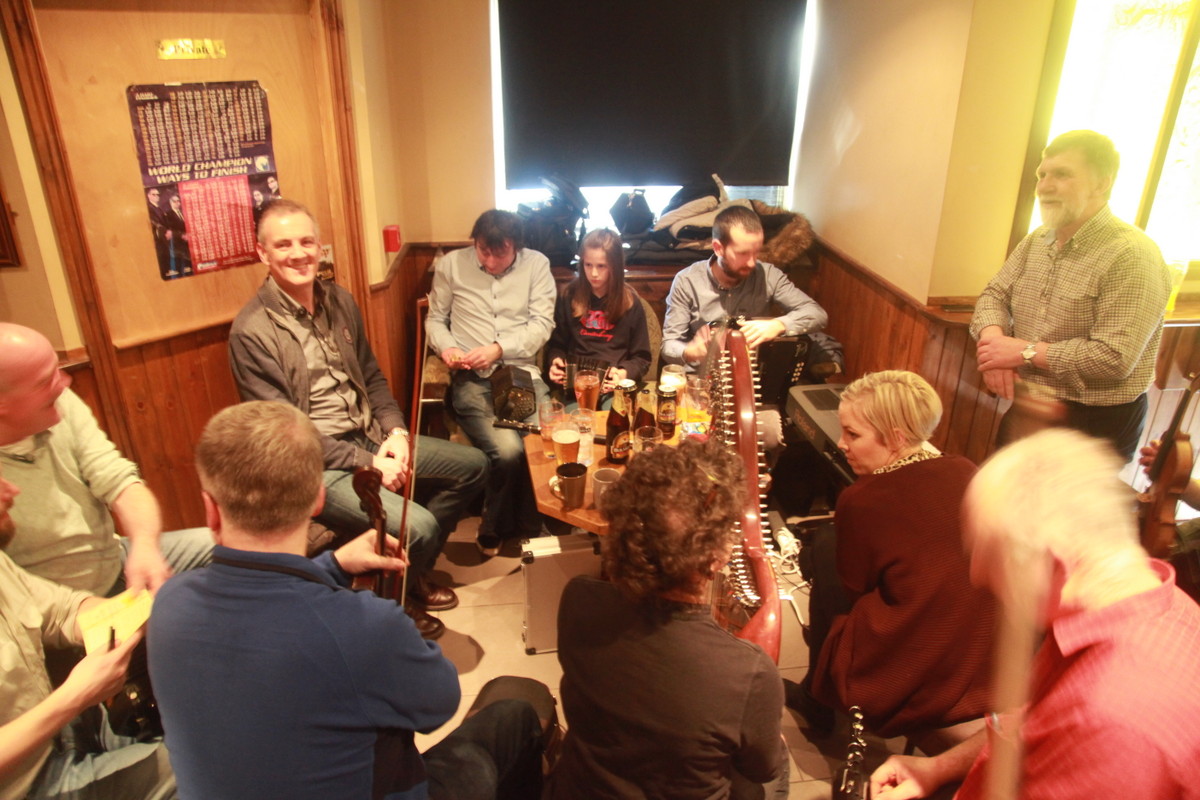
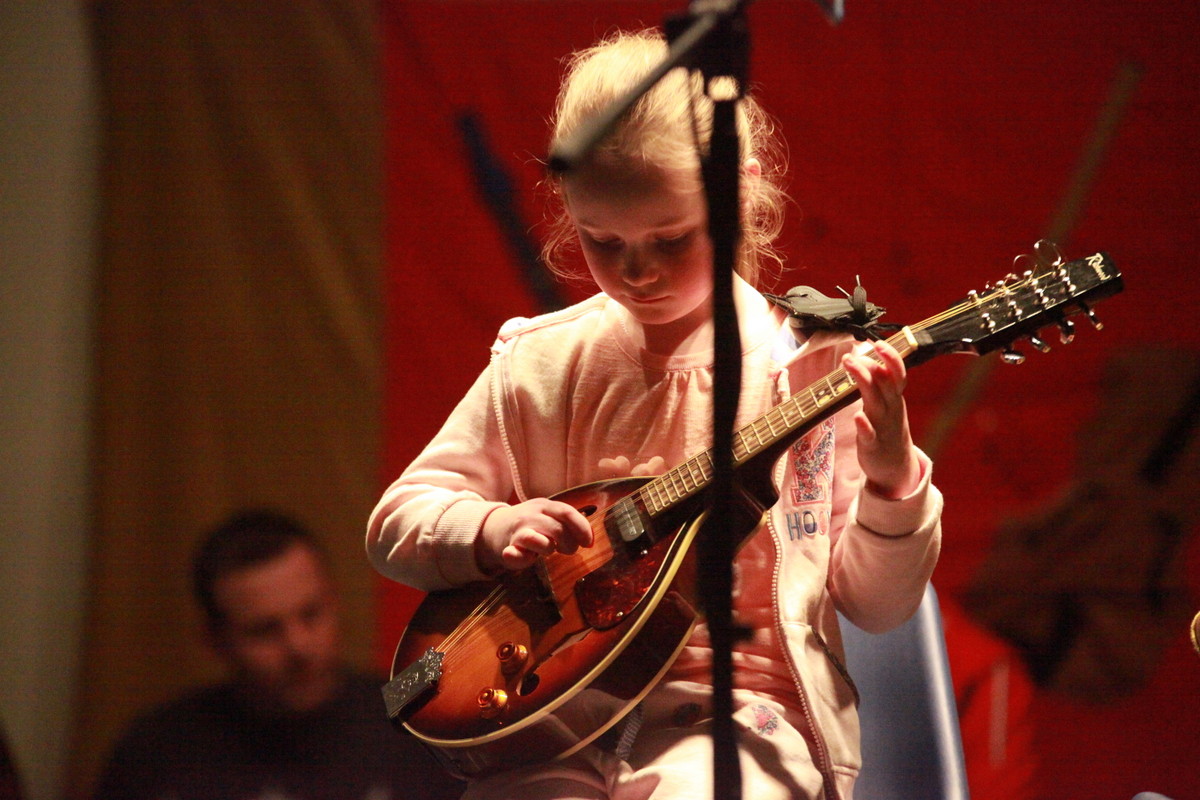
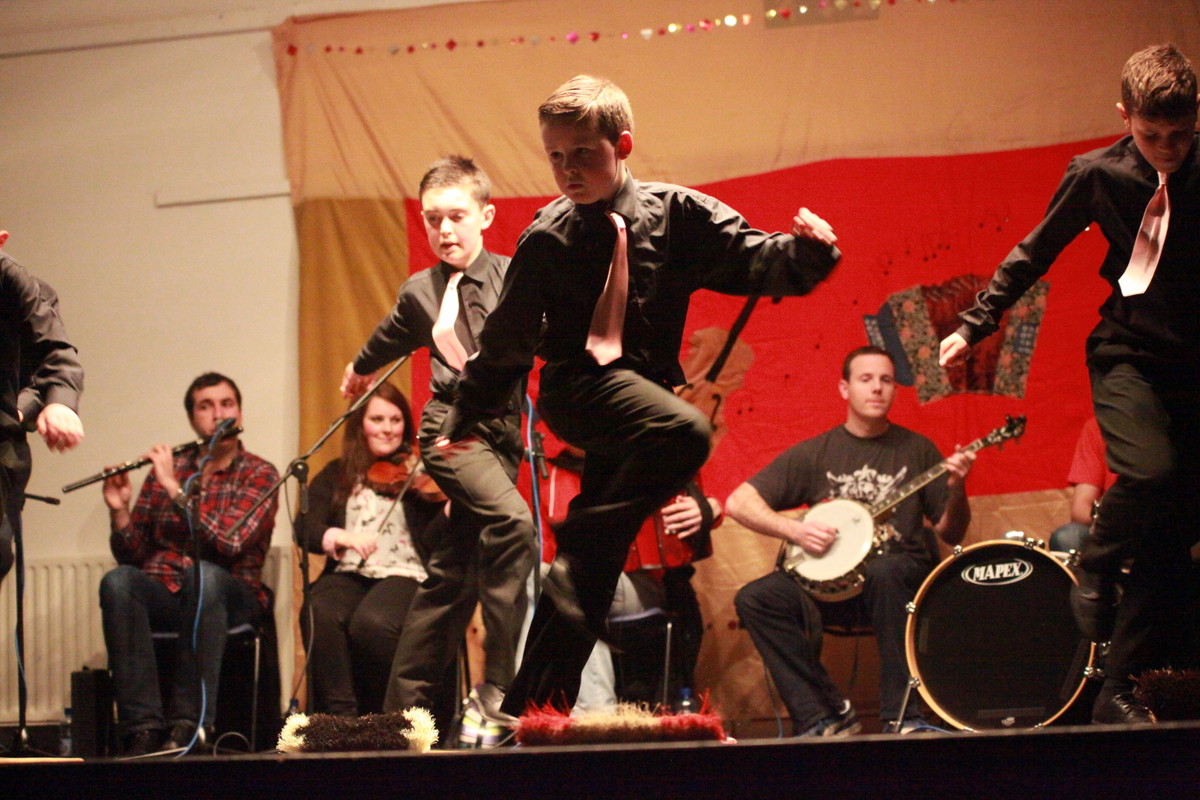
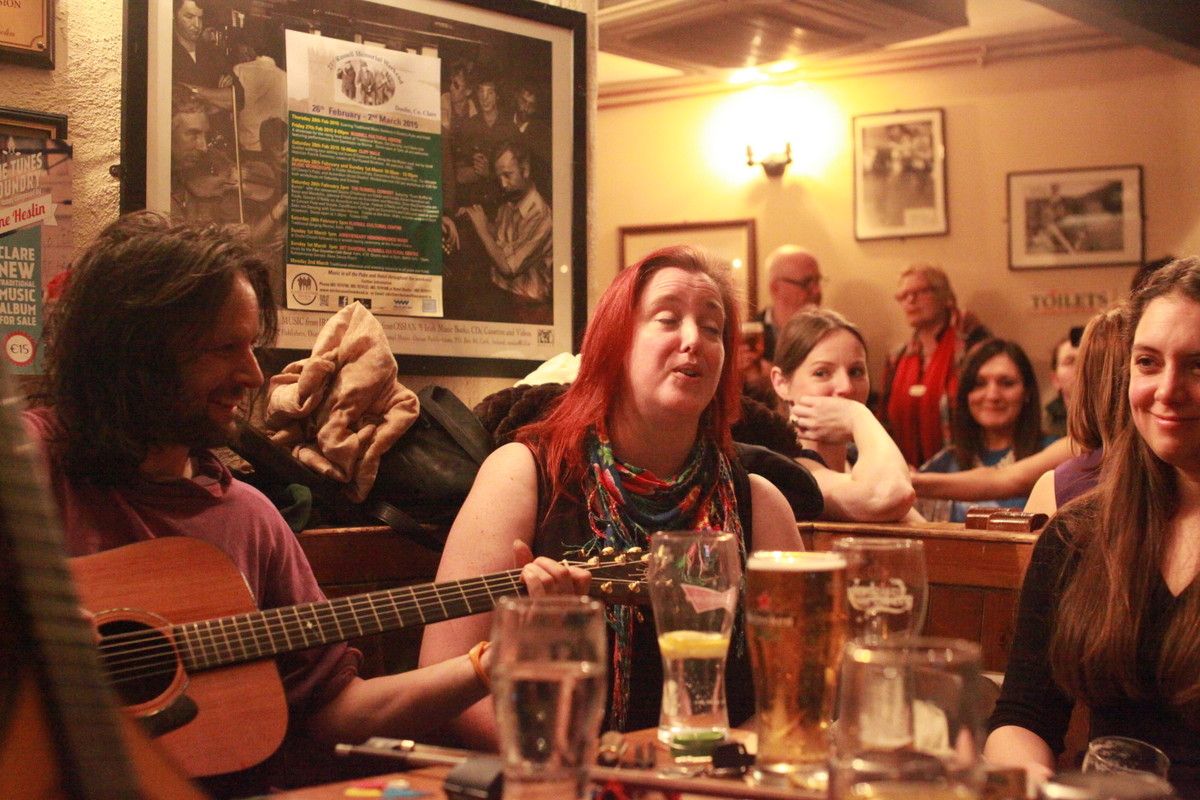
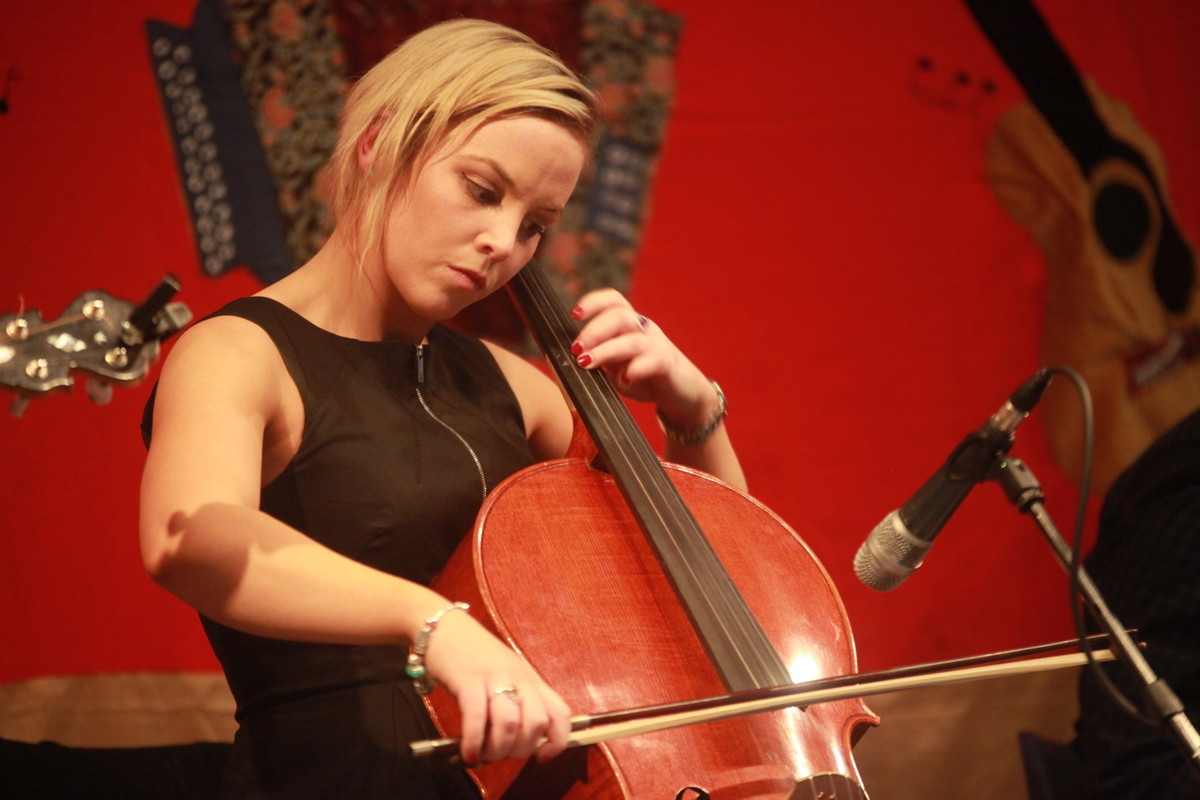
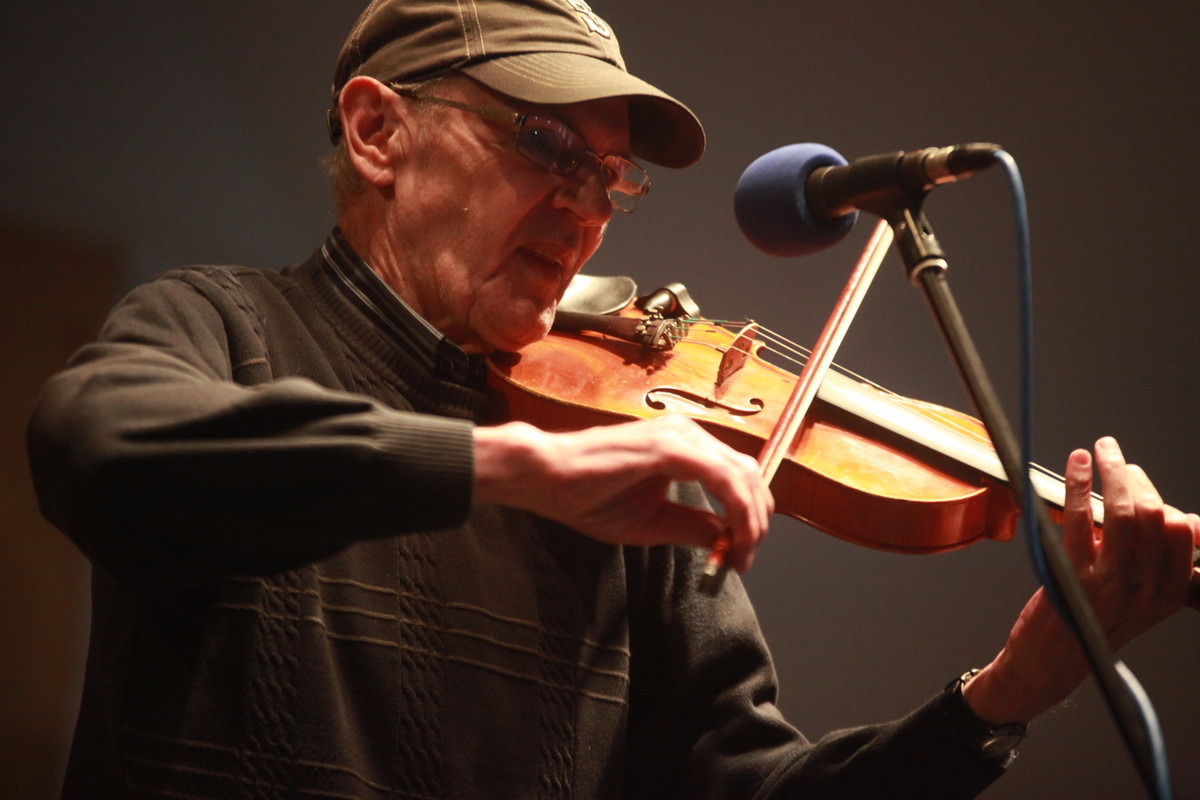
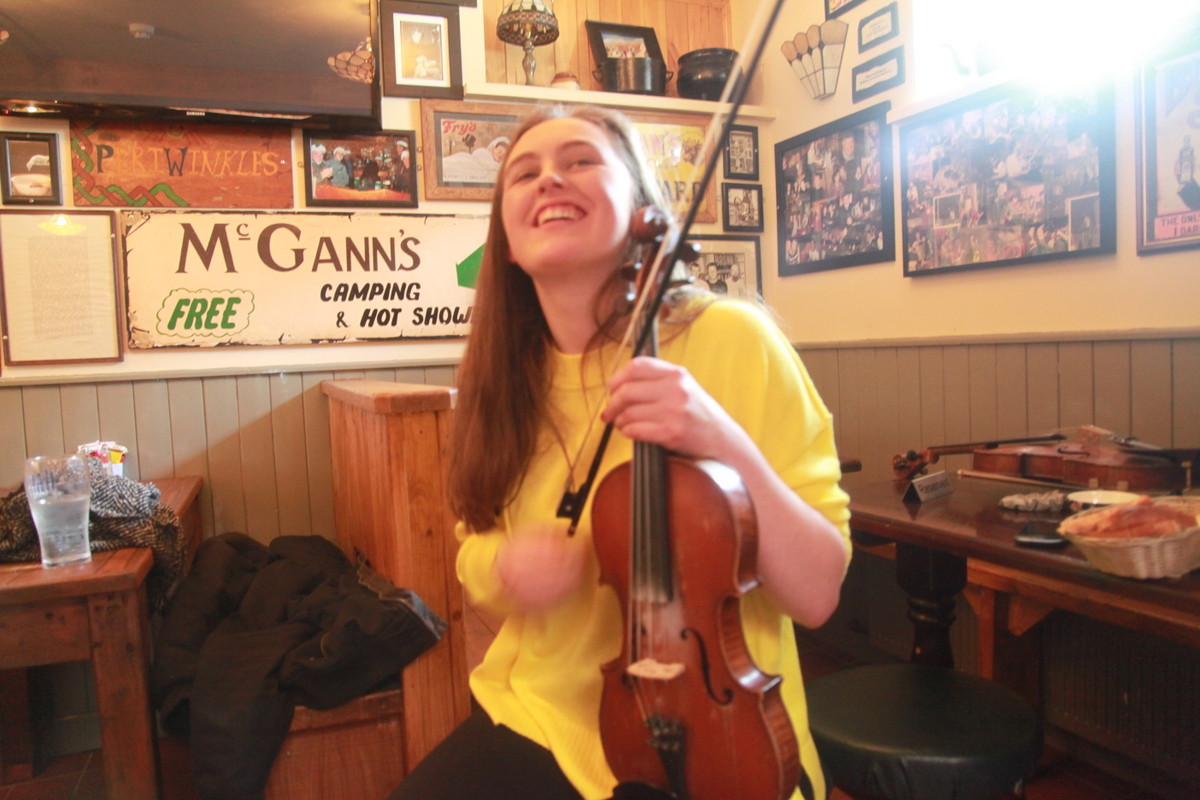
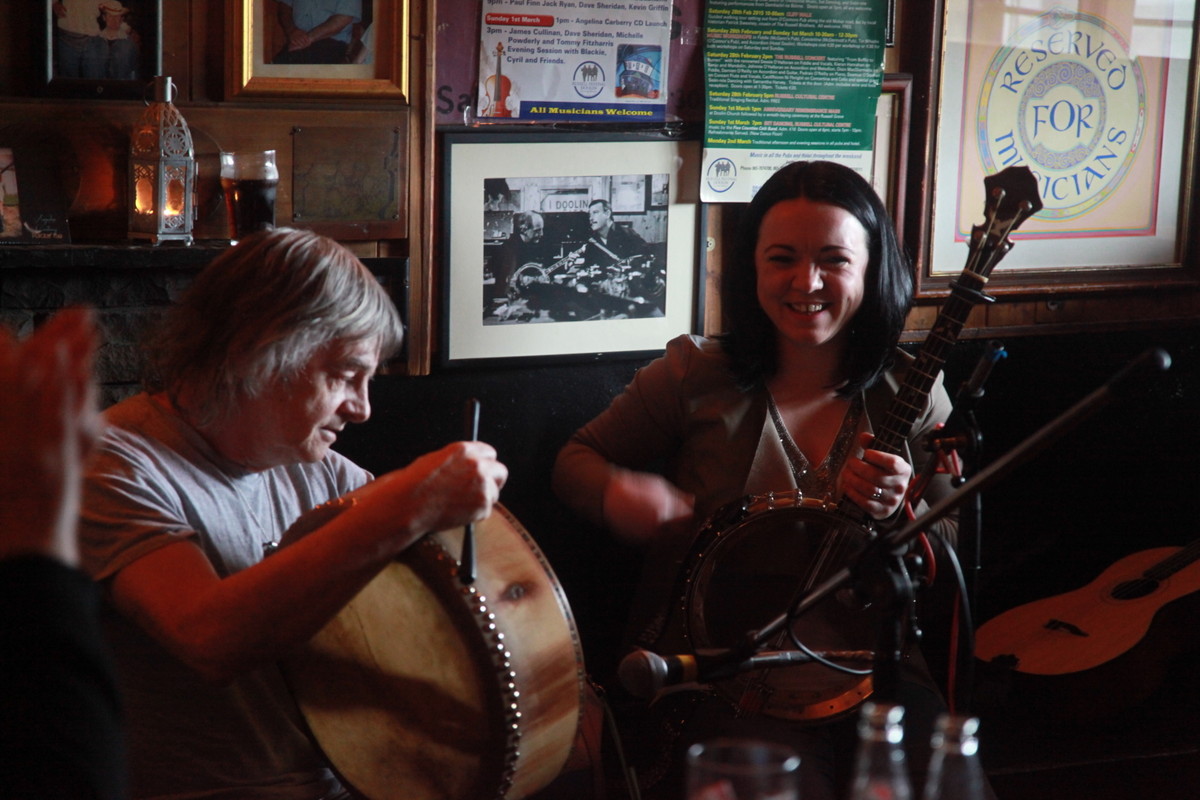
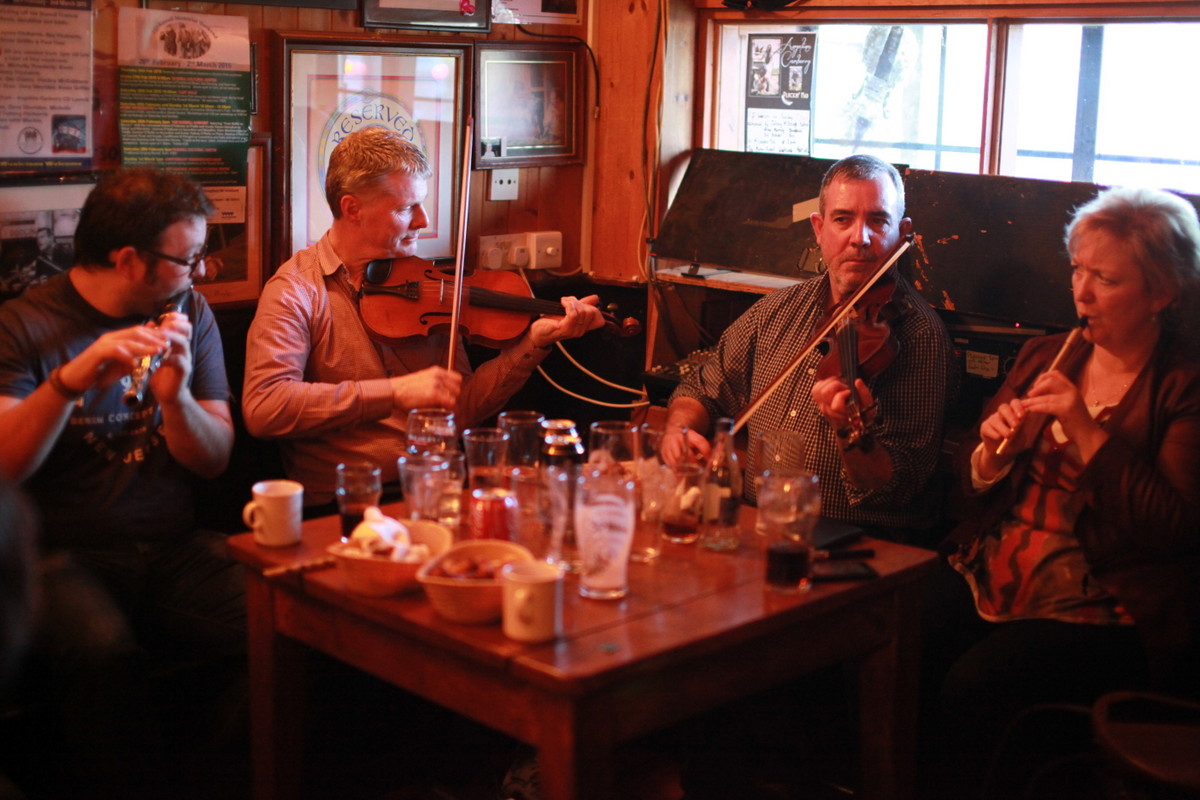
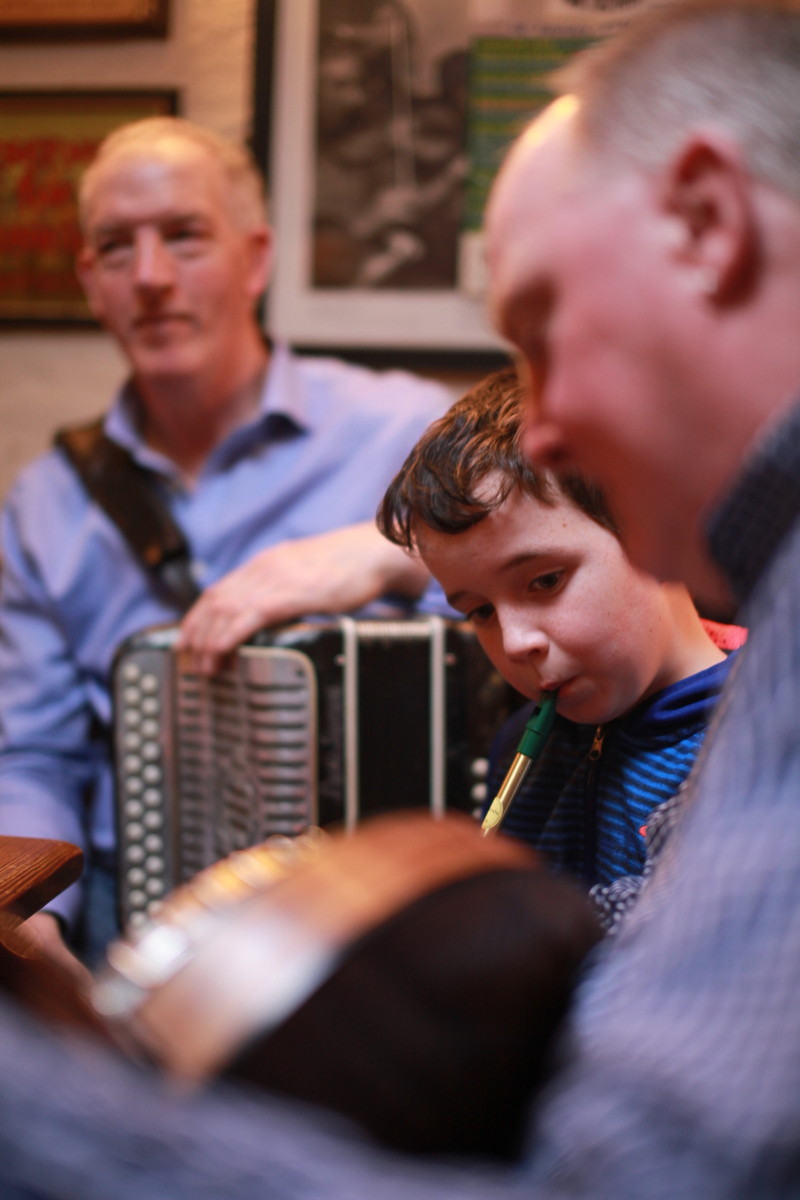
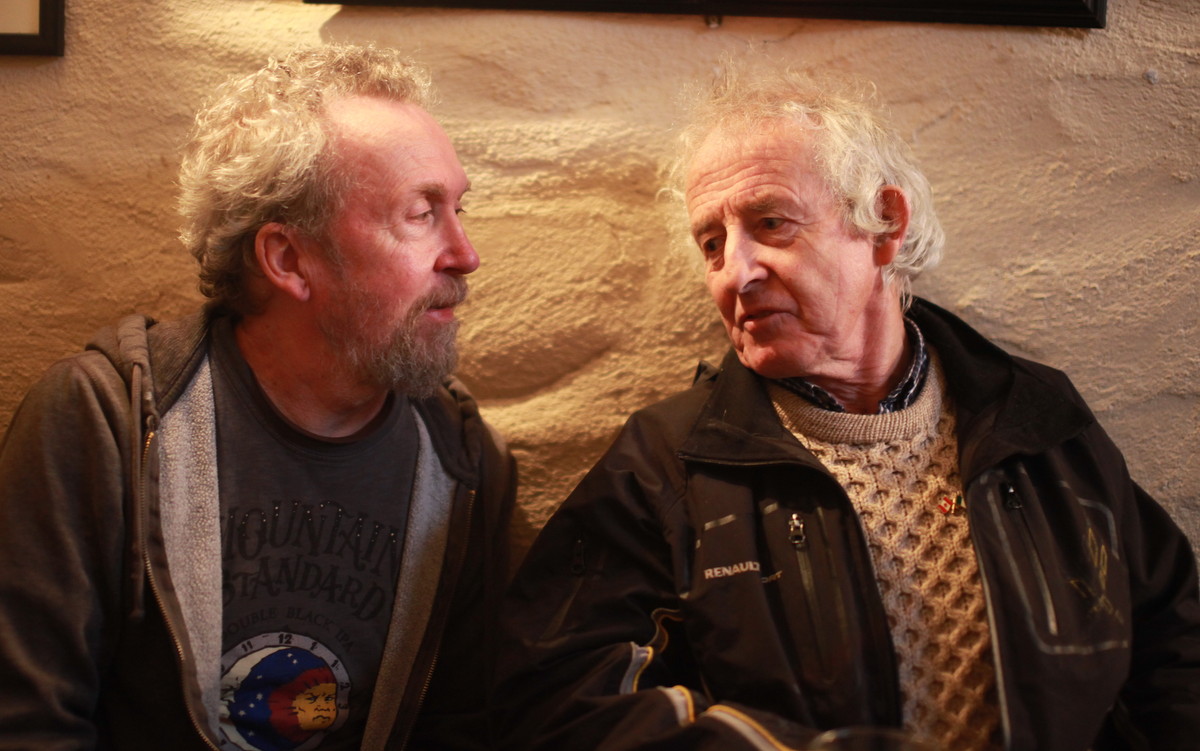
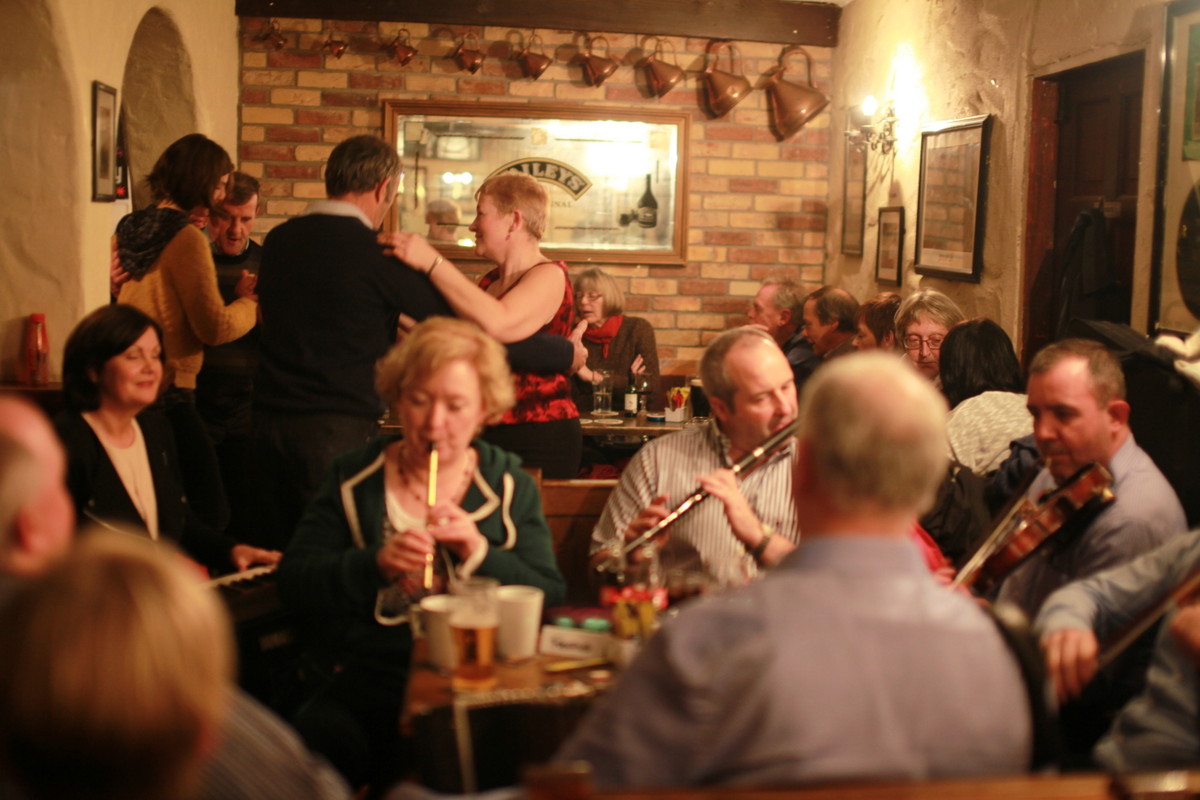
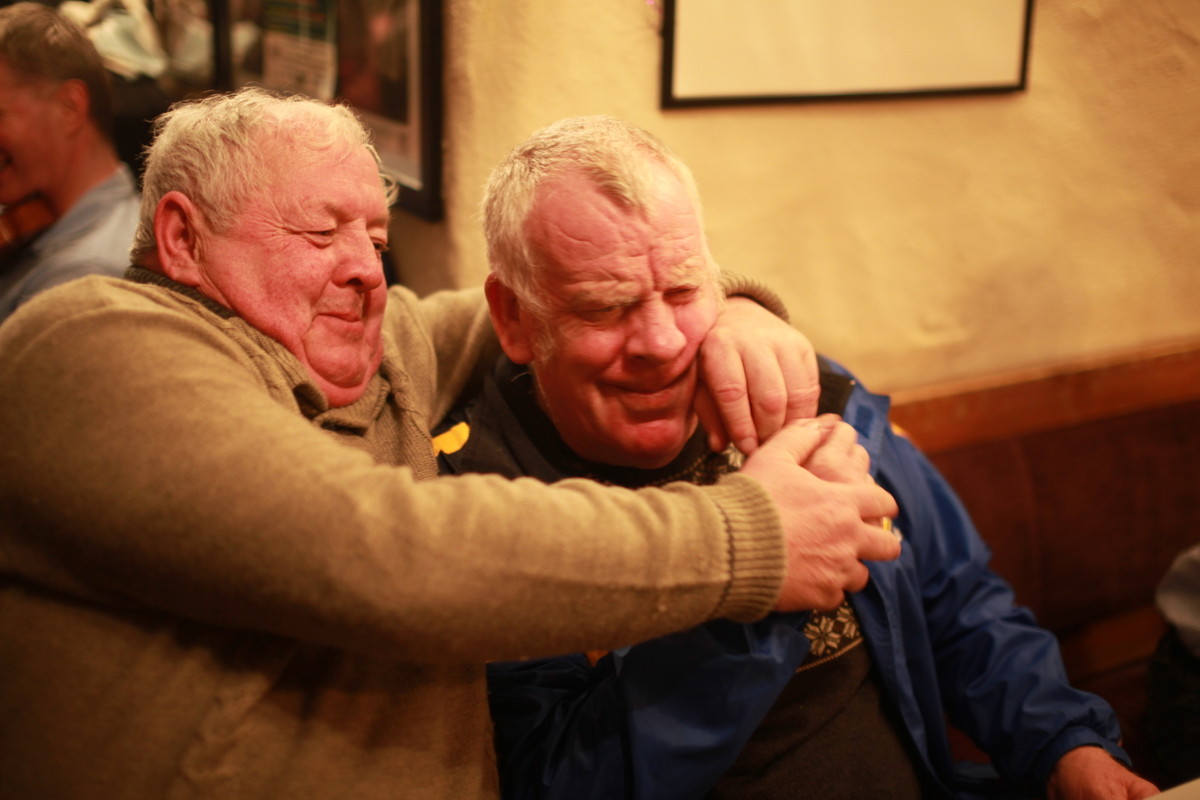
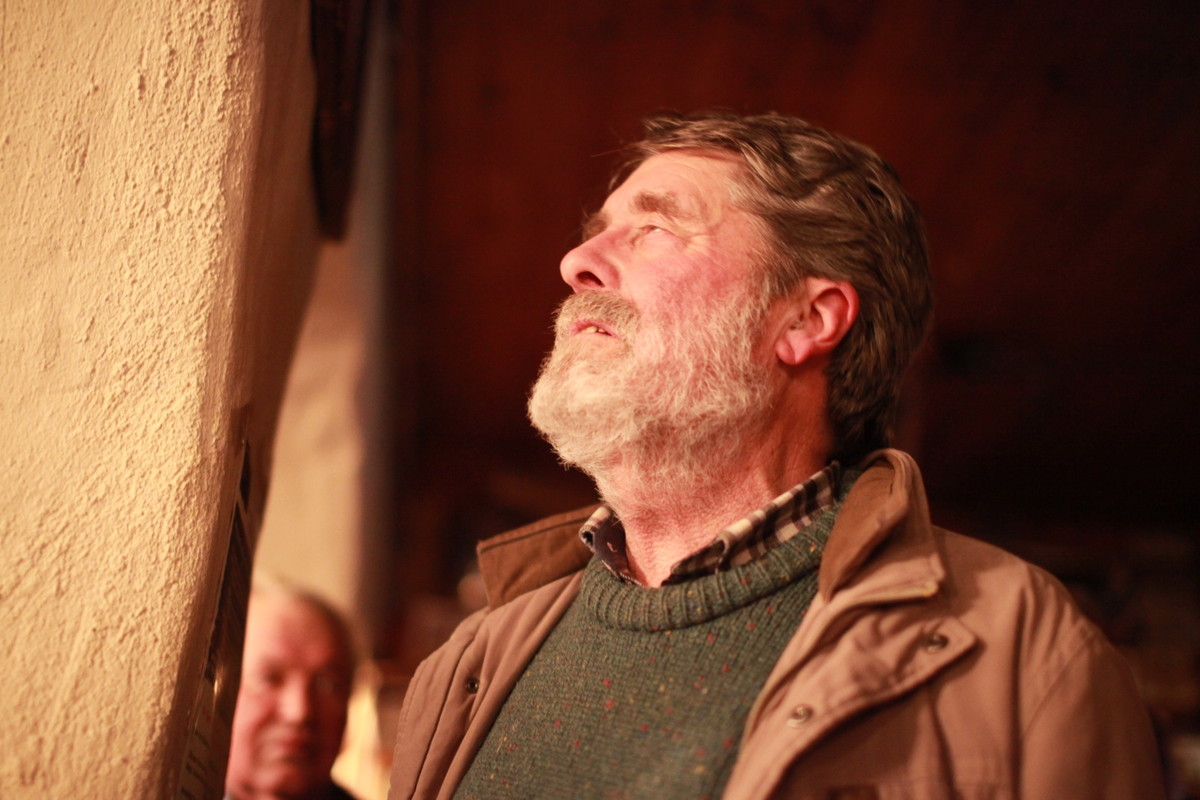
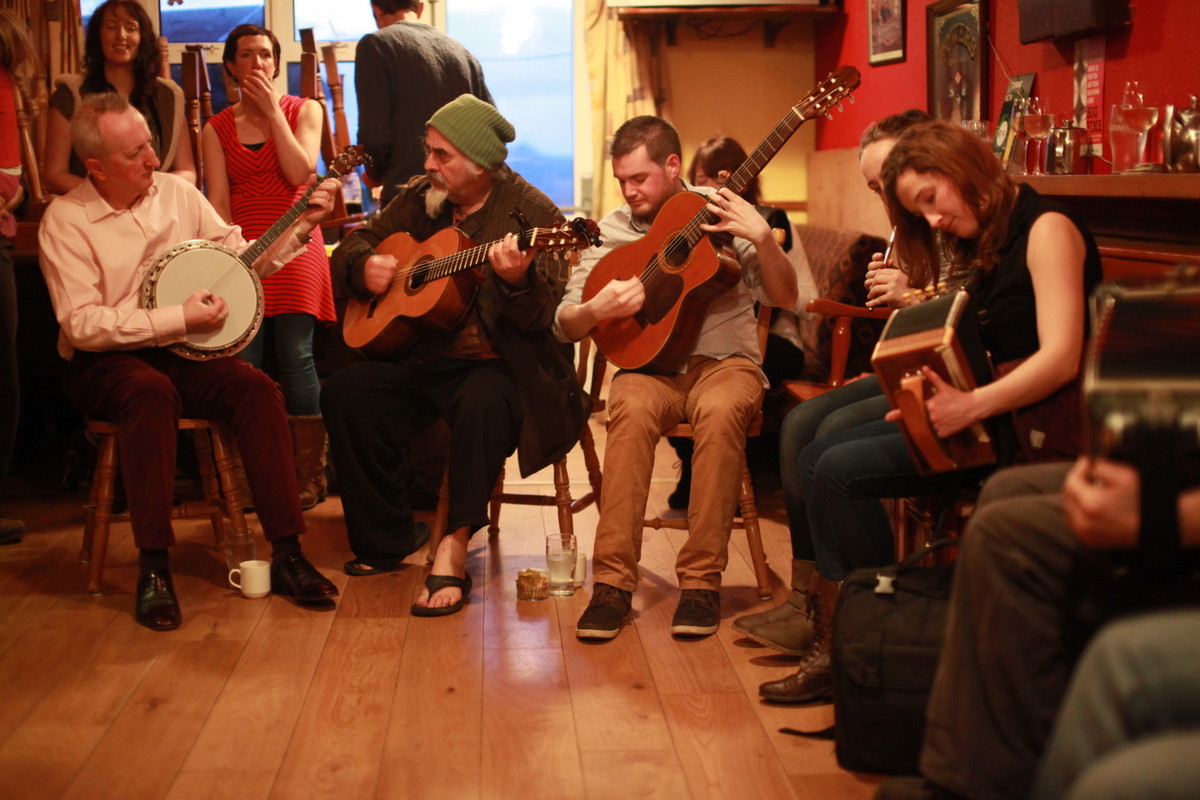
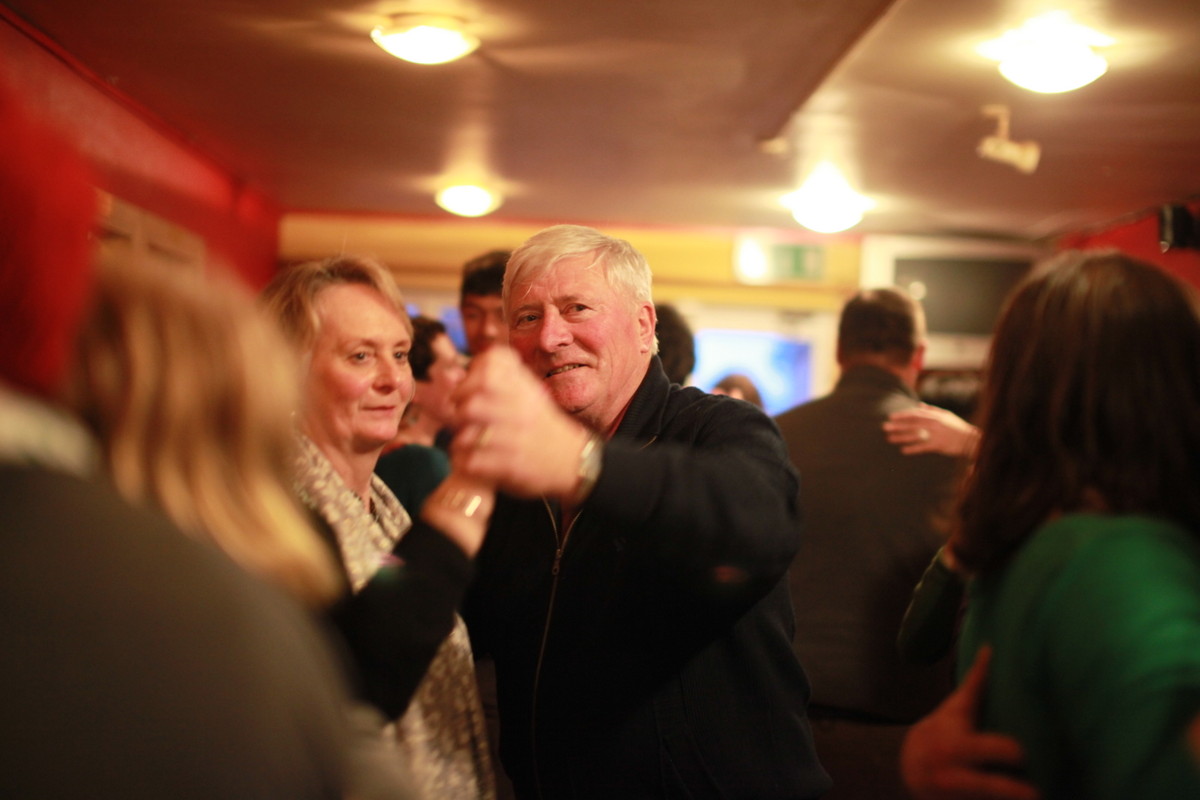
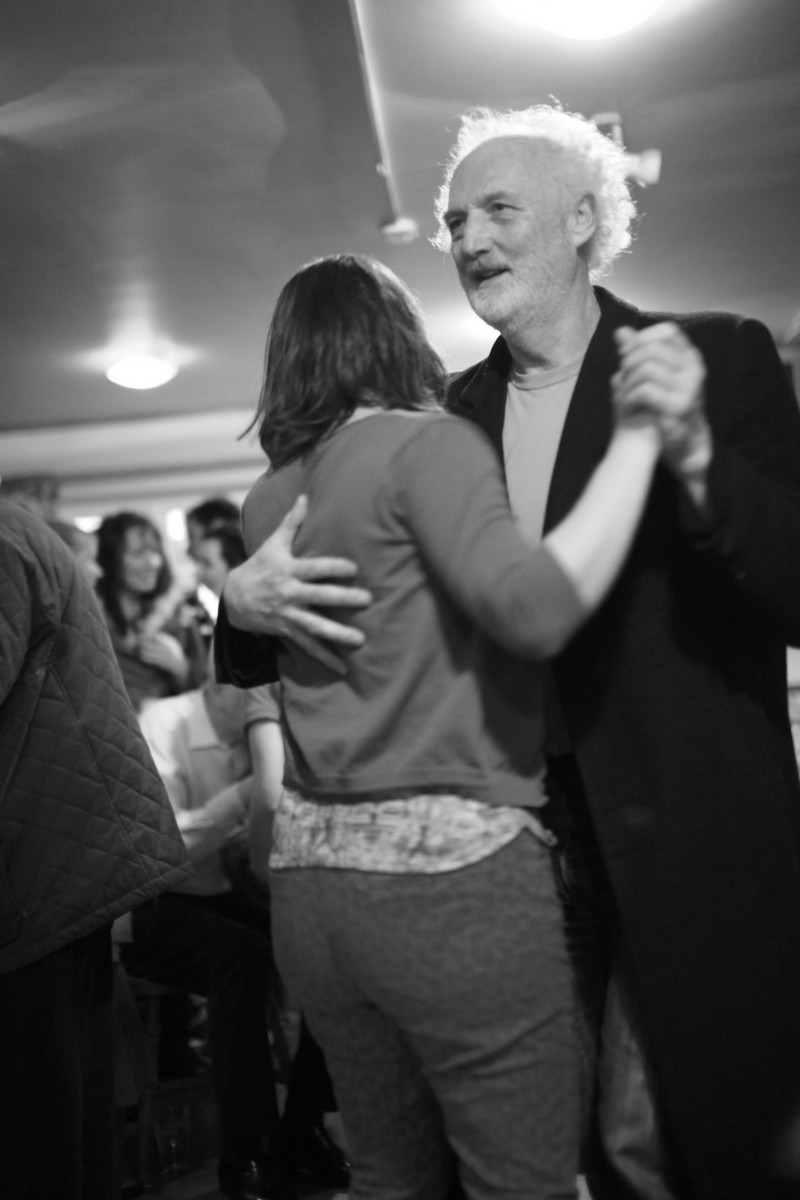
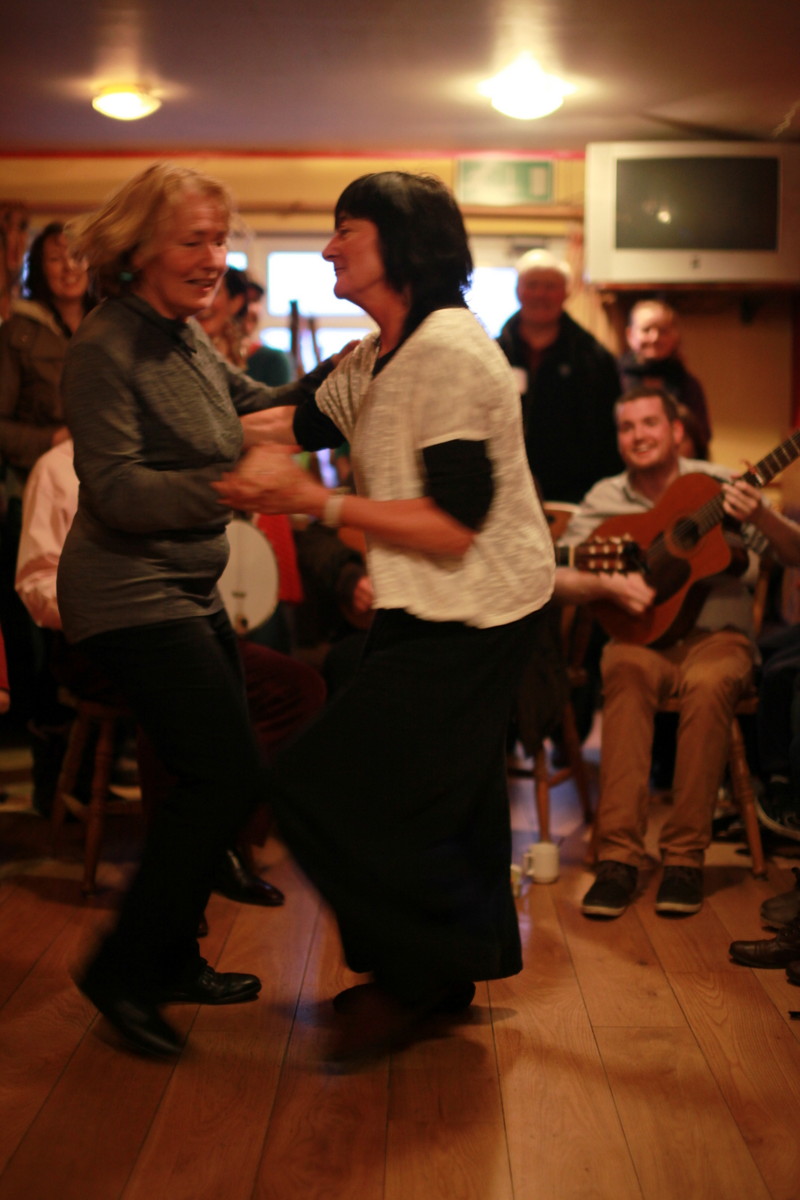
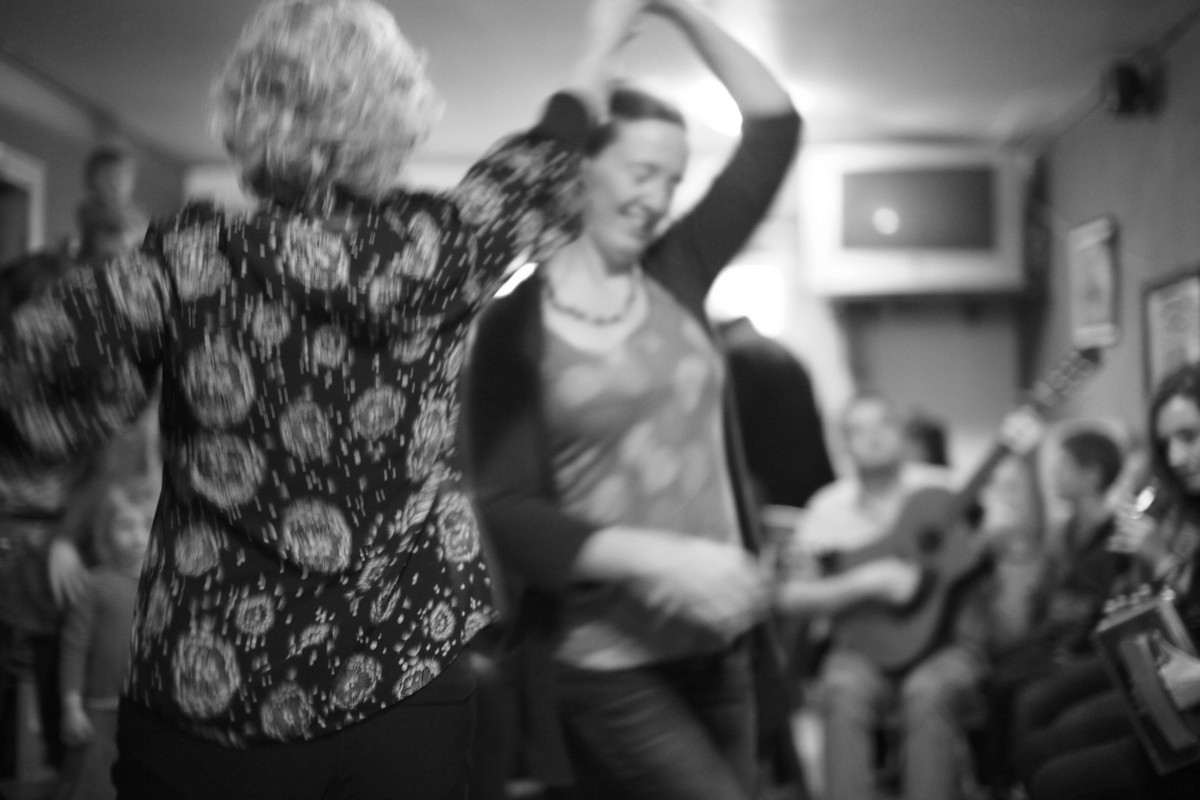
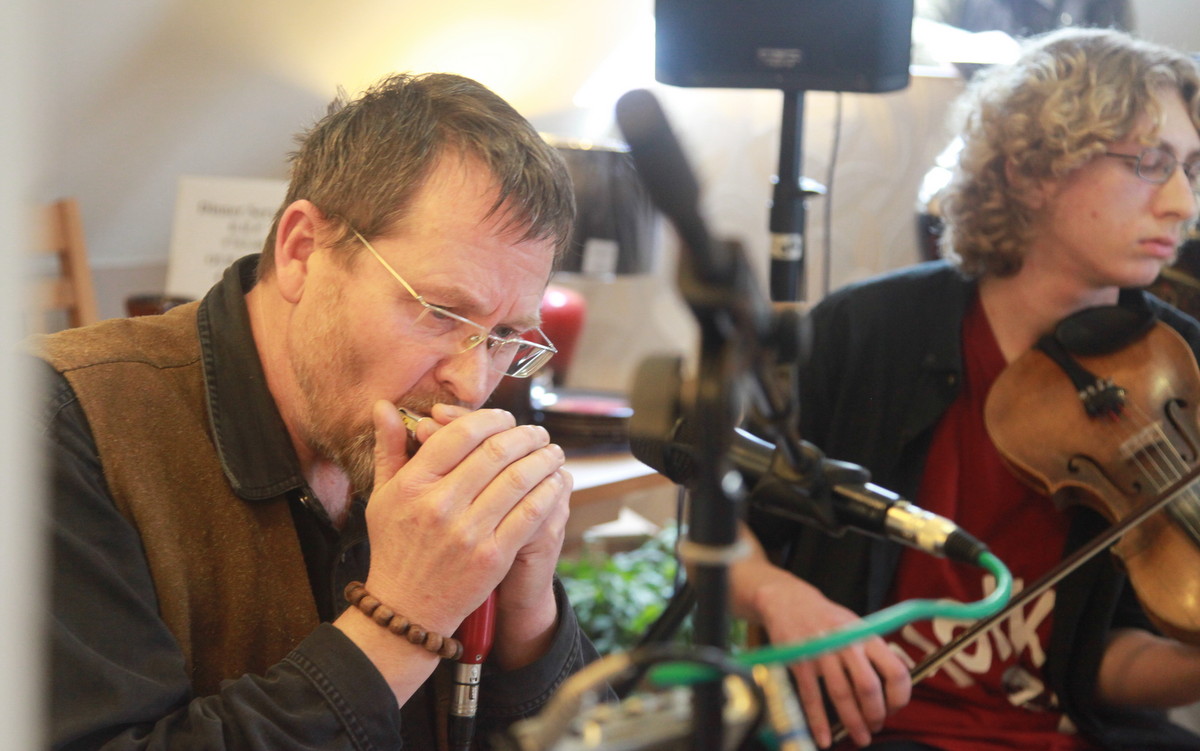
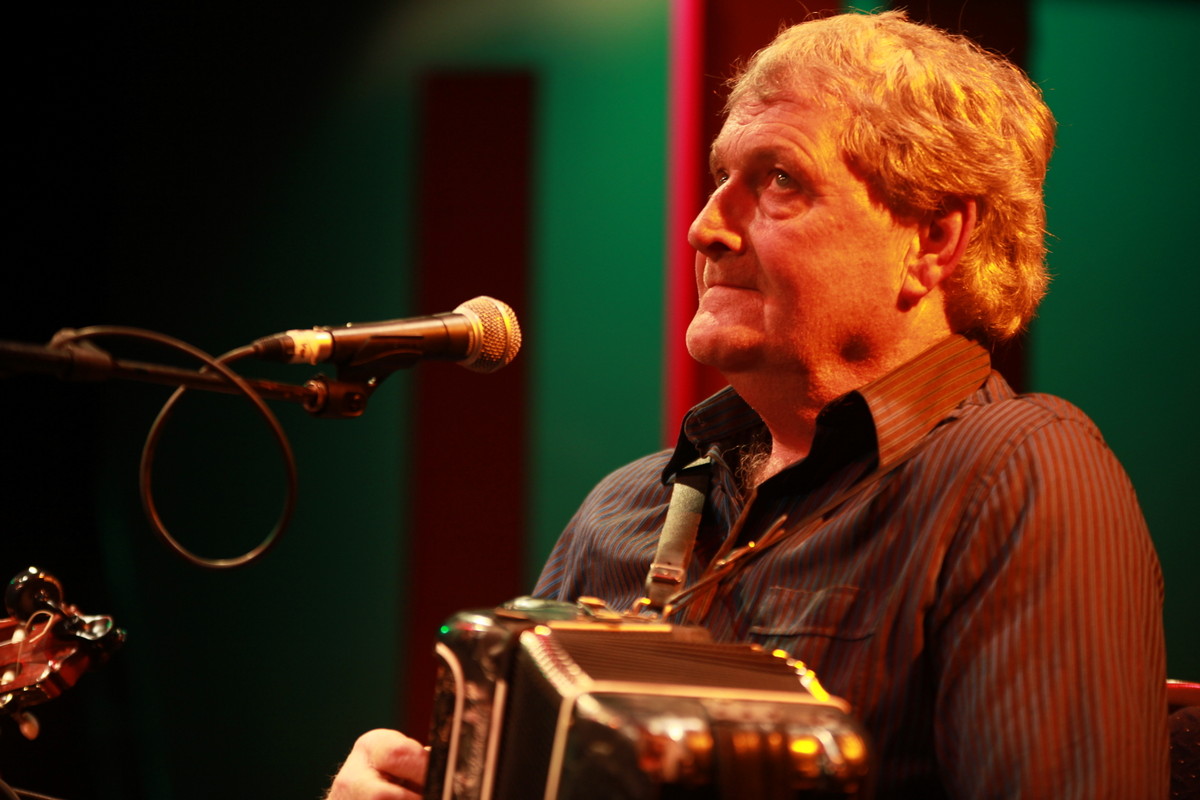
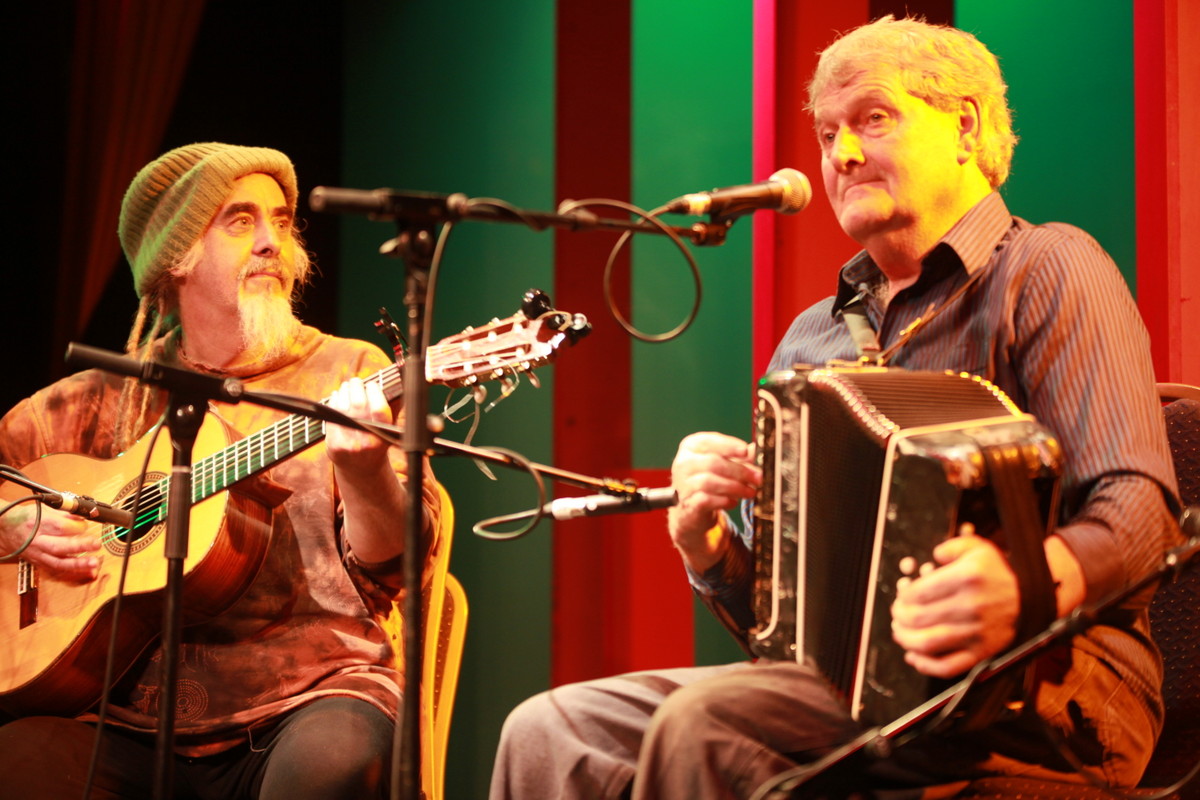
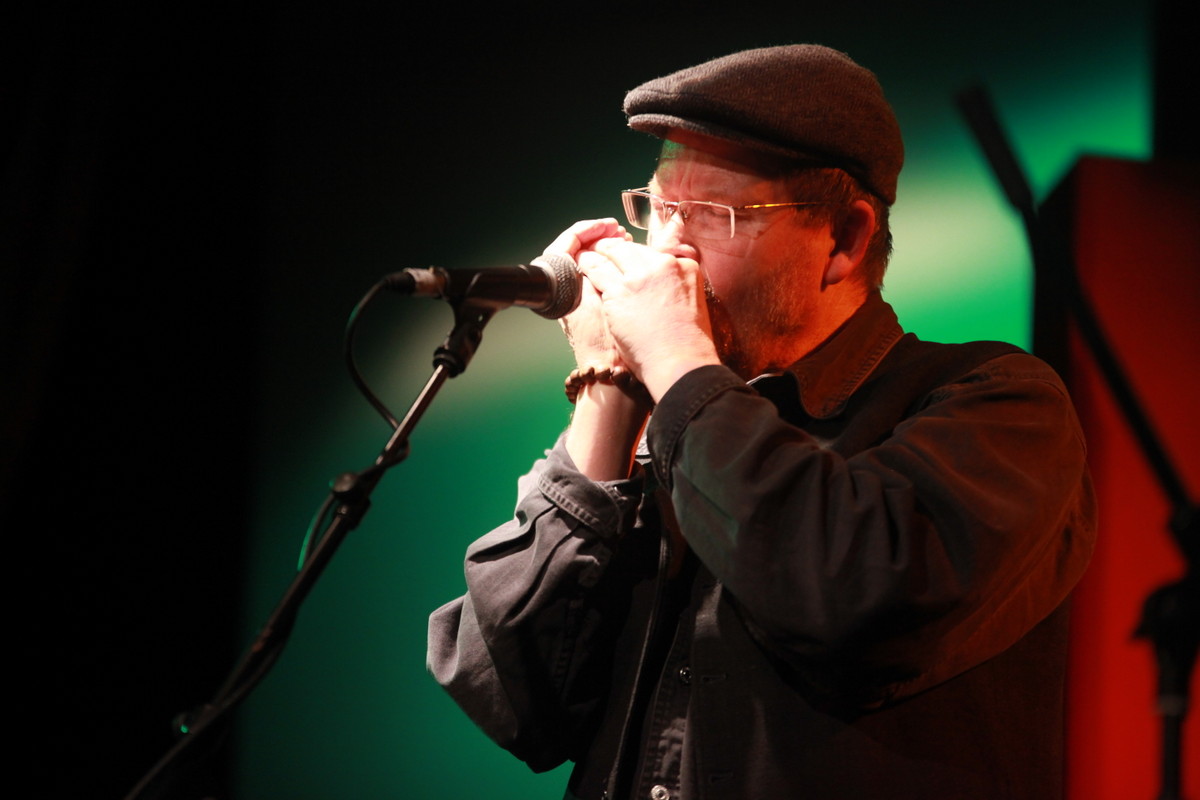
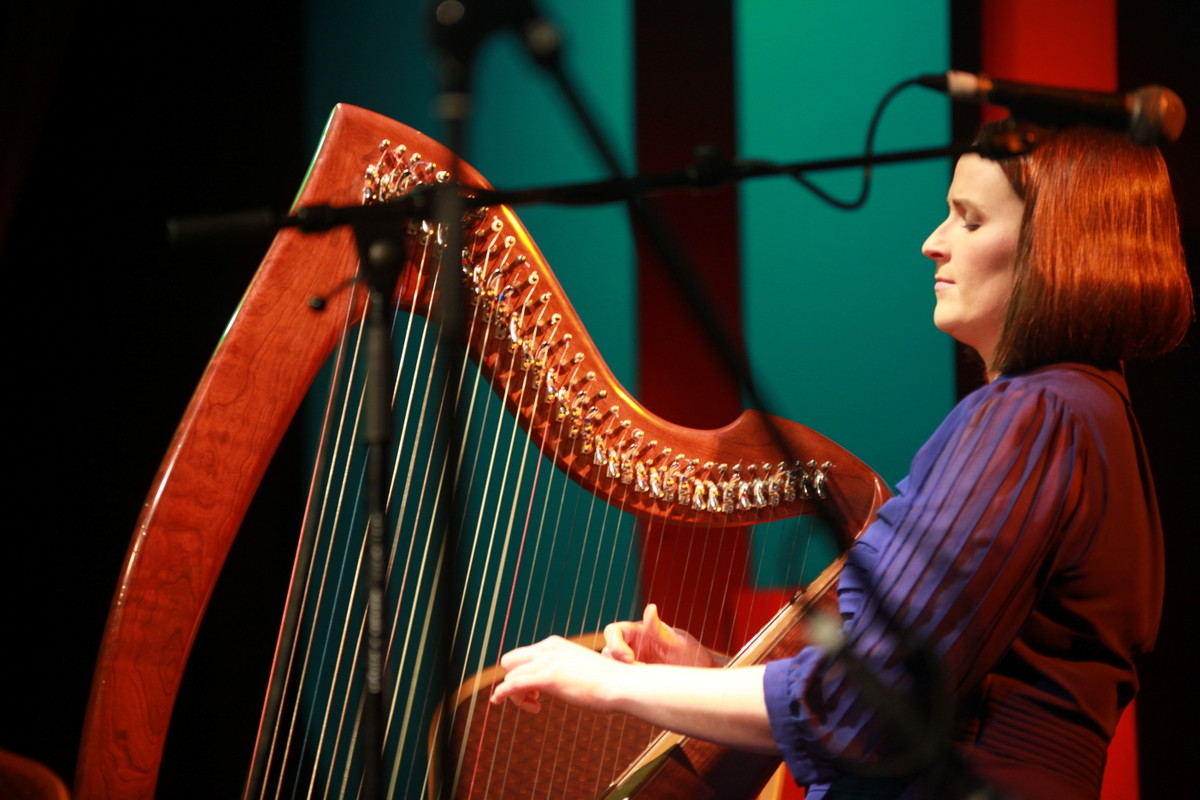
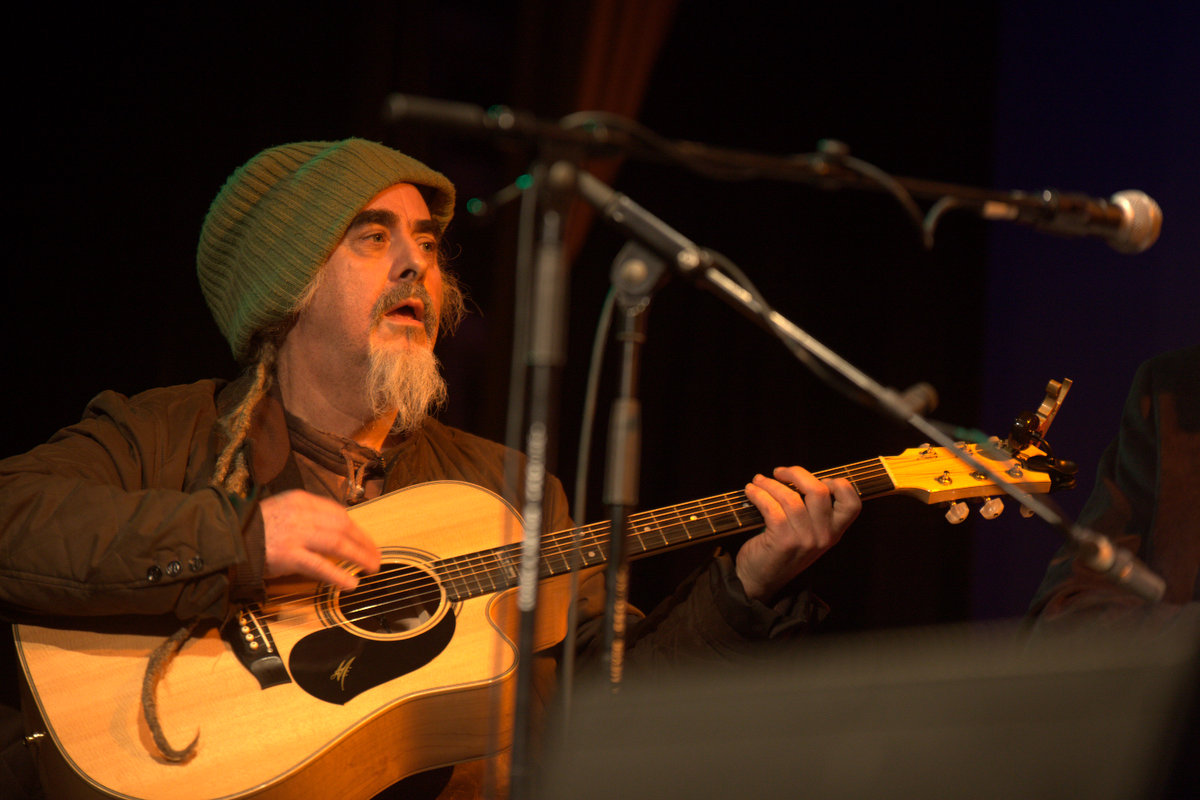
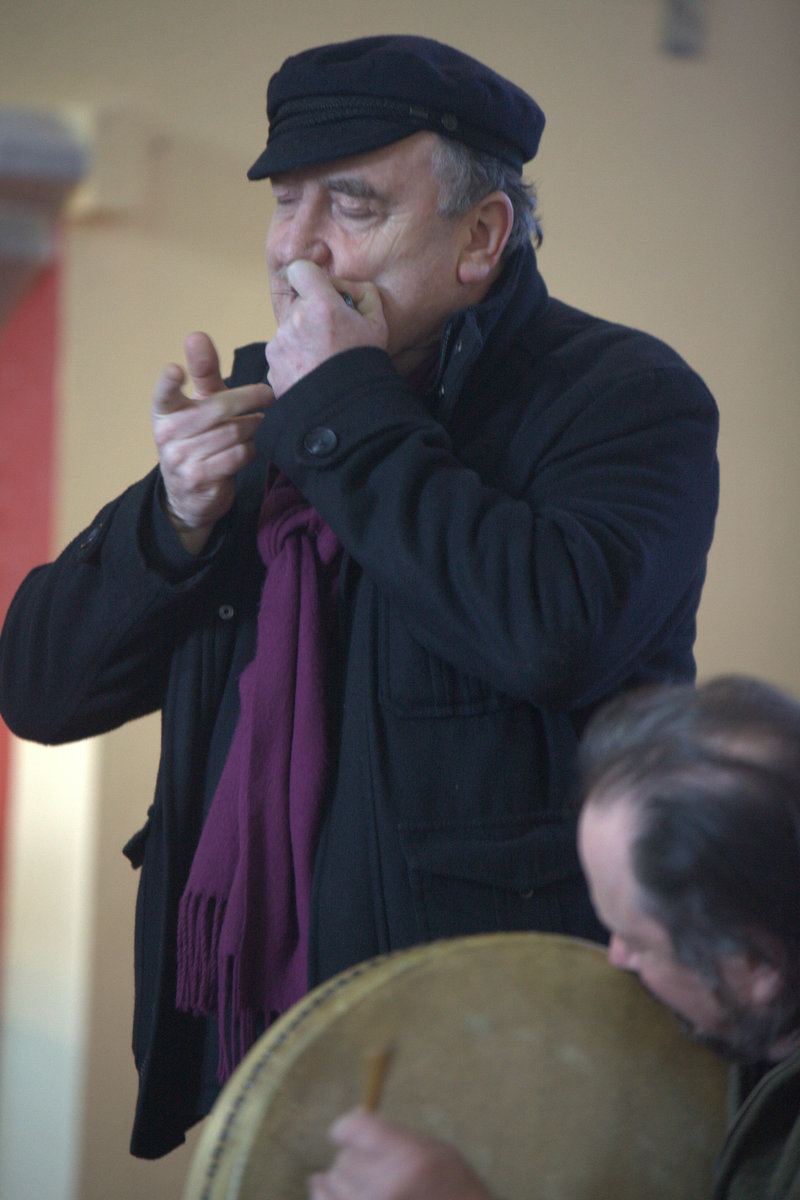
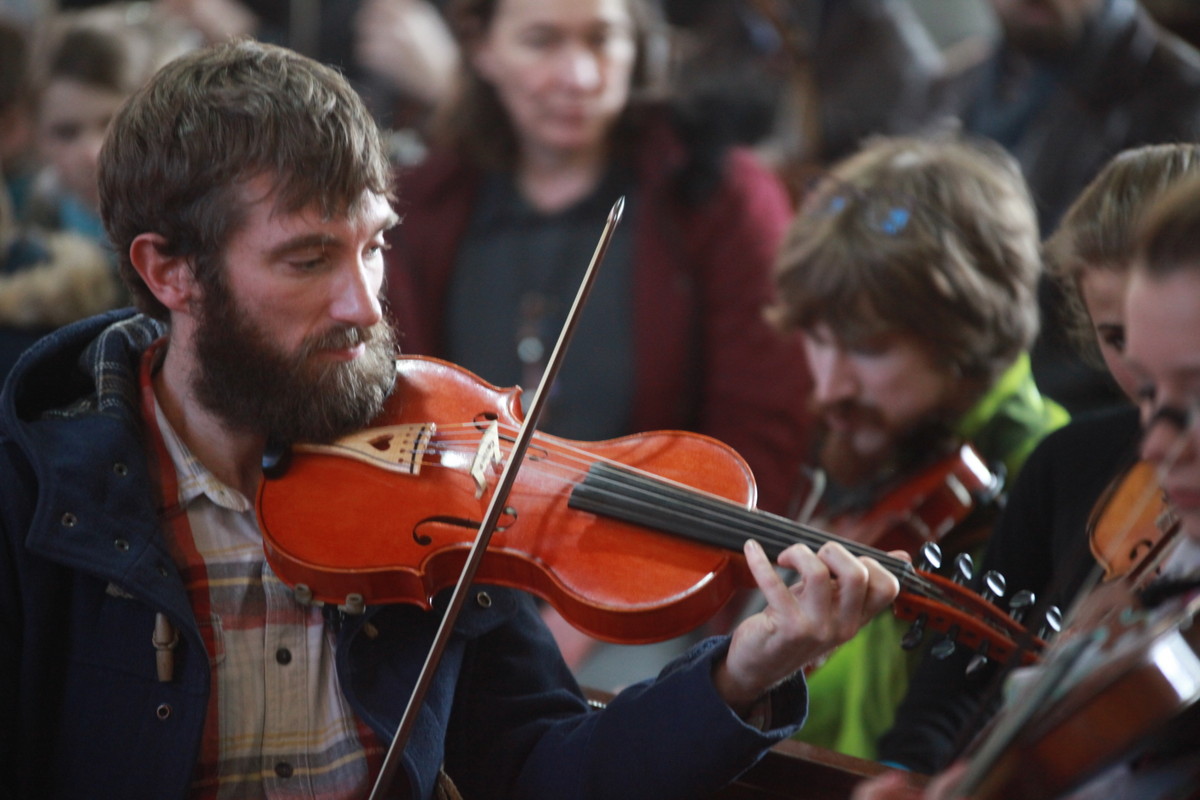
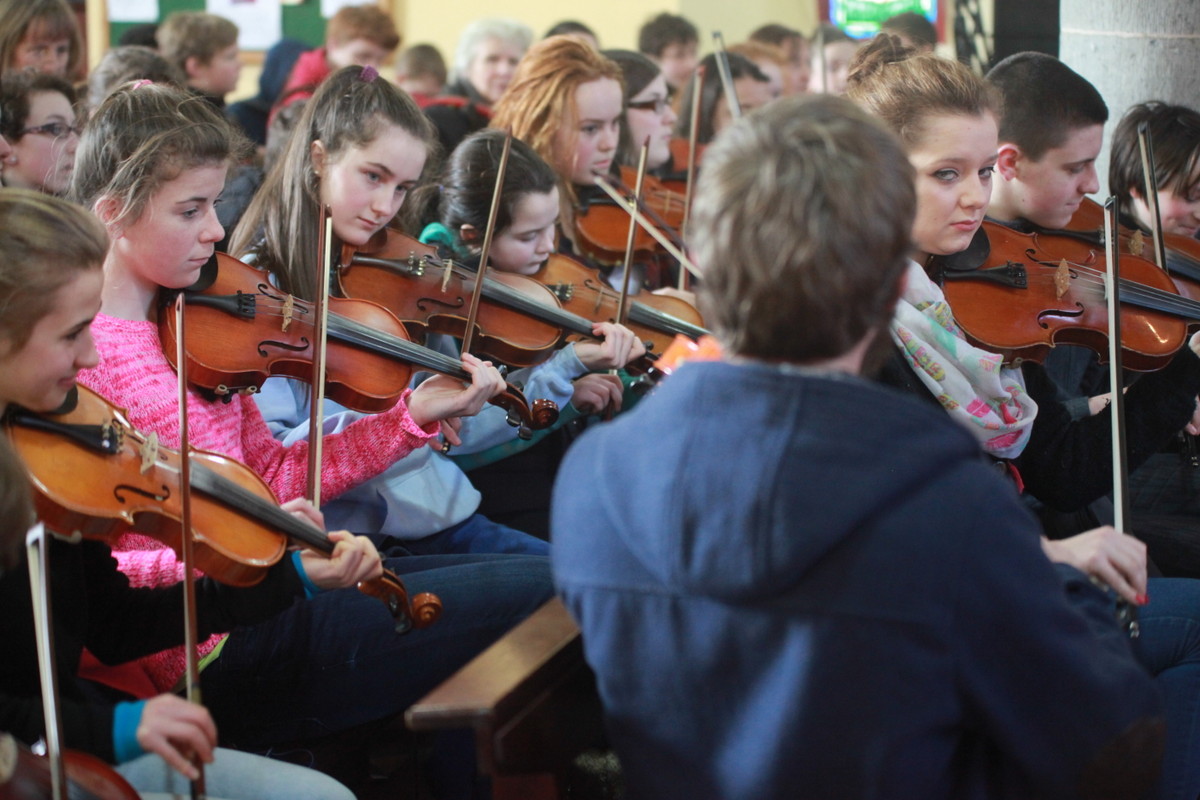
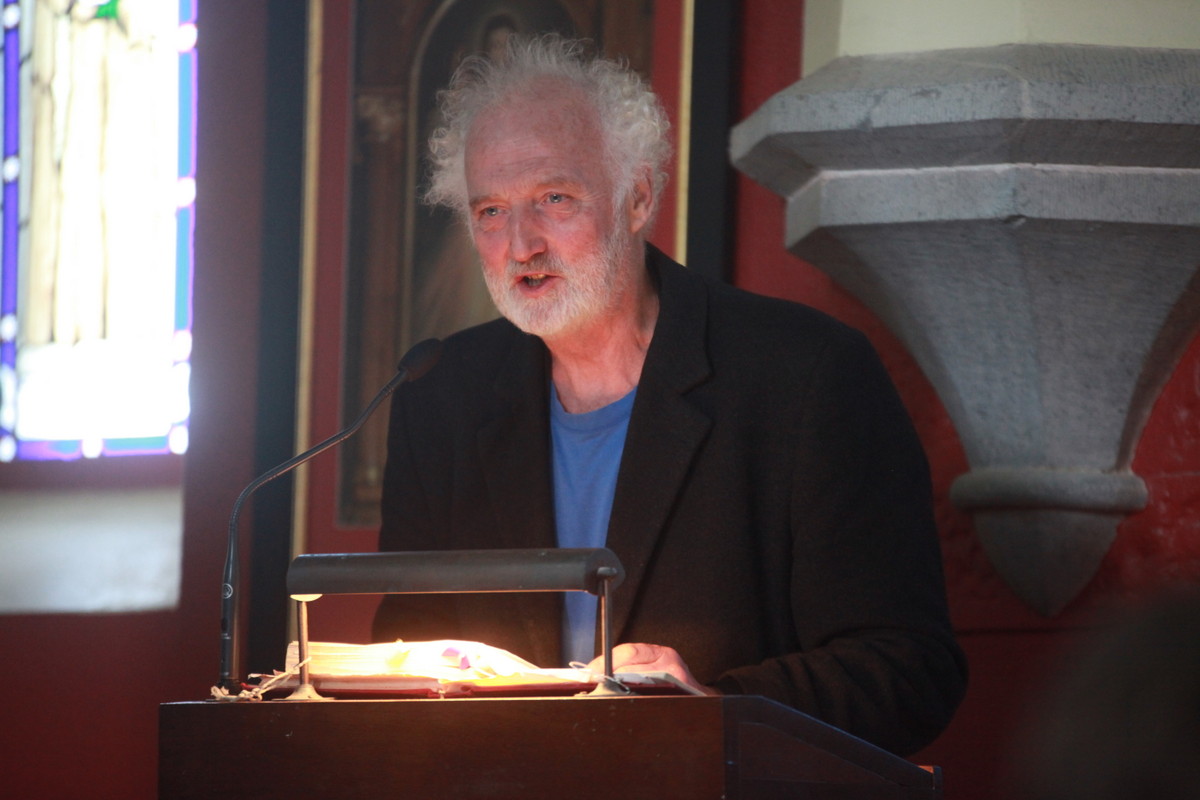
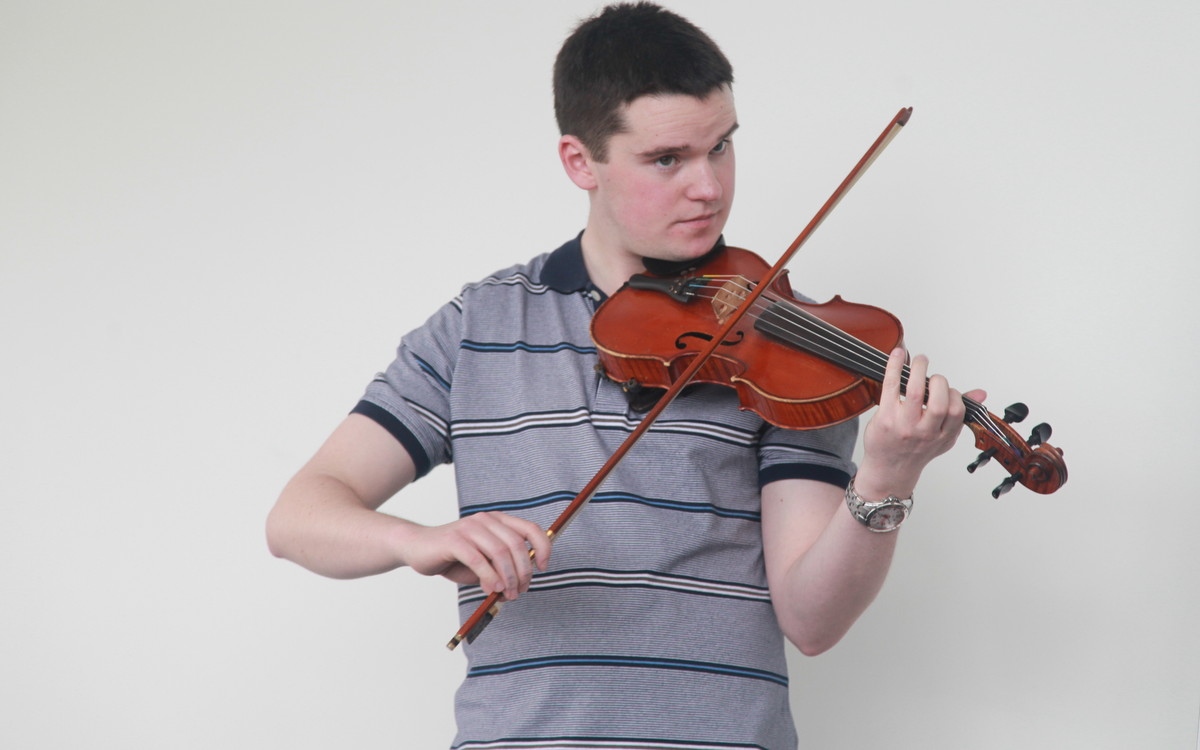
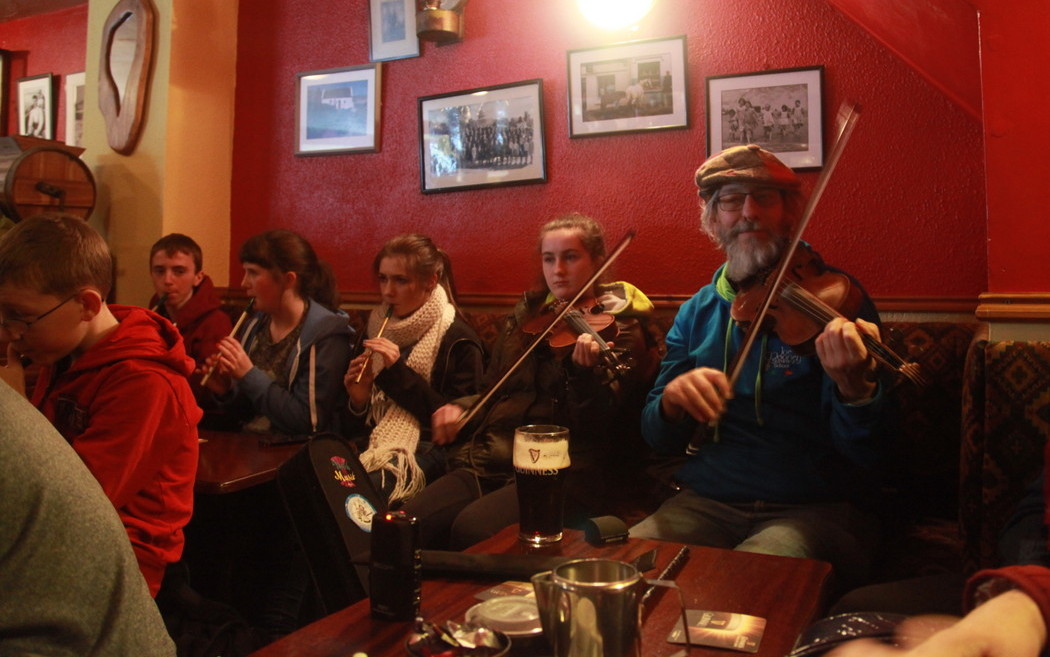
A much brighter day Tuesday with the storms and freezing wind of the day before somewhat abated. So off to the Café session at Food Heaven. This is a large modern café with plenty of room for the musicians, today led by Murty Ryan and Desi Kelliher. These sessions continue to be well received by the punters.

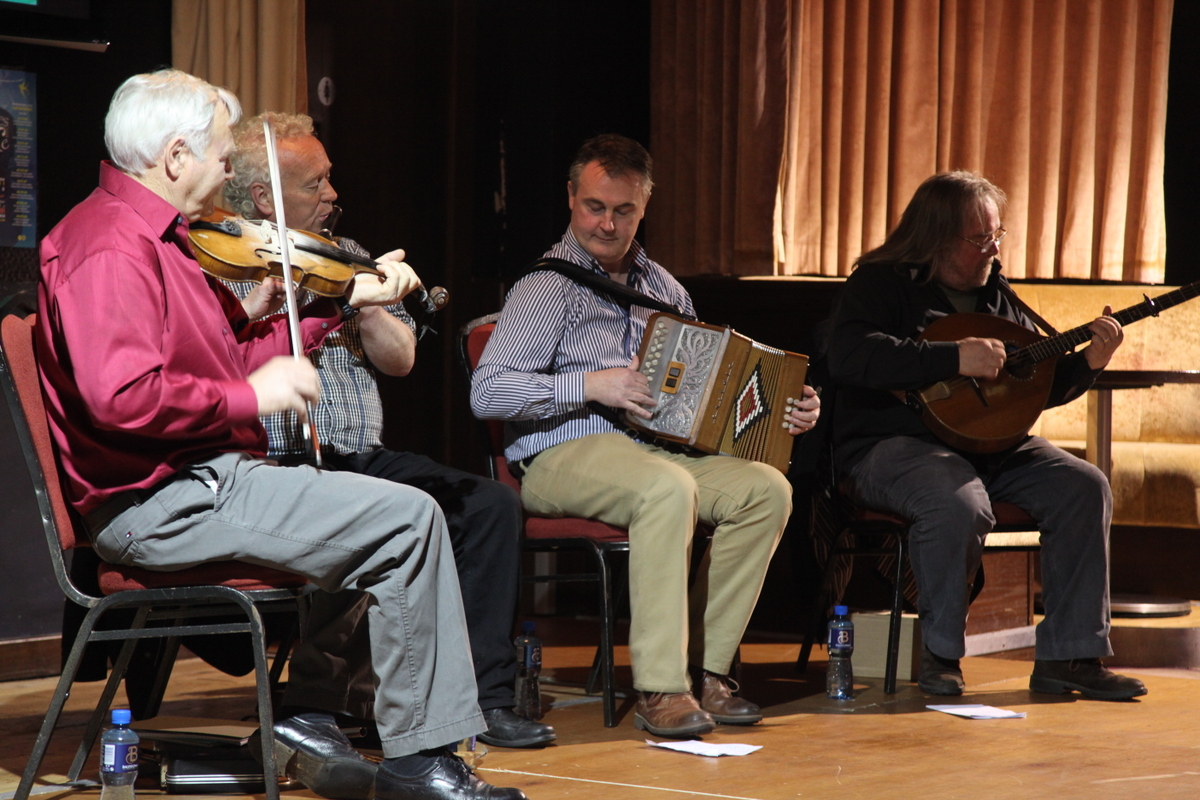
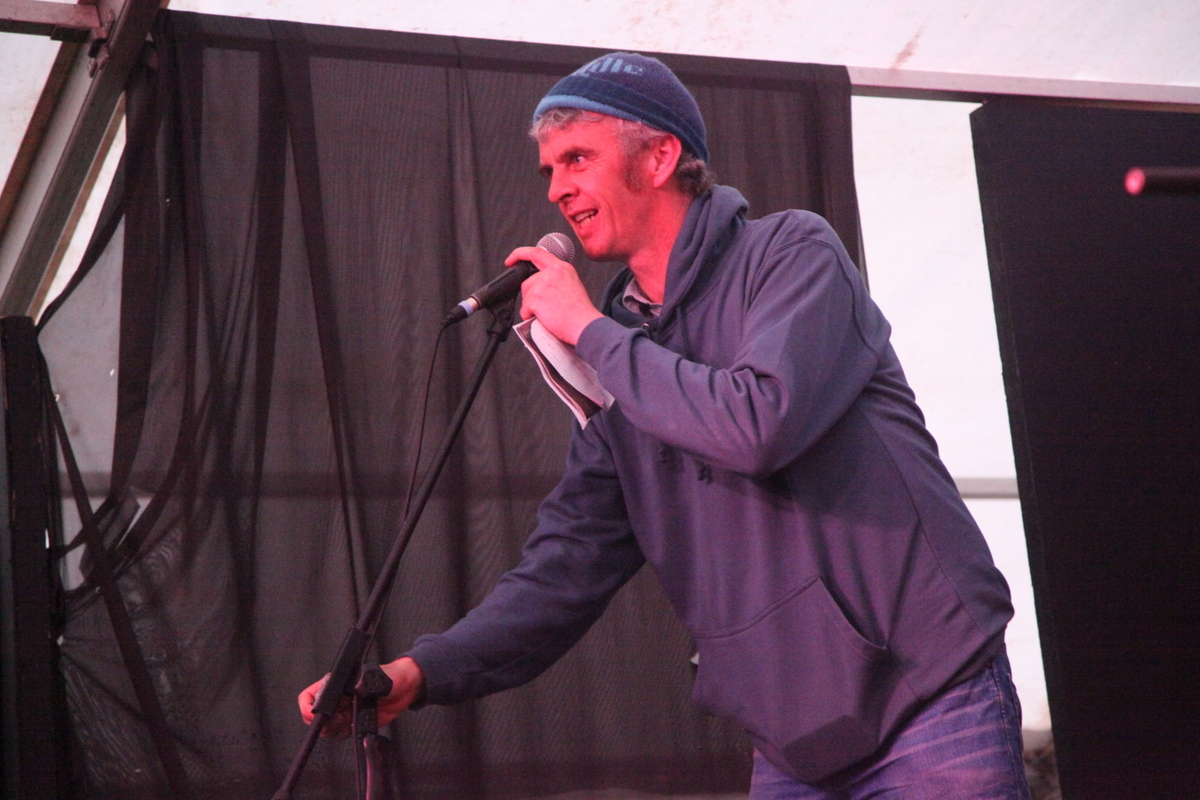
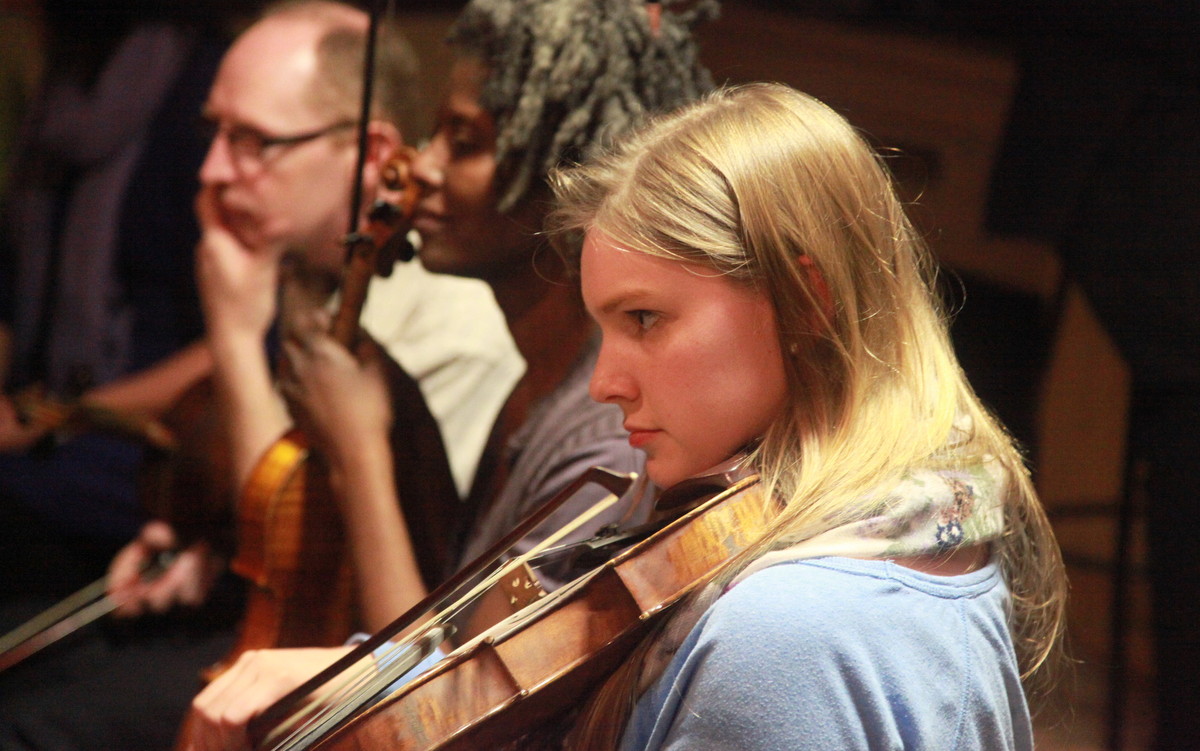
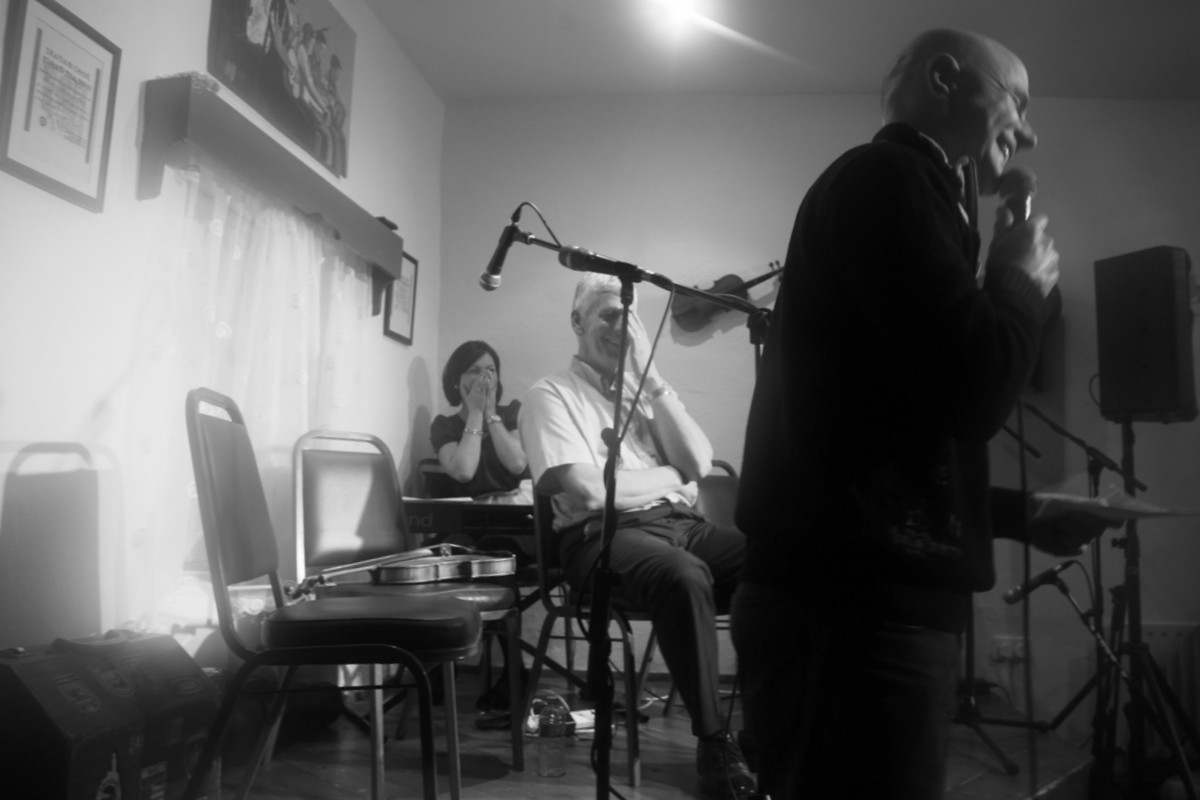
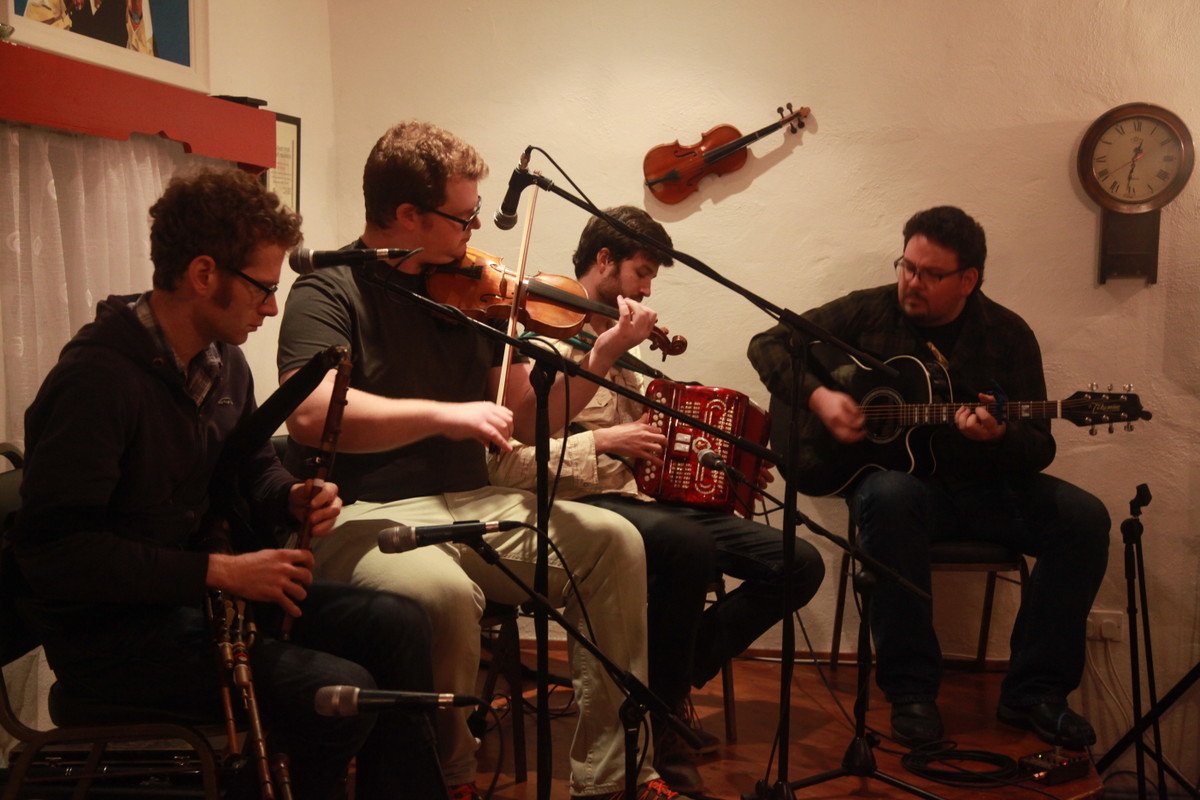
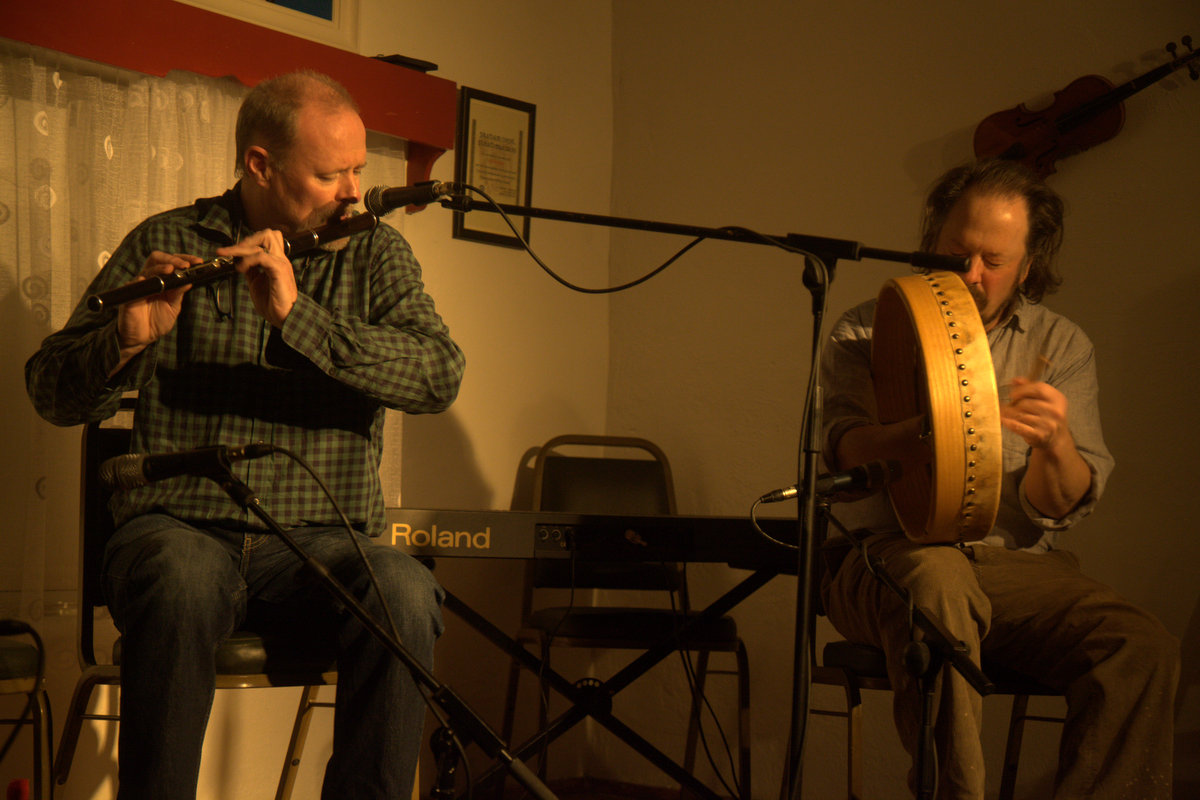
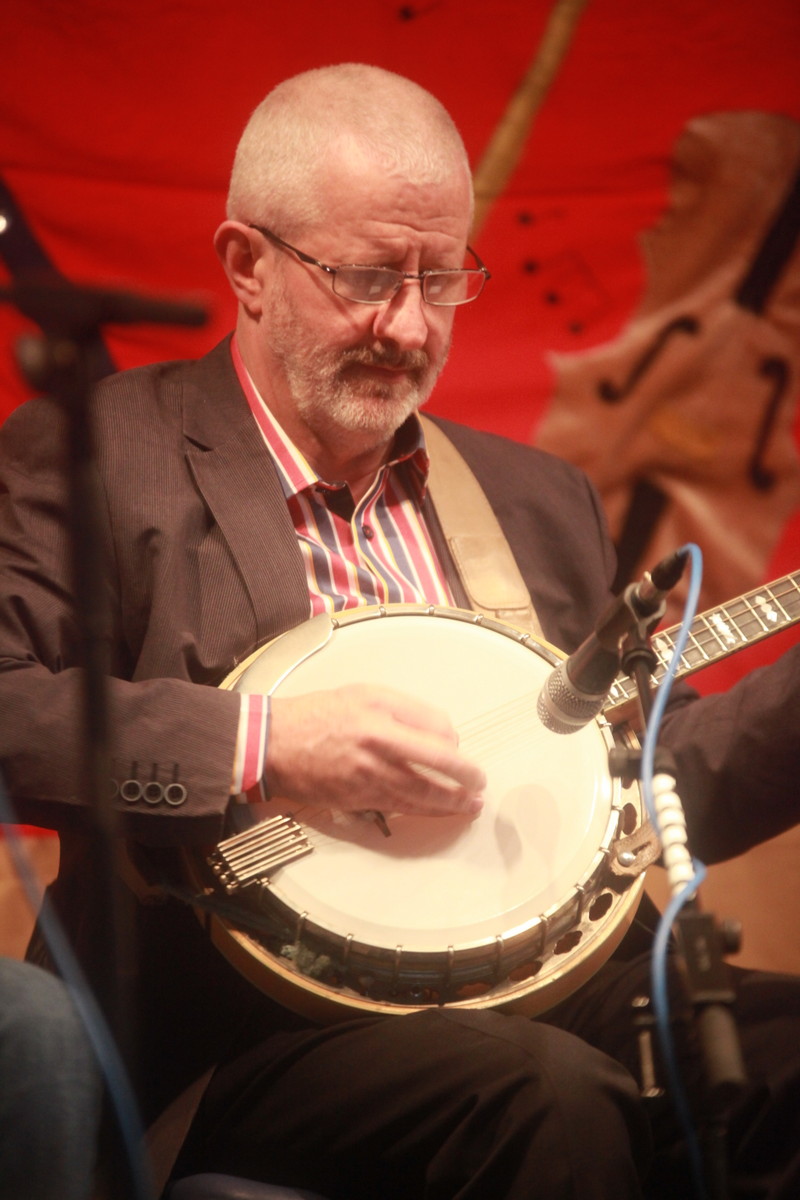
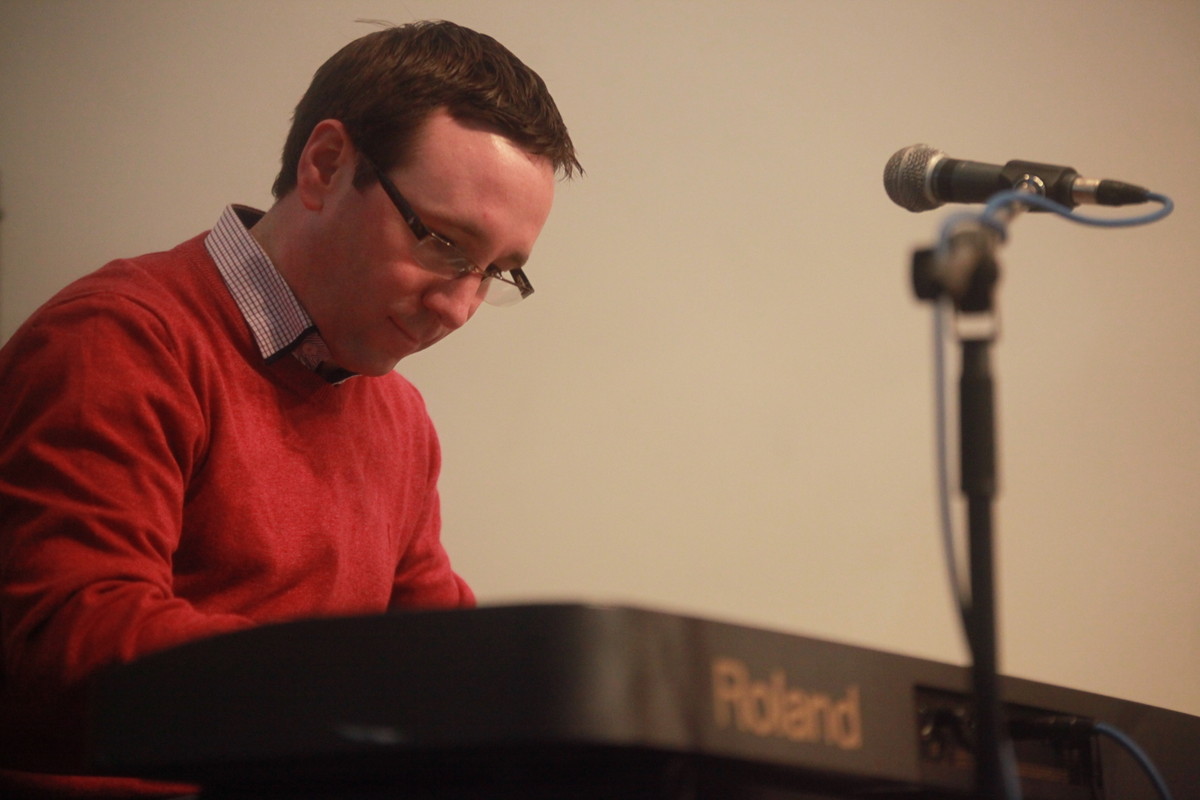
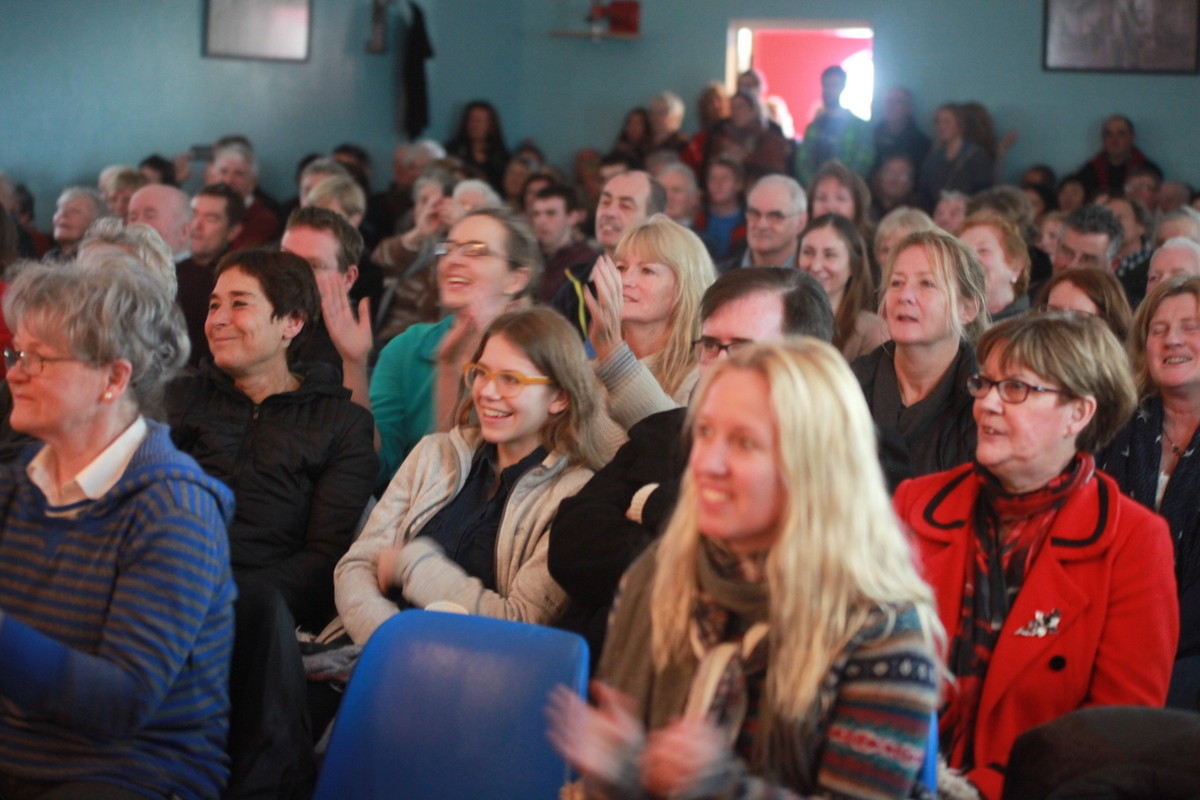
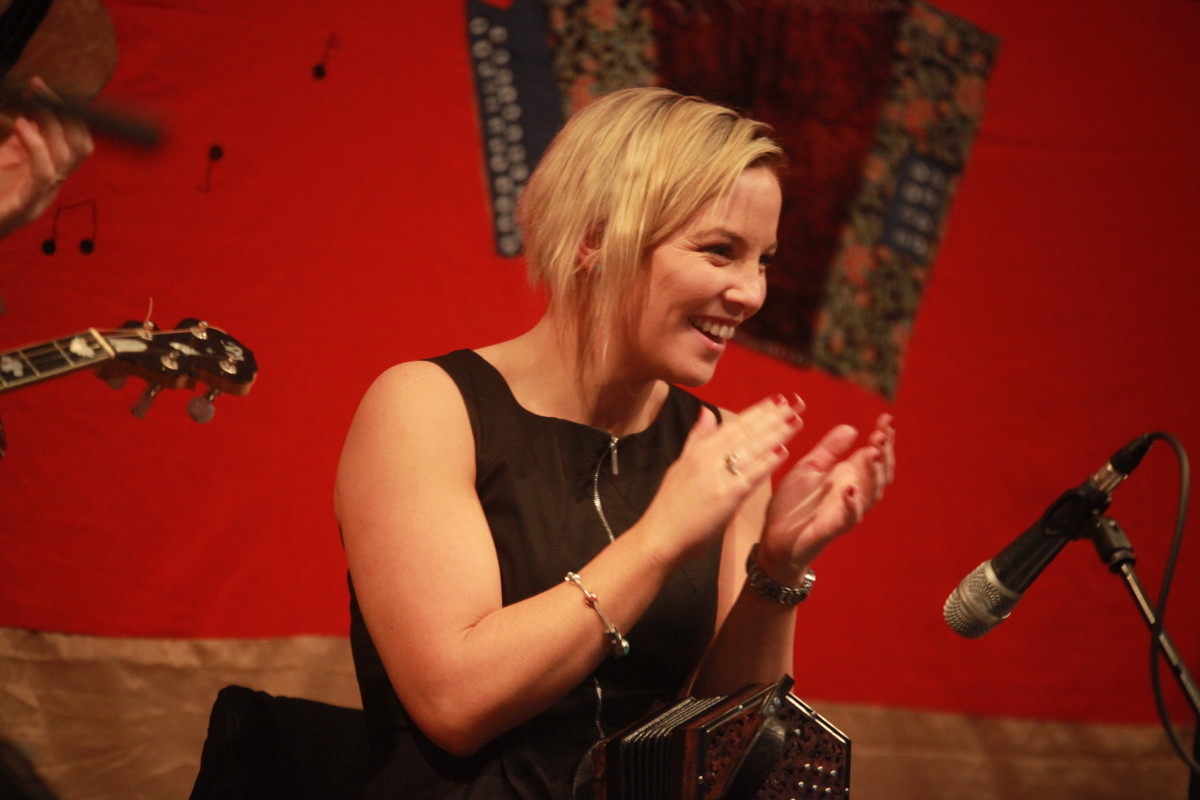
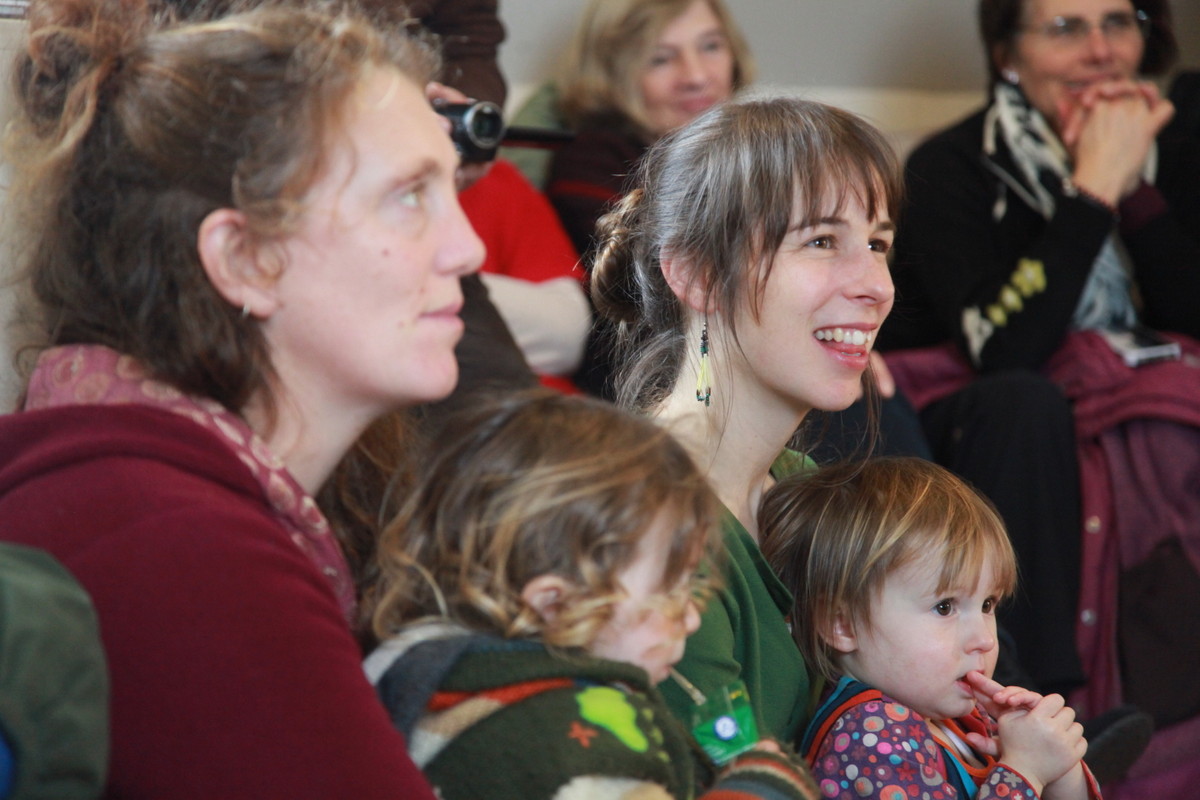
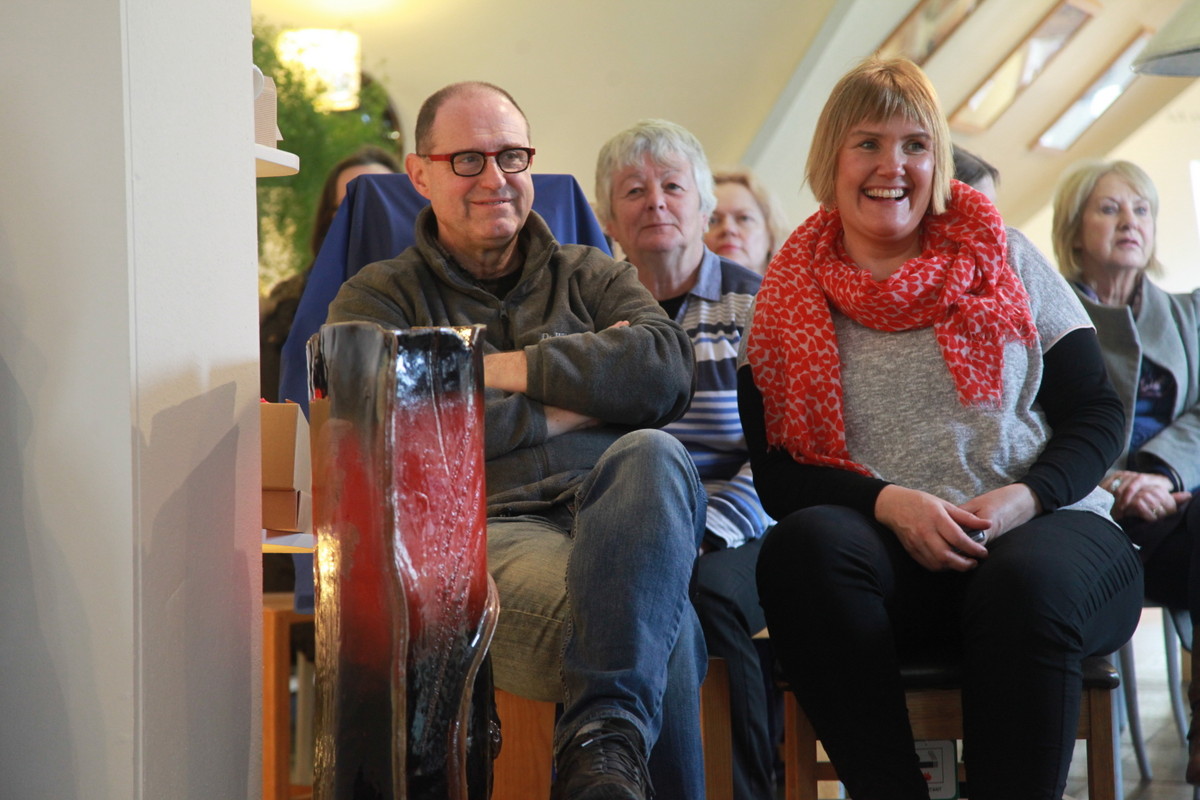
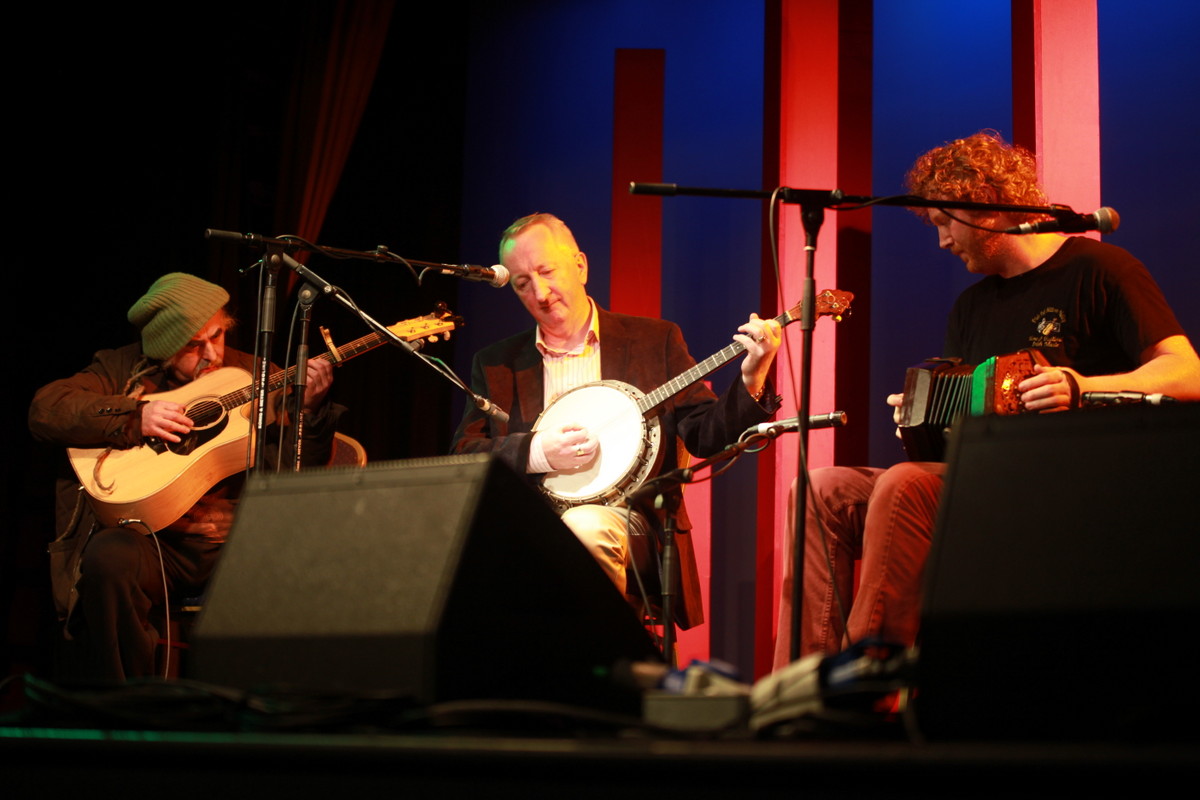
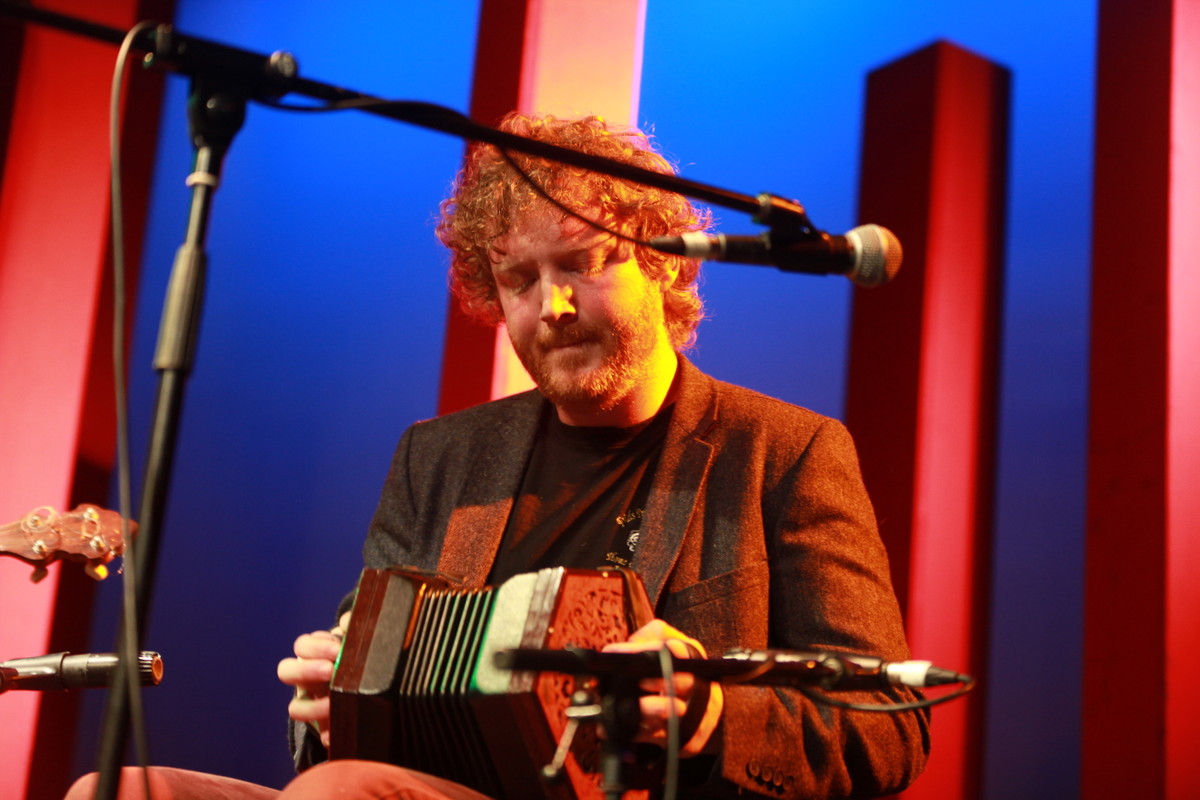
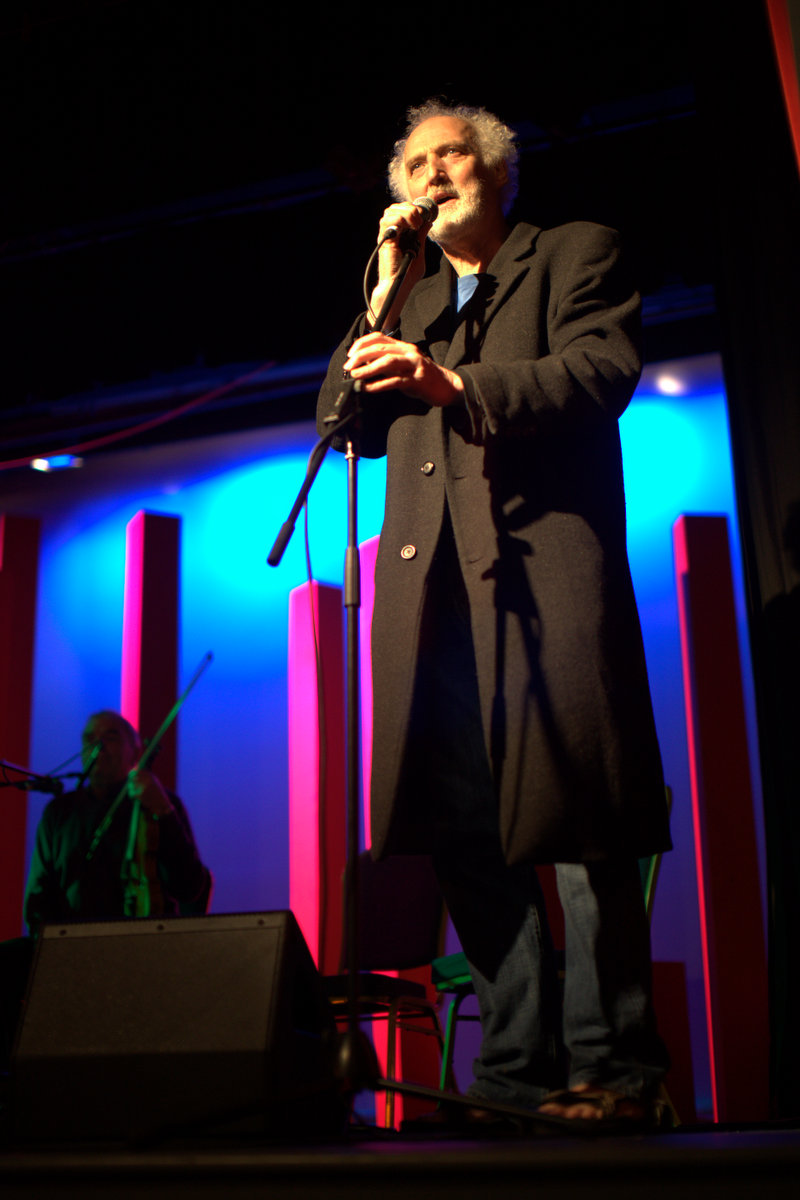
The Riches of Clare concert was moved to the Sanctuary Night Club behind the Queens Hotel due to overcrowding at the Museum. I had misgivings about how an acoustic gig would work in this cavernous space but the sound was great. It certainly helped having musicians of the quality of James Devitt, Christy Barry, Conor McCarthy & John Faulkner. It really was lovely music with two terrific songs from John. Great to hear Christy play Christy Barry Nos 1 and 2.

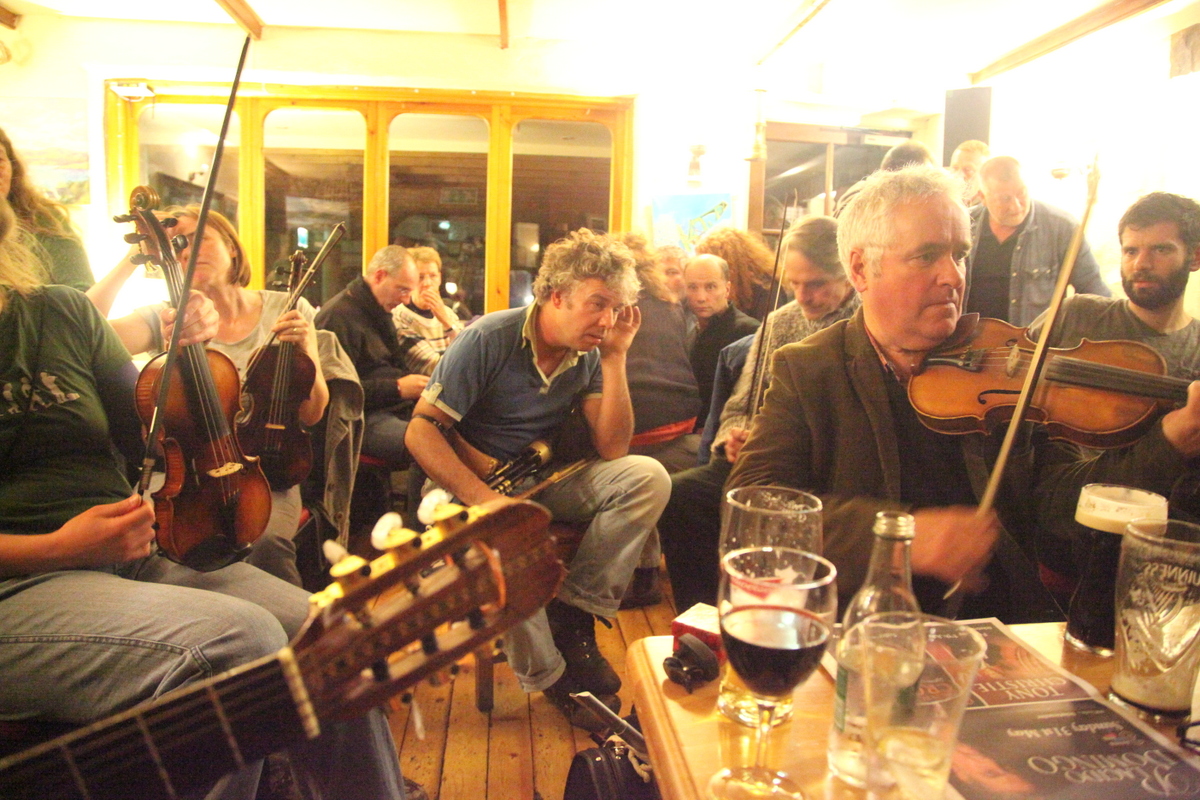
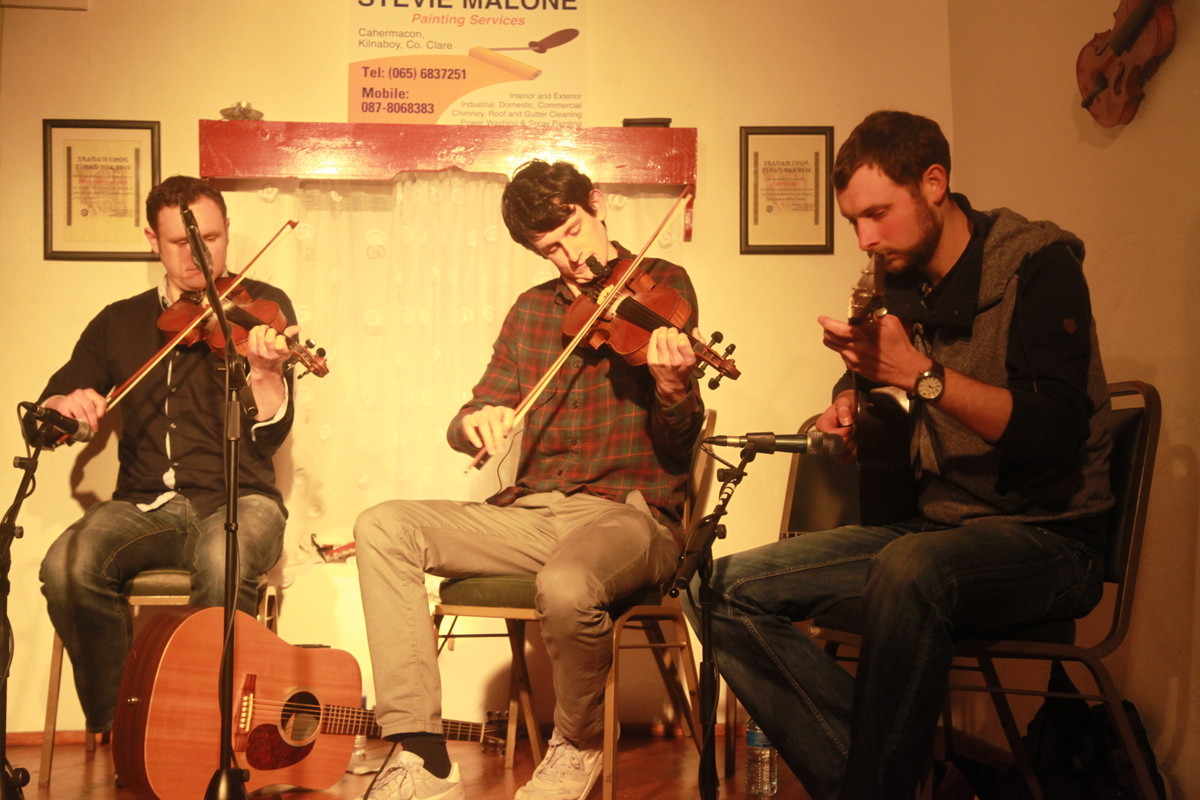
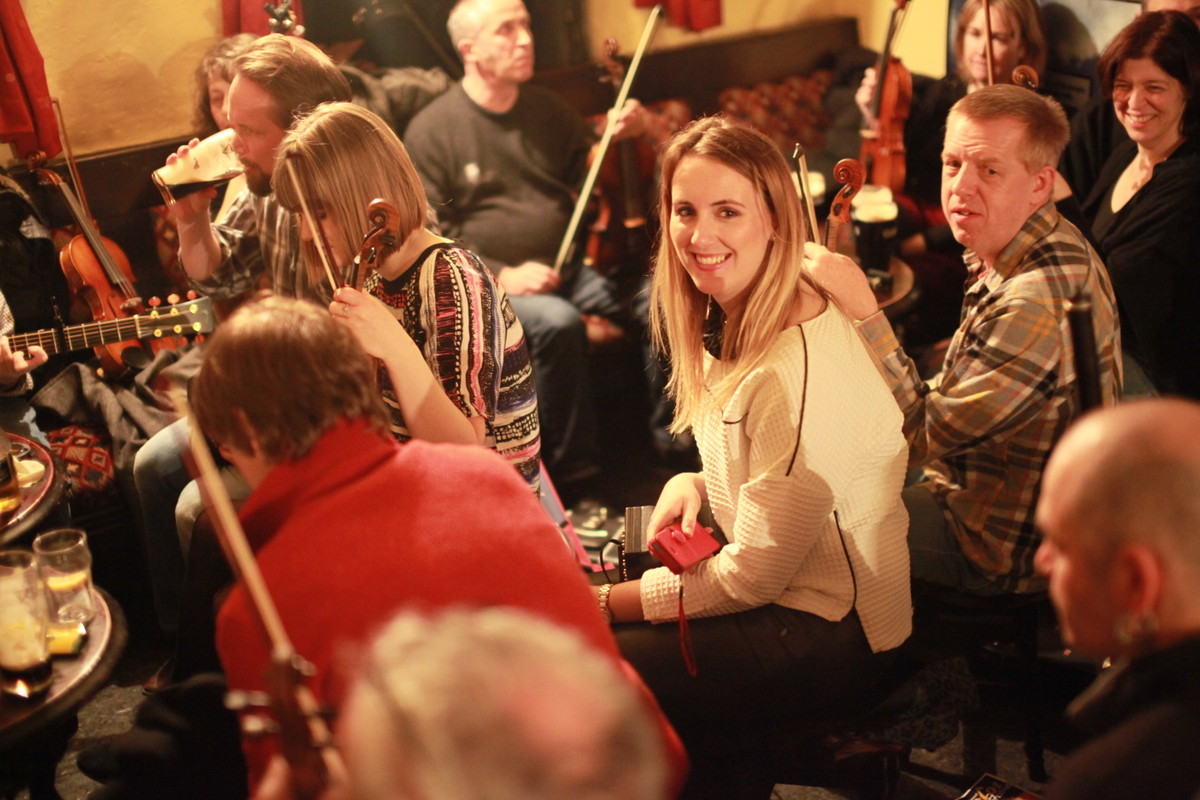
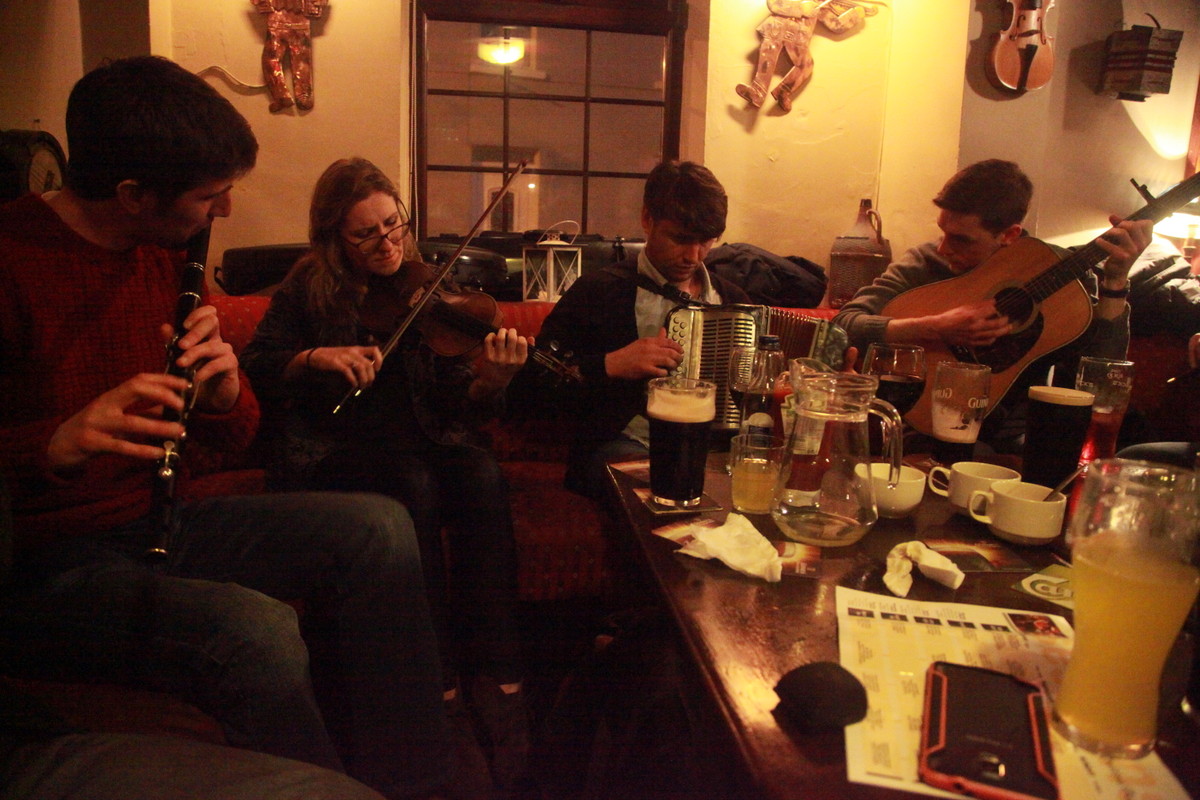
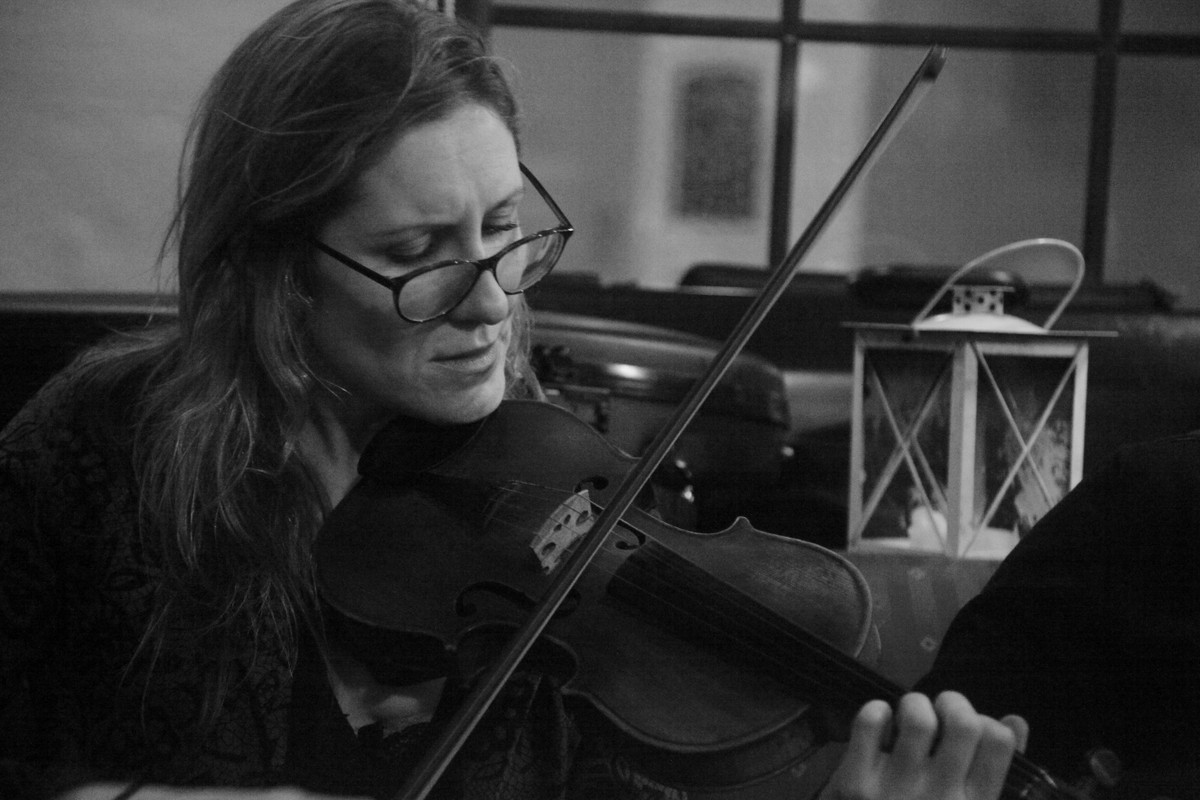
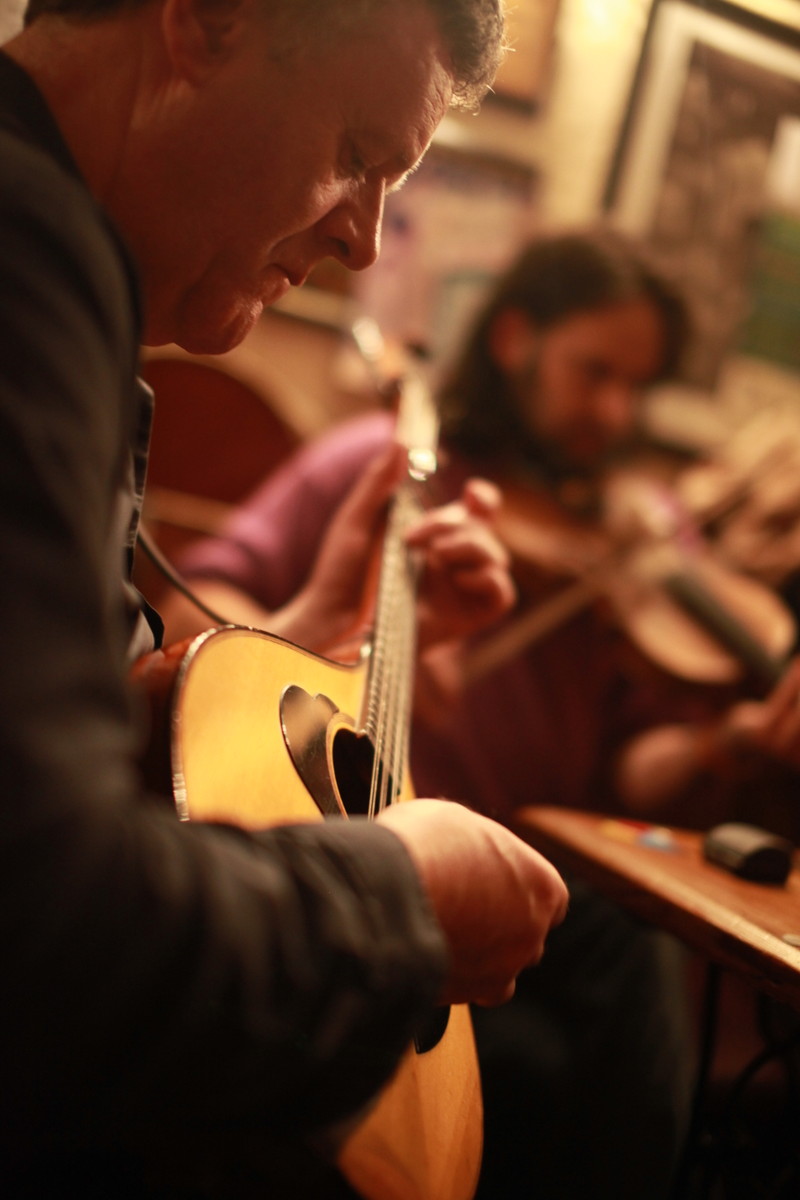
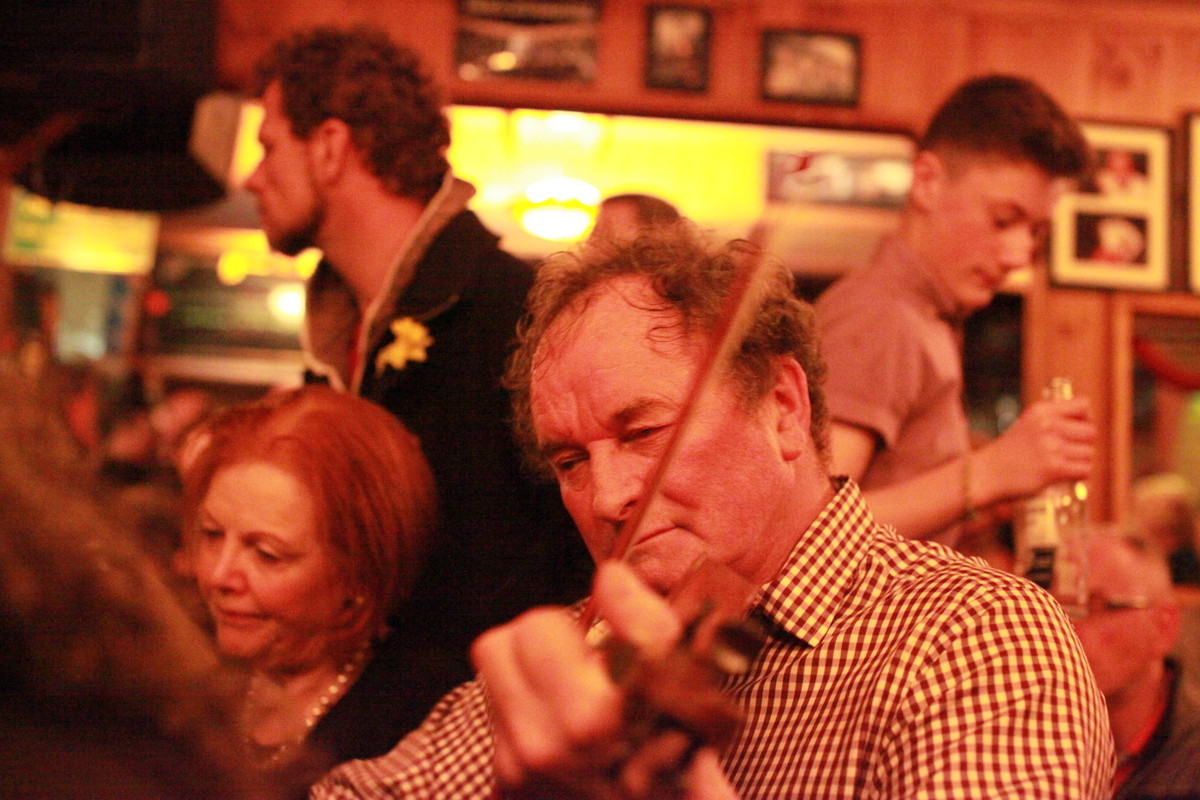
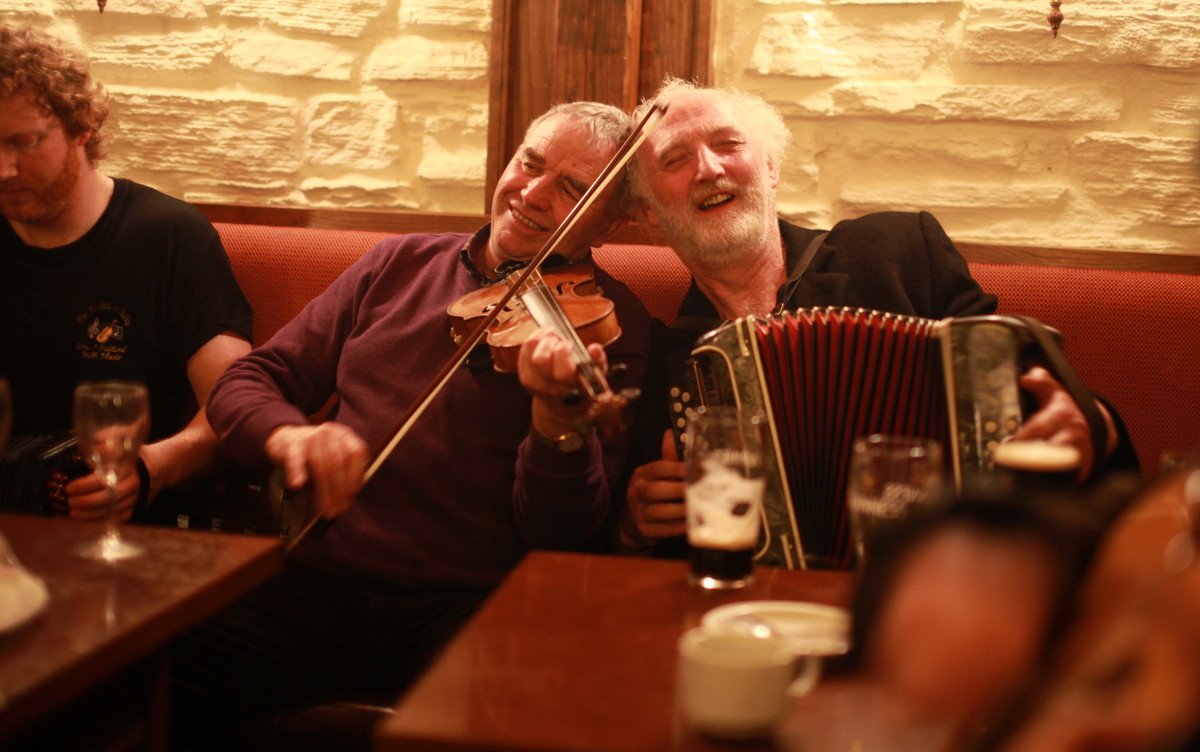
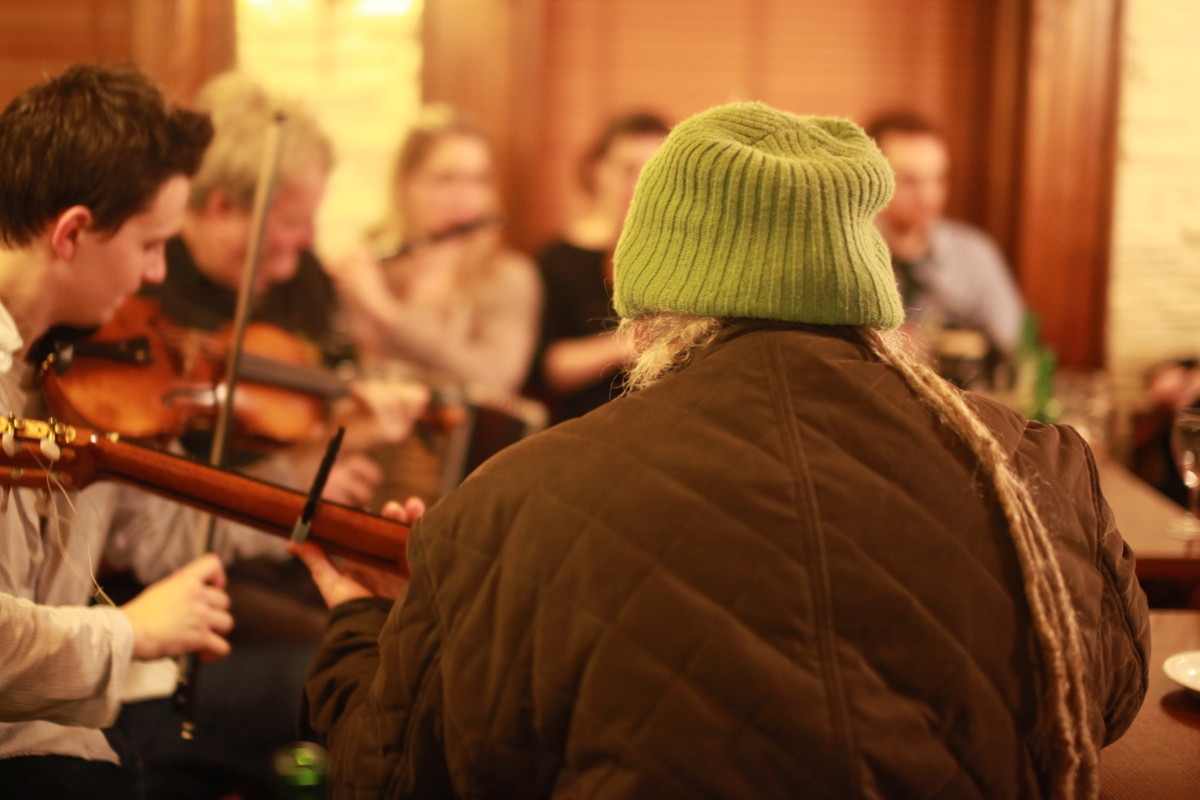
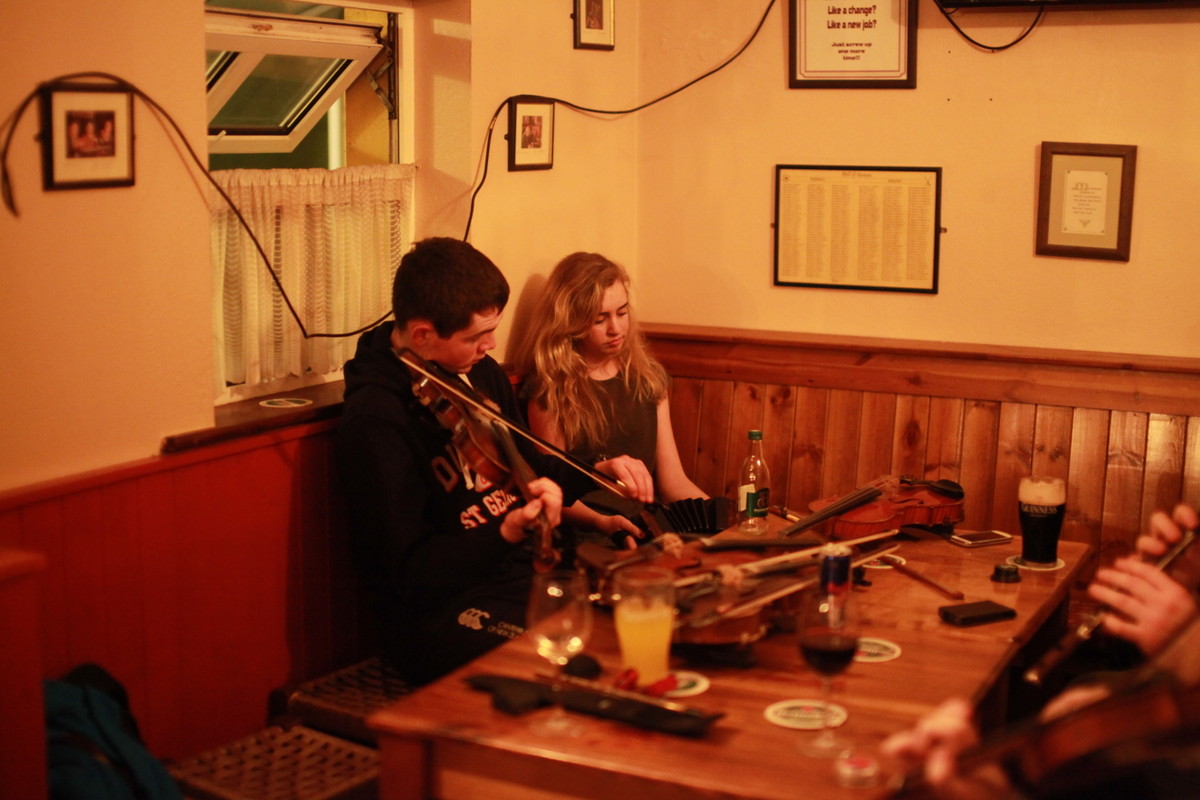
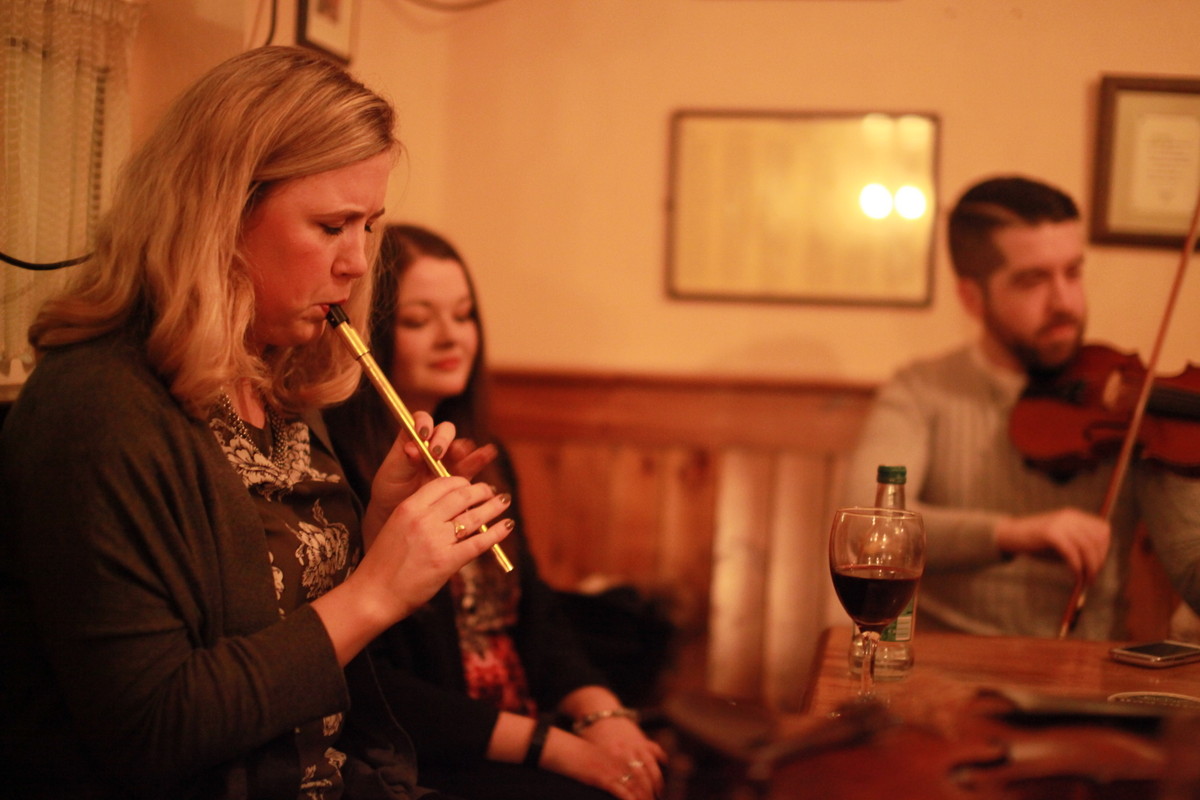
I skipped the Fionn Seissun today but there was an early session at Knox’s with Hugh and Eric Healy, Brian O’Laughlin and Caroline. Brilliant stuff. Clogher Road got yet another airing! Then it was on to Cruises again to finish the evening with Quentin Cooper and Eoin O’Neill and the usual mob of reprobates.

You can feel the build up to the weekend as more musicians arrive every day.

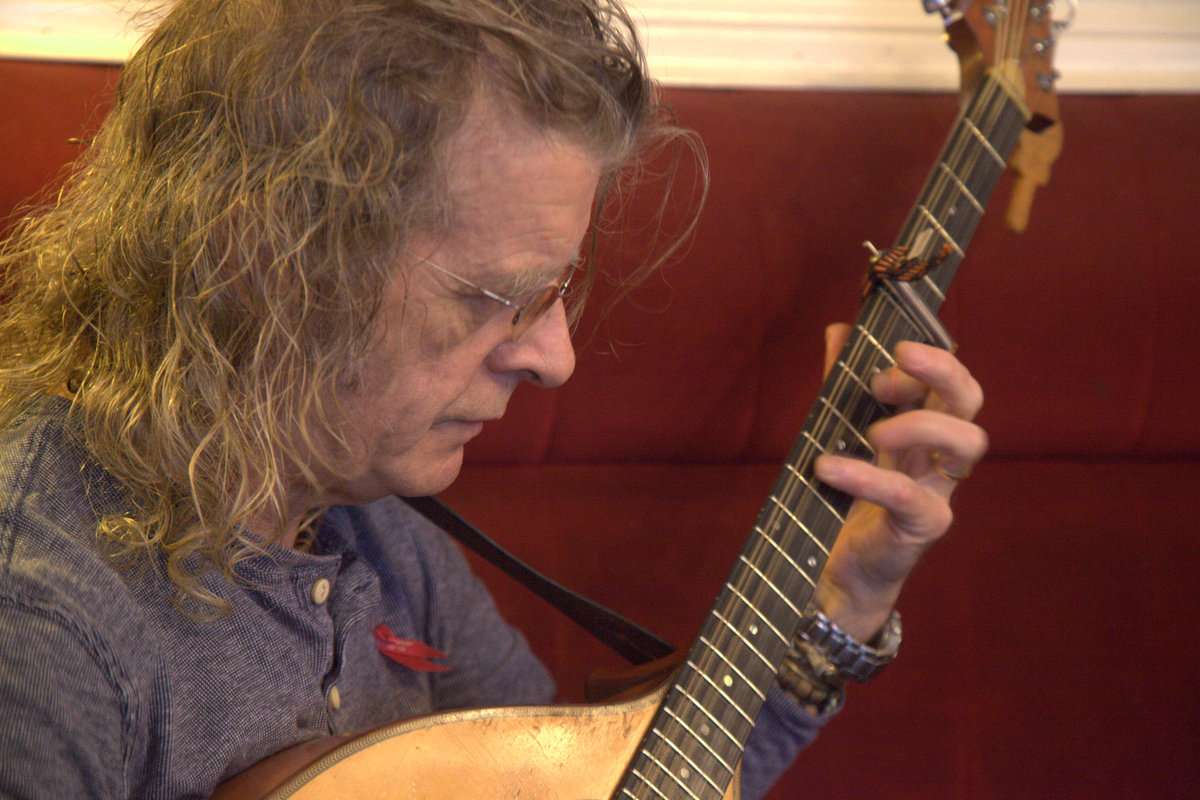
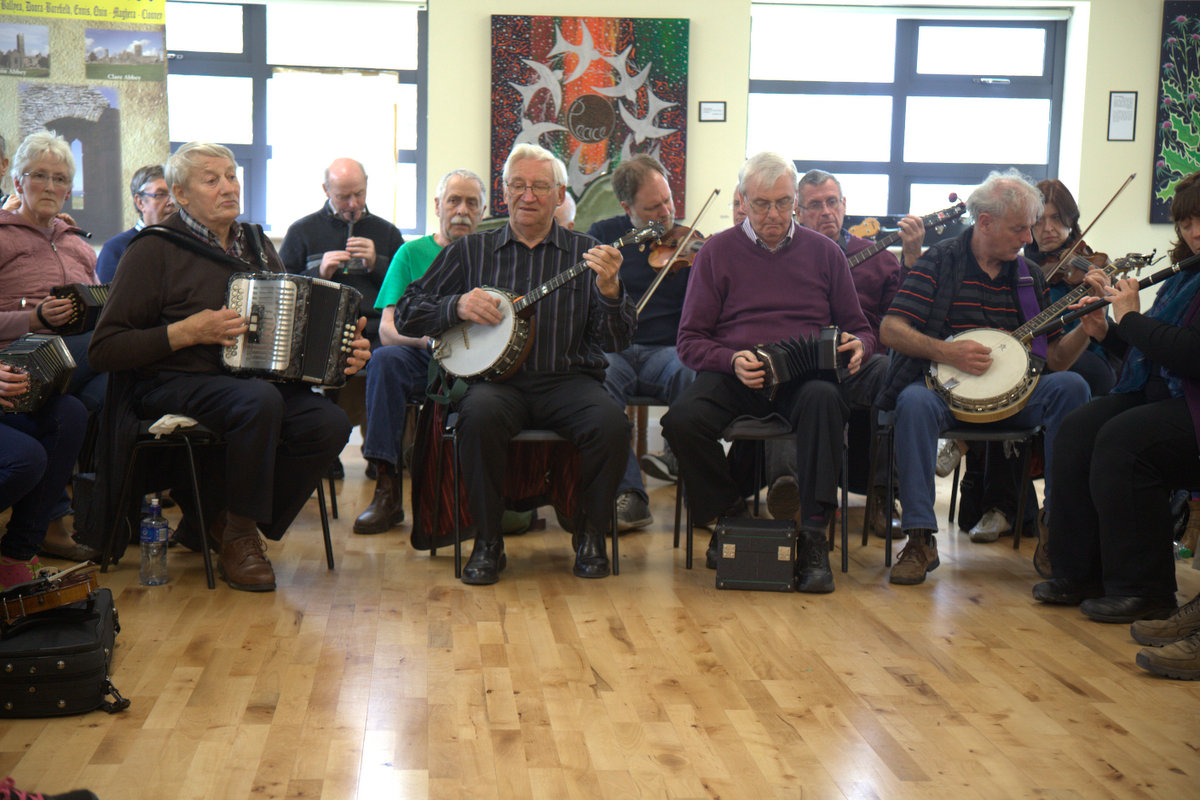
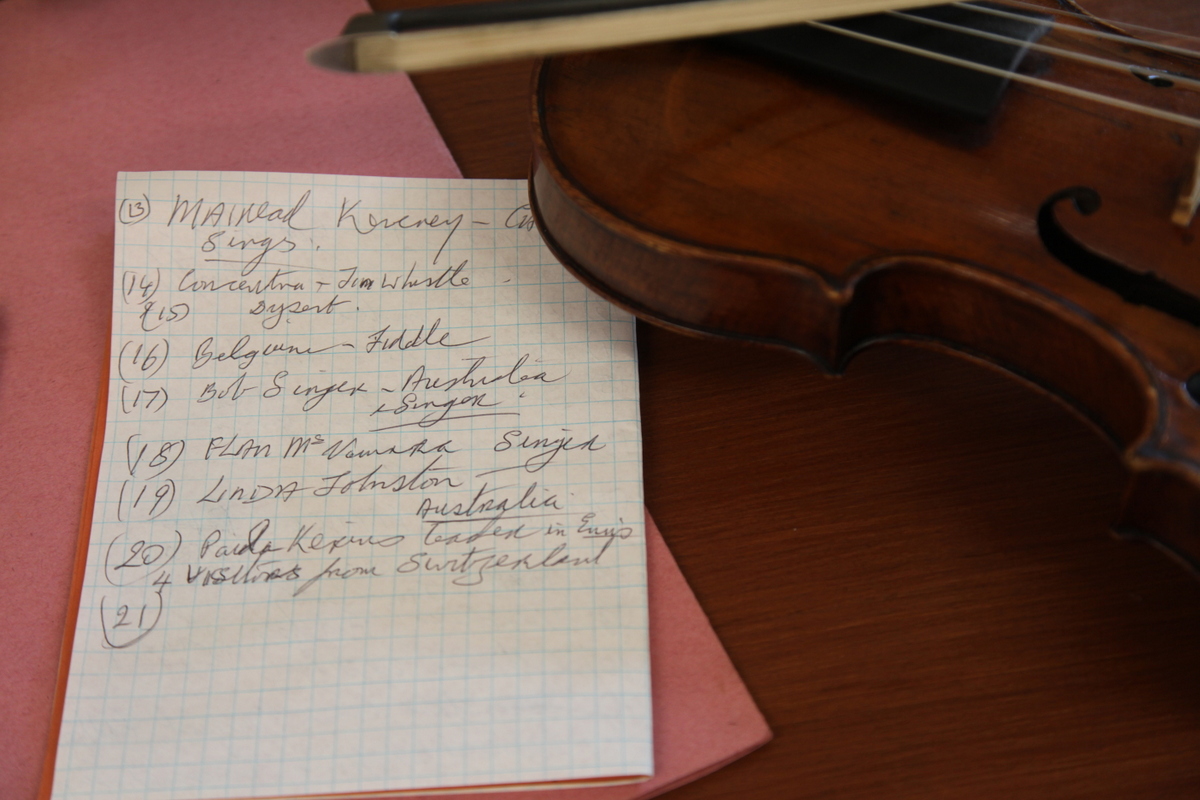
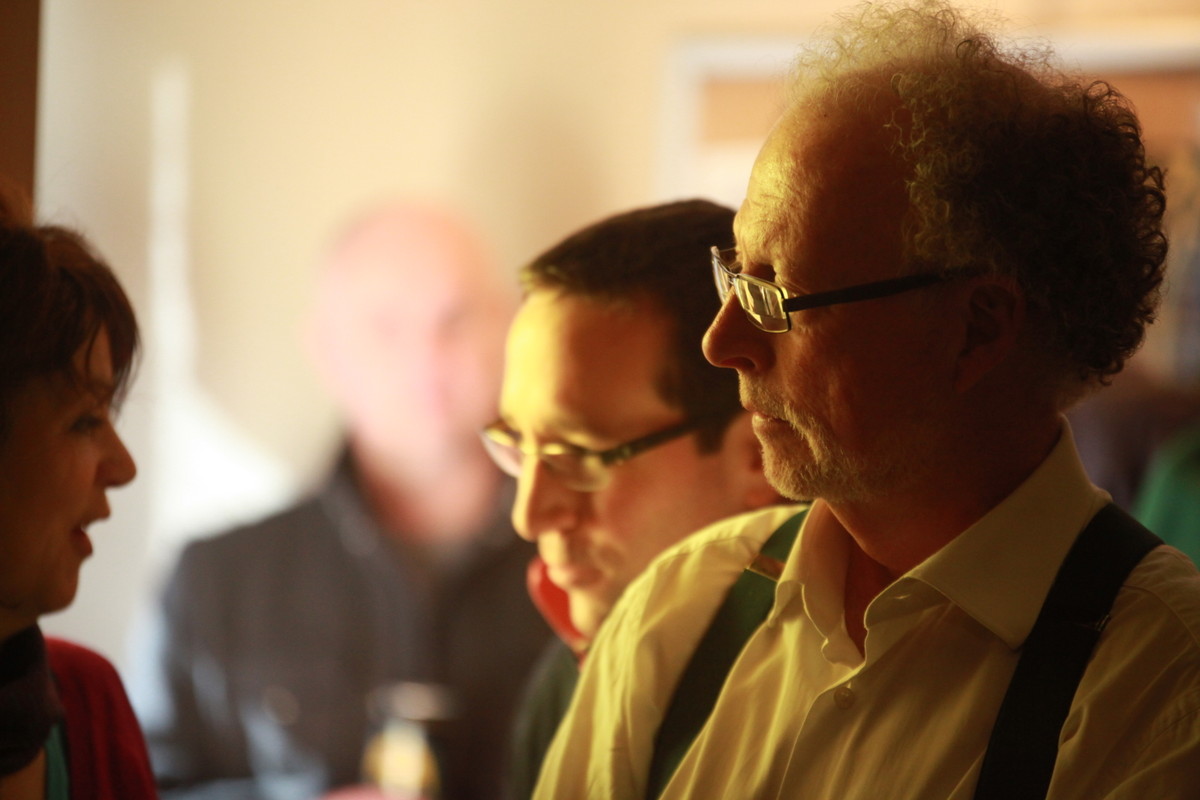
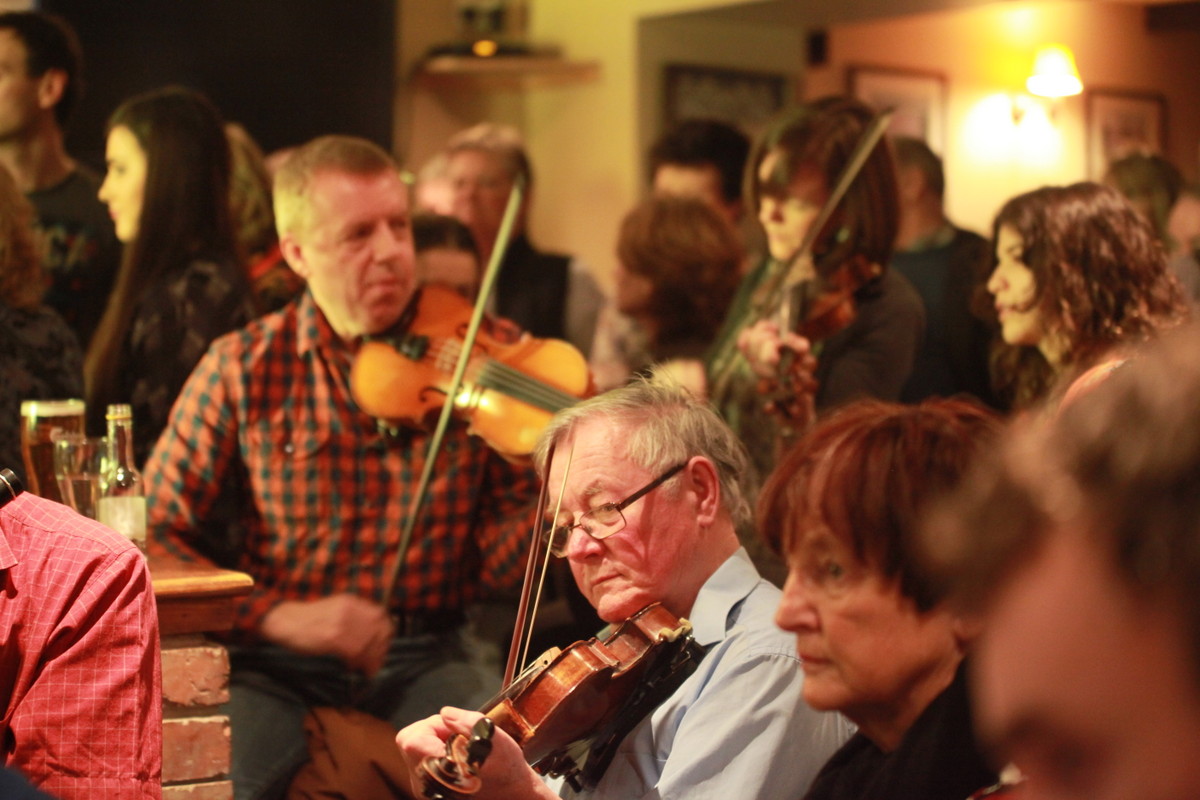
IMG_0852 IMG_0827 IMG_0846 IMG_0868 IMG_0880 IMG_0894 IMG_0907 IMG_0924 IMG_0927 IMG_0943 IMG_0021 IMG_0041 IMG_0055 IMG_0062 IMG_0123 IMG_0129 IMG_0141 IMG_0151

Categories: Concerts, Festivals, Sessions, Trad Irish Music | Tags: , , , , , , , , , , , | 1 Comment

Fleadh Nua 2015 Day 2

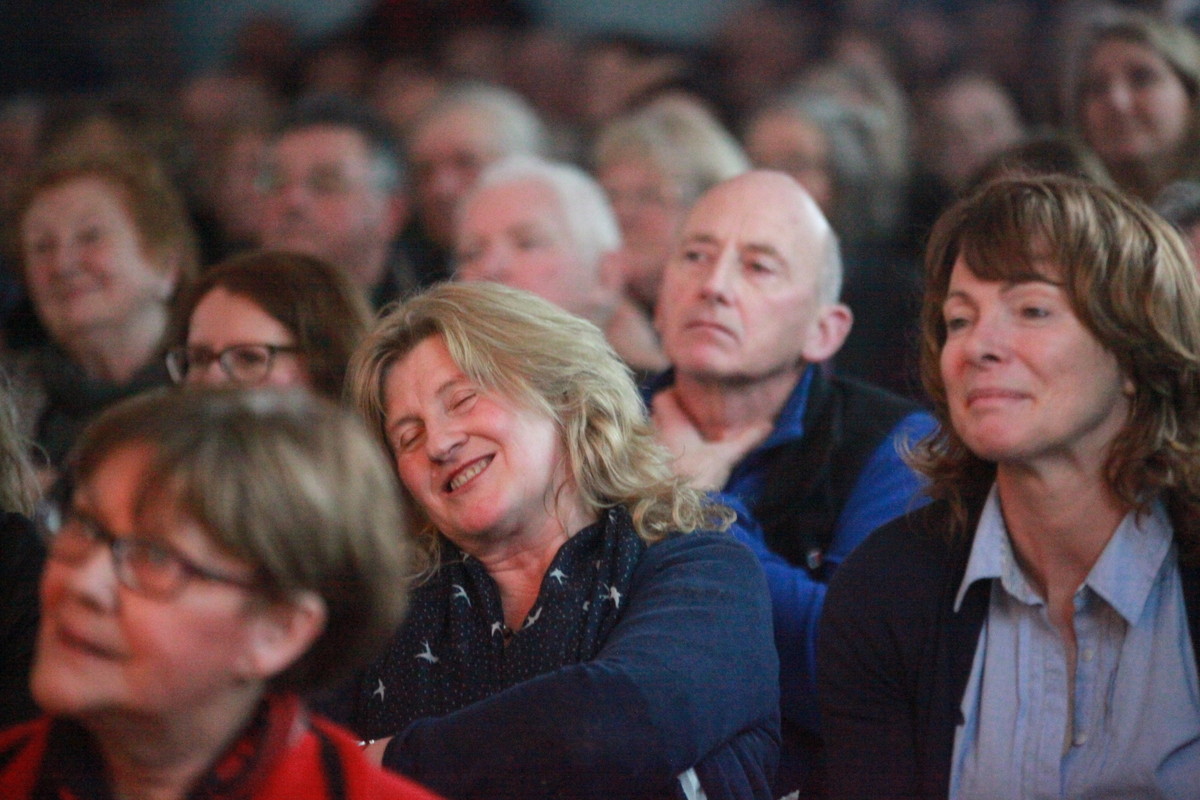
It’s Monday and the day kicked off with a brunch session at Cafe Aroma. You had to get there early to get a seat even though no one knew who the musicians would be. What a nice surprise to get Blackie O’Connell and Cyril O’Donoghue. The foreign contingent lapped it up and Blackie made everyone feel welcome.

I missed the lunchtime Riches of Clare concert with Niamh O’Dea, Anne Marie McCormack and friends but my spy on the ground tells me it was brilliant high energy entertainment.

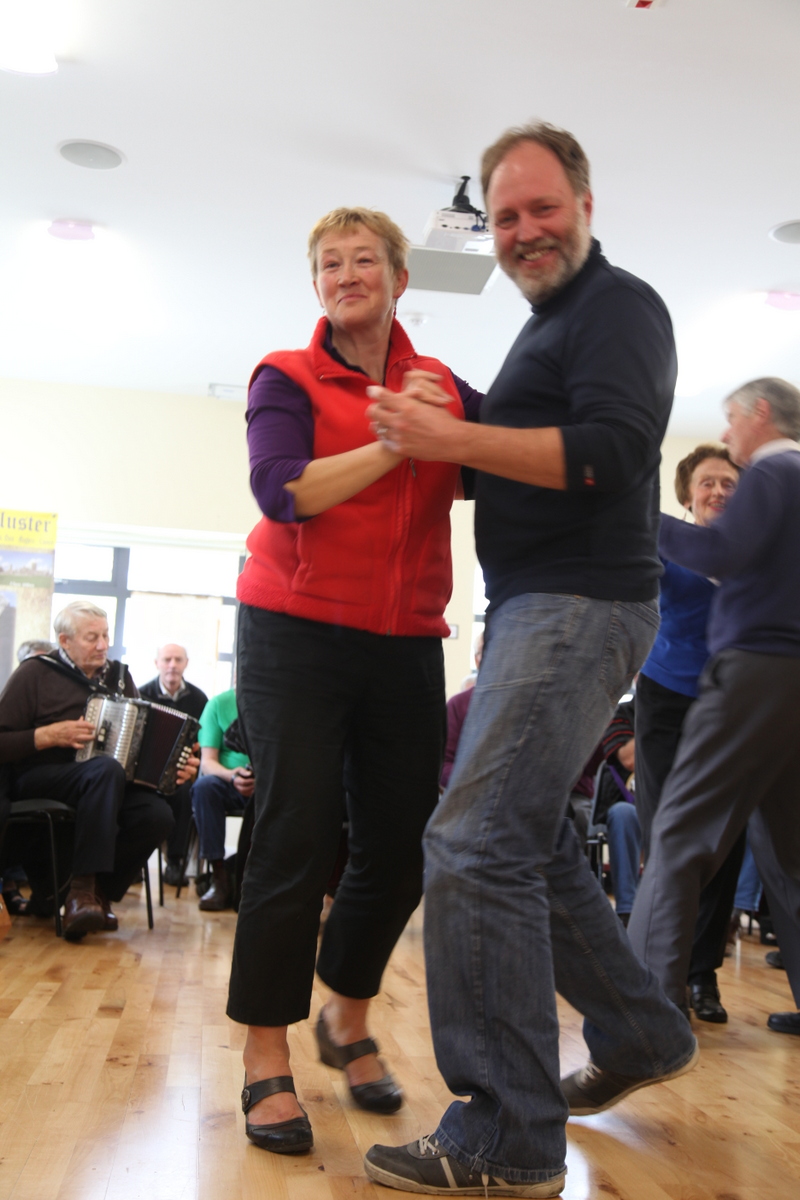
Another permanent feature of Fleadh Nua is the afternoon Fionn Seissun. The venue has moved but the format remains the same. Frank Custy and his friends lead the beginner’s session and everyone gets a go at starting a tune or song. I even sung; giving the Clogher Road an airing.

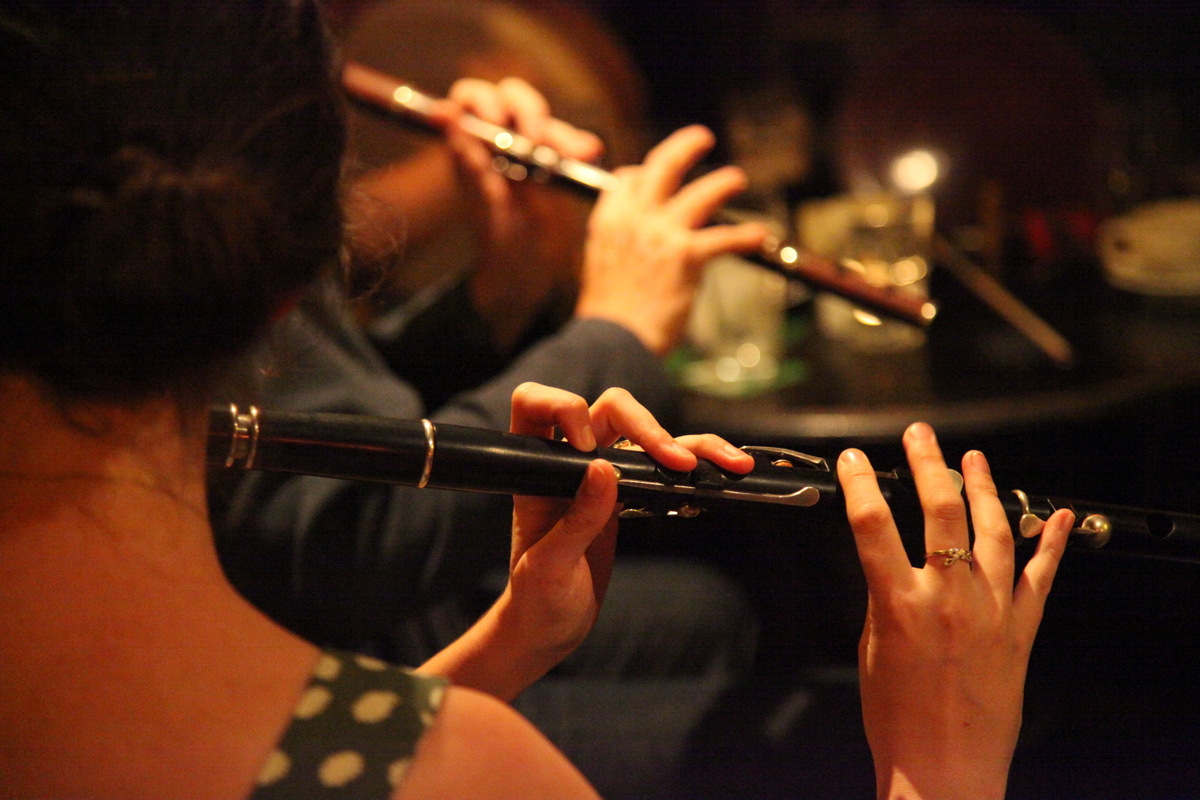
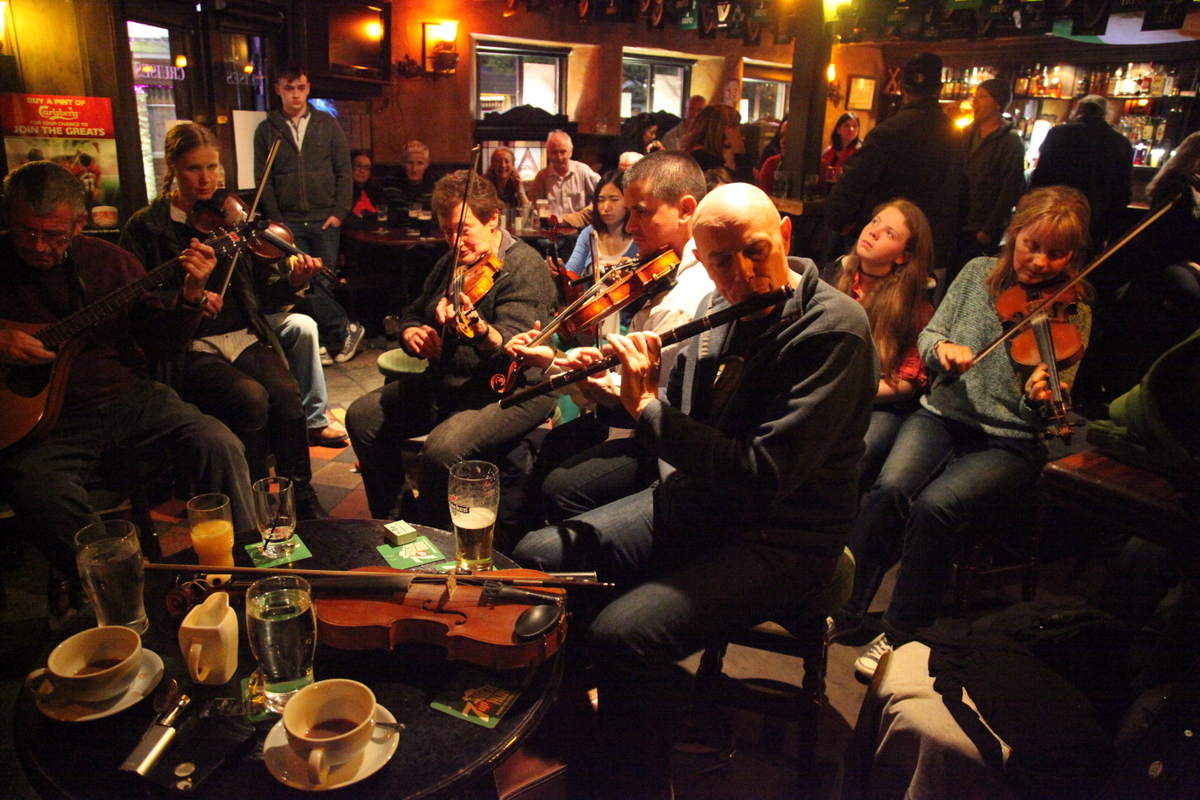
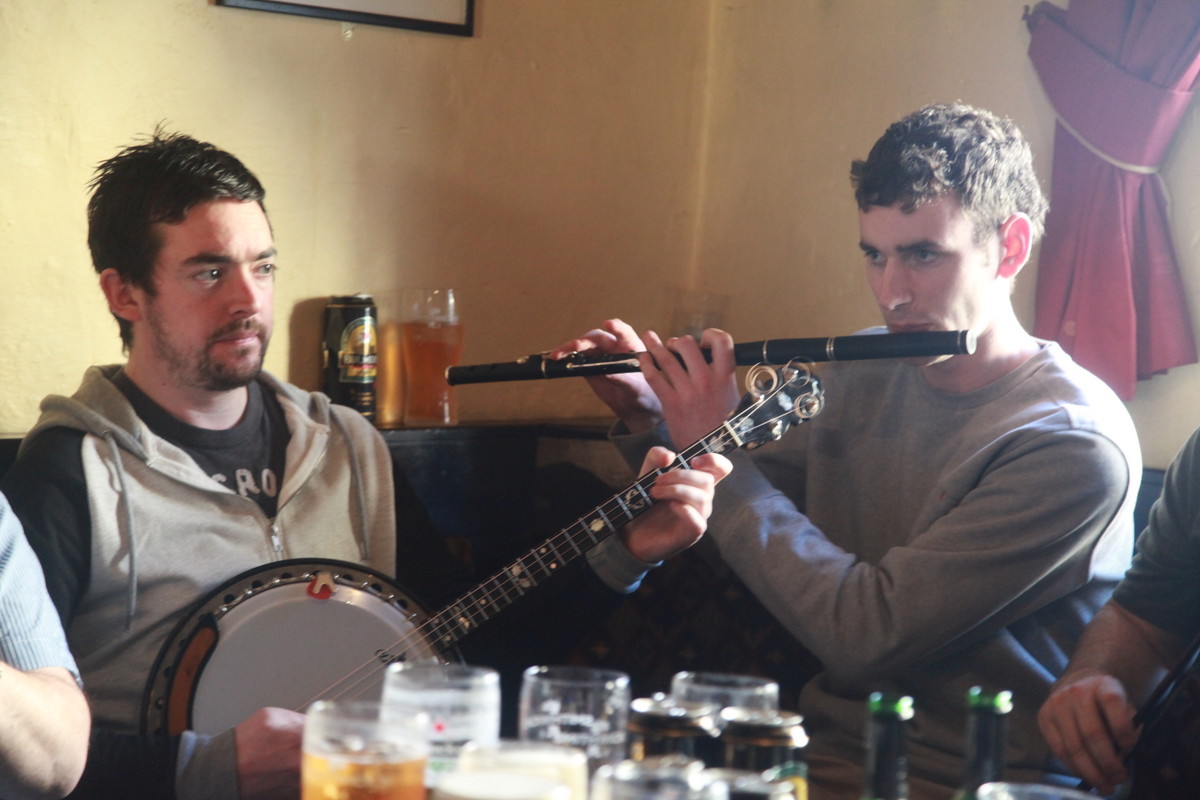
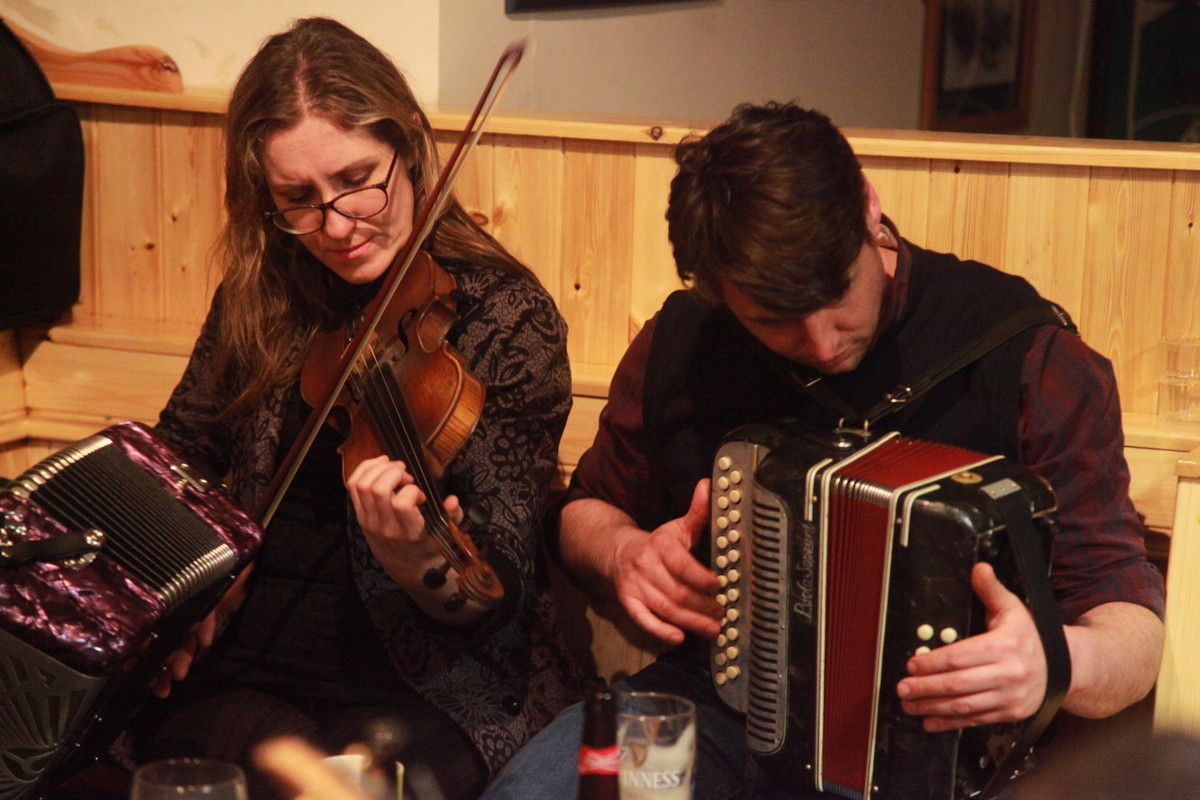
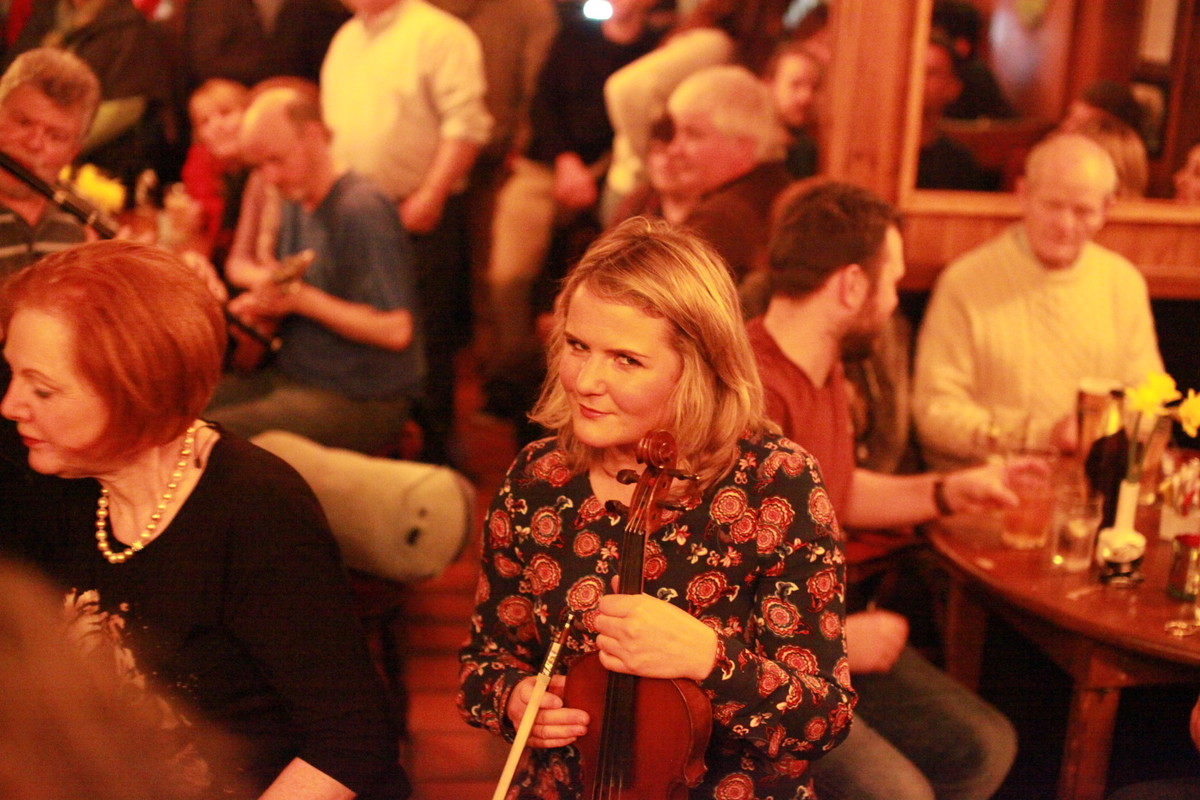
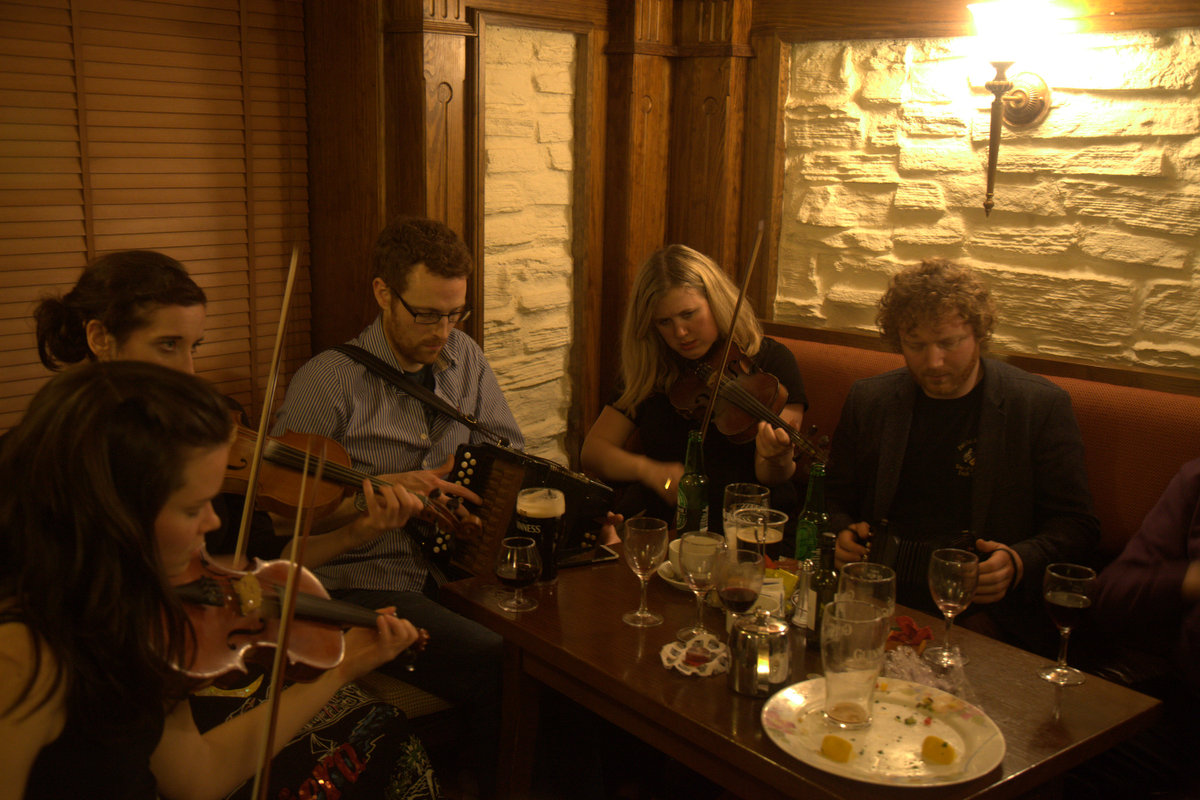
The evening concluded with tunes at Cruises led by Yvonne Casey and Brid O’Gorman, with musicians from France, Japan, UK, Germany, Belgium, Spain, Wales, USA, and Australia and hardly an Irishman to be seen. Lovely to see an ovation from the appreciative audience at the end.

All roads lead to Ennis.

IMG_0493 IMG_0504 IMG_0526 IMG_0546 IMG_0557 IMG_0577 IMG_0627 IMG_0639 IMG_0670 IMG_0697 IMG_0729 IMG_0743 IMG_0752 IMG_0774 IMG_0777 IMG_0796 IMG_0801 IMG_0812 IMG_0819 IMG_0823

Categories: Concerts, Festivals, Sessions, Trad Irish Music | Tags: , , , , , , , , , , , | Leave a comment

Baltimore Fiddle Fair

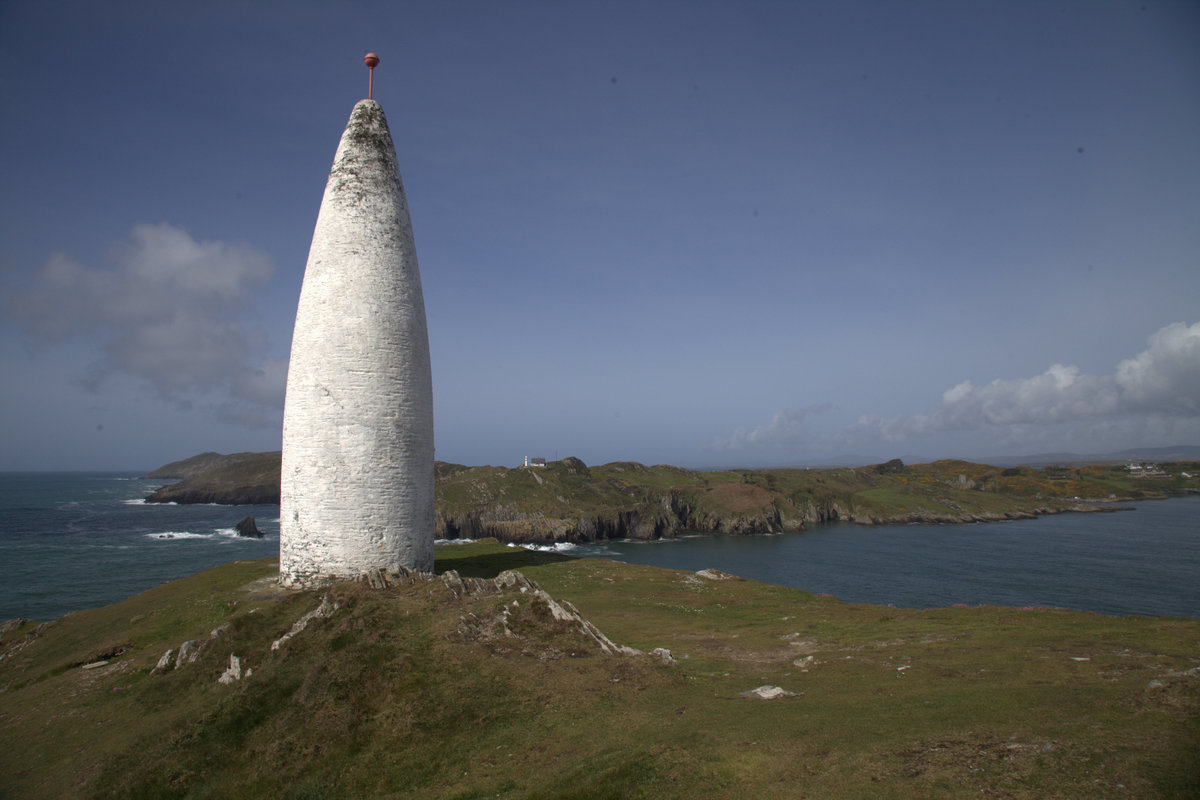
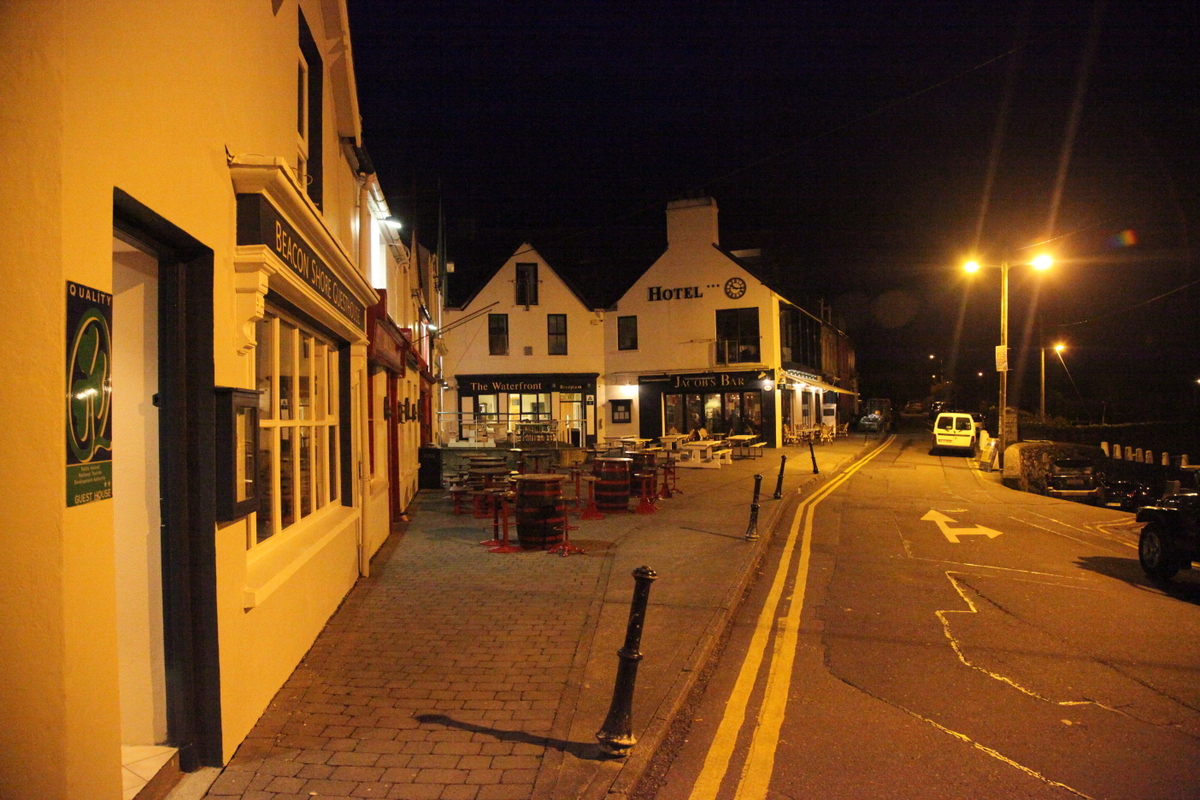
Baltimore lies in the very southwest corner of Ireland in one of the most beautiful parts of Ireland – West Cork. It is a very pretty town nestled on a protected harbour with a strong maritime heritage. Very popular with the yachty set but for one weekend a year the sound of clinking gins-and-tonic is replaced by fiddles and pipes. That is the Baltimore Fiddle Fair and that’s where I headed for the last Festival of my first year in Ireland, which is rapidly coming to a close. And a fitting way to end the year it was.

IMG_9340 IMG_9214

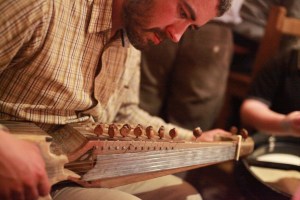
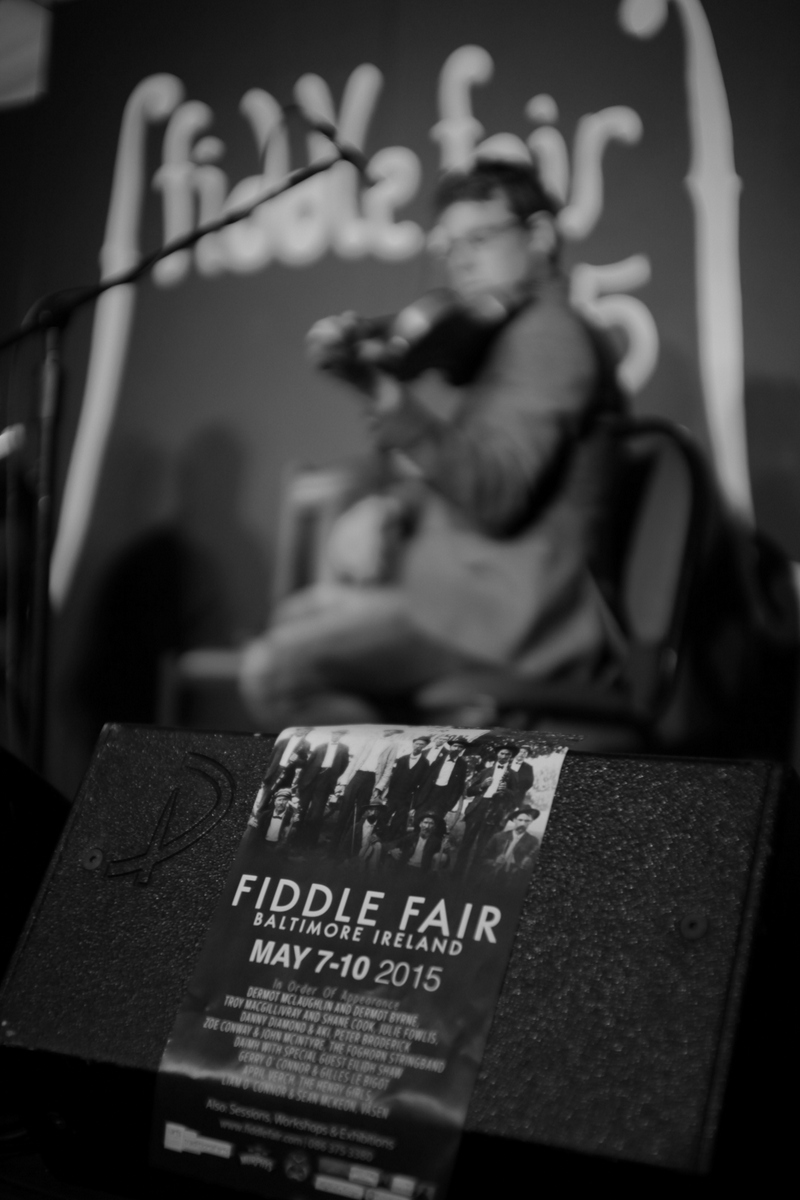
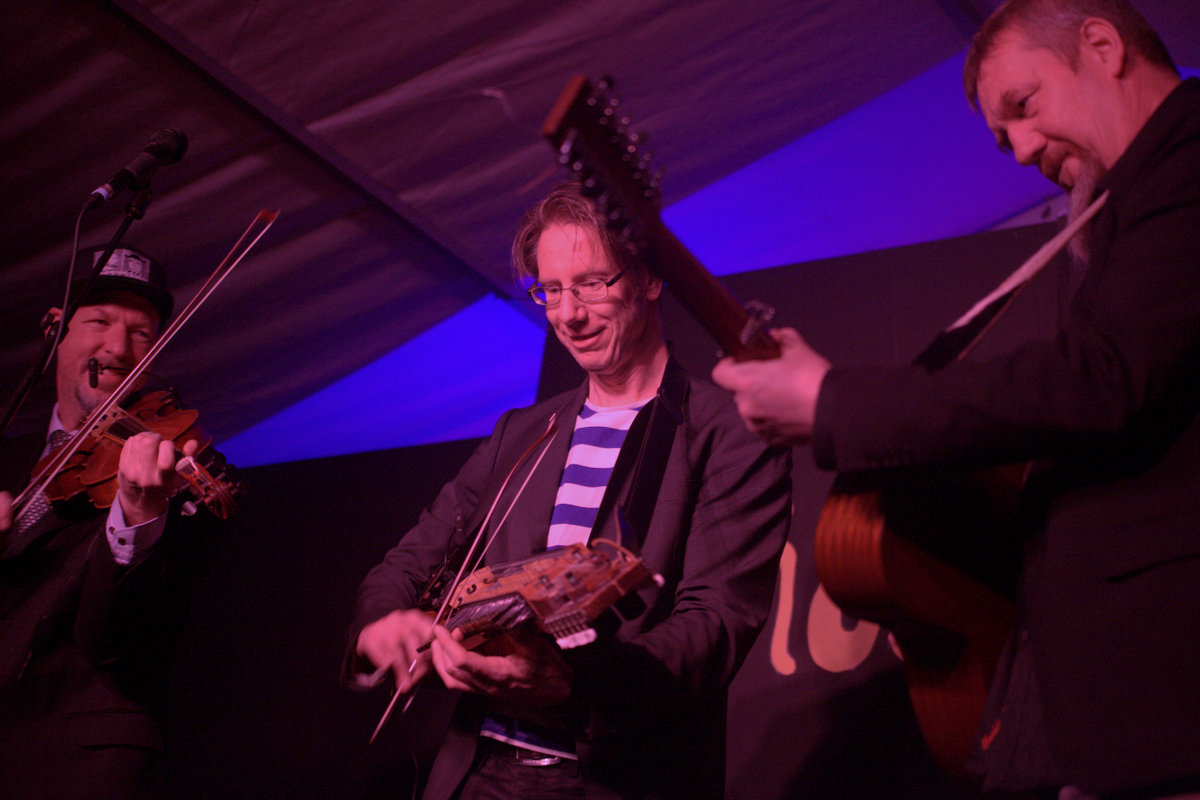
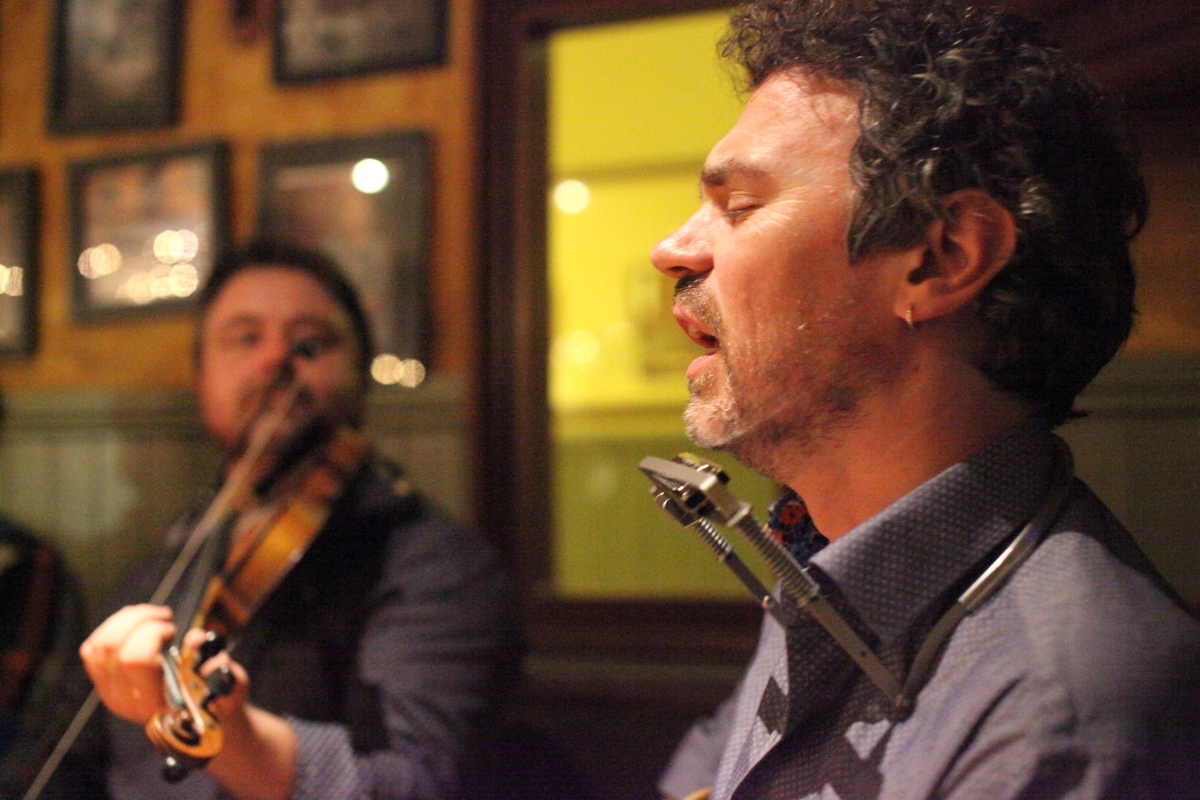
Four days of music centred on the fiddle and covering many genres. We heard Old Timey, Cape Breton, Bluegrass, Swedish, Gypsy Swing, Scots and a variety of traditional Irish. There were fiddlers of the class of Gerry O’Connor, Zoe Conway, Liam O’Connor, Danny Diamond, Dermot McLaughlin and Shane Cook. The core of the festival was the concerts though I have to admit I only attended one, so I can’t really comment on them but the one I did attend was a show stopper. Warmed up by the fiddle and pipes of Liam O’Connor and Sean McKeown the crowd was blown away by Swedish superband Väsen.  I had never heard of them (shame on me) but I know them now.  Slick and professional and as tight a sound as you will ever hear, with five string viola, nyckelharpa and guitar combining effortlessly. This music was a revelation with its dynamic range and variations in tempo and rhythm. I was truly ‘polskafied’.

IMG_9951

IMG_9939-001

IMG_9969

IMG_0030

IMG_0055

IMG_0017

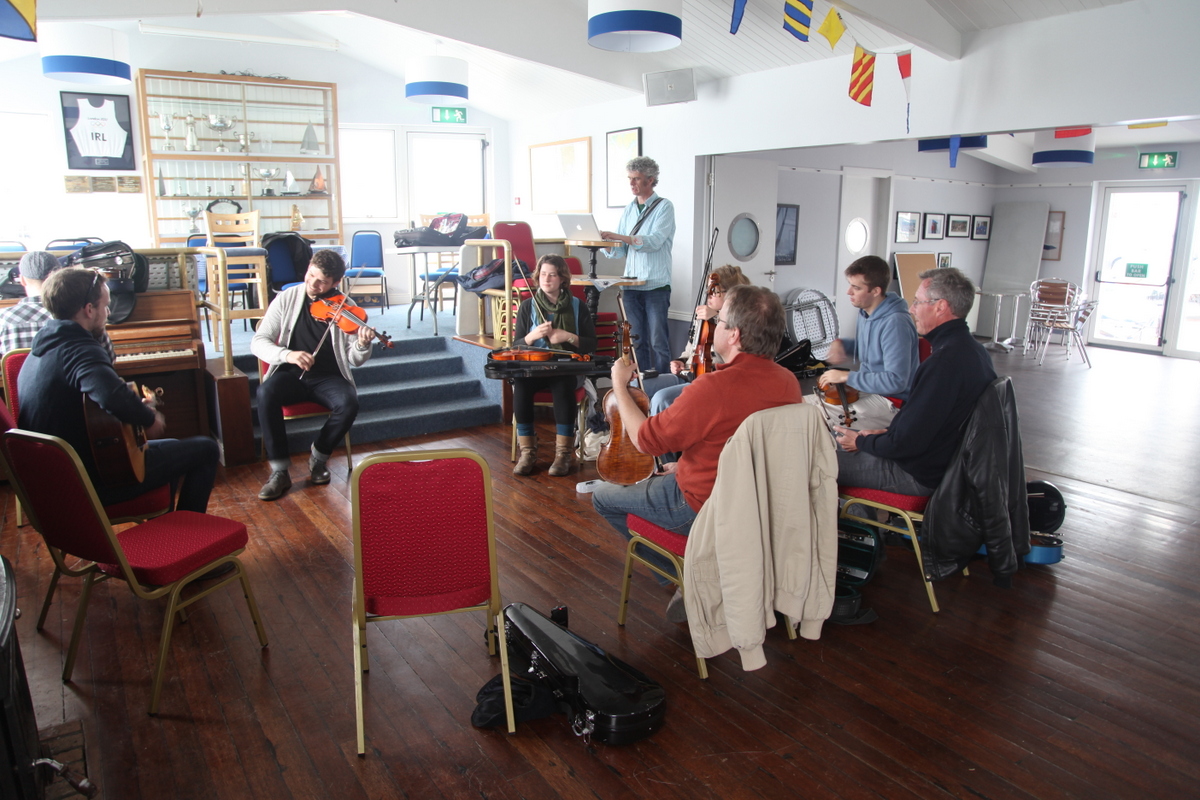
I attended five workshops. A big stretch but I was able to get exposure to Donegal style, Old Timey and Cape Breton as well as picking the brains of Gerry O’Connor and Zoe Conway. I never tire of these workshops. Every time I learn something.

IMG_9700

IMG_9689

IMG_9475

IMG_9458

IMG_9484

IMG_9379

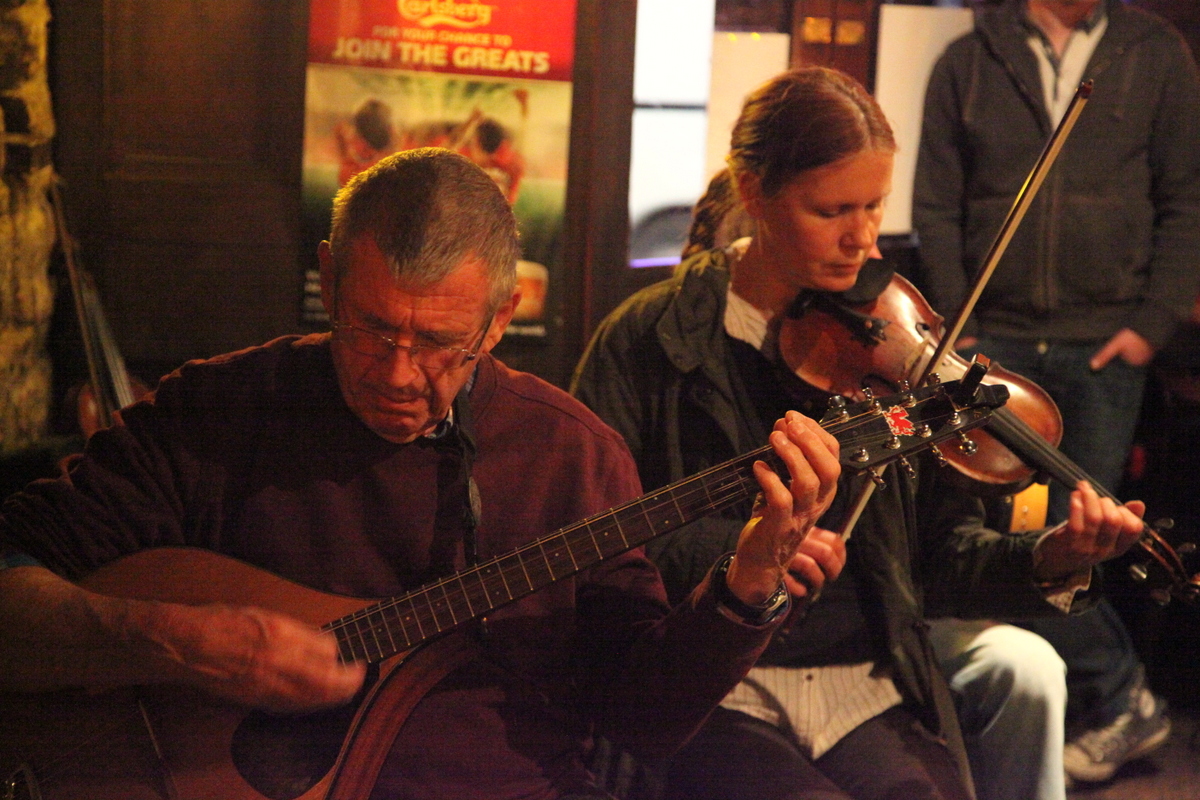
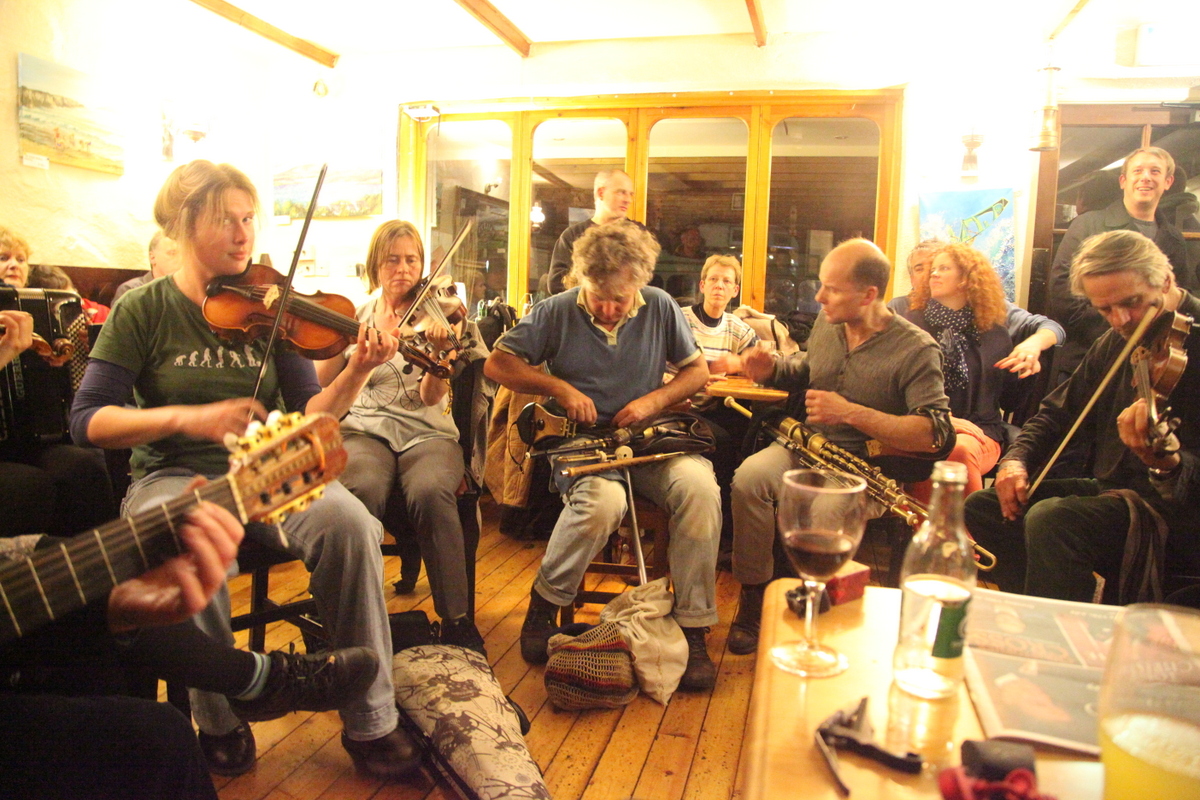
But of course as always it was the sessions that kept me occupied. Every day from around 1 pm there was continuous music in the venues around the Square and in the evenings, after the concerts, Casey’s Hotel raged with as many as four sessions until at least 4am every night. There were visitors from all over the world and I met some wonderful new people including John from Wales, Patrizia and Angelica from Austria, Julie from Denmark, who is cycling around Ireland (https://www.facebook.com/TourdeFolk), Liam from Queensland, Kathleen from Boston, Larry from Tipp, the delightful, Joleen, Karen and Lorna who make up the Henry Girls from Donegal and caught up with old friends again such as Trish from Dublin, Clare from Cork and Aina from France.

IMG_9741

IMG_9432

IMG_9390

IMG_9236IMG_9320

IMG_9256

IMG_9816

IMG_9904

IMG_9853

IMG_9880

IMG_9209

IMG_9221

IMG_9230

IMG_9161

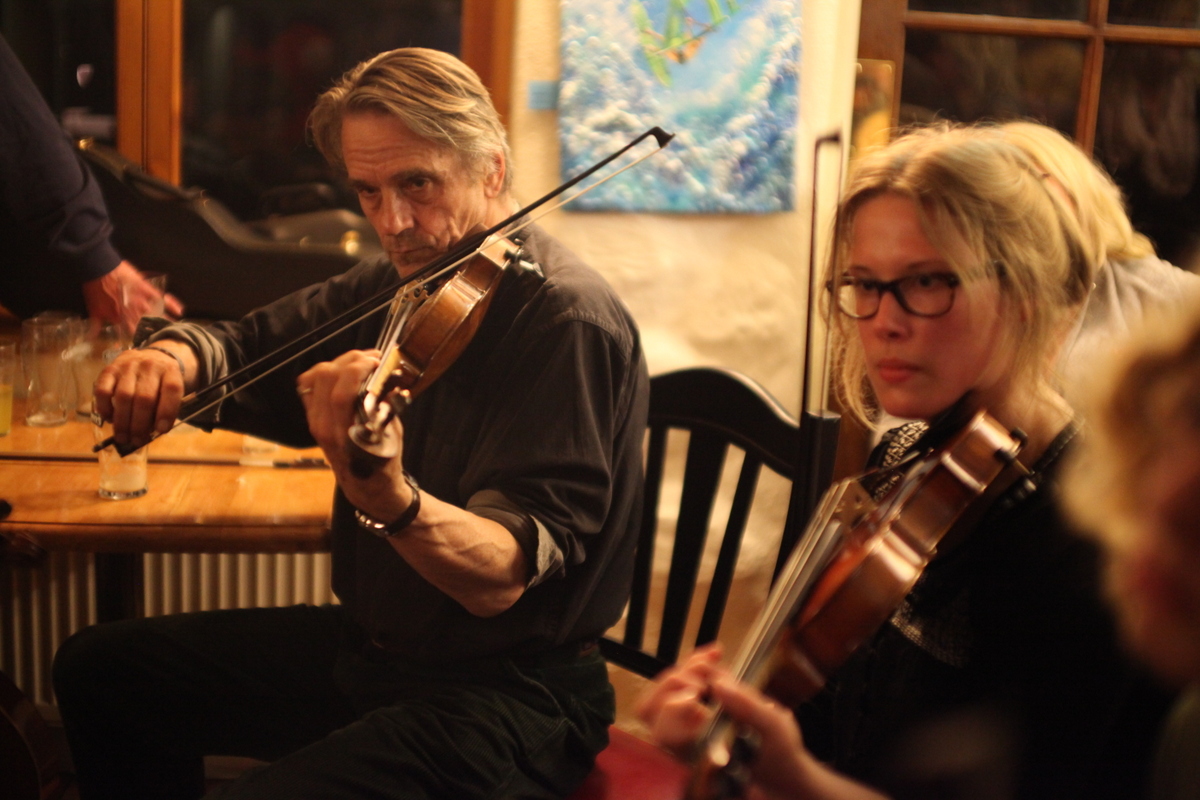
You meet all kinds at a festival such as this and for me that is what makes travelling to them worthwhile. Every evening, we were joined at Casey’s by Jeremy Irons. Self-effacing and just happy to sit in on the edges of the session and find his way in and out of tunes. Clearly revelling in the craic and a world that is a long way from Hollywood.

IMG_9240

IMG_9675

IMG_9245 IMG_9246

And I had the great pleasure to meet renowned Danish artist Claus Havemann. I chatted to him outside Bushes Bar as he stood there having a cigarette and staring across to Sherkin Island where he has had a home for thirty years and spends his time when not in Denmark. He told me of his journey in art over the last forty years which took him from Surrealism to Realism to Modernism to Minimalism to his current works which reinterpret the masters. He told me that he once painted a picture during his Minimalist period called ‘Yellow’ which was essentially dozens of layers of blue paint. The title made perfect sense to me when he explained that yellow is opposite blue on the colour wheel. I have included a couple of his paintings. I especially like the Velazquez ‘copy’, one of a series in which he paints in the style of the master but puts in modern references such as a Picasso and Miro on the wall and his interpretiaon of the Vermeer as a portrait of his daughter.  See more at  http://www.claushavemann.com/

Click for a closer look and zoom

Click for a closer look and zoom

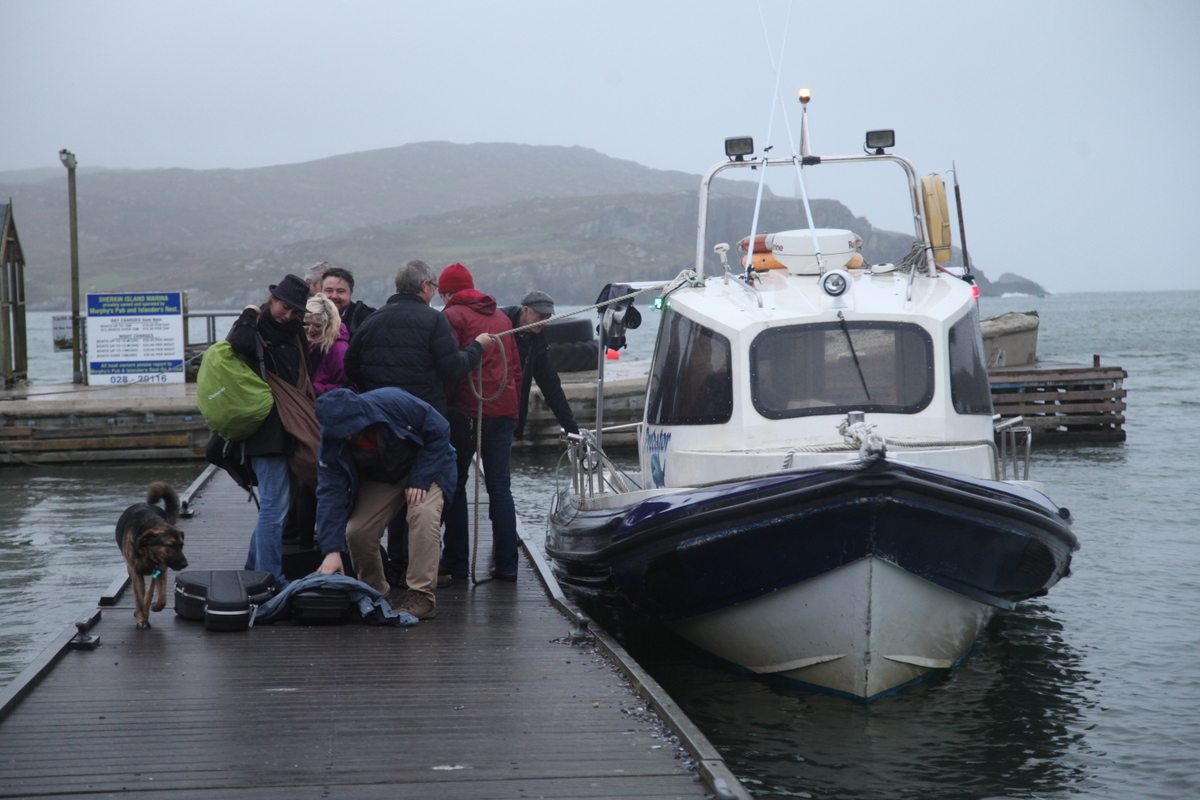
Speaking of Sherkin Island, one of the highlights of the Festival was a session at the Island Rest Hotel. Sherkin is only a few minutes by boat and has about 90 residents. I met many of them that night as they lapped up the seriously good music from the visiting musicians shipped over (literally) for the event. There were some great contributions from locals also including songs and some impromptu dancing from Mary and her artist friends. I have never been to a session where I was picked up and delivered back by boat and the memory of this one will stay a long time.

IMG_9514

IMG_9546

IMG_9553

IMG_9561

IMG_9575

IMG_9542

IMG_9595

IMG_9620

I was intrigued by the Algiers Bar where I also played, having spent quite a bit of time in Algeria during my geology days. Turns out this pays homage to the notorious event in 1631 known as the Sack of Baltimore when Barbary pirates (comprising Dutch, Algerians and Ottomans) attacked Baltimore and captured 108 English settlers who were transported back to North Africa as slaves. Funny how we think of slavery in terms of Africans being sent to the new world, but in the century from 1580 to 1680 there were up to a million Europeans taken as part of the Barbary slave trade. Baltimore was abandoned and the village deserted for generations.

The face of the festival is Declan McCarthy.  It was his brainwave back in 1992 and he is still running it. And what a trooper he is. Everything  (well nearly everything) ran smoothly. The venues, the workshops and the support of the town. Hat’s off to him! Speaking of the venues some of the workshops were held at the magnificent stately home Inish Beg and at the famous Glebe Gardens. Along with the church, sailing club and a specially erected marque they really got it right with, of course, the fabulous location.  And unlike many other festivals where you’re lucky if you can buy a bucket of chips there were great food options with the Glebe Café a standout.IMG_9923

IMG_9716

IMG_9711

I was absolutely shattered at the end of this week. Workshops every morning and some afternoons, sessions all day and surviving on just a few hours sleep. To fiddle a bit with the words of Richard Thompson in Beeswing “you wouldn’t want it any other way”.


Categories: Concerts, Festivals, Sessions, The Fiddle, Trad Irish Music | Tags: , , , , , , , , , , , , , , , , , , | 3 Comments

Super Sunday

What a Sunday.

After a very late night at the Cuckoo Fleadh in Kinvara in Galway I was slow to get started but discovered the perfect antidote at Byrnes Restaurant in Ennistymon. Yvonne Casey and Jon O’Connell.  This was as close to pure as you could hope for.  It was a sublime combination of music and place. Outside after the night’s heavy rain the Ennistymon falls were gushing.  Inside a fiddle and guitar melted together in the hands of two world class players. It didn’t matter that it wasn’t all Irish. At times the small but appreciative audience were mesmerised. I came away enervated but and itching to play.

IMG_8708.CR2

IMG_8770 IMG_8777 IMG_8796

So off to Kinvara again for the Cuckoo Fleadh. There were sessions everywhere by the time I arrived. The highlight for the day was a session with Brid Harper and eight fiddles. At least until the noise from the local lads became too much. Hope I dont offend anyone but I am a fiddler, and for a change to hear eight of them with only a whistle, flute and concertina was heaven.  Great to catch up for tunes with with Moya and Sandra in the back bar of Connollys and with Bridge and Siofra.  On top of 11 hours of music the previous day (including a madcap session with Andrew MacNamara and Eileen O’Brien and meeting and playing with Eilish O’Connor again, after 33 years!) I was well satisfied

IMG_8423 IMG_8434 IMG_8448 IMG_8454 IMG_8461 IMG_8483 IMG_8512 IMG_8518 IMG_8527 IMG_8534 IMG_8564 IMG_8571 IMG_8601 IMG_8605 IMG_8612 IMG_8620 IMG_8631


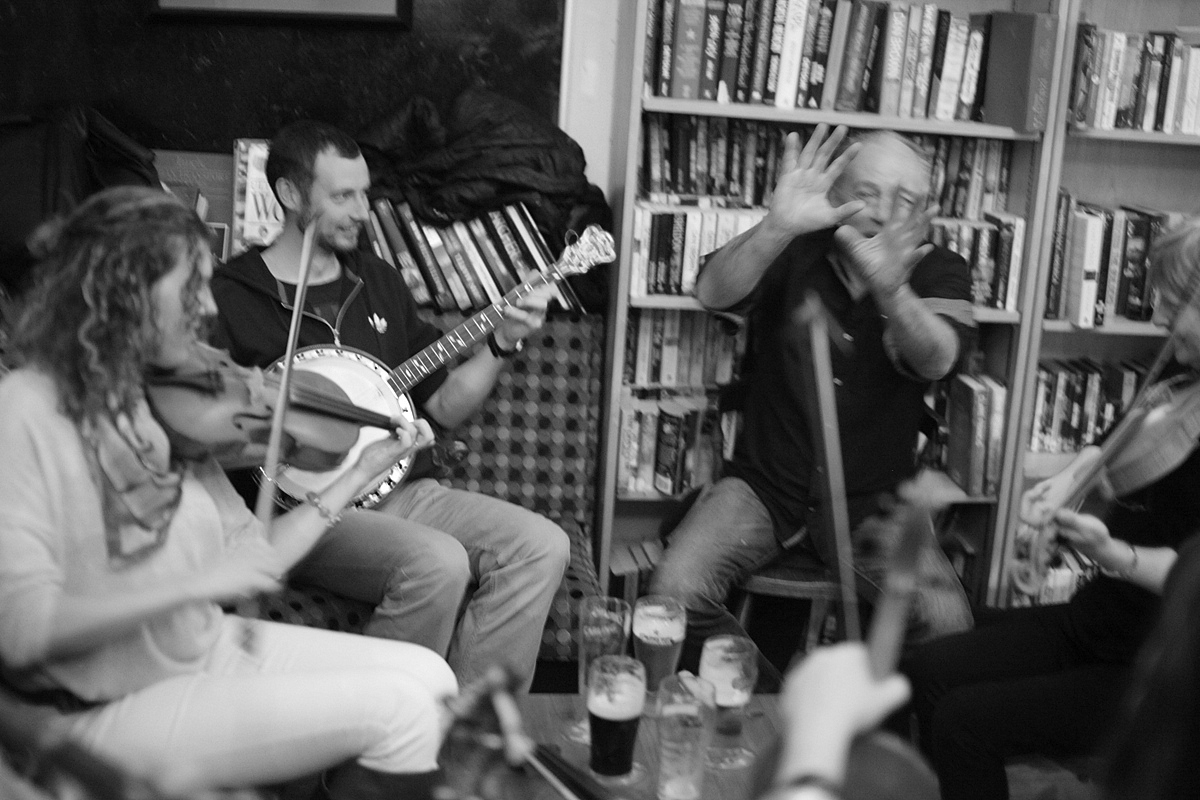
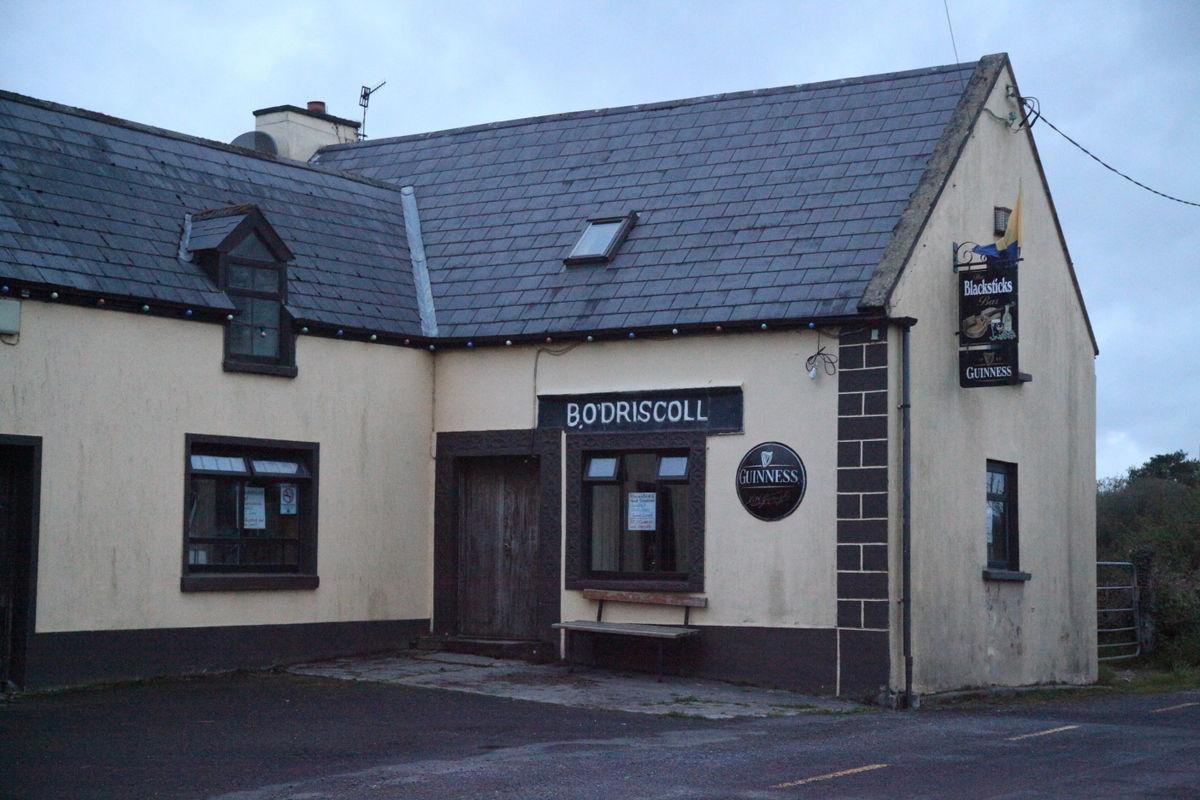
Then off for a session at the Blacksticks Pub at O’Callaghan’s Mills. It lies somewhere between Feakle and Tulla and is one of those rare gems of pubs. It only has music on holiday Sundays and the session in the kitchen, led by Pat O’Connor and John Canny and attended by locals from Feakle and Tulla was a real little window into East Clare. I will talk more about this in another place but I got home at 3.30am, after pretty much circumnavigating Clare, tired and satisfied.

IMG_8878 IMG_8879 IMG_8880

Categories: Festivals, Sessions, Trad Irish Music | Tags: , , , , , , , , , , , , , , , , , , , , | Leave a comment

Man of Aran

What is it about islands? Why do they have such appeal to us? All around the world they are treasured as special. Sometimes the residents are fiercely protective. In Australia we have many that hold a singular place and I was lucky enough to live on one such of these – Magnetic Island on Australia’s Great Barrier Reef. There are others though; Rottnest Island, where you can’t live but it is still very dear to the heart of Perth people, or Kangaroo Island off South Australia, or the beautiful Lord Howe Island among them. Ireland has a few too, such as Tory, Achill, Skellig and of course the Aran Islands.

Mention the Aran Islands and you immediately have my attention. The place has a mysterious lure. Despite knowing little about it (except that it is where the Clancy Brothers got their jumpers from and one of the most omnipresent tunes in sessions around the world is named after one of the Islands) it was a place I felt I must visit. I have been on two separate occasions. First, on a freezing summer’s day in July 2014, to Inisheer for an overnight stay; and more recently over three glorious sunny, warm days in April 2015. That’s Irish weather for you – freezing in Summer and hot in Spring!

The Islands are accessed either from Galway or Doolin, in my case for both trips I took the boat from Doolin, half an hour from my home in Caherush. My first visit was a spontaneous decision based on the fact there was blue sky in the morning. Of course by the time the boat left the weather had turned and the squally rain and howling wind off the Atlantic made for a very rough half hour crossing which took over an hour as we were buffeted by giant waves. At one point we stopped in the middle of the ocean in a futile attempt to retrieve a feral buoy. This was in contrast to my trip to Inis Mór when the sea was mirror calm with not a ripple. So I saw the islands in its various moods.

Ferry to Inisheer.  Rough seas with Cliffs of Moher in the background Arriving Inis Mor

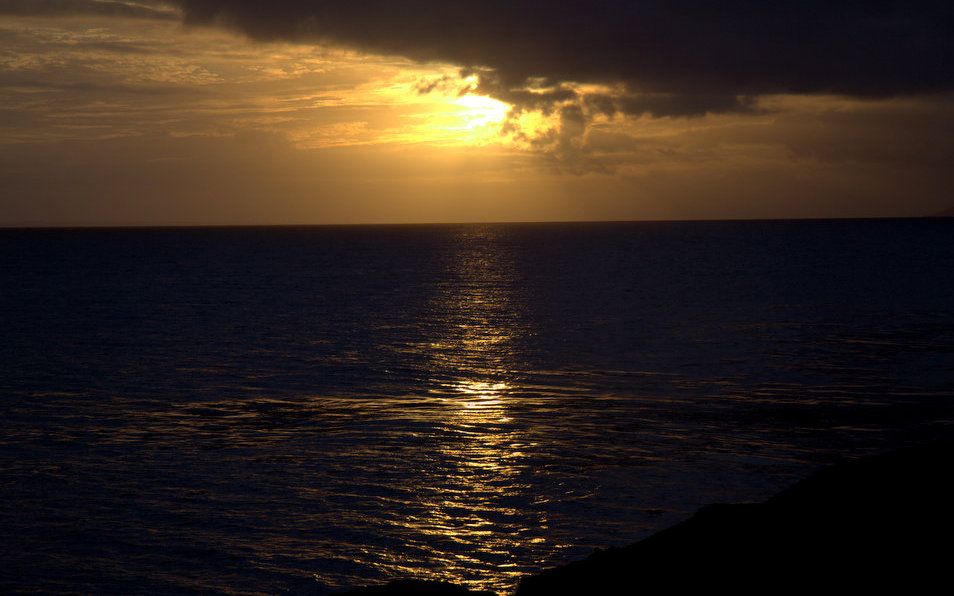
Inisheer SunriseHarbour at Kilronan.  Inis Mor

Inisheer Inisheer.  Early morning sky

Technically the islands are part of Galway, but geographically, geologically and culturally they belong to Clare as the three Aran Islands are an extension of the Burren.  They all have that wild inspiring landscape that I found so enriching in north Clare and that I have blogged about before. https://singersongblog.wordpress.com/2014/06/20/the-burren/

https://singersongblog.wordpress.com/2014/08/29/the-burren-again/

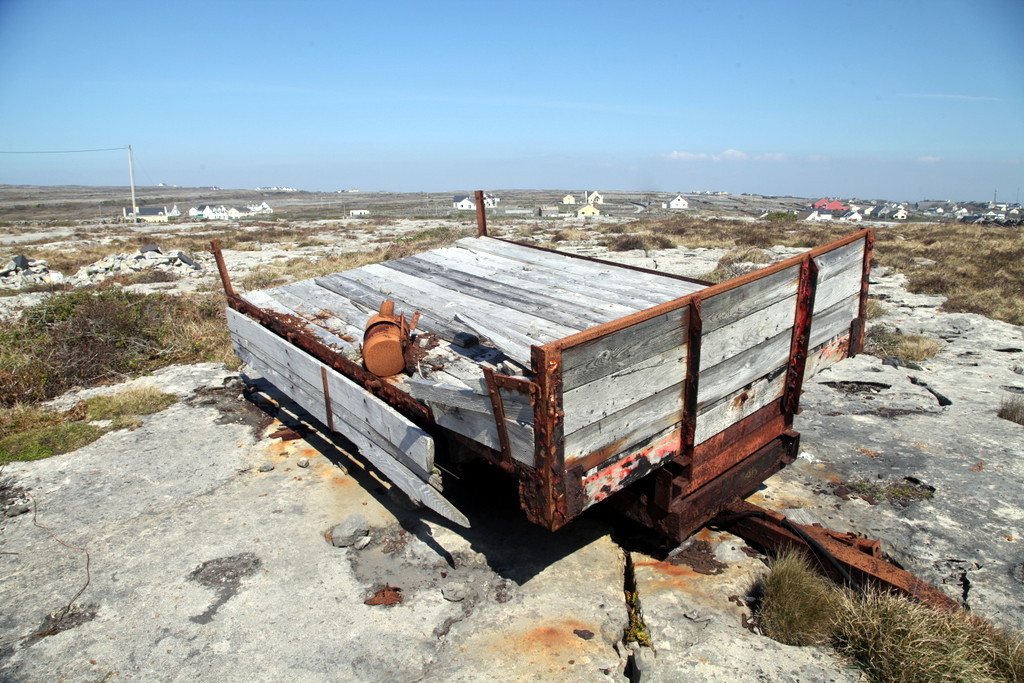
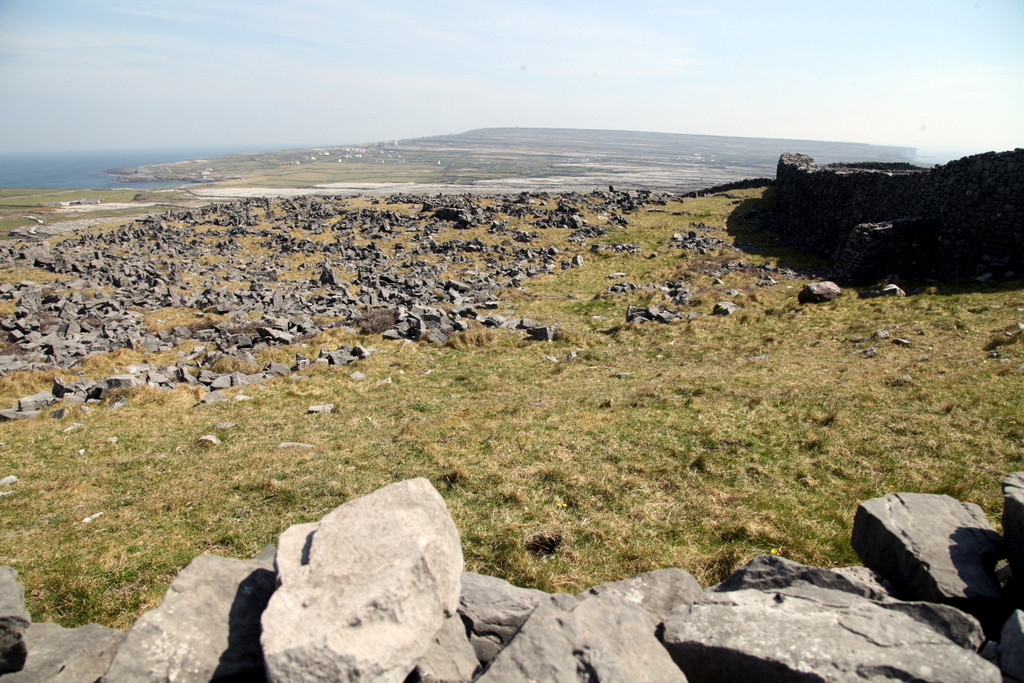
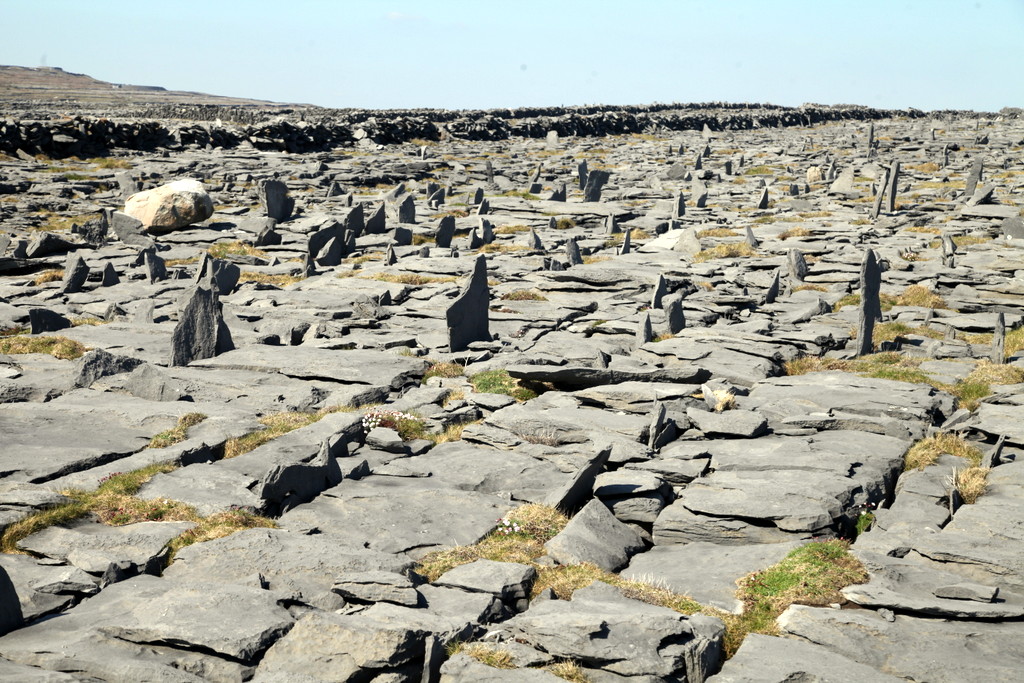
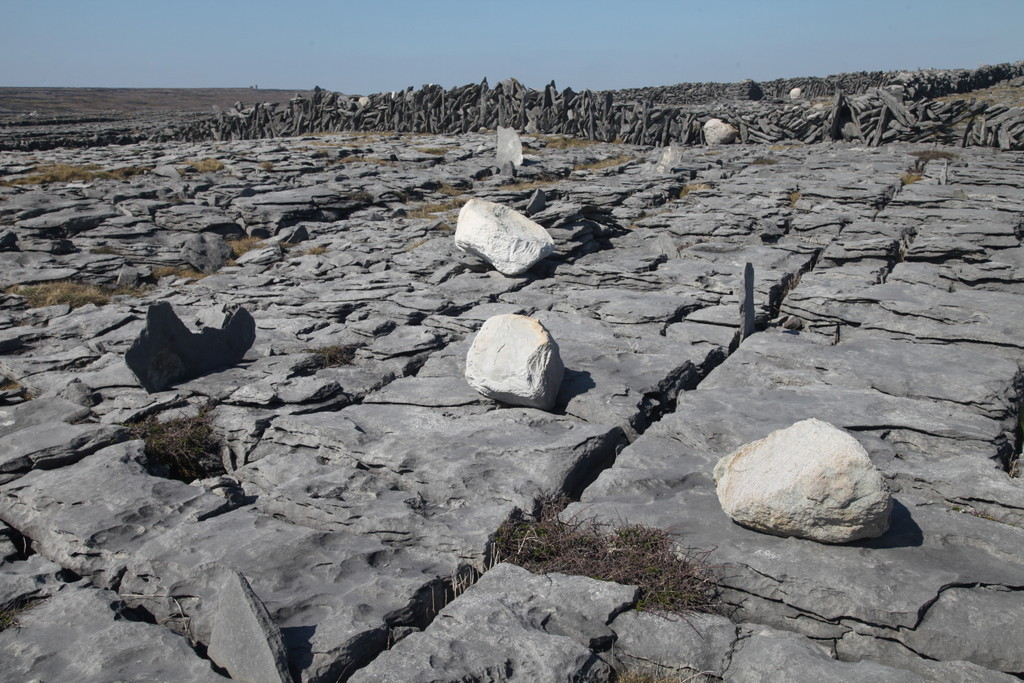
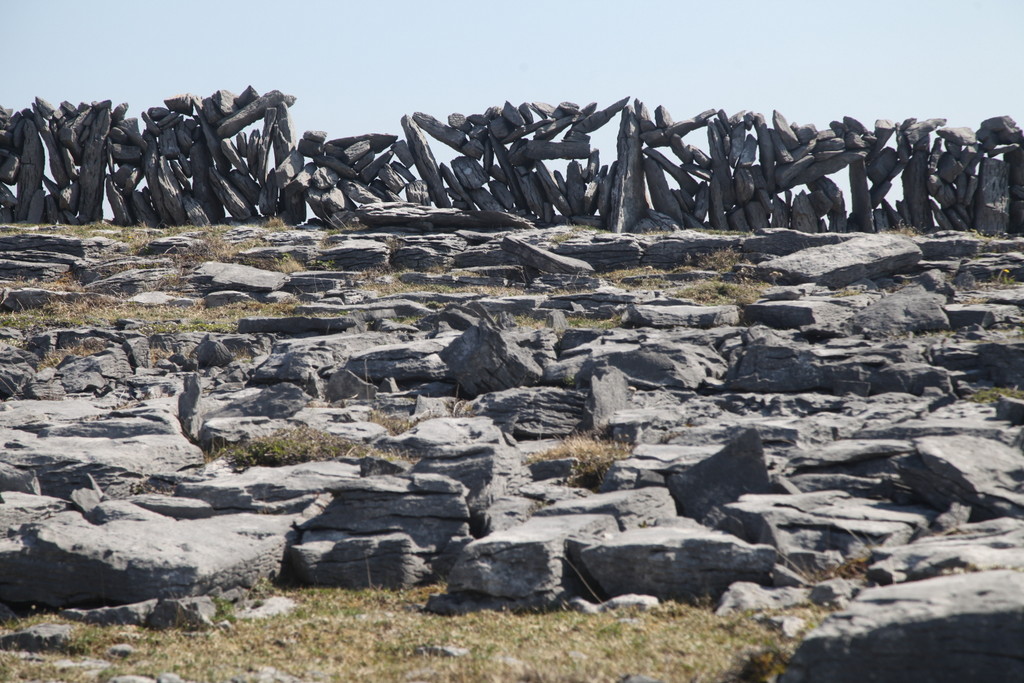
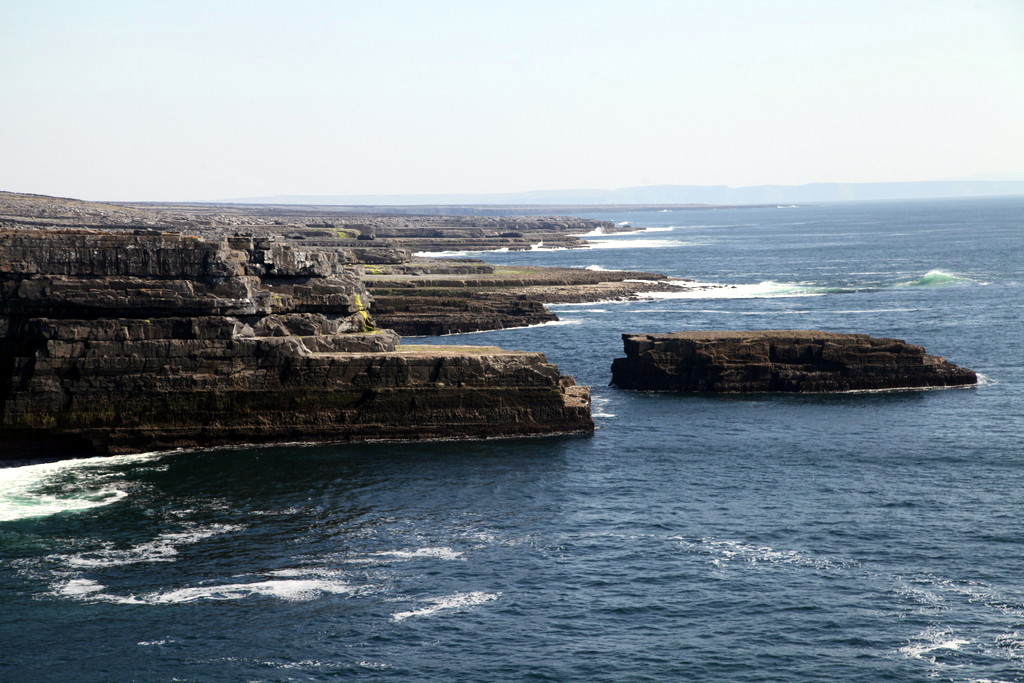
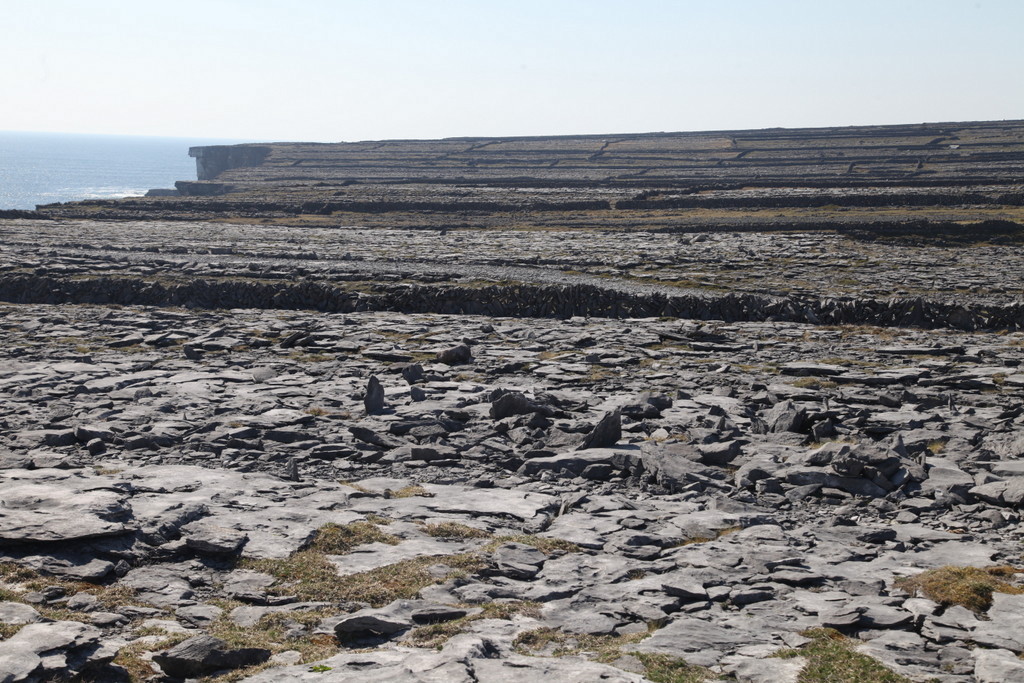
All the features of the Burren are there. Sometimes better exposed than on the mainland: clints, grykes, rillenkarren, dolines, kamenitzas, glacial erratics, fossil shells and corals, limestone pavements, but with the ever present Atlantic around almost every corner.

So back to my first question. With the Aran Islands, is it that inconvenience mixed with expectation that getting there involves that makes it attractive to visitors? Or that feeling that once there you are completely cut off (well maybe not now with smartphones).   Or the slower pace? How would it be to actually live there?

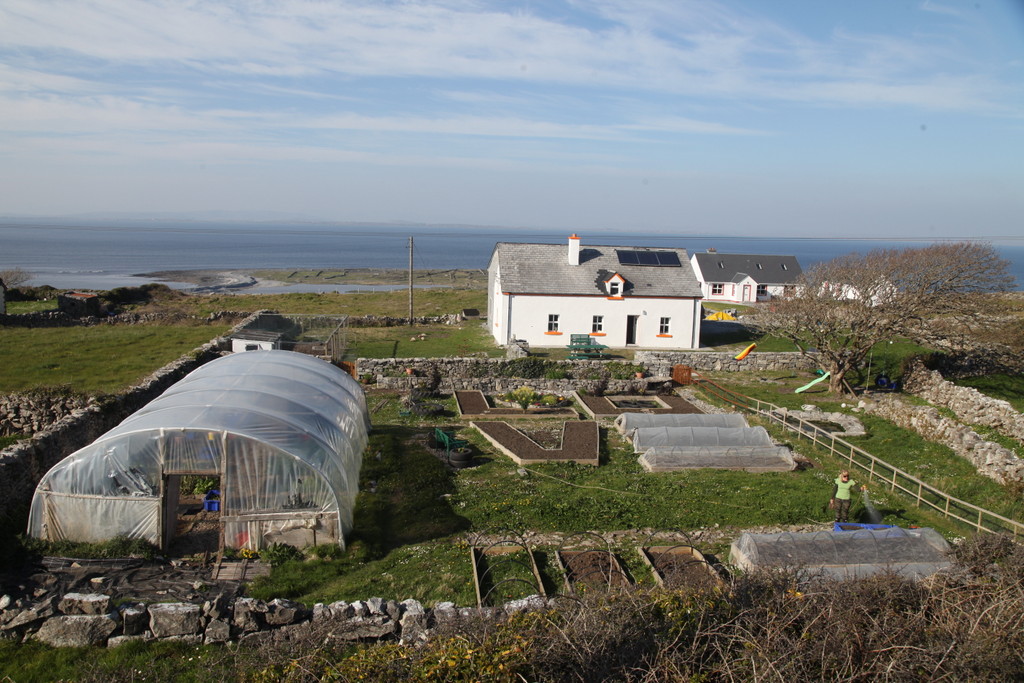
Of course many do and Melissa and Johnny Gillan and their five children are among them.  Melissa is from Maine and married an Irishman from Aran who after their second child convinced her to leave the States and start a new life on Inis Mór. Melissa tells the story way better than I could on her blog (which is how we met) http://thearanartisan.com/2014/11/08/i-live-in-aran/.  I have never seen anyone happier. She now has five kids and an enviable lifestyle where she has created a paradise – a garden that sustains her family within this harsh environment and is moving towards her dream of starting a business based on this. The whole family is involved, with the kids nurturing the garden and animals with a sense of pride. Her philosophy is captured by the layout of the garden beds which spell the word LOVE and which was revealed with delight by her kids after an enthusiastic guided tour. I was invited to dinner there one night, which comprised razor clams gathered on the shore, a tuna steak from a fish caught by Johnny’s brother off the coast, potatoes, carrots, kale, rhubarb crumble and a parsnip cake. All from the garden and made with skill and affection. The kids embrace the lifestyle. I was reminded a little of the zest for living my own kids had on Magnetic Island for the three years we lived there. Melissa and Johnny may not be your typical Aran family, I don’t know, but I also met Cóil and Grainne, both young islanders who gave up their day to show me around their island with an obvious pride. I was greeted with nothing but warmth and hospitality.

Melissa Gillan's grarden Inis MorThe Gillan family.  Inis Mor

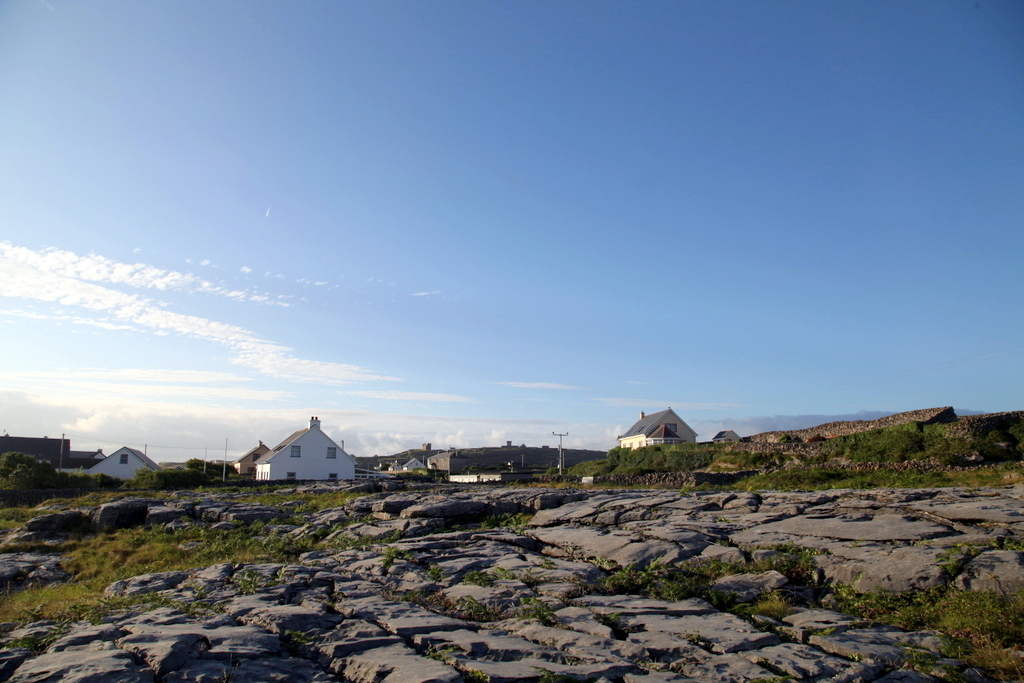
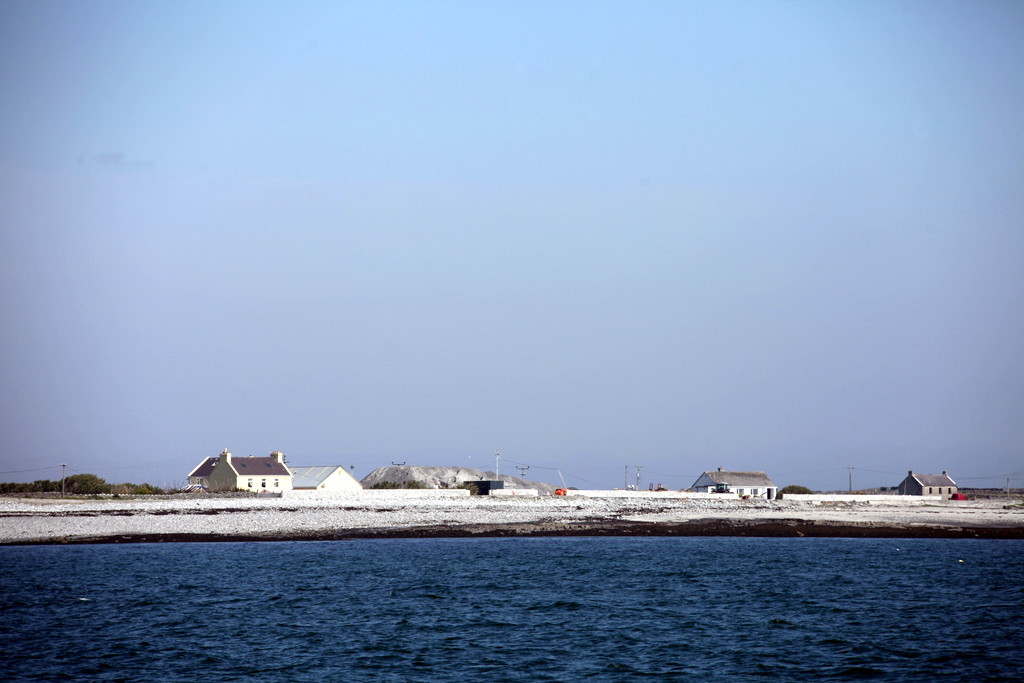
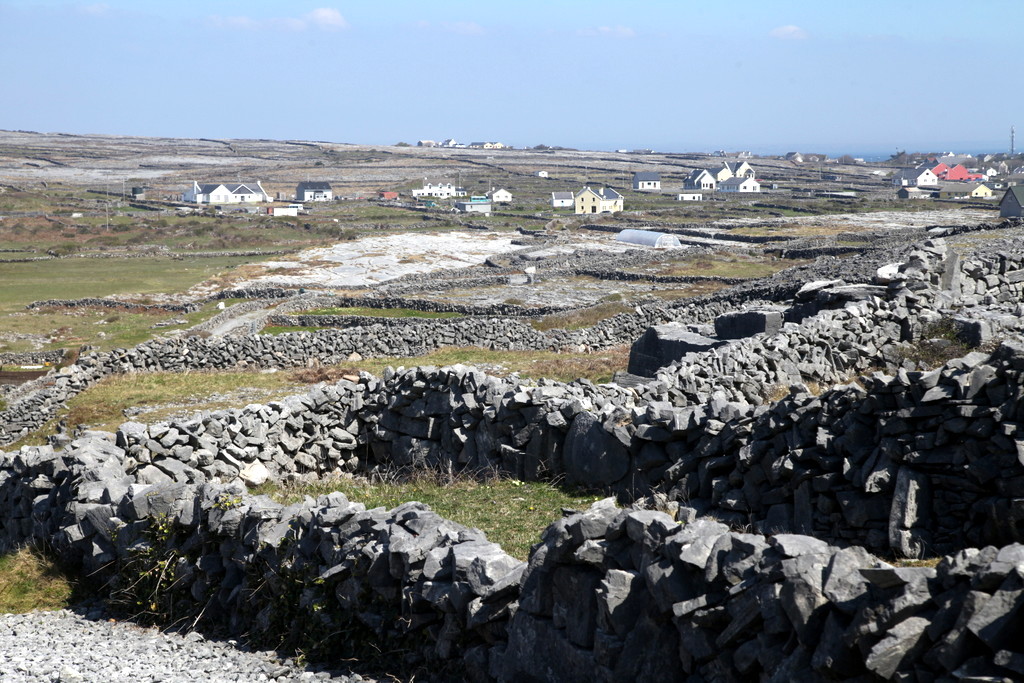
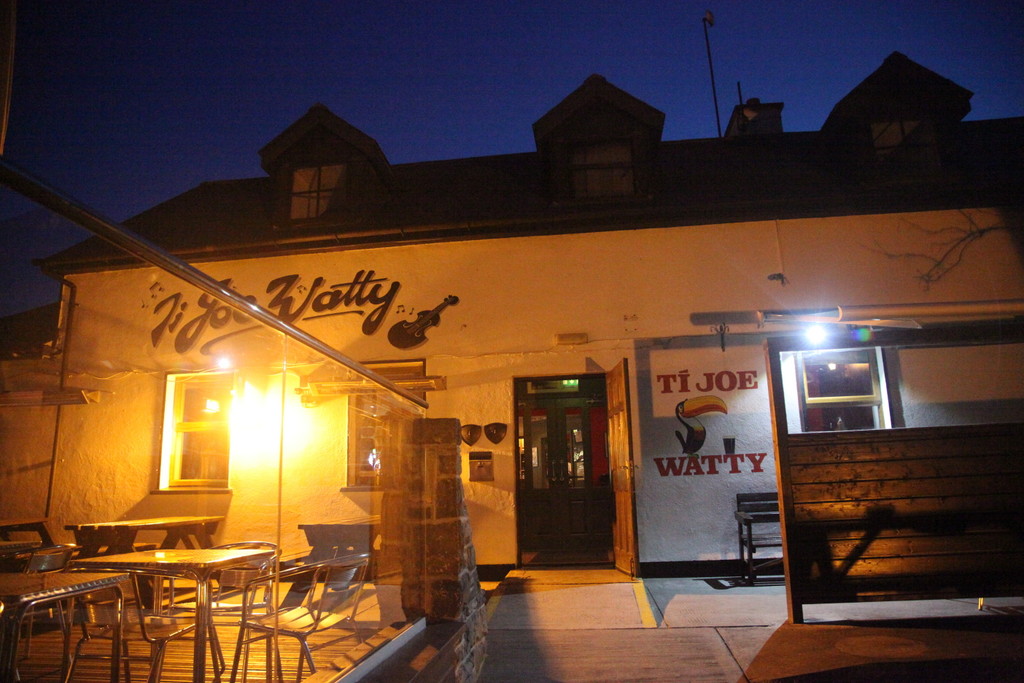
Both the Islands I visited seem to have somewhat different characters. Inis Mór (the Big Island) has sweeping landscapes with hardly a tree; massive limestone pavements and steep cliffs. It doesn’t seem heavily populated but there are about 900 people spread across the entire island. Inis Oírr is smaller with about a third of that but the houses are more concentrated around the main settlement of Inveragh and the fields as defined by the stone walls seem smaller. Both have the same sparse pasture, lush in places barren in others.  Inis Mór has more tourists and a lot more bicycles but it is easy to avoid the day trippers by starting early. The evenings everywhere are gloriously empty of people except for the inevitable craic behind the walls of Ti Whatty or Rory’s.

Inisheer.  Stone fields

Inisheer. Stone walls and fields

Inisheer

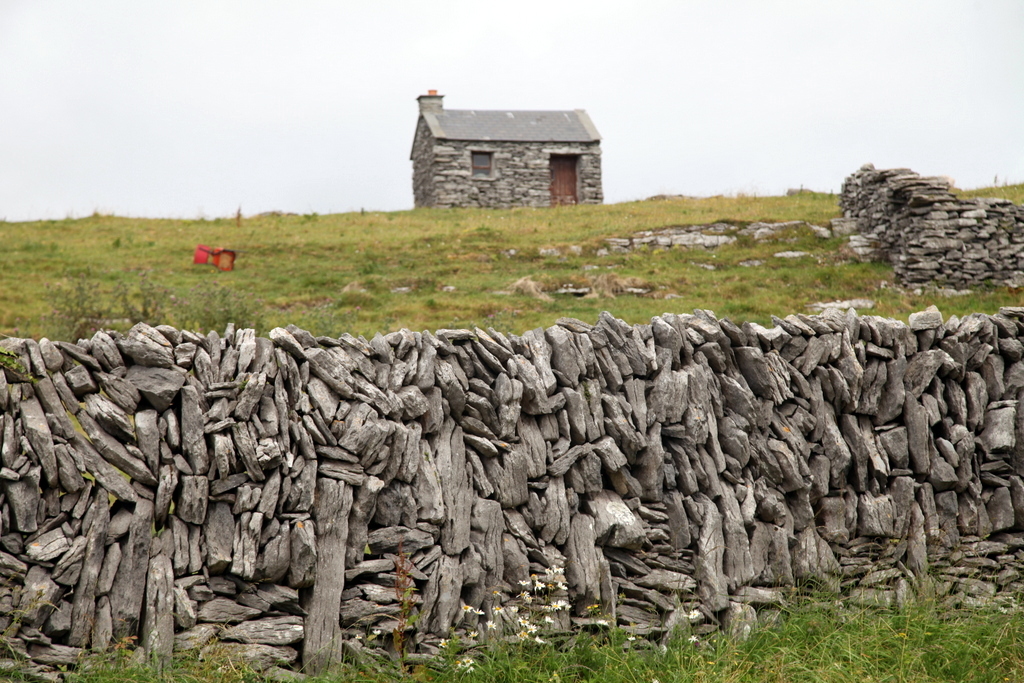
Inisheer. Drystone walls and one room cottage

Inisheer

Inisheer in the morning light

Inisheer

Inisheer

Inisheer

Inisheer.  Off to fiddle lesson?

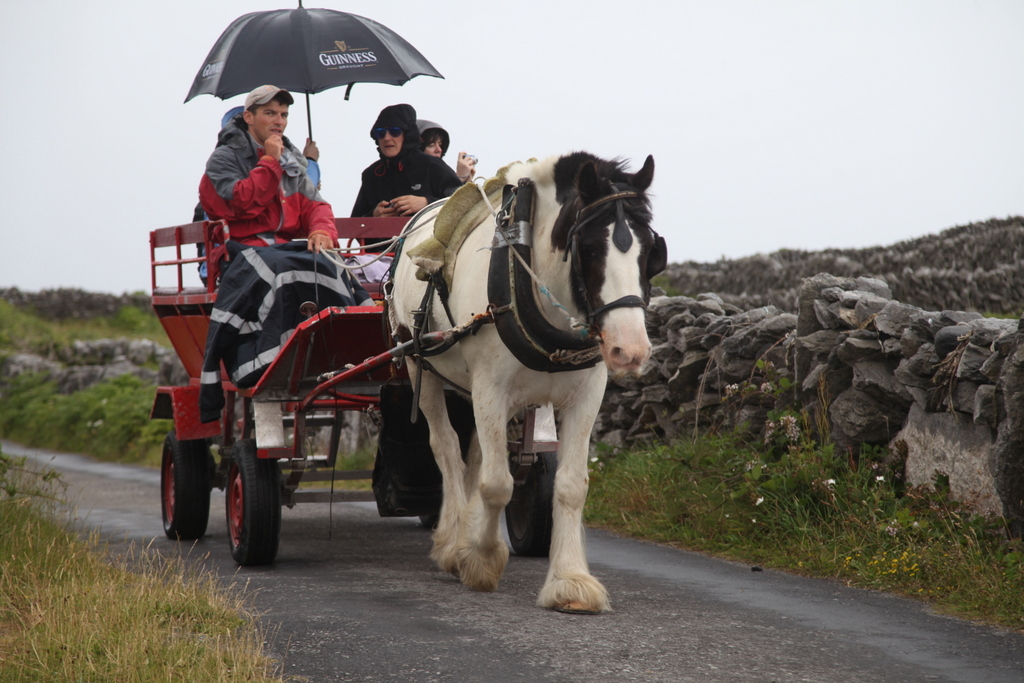
Inis Mor. Coping with the elements

Inis Mor. Coping with the elements

Inis Mor.

Inis Mor.

Inis MOr

Inis Mor.

IMG_5709

Inis Mor

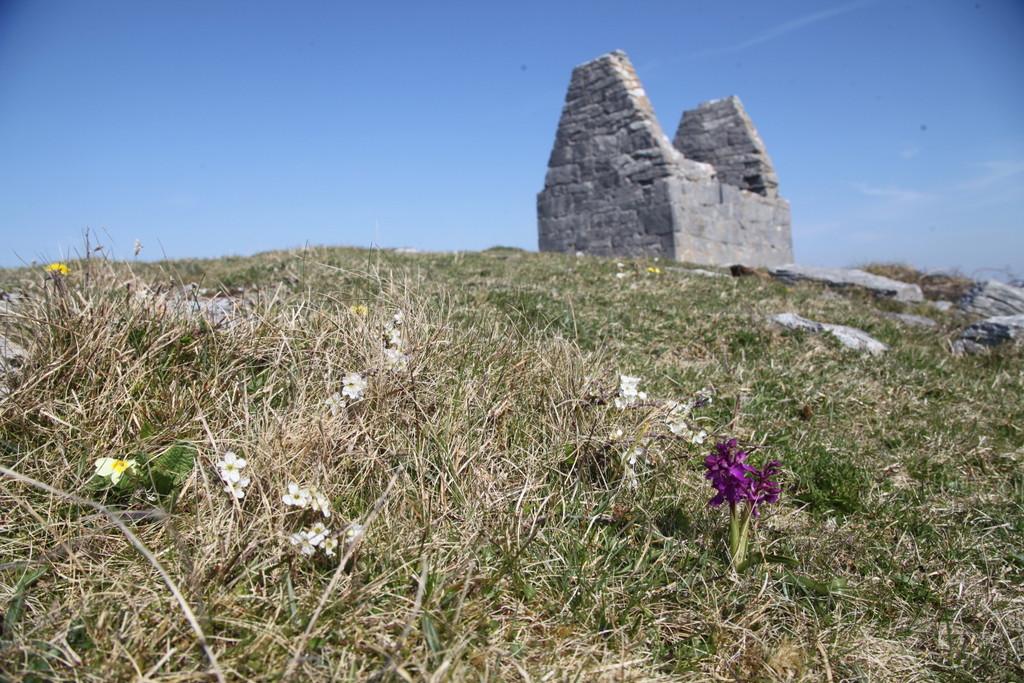
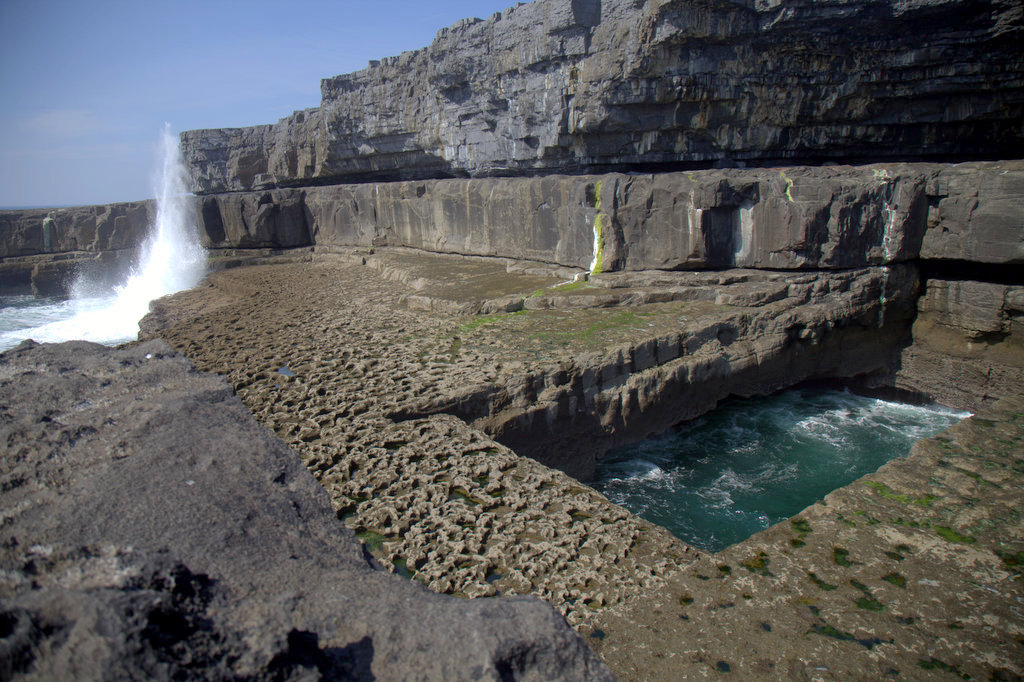
There is plenty for the tourist. On Inis Mór, bike hire is popular and the circuit to the Dún Aonghasa fort is a well-worn trail. But off the beaten track are some amazing sites such as the Black Fort, the Seven Churches and Teampull Bheanáin, reputedly the smallest church in the world measuring around 3m x 2m.  This unusual church can be seen from all around the island and was the best location I found for viewing the unique Burren flora.  Then there is the spectacular Worm Hole or Poll na bPeist. It is a hole in the rock platform that looks like it has been sliced out by the hand of Fin McCool himself. There is a more prosaic explanation that relates to erosion along mutually orthogonal jointing but let’s stick with Fin McCool, I think! Connected with this is a blow hole where the back pressure from the hole causes the sea to shoot up periodically  higher than the cliff.  This is an awe-inspiring place that has been put on the tourist map by the Red Bull people who have filmed one of their diving videos here.

Inis Mor. Teampull Bheanáin

Inis Mor. Teampull Bheanáin

Inis Mor. Teampull Bheanáin

Inis Mor. Teampull Bheanáin

Inis Mor. Teampull Bheanáin

Inis Mor. Teampull Bheanáin

Inis Mor. Teampull Bheanáin

Inis Mor. Blowhole at the Worm Hole. Poll na bPeist

Inis Mor. Blowhole at the Worm Hole. Poll na bPeist

Inis Mor. Blowhole at the Worm Hole. Poll na bPeist

Inis Mor. Blowhole at the Worm Hole. Poll na bPeist

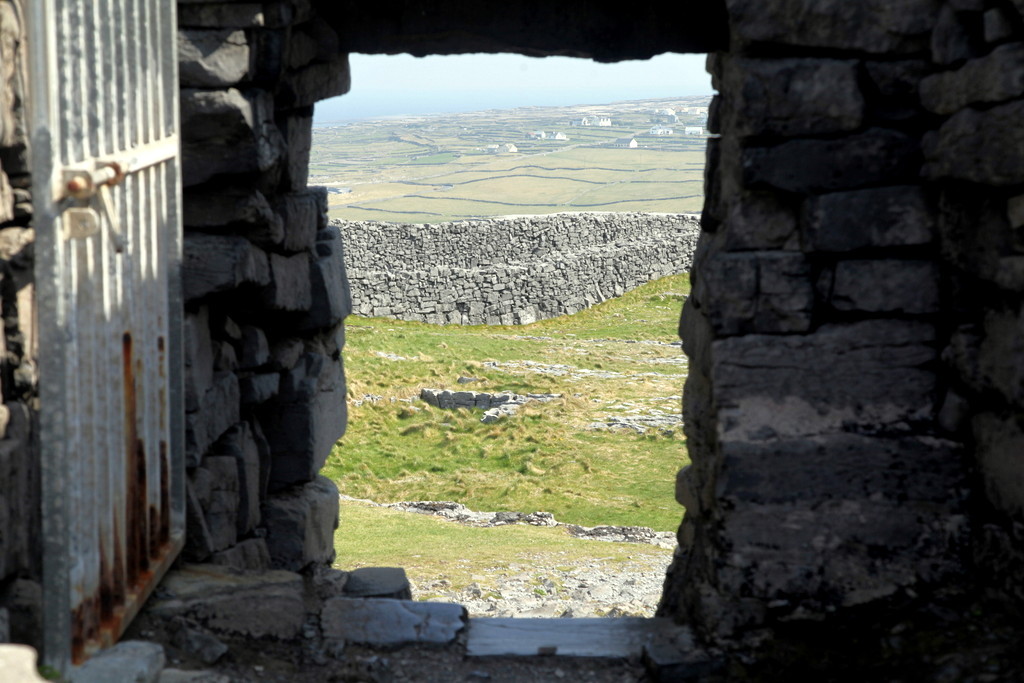
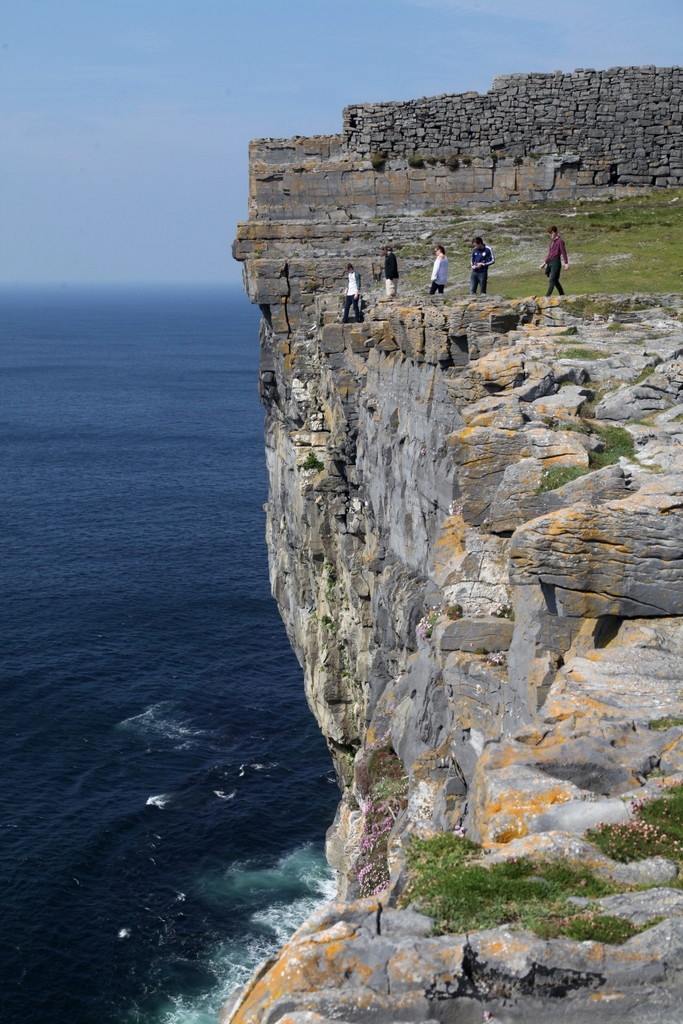
The Islands, and in particular Inis Mór is well known for the excellent preservation of their megalithic circle forts. Dún Aonghasa gets the most attention, but others such as Black Fort are just as interesting and much quieter. These forts are fascinating and here on Aran occupy a coastal positon where the cliffs are used as one line of defence and a semicircular stone rampart as the other enclosing a headland within which was a settlement. There were also a number of outer walls in some cases and unique and spectacularly well preserved examples of chevaux de frise. These are fields of sharp limestone lugged into place and designed to make cavalry or foot progress difficult and retreat impossible. They were placed about 30m away from the wall as this was the range of hand thrown projectiles of the time. The original structures at Dún Aonghasa appear to date from around 1000 BC which places them near the end of the Bronze Age. The famous portal tomb at Poulnabrone on the mainland is much older (3,800BC) as are other tombs on Aran which date to 1850 BC.  This first period of settlement at Dún Aonghasa ended about 700BC but then the site was added to and inhabited during medieval times and later. I spent hours at these forts mesmerised by the ambience and the anicientness (if that is a word!)

Inis Mor. Dun Aengus fort

Inis Mor. Dun Aengus fort

Inis Mor. Dun Aengus fort. Cheval de frise

Inis Mor. Dun Aengus fort. Cheval de frise

Inis Mor. Dun Aengus fort

Inis Mor. Dun Aengus fort

Inis Mor.  Rock platform Dun Aengus fort

Inis Mor. Rock platform Dun Aengus fort

IMG_6641

Inis Mor. Inside the inner wall Dun Aengas

Inis Mor. Inner wall. Dun Aengus fort

Inis Mor. Inner wall. Dun Aengus fort, showing remarkable stone work

Inis Mor. Dun Aengus fort

Inis Mor. Dun Aengus fort. Stone was quarried from the steep face near the wall.  Note the crack!

Inis Mor.  Black Fort. Cheval de frise with glacial erratic

Inis Mor. Black Fort. Cheval de frise with glacial erratic

Inis Mor.  Black Fort showing walls of medieval houses

Inis Mor. Black Fort showing walls of medieval houses

Inis Mor.  Black Fort

Inis Mor. Black Fort from inside the enclosure

Inis Mor.  Black Fort and cheval de frise

Inis Mor. Black Fort and cheval de fries

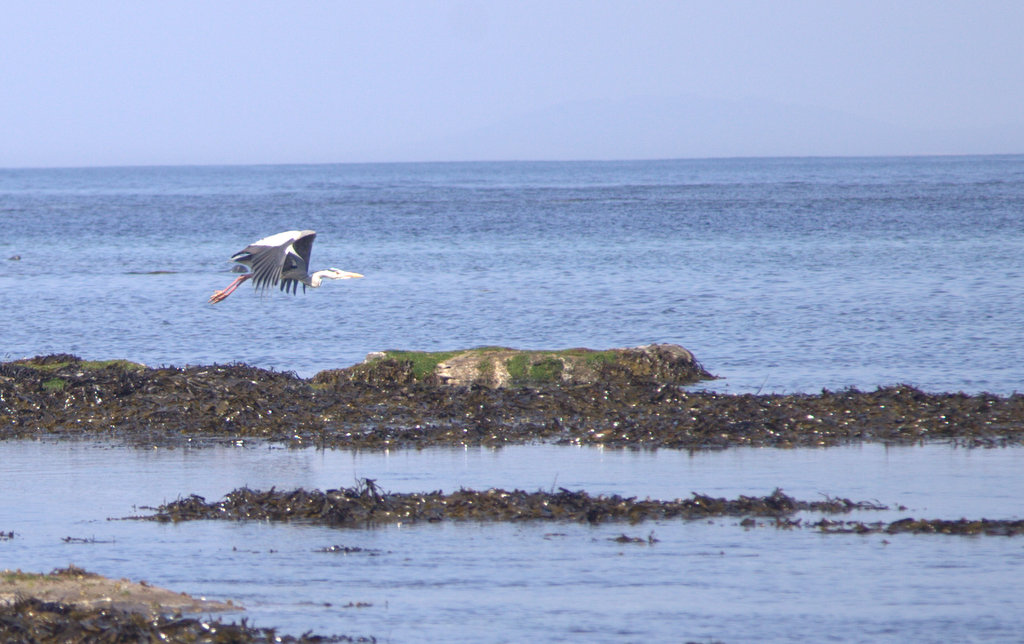
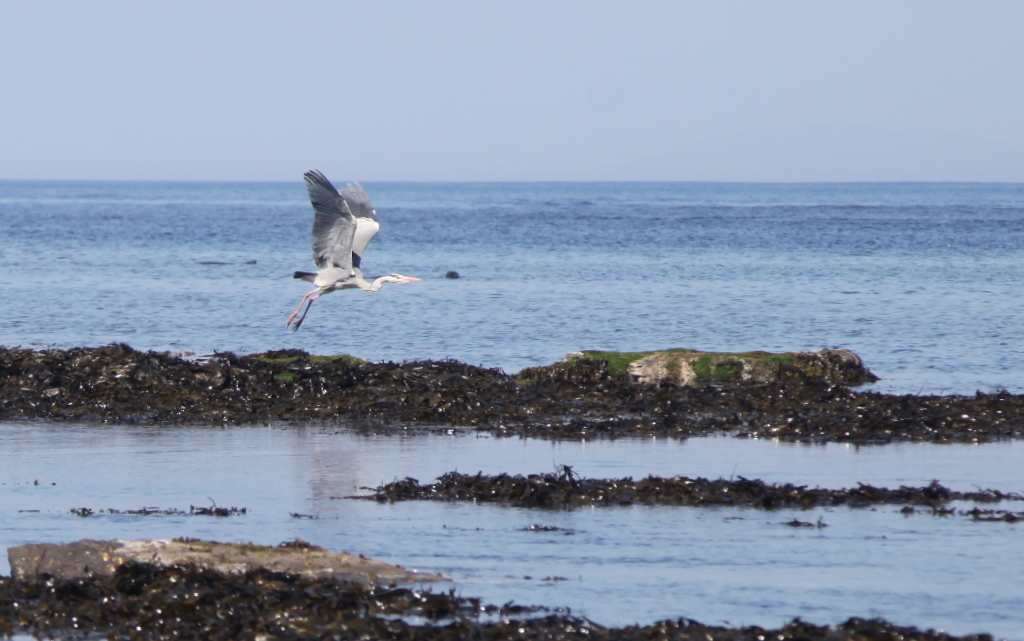
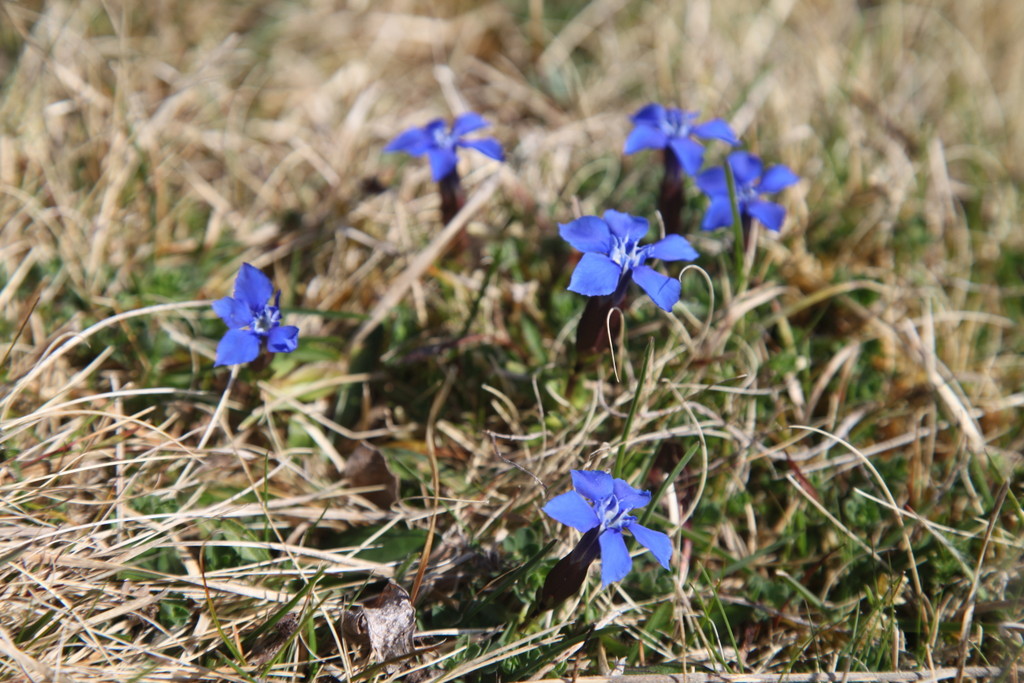
The landscape helps make this a unique world. I have talked here and elsewhere about the typical Burren landforms, but I should mention the widespread glacial erratics, dropped by melting glaciers. Well that is the scientific explanation. Local legend has it that they were left by giants who were throwing stones at each other (Fin McCool again!) Doesn’t this make sense? How else could boulders of granite from Connemara get onto the Aran Islands? The Burren is known world wide for its flora with its rare combination of alpine and Mediterranean plants.  Spring is the best time to see it and in the three days I was on Inis Mor I witnessed an explosion of life with the spring gentians and orchids bursting into flower. The wildlife does not disappoint either with seals, water birds, birds of prey and dolphins all on show at various times.

Inis Mor.  Glacial erratics near Black Fort

Inis Mor. Glacial erratics near Black Fort

Limeston Pavement Inis Mor

Limestone Pavement Inis Mor

Inis Mor.  Burren landscape

Inis Mor. Burren landscape

Inis Mor

Inis Mor. Typical Burren stone wall. How does it stay up?

Inis Mor.  Near Black Fort

Inis Mor. Near Black Fort. Crumbling coastline

Beach near Kilronan.  Inis Mor

Beach near Kilronan. Inis Mor

Inis Mor Inis Mor. View from Black Fort Inis Mor. Burren landscape.

Inisheer.  The Burren limestone Inis Mor. Inis Mor. Inis Mor. Seal colony Inis Mor. Seal colony Inis Mor. Wild duck's nest Inis Mor. Teampull Bheanáin.  Spring gentian Inis Mor.  Spring in the Burren

IMG_6126

On each of my visits to Aran I was resigned to having nights without music but on each occasion I discovered the craic. On Inis Oírr I met Mícheál O’hÁlmháin, the leading musical identity on the Island and members of his family and we played in the hotel until the small hours and on Inis Mór I met three French guys, Alex, Mathieu and Victor who turned out to be amazing guitarists and with Michelle, Lea and Rom from Switzerland we had two nights of Celtic meets Gypsy Jazz meets 70s rock meets Europop!  On Inis Oírr I also stumbled onto an Irish language summer camp. It was held in the hall and I was drawn by the distinctive sound of irish dancing. The front door was open but what I saw was not what I expected. It was full with teenagers maybe 150 of them having the time of their lives. They were playing a game of musical statues to the recorded music of a ceili band. I stayed and watched as they threw themselves into a succession of musical and dance numbers including a country and western song about Connemara in Irish, some updated versions of set dances, line dancing and some pop songs. I was impressed that here was a camp dedicated to preserving the Irish language and culture but prepared to do it in a modern way that was relevant to today’s youth but still respectful of the heritage.  And then to top all that while on Inis Mór  and thanks to an invitation from Melissa I played with the local Island kids at the regular Comhaltas gathering with Galway Bay as a backdrop.

Inis Mor.  For the craic.IMG_7588

IMG_6285 IMG_6188 IMG_6331

Inis Mor.  A regular gathering of the local Comhaltas group.

There is a lot more I could say about these Islands but by now I think I have probably lost all my readers (If you have read this far please let me know – it would be nice to know if anyone reads beyond the first paragraph!), so I will let the pictures talk from here.  Just a few more images that give a taste of these islands that I am sure I will return to regularly.

Inisheer.  Fisherman returns escorted by dolphin

v

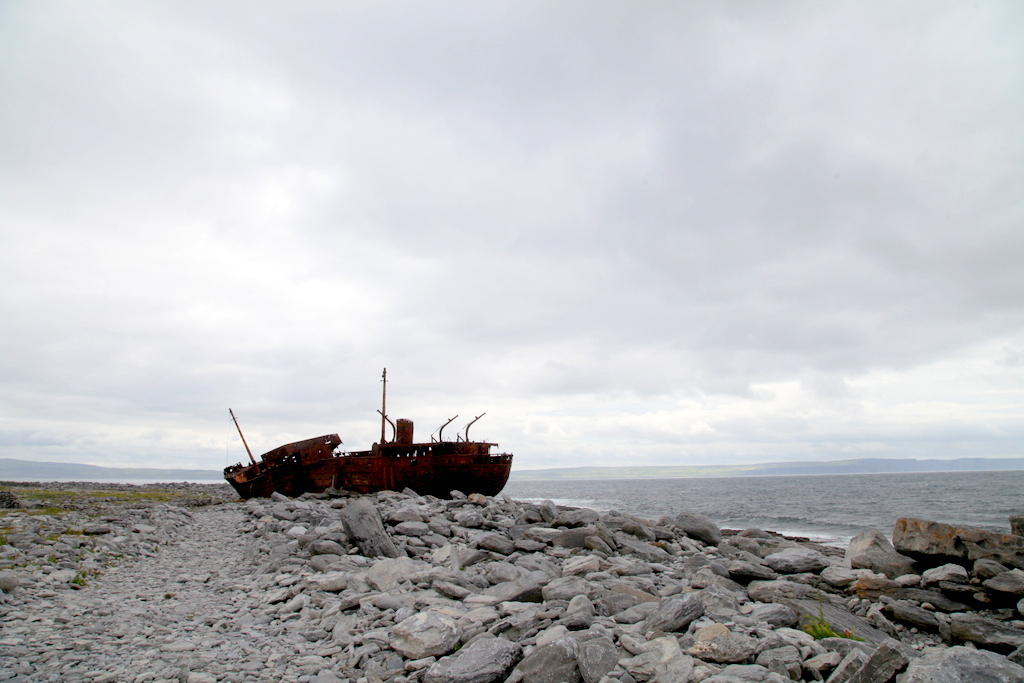
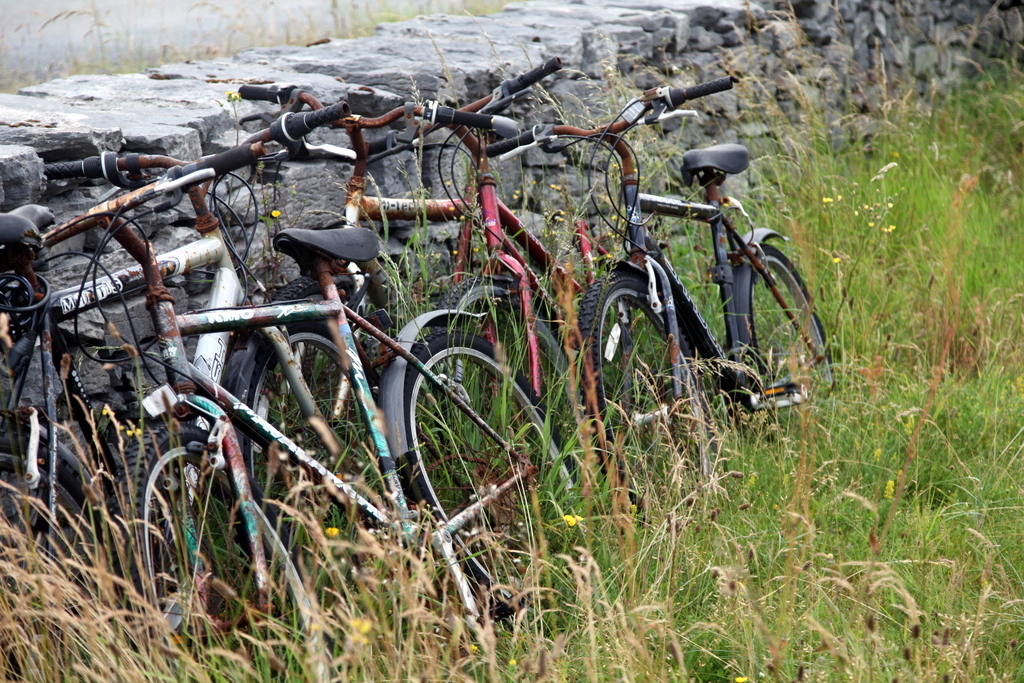
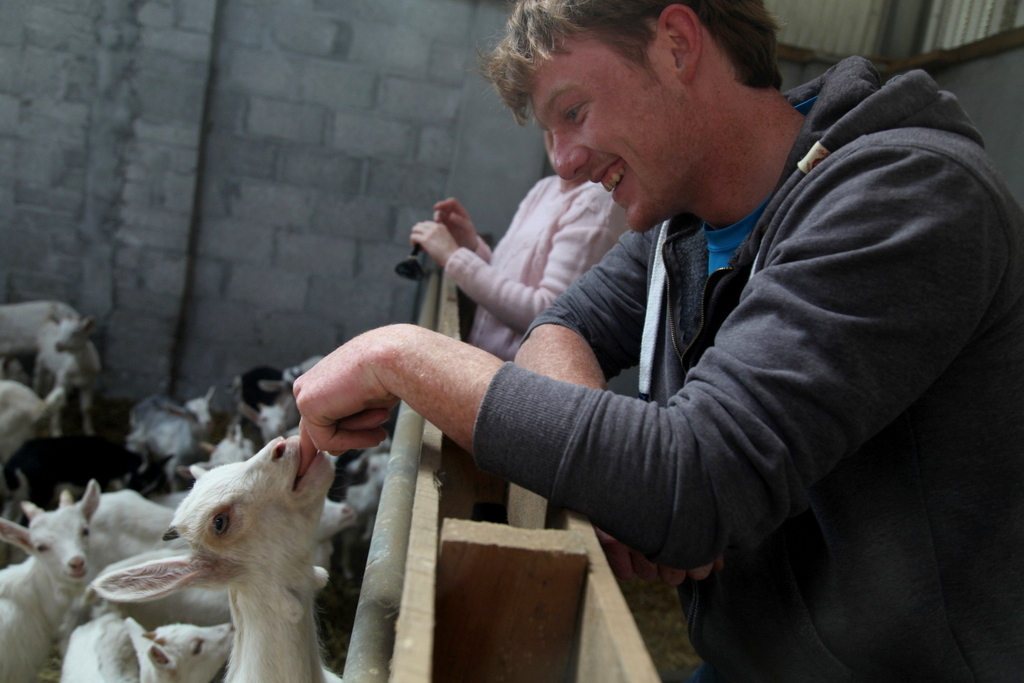
Inisheer Inisheer.  Wreck of the Plassey Inisheer.  Wreck of the Plassey Abandoned house InisheerInis Mor.  Atlantic on a calm day Rusted bikes, Inisheer Inisheer Inisheer.  Fining pots Inisheer.  Limestone outcrops glowing in the morning sun Inisheer.  Curragh and ruins Inis Mor. Goat farm Inis Mor. Goat farm Inis Mor. Abandoned house

Inis Mor.  Site where Curragh was re-tarred

Inis Mor.  Stairway to Heaven?

Inis Mor. Stairway to Heaven?

Categories: Real Ireland, Wild Ireland | Tags: , , , , , , , , , , , , , , , | 4 Comments

Off to Offaly. What’s it Offer Me?

The Midlands of Ireland gets a bad rap. It comprises the counties of Laois, Longford, Offaly and Westmeath. Major towns are Athlone, Mullingar and Tullamore.  The whole Midlands is unfairly seen as a cultural backwater, dreary and nothing but boring bog land.  Author and Irish Times columnist Michael Viney has described the Midlands as “a wearily protracted obstacle between Dublin and the west … a slow ticking-off of dull little towns on a lot of flattish land drained by sluggish rivers”.

At the invitation of a friend, Christina,  who owns a B&B in Kinnitty,  Co. Offaly.  I spent a few days seeing for myself.

And I say this characterisation is unfair. Yes there is plenty of bog land but in my four days, mainly in Offaly,  I found music every night, discovered the Slieve Bloom Mountains, enjoyed a fine meal at Castle Kinnitty, absorbed the Georgian architecture in Birr and walked through a sculpture park in Lough Boora. I met plenty of lovely people as I have everywhere in Ireland.  Offaly had plenty to offer me!

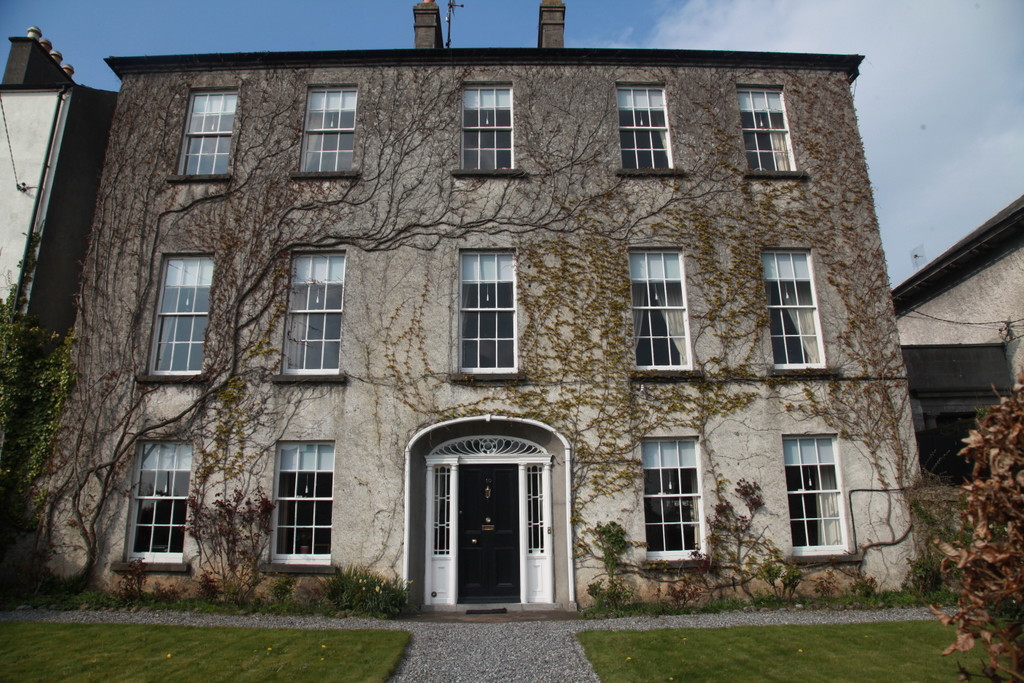
I stayed at beautiful Ardmore House.  This elegant grand house, now a B&B, was built in 1840 by the Bernards who lived in the nearby Kinnity Castle. More on that later.  It was used as a doctors’ surgery and residence until the 1970s.  It had various owners after that and was bought in a run-down state over 20 years ago by Christina who has restored it in a  labour of love.  Set in lovely formal grounds and with huge bedrooms fitted with period furniture.  There is a wonderful ambience about the place and views from every window over the rolling hills on the edge of town and beyond to the Slieve Blooms.   http://www.kinnitty.com/about.html.

This was my base from which to explore Offaly. And I didn’t have to go far.  Across the road near the Church is a stone pyramid, a mausoleum for members of the Bernard Family.  It was built in 1834 and houses the remains of six people including one bitten by a rabid dog.  The stone work is wonderful with blocks laid at an angle to get the pyramid shape.  The  mortar pattern is etched through the steel door which gives a great senses of unity.  The last internment was in 1905.

Ardmore House, Kinnity

Ardmore House, Kinnity

Elegant Georgian architecture.  Ardmore House, Kinnity
Elegant Georgian architecture. Ardmore House, Kinnity

Bernard's Pyramid, Kinnitty.

Bernard’s Pyramid, Kinnitty.

Bernard's Pyramid, Kinnitty

Bernard’s Pyramid, Kinnitty

Anyway I digress. The main reason I came of course was to play music.  Wednesday nights sees a regular session in this part of the county.  It is led by the talented Kinsella family and rotates between four pubs in surrounding villages.  This night saw the music at Bergin’s at Killoyn (pronunced ‘Killine’).  Other nights are at the Slieve Bloom in Kinnitty, Burton’s at Ballybritt and Dempsey’s at Cadamstown.

This is one of those sessions that exists soley for the community.  The pub was packed with regulars who were there just for the music. If there are tourists then they either come by accident or they are directed here by their hosts.  I am told that on other nights this pub is nearly empty.  This is a clear sign that the music is strong here and that people are into it.  While the quality of the music may be better in Clare you can’t argue with the enthusiastic way it is played and the reception it receives.   There were about fifteen musicians of all ages but as the night wore on many more singers were coaxed from the crowd. The tunes were well led by gifted box player Padraig Kinsella, and members of his family.  It is worth commenting here that the perception that Offaly is a backwater is belied by its successes in the All Ireland Fleadhs.  Players from Offaly including Padraig have won the All Ireland for button accordion eleven times, significantly more than from any other county.  I certainly didn’t appreciate this.  There was a lot of singing but no shortage of tunes and even after most of the musicians had packed up soon after midnight more singers came out of the crowd and we left at 2am with the session still in full swing.

IMG_2685 IMG_2690

IMG_2635 IMG_2644

IMG_2640 IMG_2707

IMG_2671 IMG_2720

As my readers would know I attempt to play music every night.  So when we discovered there was a session in Eugene Kelly’s on Thursday off we went.  What I had forgotten, until I got there, was that this was the first place I had played music in Ireland, when I had arrived in May 2014.  I remembered meeting concertina player, Aoife Greene (another All Ireland winner) there that night and she was here again.  She recognised me even though I now have a beard and long hair.  Some great tunes followed and plenty of songs though the session was somewhat throttled by one member of the audience who insisted on sitting in the circle and making her presence well and truly felt.  Though in fairness she could sing.
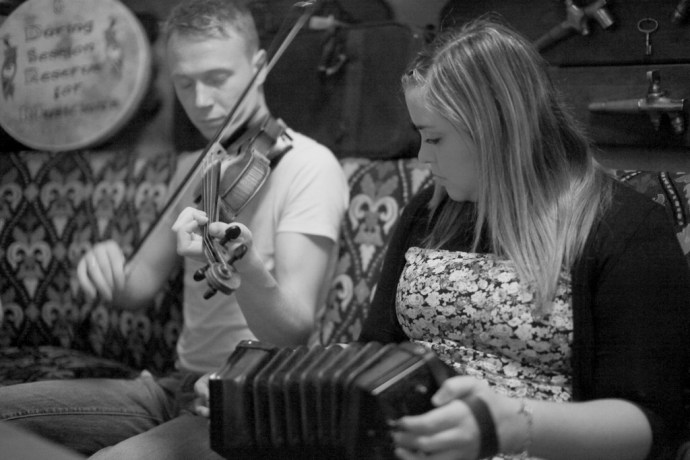
IMG_3002 IMG_3023

On the last night Christina had organised a house session at Ardmore. Some of the musicians who I had met at Bergin’s were there and others, friends of Christina, had come from as far away as Westport in Mayo as well as some locals.  It was a privilege to be part of this.  Great tunes and songs, excellent food, fine whiskey and a turf fire. Only thing missing was some dancing and you could have been at a house session a hundred years ago.

IMG_3505 IMG_3506

IMG_3524 IMG_3529IMG_3532IMG_3533

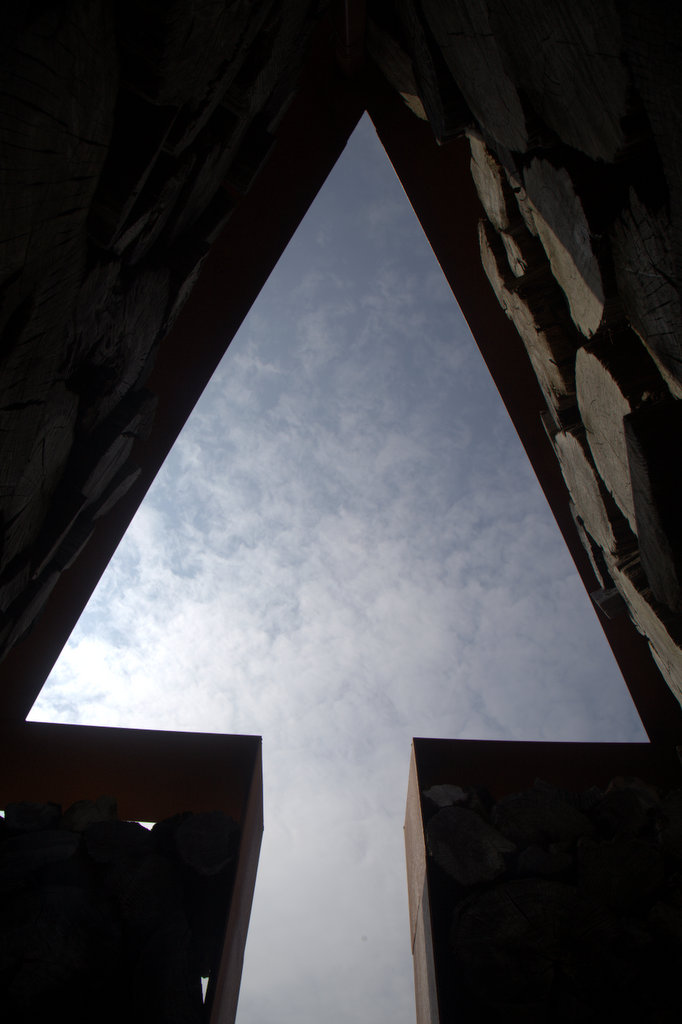
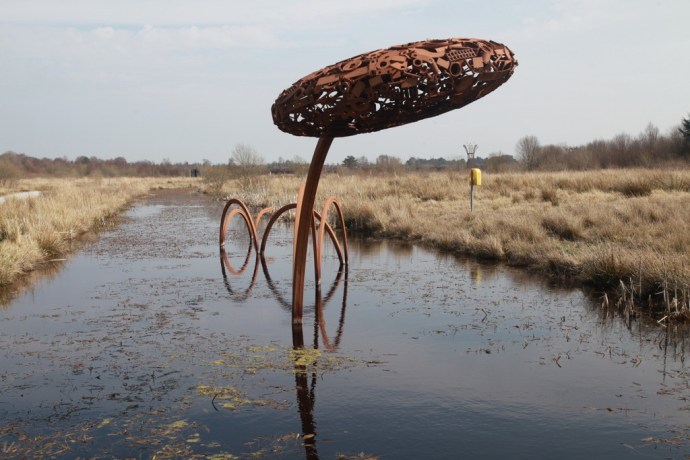
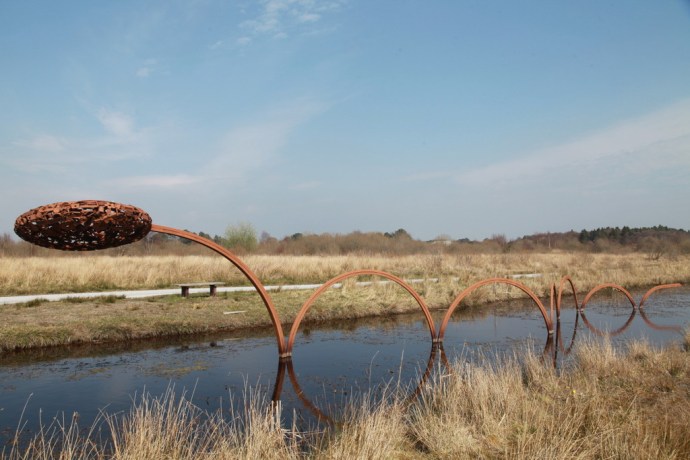
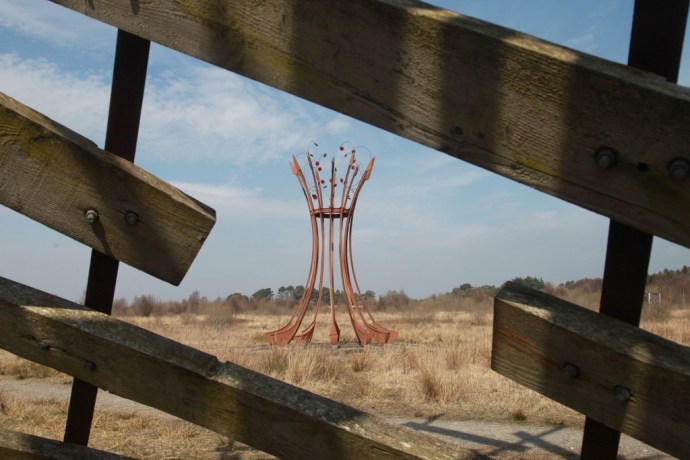
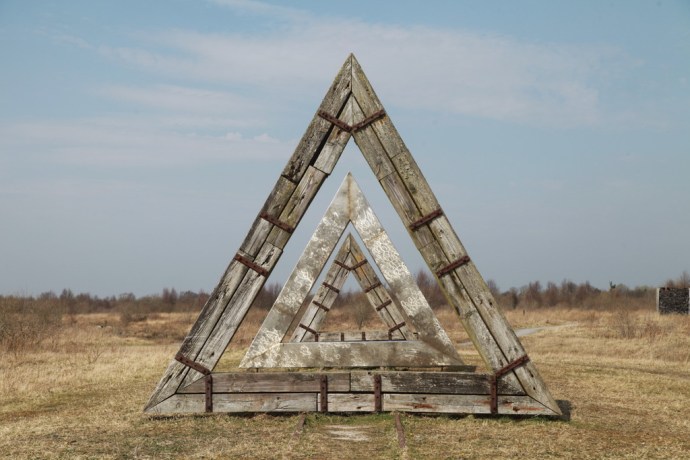
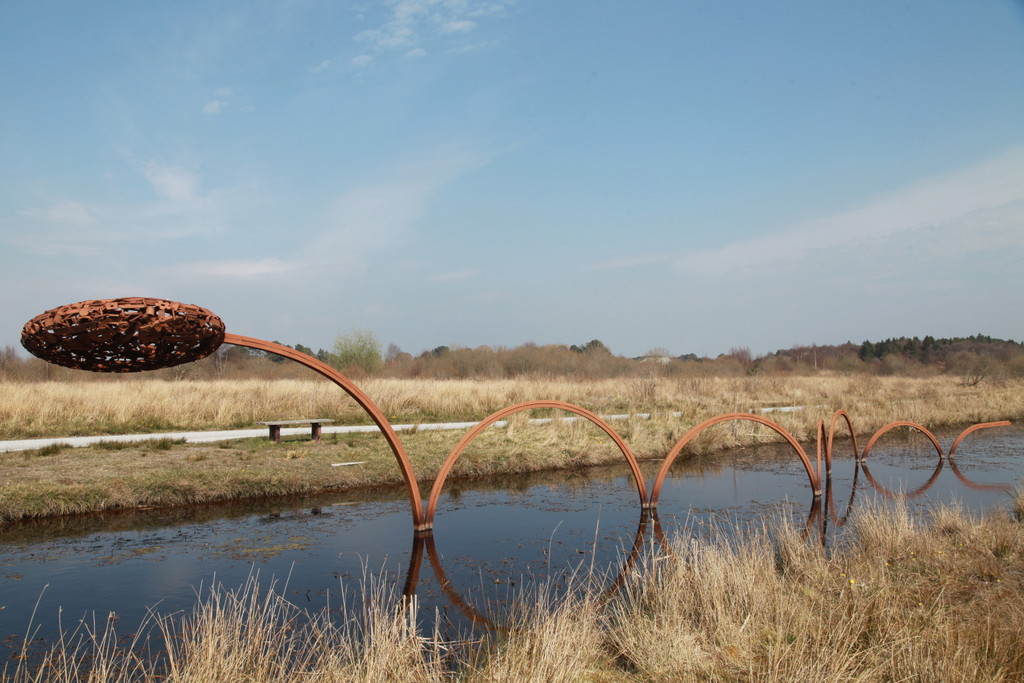
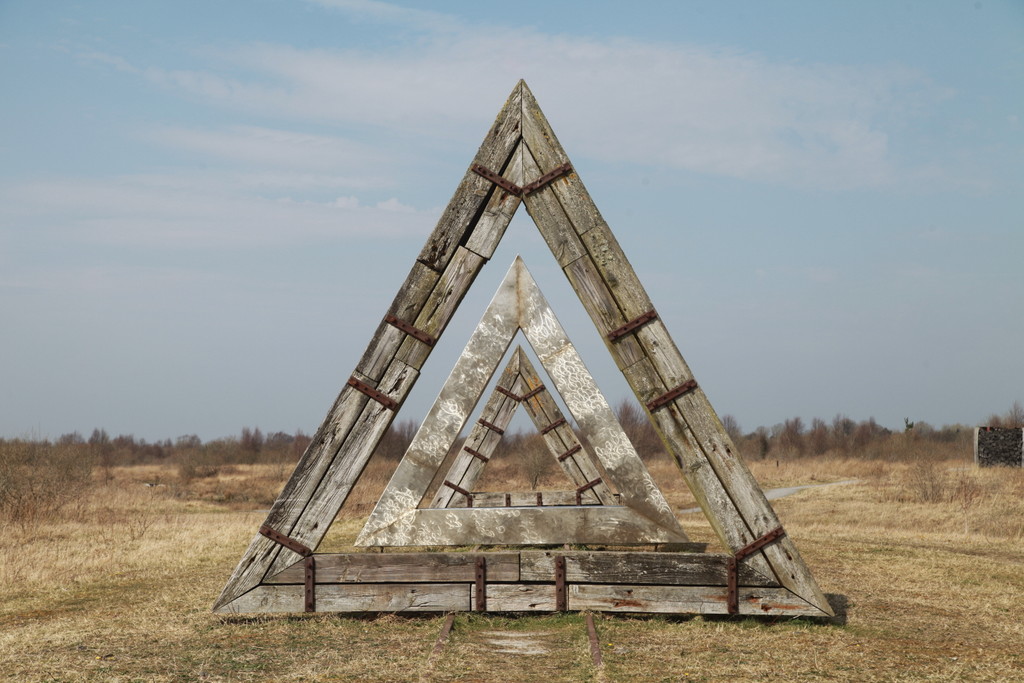
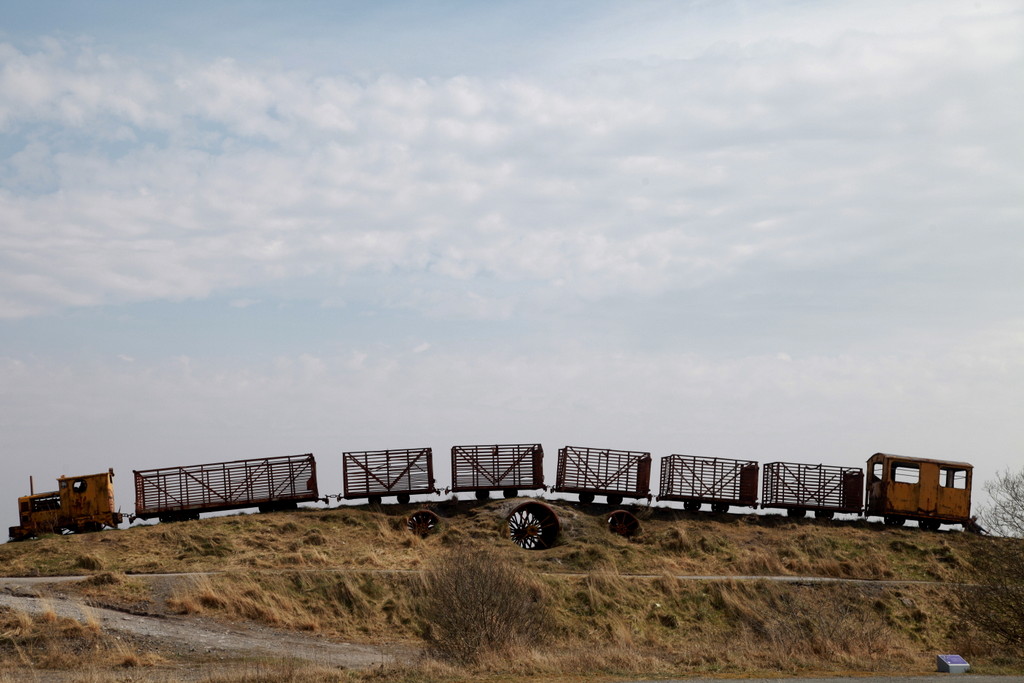
In between these sessions I got out and about.  The weather was stunning.  Clear blue skies and around 18 degrees.  County Offaly has the earliest evidence of human habitation in Ireland dating from 6500 BC at Lough Boora just down the road. There would have been lakes there then, long since turned into bogs and subsequently mined out by Bord na Móna (the company created in 1946 to exploit bogs mainly in the Midlands)  Here at Lough Boora however it is now returned to lakes and a nature reserve.  I visited there and took a short walk was through a sculpture park.  All the installations were inspired by the unique land and the bog and its history of mining.  I was very impressed.  Great opportunity for some photos a little different from what I was used to.  I really enjoyed trying my hand at something different.

IMG_1133

IMG_3294 IMG_3268 IMG_3234 IMG_3226 IMG_3219 IMG_3216 IMG_3215 IMG_3198 IMG_3191 IMG_3185 IMG_3159 IMG_3148 IMG_3136 IMG_3124

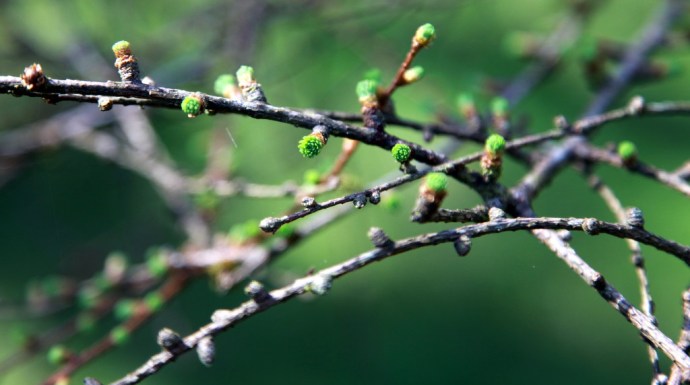
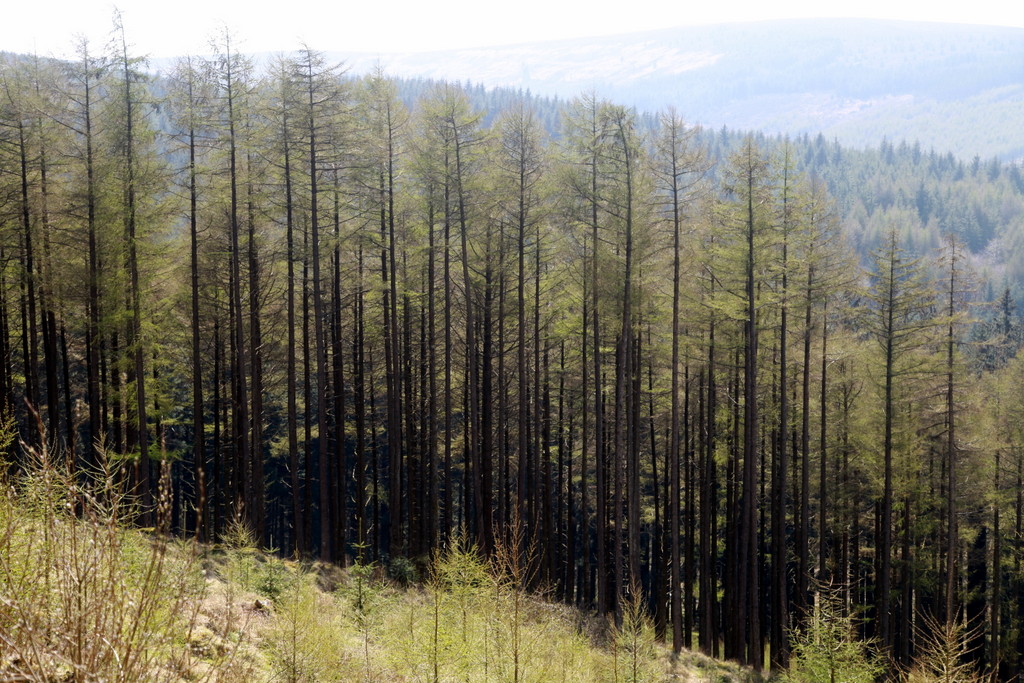
There was also the Slieve Bloom Mountain range.  More low hills actually but there were expansive views of the countryside .  It is renowned as the birthplace and early home of legendary Finn MacCool but I was more taken with the forests of pine and beech, just breaking out with the spring growth.  It was at that wonderful point where the trees still have that winter nakedness but there is a tinge of bright green from the new shoots.

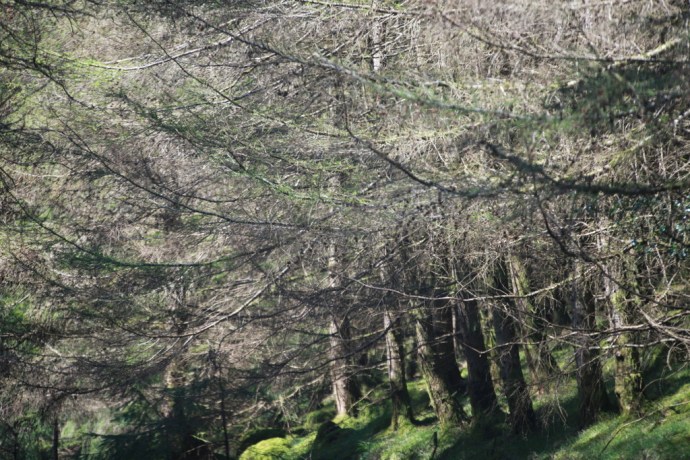
IMG_2756 IMG_2772 IMG_2777 IMG_2782 IMG_2799 IMG_2810 IMG_2817 IMG_2852 IMG_2869

IMG_2822

IMG_2829 IMG_2831

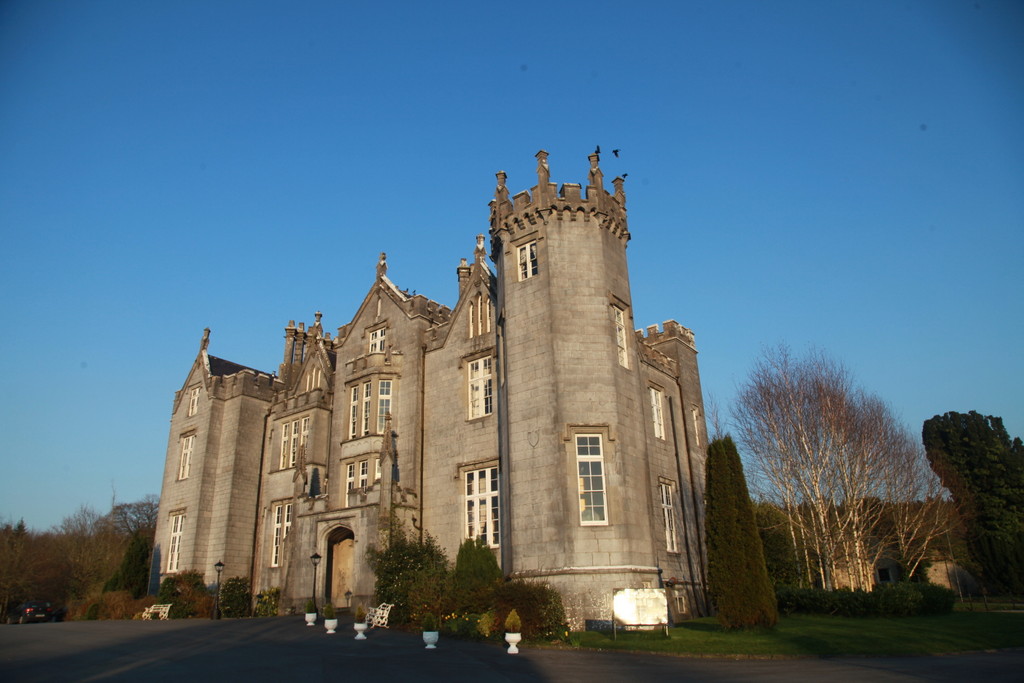
Kinnitty Castle has had a chequered history.  It’s current predicament is at least as bad as anything it has faced since the site was first settled.  It is worth relating briefly as reflects a lot of the story of Ireland.

The site was known to be an ancient druid ceremonial ground; it was a monastery in the 6th century with links to Clonmacnoise along with which it was a major learning centre in Europe at the time.  It was raided by the Vikings and then rebuilt by the Normans with a castle and Abbey.  It became the stronghold of the O’Carrolls around the 11th Century through to the 17th century.  A new castle was built by the O’Carrolls in 1630 and confiscated by the English in 1641.  In 1664 it was granted to an English officer Thomas Winter. It was sold by the Winter family to the Bernards family in 1764 and became known as Castle Bernard.  The current look of the castle was a result of work commissioned in 1811.  The work was carried out by the Pain Brothers who built Dromoland and is a wonderful example of neo gothic architecture.

In 1922, the Castle was burned down by the Republican forces.  Rebuilt in 1928 by the Bernard family who lived there until 1946 when it was sold to Lord Decies who in turn sold it to the State in 1951. It became run down but was purchased by the Ryan family in 1994 and renovated and transformed into a luxurious 37 bedroom hotel.

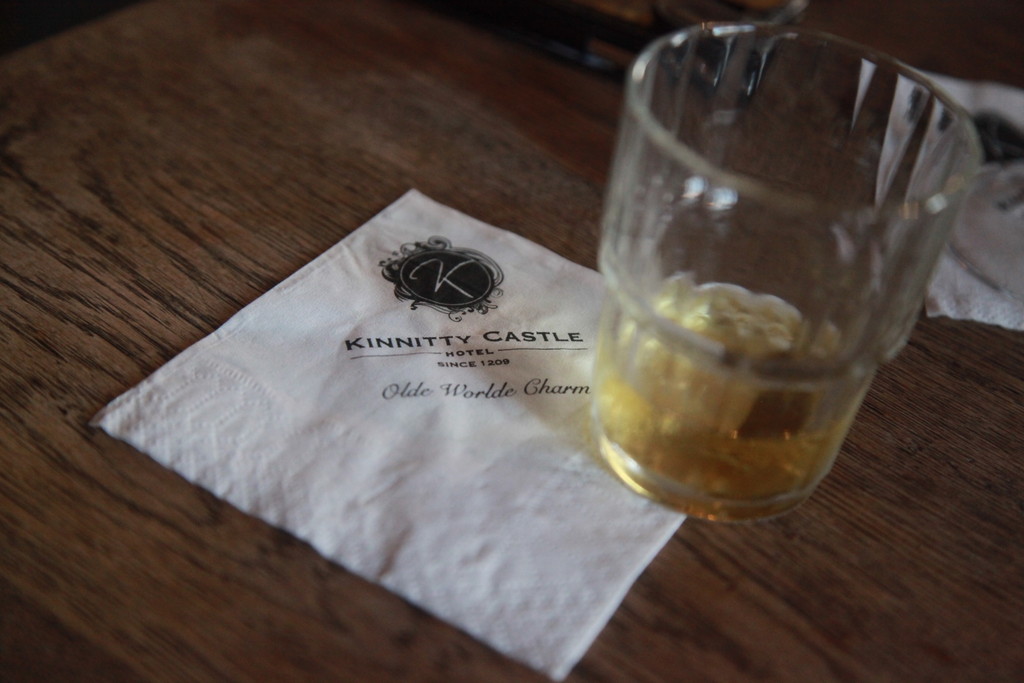
The castle was forced into receivership by the KBC Ireland Bank and despite a number of attempts to sell it is still being run by the receivers as a going concern.  It is popular for weddings, understandably, and I have to say the steak was delicious.  The hotel is full of amazing period furniture, most of it huge and befitting the grand proportions of the house.  The bank seized all this along with the hotel but the Ryans claim that the effects are their own personal assets.  It is all very messy with legal action and accusations flying everywhere and as of now you could buy this special castle for a mere seven million euros and make the bank go away.

IMG_2957


IMG_2953 IMG_2985 IMG_2998 IMG_2965

IMG_2990

The English heritage is apparent in nearby Birr also.  Birr also has a magnificent castle which is the family home of the current Earle of Rosse, but goes back to the O’Carrrols again who had one of their castles there in the 15th Century.  In 1620 it was granted to a Sir Laurence Parsons in the course of the Stuart plantation, c. 1620. Sir Laurence Parsons built most of the structure of the present castle. But this was not the main attraction for me.

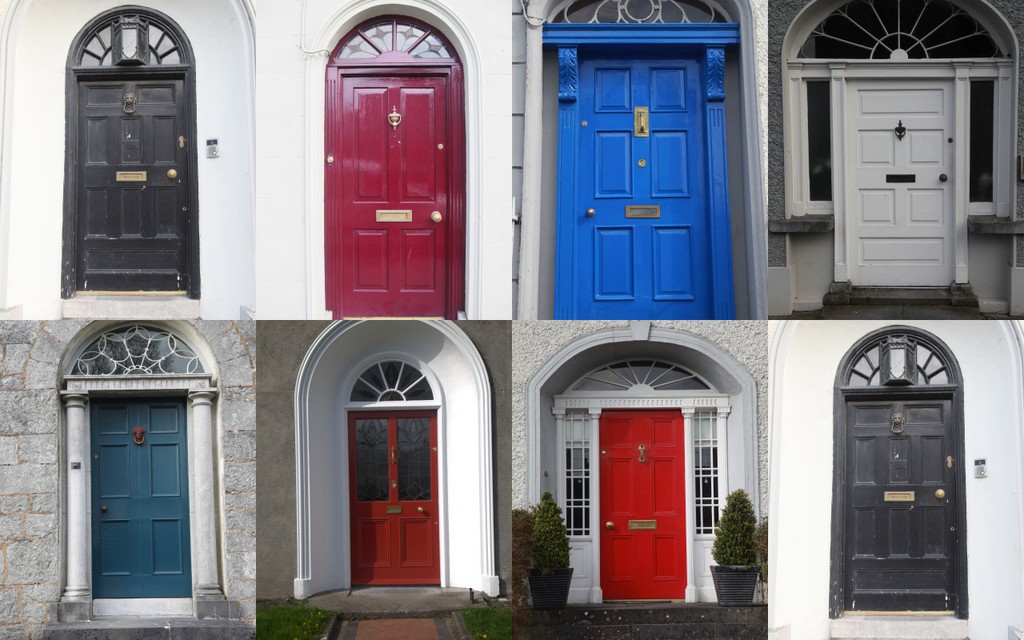
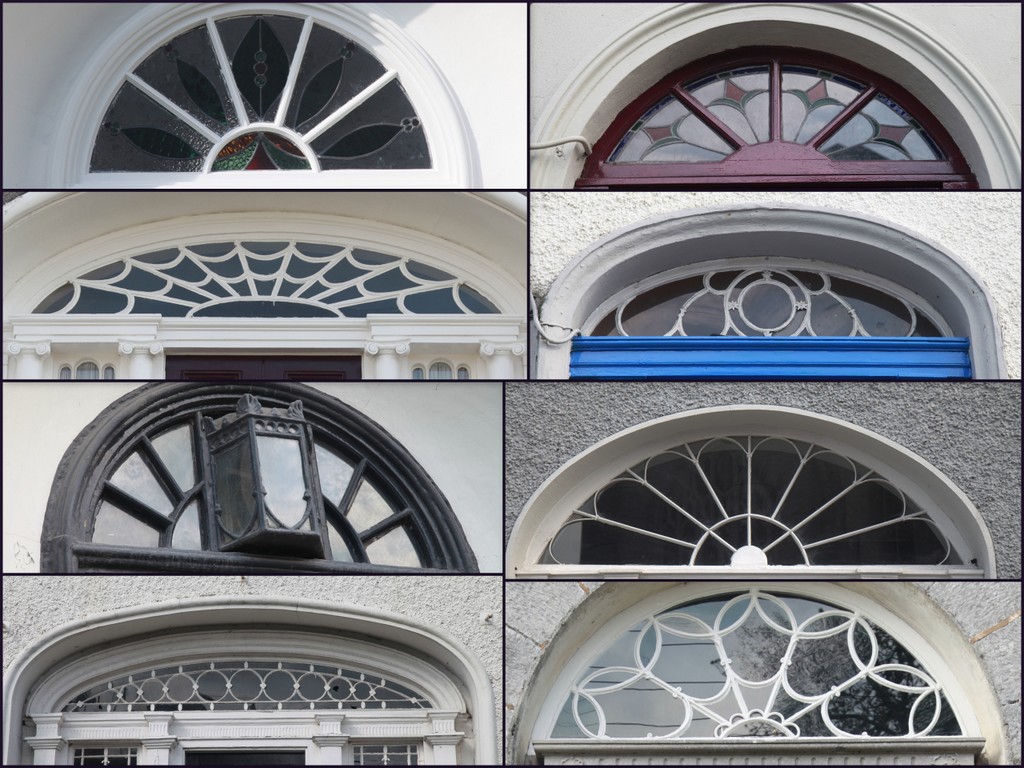
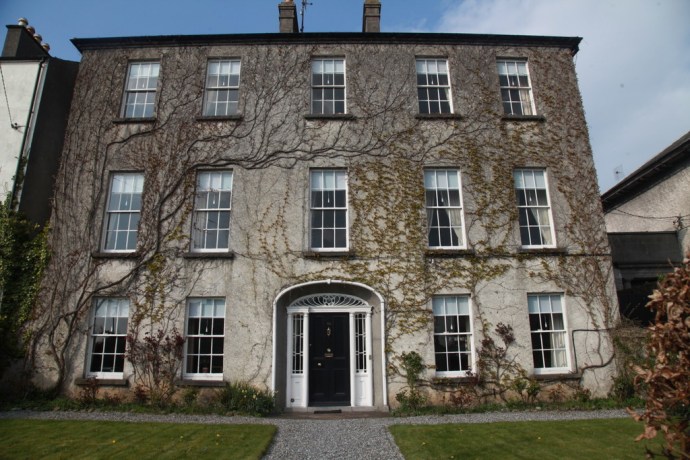
The town is well regarded for the excellence of the preservation of the Georgian architecture.  A walk down the main thoroughfare of Emmett Street (formerly Cumberland Street) and the Oxmantown Mall and St John’s Mall give ample evidence of this.  I was taken with the elegance of the buildings and the unity of streetscape which was a defining characteristic of Georgian city planning There were simple family homes and there were clearly more ornate, but still conforming to the same simple elegant ethos, homes of the wealthy.  I loved the arched door treatments, the fanlights above the doors, the beautifully proportioned multi-paned windows and some of the less noticeable details such as the cast iron gate handles.

I was walking down Oxmantown Mall photographing the front of a blue doored two story mansion when the owner came out.  We got chatting and retired vet, Sam Glendinning took me through the archway which accessed the back and showed me his formal walled garden.  He was in the process of renewing it as it had become overgrown but there was enough to see what a marvelous space it was. A magnolia in flower was a feature with a central lawn and garden beds and trees around the boundary.  It was so quite; not a noise though we were right in the middle of town.  I was entranced.  Sam said it may be for sale if he could convince his wife to move into something smaller but he wouldn’t name a price.  Out of my league I would think.

Other claims to fame of this town are the largest telescope in the world built by the then Earl of Rosse in 1845.  (Why build a telescope in Ireland where there averages up to 225 days of rain a year?), the world’s first auto fatality when Mary Wood was thrown out of the steam car she was a passenger in as it rounded a corner on Cumberland Street and an Australian connection where Dame Nellie Melba sang from the balcony of Hotel Dooley, an event remembered today with Melba’s Nightclub
 

IMG_3460 IMG_3411 IMG_3412Collages County Offaly visit1 County Offaly visit2IMG_3497 IMG_3498 IMG_3386 IMG_3403

I left Offaly on the Saturday and as if to say goodbye the weather broke.  I enjoyed my time there and thanks Christina for your hospitality.  It didn’t take long though and Saturday night I was back in the swing of things with tunes at Friels in Miltown with Yvonne Casey, Josephine Marsh and John Joe Tuttle.
Categories: My Journey, Sessions, Trad Irish Music | Tags: , , , , , , , , , , , , , , , , , , , , , | 6 Comments

St Patricks Day in Ennis. Fifty Shades of Green.

My first St Patrick’s Day in Ireland.

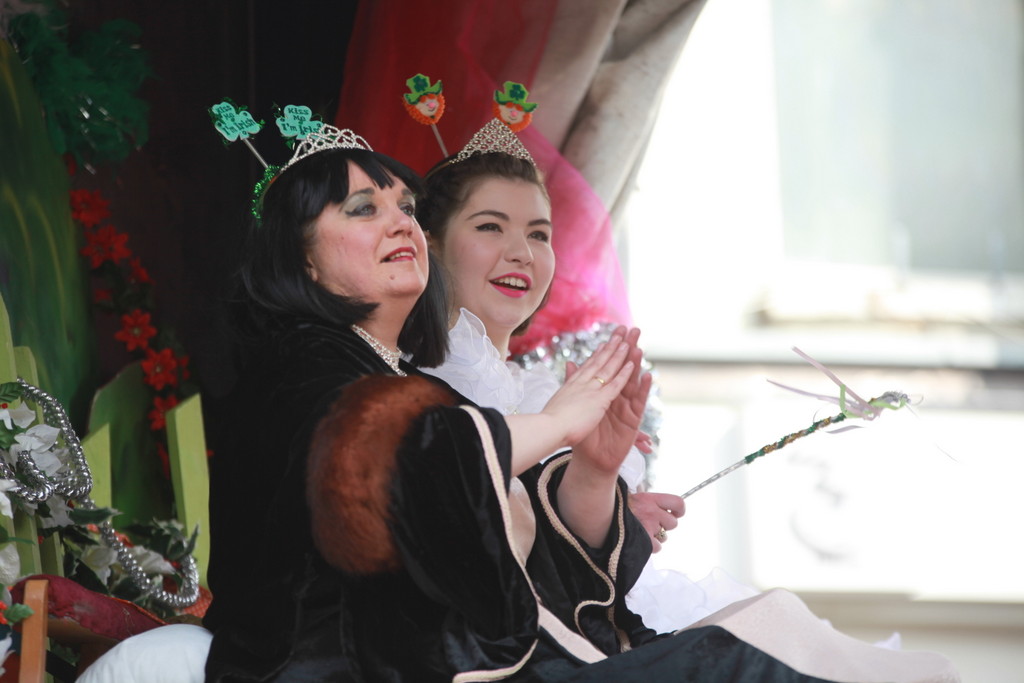
It has always been something I have avoided in Oz. An excuse for all and sundry to parade themselves as being Irish (whether they are or not) fuelled by green beer and endless renditions of Wild Rover and the Fields of Athenry. Not always a pretty sight. And sessions on St Pats Day are non existent as every person who can hold a fiddle or accordion is gigging somewhere that night. So I was keen to find out what it was like back here.

St Patrick’s Day honours the death of St Patrick, patron saint of Ireland, in 461 and it is celebrated as a national holiday in Ireland and Northern Ireland and around the world by the Irish diaspora. It has moved from being a religious holiday to a day of secular celebration much to the chagrin of the church. I like this quote from Father Vincent Twomey who wrote in 2007, “It is time to reclaim St Patrick’s Day as a church festival without mindless alcohol-fuelled revelry” and concluded that “it is time to bring the piety and the fun together.” This plea seems to have fallen on deaf ears.

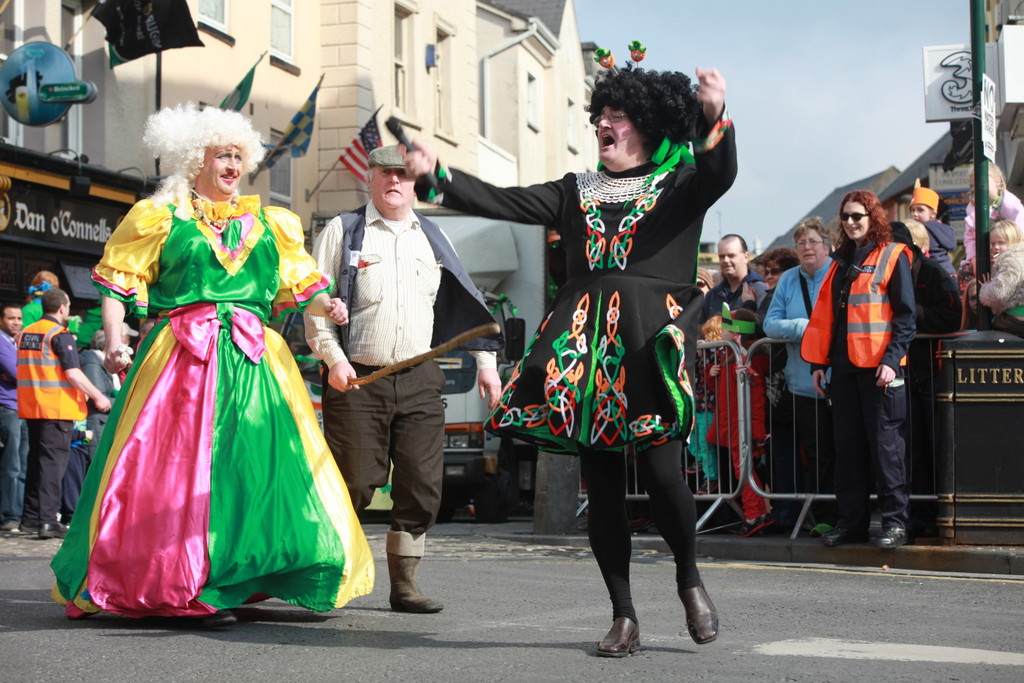
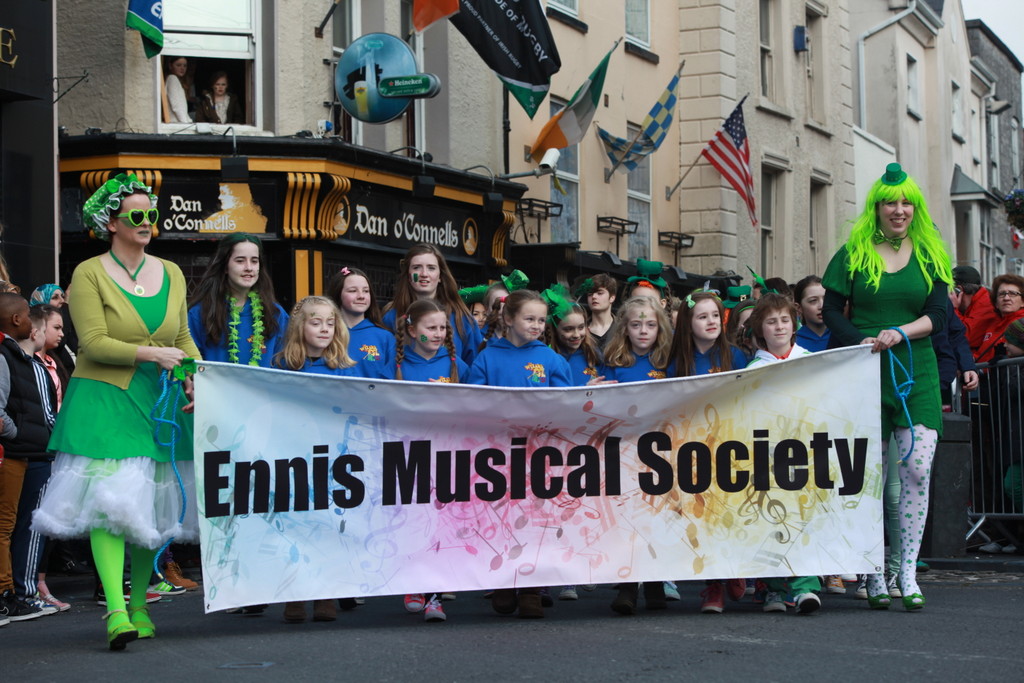
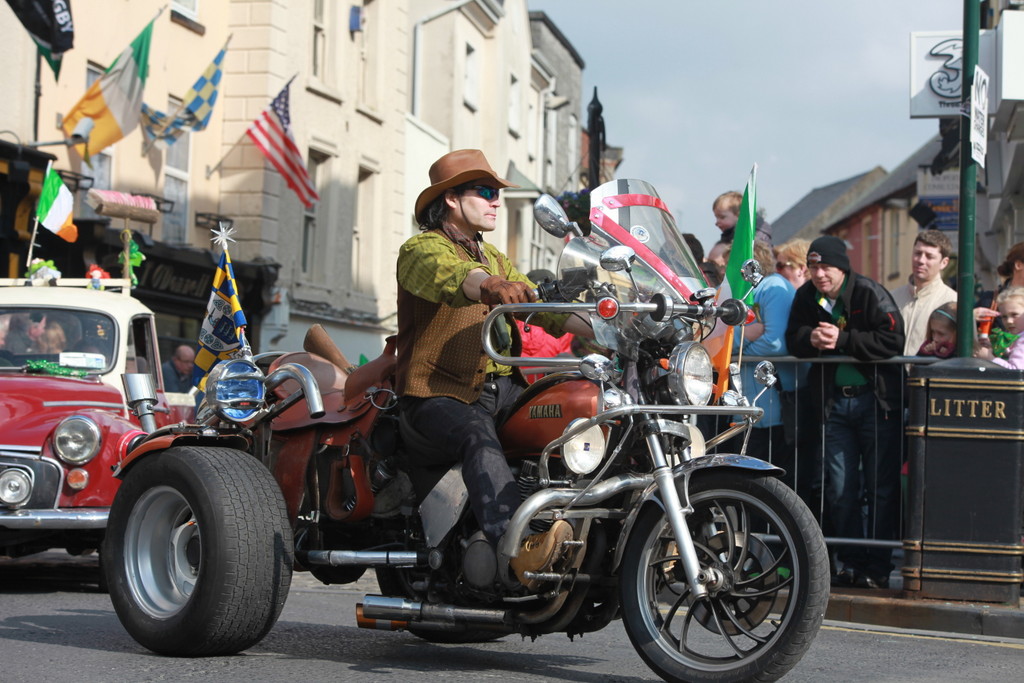
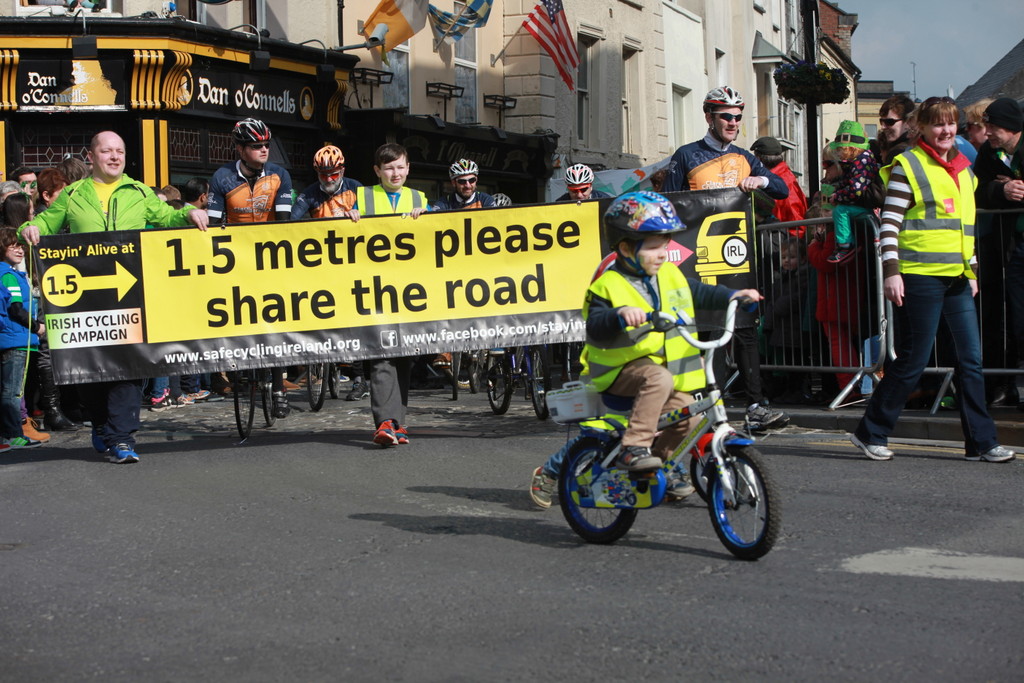
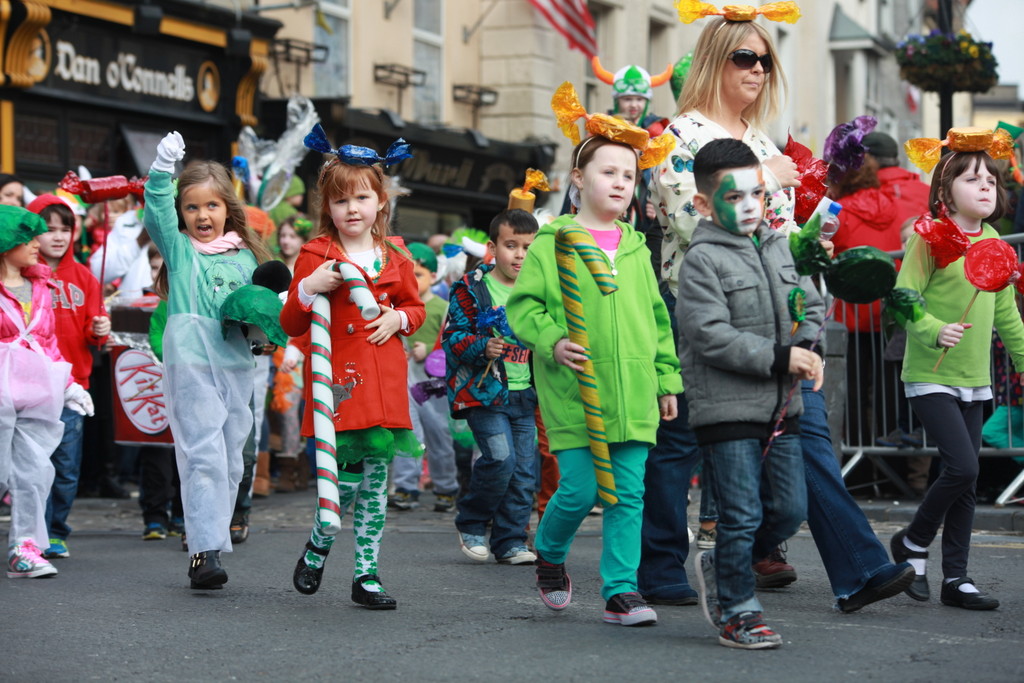
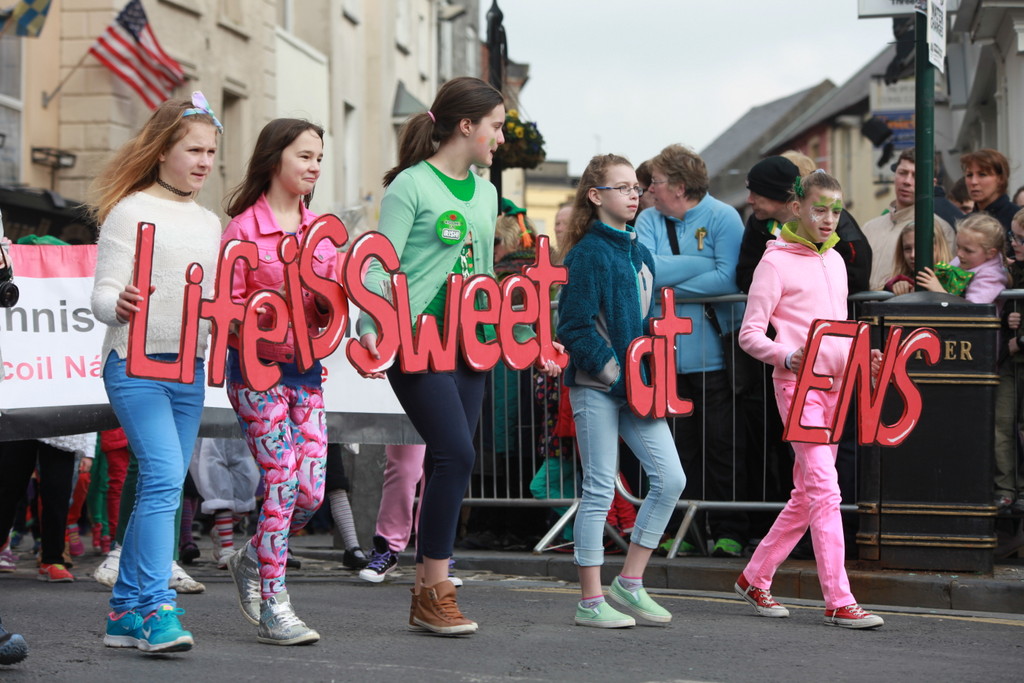
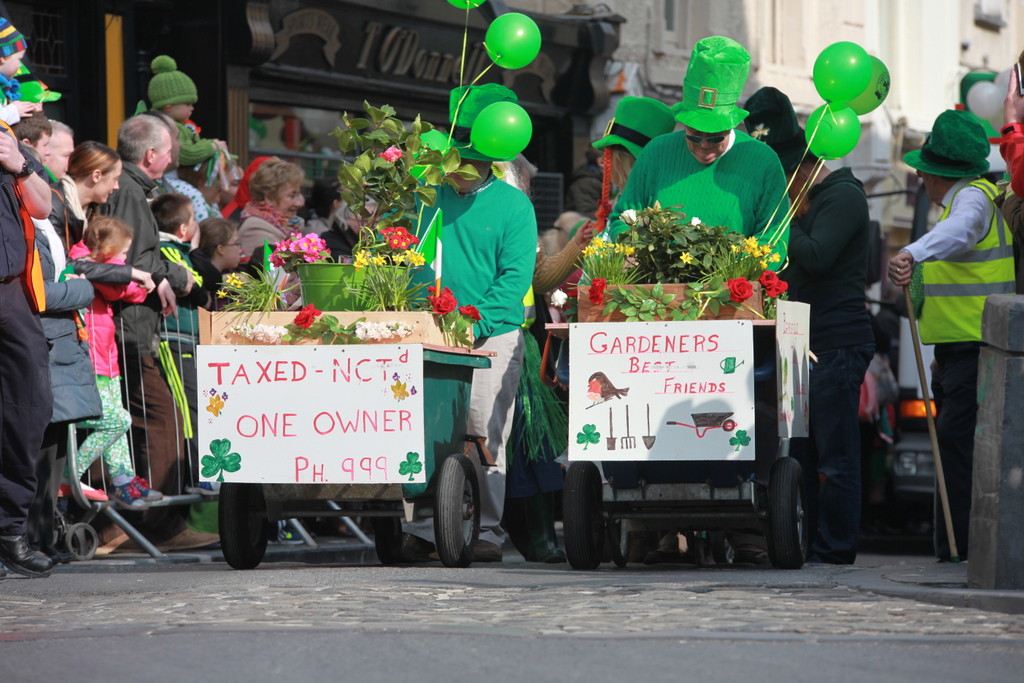
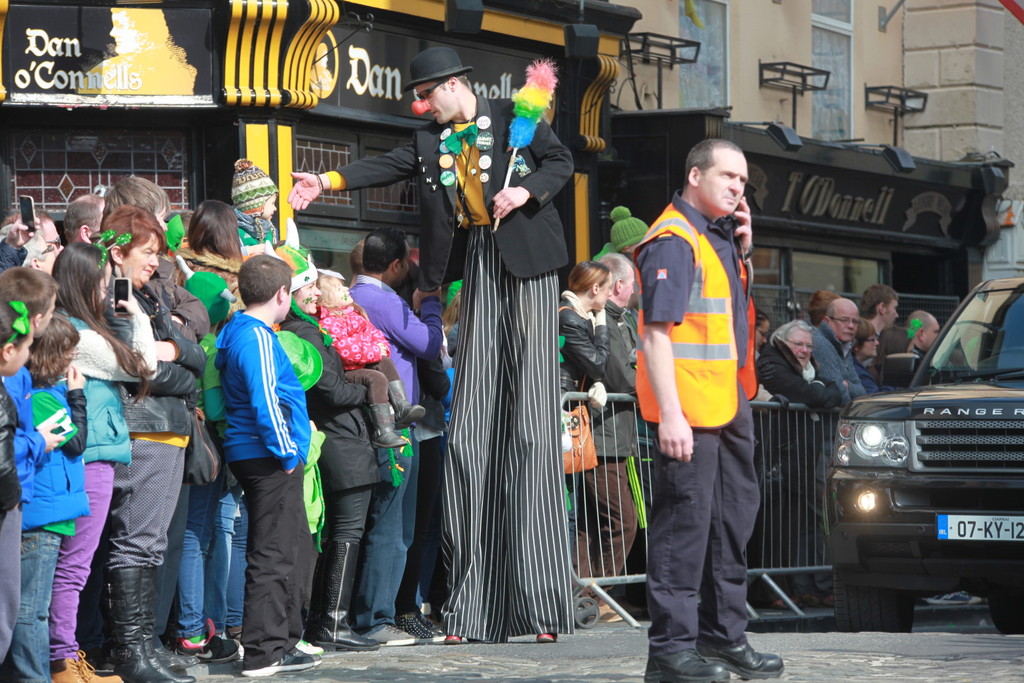
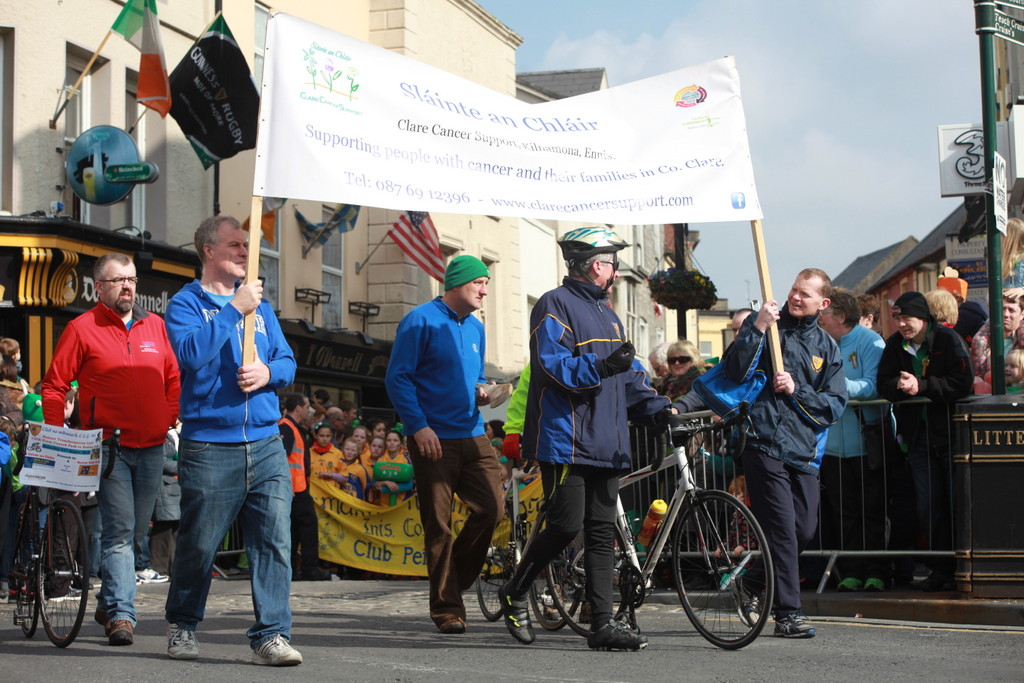
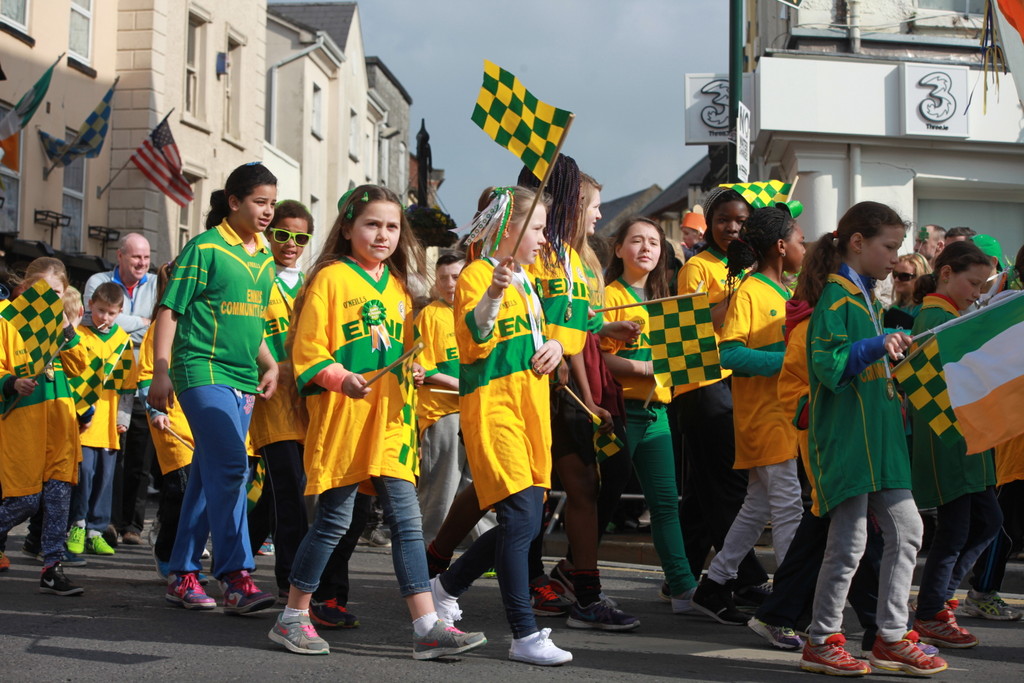
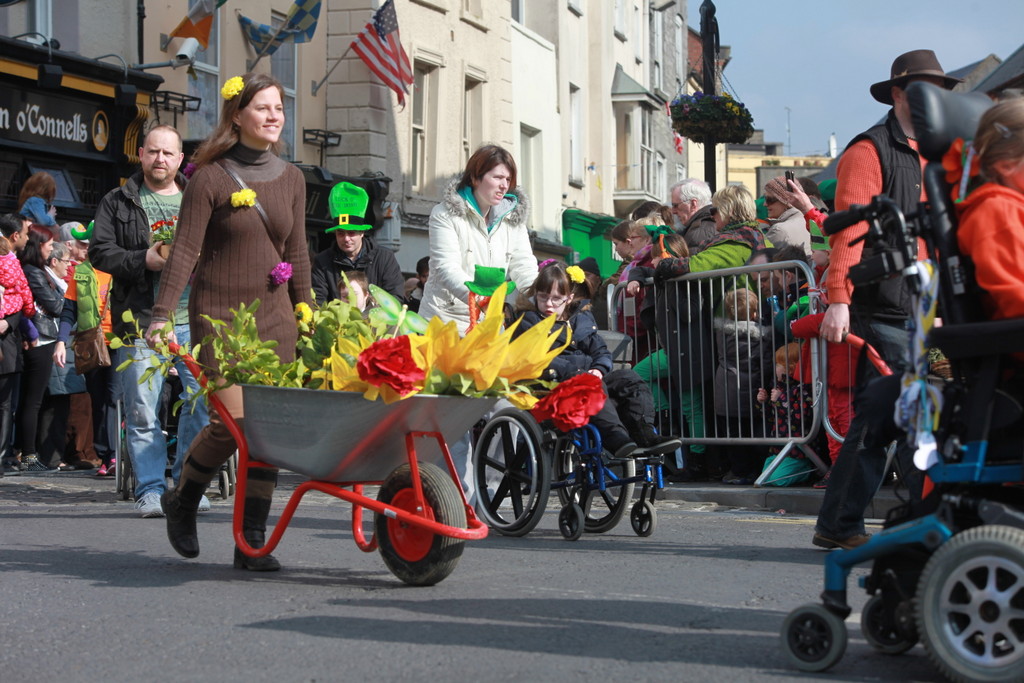
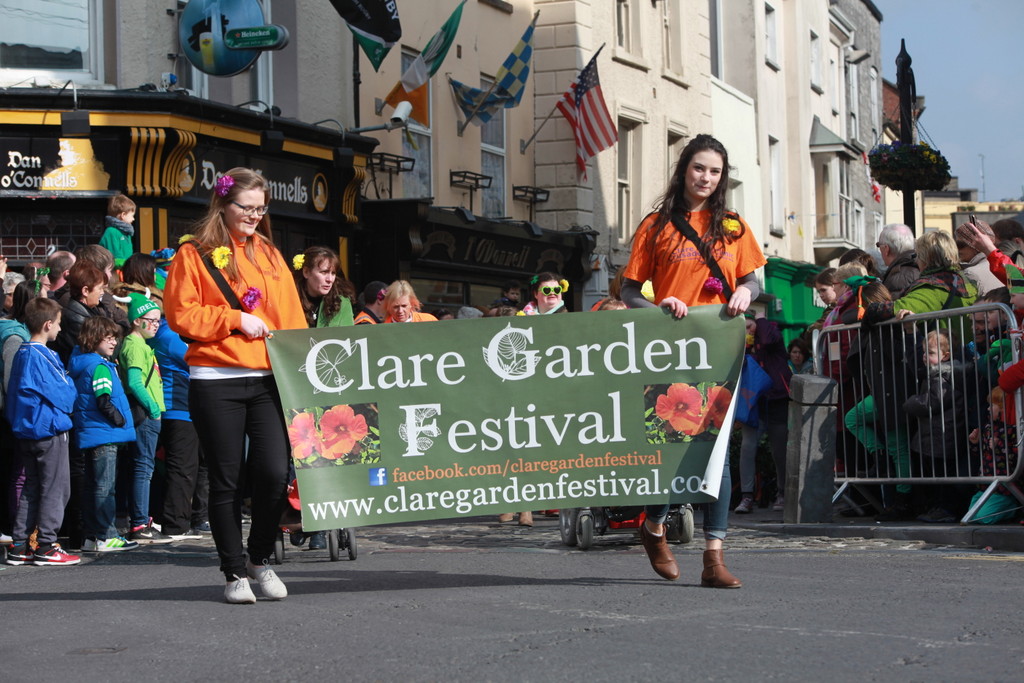
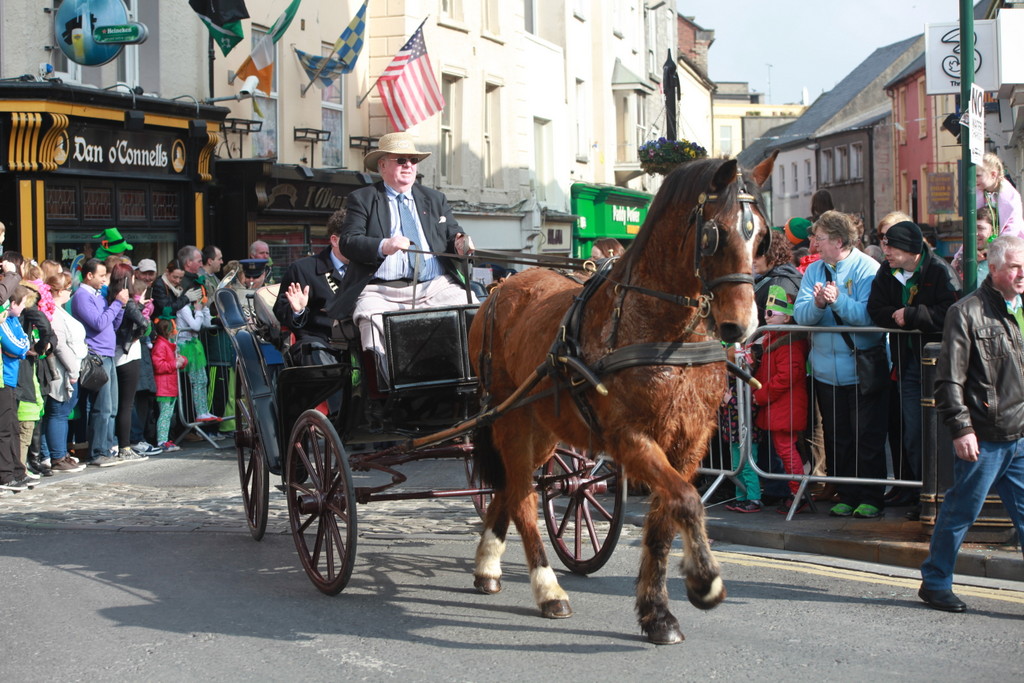
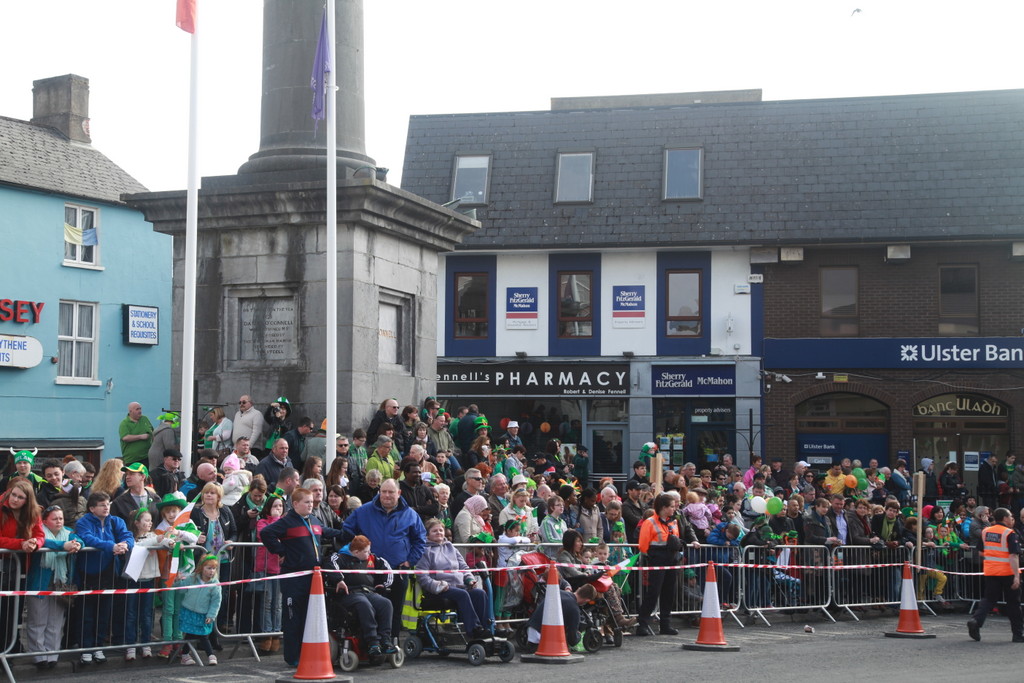
March 17th was a glorious sunny day in Clare so I headed into Ennis. The place was decorated with bunting and flags in preparation for the Parade, which kicked off at 11.00. Parades are a big deal here and every town and village has one. Not as big as Dublin of course which is now supposedly beats that in New York but definitely not as small as the one in Dripsey in Co Cork (which celebrates the fact that it has the shortest parade in the world – 100 yards between the village’s two pubs).

IMG_6486

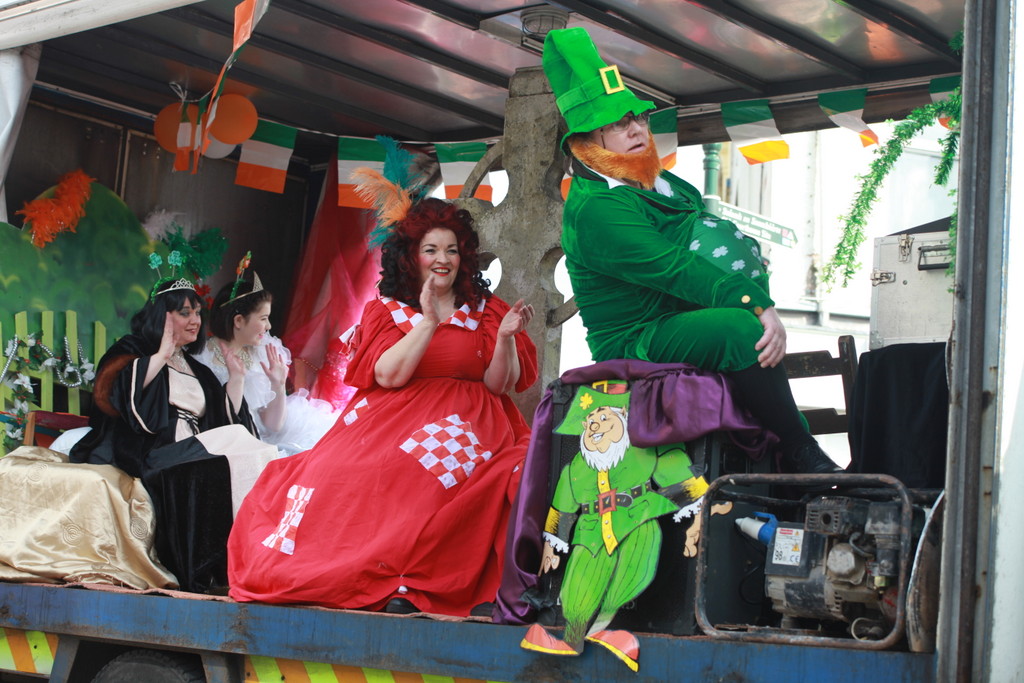
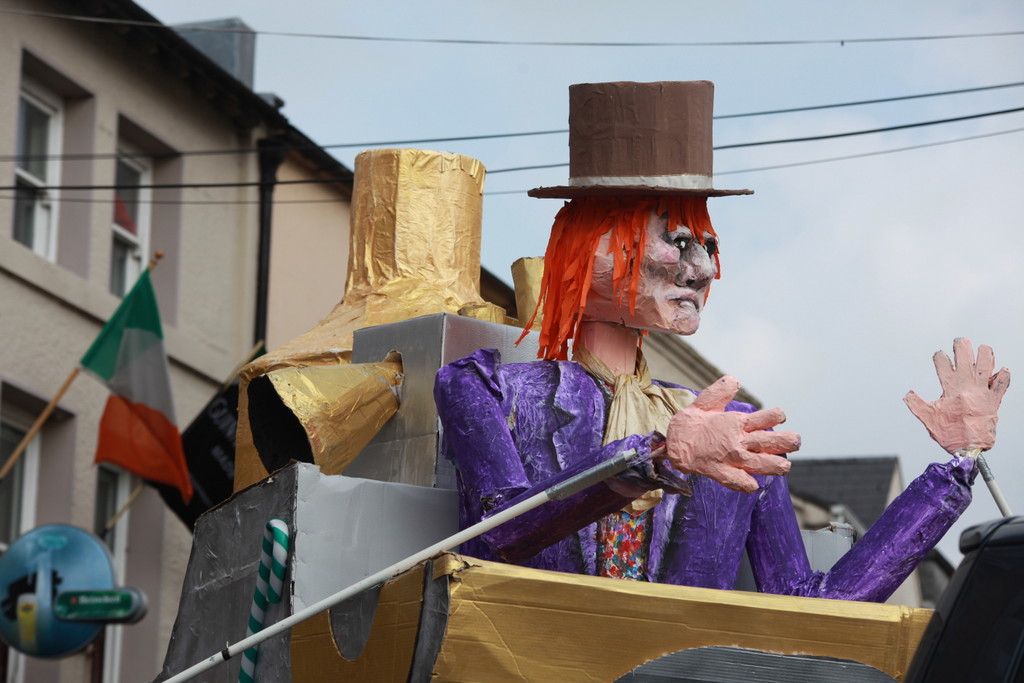
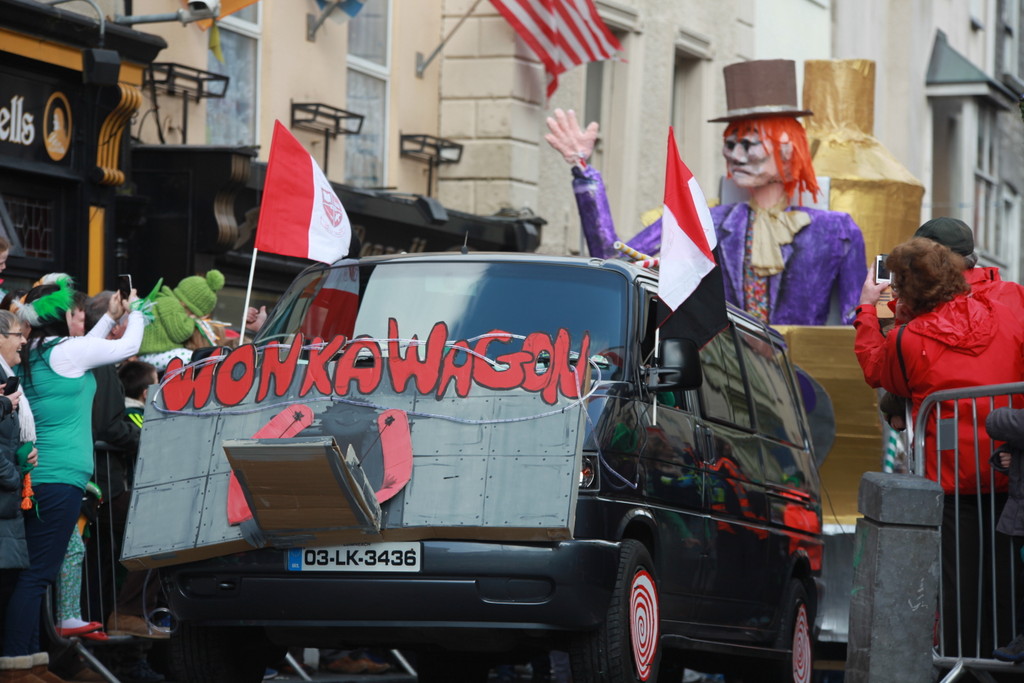
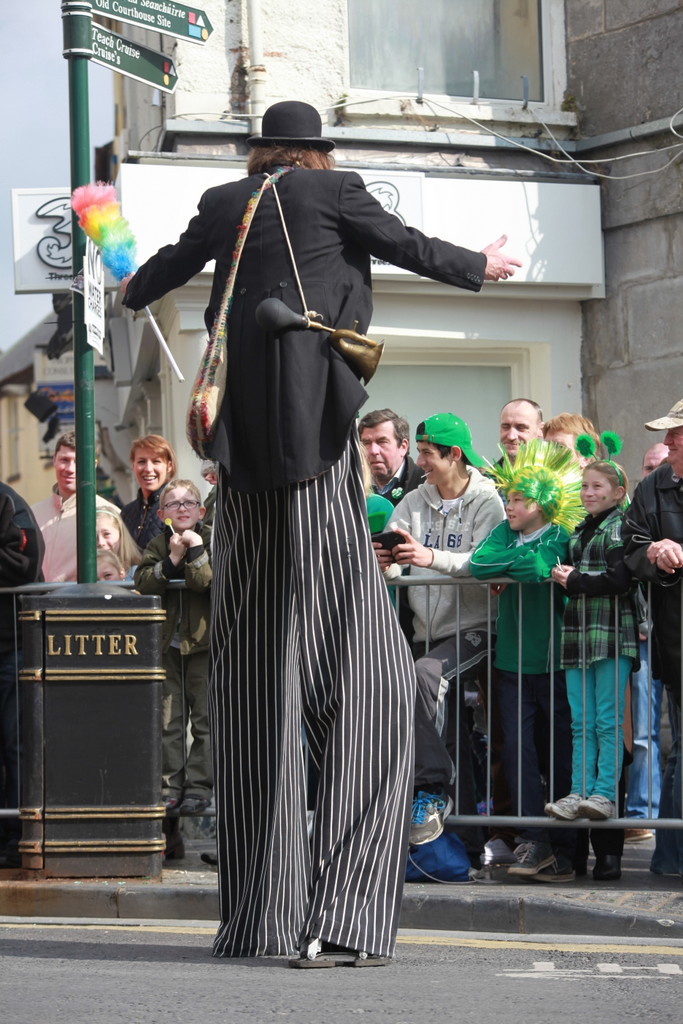
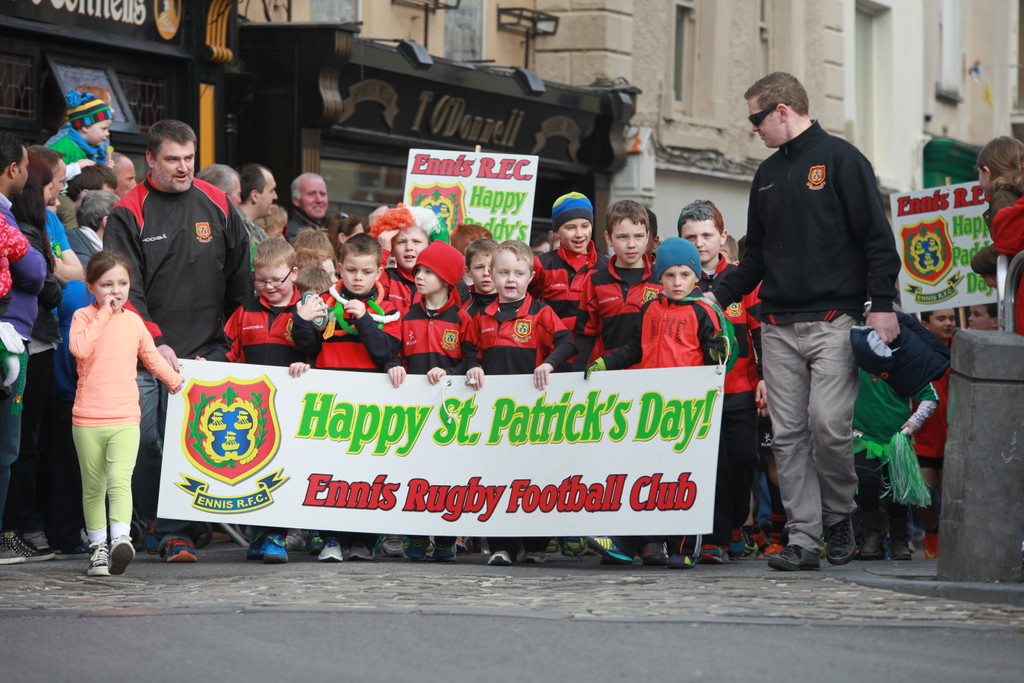
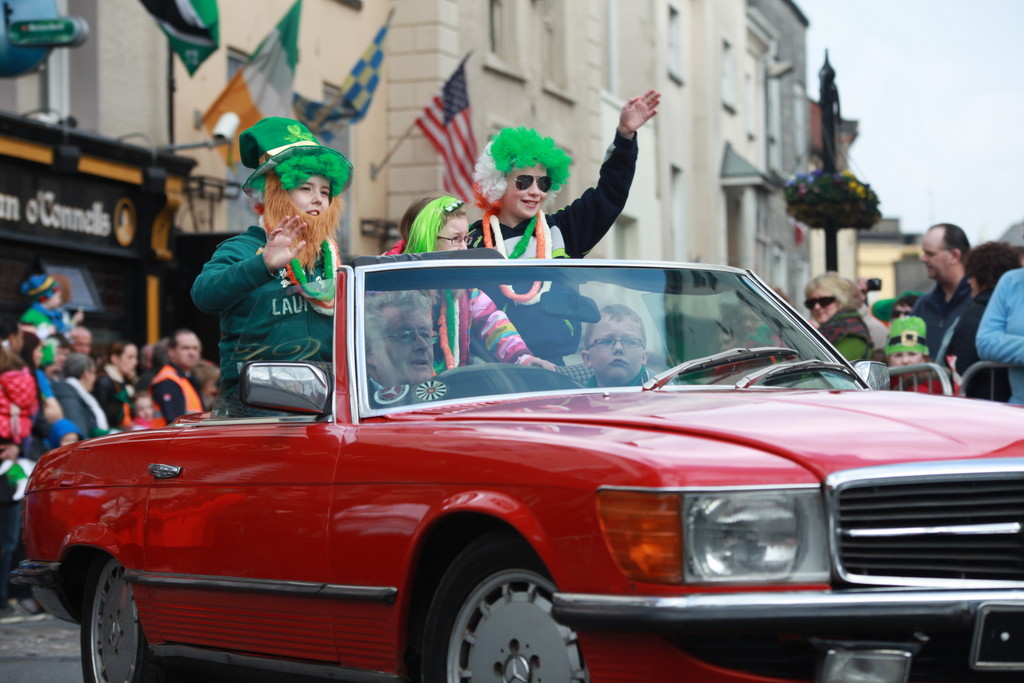
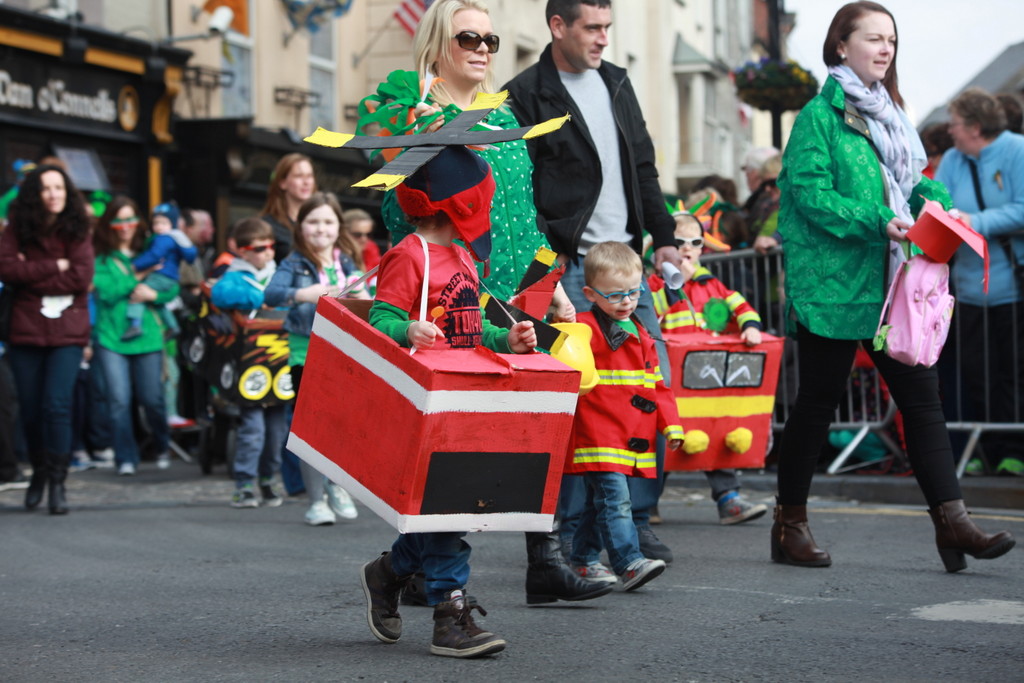
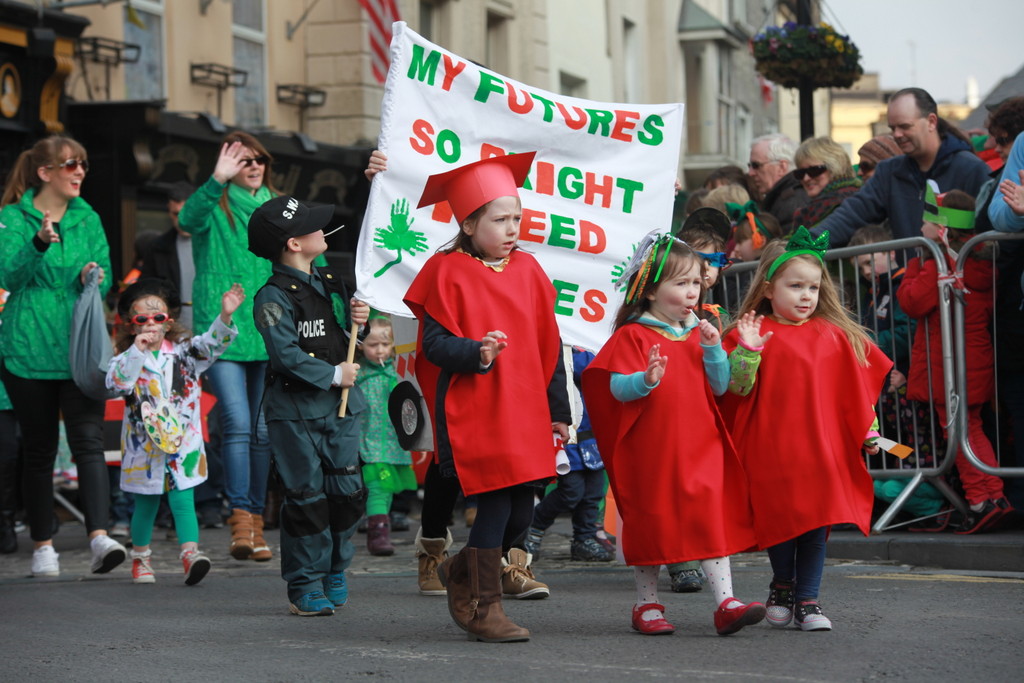
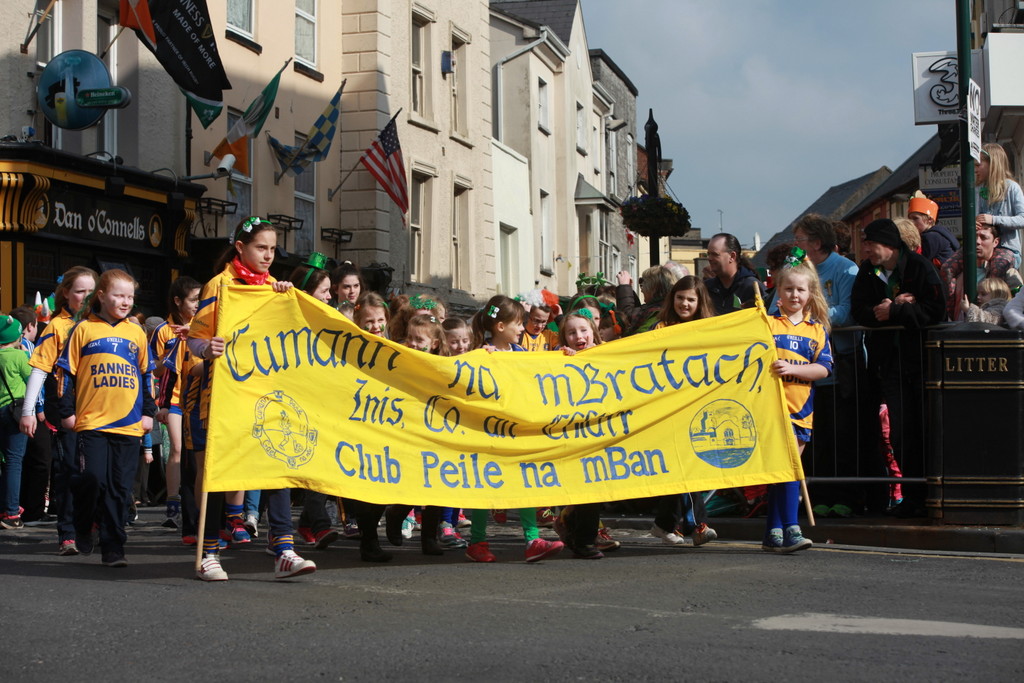
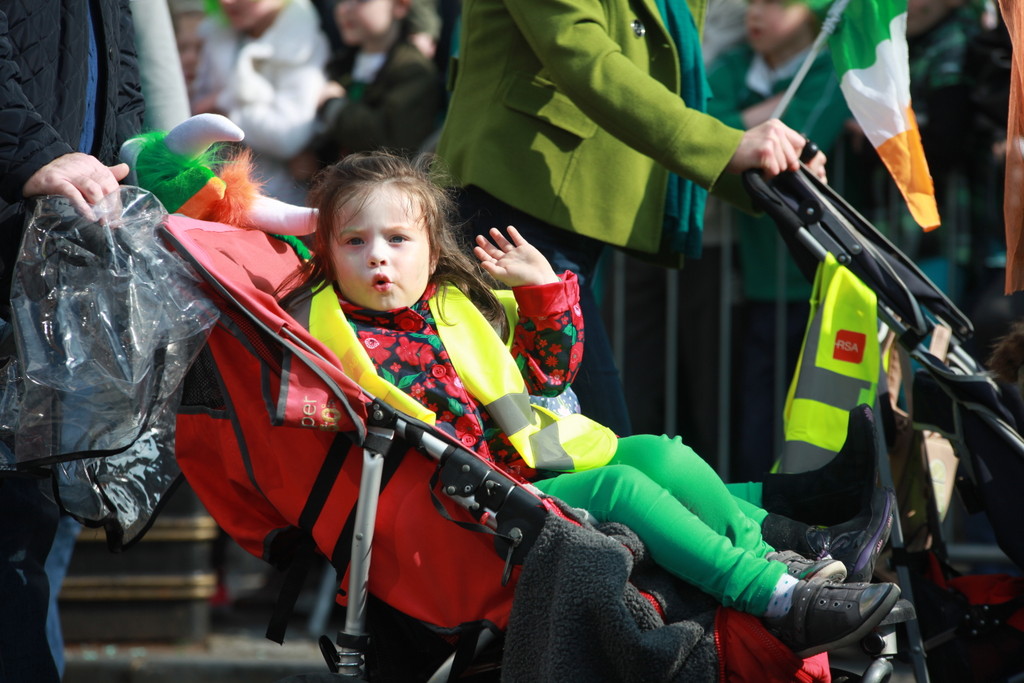
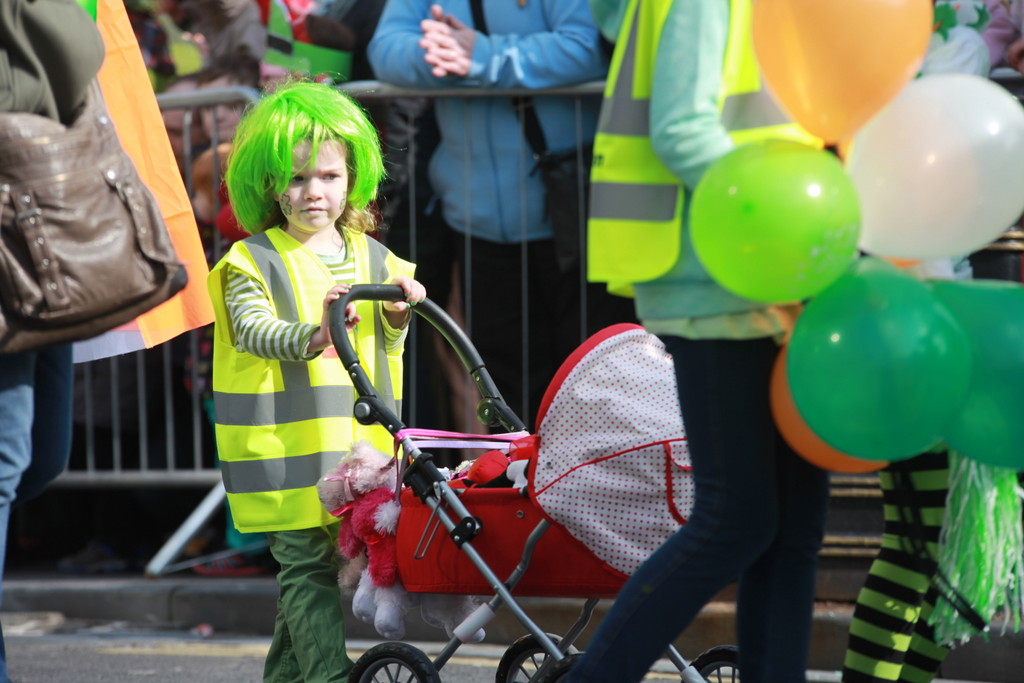
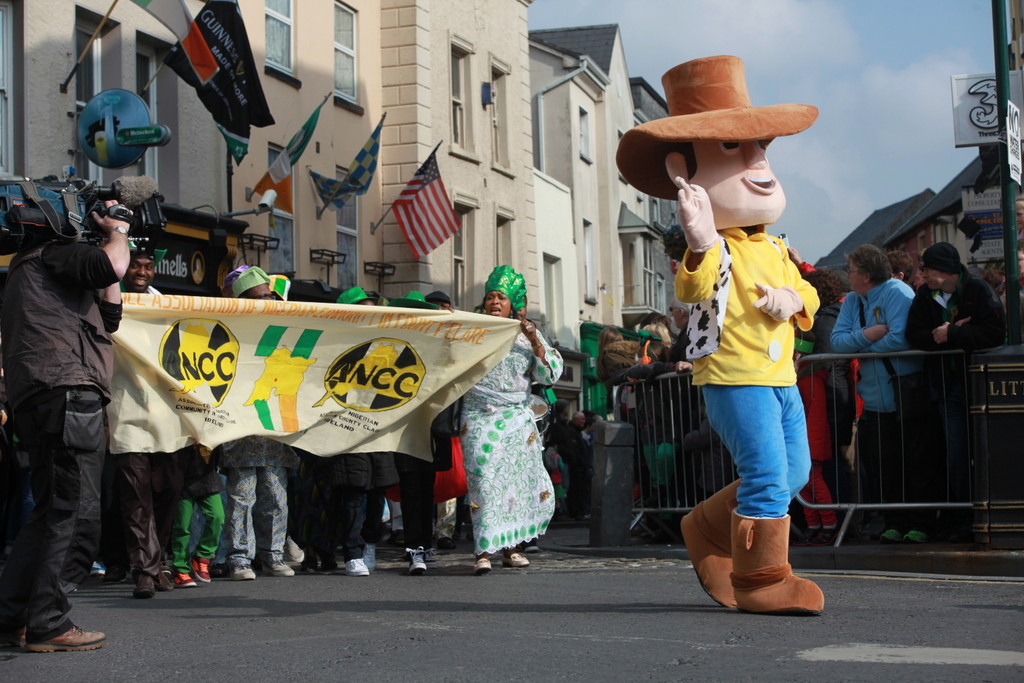
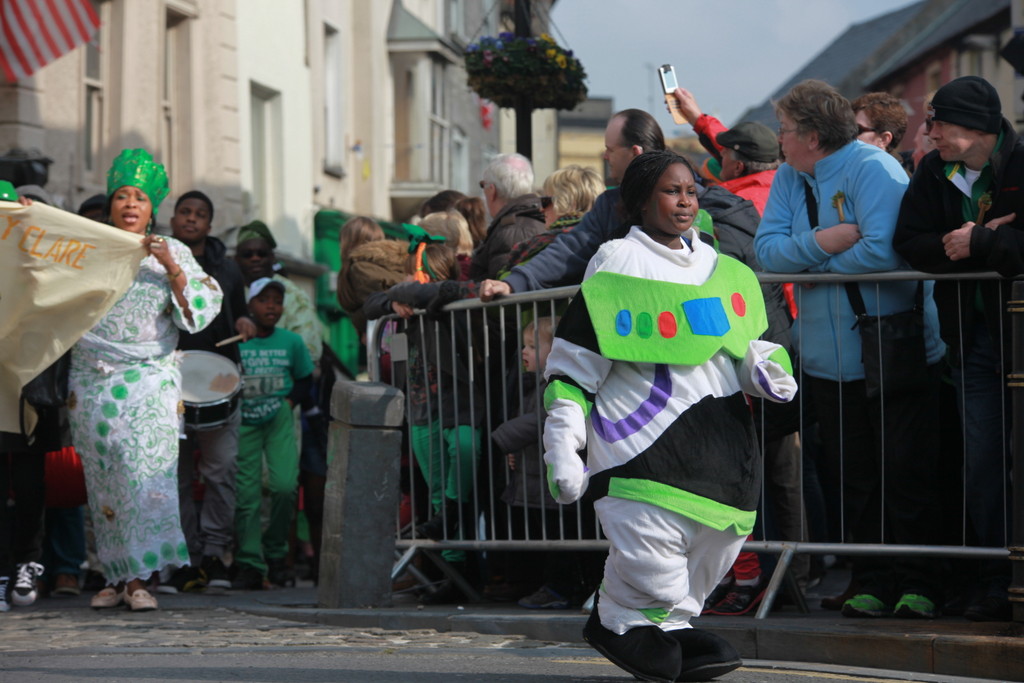
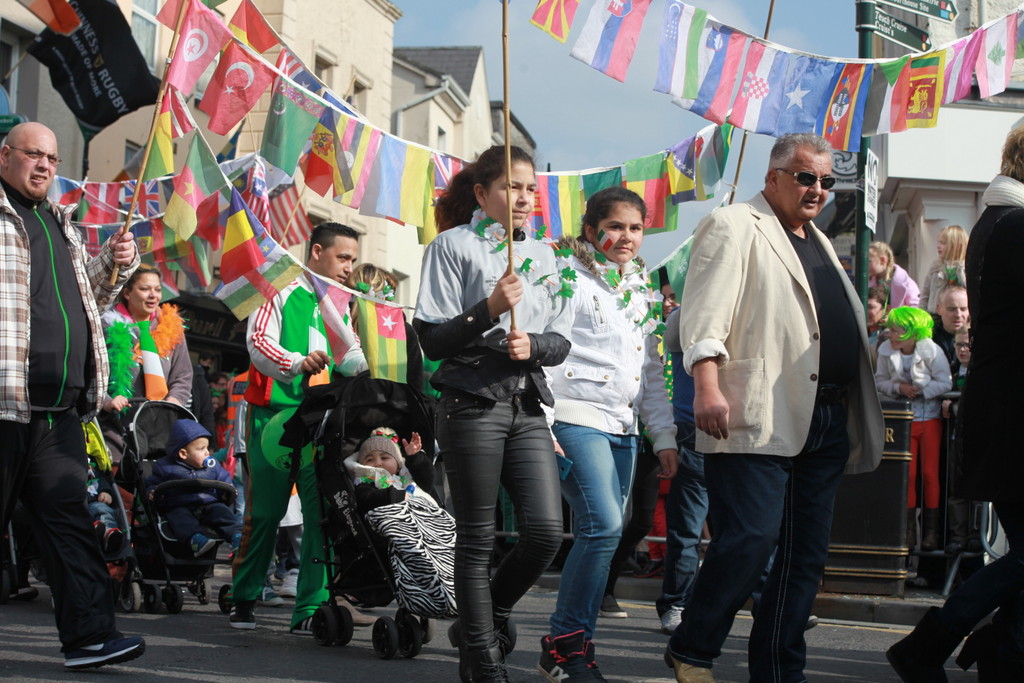
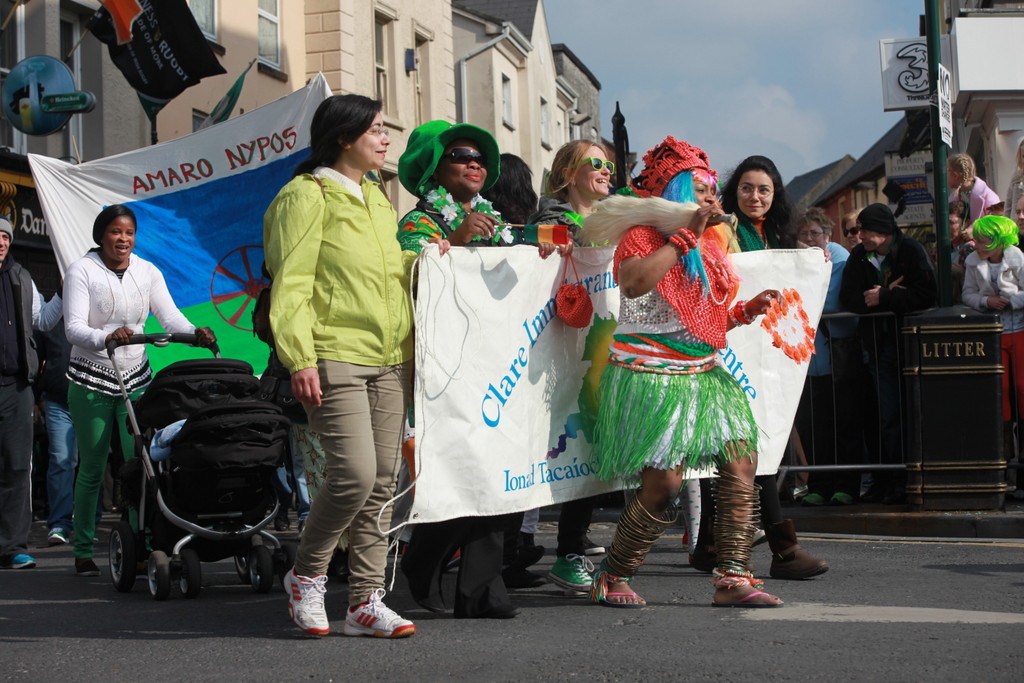
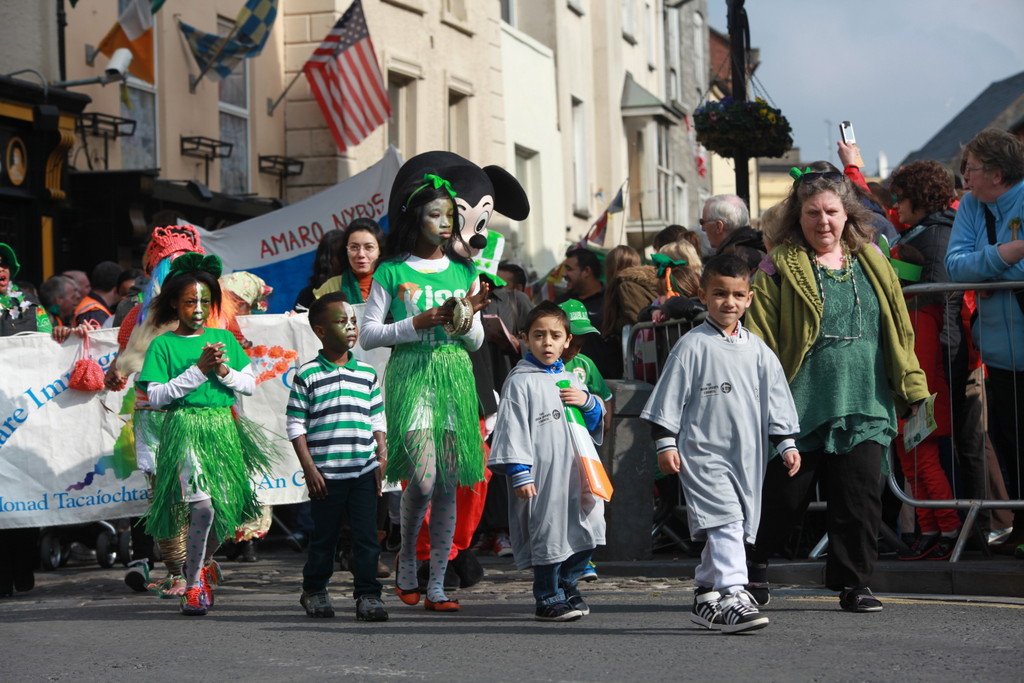
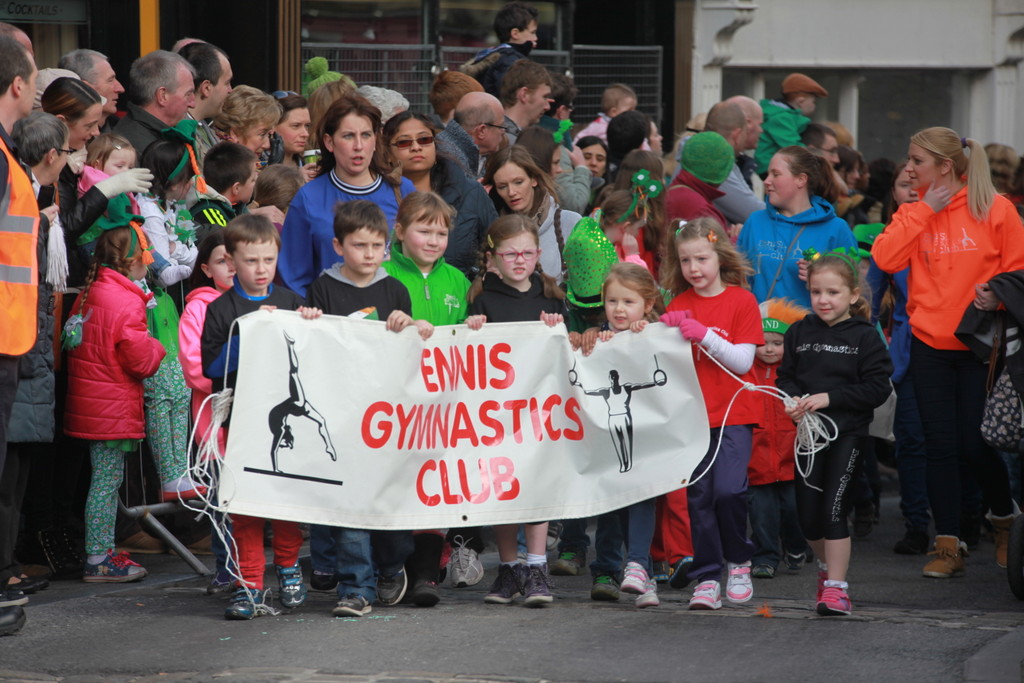
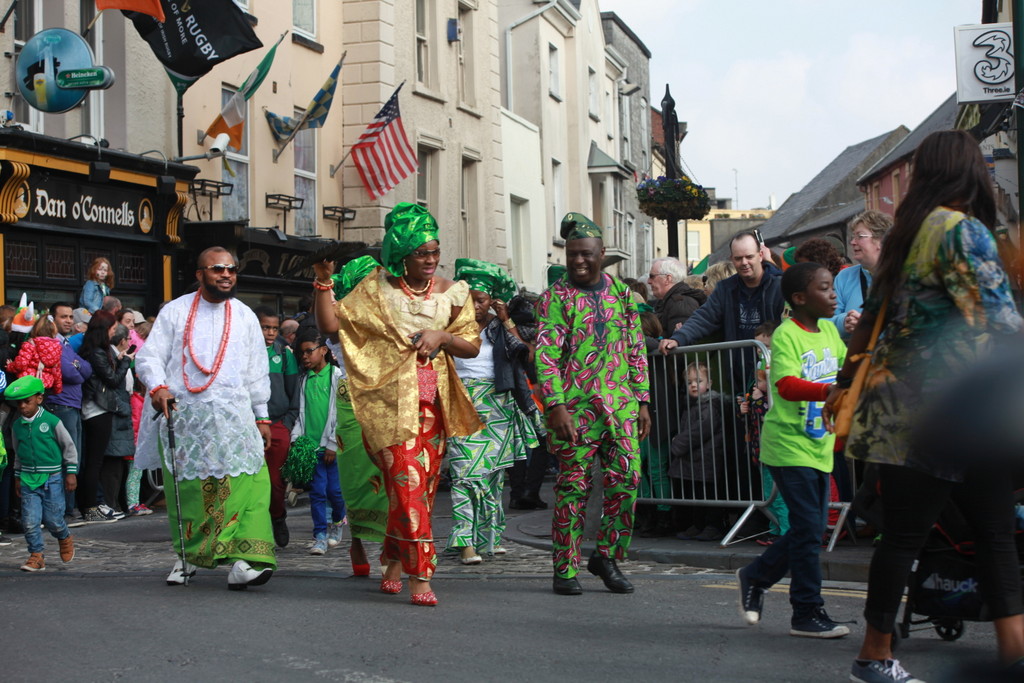
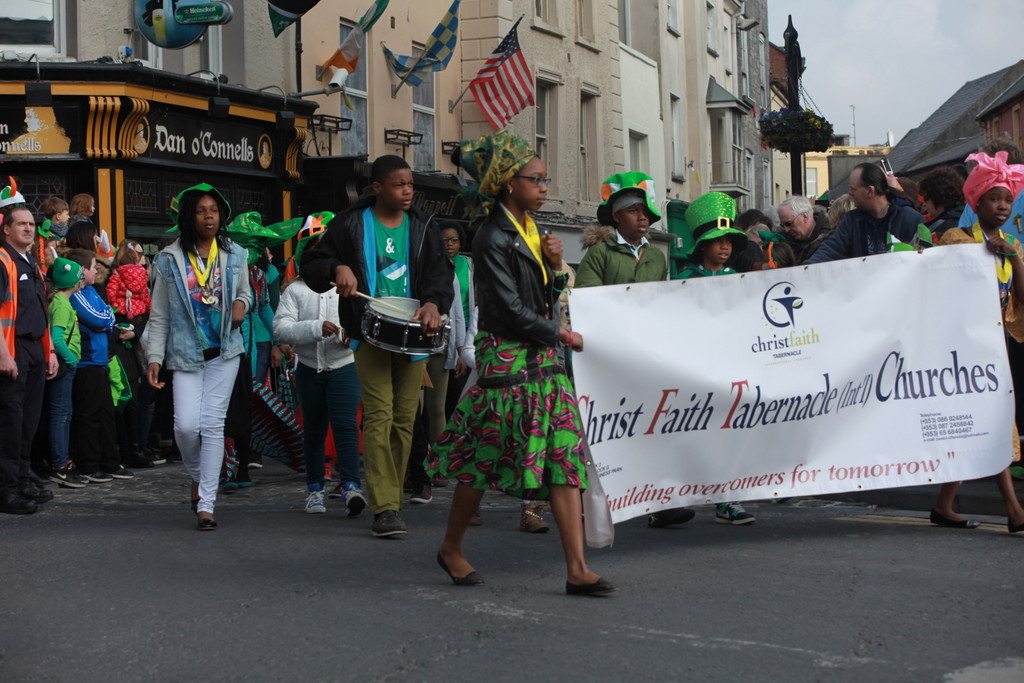
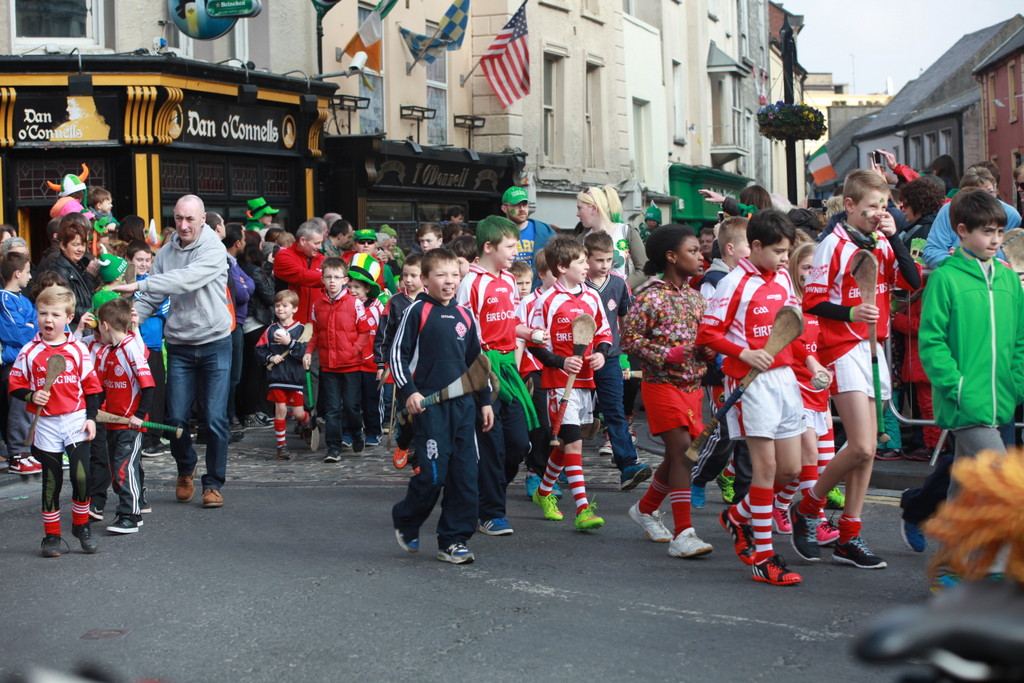
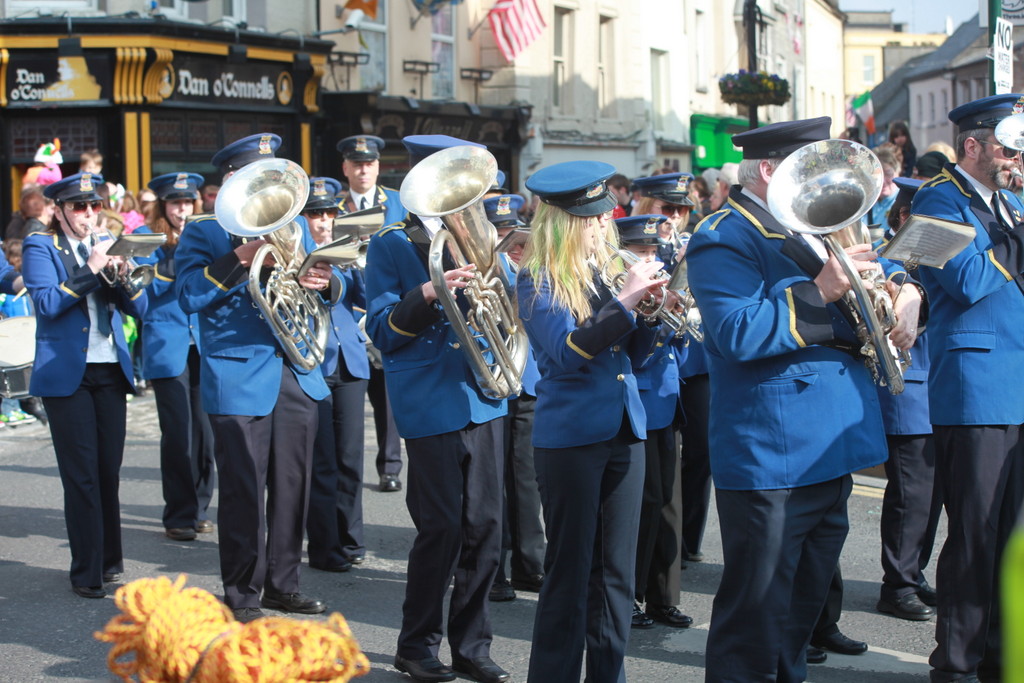
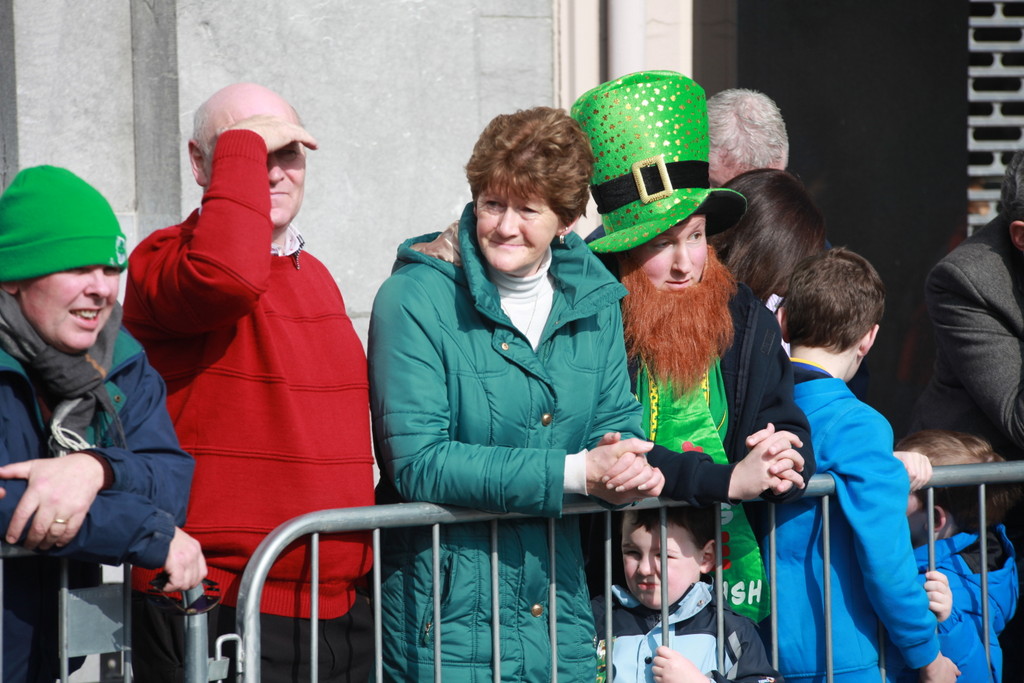
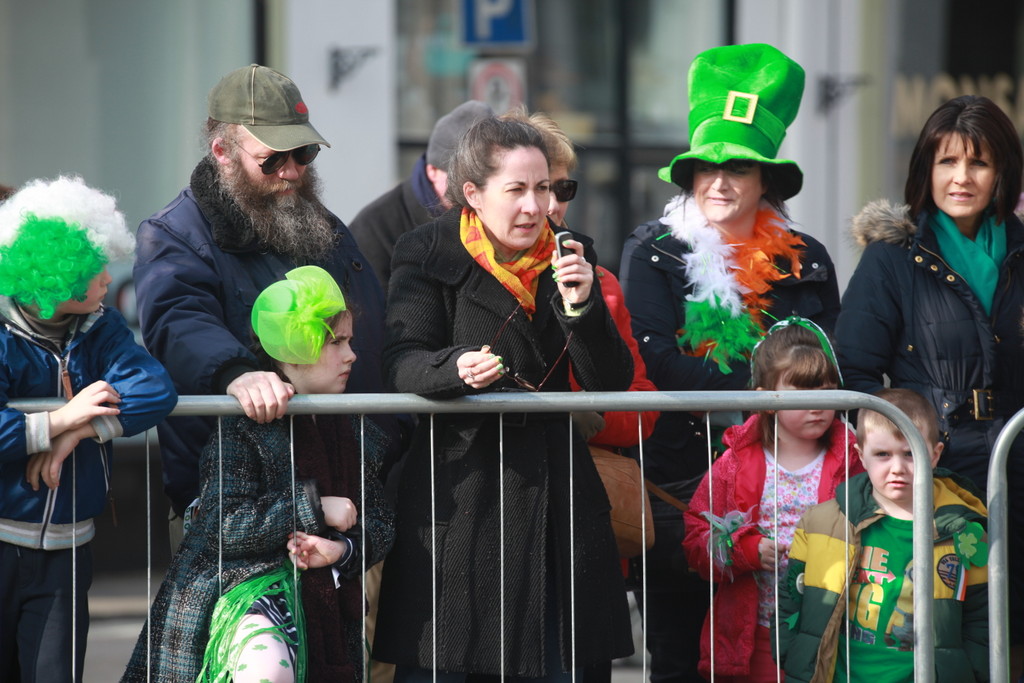
They are often staggered so the limited number of brass bands and prime movers can rotate between the villages. Community groups and schools go to a lot of effort and there are prizes for the best float or display. And everyone dresses up, with green of course being the dominant colour. At least fifty shades of green. Somehow it’s not tacky as it tends to be in Australia. It is the Irish celebrating their Irishness. So I saw nothing incongruous in leprechaun beards and green wigs as I might have in Australia if worn by Australians.

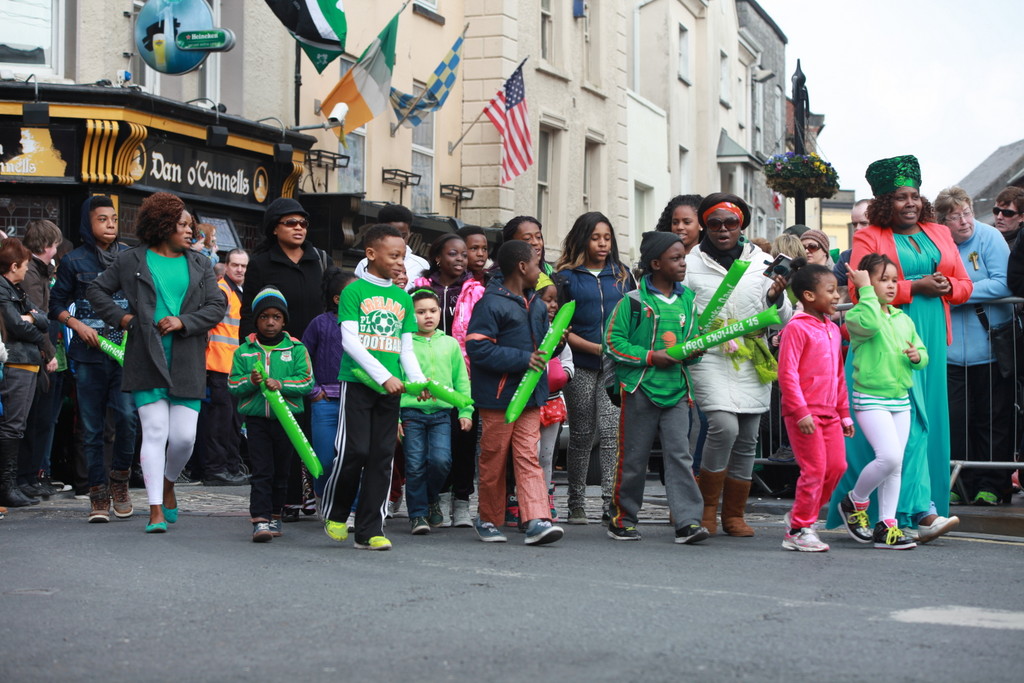
The other thing that struck me as the Parade moved past me was that just as in Australia now, Ireland is a multi-layered society and a quick flick through the photos shows groups with a diversity of ethnic identities. There is a strong representation of support groups for people with special needs. It was quite a window into what is important to the people of Clare. The whole thing is very much a family day and this spilled over into the pubs and restaurants with family groups continuing the celebrations as others geared up for a big night.

IMG_1390 IMG_1402 IMG_1414 IMG_1624 IMG_1614 IMG_1608 IMG_1588 IMG_1583 IMG_1579 IMG_1570 IMG_1556 IMG_1550 IMG_1542 IMG_1541 IMG_1538 IMG_1535 IMG_1529 IMG_1524 IMG_1519 IMG_1512 IMG_1503 IMG_1499 IMG_1487 IMG_1483 IMG_1473 IMG_1470 IMG_1459 IMG_1451 IMG_1446 IMG_1428 IMG_1418 IMG_1375 IMG_1370 IMG_1359 IMG_1357 IMG_1349 IMG_1333 IMG_1326 IMG_1323 IMG_1307 IMG_1293 IMG_1284 IMG_1278 IMG_1273 IMG_1270 IMG_1259 IMG_1252 IMG_1242 IMG_1234 IMG_1224 IMG_1221 IMG_1213 IMG_1210 IMG_1205 IMG_1199 IMG_1190 IMG_1187 IMG_1184 IMG_1182 IMG_1176 IMG_1174 IMG_1162 IMG_1157 IMG_1155 IMG_1137

I had heard there would be tunes all day at Cruises so at 1:00 I joined Eric and Hugh Healy with Brian O’Loughlin and Catherine for some great tunes.  Energetic and fast – great fun. Accompanied as we were by a young lad who practiced his dance steps continuously for well over two hours! Gradually the families left the pub and by 4 pm there was a change in musicians to Eoin O’Neill and Quentin Cooper and friends.  The pub was rapidly filling up but at 6:00 I decided to head back to Friels at Miltown Malbay where there was a session in full swing when I arrived with with Damien O’Reilly, Caoilfhionn Ni Fhrighil, Eamonn O’Riordan, Brian Mooney and Thiery Masur .  The pub was packed like I haven’t seen it since Willie Week and there was plently to like about the music. At 8.30 it wound up and my next stop was Liscannor where Ennis band Los Paddys de las Pampas were playing at Egans.  I have to say I had never heard them before and wasn’t sure what to expect – Ireland meets South America?  But with talent like Adam Shapiro and Kirsten Allstaff involved it had to be good.  And what a great night.  The music was surprisingly infectious and even a boring old fart like me was up on the dance floor bopping along.  There were some great cameos from Clara Buettler and two flamenco dancing sisters (can’t remember their names) and then Lenka Hoffmanova took to the floor looking resplendent in her dress of orange white and green.  Flamenco meets sean nos!  Great stuff!

Now that was how St Patricks Day should be celebrated.

IMG_1629 IMG_1742 IMG_1736 IMG_1734 IMG_1722 IMG_1718 IMG_1717 IMG_1713 IMG_1705 IMG_1700 IMG_1685 IMG_1678 IMG_1667 IMG_1655 IMG_1643


Categories: Real Ireland, Sessions, Trad Irish Music | Tags: , , , , , , , , , , , , , , , , , , | 4 Comments

Corofin Traditional Festival, Co Clare

The festival at Corofin is the 25th festival I have been to in Ireland since I arrived in May 2014. Is it the best? Hard to answer but for me it had everything. Some festivals have better workshops, bigger concerts, more variety, but this one to my mind gets the balance just right. Let me tell you about it.

The festival committee headed by the dynamic O’Reilly brothers have developed a tried and true formula and know better than to tinker with it. In fact the Festival won the MórGlór award last year in recognition of its contribution to music in Clare and the efforts of the organisers to put on a consistent and high quality festival.

Corofin is a small village on the edge of Clare’s spectacular Burren (see my blogs at https://singersongblog.wordpress.com/2014/06/20/the-burren/ and https://singersongblog.wordpress.com/2014/08/29/the-burren-again/) about 14 km from Ennis. The festival was held over the week 2nd March to 8th March 2015.  It kicked off on the Monday night and there were events every night until the weekend when the festival proper got into full swing. I didn’t attend the opening by Eoin O’Neill on Monday (I was still enjoying the final session of the Russell Weekend in Doolin (https://singersongblog.wordpress.com/2015/03/06/russell-weekend-doolin-co-clare/) so I can’t comment on that but Tuesday and Wednesday saw two more free events in the Teach Ceoil. This is an intimate venue where there is a great connection between the artists and the audience. On Tuesday we heard Mick, Donal and Conor McCague launching their album of mainly Mick’s original compositions. It was lovely music, a highlight for me being; yes you guessed it, the fiddle playing of Donal. Wednesday was a tribute night to the irrepressible Joe Rynne from Inagh who has had such a big influence on music in North Clare As recipient of a Lifetime Achievement Award, we were treated to some wonderful cameos from members of his family, from renowned flute players, Christy Barry and Brid O’Donoghue and then finishing with an all in session comprising 25 of Joe’s friends, many of them legends themselves and some previous members of the Corofin Hall of Fame. Their playing of the ‘Tulla’ set was something to behold.

Then there were three concerts on Thursday Friday and Saturday. One can’t be everywhere so the only one of these I saw was on Friday with the Yanks, a group of yes, you guessed it, Americans, led by 2014 All Ireland Senior Fiddle Champion Dylan Foley and the most gorgeous flute from Conal Ó Gráda with Colm Murphy backing on bodhran. I had never heard flute playing quite like that of Conal. It was light, full of energy and spirit and I was mesmerised. Performers at the other concerts included Angelina Carberry and Dan Broudar, Noel Hill and Liam O’Connor and Jesse Smith and Colm Gannon, and while it was disappointing not to see everyone, I was able to catch up with some of these at the various sessions.

I attended the fiddle workshop and in the allocated three hours we had an hour each from Jesse Smith, Dylan Foley and Conor McEvoy. This was nowhere near enough time and in particular Jesse Smiths’ insightful perspective was particularly helpful to me.

This festival however very much revolves around the virtually continuous sessions that take place from Friday night to the death on Sunday evening. It is a musicians’ festival and quality players turn up in droves and this brings a big contingent of international trad followers. It felt at times a bit like Willie Week without the baggage, if you know what I mean. Of course there were some sessions that didn’t deliver, just as in any festival – too much noise, too big, whatever; but there were so many that did. I played on the Saturday (not counting the workshop) from 2:30 to close at around 2am (after three hours sleep the night before) and again on the Sunday for twelve hours, exhausted but satisfied. There were both large sessions such as at Crowley’s on Saturday where despite there being possibly forty musicians, the music was fast and tight and had a good strong pulse, and there were small intimate sessions, such as with Stefan and Paolo at the Anglers Rest on Sunday or on Saturday where I had the great pleasure of playing with the incredibly talented Sarah, Ellen and Seamus O’Gorman, All Ireland champions from Waterford and the future of fiddle playing in Ireland. Great stuff. And I have to mention the Sunday evening session at the Angler’s Rest, with Derek Hickey, Claire Egan, Eoin O’Neill (box), Liam O’Brien, Dan Brouder, Angelina Carberry and Geraldine Cotter among others. This was sublime music played at a gentle pace and with wonderful restraint and despite the number of boxes you could hear each instrument clearly. It became almost hypnotic at times and a largely silent and appreciative crowd were treated to a memorable evening and a great finale to a weekend of wonderful music. Great to be part of it.

I caught up with a host of overseas musicians, some regular visitors to Clare who include Corofin on their must-visit list along with Willie Week and the Tradfest in Ennis and judging by the variety of inter-county number plates jostling for parking space there were visitors from all over Ireland drawn to this celebration of the best of Irish music. And as usual I made many new friends. Who wouldn’t want to be part of the traditional music scene?

There was not a bed to be had in Corofin as I discovered when my car was locked inside the Centra Car park, but that’s another story!

I only had one issue, and I mention it as something for the organisers to think about next time. There was a fantastic session going at Bofey Quinn’s on Saturday evening and the place was packed and buzzing. At 10pm the musicians who play at the regular scheduled session arrived and virtually mid-tune the session came to an abrupt end. As the regulars took over, the pub quickly cleared both of musicians and drinkers. This was not in the best interests of the Festival or the pub. I don’t know what the answer is but, like I say, I just mention it as something to think about.

Fair play to the O’Reilly brothers who seem to be the driving force behind this festival (I hope that’s not being unfair to others who contribute), while at the same time appear in the concerts, do MC’ing and turn up at sessions all over town as well as being at the end of the phone to answer requests for lost caps. Thank you.

So is it the best? Let me just say if it was a restaurant I’d give it three hats!

See you there next year.

IMG_0016 IMG_0034 IMG_0038 IMG_0058 IMG_0063 IMG_0077 IMG_0083 IMG_0100 IMG_0104 IMG_0107 IMG_0114 IMG_0137 IMG_0141 IMG_0143 IMG_0155 IMG_0181 IMG_0209 IMG_0213 IMG_0221 IMG_0244 IMG_0269 IMG_0286 IMG_0296 IMG_0307 IMG_8944 IMG_8972 IMG_8976 IMG_8977 IMG_9023 IMG_9044 IMG_9090 IMG_9099 IMG_9106 IMG_9131 IMG_9141 IMG_9142 IMG_9159 IMG_9177 IMG_9215 IMG_9234 IMG_9242 IMG_9250 IMG_9253 IMG_9254 IMG_9272 IMG_9283 IMG_9293 IMG_9305 IMG_9330 IMG_9342 IMG_9348 IMG_9367 IMG_9369 IMG_9374 IMG_9387 IMG_9394 IMG_9410 IMG_9415 IMG_9419 IMG_9437 IMG_9479 IMG_9511 IMG_9518 IMG_9548 IMG_9557 IMG_9565 IMG_9588 IMG_9593 IMG_9605 IMG_9607 IMG_9616 IMG_9621 IMG_9624 IMG_9652 IMG_9666 IMG_9668 IMG_9682 IMG_9701 IMG_9713 IMG_9723 IMG_9737 IMG_9759 IMG_9770 IMG_9789 IMG_9797 IMG_9803 IMG_9814 IMG_9822 IMG_9826 IMG_9874 IMG_9876 IMG_9883 IMG_9902 IMG_9920 IMG_9961 IMG_9965 IMG_9993

Categories: Festivals, Trad Irish Music | Tags: , , , , , , , , , | Leave a comment

Russell Weekend, Doolin. Co. Clare

Another week another festival.  This time in my backyard at Doolin, pretty much the spiritual home of traditional music in Clare. This festival, held over the weekend 27th February to 2nd March 2015, honours the Russell family but in particular the much loved Micho Russell who died tragically in 1994. This is now its 14th year.

Doolin, for those who don’t know it has three pubs and a hotel and is spread out over a couple of kilometres just north of the famed Cliffs of Moher, Ireland’s biggest natural attraction. So it gets lots of foreign visitors. It has been something of a mecca for those seeking traditional music and for most of the year there is music every night in all the pubs. In itself this has brought about quite a change in Doolin as the pubs are very crowded and noisy and ironically it is not always the best place in Clare to hear traditional music. But there is no denying that the craic is mighty. This festival seems to mark the reawakening of Doolin from its winter slumber. Not that there wasn’t any music through the winter (take the Monday session at Hotel Doolin for instance) but this weekend brings out the punters in a big way and is a promise of what’s to come.

The festival kicked off on the Friday with the opening function in the hall. This was a showcase for the young talent of the district and the hall was packed with proud parents and relatives. And they had a lot to be proud of. From whistle-toting tots, who could hardly read and write, to All Ireland age champions on a variety of instruments. For over an hour there was a cavalcade of young musicians and dancers. I couldn’t help feel a sense of wonder at how important this music was to the soul of Ireland and how great it was that this was being passed to the kids. Yes kids learn musical instruments all over the world but nothing like here in Ireland. I have said it before but the future of Irish traditional music and dance seems safe. I was particularly taken with the set dancing where they were clearly enjoying themselves, even though they all had to rush to a disco afterwards. Good to keep a sense of perspective.

Then there was the main concert. This is traditionally held on the Saturday afternoon and was a cracker. I loved the format with all the musicians on stage, taking turns at solos and interspersed with performances from the whole band.   With musicians such as Oisín Mac Diarmada and Kieran Hanrahan and the amazign Seamus O’Donnell, the music was absolutely brilliant. We also had some brilliant sean nos dancing from Samantha Harvey and two show stopping performances from the 74 year old dancing singing fiddler Desssie O’Halloran, who had the enthusiastic crowd on their feet. For me the high point of the concert was the saxophone playing of Seamus O’Donnell including a soulful rendition of Danny Boy. Something I had never heard before. I was sceptical but wow!. What a lift it gave to the music. Not ‘traditional’ I know but played from the heart.

There was copious quantities of food and wine afterwards and then a singing session capping a great evening.

I love to attend workshops.  I had not heard of the tutor so it was to be a complete surprise. After two very late nights it was a wonder that I actually managed to turn up. And I am so glad I did. Unusually the fiddle workshop was scheduled for McGann’s pub, definitely a new one for me. I was the only one there. So I had a one on one with Catriana Ruine. I learnt five tunes but learned so much more than that, just playing and listening, It sounded so great just two fiddles in a quiet pub with the main distraction the crackling from the fire. I was very pleased with how quickly I picked up the tunes. When Catriana left I stayed in my corner near the fire and played tunes on my own for nearly an hour as the pub filled with diners, who happily, largely ignored me. It felt so good. Somehow I got inspiration from the moment. I don’t know where I got the confidence from but here I was, me playing on my own in one of the most famous music pubs in Ireland to a full house (even though they were more interested in their black pudding and crispy bacon than me) and playing competently enough not to be asked to shut it. All good things however come to an end and unceremoniously the piped music was turned on and I couldn’t compete. As I packed my fiddle away I was met with a lovely burst of applause from the diners which really surprised me as I didn’t think anyone was actually listening.

The workshop on the Sunday was equally good but for different reasons. There were two of us this time, and eventually our tutor turned up. We had the irrepressible and enthusiastic Cáit Ryan from Upperchurch in Tipperary. And while we only learned a couple of tunes, for one so young she was so full of good advice. In particular emphasising the importance of learning to sing in Irish.  I now have a new challenge! We even had a crack at the air Ned from the Hills.   This time the pub was not the best place as we were constantly interrupted, sitting as we were on the way to the toilets. Her family runs a music pub in Tipperary called Jim of the Mills, a place that is now firmly on my agenda to visit.

The sessions continued all afternoon and night over the weekend with musicians of quality. Highlights for me were a session that went at least 7 hours with the Clancy sisters and Mary Shannon at McGanns, some quiet tunes with Adam Shapiro and Terrry Bingham at O’Connors on Sunday and, at least for a while, some great music at McGanns with James Cullinan and others on Sunday. I say for a while because this session was brutally murdered by the arrival of two additional guitars (there was already one) competing with each other to see who could be the loudest and drowning completely the music. A shame. Fiddles were packed up and flutes disassembled and pretty soon the lads had McGann’s to themselves. The arrival of a cahone was the final plunge of the knife. This was more than made up for though on the Monday. James Cullinan again, his wife Carol, Noel O’Donoghue and Kevin Griffin kicked off in O’Connor’s at 3pm They were joined at various stages by others such as Donie Nolan, Seamus MacMahon, Carmel O’Dea, Anita Broderick and a couple of very talented kids, until it finally concluded at 12:30 am . A marathon 9 ½ hours of the most wonderful music that ebbed and flowed with the change in personnel. no guitars, no spoons and no bodhrans! Despite the pub noise that increased through the evening the music stayed pure and real. I changed my plans to go to Corofin that night and stayed to the very end. I had heard of James Cullinan’s quality and was not disappointed. And for a couple of hours I had the added privilege of meeting and playing with Carmel O’Dea. Another class fiddler. It was also special to hear a wonderful version of the Clogher Road from the fine voice of Donie Nolan. This is a session that will stay with me for years. Unfortunately I could not drag myself away so I missed what looked like another mighty session with Terry Bingham, Christy Barry and Anne Rynne in the other bar.

The craic was mighty, as they say, all weekend.  I met lots of new people and everyone was so friendly.  I have to share one story.  As I walked past the bar in McGann’s, with my fiddle on my back one young guy grabbed my arm and stopped me saying “you play the spoons”. A bit taken aback I pointed to my fiddle and said “no what makes you think that?” “You just look like it” came the response. I wasn’t sure what to say when he finally registered my accent.  “Fuck! you’re American” he blurts out.  After telling him he had now insulted me on two counts, we parted the best of friends. Just love it…..

A  fabulous festival and as I drove home that night through the light snowfalls I thought on this and the many other festivals I have attended. Every festival I go to gives me something. That’s why I keep going. Can’t wait for Corofin.

IMG_7452 IMG_7653 IMG_7706 IMG_7771 IMG_7815 IMG_7824 IMG_7837 IMG_7860 IMG_7870 IMG_7877 IMG_7891 IMG_7892 IMG_7898 IMG_7922 IMG_7933 IMG_7936 IMG_7942 IMG_7943 IMG_8130 IMG_8222 IMG_8225 IMG_8280 IMG_8281 IMG_8306 IMG_8333 IMG_8398 IMG_8414 IMG_8429 IMG_8450 IMG_8500 IMG_8532 IMG_8534 IMG_8553 IMG_8564 IMG_8573 IMG_8591 IMG_8598 IMG_8608 IMG_8635 IMG_8652 IMG_8657 IMG_8663 IMG_8669 IMG_8695 IMG_8697 IMG_8707 IMG_8721 IMG_8751 IMG_8778 IMG_8788 IMG_8795 IMG_8803 IMG_8811 IMG_8812 IMG_8823 IMG_8831 IMG_8846 IMG_8866 IMG_8878 IMG_8899 IMG_8903

Categories: Festivals, Trad Irish Music | Tags: , , , , , , , , , , , , | 1 Comment

Scoil Cheoil an Earraigh, Ballyferriter, Co Kerry

I have just returned from another festival/school, this time at Ballyferriter on the Dingle Peninsular in West Kerry.  And it really was a beauty.  It is called the Scoil Cheoil an Earraigh which translates slightly optimistically as Spring Music School.

The Dingle version of Spring involved rain, hail, mist and wild winds whipping up the Atlantic, but in the warmth of one of the many sessions you didn’t notice. Ballyferriter is almost the classic Irish village, with mandatory three pubs, hotel, church and shop. What sets it apart is its glorious setting right at the western end of the peninsular sandwiched between Slea Head and Mt Brandon . When the rain stopped as it did on a couple of occasions and the mist lifts, Mt Brandon, all 952 metres of it, stands proud with is snow capped peak and to the west the beaches and hills beckon. It is obvious why this area was chosen to film the seminal classic Ryan’s Daughter. It is also very compact so everything is within staggering distance and this is important when you are trying to find your way home at 6am.

Everyone said I would love Kerry and I do. This festival was a wonderful introduction to the Kingdom and the music.  This blog is just about the Festival.   I will post some pictures later of Dingle’s spectacular scenery.

The Scoil Cheoil Earraigh seems to hold a special place for many people. For some it is the only festival they attend. Of course there is a strong local contingent but there are also visitors from many other counties and from the UK, France, Russia, Germany. So what is it that brings them here?
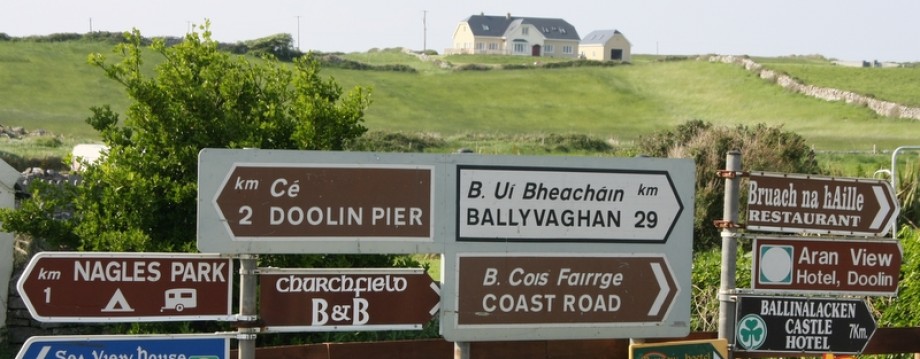
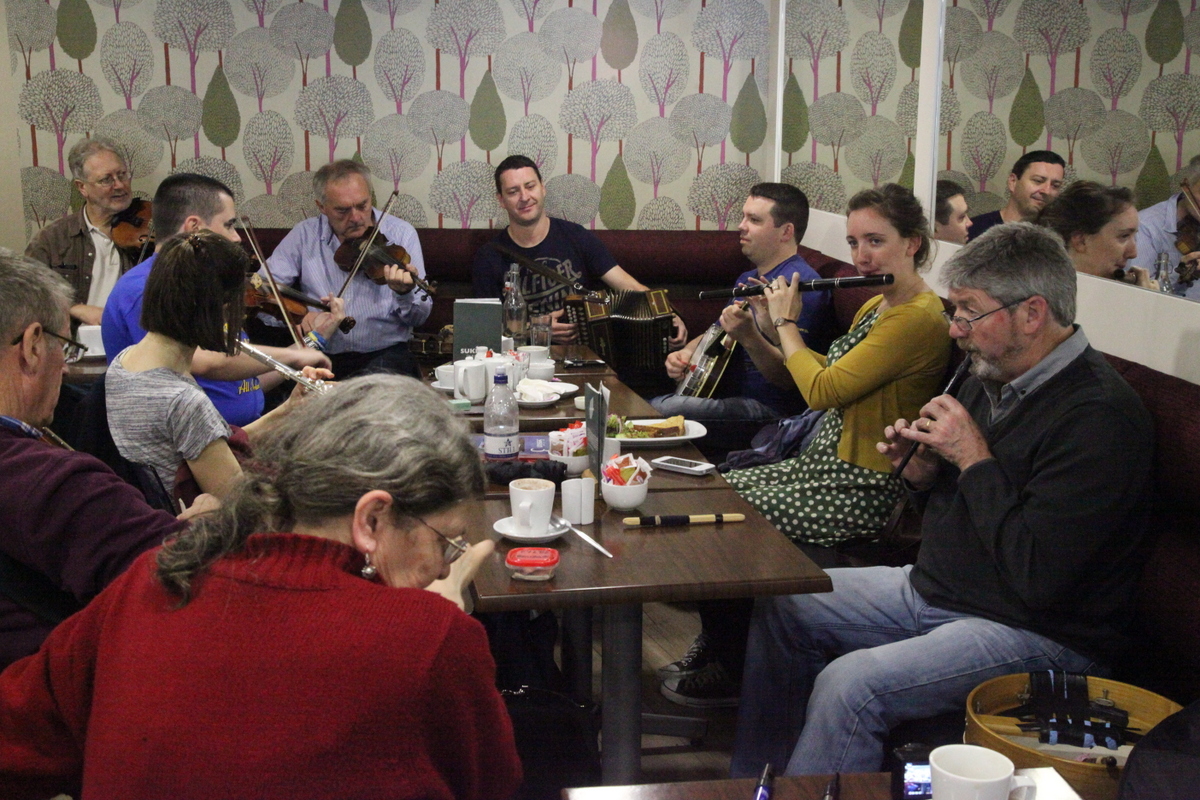
It is not a huge festival and it benefits from this. It was very well organised with no obvious hitches. The workshops over three days were with top class tutors. How many opportunities would a guitarist have spend three days with Steve Cooney? Many of the tutors performed in a number of impressive concerts along with other headline acts. The stamp of the Begleys was everywhere.  I’m not sure what the collective name for a lot of Begleys is – perhaps a boggle of Begleys but whatever it is it translates to pure musical genius. Along with Seamus and Breanndán with their vibrant and pulsating rhythms interspersed with wonderful soulful songs sung in Irish was Breanndán’s son Cormac displaying his virtuosity on a range of concertinas and other members of the extended Begley family popping up in various sessions. But it wasn’t just the Begley show. Other guests included Galway’s Páraic Mac Donnchadha on the banjo, Connie O’Connell renowned fiddler from Cork, Steve Cooney, back together in a big way with Seamus and adding his driving rhythms to a variety of other artists and in sessions, Harry Bradley , musician of the year last year, Tommy McCarthy a traveller singer with an extraordinary presence, and a huge repertoire of songs and fascinating stories and Brendan Powers from NZ master harmonica player across many genres stirring up the trad scene by utilising technology to take the music into uncharted territory. There were also informal concerts in cafes which was a great counterpoint to the frenetic energy of the sessions.
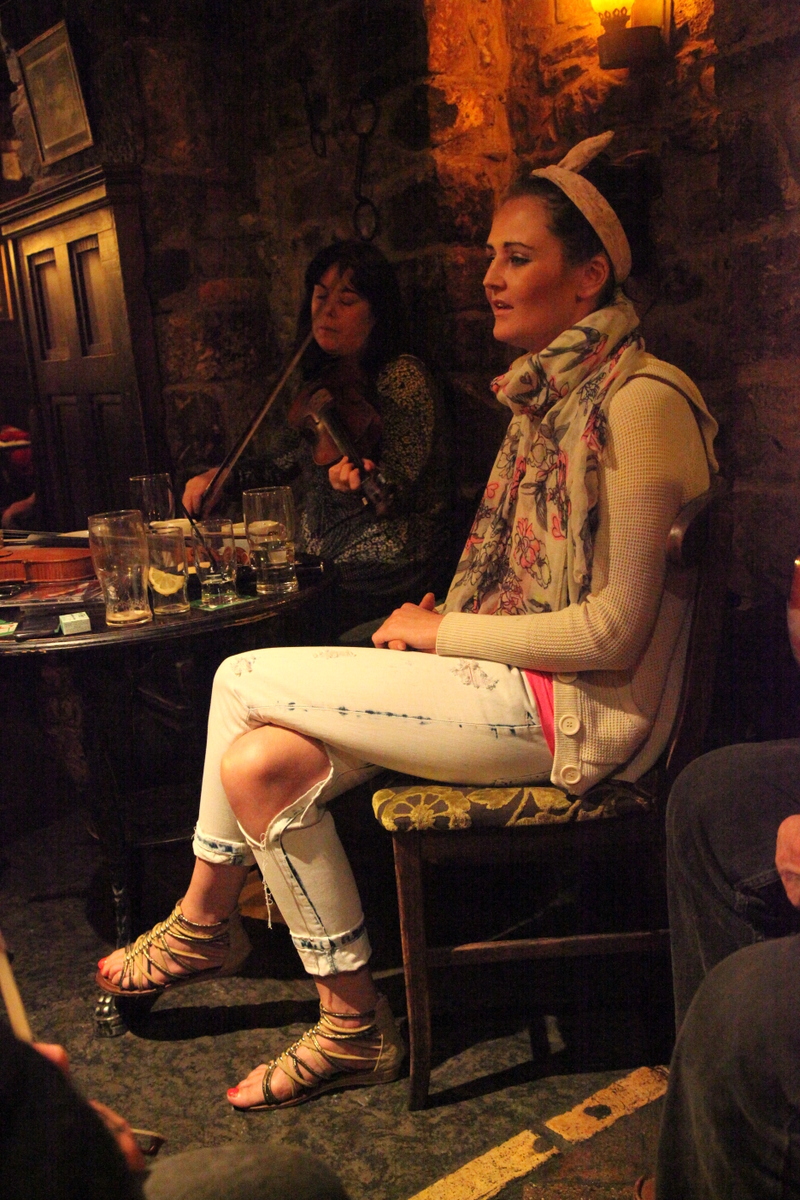
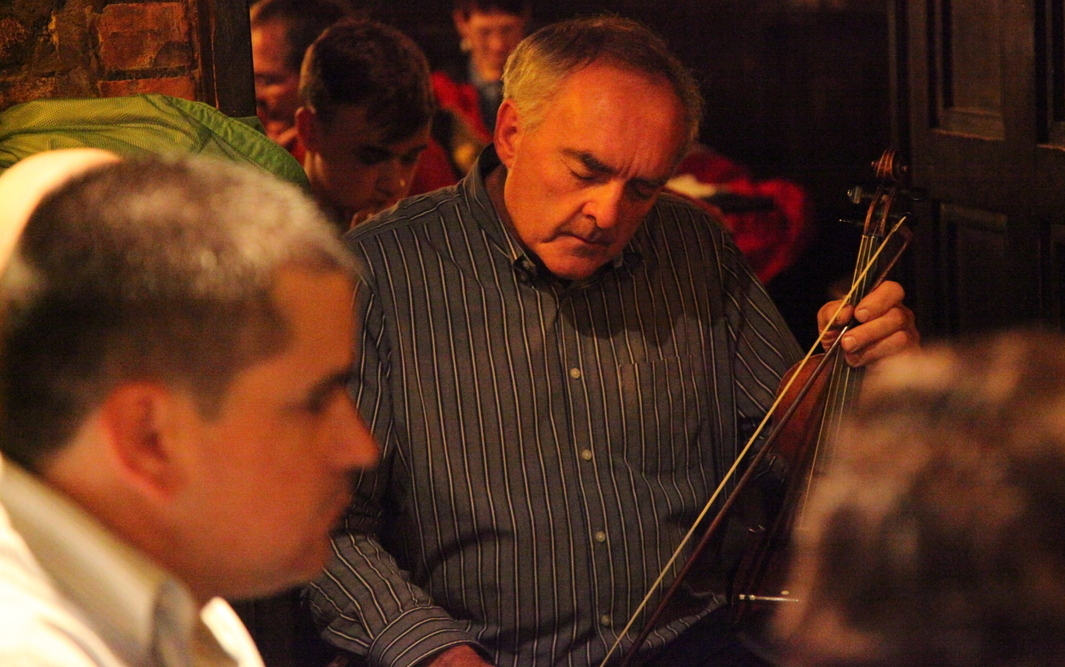
I just loved the way the whole festival was conducted in Irish. It didn’t seem to matter that you didn’t understand much of what was going on. This was West Kerry being West Kerry and while visitors were welcome it was very much a showcase for the unique heritage of this part of the world. This was reflected in the music which was of course riddled with polkas and slides, the spontaneous dancing of sets and half sets – vigorous and energetic, reflecting the music, the craic and the warm welcome all visitors received. I attended a lecture on the origins of polkas and while I didn’t understand a word I picked up enough from the slides and musical examples to be totally riveted.

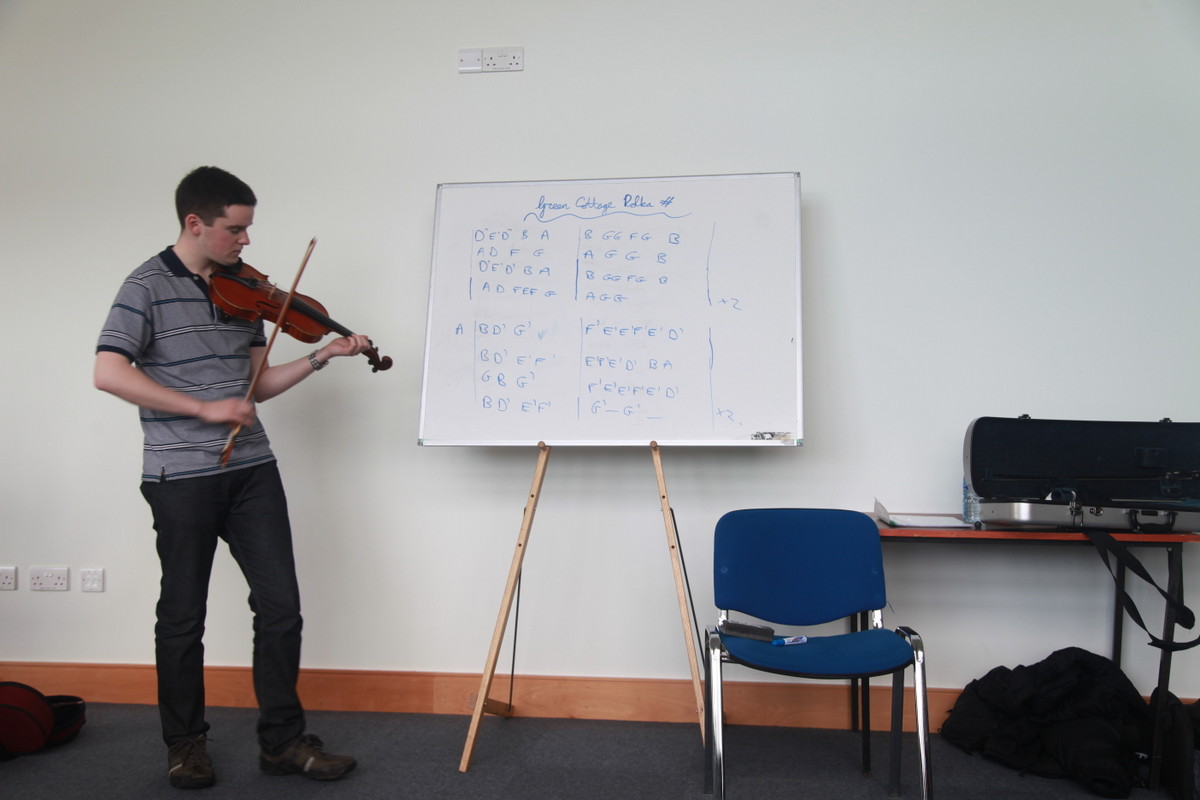
The workshop was one of the best I have been to in the last year – and I have been to plenty. We had two tutors. Caoimhín Ó Raghallaigh, well known for his many musical collaborations including more recently the Gloaming, who explored dynamics and how to extract more feeling. We didn’t learn a tune but it was a revelation. And young Aiden Connolly showed the group (exclusively adults) how to play polkas and slides – something that had never been explained so clearly to me before. I came away inspired which is what a good School should do.

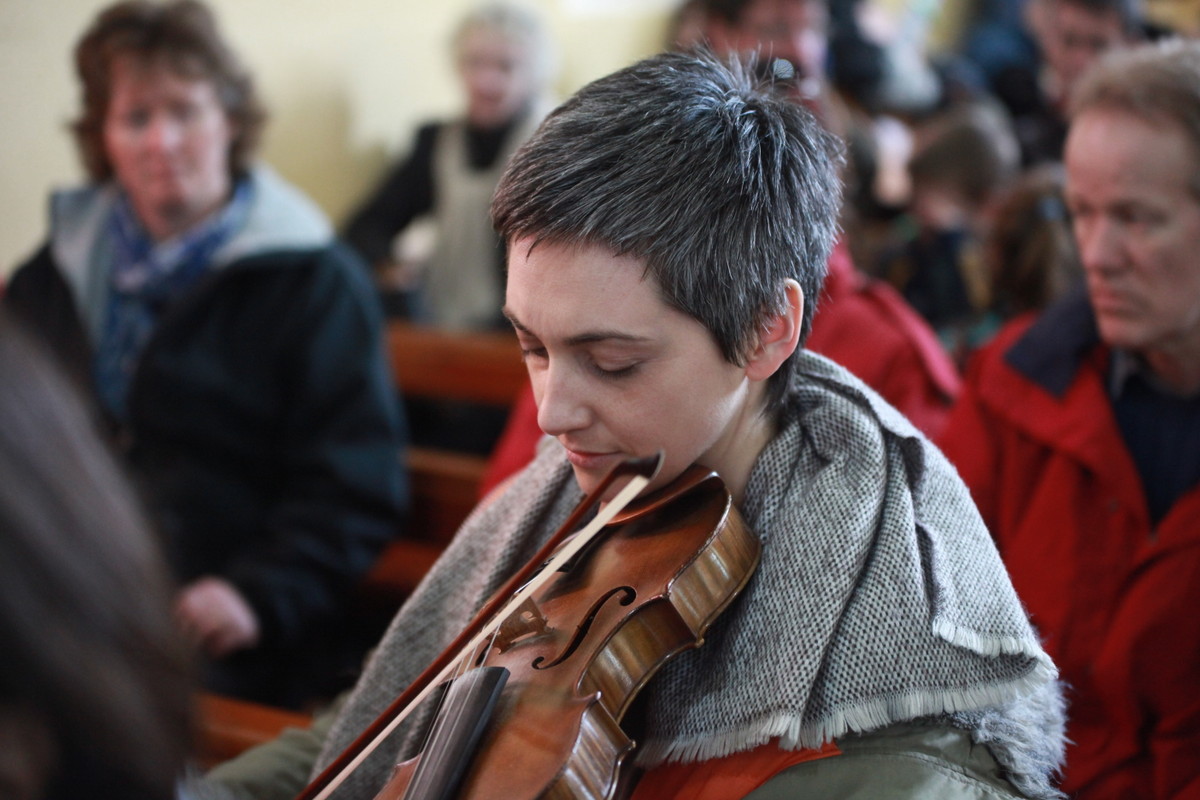
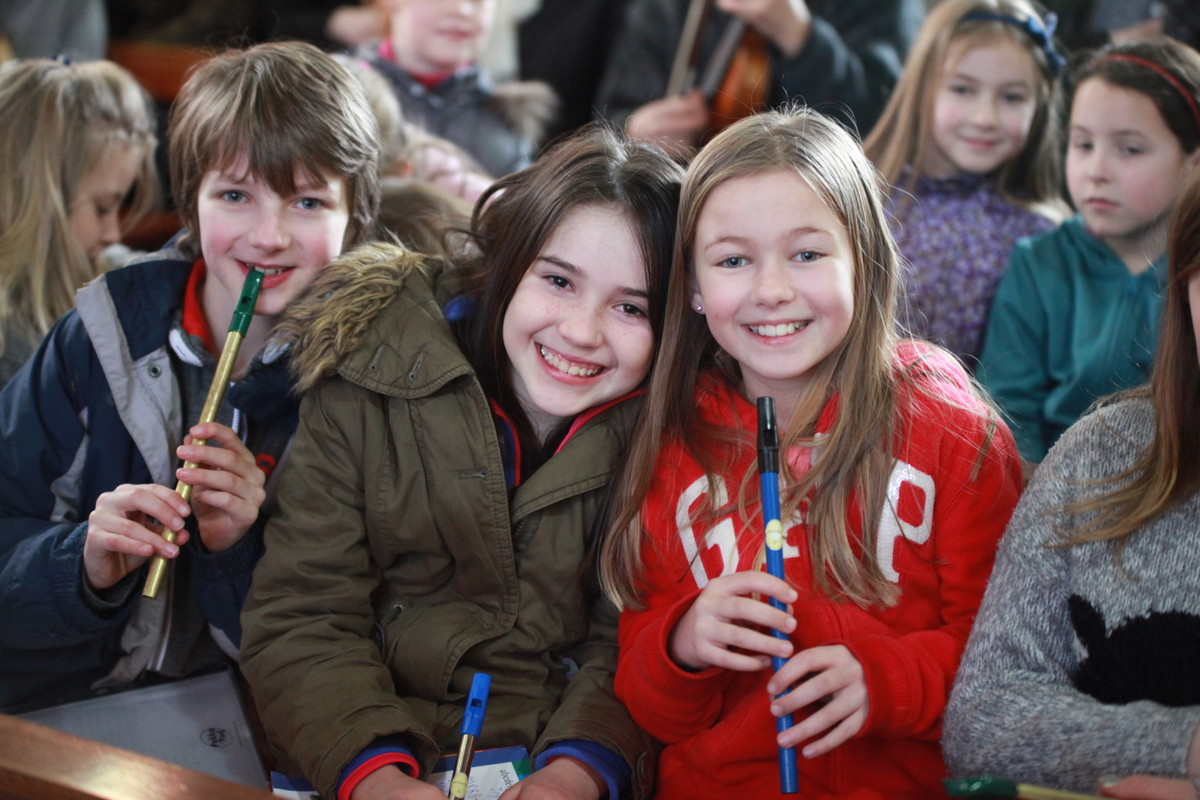
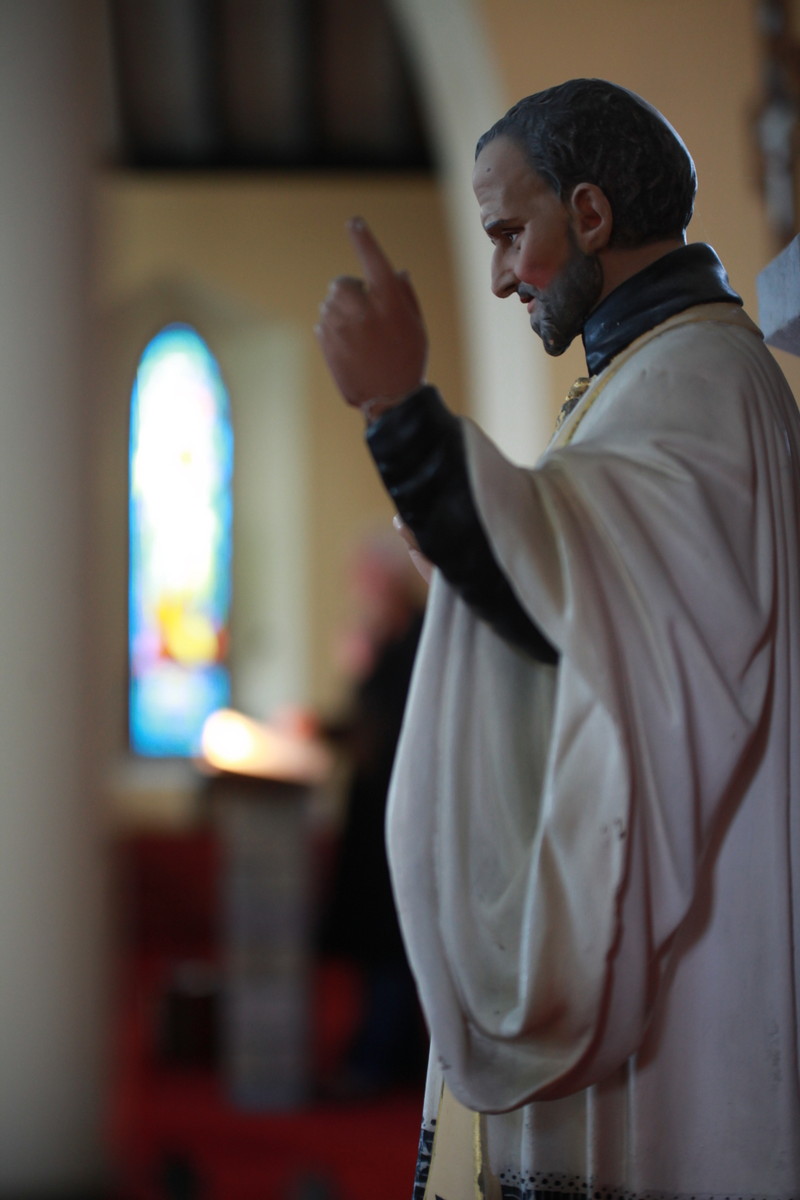
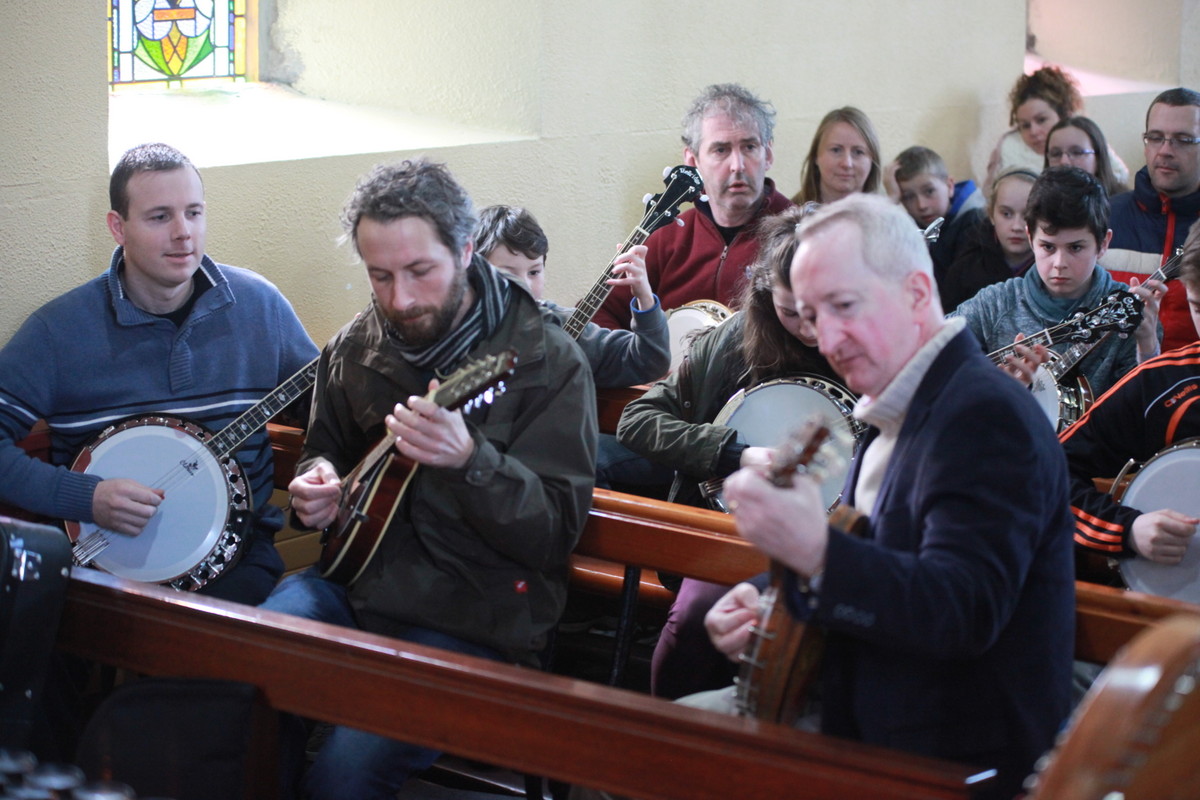
There was a concert on Saturday, in the wonderful setting of St Vincent’s church, of all the workshop groups led by their tutors. This was the most successful format of any I have seen where similar things have been tried. Everyone played in their seat eliminating massive logistical problems. The highlight was the finale with all groups led by Breanndán Begley playing a stirring version of Fáinne Geal an Lae.

What to say about the sessions. These were numerous and exhausting. All the ‘stars’ who appeared at the concert joined into various sessions. Something that doesn’t always happen. Those who were at the Bar an Bhuailtin on Saturday night will never forget the musical treat provided by Begley, Cooney, O’Connell and a host of others until six in the morning, There was a session in Tig an t-Saorsaig with a contingent of musicians from Thurles where sets of reels lasted forty minutes without a break and another session at Tigh Ui Cháthain led by Cormac Begley on his bass concertina and Páraic Mac Donnchadha on banjo which must have gone for eleven hours and it would not surprise me if they didn’t repeat a tune in that time. Spellbinding. But for me the real highlights were playing in quiet sessions such as with Alph Duggan on the Thursday and with Fergal, Breige and Anja on the Sunday with hardly an audience just sharing tunes and songs.

As I say I have never played music in Kerry before so I should talk a little about my introduction to their music. While the Corca Dhuibhne (Dingle peninsular) is not part of the Sliabh Luachra, the more widely known home of polkas, the West Kerry Gaeltach has a long musical tradition and much in common. The music played here historically was for the West Kerry dance sets and comprised mainly polkas, slides and occasionally hornpipes. For many years this music was considered ‘foreign’ having been thought to have been brought in by the occupying military forces, but the Goodman collection of the late 19th Century demonstrated a rich tradition which was largely ignored by collectors such as O’Neill and Breathnach. Polkas were among the first tunes I learnt many years ago when starting out on the fiddle. They were considered easy. And of course in Australia no one knew how to play them properly so they were pretty awful. I couldn’t play reels, so in my various bush bands we used polkas instead. We got away with it with the unsophisticated Aussie audiences but it was hardly satisfying. So I developed a dislike for them and it seems this is shared by many over here as well. Even in Clare you rarely hear them unless you’re playing with someone from that tradition such as Jacky Daly. Hearing these tunes however delivered by masters steeped in this tradition and on its home turf was a revelation.   The tunes are full of an internal energy that drives the music forward all the time. They are infectious. The rhythm sucks you in and drags you onto the floor to dance. I wouldn’t say I have come away converted but I will take this body of music much more seriously and revisit those hackneyed tunes I rejected so many years ago. Thanks Ballyferriter.
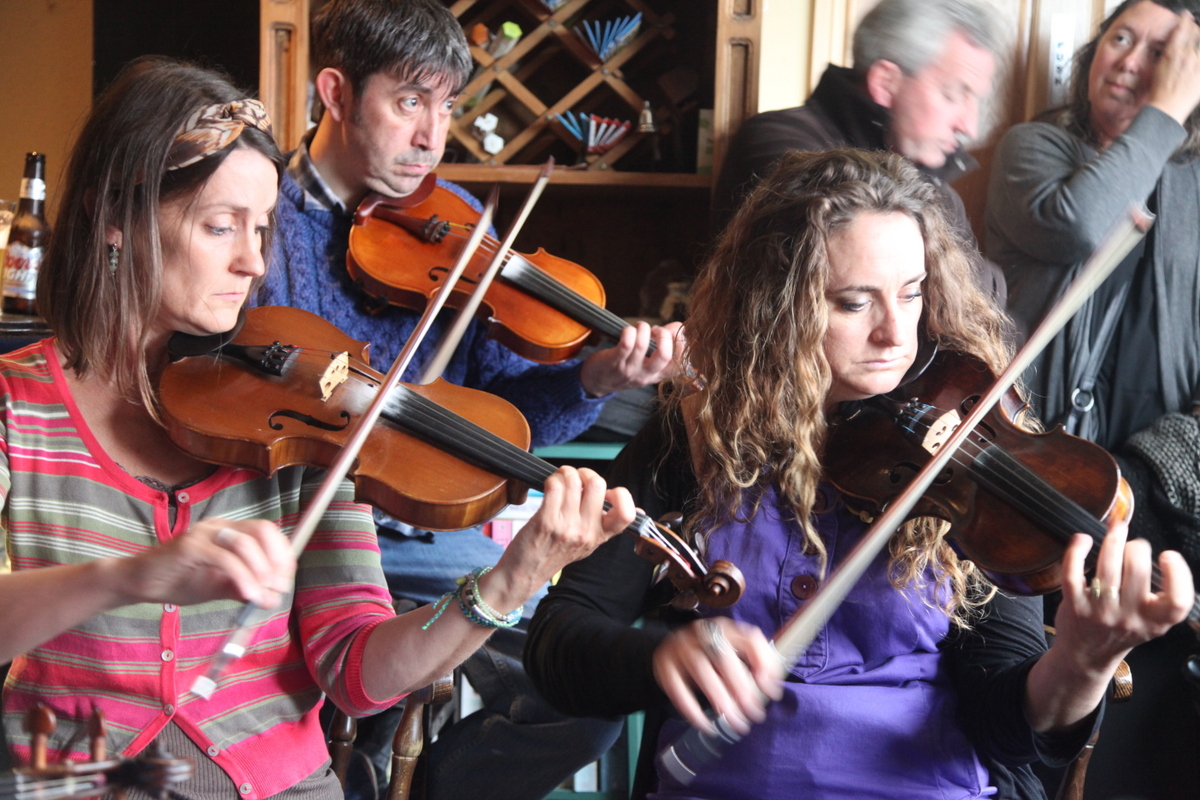
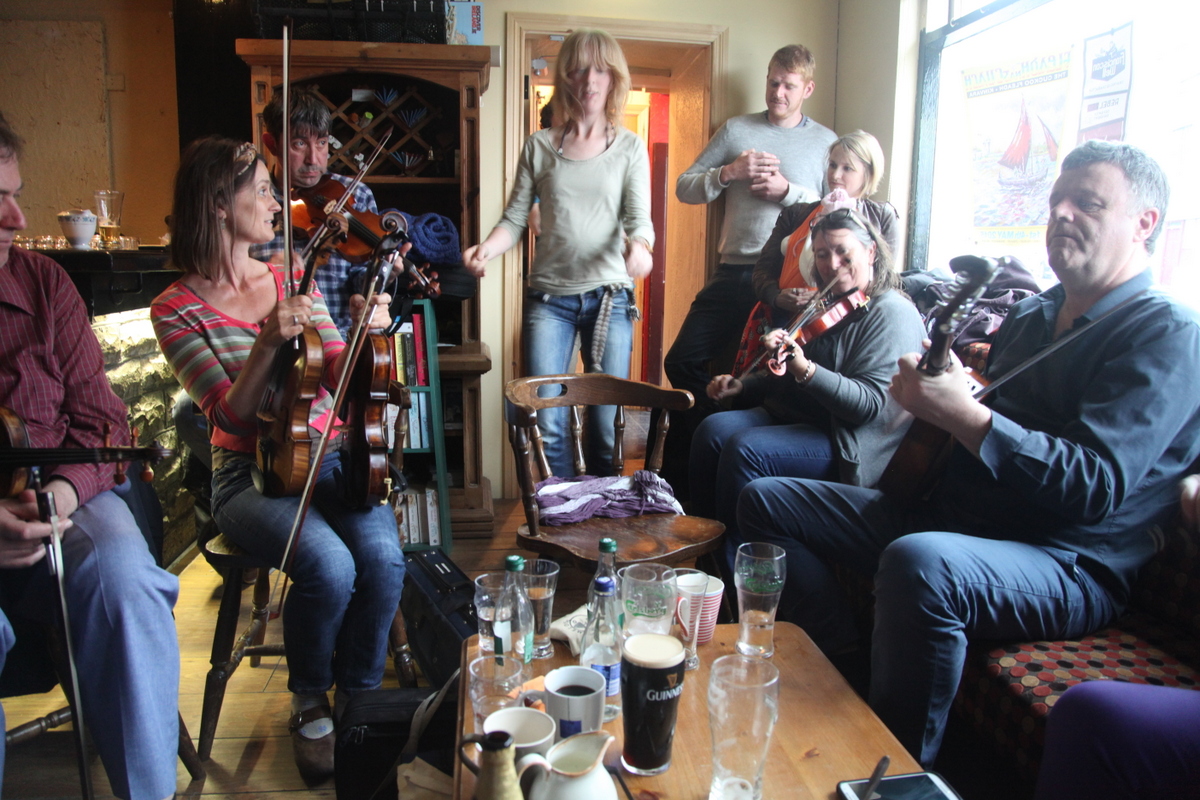
I say well done to the organisers for a memorable experience. I understand the lure of this place and its music and I too will be back.

IMG_6193 IMG_6321IMG_6185 IMG_6160 IMG_6100 IMG_6048 IMG_5990 IMG_5959 IMG_5953 IMG_5952 IMG_5922 IMG_5913 IMG_5909 IMG_5900 IMG_5895 IMG_5885 IMG_5871 IMG_5810 IMG_5767 IMG_5748 IMG_5735 IMG_5734 IMG_5714 IMG_5707 IMG_5692 IMG_5684 IMG_5664 IMG_5663 IMG_5654 IMG_5647 IMG_5637 IMG_5626 IMG_5615 IMG_5612 IMG_5493 IMG_5490 IMG_5480 IMG_5461 IMG_5450 IMG_5434 IMG_5433 IMG_5426 IMG_5418 IMG_5410 IMG_5396 IMG_5387 IMG_5383 IMG_5379 IMG_5372 IMG_5363 IMG_5361 IMG_5357 IMG_5353 IMG_4917 IMG_4905 IMG_4865 IMG_4863 IMG_4833 IMG_4832 IMG_4818 IMG_4405 IMG_4335 IMG_4330 IMG_4301 IMG_4300 IMG_4292 IMG_4275 IMG_4262 IMG_4209 IMG_4178 IMG_4154 IMG_4146 IMG_4144 IMG_6321 IMG_6320


Categories: Festivals, Sessions, Trad Irish Music | Tags: , , , , , , , , , , , , , , , , , , | 3 Comments

Blog at WordPress.com.