Real Ireland

Man of Aran

What is it about islands? Why do they have such appeal to us? All around the world they are treasured as special. Sometimes the residents are fiercely protective. In Australia we have many that hold a singular place and I was lucky enough to live on one such of these – Magnetic Island on Australia’s Great Barrier Reef. There are others though; Rottnest Island, where you can’t live but it is still very dear to the heart of Perth people, or Kangaroo Island off South Australia, or the beautiful Lord Howe Island among them. Ireland has a few too, such as Tory, Achill, Skellig and of course the Aran Islands.

Mention the Aran Islands and you immediately have my attention. The place has a mysterious lure. Despite knowing little about it (except that it is where the Clancy Brothers got their jumpers from and one of the most omnipresent tunes in sessions around the world is named after one of the Islands) it was a place I felt I must visit. I have been on two separate occasions. First, on a freezing summer’s day in July 2014, to Inisheer for an overnight stay; and more recently over three glorious sunny, warm days in April 2015. That’s Irish weather for you – freezing in Summer and hot in Spring!

The Islands are accessed either from Galway or Doolin, in my case for both trips I took the boat from Doolin, half an hour from my home in Caherush. My first visit was a spontaneous decision based on the fact there was blue sky in the morning. Of course by the time the boat left the weather had turned and the squally rain and howling wind off the Atlantic made for a very rough half hour crossing which took over an hour as we were buffeted by giant waves. At one point we stopped in the middle of the ocean in a futile attempt to retrieve a feral buoy. This was in contrast to my trip to Inis Mór when the sea was mirror calm with not a ripple. So I saw the islands in its various moods.

Ferry to Inisheer.  Rough seas with Cliffs of Moher in the background Arriving Inis Mor

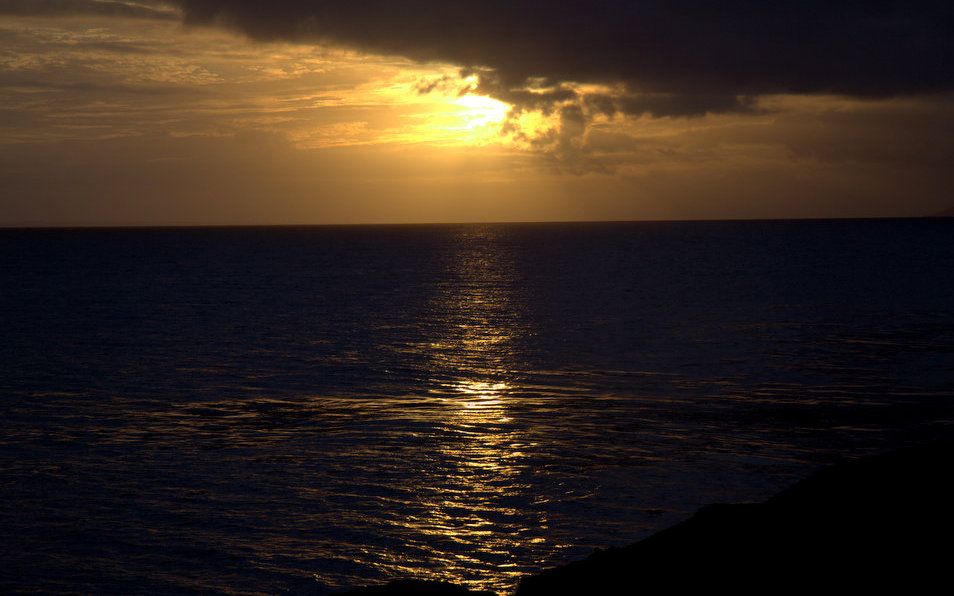
Inisheer SunriseHarbour at Kilronan.  Inis Mor

Inisheer Inisheer.  Early morning sky

Technically the islands are part of Galway, but geographically, geologically and culturally they belong to Clare as the three Aran Islands are an extension of the Burren.  They all have that wild inspiring landscape that I found so enriching in north Clare and that I have blogged about before. https://singersongblog.wordpress.com/2014/06/20/the-burren/

https://singersongblog.wordpress.com/2014/08/29/the-burren-again/

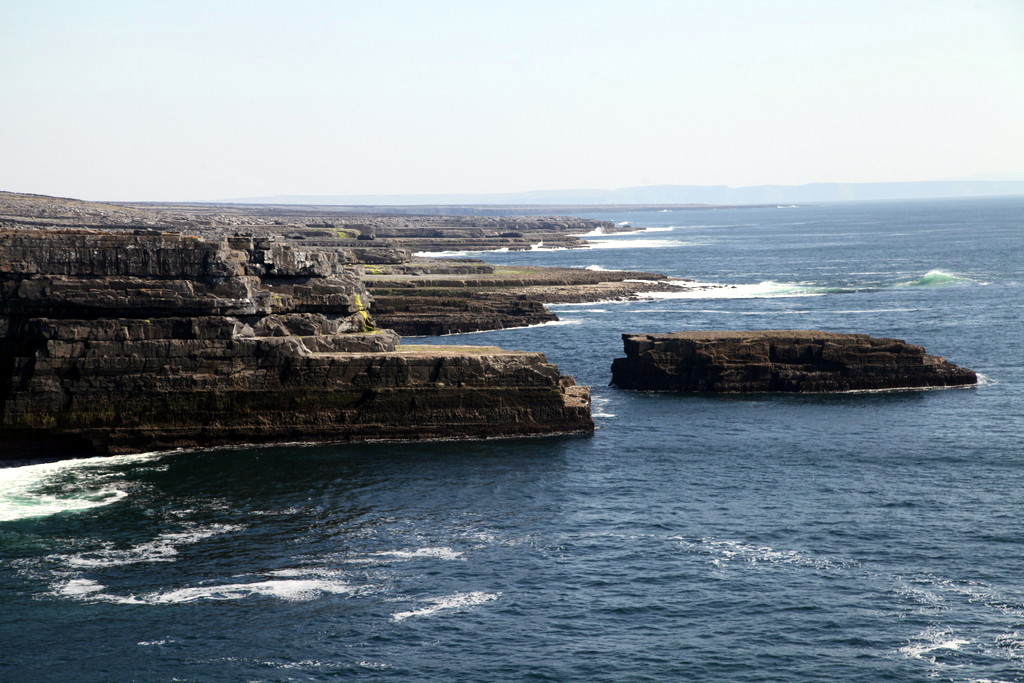
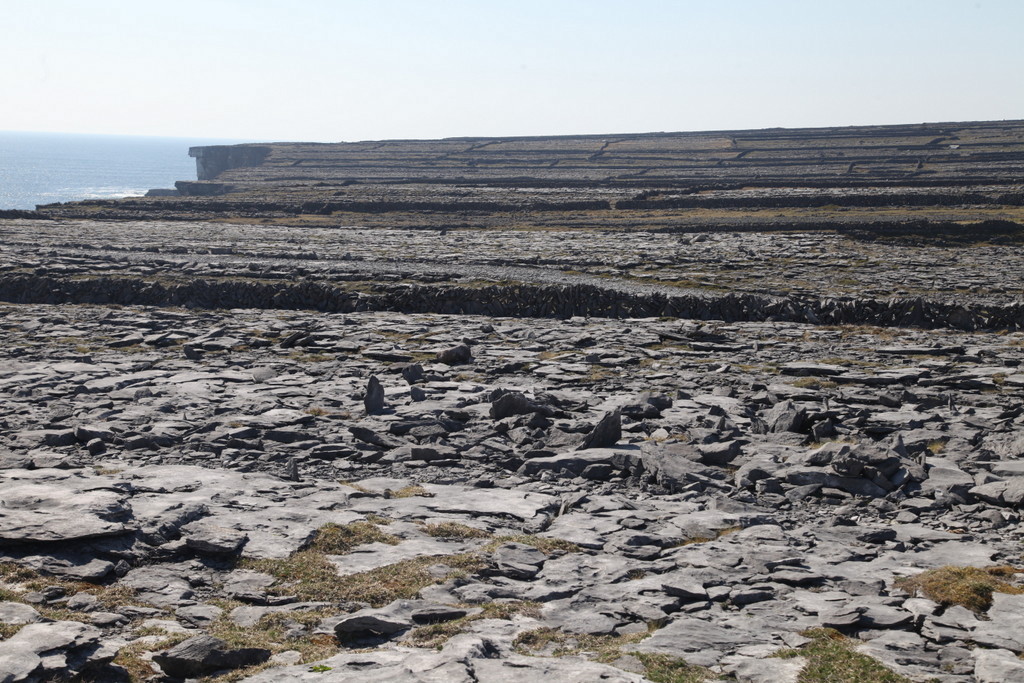
All the features of the Burren are there. Sometimes better exposed than on the mainland: clints, grykes, rillenkarren, dolines, kamenitzas, glacial erratics, fossil shells and corals, limestone pavements, but with the ever present Atlantic around almost every corner.

So back to my first question. With the Aran Islands, is it that inconvenience mixed with expectation that getting there involves that makes it attractive to visitors? Or that feeling that once there you are completely cut off (well maybe not now with smartphones).   Or the slower pace? How would it be to actually live there?

Of course many do and Melissa and Johnny Gillan and their five children are among them.  Melissa is from Maine and married an Irishman from Aran who after their second child convinced her to leave the States and start a new life on Inis Mór. Melissa tells the story way better than I could on her blog (which is how we met) http://thearanartisan.com/2014/11/08/i-live-in-aran/.  I have never seen anyone happier. She now has five kids and an enviable lifestyle where she has created a paradise – a garden that sustains her family within this harsh environment and is moving towards her dream of starting a business based on this. The whole family is involved, with the kids nurturing the garden and animals with a sense of pride. Her philosophy is captured by the layout of the garden beds which spell the word LOVE and which was revealed with delight by her kids after an enthusiastic guided tour. I was invited to dinner there one night, which comprised razor clams gathered on the shore, a tuna steak from a fish caught by Johnny’s brother off the coast, potatoes, carrots, kale, rhubarb crumble and a parsnip cake. All from the garden and made with skill and affection. The kids embrace the lifestyle. I was reminded a little of the zest for living my own kids had on Magnetic Island for the three years we lived there. Melissa and Johnny may not be your typical Aran family, I don’t know, but I also met Cóil and Grainne, both young islanders who gave up their day to show me around their island with an obvious pride. I was greeted with nothing but warmth and hospitality.
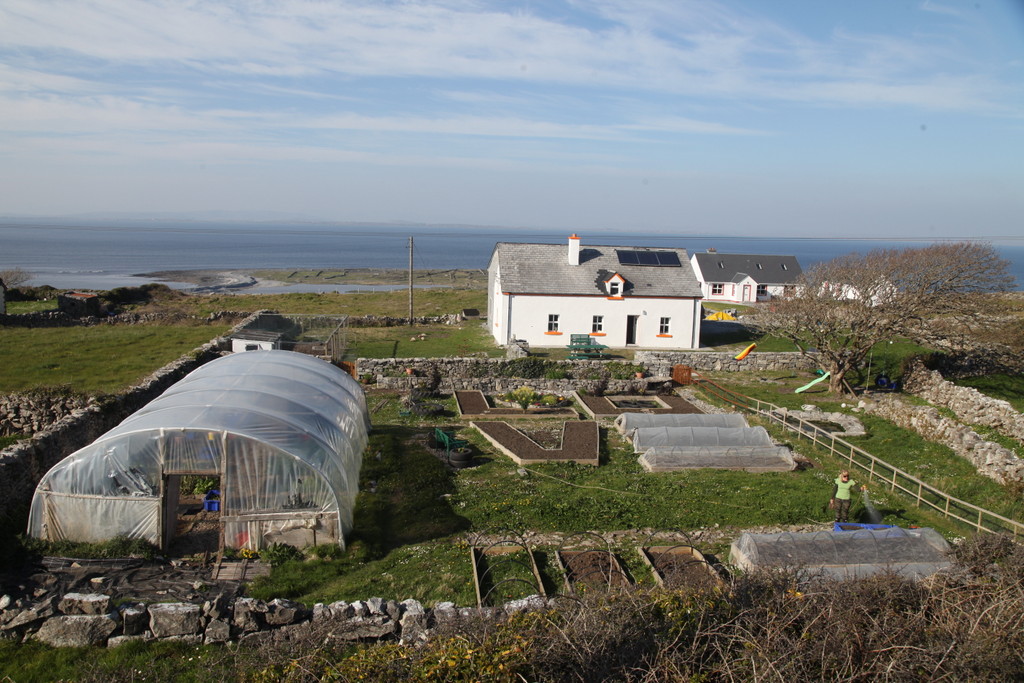
Melissa Gillan's grarden Inis MorThe Gillan family.  Inis Mor

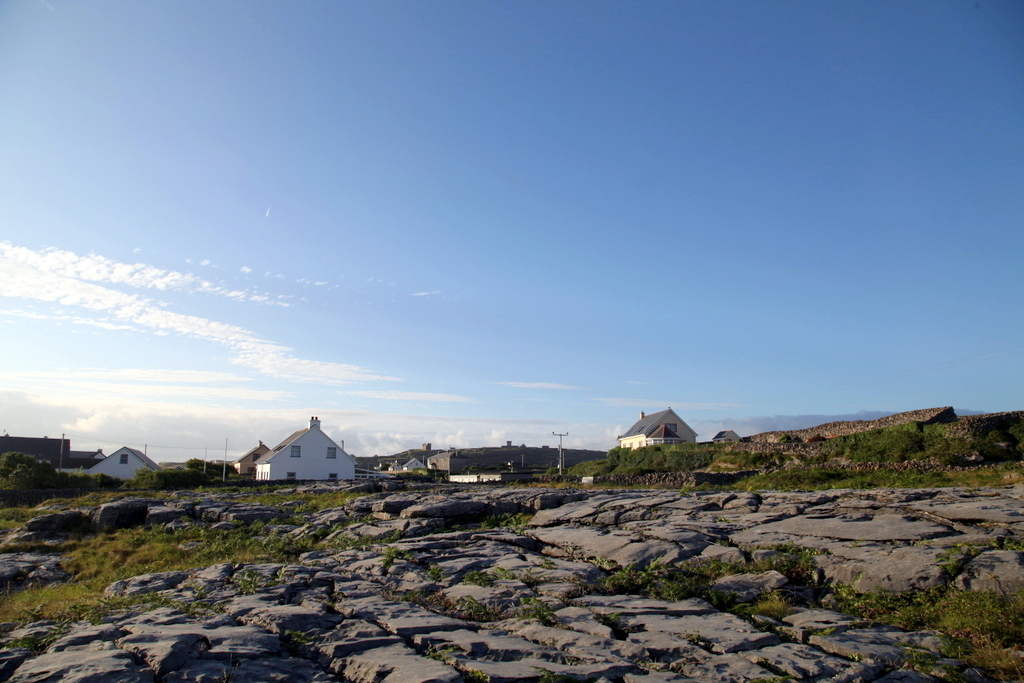
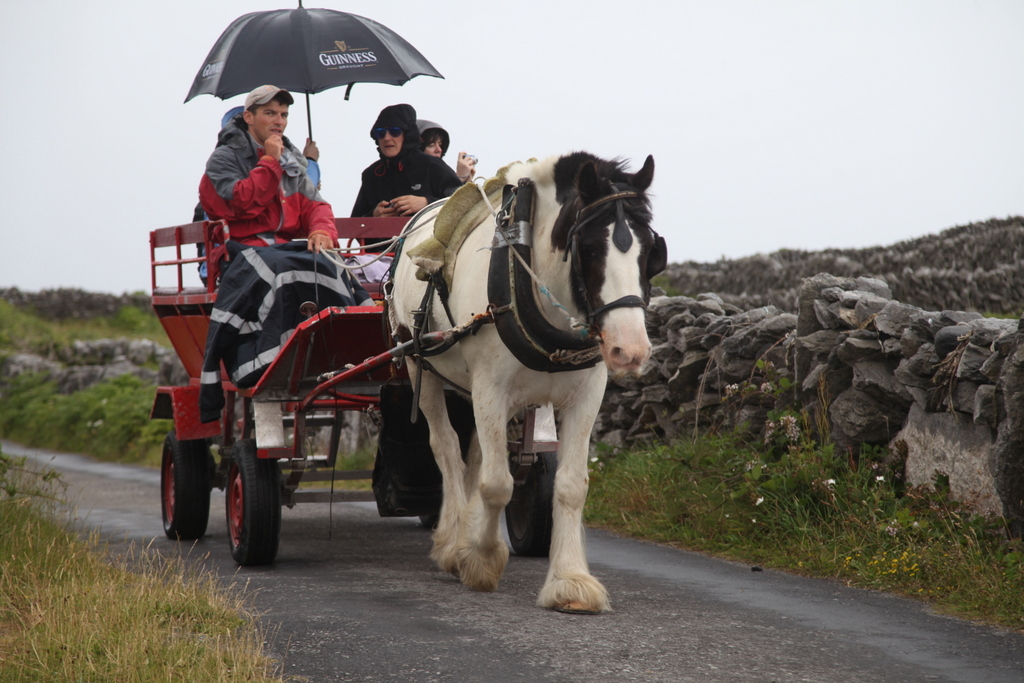
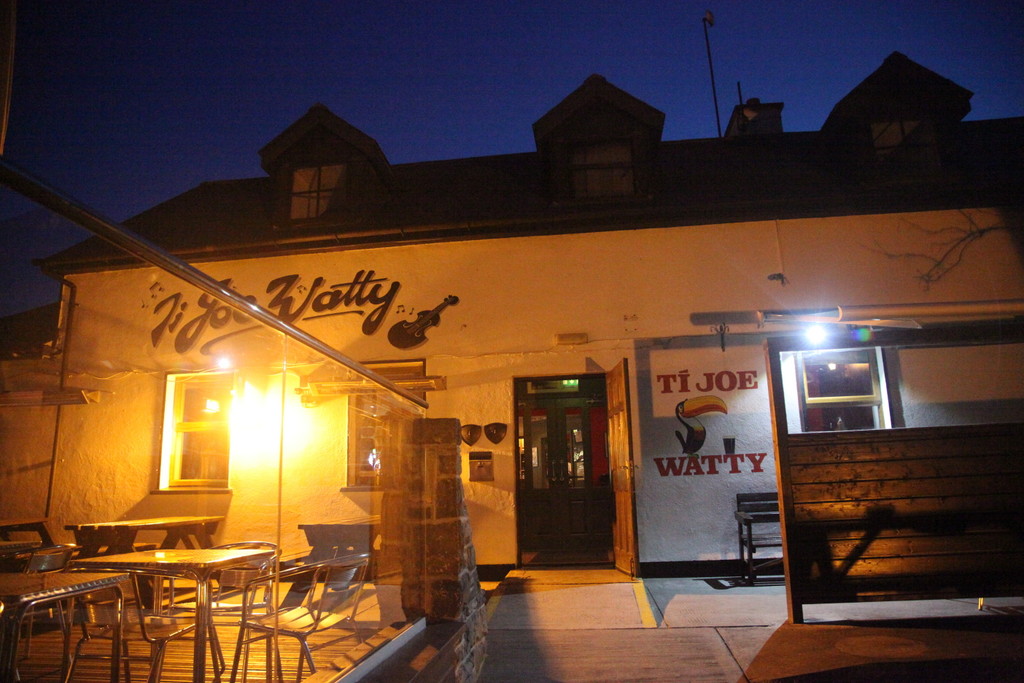
Both the Islands I visited seem to have somewhat different characters. Inis Mór (the Big Island) has sweeping landscapes with hardly a tree; massive limestone pavements and steep cliffs. It doesn’t seem heavily populated but there are about 900 people spread across the entire island. Inis Oírr is smaller with about a third of that but the houses are more concentrated around the main settlement of Inveragh and the fields as defined by the stone walls seem smaller. Both have the same sparse pasture, lush in places barren in others.  Inis Mór has more tourists and a lot more bicycles but it is easy to avoid the day trippers by starting early. The evenings everywhere are gloriously empty of people except for the inevitable craic behind the walls of Ti Whatty or Rory’s.

Inisheer.  Stone fields

Inisheer. Stone walls and fields

Inisheer

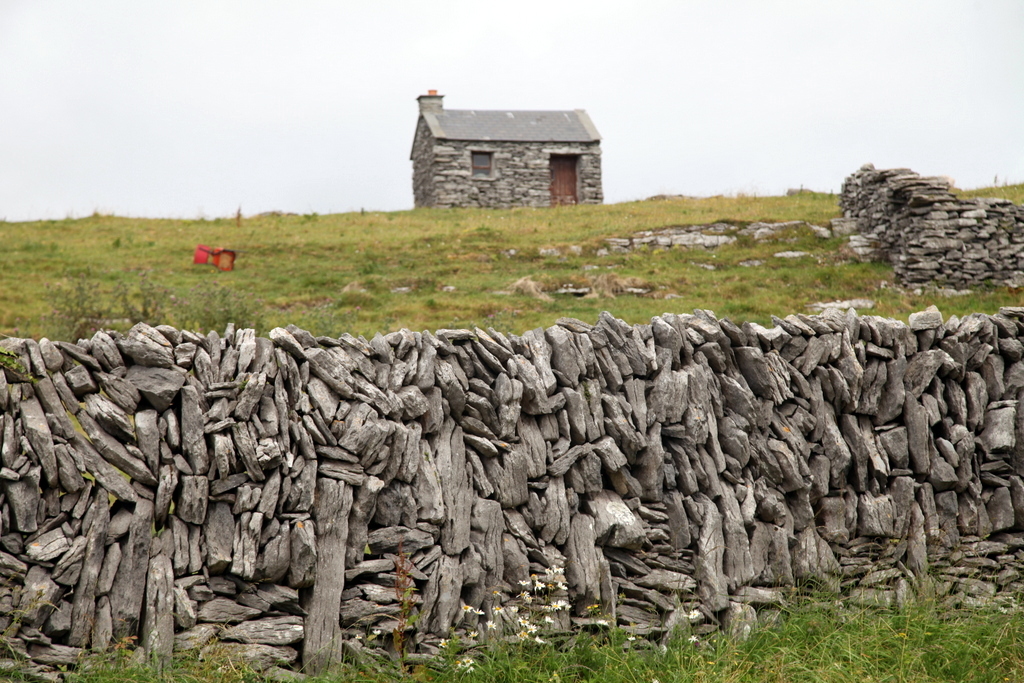
Inisheer. Drystone walls and one room cottage

Inisheer

Inisheer in the morning light

Inisheer

Inisheer

Inisheer

Inisheer.  Off to fiddle lesson?

Inis Mor. Coping with the elements

Inis Mor. Coping with the elements
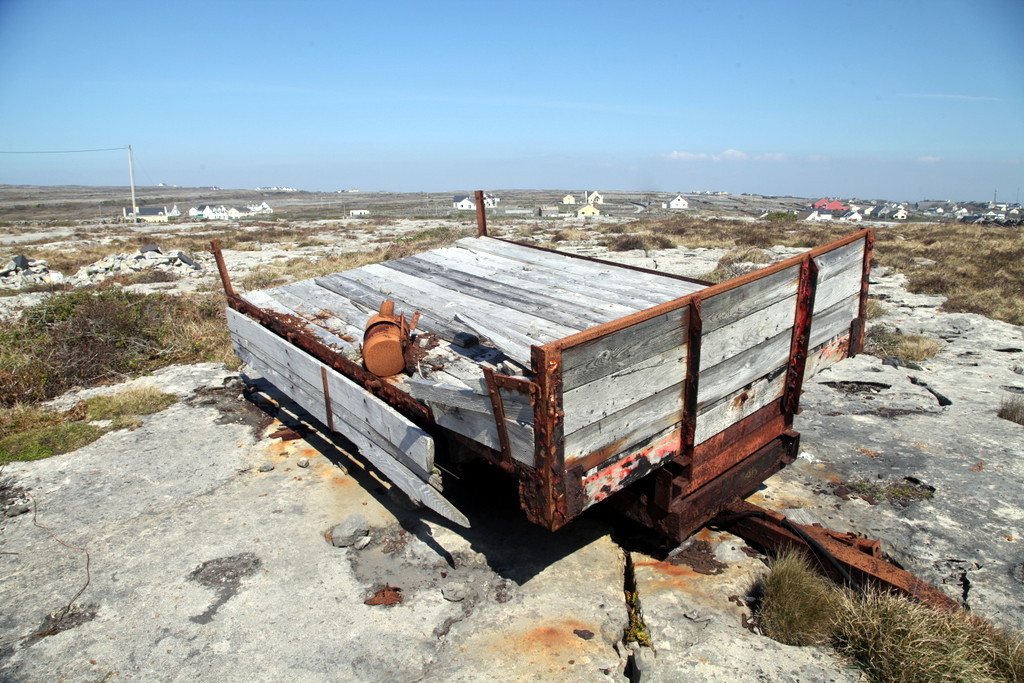
Inis Mor.

Inis Mor.
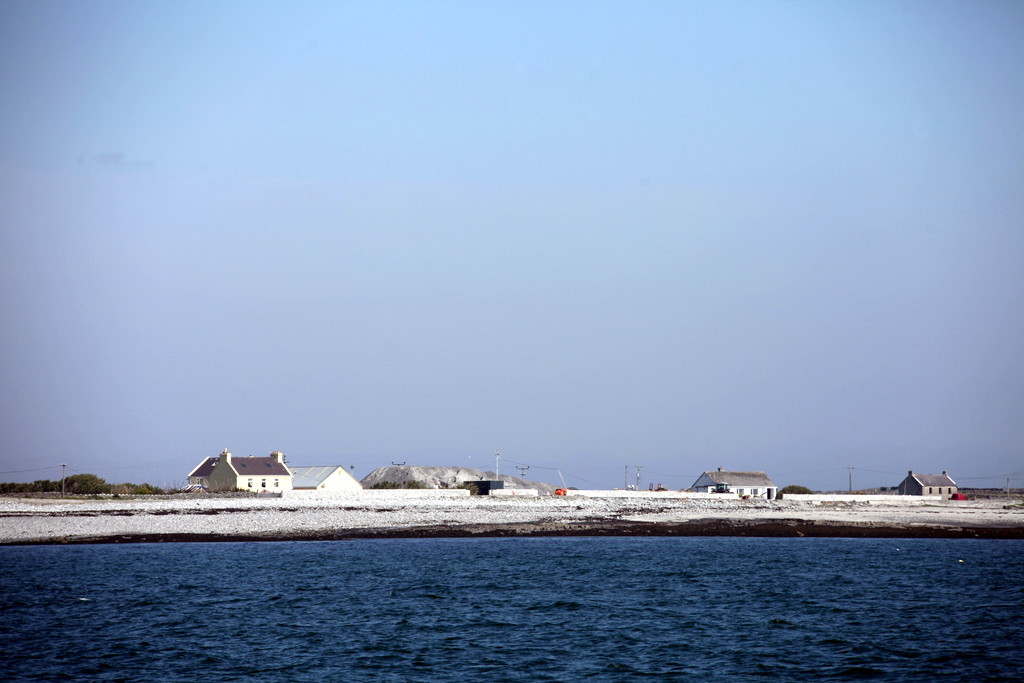
Inis MOr

Inis Mor.

IMG_5709

Inis Mor

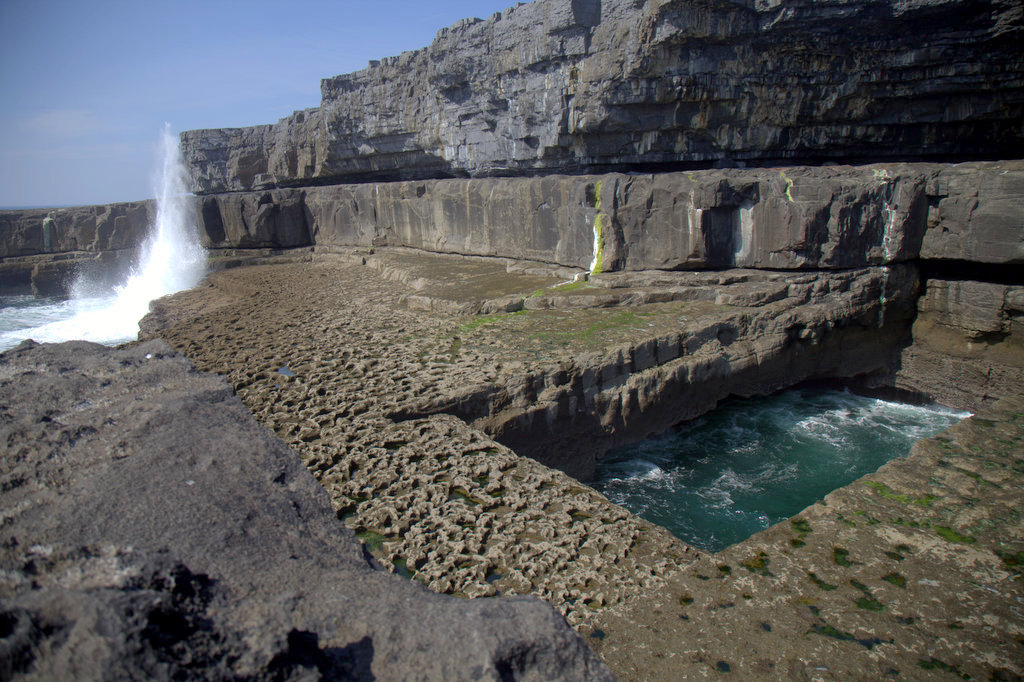
There is plenty for the tourist. On Inis Mór, bike hire is popular and the circuit to the Dún Aonghasa fort is a well-worn trail. But off the beaten track are some amazing sites such as the Black Fort, the Seven Churches and Teampull Bheanáin, reputedly the smallest church in the world measuring around 3m x 2m.  This unusual church can be seen from all around the island and was the best location I found for viewing the unique Burren flora.  Then there is the spectacular Worm Hole or Poll na bPeist. It is a hole in the rock platform that looks like it has been sliced out by the hand of Fin McCool himself. There is a more prosaic explanation that relates to erosion along mutually orthogonal jointing but let’s stick with Fin McCool, I think! Connected with this is a blow hole where the back pressure from the hole causes the sea to shoot up periodically  higher than the cliff.  This is an awe-inspiring place that has been put on the tourist map by the Red Bull people who have filmed one of their diving videos here.

Inis Mor. Teampull Bheanáin

Inis Mor. Teampull Bheanáin

Inis Mor. Teampull Bheanáin
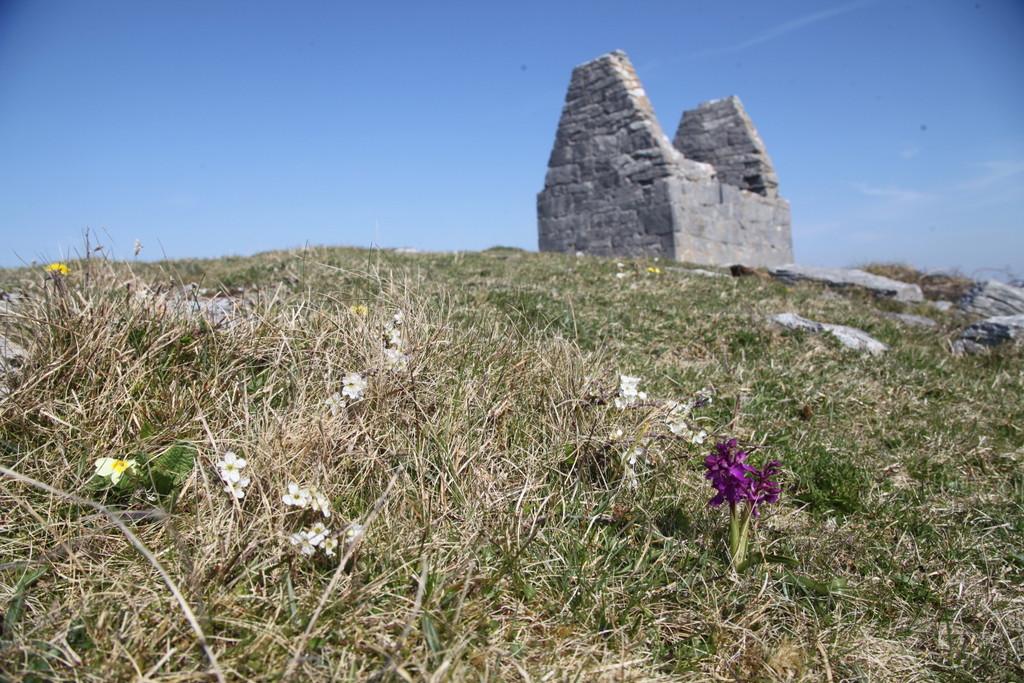
Inis Mor. Teampull Bheanáin

Inis Mor. Teampull Bheanáin

Inis Mor. Teampull Bheanáin

Inis Mor. Teampull Bheanáin

Inis Mor. Blowhole at the Worm Hole. Poll na bPeist

Inis Mor. Blowhole at the Worm Hole. Poll na bPeist

Inis Mor. Blowhole at the Worm Hole. Poll na bPeist

Inis Mor. Blowhole at the Worm Hole. Poll na bPeist

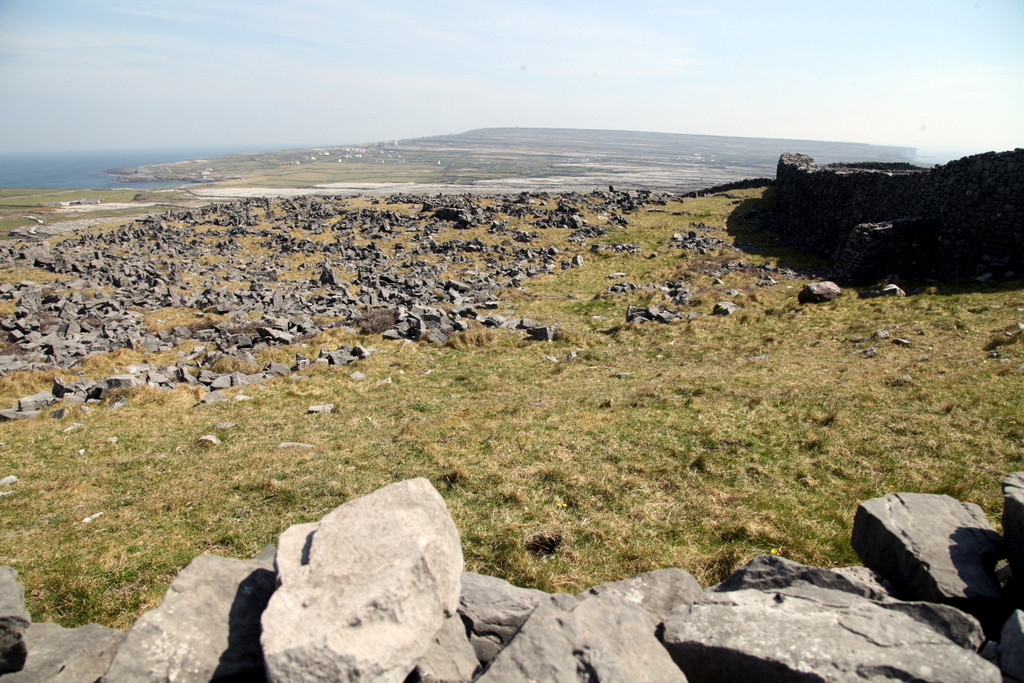
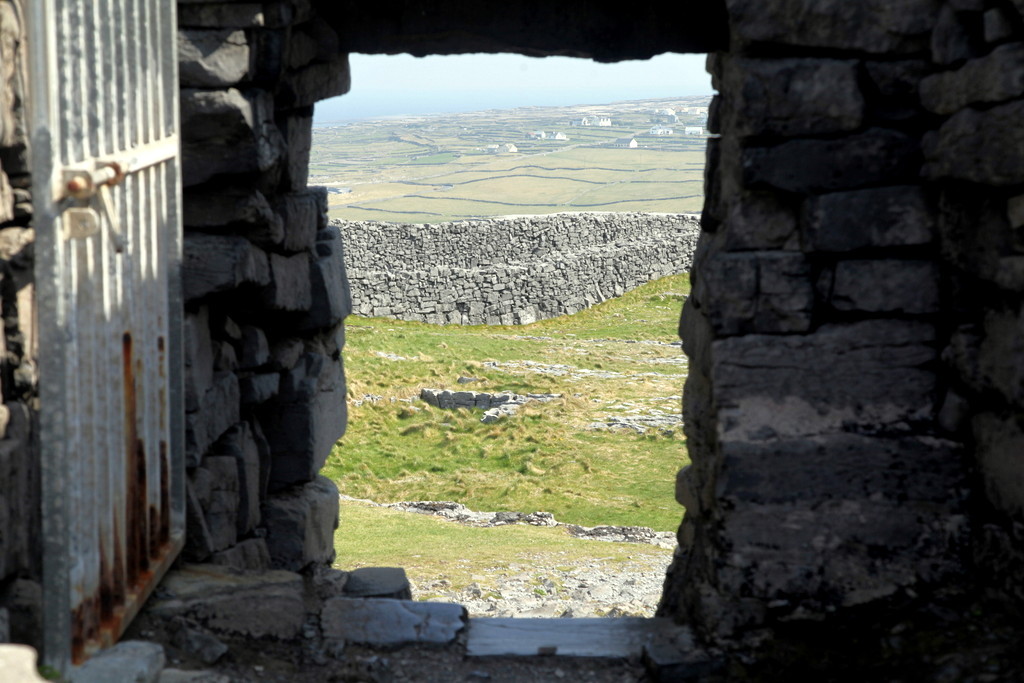
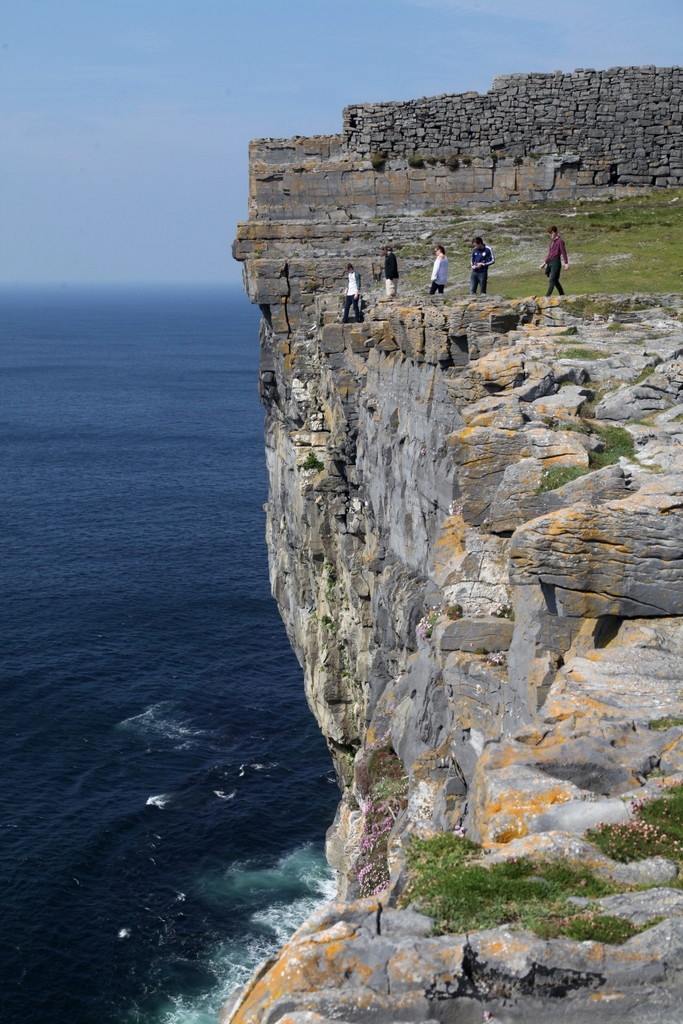
The Islands, and in particular Inis Mór is well known for the excellent preservation of their megalithic circle forts. Dún Aonghasa gets the most attention, but others such as Black Fort are just as interesting and much quieter. These forts are fascinating and here on Aran occupy a coastal positon where the cliffs are used as one line of defence and a semicircular stone rampart as the other enclosing a headland within which was a settlement. There were also a number of outer walls in some cases and unique and spectacularly well preserved examples of chevaux de frise. These are fields of sharp limestone lugged into place and designed to make cavalry or foot progress difficult and retreat impossible. They were placed about 30m away from the wall as this was the range of hand thrown projectiles of the time. The original structures at Dún Aonghasa appear to date from around 1000 BC which places them near the end of the Bronze Age. The famous portal tomb at Poulnabrone on the mainland is much older (3,800BC) as are other tombs on Aran which date to 1850 BC.  This first period of settlement at Dún Aonghasa ended about 700BC but then the site was added to and inhabited during medieval times and later. I spent hours at these forts mesmerised by the ambience and the anicientness (if that is a word!)

Inis Mor. Dun Aengus fort
Inis Mor. Dun Aengus fort

Inis Mor. Dun Aengus fort. Cheval de frise
Inis Mor. Dun Aengus fort. Cheval de frise

Inis Mor. Dun Aengus fort

Inis Mor. Dun Aengus fort

Inis Mor.  Rock platform Dun Aengus fort

Inis Mor. Rock platform Dun Aengus fort

IMG_6641

Inis Mor. Inside the inner wall Dun Aengas

Inis Mor. Inner wall. Dun Aengus fort

Inis Mor. Inner wall. Dun Aengus fort, showing remarkable stone work
Inis Mor. Dun Aengus fort

Inis Mor. Dun Aengus fort. Stone was quarried from the steep face near the wall.  Note the crack!
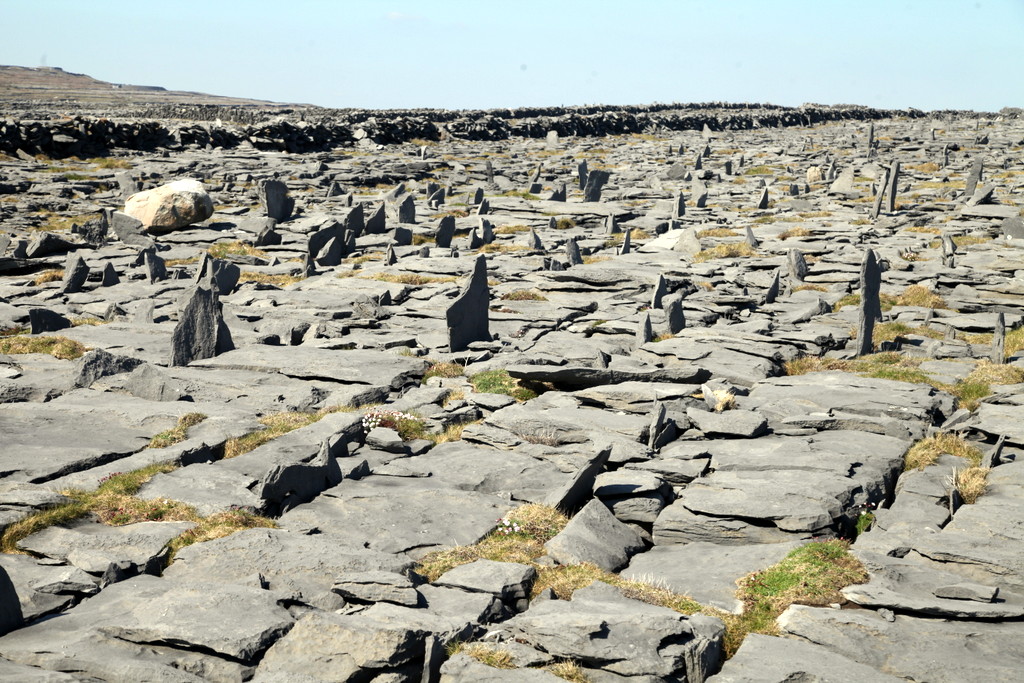
Inis Mor.  Black Fort. Cheval de frise with glacial erratic

Inis Mor. Black Fort. Cheval de frise with glacial erratic

Inis Mor.  Black Fort showing walls of medieval houses

Inis Mor. Black Fort showing walls of medieval houses

Inis Mor.  Black Fort

Inis Mor. Black Fort from inside the enclosure

Inis Mor.  Black Fort and cheval de frise

Inis Mor. Black Fort and cheval de fries

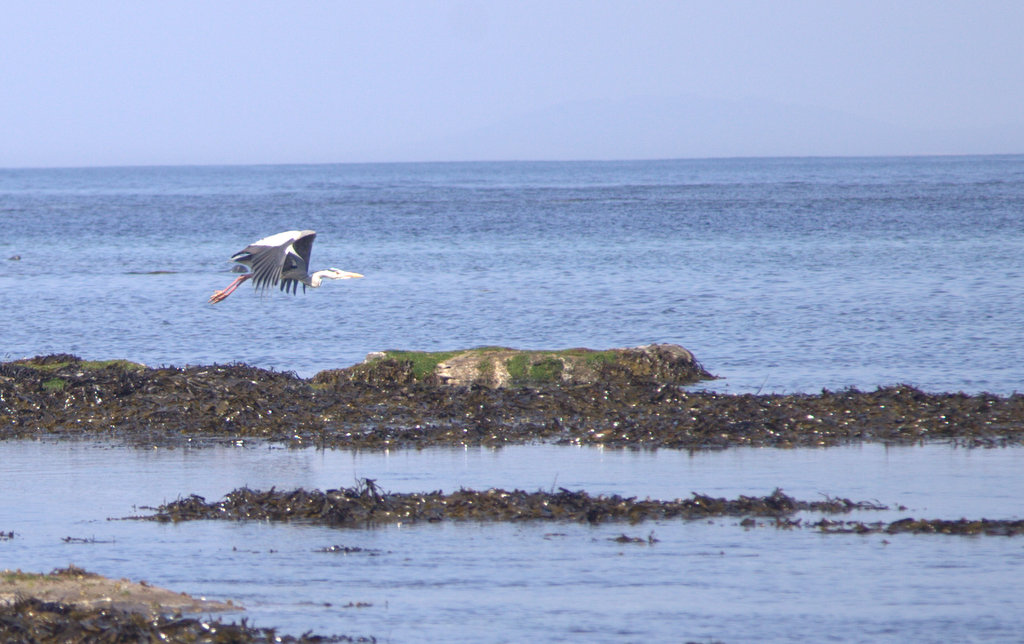
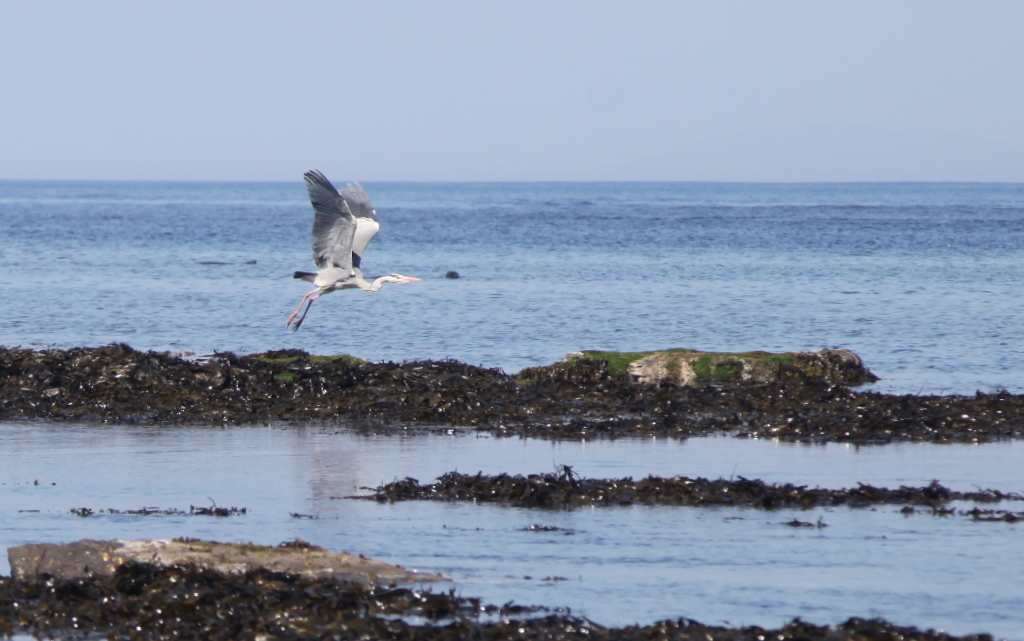
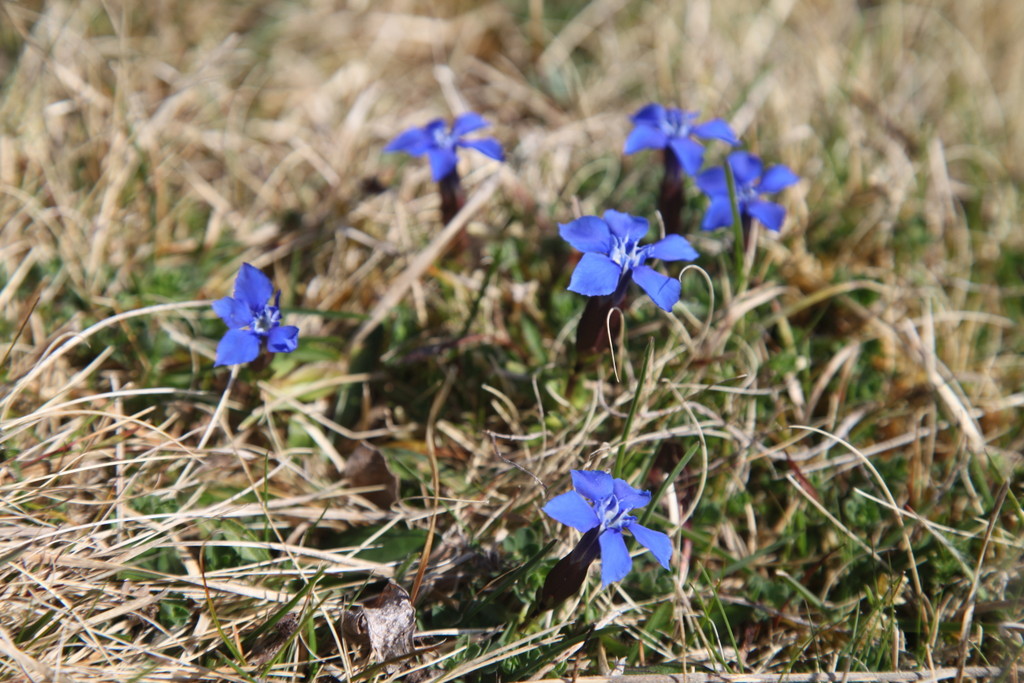
The landscape helps make this a unique world. I have talked here and elsewhere about the typical Burren landforms, but I should mention the widespread glacial erratics, dropped by melting glaciers. Well that is the scientific explanation. Local legend has it that they were left by giants who were throwing stones at each other (Fin McCool again!) Doesn’t this make sense? How else could boulders of granite from Connemara get onto the Aran Islands? The Burren is known world wide for its flora with its rare combination of alpine and Mediterranean plants.  Spring is the best time to see it and in the three days I was on Inis Mor I witnessed an explosion of life with the spring gentians and orchids bursting into flower. The wildlife does not disappoint either with seals, water birds, birds of prey and dolphins all on show at various times.
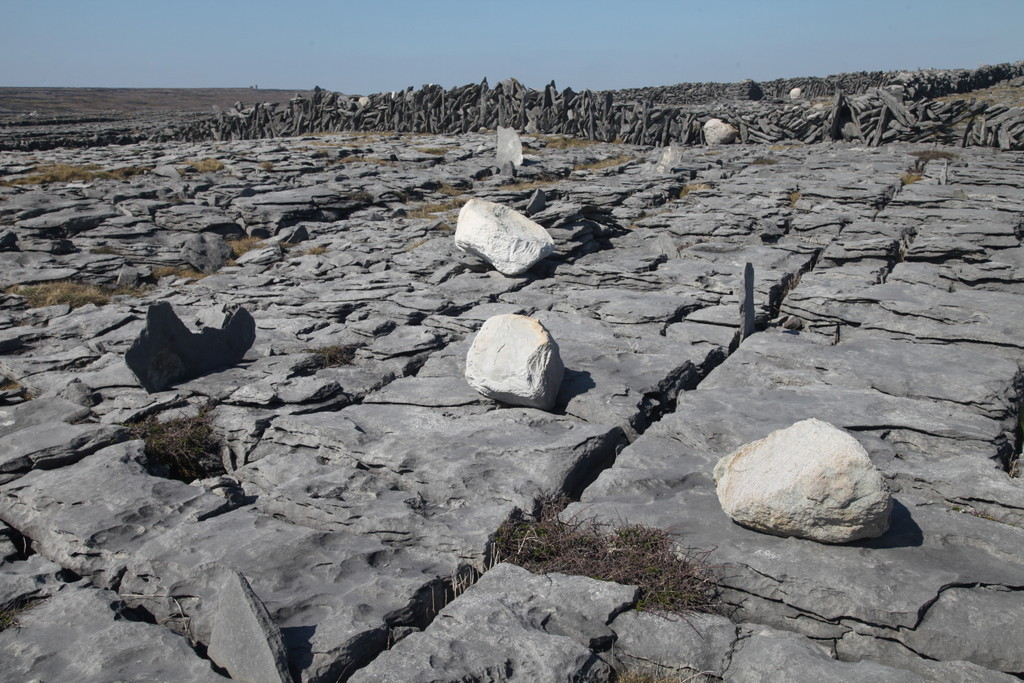
Inis Mor.  Glacial erratics near Black Fort

Inis Mor. Glacial erratics near Black Fort

Limeston Pavement Inis Mor

Limestone Pavement Inis Mor

Inis Mor.  Burren landscape
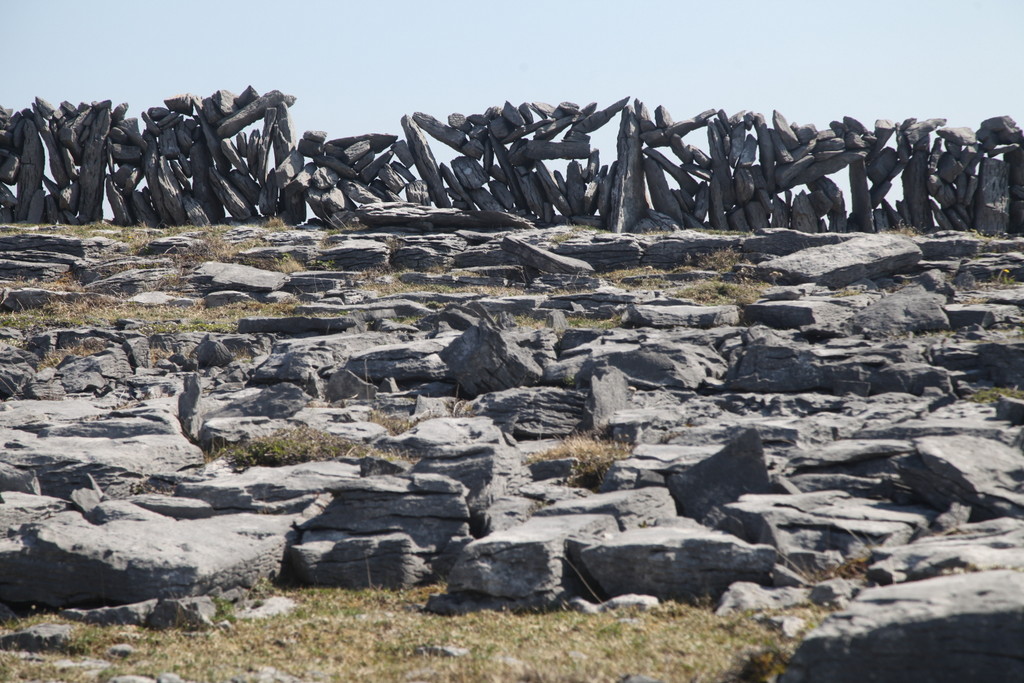
Inis Mor. Burren landscape

Inis Mor

Inis Mor. Typical Burren stone wall. How does it stay up?

Inis Mor.  Near Black Fort

Inis Mor. Near Black Fort. Crumbling coastline

Beach near Kilronan.  Inis Mor
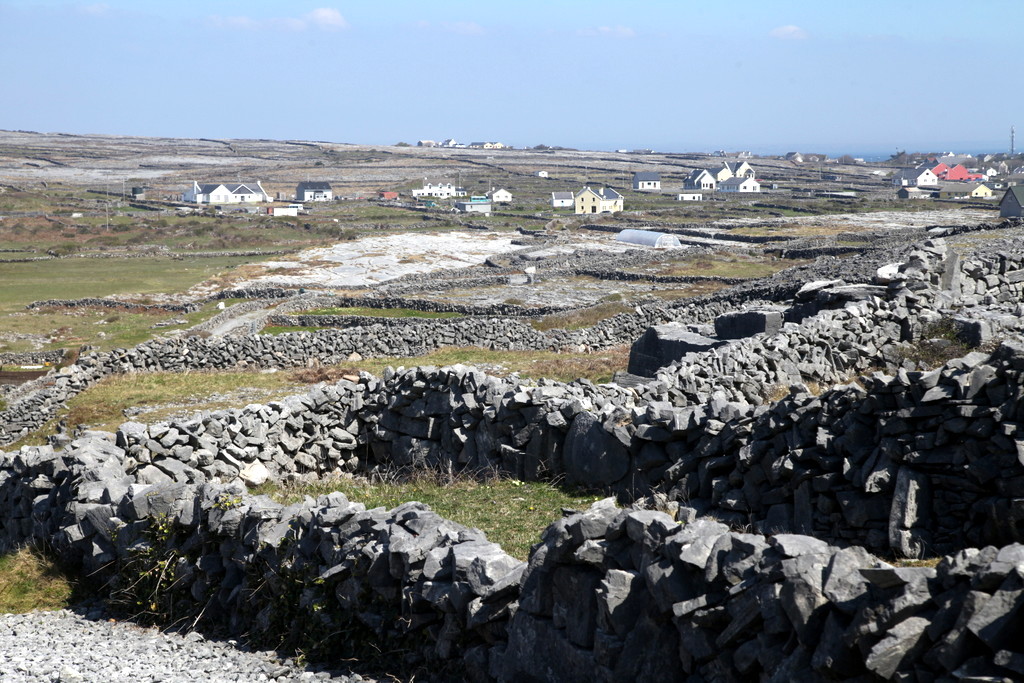
Beach near Kilronan. Inis Mor

Inis Mor Inis Mor. View from Black Fort Inis Mor. Burren landscape.

Inisheer.  The Burren limestone Inis Mor. Inis Mor. Inis Mor. Seal colony Inis Mor. Seal colony Inis Mor. Wild duck's nest Inis Mor. Teampull Bheanáin.  Spring gentian Inis Mor.  Spring in the Burren

IMG_6126

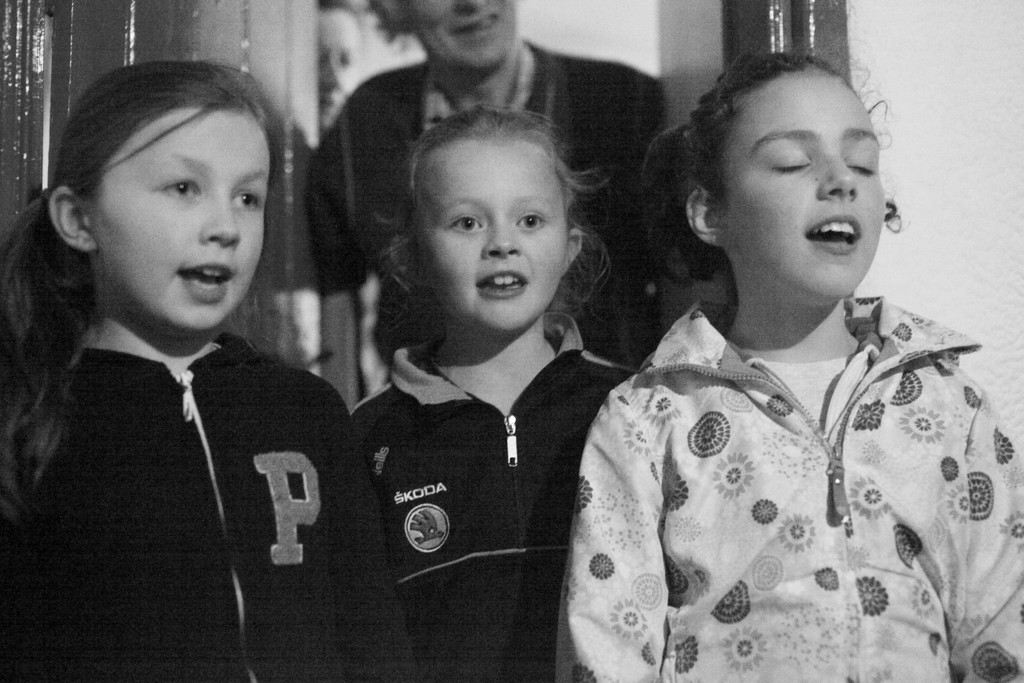
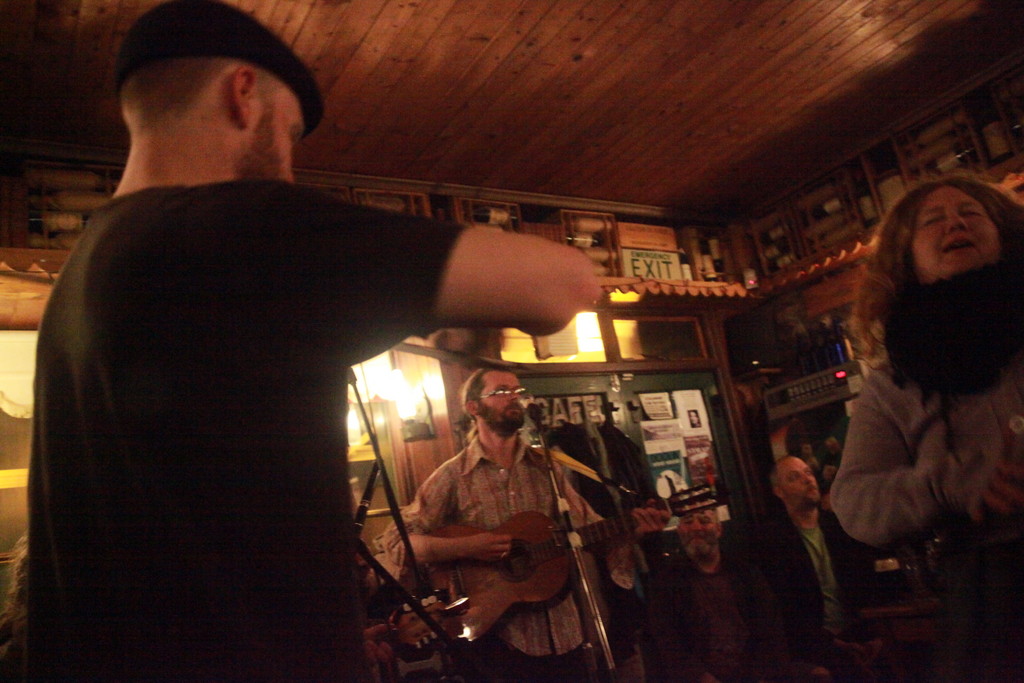
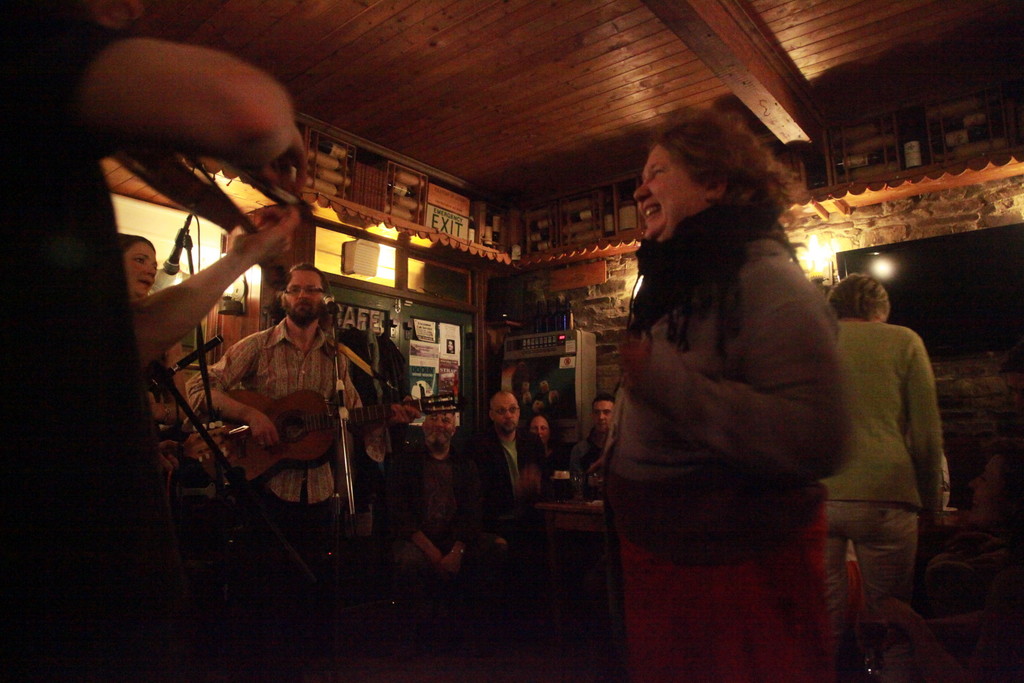
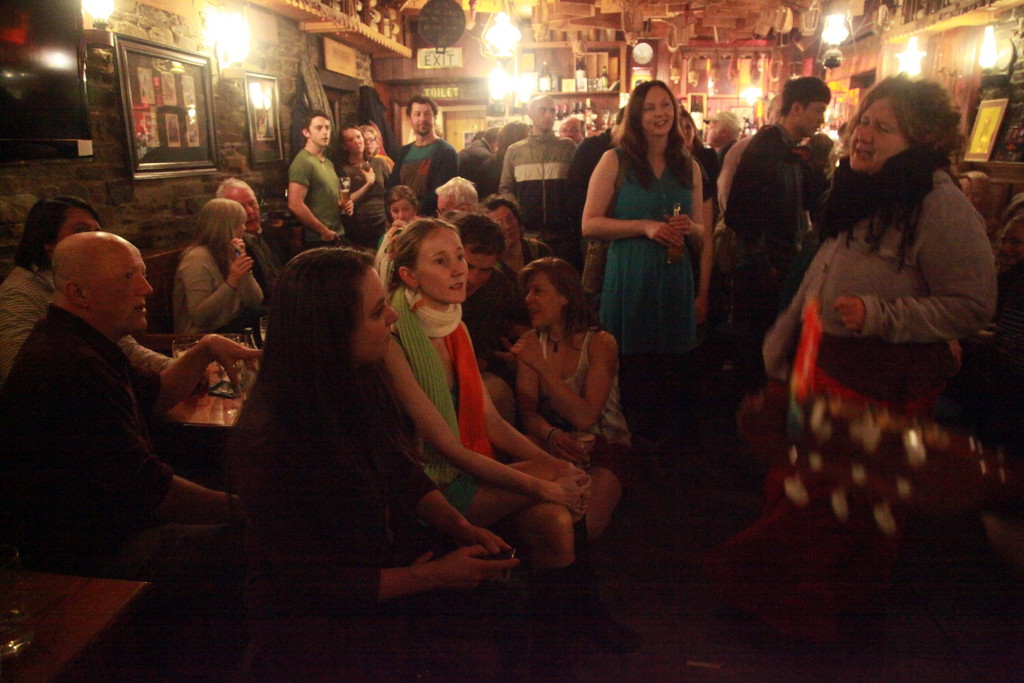
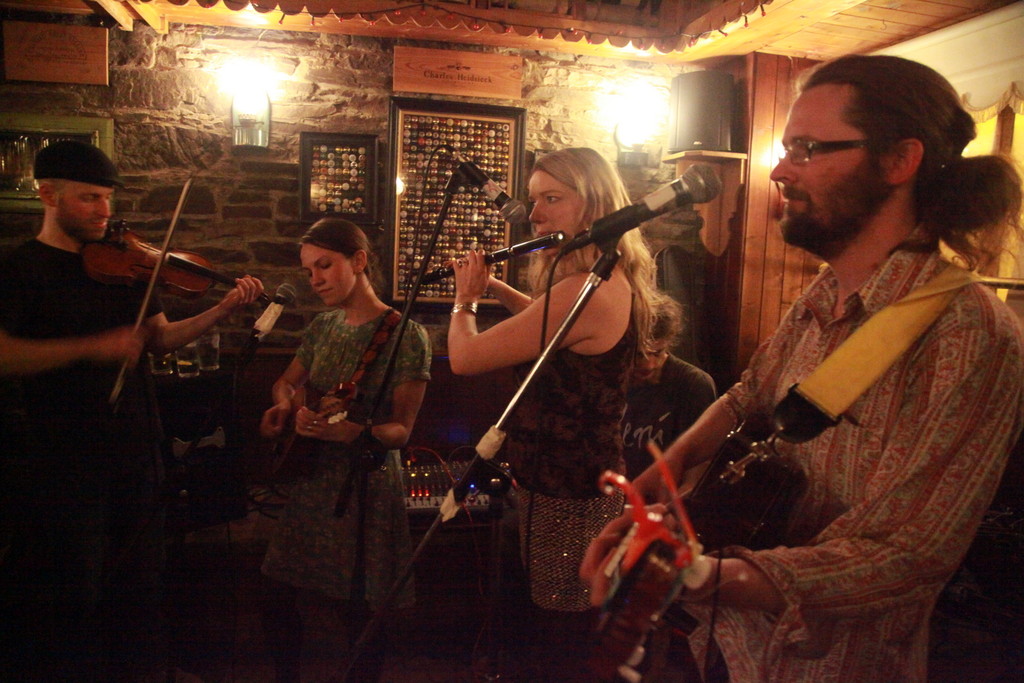
On each of my visits to Aran I was resigned to having nights without music but on each occasion I discovered the craic. On Inis Oírr I met Mícheál O’hÁlmháin, the leading musical identity on the Island and members of his family and we played in the hotel until the small hours and on Inis Mór I met three French guys, Alex, Mathieu and Victor who turned out to be amazing guitarists and with Michelle, Lea and Rom from Switzerland we had two nights of Celtic meets Gypsy Jazz meets 70s rock meets Europop!  On Inis Oírr I also stumbled onto an Irish language summer camp. It was held in the hall and I was drawn by the distinctive sound of irish dancing. The front door was open but what I saw was not what I expected. It was full with teenagers maybe 150 of them having the time of their lives. They were playing a game of musical statues to the recorded music of a ceili band. I stayed and watched as they threw themselves into a succession of musical and dance numbers including a country and western song about Connemara in Irish, some updated versions of set dances, line dancing and some pop songs. I was impressed that here was a camp dedicated to preserving the Irish language and culture but prepared to do it in a modern way that was relevant to today’s youth but still respectful of the heritage.  And then to top all that while on Inis Mór  and thanks to an invitation from Melissa I played with the local Island kids at the regular Comhaltas gathering with Galway Bay as a backdrop.
Inis Mor.  For the craic.IMG_7588

IMG_6285 IMG_6188 IMG_6331

Inis Mor.  A regular gathering of the local Comhaltas group.

There is a lot more I could say about these Islands but by now I think I have probably lost all my readers (If you have read this far please let me know – it would be nice to know if anyone reads beyond the first paragraph!), so I will let the pictures talk from here.  Just a few more images that give a taste of these islands that I am sure I will return to regularly.

Inisheer.  Fisherman returns escorted by dolphin

v

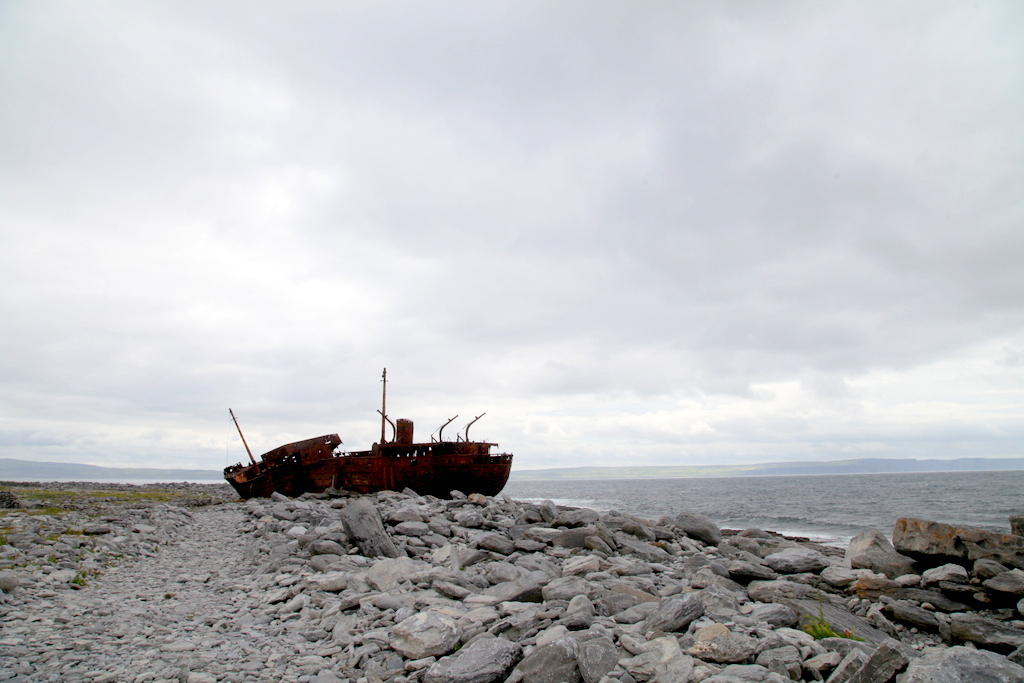
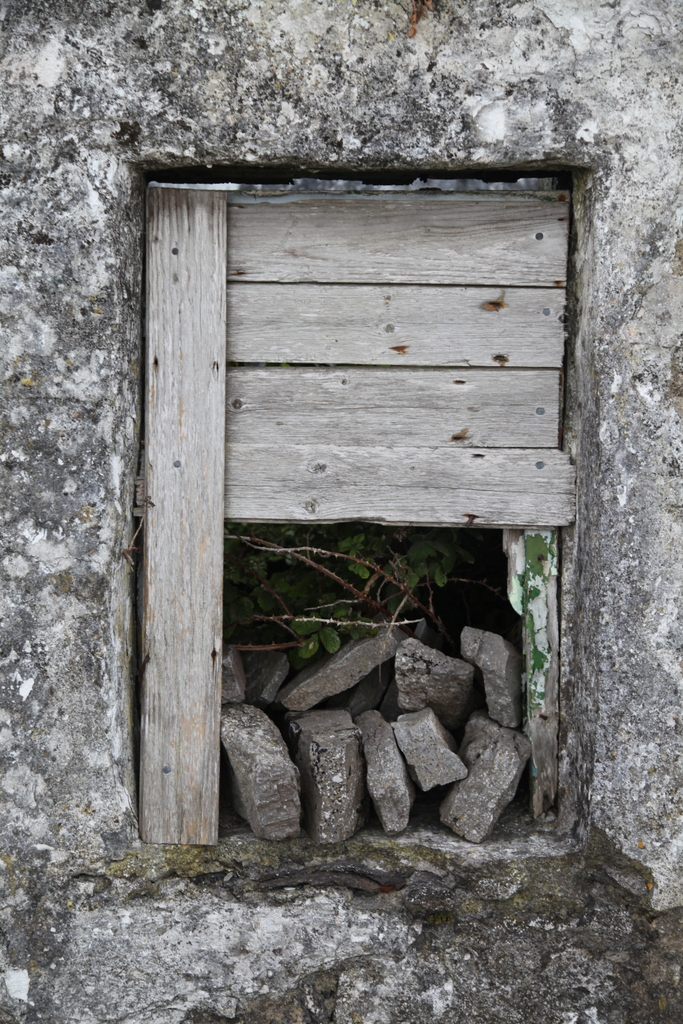
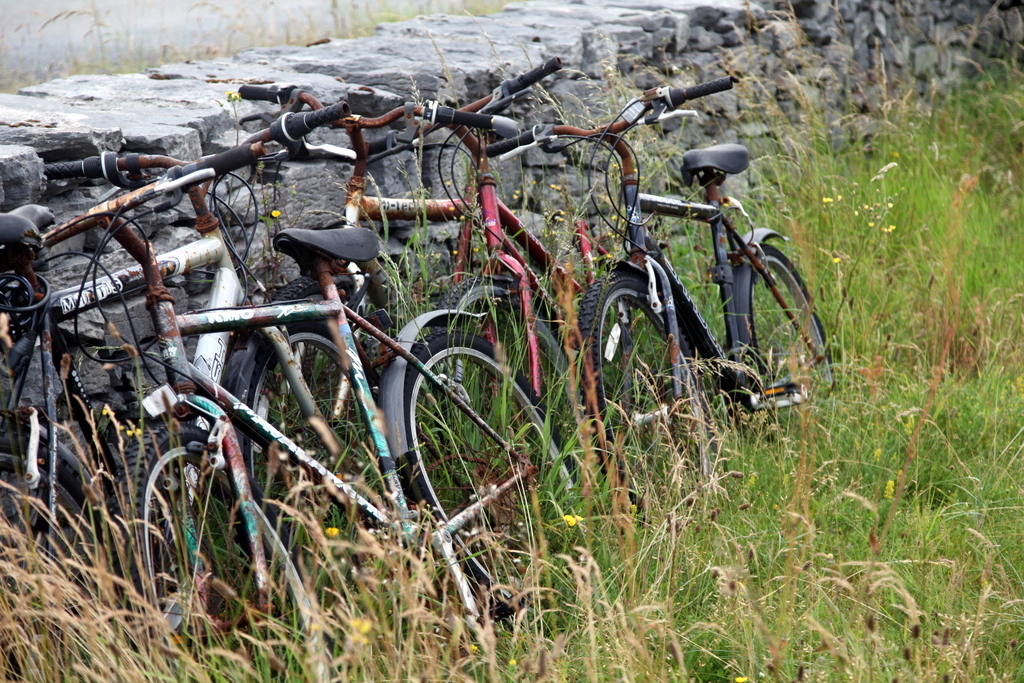
Inisheer Inisheer.  Wreck of the Plassey Inisheer.  Wreck of the Plassey Abandoned house InisheerInis Mor.  Atlantic on a calm day Rusted bikes, Inisheer Inisheer Inisheer.  Fining pots Inisheer.  Limestone outcrops glowing in the morning sun Inisheer.  Curragh and ruins Inis Mor. Goat farm Inis Mor. Goat farm Inis Mor. Abandoned house

Inis Mor.  Site where Curragh was re-tarred

Inis Mor.  Stairway to Heaven?

Inis Mor. Stairway to Heaven?
Categories: Real Ireland, Wild Ireland | Tags: , , , , , , , , , , , , , , , | 4 Comments

Jim O’ the Mills, Upperchurch, 1916 and Other Things.

I first heard of this pub during the Russell weekend in Doolin last month. ‘Jim O’ the Mills’.  Well that’s not strictly true. In fact I recall being told during my first week in Ennis back in May 2014 about a pub that only opens sometimes in a remote village in North Tipperary. It had slipped my mind until Cáit Ryan, whose father happens to be Jim of ‘Jim of the Mills’ told me about it. I determined to visit it at the next opportunity.

So on the Thursday before Easter I headed out there. As it happens the pub only opens on Thursdays so given that the next day was a holiday a big night was expected. Although only less than two hours’ drive from home I figured I would stay in a B&B as I didn’t fancy a long drive back in the small hours, but the nearest with spare rooms was at Nenagh about 45 minutes away. This turned out to be the best B&B I have come across in Ireland but more on that another time.

I really had no idea where the pub was so I got to the village of Upperchurch before dark to give myself a better chance of finding it. The regulation three pubs were all closed but I eventually found a man wandering the deserted streets (or should I say ‘street’) who gave the very clear directions of “turn left and left again and you can’t miss it”. He was right. But I needn’t have worried because when I returned an hour and a half later the parked cars on the main road well and truly gave it away.

Jim O' the Mills,  Upperchurch, Tipperary

Jim O’ the Mills, Upperchurch, Tipperary

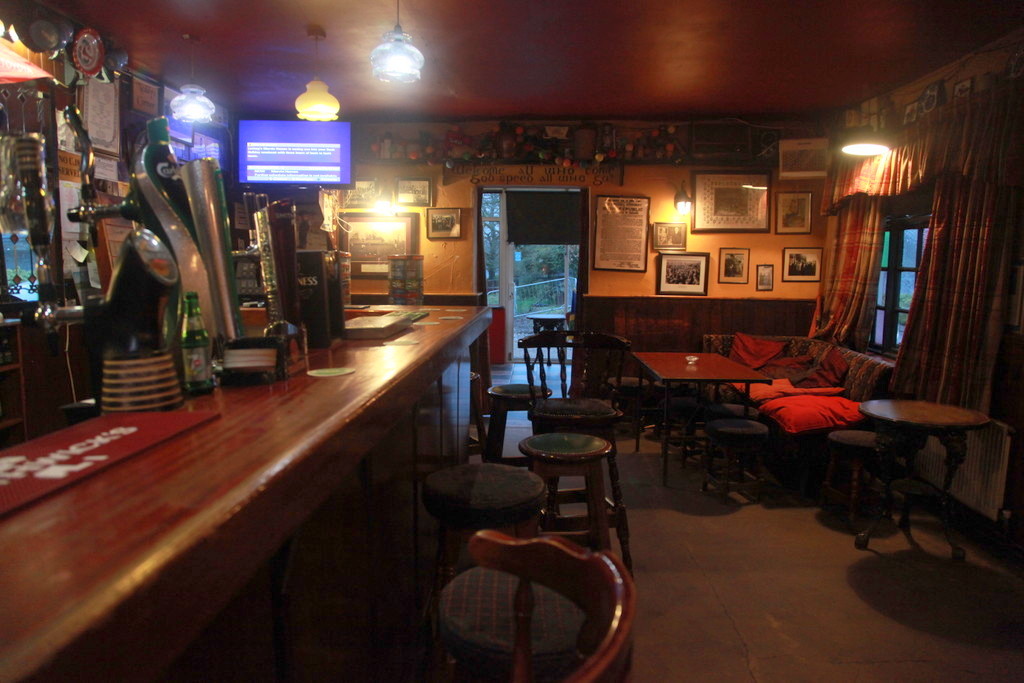
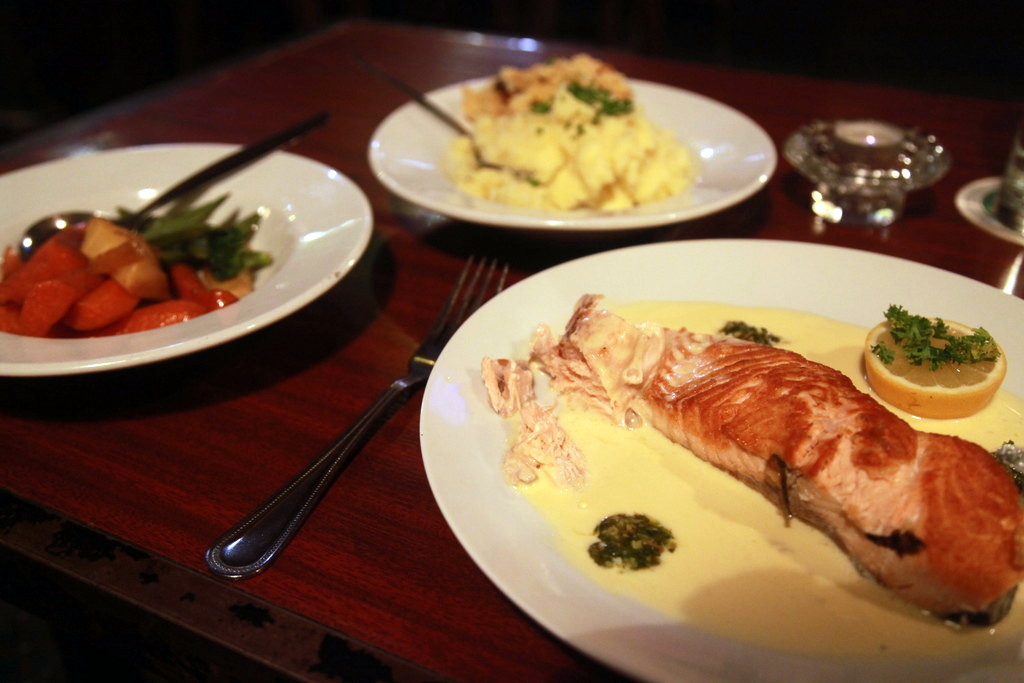
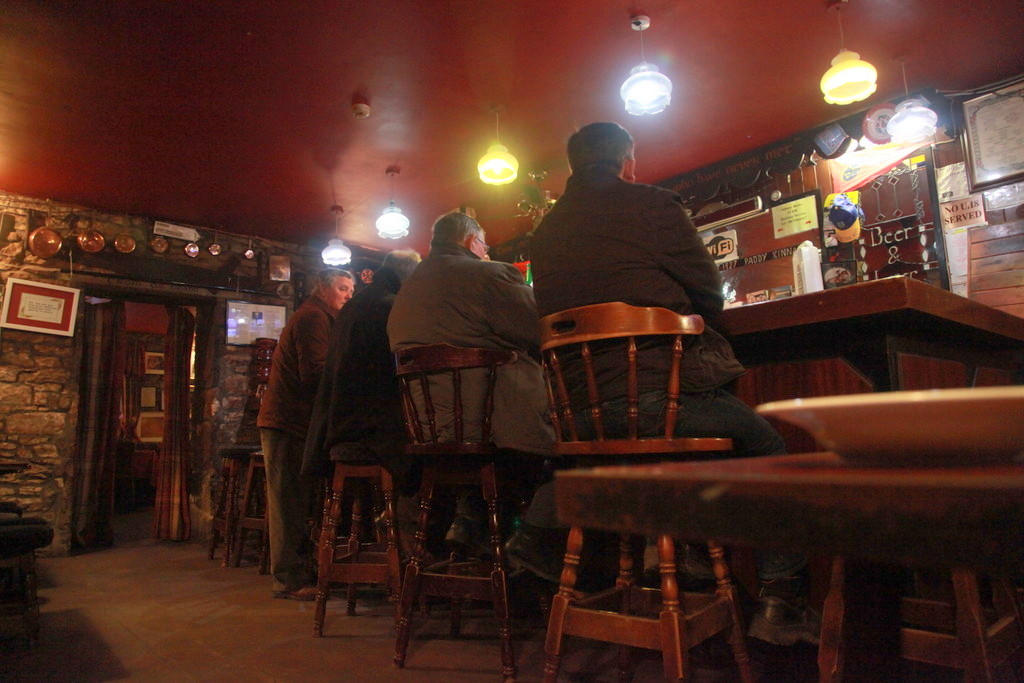
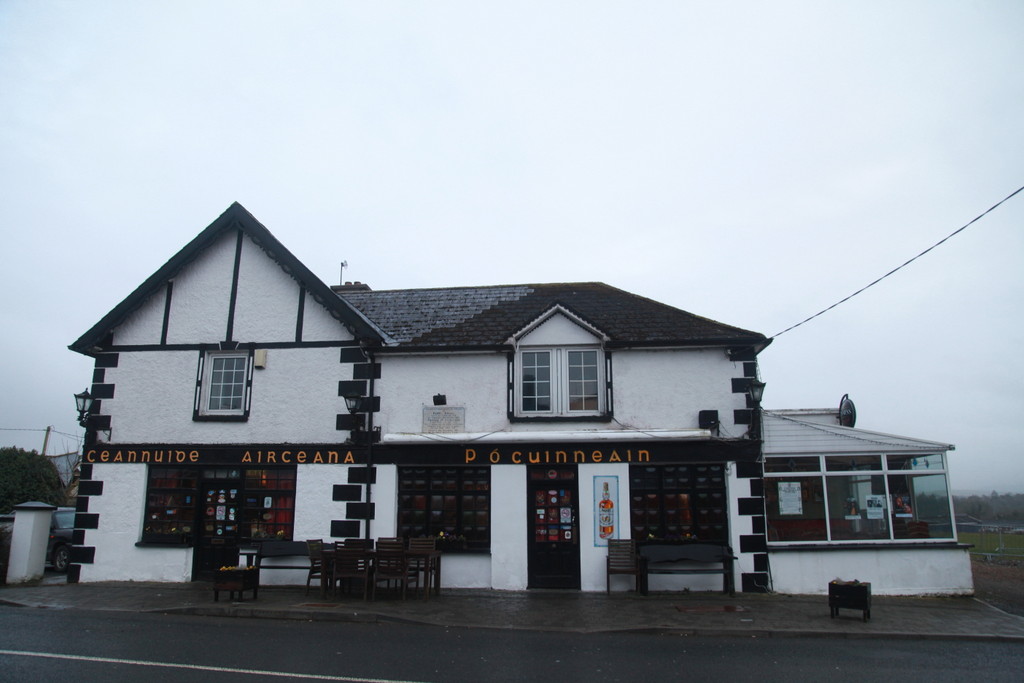
With some time to kill I went back to Upperchurch and by this time Paddy Kinnane’s pub was open. I stepped into a dimly lit empty room and a request for food was met with “I don’t think so you have to order ahead“ from the young lass behind the bar. A little nonplussed (who plans the day before to go to Upperchurch?) but I was rescued by the manager, Jim Butler, who after checking with the kitchen told me “You can have steak or salmon.” Salmon it was, washed down with a Guinness, and it was quite magnificent. With beautiful fresh vegetables. The pub was a genuine traditional Irish Pub.  Nothing ‘Plastic Paddy’ here – this was ‘Stone and Wood Paddy’. By the time I had finished my meal there were four punters at the bar.  I was amused, this being Easter Thursday, that they managed to keep up a conversation for about fifteen minutes about the Mass which had just finished.  Only Ireland!  The walls were adorned with photographs and memorabilia with more than a Republican slant. Jim who was married to Paddy Kinnane’s sister, proceeded to fill me in on Upperchurch’s role in the 1916 Rebellion and the subsequent Civil War, and Paddy in particular. This prompted me to do a bit of research of my own so if you’ll bear with me I’ll divert for a while.

Paddy Kinnane's Pub, Upperchurch

Paddy Kinnane’s Pub, Upperchurch

Paddy Kinnane's.

Paddy Kinnane’s.

Dinner, Paddy Kinnane's

Dinner, Paddy Kinnane’s

Paddy Kinnane's

Paddy Kinnane’s

The eponymous Paddy O’Cuinneain (Paddy Kinnane) who opened the Pub in 1927 had joined the Irish Volunteers at the age of 22 in 1914 but this had disbanded soon after. Following the Rising in Easter 1916 he was involved on the fringes eventually joining the Irish Republican Brotherhood. He saw little action though but spent seven days in jail for refusing on principle to pay a fine of 2/6 for not having a light on his bicycle at night. He saw this as a political statement. Love it! In 1917, branches of the Gaelic League and Sinn Fein were formed in Upperchurch (the Upperchurch Volunteers).   Paddy was involved in August 1917 in a raid on a hardware shop in Thurles where a hundredweight of explosives was captured. The company at this time had one rifle which Paddy had stolen from a British officer.

The Upperchurch Volunteers joined with some of the other local units to become the 3rd Tipperary Brigade and Paddy became the Commandant in 1918. From 1919 he was a wanted man and went on the run and never slept at home until 1924. In 1919 he was involved in a plot to assassinate an Inspector of the Royal Irish Constabulary (RIC). In the 1920s he was involved in a number of failed attempts to destroy RIC barracks in particular at Drombane and Doon.

Jim Butler told me had been a hunger striker but I am not clear whether this was in the 1920s or later. People think Bobby Sands and 1981 when ‘Hunger Strike’ is mentioned, but it has been used a lot in Ireland historically to push a political point and in particular by the Republicans – for example 8,000 internees went on a hunger strike protesting their detention in 1923. He remained active after the war and he was a colleague of fellow republican Sean MacBride (who later won the Nobel Peace Prize) and they were both elected to the Dáil Éireann in 1947, Paddy representing Tipperary.

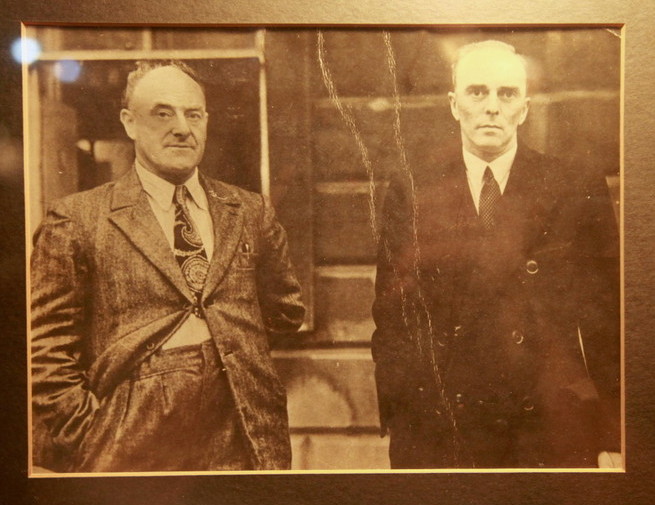
Quite a history. Here is a photo of Paddy with Sean which is hanging on the pub wall.

Paddy Kinnane and Sean MacBride

Paddy Kinnane and Sean MacBride

But it was time to visit Jim of the Mills. First the name – an obvious homage to Ned of the Hills. This is a famous Irish song celebrating Tipperary man Edmund O’Ryan who led a gang of bandits in the 17th Century in the style of Robin Hood. http://en.wikipedia.org/wiki/%C3%89amonn_an_Chnoic

It was explained to me by Jim Butler that because there are so many Ryans in this part of Tipperary they are all distinguished by nicknames. Ryan the Giant, Ryan Sean Og and of course Jim of the Mills.

I thought I had plenty of time. Irish sessions always start late don’t they? So I arrived at 9:30 and the place was already packed. Not what I expected at all. Outwardly there was no hint of activity (except for the cars). No sign saying Heineken or Guinness. No blackboard saying “Trad Music tonight”. It just looked like a family home.  The Ryans have been living here since 1990 but the house dates back to 1800.  From1815 it was used as a mill (Jim of the Mills!)  But since 1982 there have been regular sessions here.  Cáit Ryan told me it started with 5 or 6 people only.

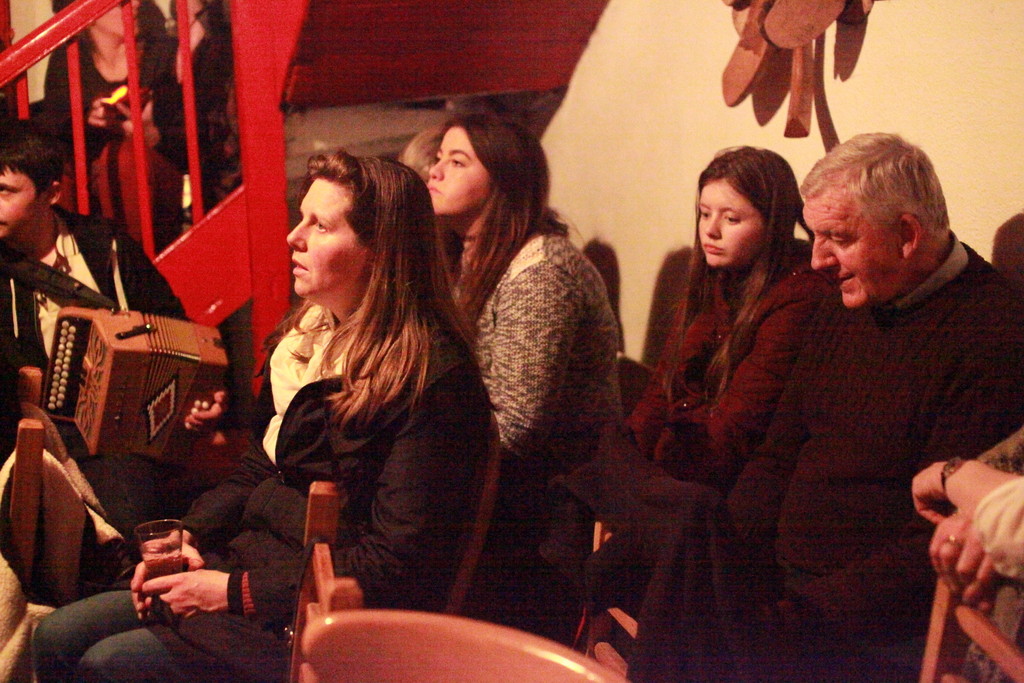
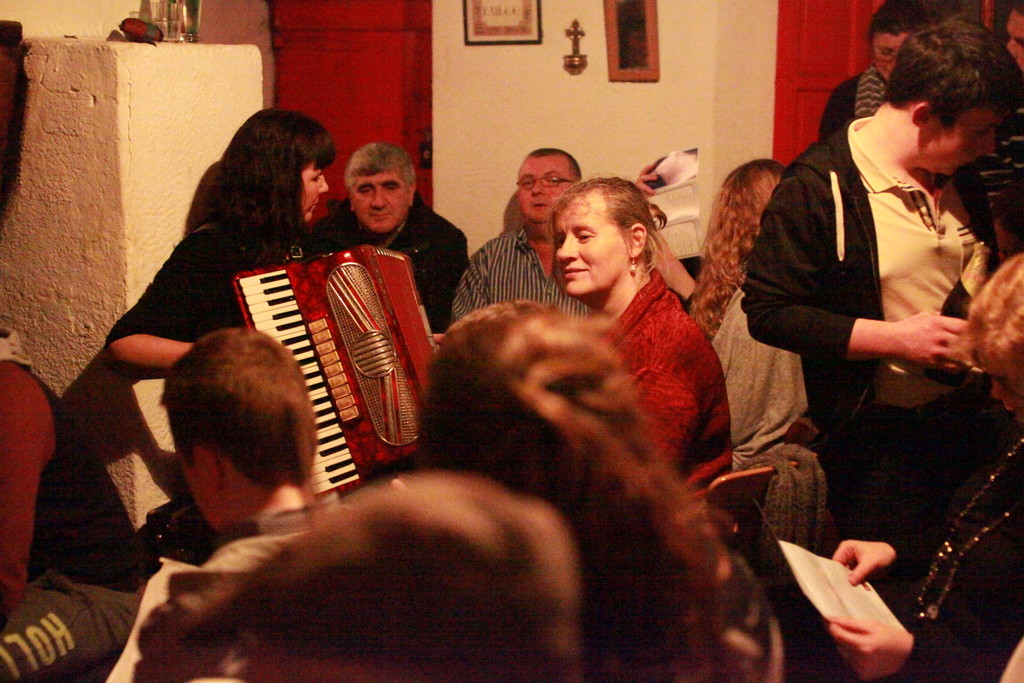
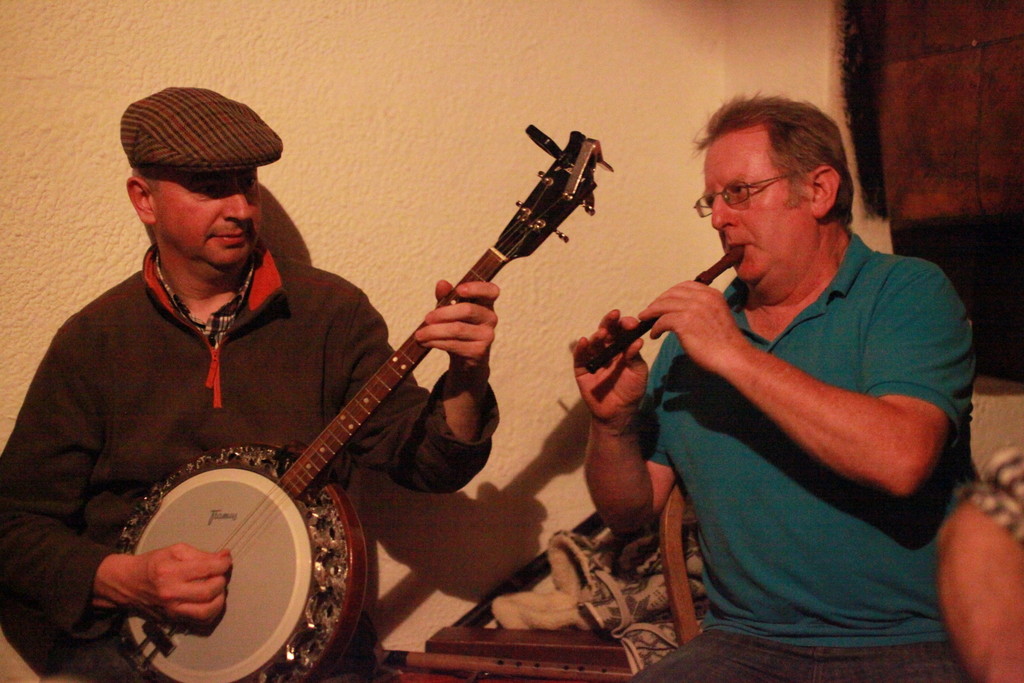
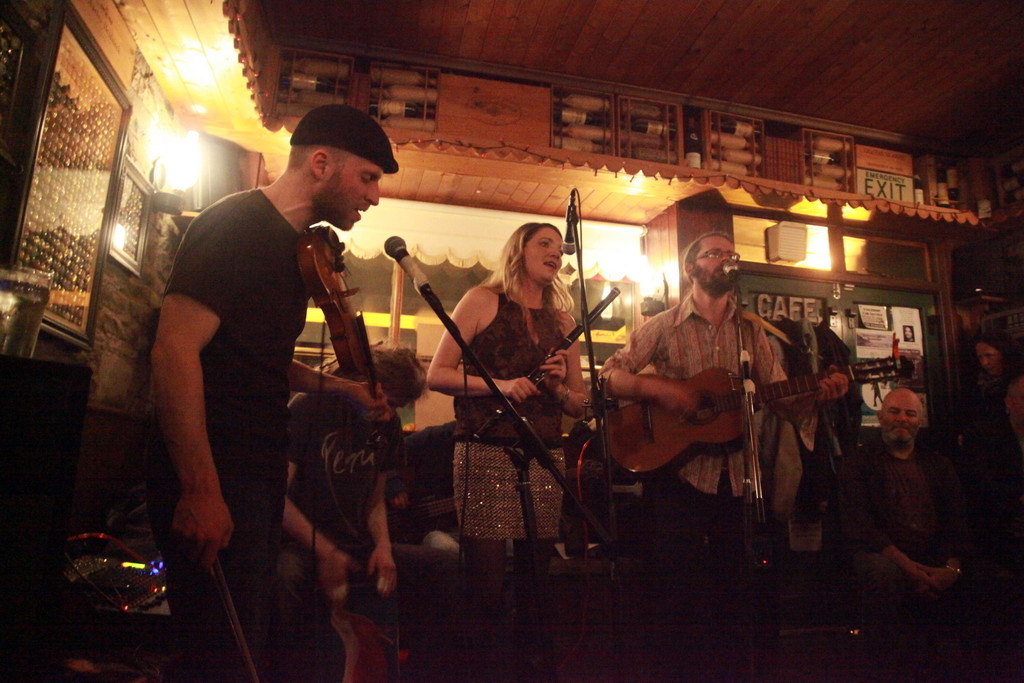
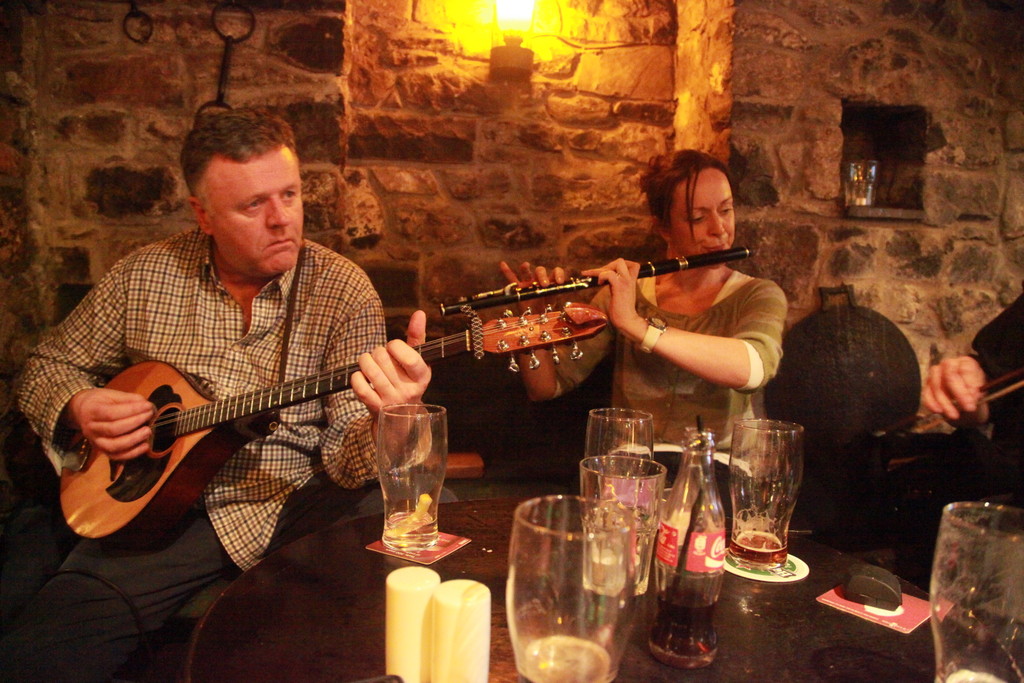
On going through the red half door I walked into an Ireland that was of another time.  Like Woody Allen’s Midnight in Paris. But here it was for real. I turned left and into the room which is called the ‘kitchen’ because that’s what it once was, packed with musicians all lined up in chairs facing the enormous fire place. I was taken through to the new ’kitchen’ and immediately pounced upon and introduced to Kae Ryan, Jim’s wife and a host of others. I was offered a cup of tea, the first of about half a dozen during the night. There were only a few seats left back in the session room so I got my fiddle out, found a spot and was immediately swept up by the non-stop music. As if by way of welcome for me the first tunes were a set known as the “Upperchurch Polkas”. I’ll definitely have them learnt for next time. There were no stars here and no egos it was music from the heart. We heard a beautiful song from Ella Stapleton, who had just won a prestigious singing competition and from Bridie Ryan (yes another Ryan but not related), who seemed to be MC’ing and a host of others whose names I didn’t know or don’t remember. There were all ages playing and singing and I love that there were plenty of local songs as well as the old standards. I even got to sing an old favourite of mine ‘Jim Jones’.

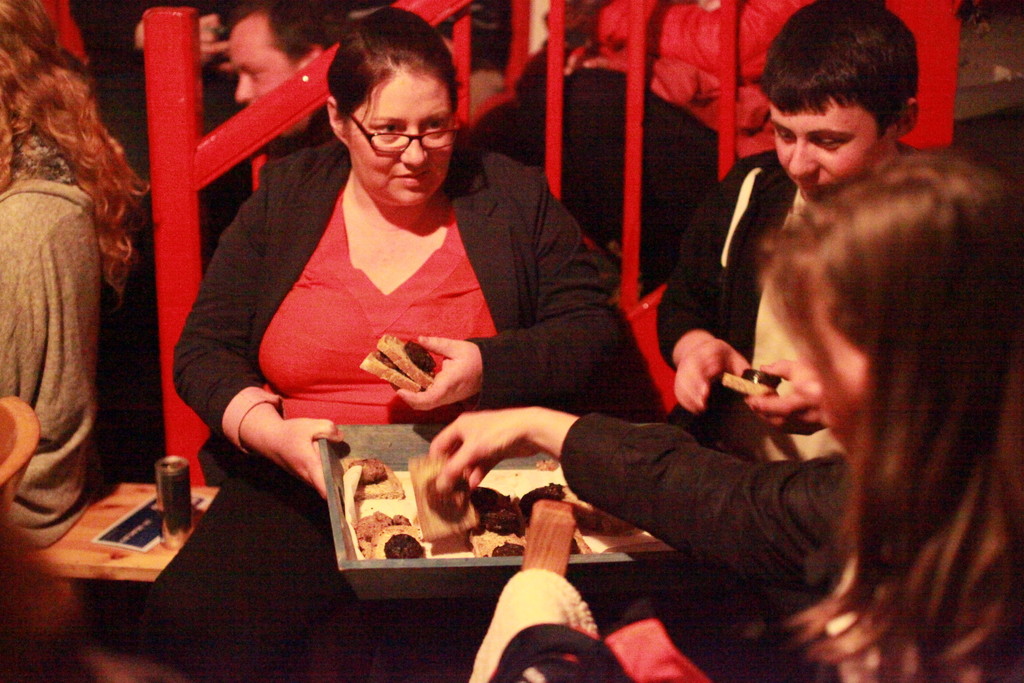
A lovely touch was the plates of bread and black and white pudding which came out during the night and disappeared with alarming speed. Did some come just for the pudding?
I caught up during the night with Jim, the host who sings and plays fiddle, and met three of Cáit’s sisters, Greta, Roisin and Erin, all steeped in the music.  There is another sister Aine who is an actor and playwright. I have been to hundreds of sessions in Ireland now. Perhaps 700, but this was truly a unique experience. It had the feel of a giant house party. We were in the Ryan family home, but for one night a week it becomes the centre of the world. Four rooms are taken over by music lovers and lovers of the craic. It was absolutely ‘chockers’ as we say back home. There were little sessions going on all over the place. In the new ‘kitchen’ I was treated to unaccompanied songs from a number of home grown talents including Jim himself and then there was another small room where I joined Cáit and her sister Greta and their friends in belting out songs and tunes. Some decidedly untraditional!  The noise was deafening, but somehow it seemed right.  Then there was the bar which was jammed. A trip to the toilet took ten minutes and you made lots of friends on the way!

I was told there would be heaps of tourists but the people I spoke to were all regulars and from neighbouring villages. Maybe the tourists haven’t reached the Midlands yet.

I left around 4am but Cáit told me that she finished up at 5:30 and the music was still going.

This is certainly not the place to go to if you want to play quiet tunes in the corner and maybe for many of the tradheads there would be too much singing but wow, for a taste of the real Irish craic and an unforgettable experience and to meet a genuine, warm, Irish family steeped in the local history and tradition and with music coming out of the walls you really must find your way to Upperchurch in North Tipperary on a Thursday.

Thanks Cáit for inviting me and to Jim and Kae and everyone else for making me feel so welcome. Special thanks to Greta for grabbing my camera and taking some amazing shots. See you all again for sure…….

Session at Jim O' the Mills

Session at Jim O’ the Mills

Session at Jim O' the Mills

Session at Jim O’ the Mills

Session at Jim O' the Mills.  Songs from all ages

Session at Jim O’ the Mills. Songs from all ages

Session at Jim O' the Mills.  Bridie.

Session at Jim O’ the Mills. Bridie Ryan.

Session at Jim O' the Mills.  Time for black pudding

Session at Jim O’ the Mills. Time for black pudding

IMG_2206 IMG_2207 IMG_2210

IMG_2089

Jim O’ the Mills. Ella Stapleton

IMG_2085

Jim Ryan

IMG_2068

In the kitchen at Jim O’ the Mills.

IMG_2117

Me at Jim O’ the Mills getting into a song. Photo Greta Ryan

IMG_2100

Jim O’ the Mills. Enjoying the craic.

IMG_2104

Jim O’ the Mills. Cáit Ryan

IMG_2152

Jim O’ the Mills. Me and Cáit Ryan. Photo Greta Ryan

IMG_2156

Jim O’ the Mills. Photo Greta Ryan

IMG_2181

Jim O’ the Mills. Jim Ryan

IMG_2188

Jim O’ the Mills.

Categories: Real Ireland, Sessions, Trad Irish Music | Tags: , , , , , , , , , , , , , , , , | 8 Comments

Trish’s Soda Bread

Soda Bread is made in a few countries other than Ireland but it remains quintessentially Irish. So I decided to learn how to make it. Never refuse an invitation is one of my rules here in Ireland so when Trish from Lahinch offered to show me I jumped at the opportunity. What is Soda Bread? It is a simple quick bread that uses sodium bicarbonate (what the Irish call ’bread soda’) as the leavening agent instead of yeast. It relies on mixing buttermilk (weak acid) with the soda (alkaline) to produce tiny carbon dioxide bubbles which cause the bread to rise. It does not need kneading or time to stand. It has an Australian equivalent in Damper widely made in rural Australia and popular with indigenous Australians.

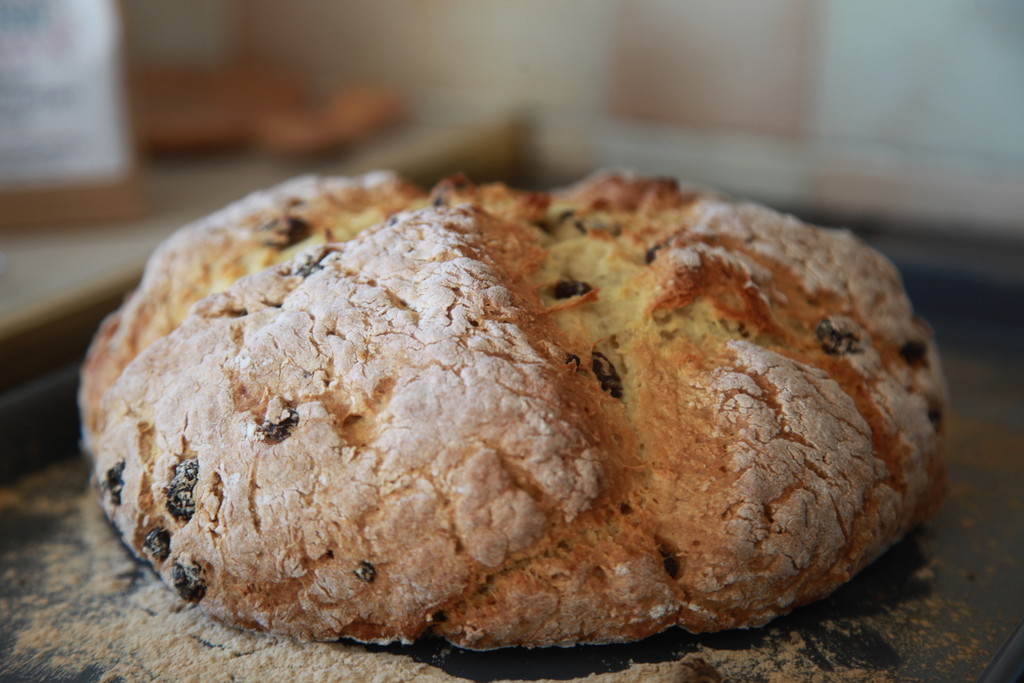
Trish's Soda Bred - the final product

Trish’s Soda Bred – the final product

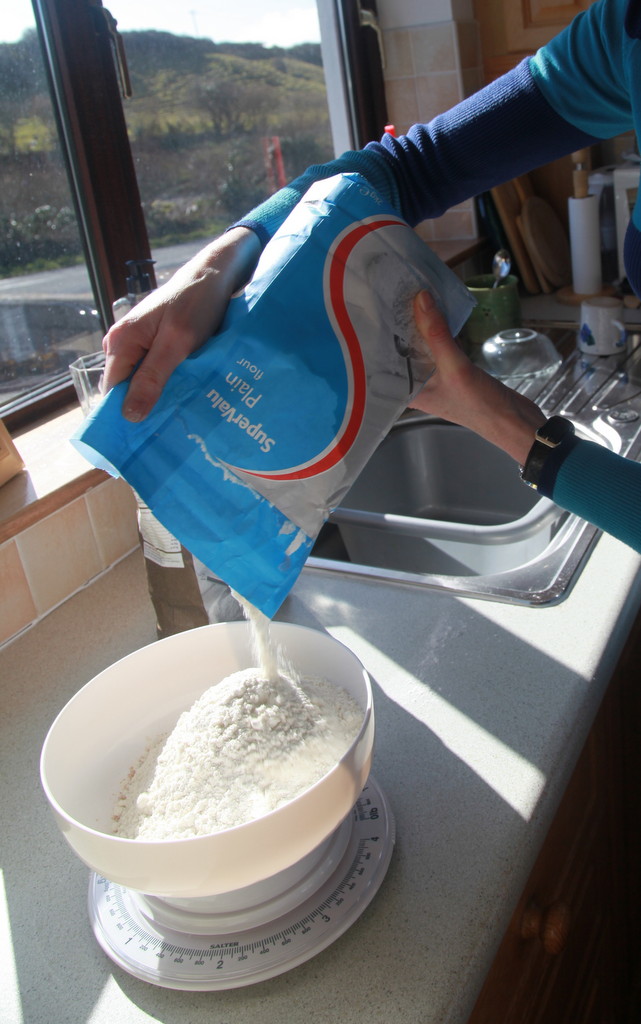
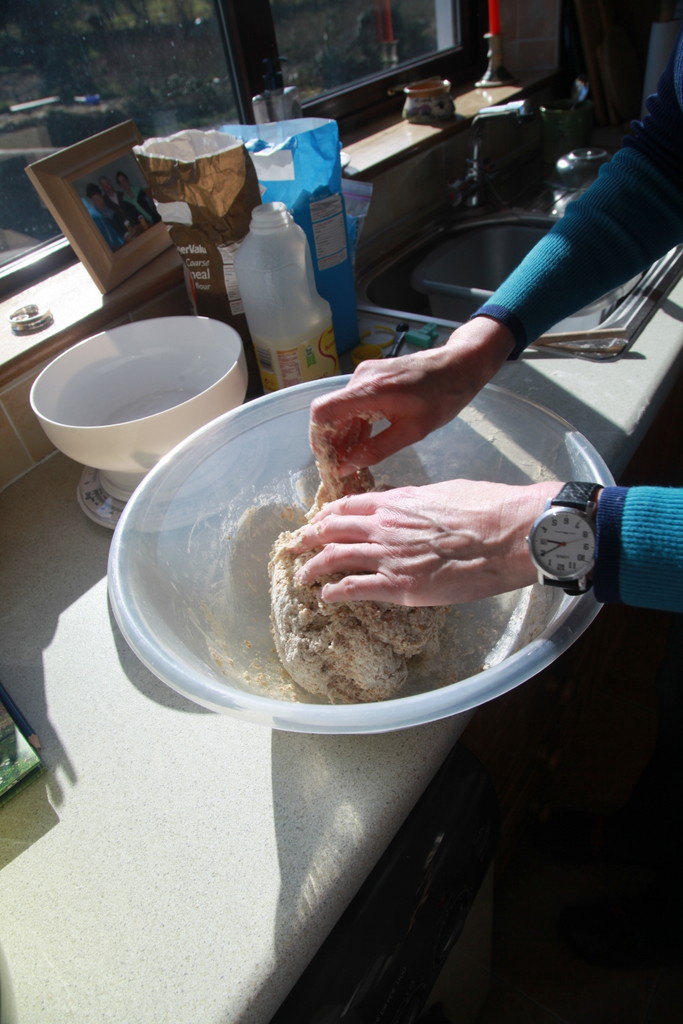
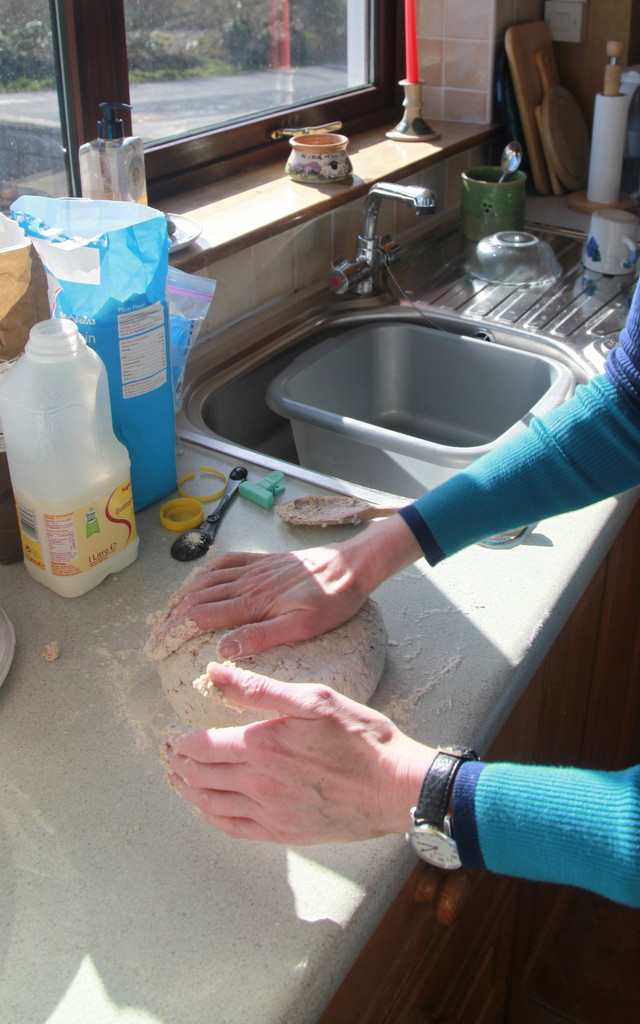
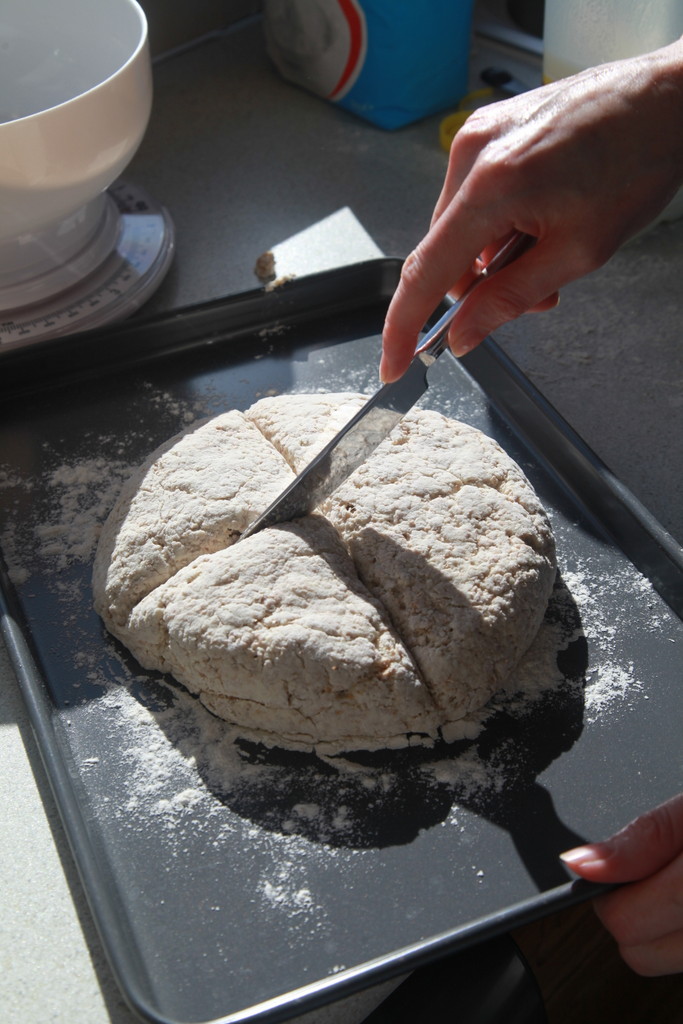
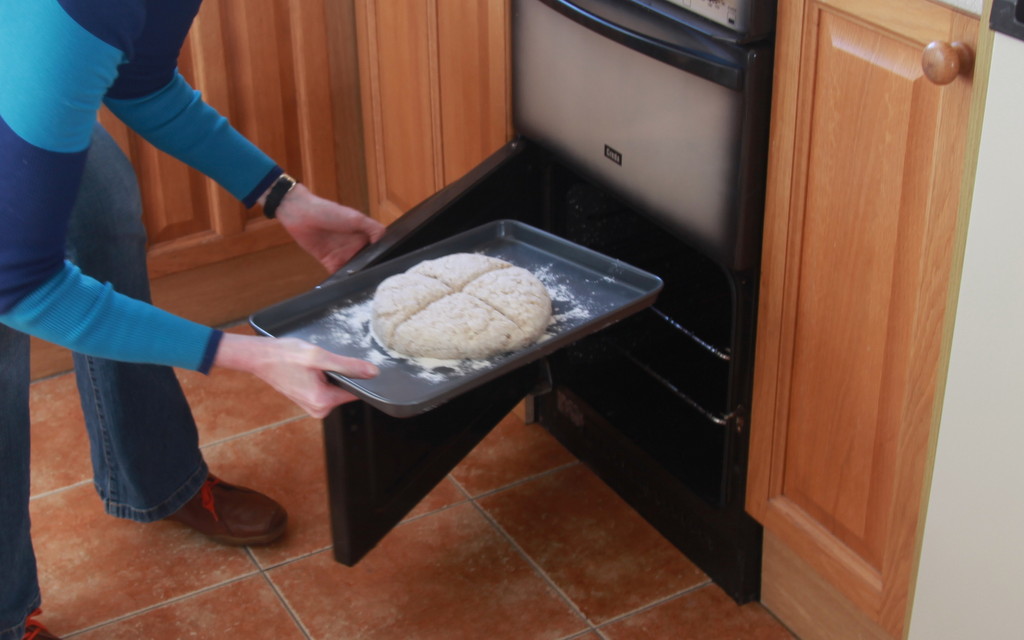
Here is Trish’s Recipe which she got from her mother and who knows how far back it goes beyond that.  Trish’s recipe uses half and half white flour and wholemeal flour but it can be mixed in any proportion depending on taste. It’s very simple – here goes. Take 20 ounces of mixed wholemeal and plain flour and add one heaped teaspoon of bread soda. Crush it between the fingers to break up the lumps. Mix. Add buttermilk, a little at a time, and lightly mix until consistent slightly sticky dough is attained. Salt is optional. Make into a ball with a little flour on the bench and flatten into the desired shape and place on a floured baking tray.  Make fairly deep cuts into quarters and place into a preheated oven at 200˚C for about 30-35 minutes. Check regularly in last five minutes. Tap bottom – a hollow sound means it is cooked! That’s it. The proof is in the pudding and it was delicious with Kerry butter and Irish Cheddar or spread with Clare jam (Strawberry and Baileys!). I had a go and mine was made with just white flour and with raisins (about 3-4 oz). Pretty proud of it – check the final photo. It’s in the freezer so yet to taste it. Thanks Trish for taking the time to open another window for me on the real Ireland. Give me half an hour’s notice if you’re coming to visit and I’ll have a hot loaf ready for you!

IMG_1286

1. Add 10 oz wholemeal flour

IMG_1287

2. Add 10 oz plain flour

IMG_1295

3. Add heaped teaspoon baking soda

IMG_1305

4. Add buttermilk

IMG_1323

5. Mix to make dough

IMG_1330

6. Round and flatten to shape

IMG_1344

7. Quarter

IMG_1347

8. Place in oven at 200 deg

IMG_1361

9. Tap bottom to check if cooked

IMG_1384

10. Ready to serve

IMG_1401

11. Portions can be frozen and eaten later

IMG_1425

12. Sliced soda bread delicious with butter and jam

IMG_1443

13. My version of Trish’s soda bread with white flour and raisins

Categories: Real Ireland | Tags: , , , , , , , , , | 4 Comments

Solar Eclipse in Co. Clare

I dutifully set the alarm for 8 am after the usual late night playing tunes, so that I could see the much hyped total eclipse of the sun.  Well it’s not actually total where we are but it was to be pretty damn close. I didn’t have high hopes as there was a thick blanket of fog when I drove home last night at 1 am. Sure enough I looked out the window at as the alarm sounded to a complete whiteout and promptly rolled back over to sleep.

Something woke me up an hour later and made me look out the window again This was what I saw peeking through the haze.

IMG_0001

First glimpse of the eclipse March 20 2015

I madly grabbed the camera put the telephoto on and, while mindful of all the dire warnings that I would lose my sight, pointed it in the general direction and fired away. Of course I didn’t have a sun filter so the first shots were completely blown out but the fog was working in my favour and as the slowly diminishing sun peeped in and out I kept clicking. For the technically minded I shot on my Canon 5D Mark 2 at the lowest ISO and on  programmed automatic stopped down between 1 and 1 2/3 stops to cut the light. I only had a 200m lens so couldn’t get in that close.

It was an amazing experience as I watched the light fade. As we reached near “total” the fog closed in and there wasn’t enough light from  the sun to get a shot. So I turned my attention to the rocks and the sea. It was deathly quiet. Eerily so. I think the word ‘eerie’ must have been coined during a total eclipse of the sun.  It was not as dark as I expected but it was the quietness and stillness that struck me.  Not even familiar sounds like the birds, which are my constant companions, or the lowing of cows, which only minutes earlier had welcomed the dawn.  The only sound was the restless sea and even it was unusually quiet. It lasted about ten minutes as the light gradually returned and I heard the first quack of a wild duck heralding the new dawn.

For a moment the fog thinned and I saw the sun emerge on the other side of the moon.  Just for a moment.  Long enough to take one last photo.  Then as the sun became bright enough to penetrate the haze it was impossible to photograph let alone look at.

In the end I had to be grateful for the fog and cloud. It enabled me to witness something that the gods have continually conspired  to prevent me seeing.

Roll on 2024.

IMG_0078

Eclipse, Caherush March 20 2015. About 15 minutes before “total”.

IMG_0087

Eclipse over Mt Callan from Caherush March 20 2015

IMG_0125

Eclipse Caherush, March 20, 2015. Minutes before “total” and just before the cloud covered the sun.

IMG_0132

Caherush during the “total” period of the eclipse March 20 2015

IMG_0145

Eclipse, Caherush March 20 2015, Minutes after “total”, the sun emerges briefly before being covered by cloud again.


Categories: My Journey, Real Ireland, Wild Ireland | Tags: , , , , , , , , | Leave a comment

St Patricks Day in Ennis. Fifty Shades of Green.

My first St Patrick’s Day in Ireland.

It has always been something I have avoided in Oz. An excuse for all and sundry to parade themselves as being Irish (whether they are or not) fuelled by green beer and endless renditions of Wild Rover and the Fields of Athenry. Not always a pretty sight. And sessions on St Pats Day are non existent as every person who can hold a fiddle or accordion is gigging somewhere that night. So I was keen to find out what it was like back here.

St Patrick’s Day honours the death of St Patrick, patron saint of Ireland, in 461 and it is celebrated as a national holiday in Ireland and Northern Ireland and around the world by the Irish diaspora. It has moved from being a religious holiday to a day of secular celebration much to the chagrin of the church. I like this quote from Father Vincent Twomey who wrote in 2007, “It is time to reclaim St Patrick’s Day as a church festival without mindless alcohol-fuelled revelry” and concluded that “it is time to bring the piety and the fun together.” This plea seems to have fallen on deaf ears.

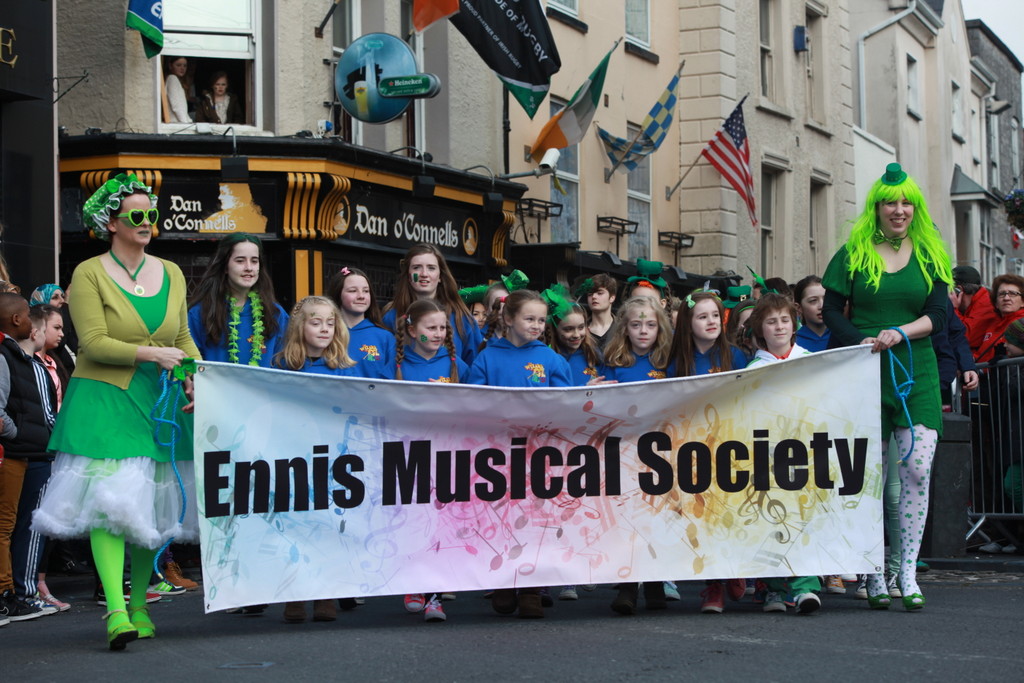
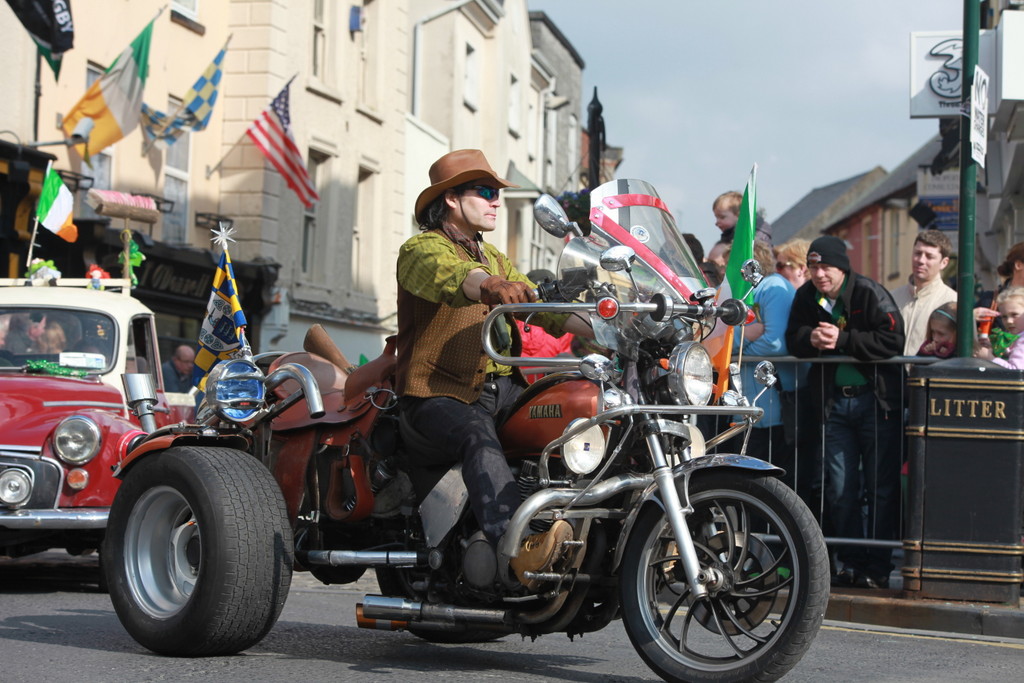
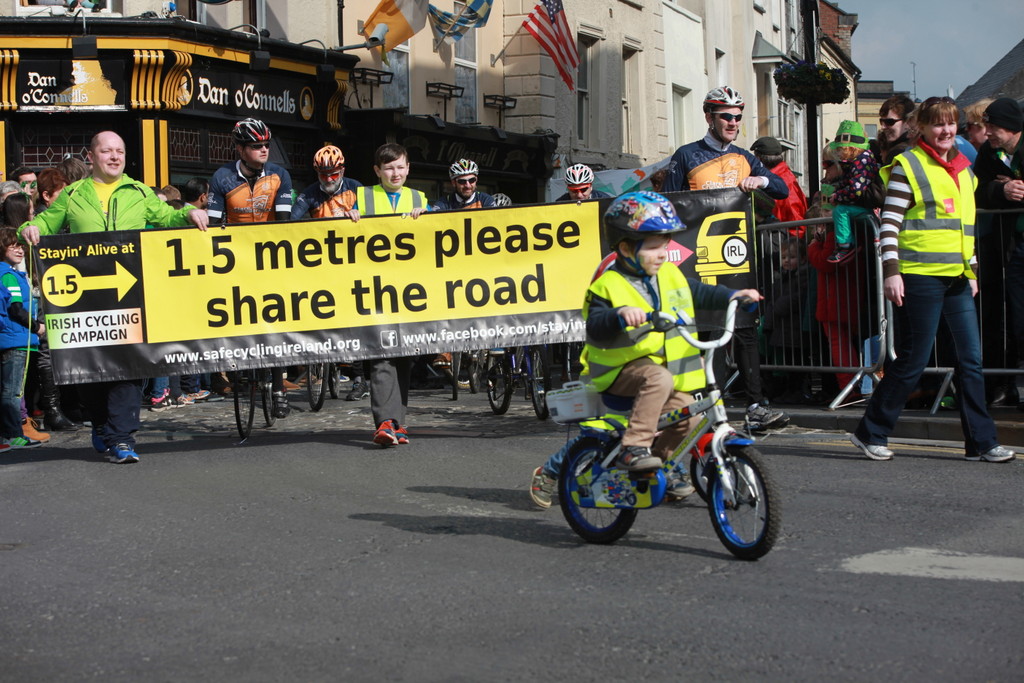
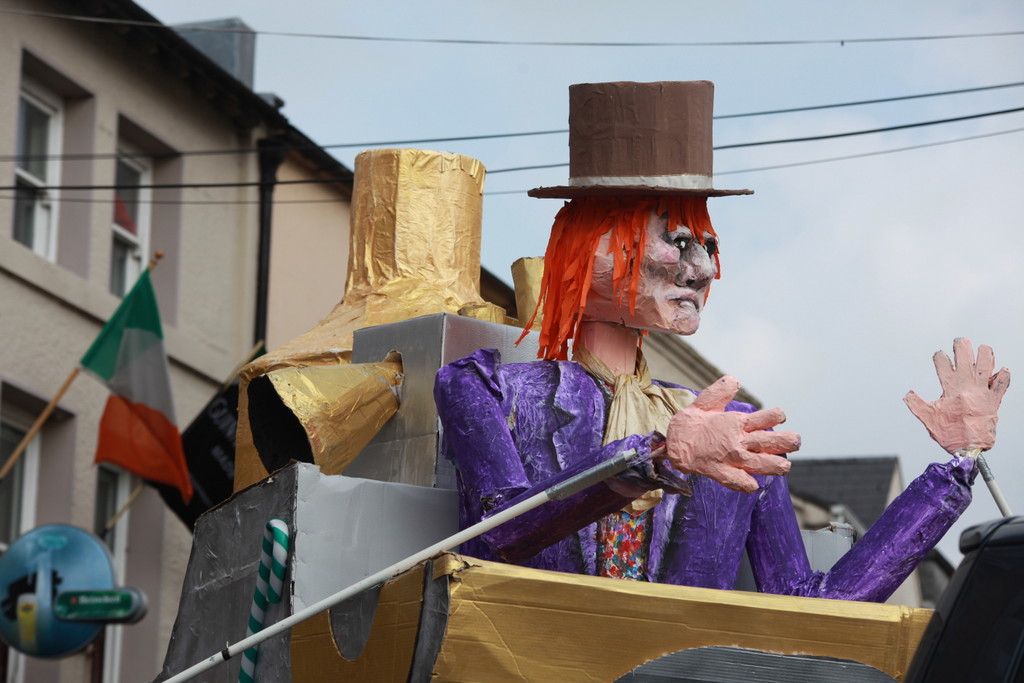
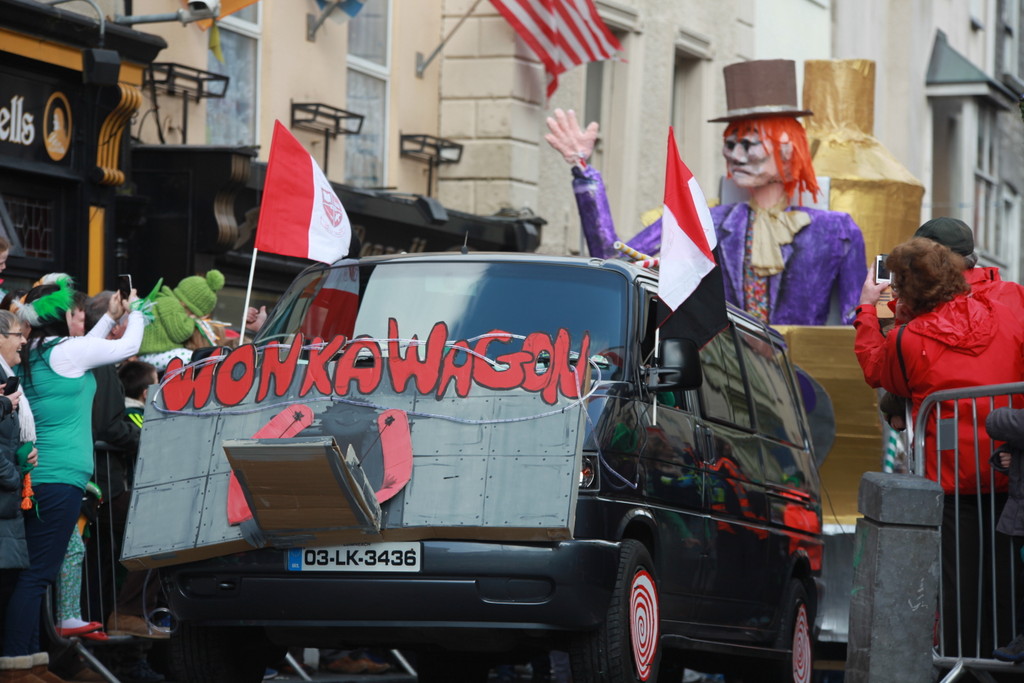
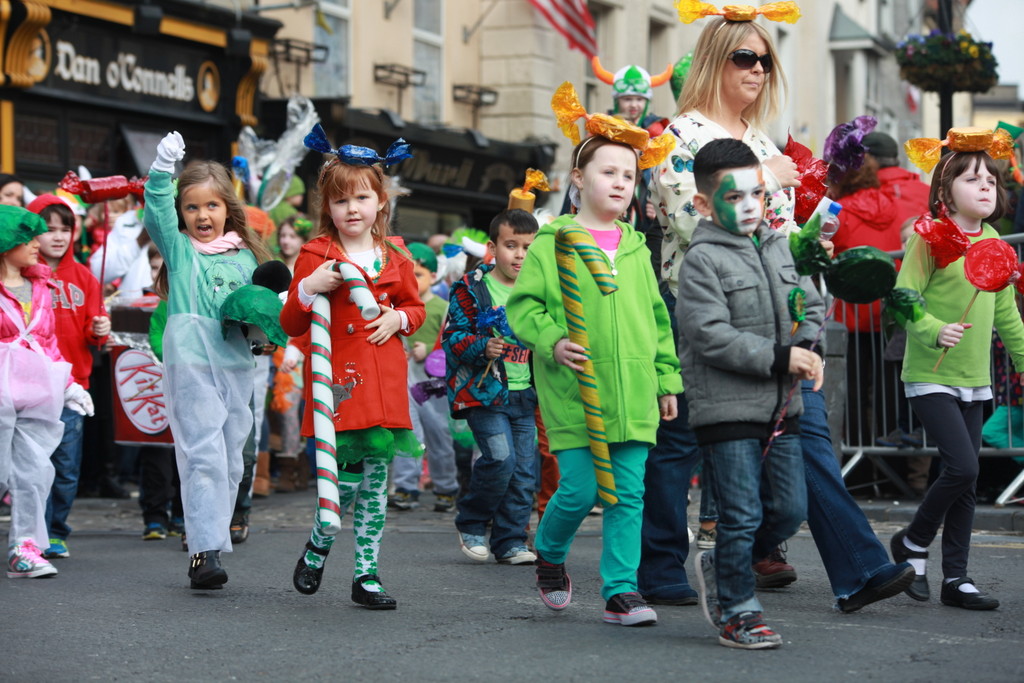
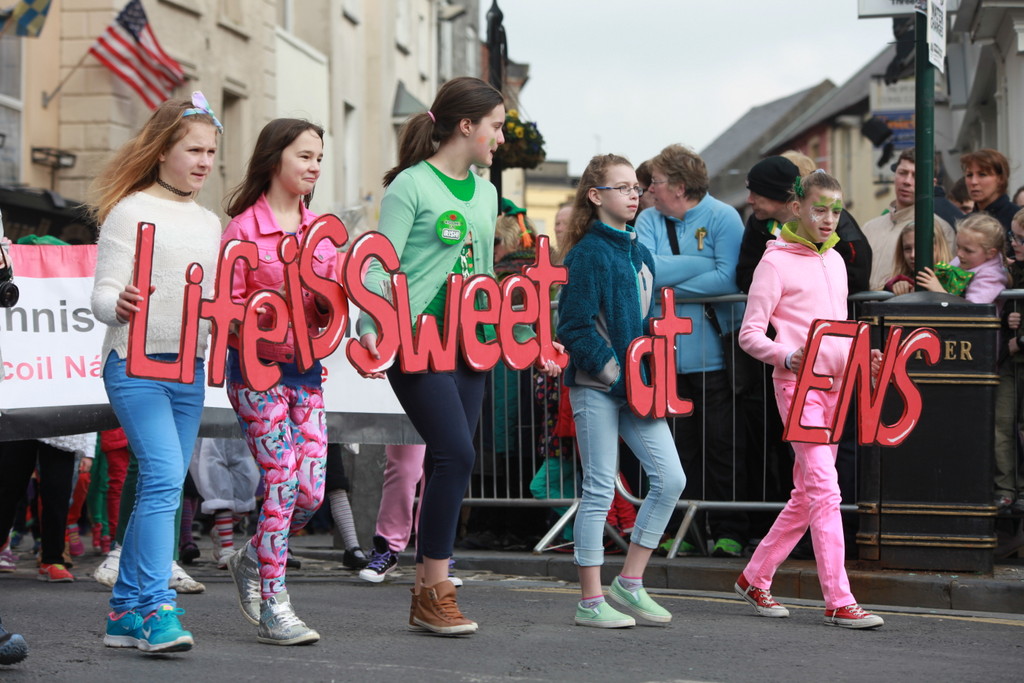
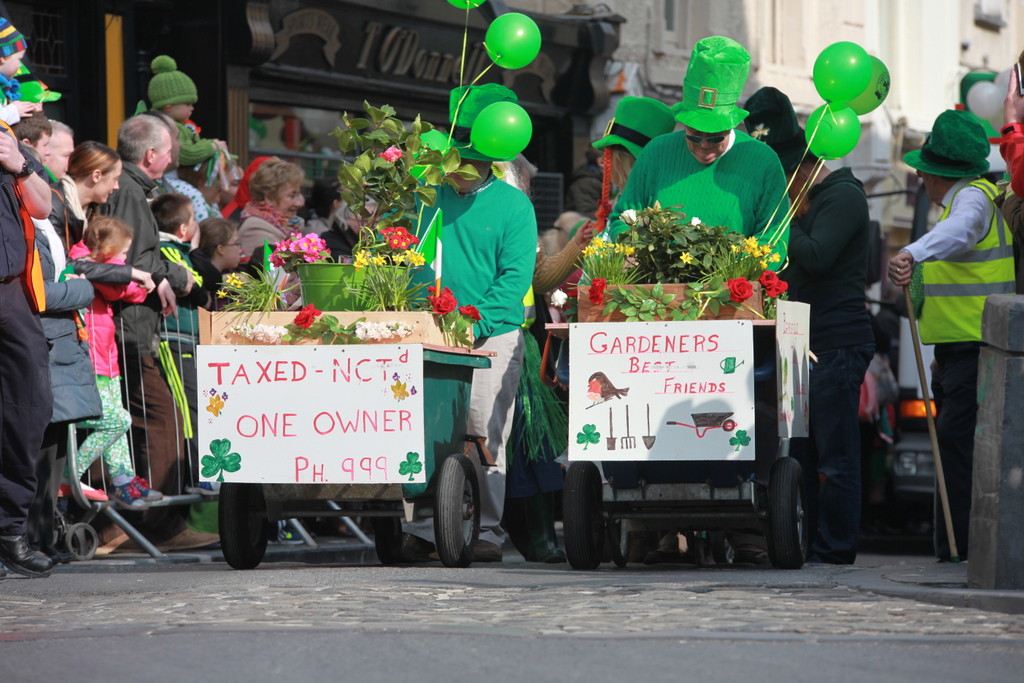
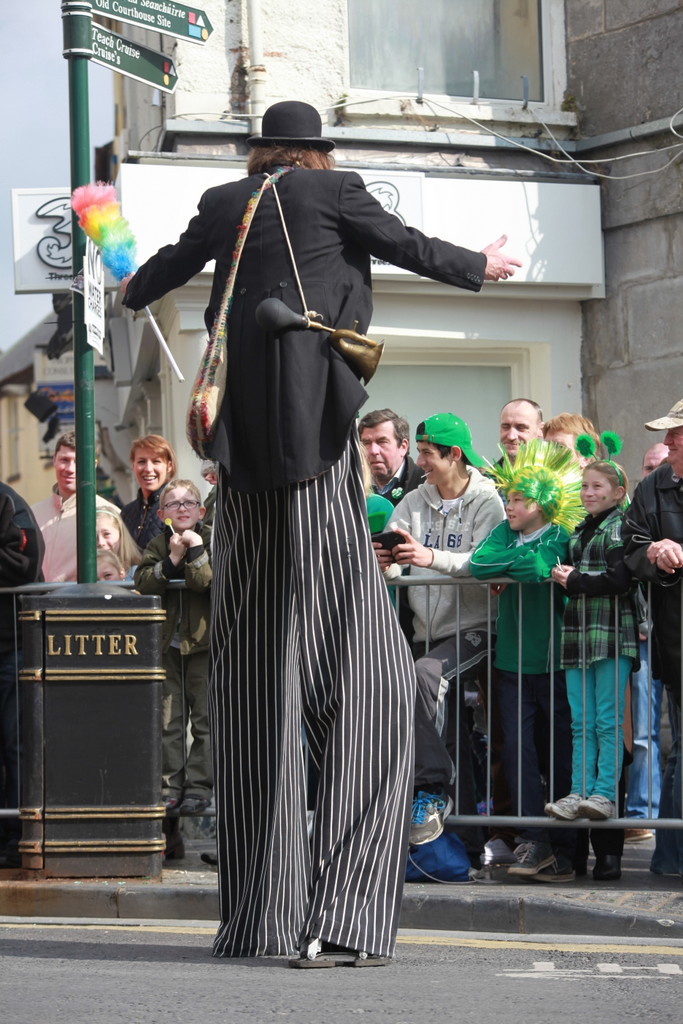
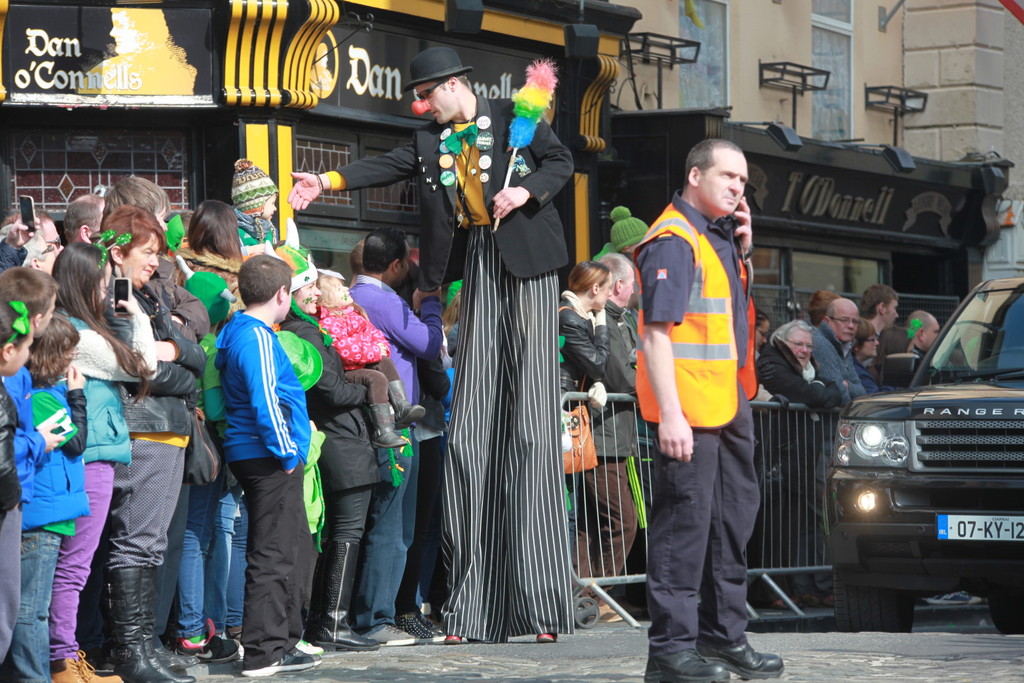
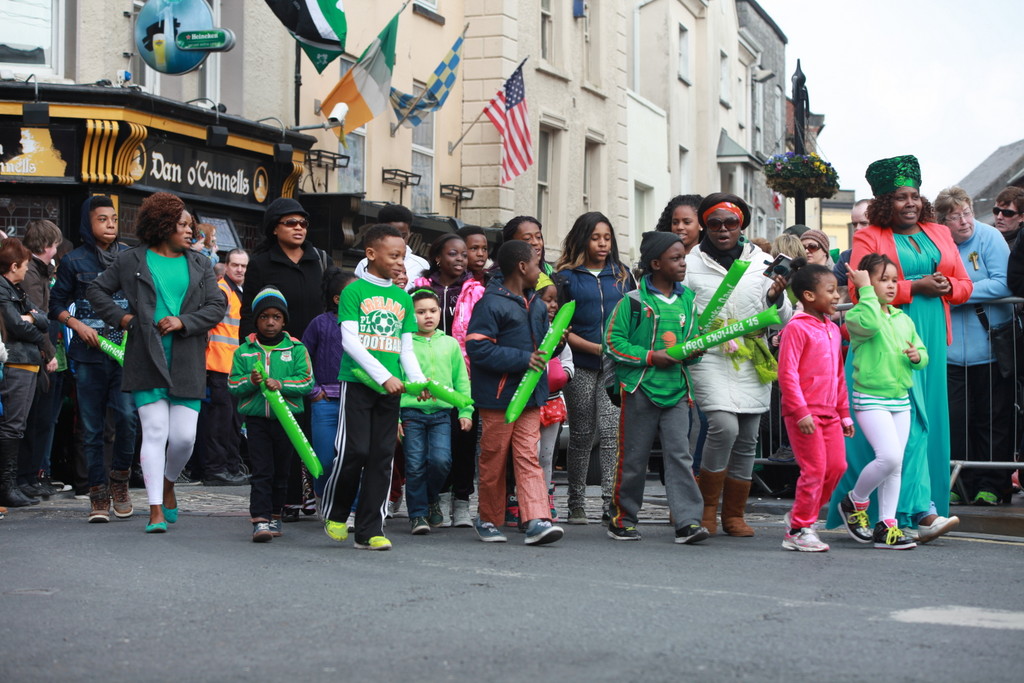
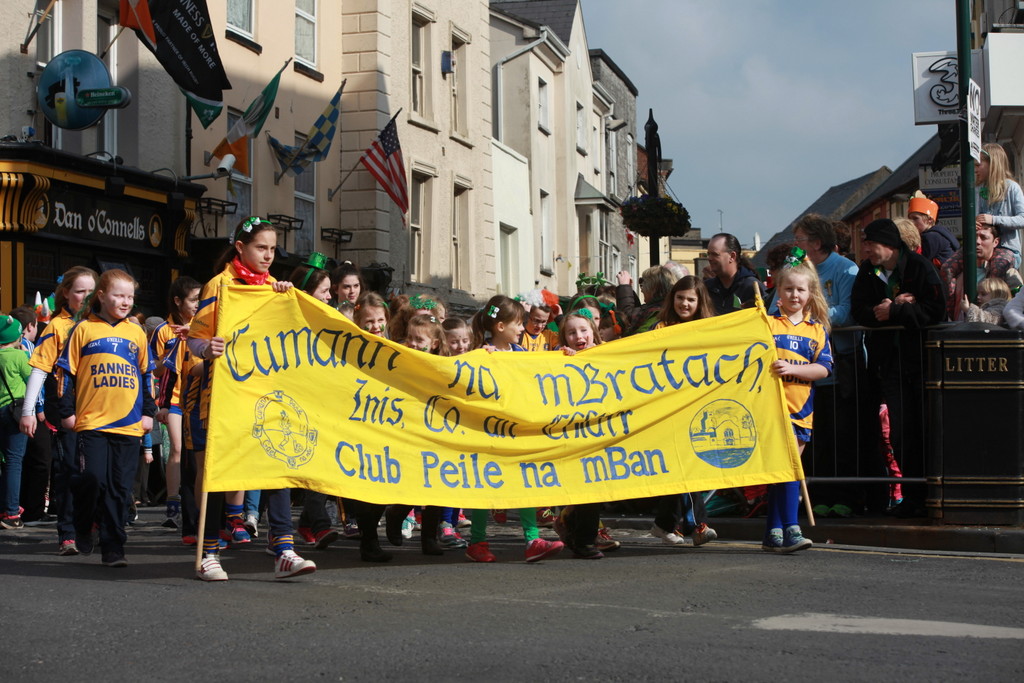
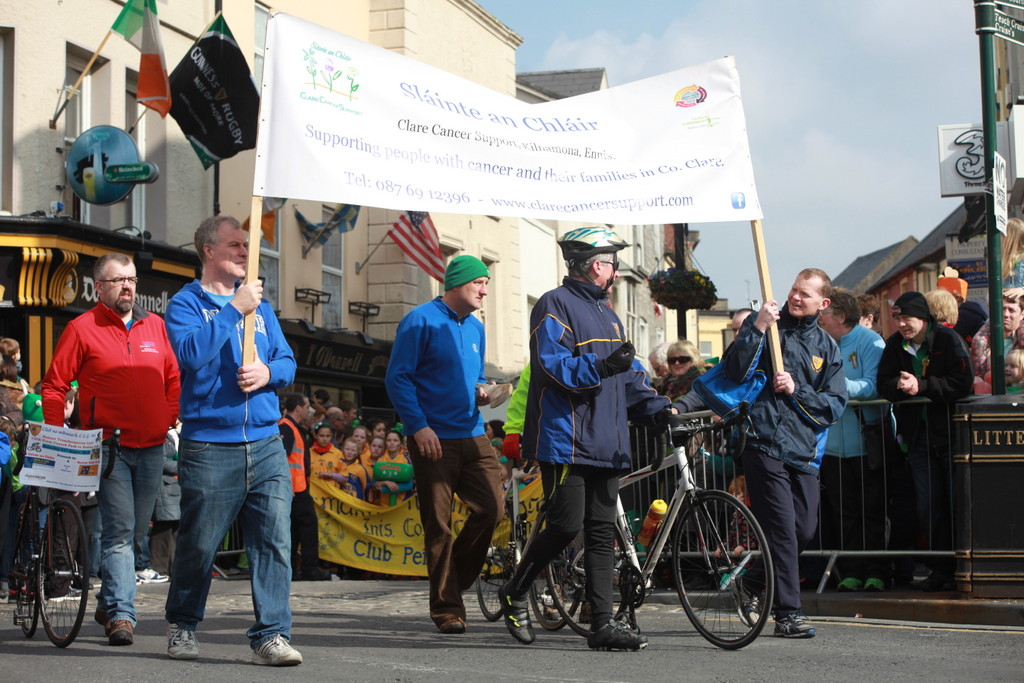
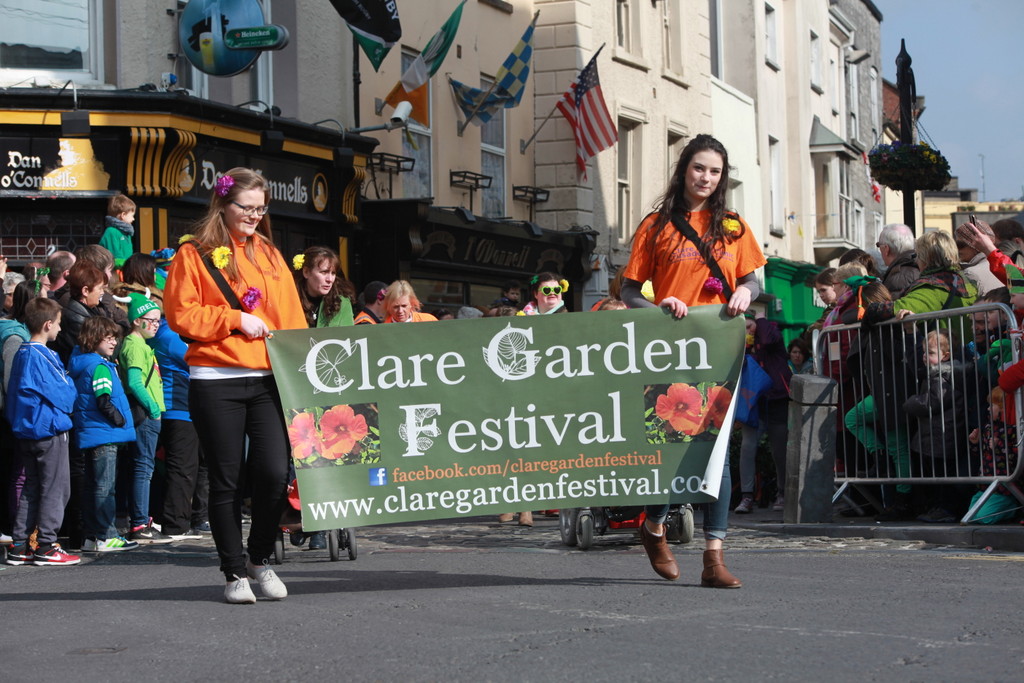
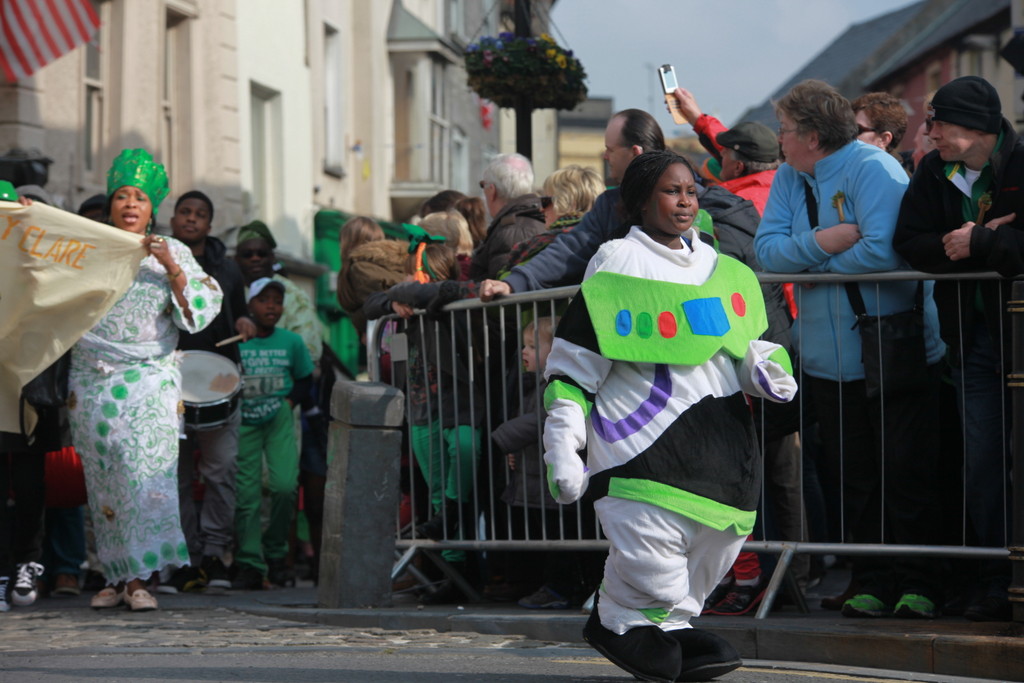
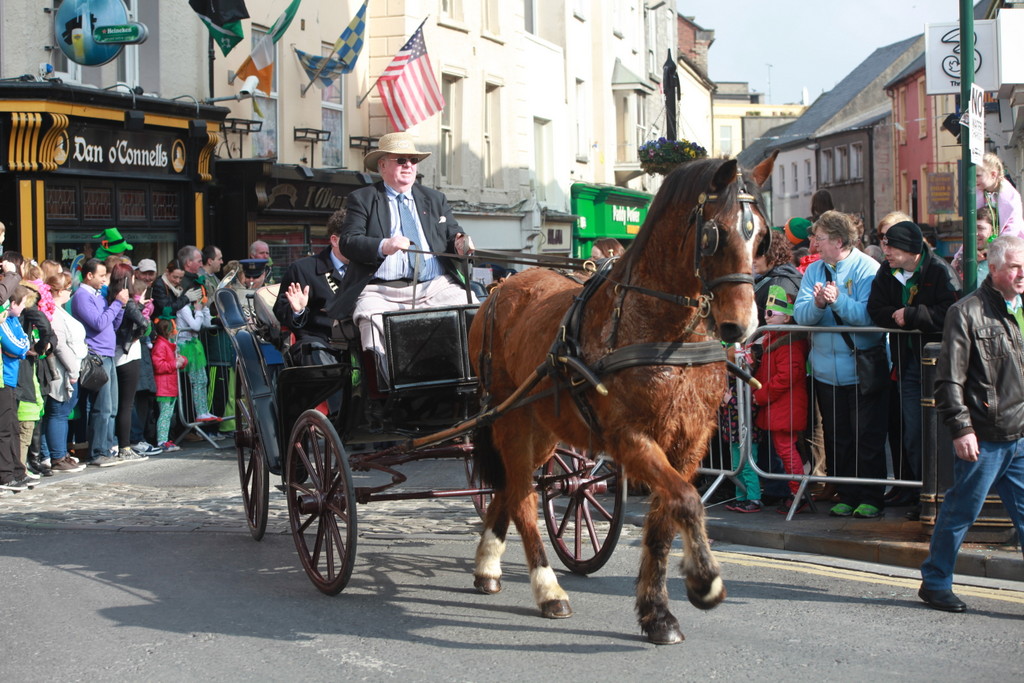
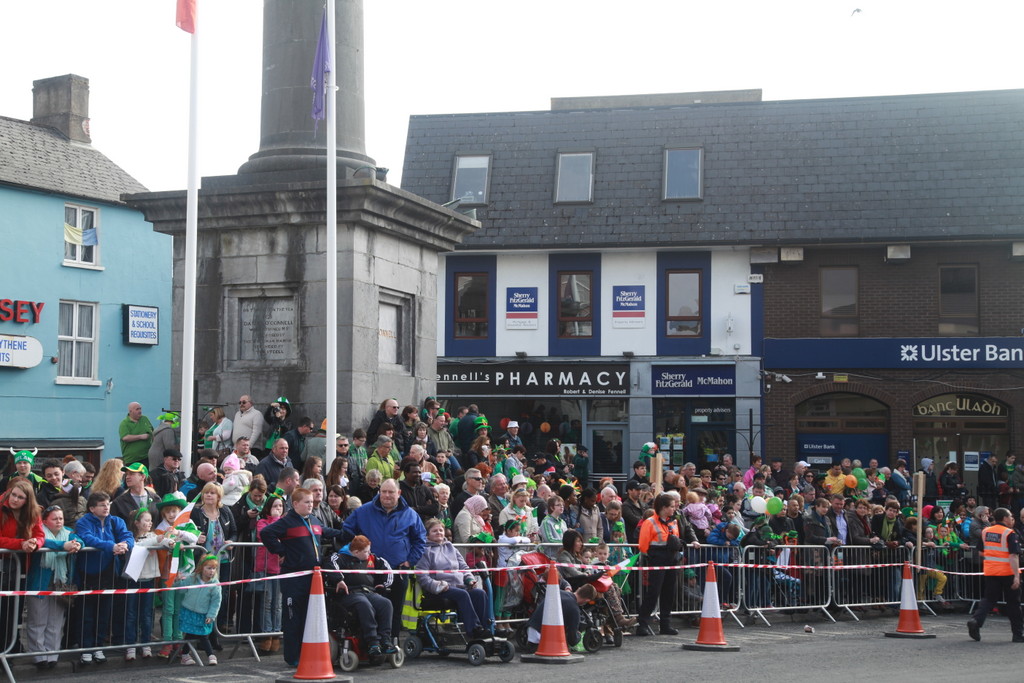
March 17th was a glorious sunny day in Clare so I headed into Ennis. The place was decorated with bunting and flags in preparation for the Parade, which kicked off at 11.00. Parades are a big deal here and every town and village has one. Not as big as Dublin of course which is now supposedly beats that in New York but definitely not as small as the one in Dripsey in Co Cork (which celebrates the fact that it has the shortest parade in the world – 100 yards between the village’s two pubs).

IMG_6486

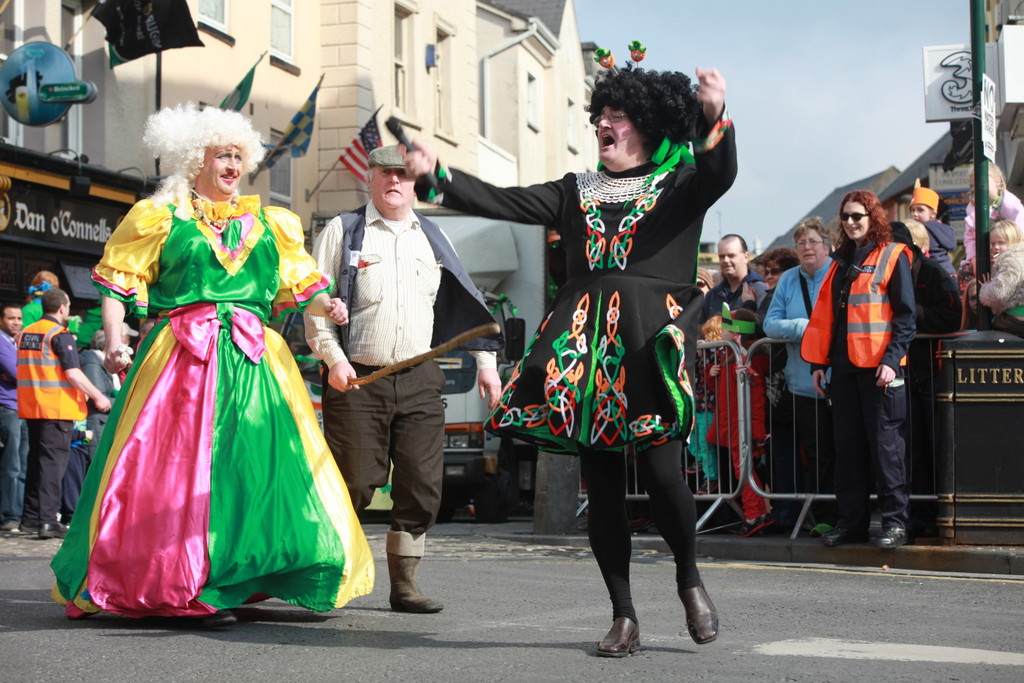
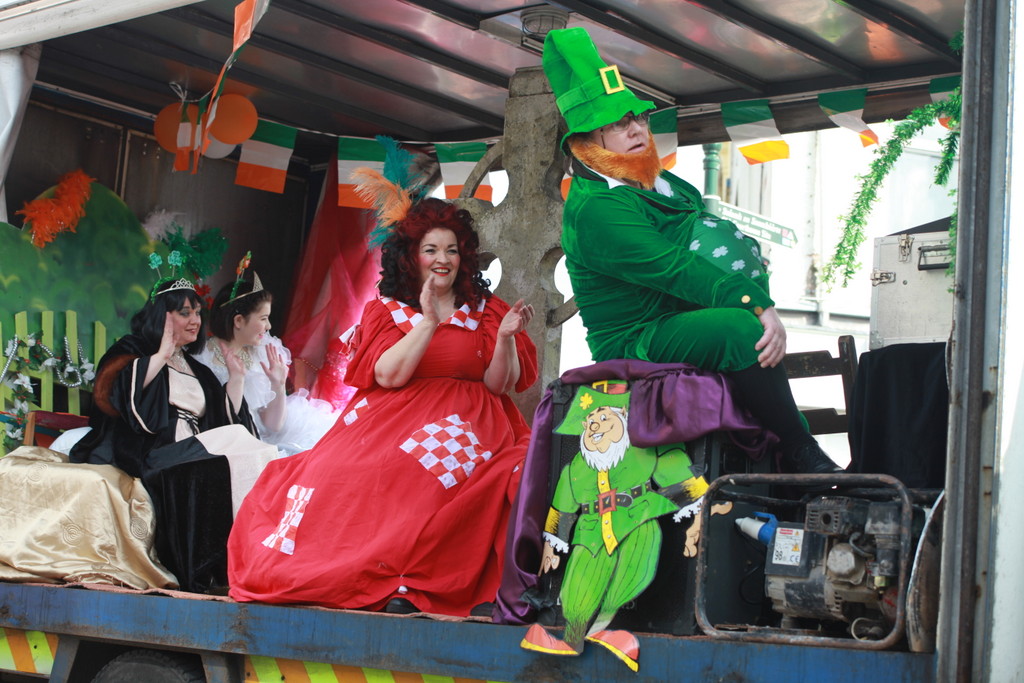
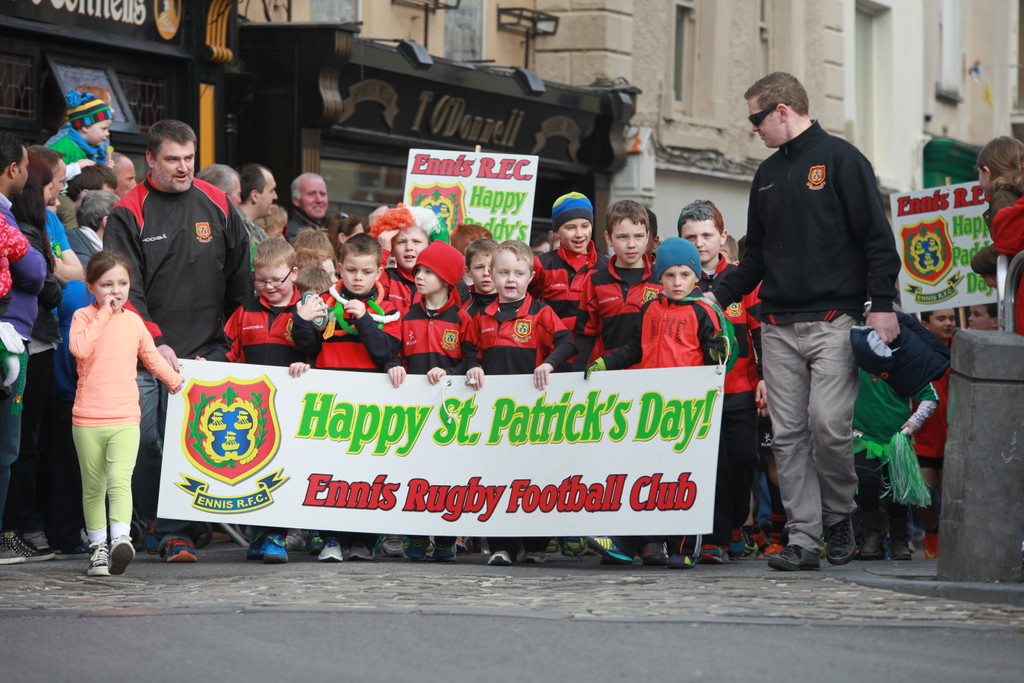
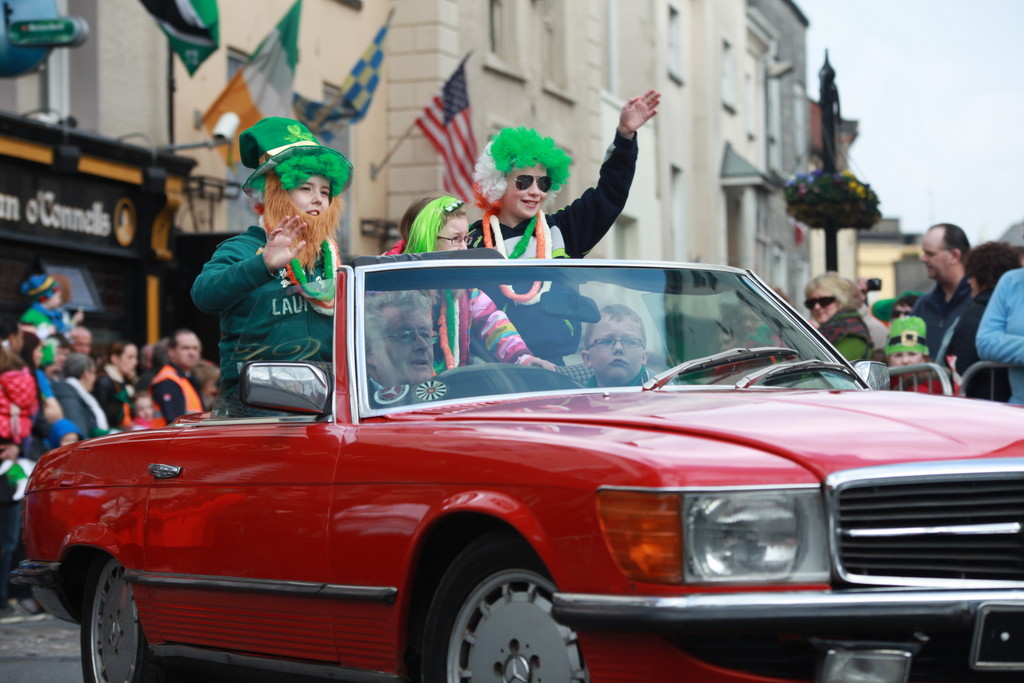
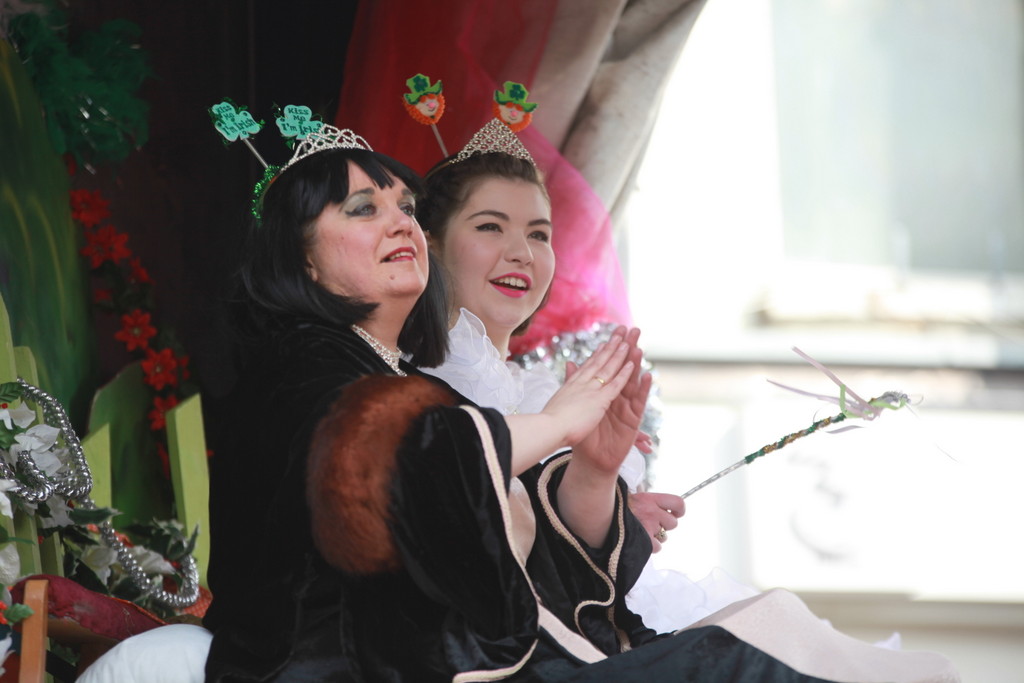
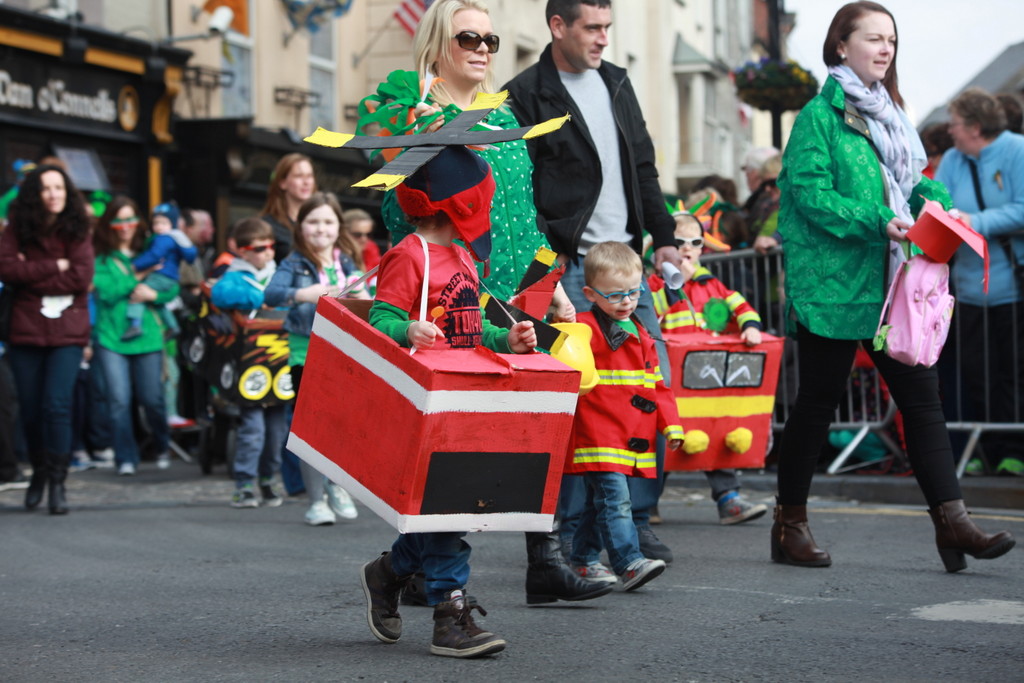
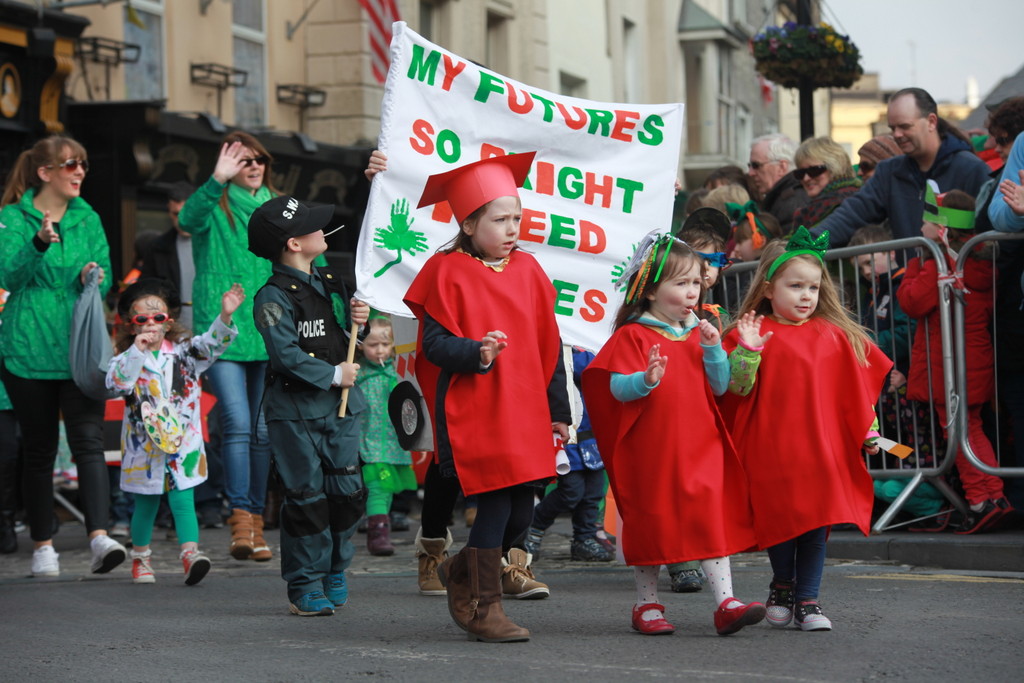
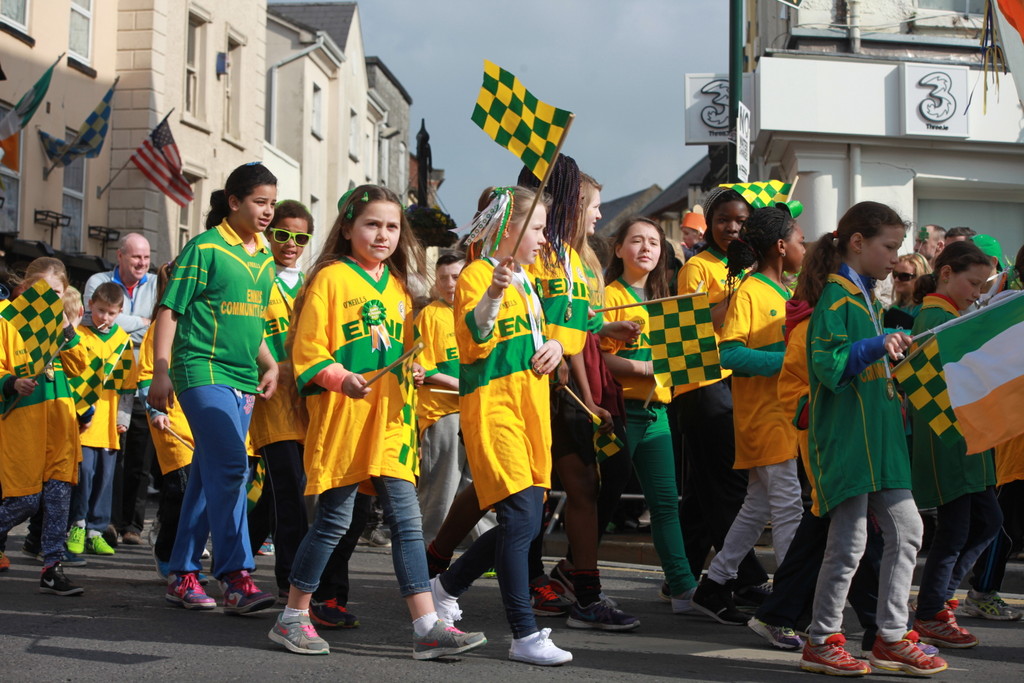
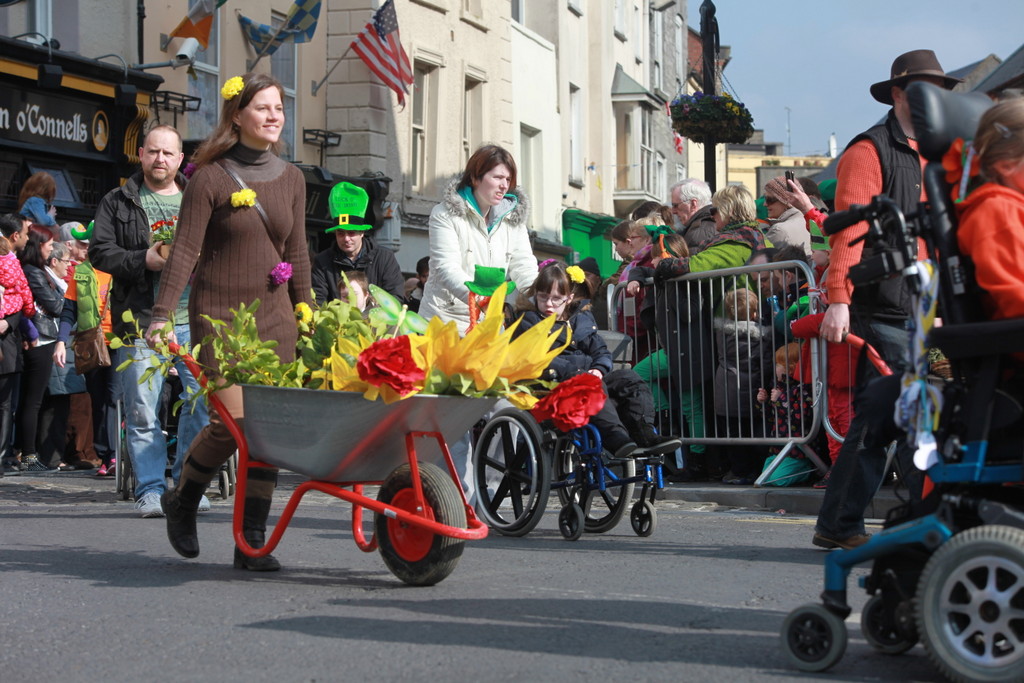
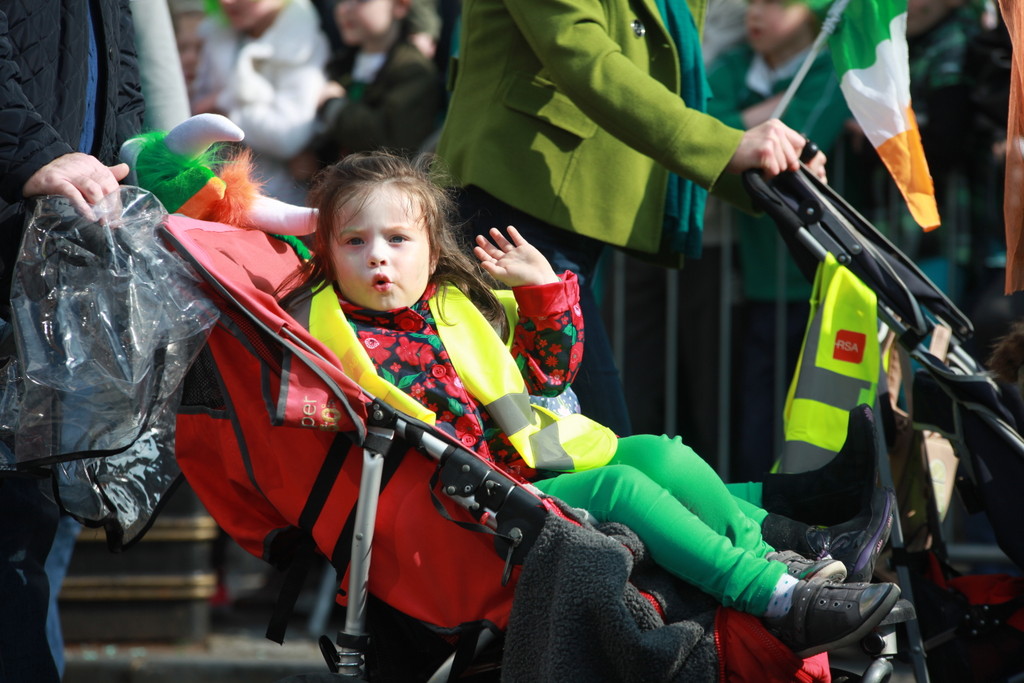
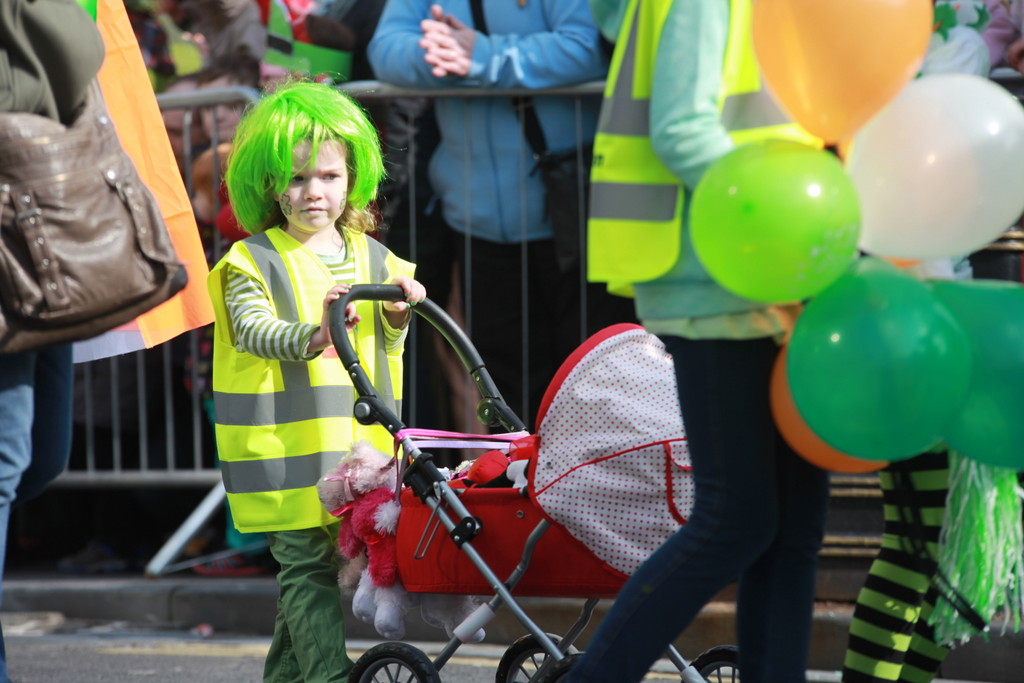
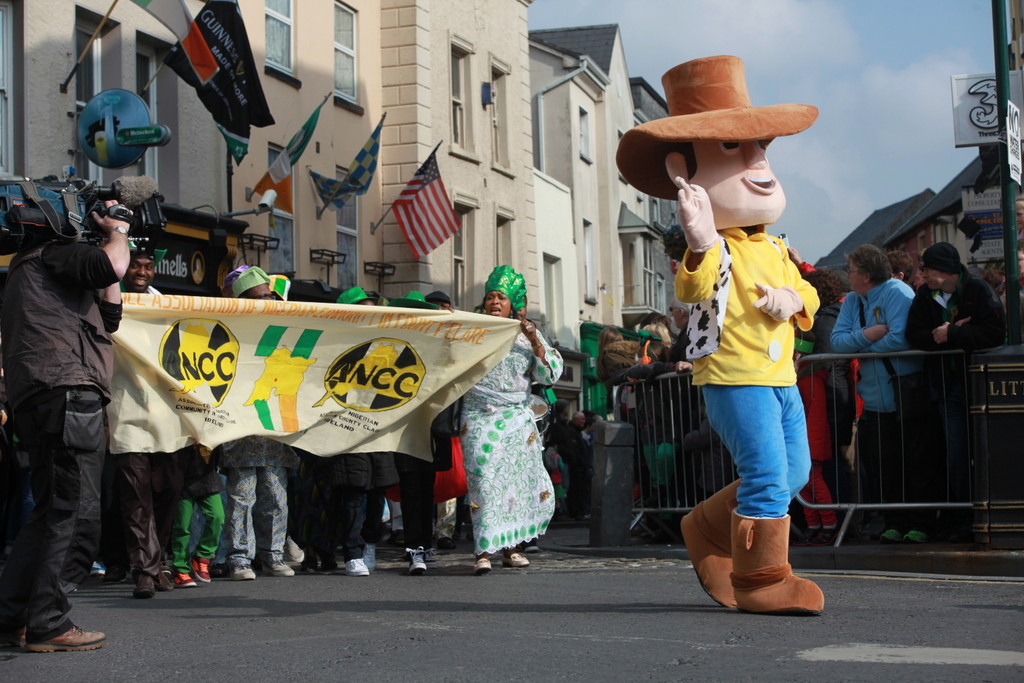
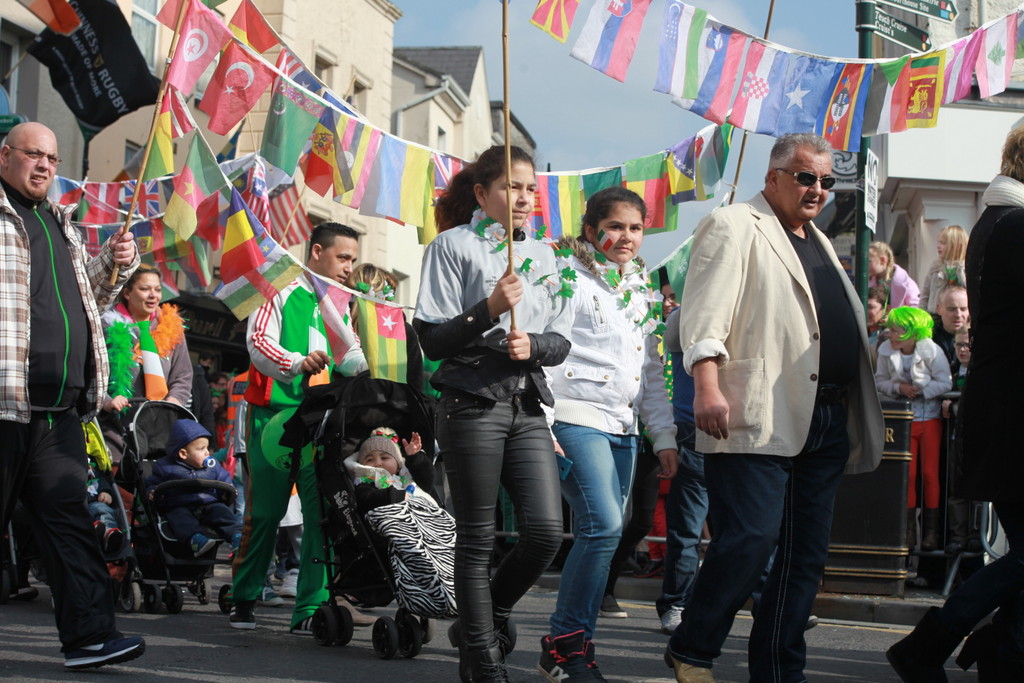
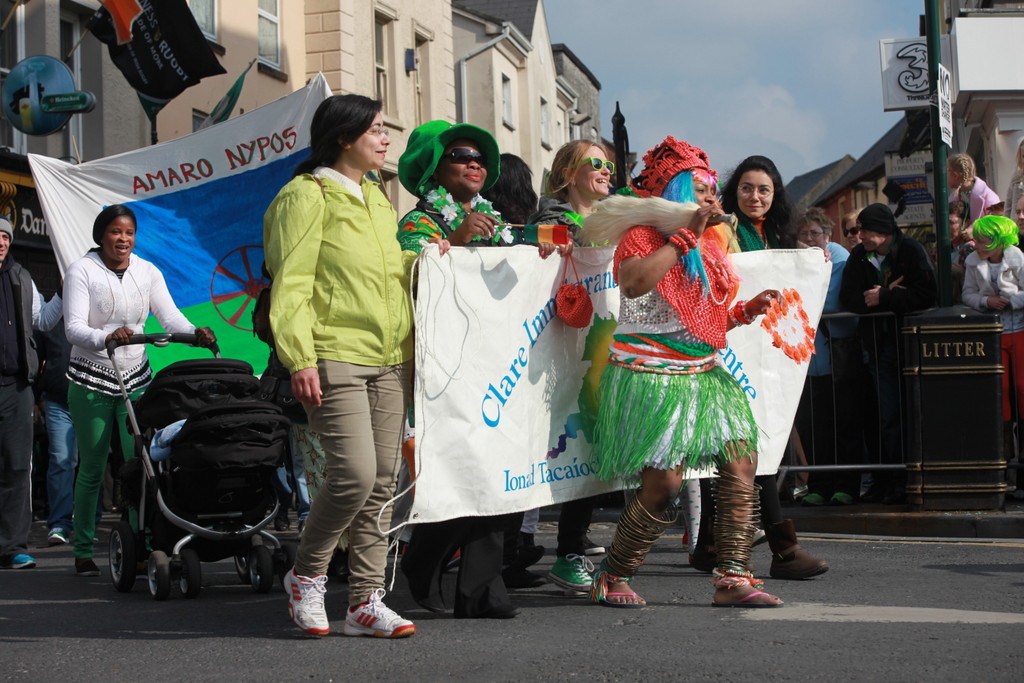
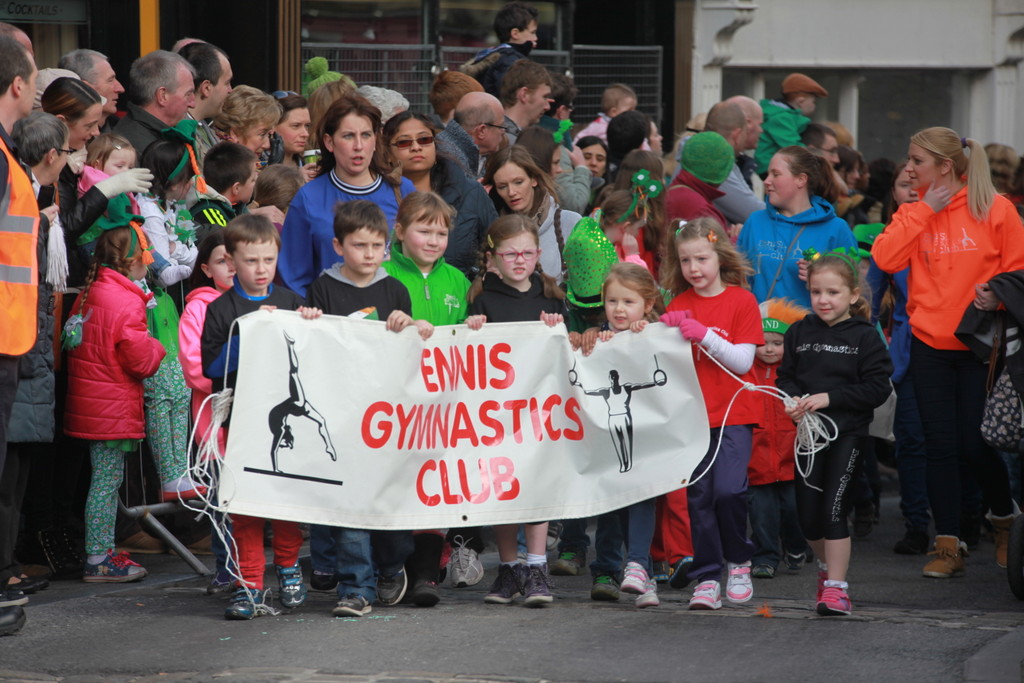
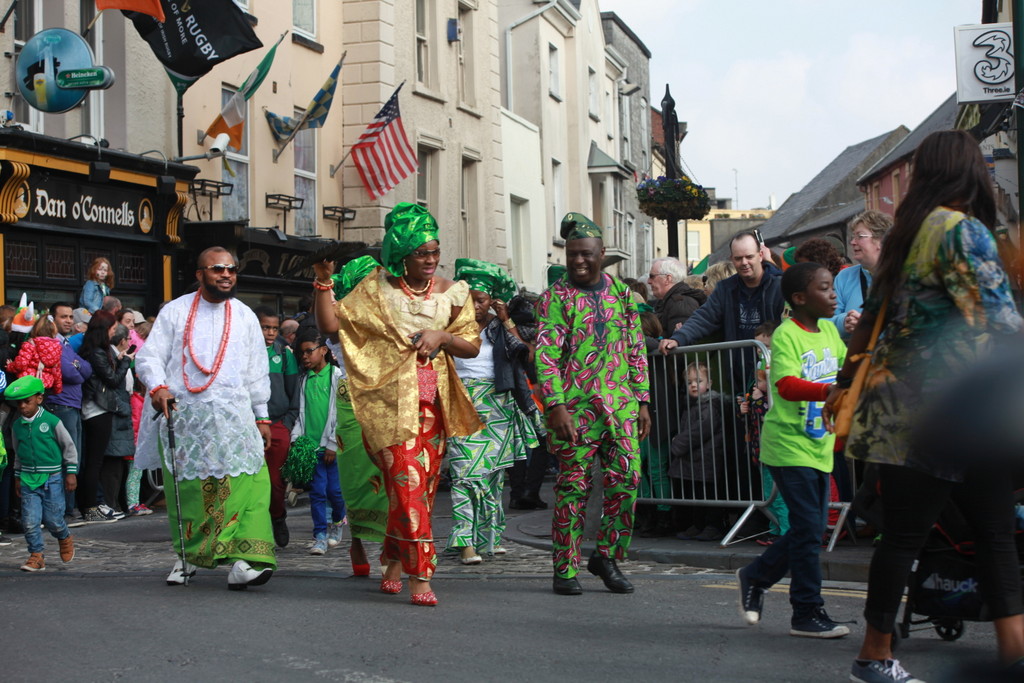
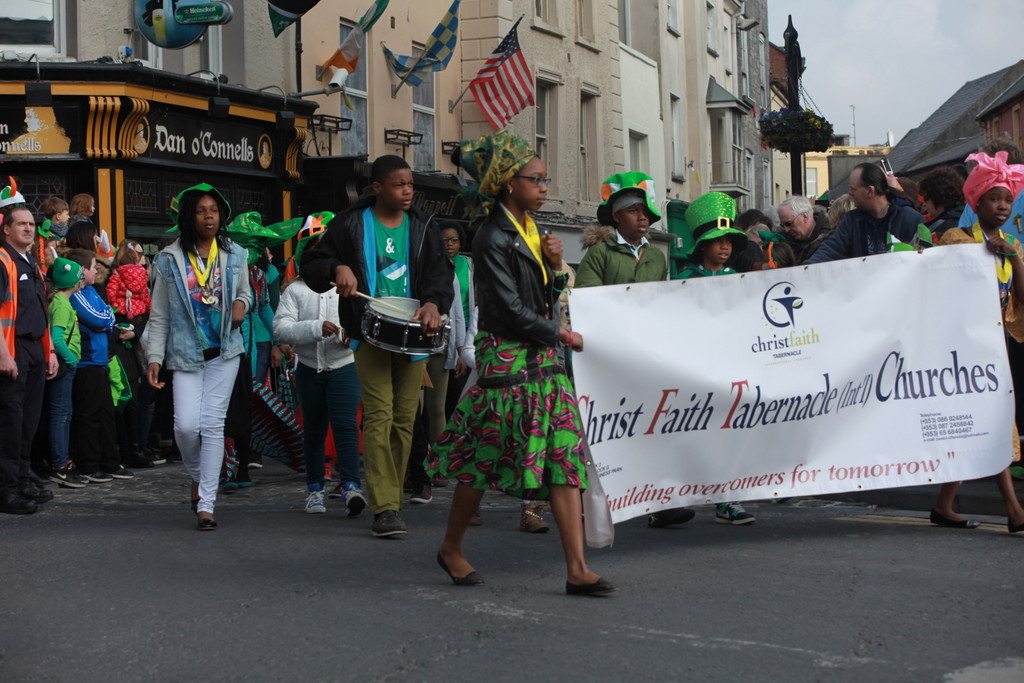
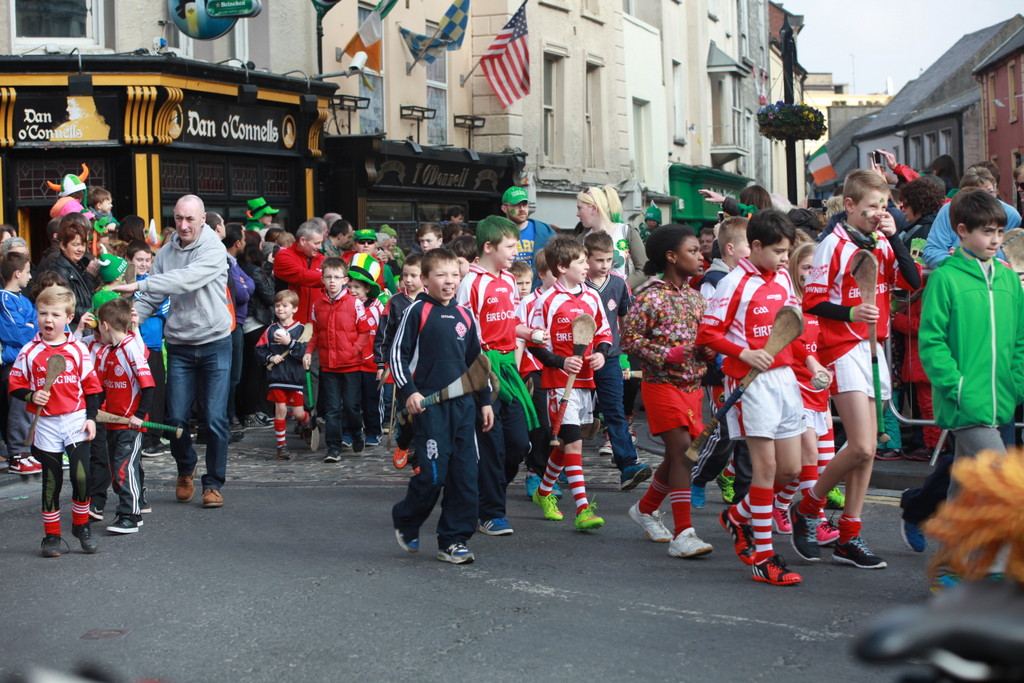
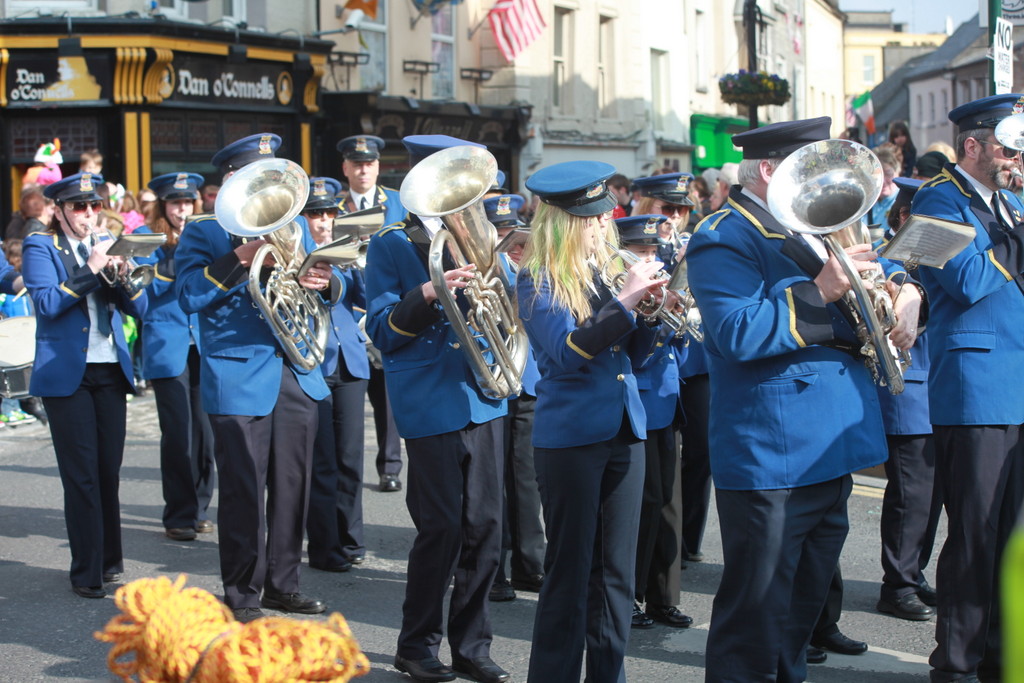
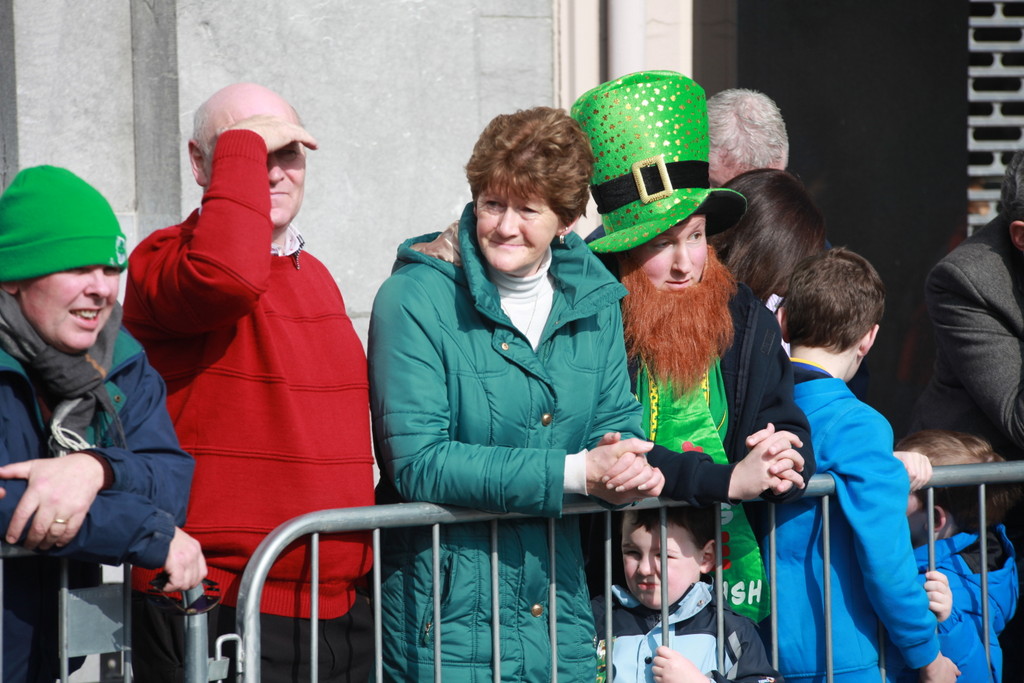
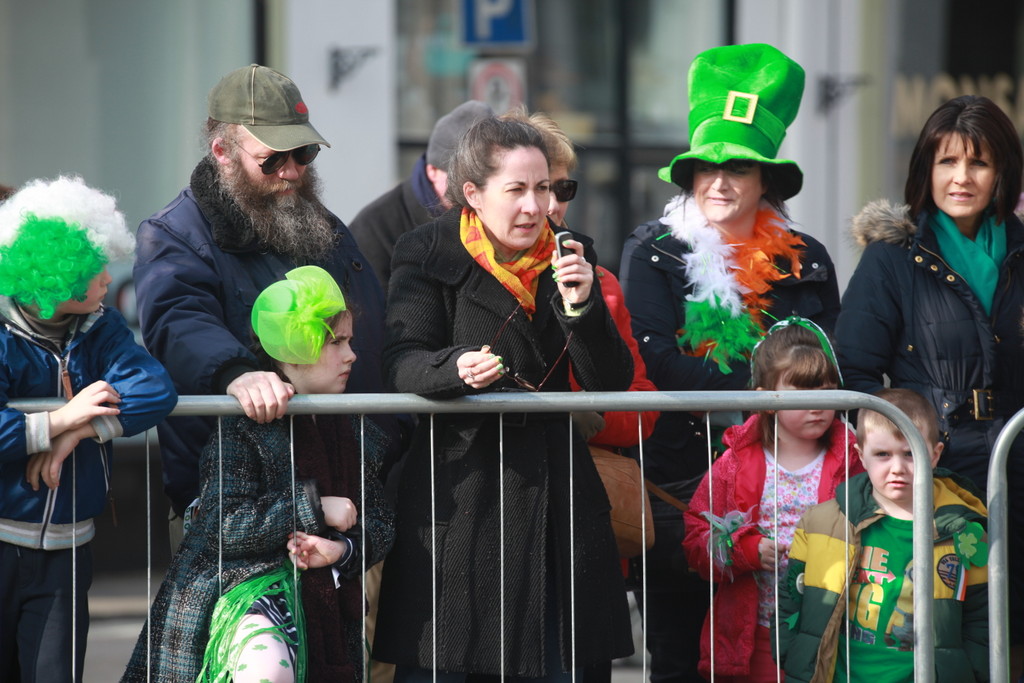
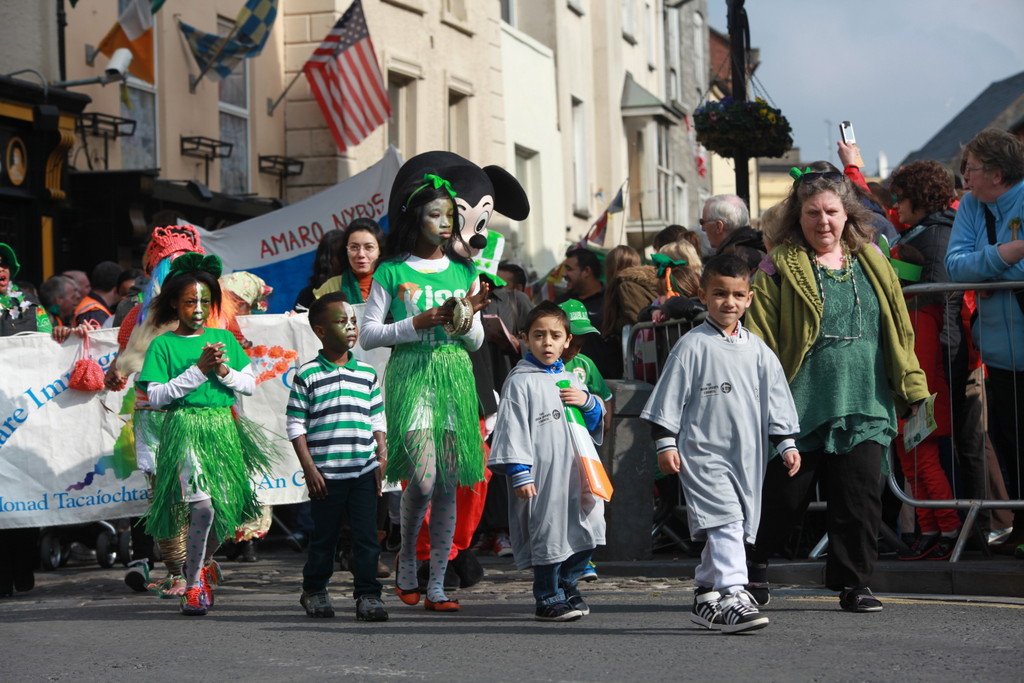
They are often staggered so the limited number of brass bands and prime movers can rotate between the villages. Community groups and schools go to a lot of effort and there are prizes for the best float or display. And everyone dresses up, with green of course being the dominant colour. At least fifty shades of green. Somehow it’s not tacky as it tends to be in Australia. It is the Irish celebrating their Irishness. So I saw nothing incongruous in leprechaun beards and green wigs as I might have in Australia if worn by Australians.

The other thing that struck me as the Parade moved past me was that just as in Australia now, Ireland is a multi-layered society and a quick flick through the photos shows groups with a diversity of ethnic identities. There is a strong representation of support groups for people with special needs. It was quite a window into what is important to the people of Clare. The whole thing is very much a family day and this spilled over into the pubs and restaurants with family groups continuing the celebrations as others geared up for a big night.

IMG_1390 IMG_1402 IMG_1414 IMG_1624 IMG_1614 IMG_1608 IMG_1588 IMG_1583 IMG_1579 IMG_1570 IMG_1556 IMG_1550 IMG_1542 IMG_1541 IMG_1538 IMG_1535 IMG_1529 IMG_1524 IMG_1519 IMG_1512 IMG_1503 IMG_1499 IMG_1487 IMG_1483 IMG_1473 IMG_1470 IMG_1459 IMG_1451 IMG_1446 IMG_1428 IMG_1418 IMG_1375 IMG_1370 IMG_1359 IMG_1357 IMG_1349 IMG_1333 IMG_1326 IMG_1323 IMG_1307 IMG_1293 IMG_1284 IMG_1278 IMG_1273 IMG_1270 IMG_1259 IMG_1252 IMG_1242 IMG_1234 IMG_1224 IMG_1221 IMG_1213 IMG_1210 IMG_1205 IMG_1199 IMG_1190 IMG_1187 IMG_1184 IMG_1182 IMG_1176 IMG_1174 IMG_1162 IMG_1157 IMG_1155 IMG_1137

I had heard there would be tunes all day at Cruises so at 1:00 I joined Eric and Hugh Healy with Brian O’Loughlin and Catherine for some great tunes.  Energetic and fast – great fun. Accompanied as we were by a young lad who practiced his dance steps continuously for well over two hours! Gradually the families left the pub and by 4 pm there was a change in musicians to Eoin O’Neill and Quentin Cooper and friends.  The pub was rapidly filling up but at 6:00 I decided to head back to Friels at Miltown Malbay where there was a session in full swing when I arrived with with Damien O’Reilly, Caoilfhionn Ni Fhrighil, Eamonn O’Riordan, Brian Mooney and Thiery Masur .  The pub was packed like I haven’t seen it since Willie Week and there was plently to like about the music. At 8.30 it wound up and my next stop was Liscannor where Ennis band Los Paddys de las Pampas were playing at Egans.  I have to say I had never heard them before and wasn’t sure what to expect – Ireland meets South America?  But with talent like Adam Shapiro and Kirsten Allstaff involved it had to be good.  And what a great night.  The music was surprisingly infectious and even a boring old fart like me was up on the dance floor bopping along.  There were some great cameos from Clara Buettler and two flamenco dancing sisters (can’t remember their names) and then Lenka Hoffmanova took to the floor looking resplendent in her dress of orange white and green.  Flamenco meets sean nos!  Great stuff!

Now that was how St Patricks Day should be celebrated.

IMG_1629 IMG_1742 IMG_1736 IMG_1734 IMG_1722 IMG_1718 IMG_1717 IMG_1713 IMG_1705 IMG_1700 IMG_1685 IMG_1678 IMG_1667 IMG_1655 IMG_1643


Categories: Real Ireland, Sessions, Trad Irish Music | Tags: , , , , , , , , , , , , , , , , , , | 4 Comments

Road Bowls Armagh

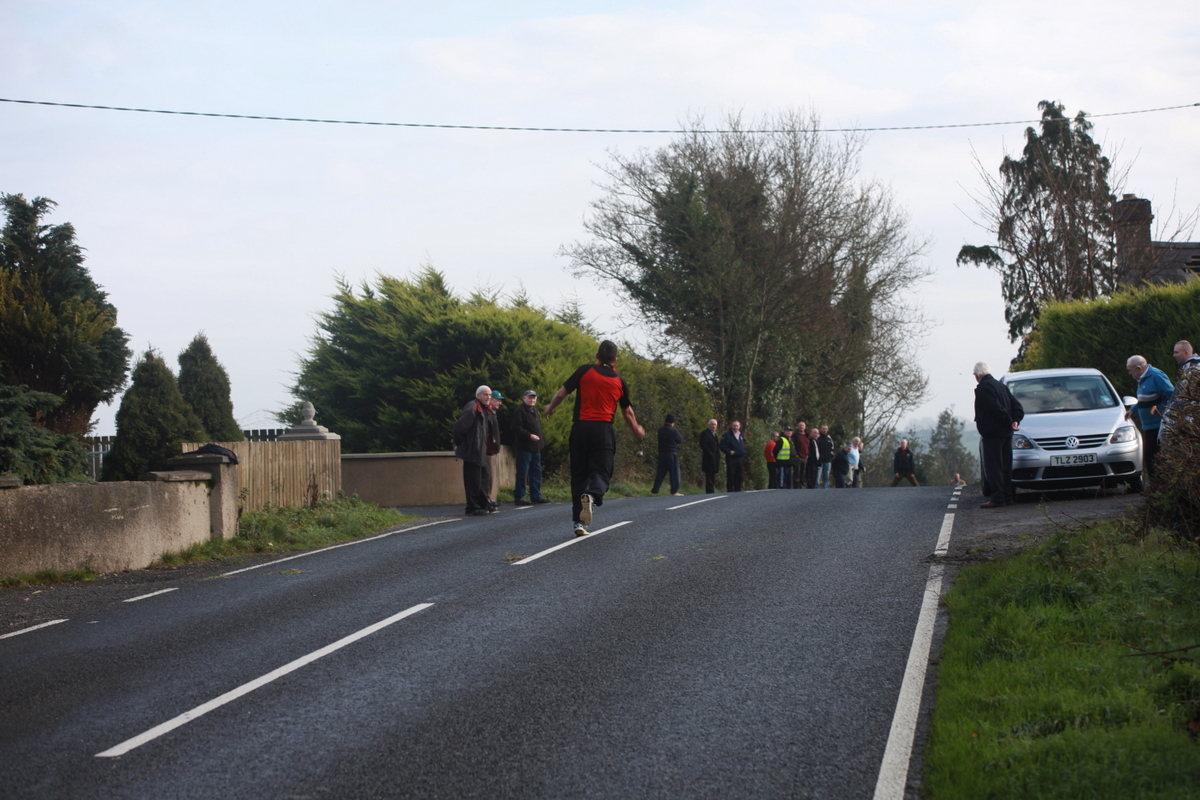
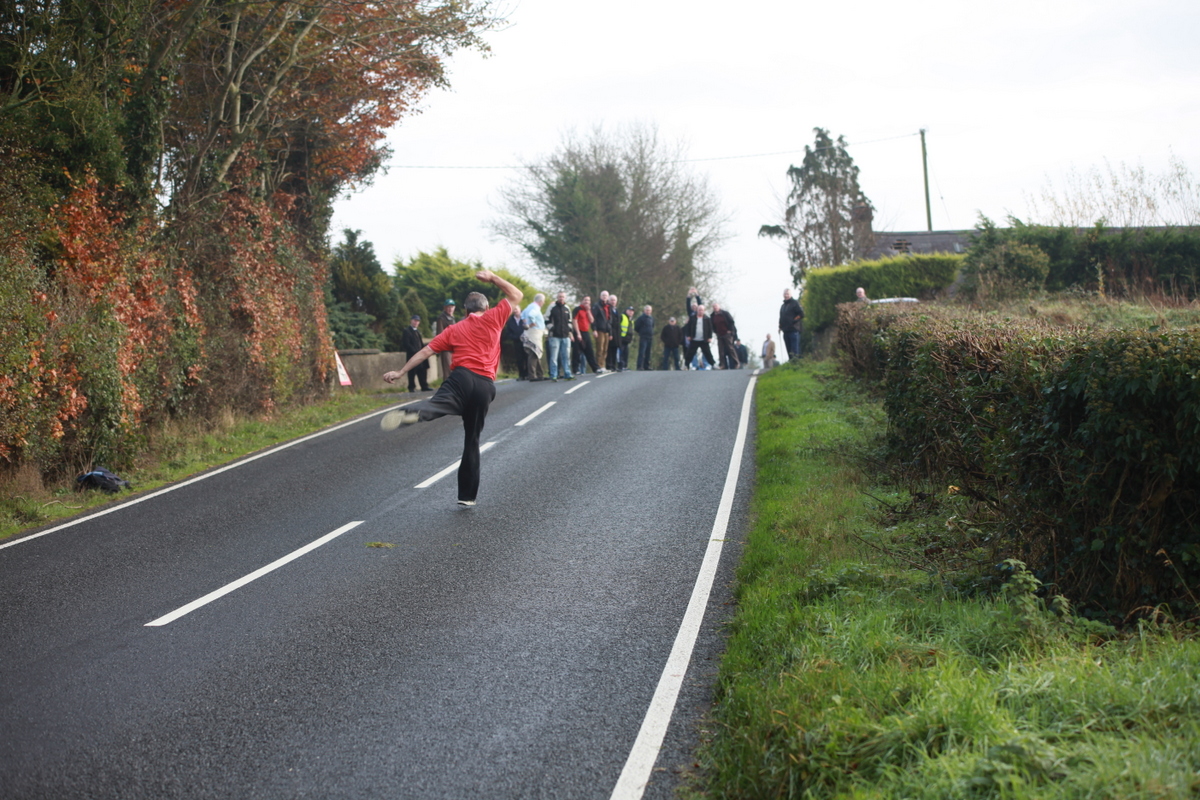
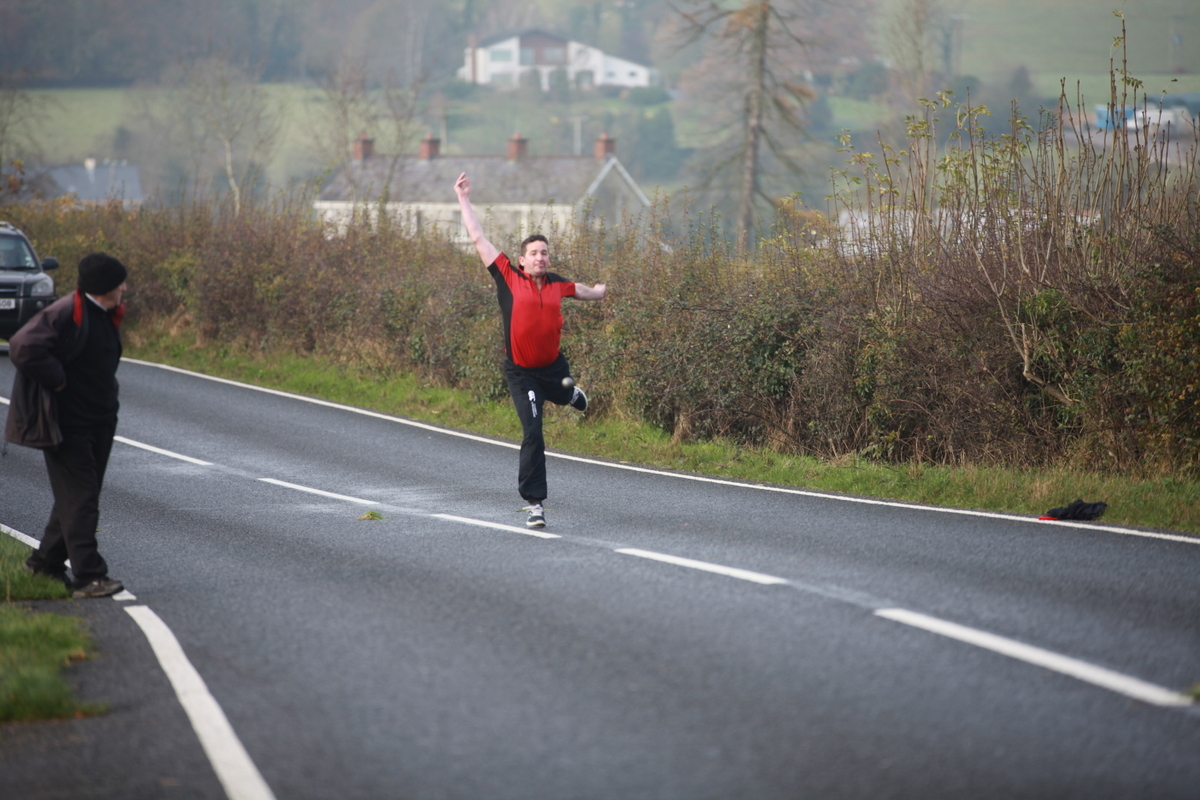
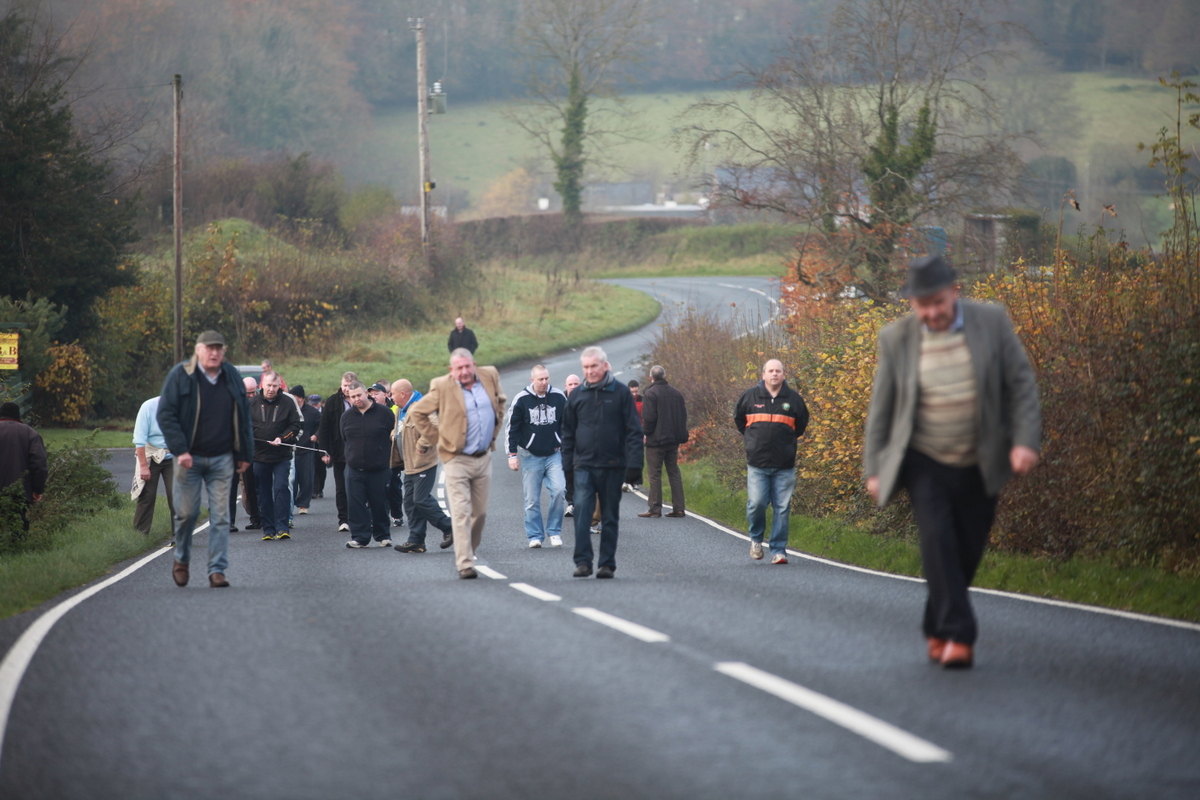
During my recent visit to the Armagh Piping Festival I went for a drive through the pretty countryside around Armagh.  As I noted elsewhere it is very “English” and very ordered, in contrast to the wildness of Clare, and the last vestiges of Autumn gave it a colourful tinge that would soon disappear.  About ten kilometres west of Armagh, I was privileged to encounter a game of road bowls (or ‘long bullets’ as it is also known in Armagh). This involves two players who project a steel ball about the size of an orange along a predefined course on public roads with the aim of reaching the finish line in the fewest throws. A brilliant concept when you think about it, except for the obvious hazards.  A crowd of participants (all men) follow the progress. Some of these men seem to have a specific role with one advising the thrower and another standing with his legs apart and arms up in the air to show the best throwing line. Others are charged with finding the ball when it leaves the road and disappears into the long grass with one carrying a 7 iron for this purpose. The end point of the throw (which is where the ball comes to rest, not as you would expect where it leaves the road) is marked with a pile of grass placed on the road and this becomes the next throwing point. There is much barracking and I was told there was significant betting though I saw no evidence of this. The throwing requires a degree of athleticism and great distances are achieved. An athleticism not however displayed in the assembled crowd, except maybe in dodging the speeding cannonball at the last minute – but nevertheless what a great excuse for a Sunday stroll.

All the participants seemed comfortable with the obvious dangers inherent in a crowd of twenty men standing in the middle of a narrow twisting and hilly Irish road. There seemed however to be a tacit understanding between drivers and pedestrians and this was entirely consistent with the great other Irish leisure activities that I have observed all over the country, such as stopping your car in the middle of the road for a conversation oblivious to the waiting traffic or standing in the doorway of a pub to have a cigarette ensuring no one can get in or out, or parking on double yellow lines (which seems to be ok if you put on your hazard lights). Don’t you love it?

One man stopped to tell me that I shouldn’t park where I had as the Guards will book me. I looked again and sure enough there was a tiny No Parking sign in the lane where I had stopped. I was thoroughly bemused that I might get booked for parking miles from anywhere while the law turned a blind eye to the obvious hazard of using a public roadway for a sporting event.

I felt lucky to have witnessed this. An event that I have only seen in documentaries and to have experienced this insight into an activity that dates back to a very different country in the 17th Century. Ireland continues to surprise and enthral me.

IMG_1124 IMG_1111 IMG_1109 IMG_1099 IMG_1090 IMG_1087 IMG_1084 IMG_1079

Categories: Real Ireland | Tags: , , , , , , , , , | 1 Comment

Spancil Hill – “It being the 23rd of June”

Yesterday I found myself at the Cross of Spancil Hill. I wasn’t dreaming and I wasn’t in California. Look all you like and you won’t see a Cross, which I always imagined in my mind’s eye as I sung the song that made the place famous. In Ireland, as I soon discovered, ‘crossroads’ are simply called a ‘cross’ and it just refers to this.

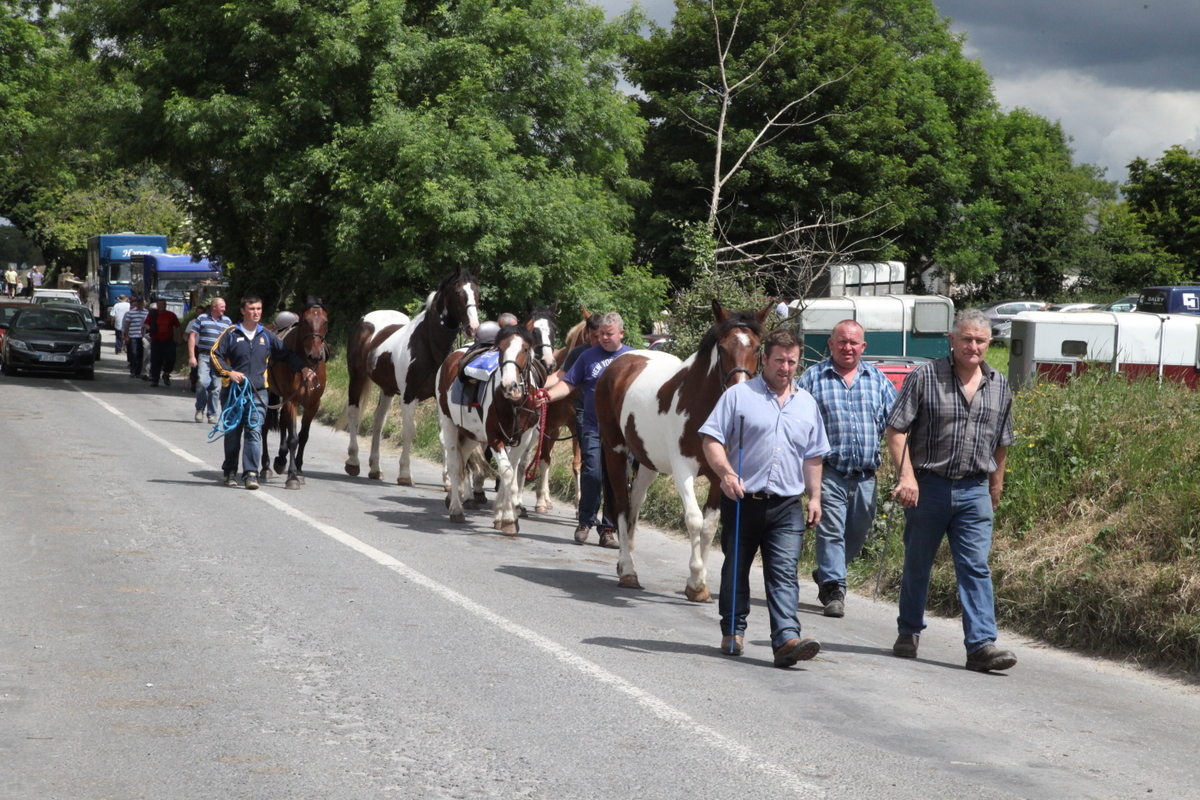
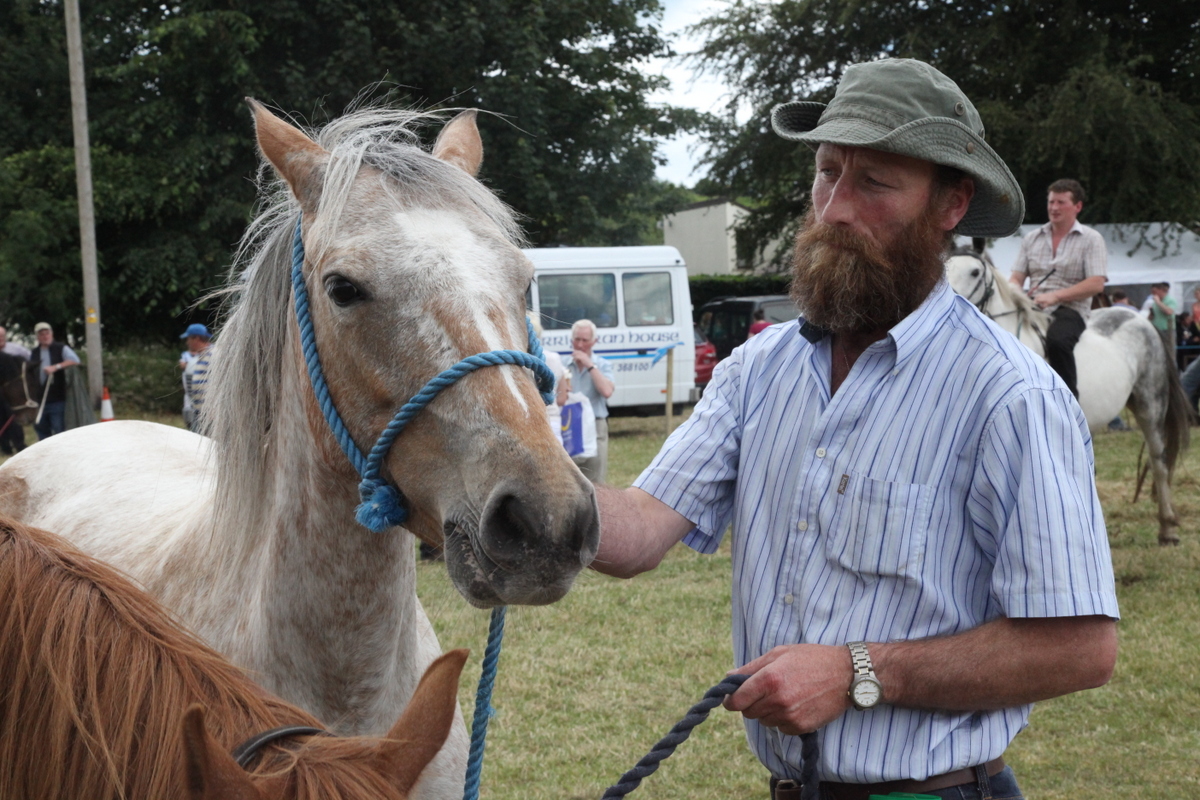
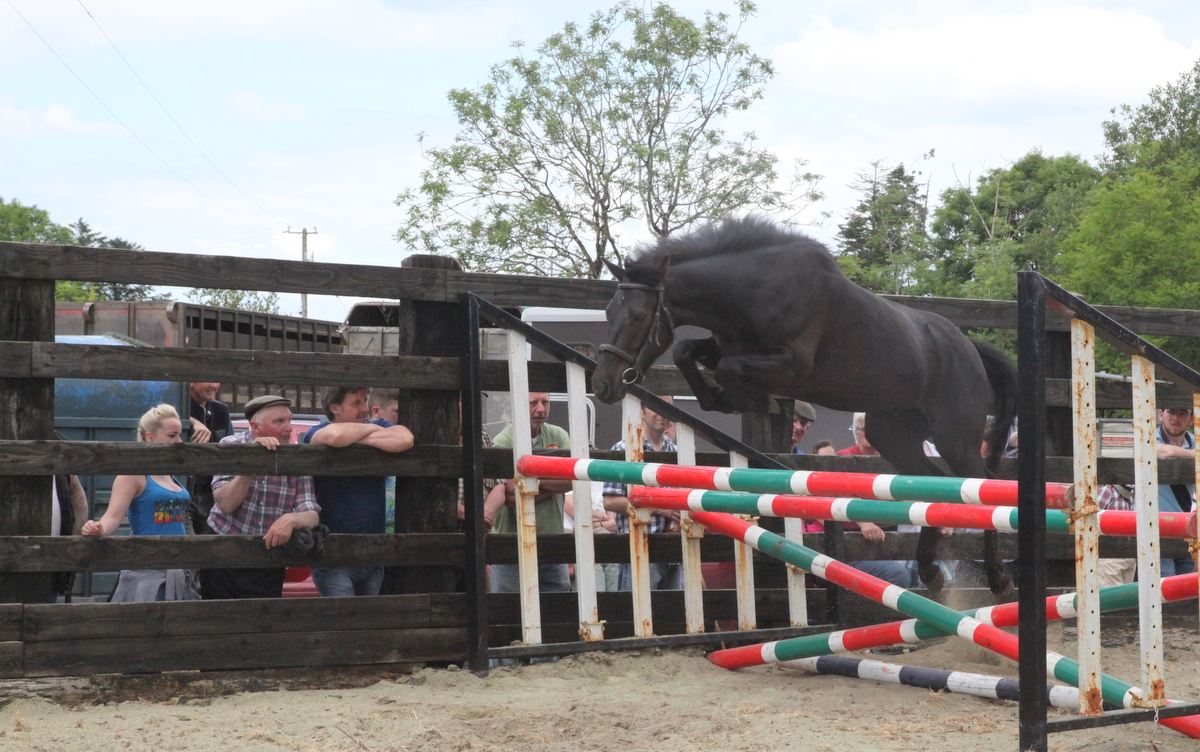
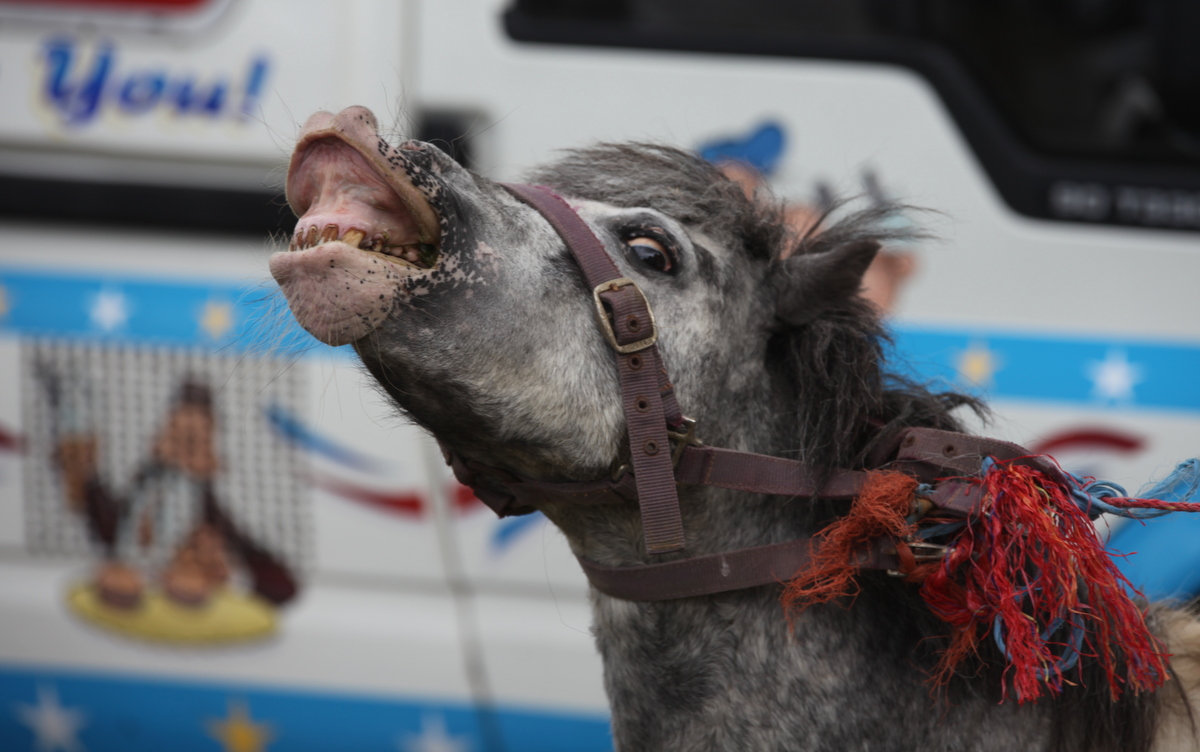
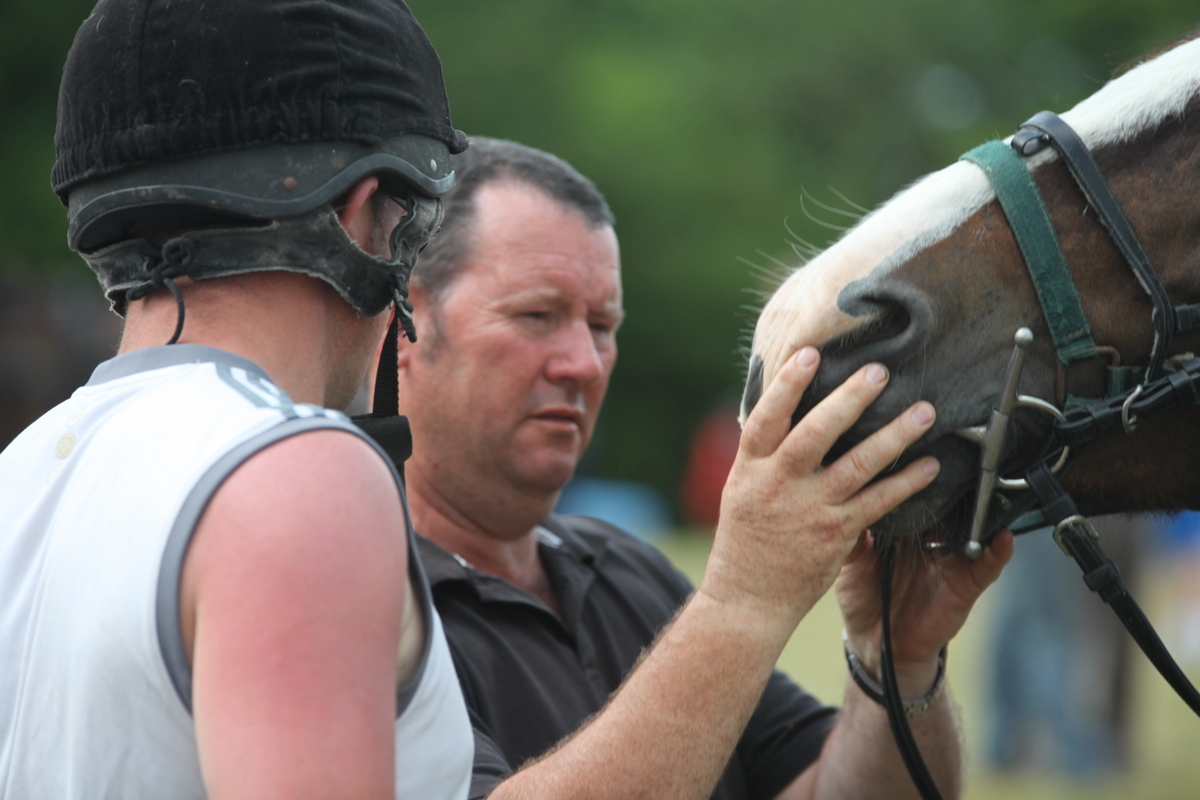
The Fair at the Cross of Spancil Hill was one of the most important in Ireland during the 1800s and was of course made famous by Michael Considine’s wonderful song which referred to above. It still is one of Ireland’s largest horse fairs. Have a listen to the full version sung by Robbie McMahon.

https://www.youtube.com/watch?v=qGKJDxjIFBc

Differs considerably to that made popular by the Dubliners.

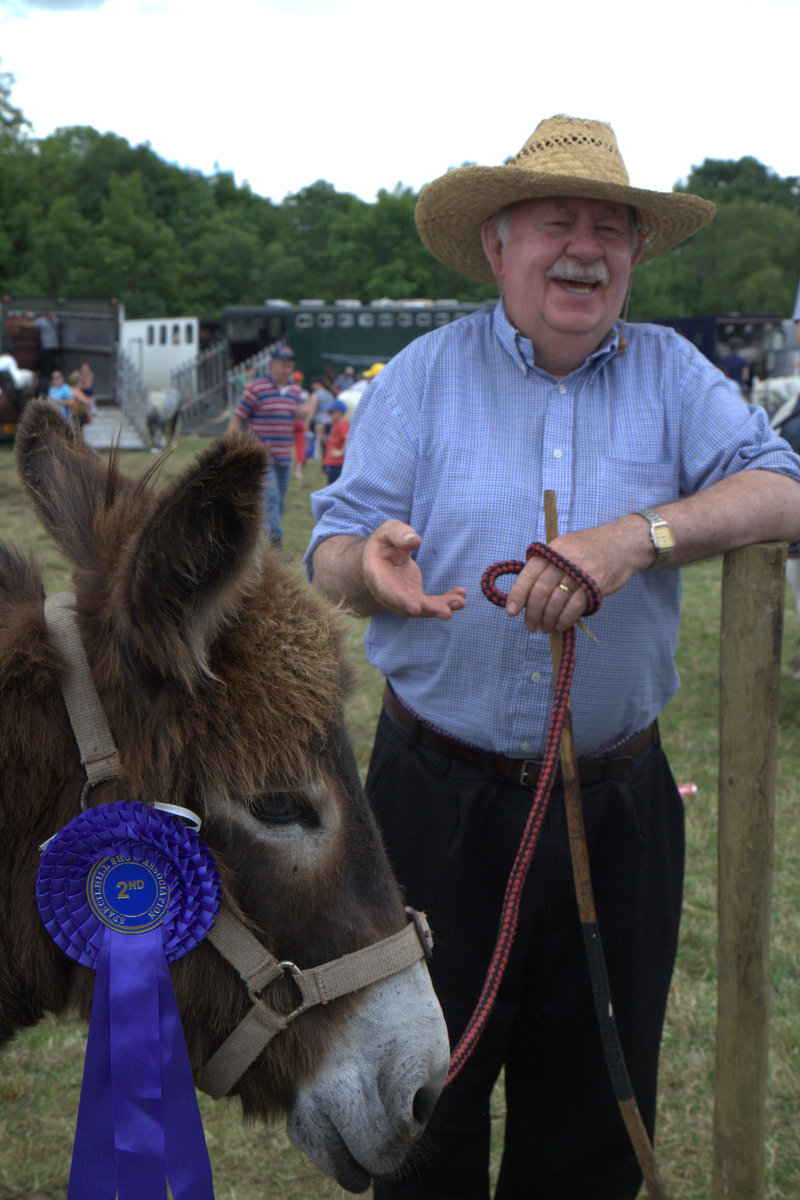
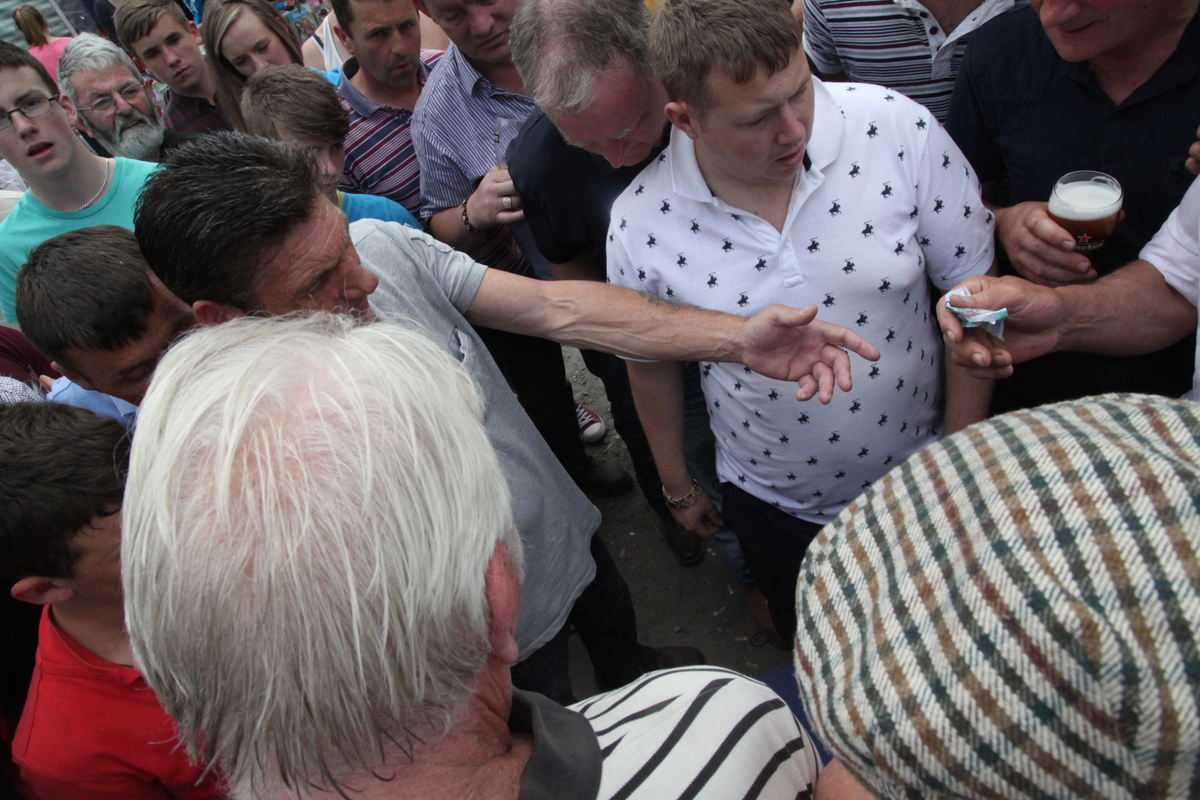
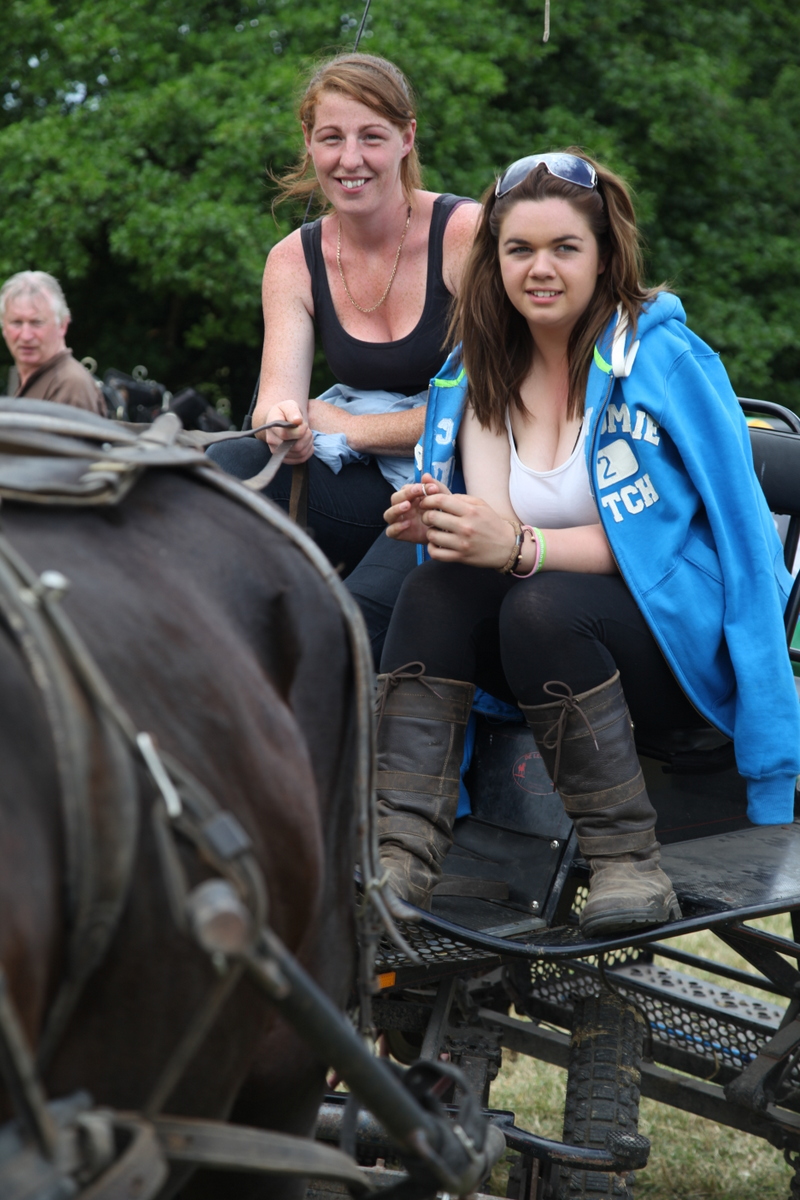
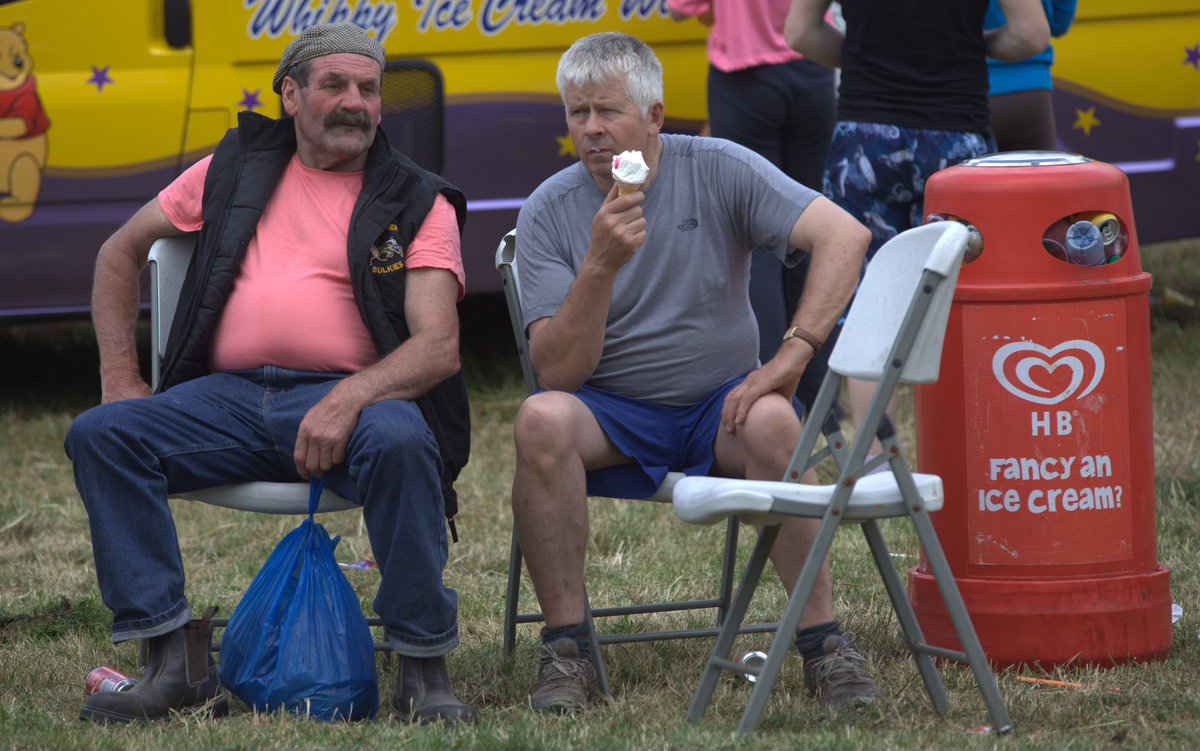
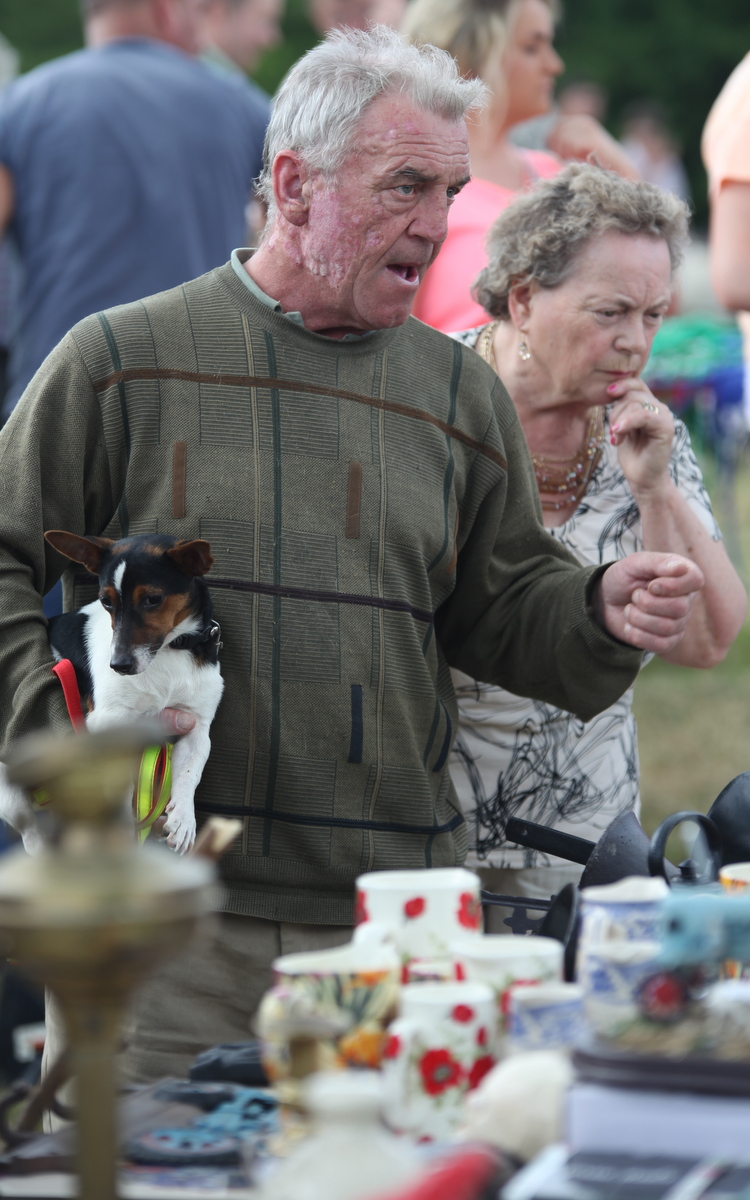
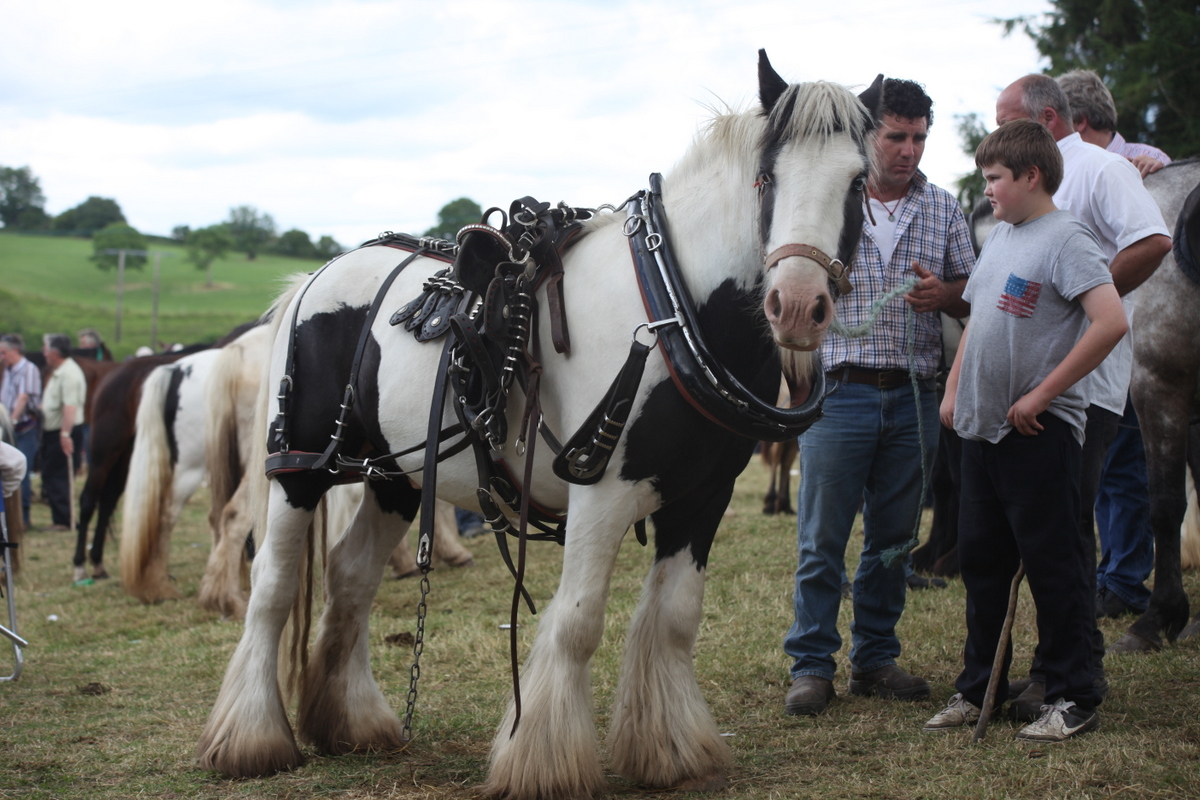
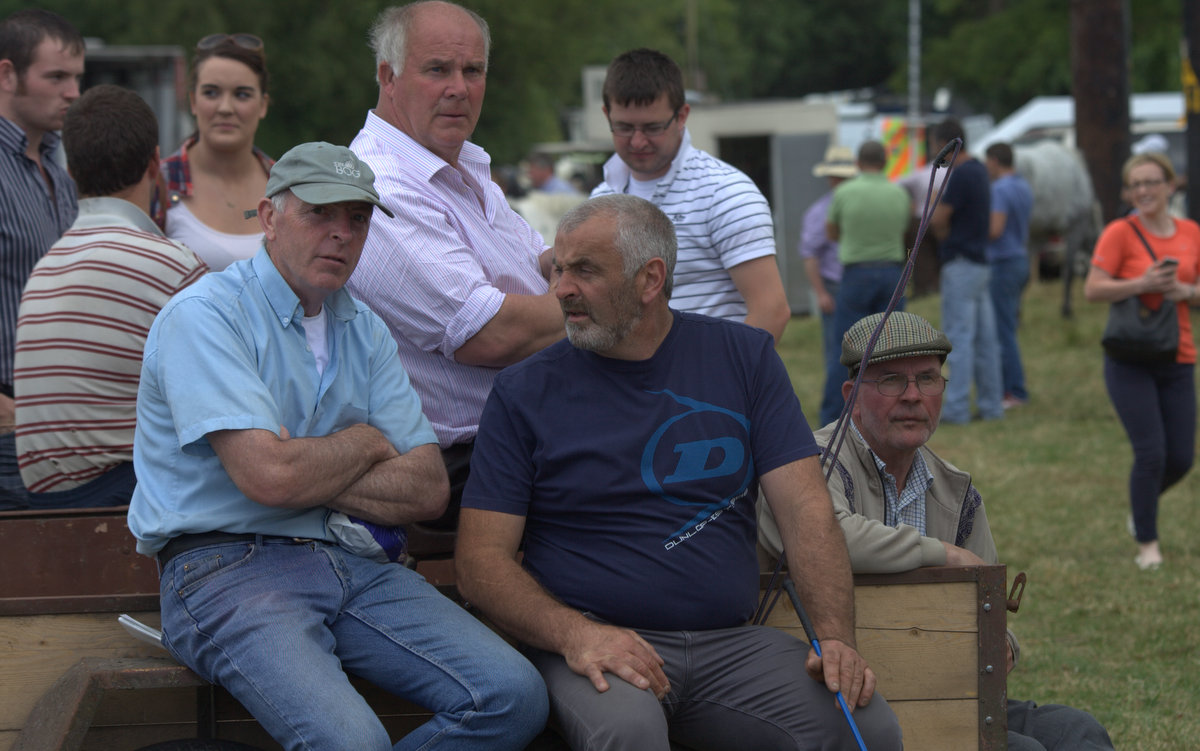
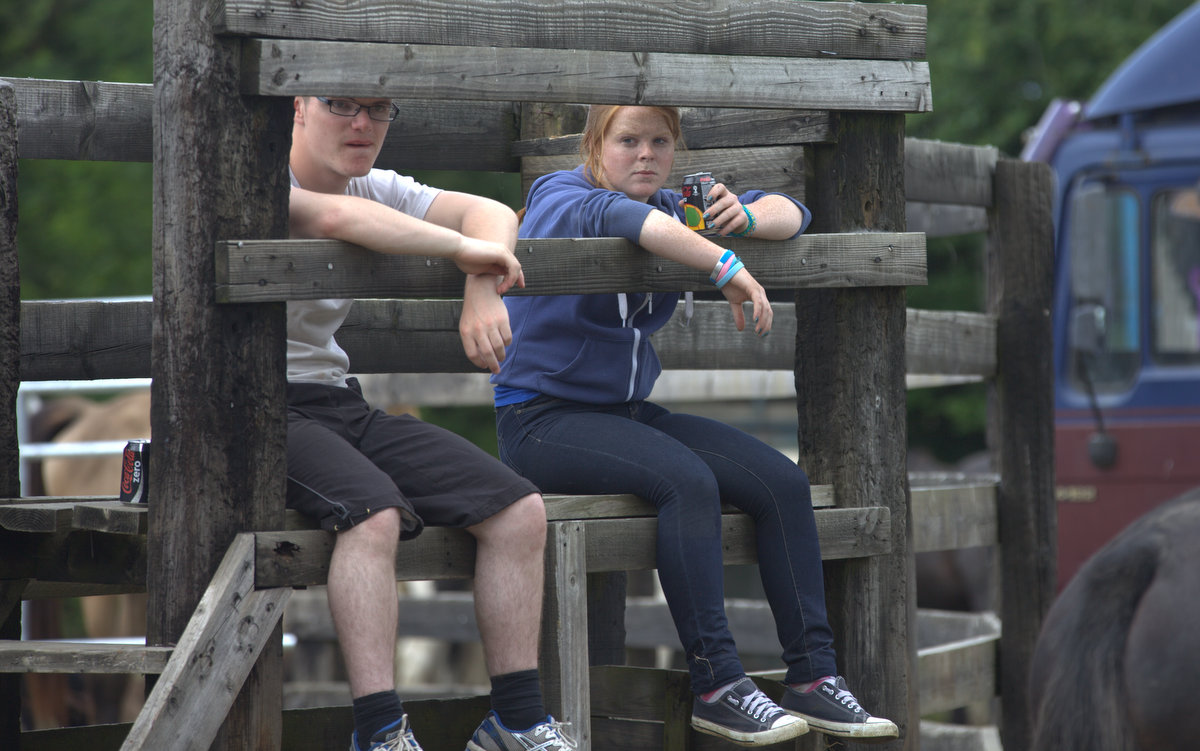
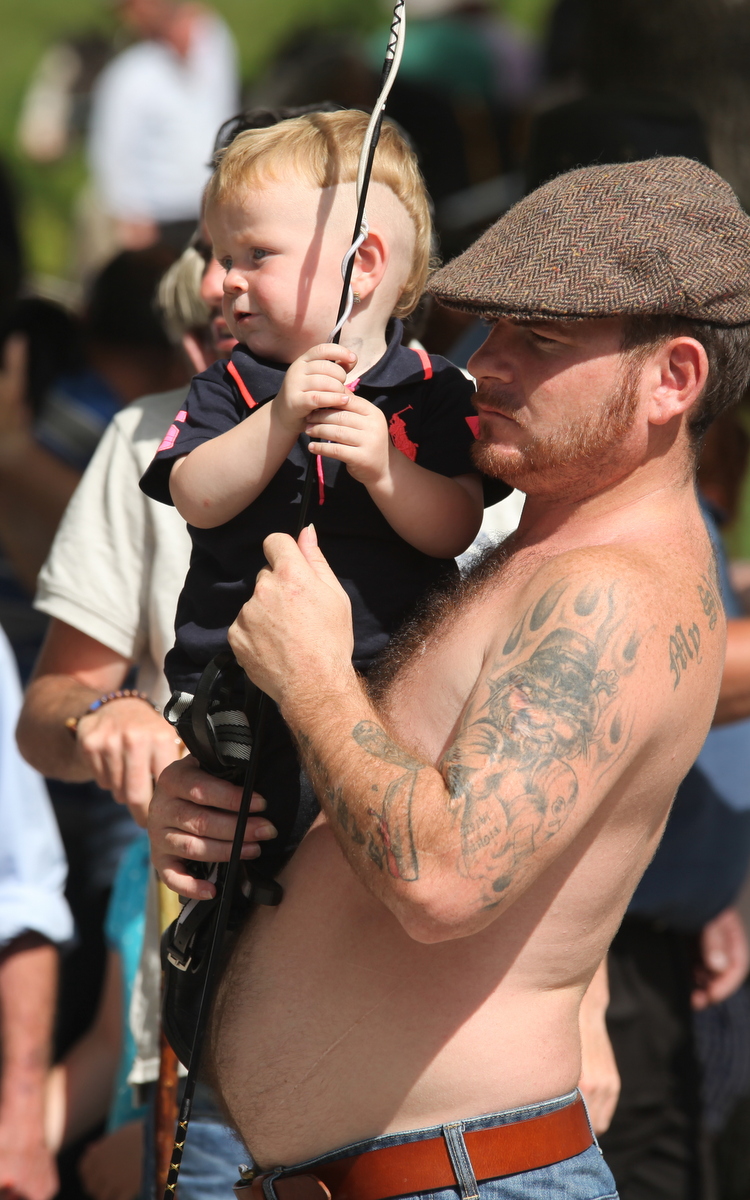
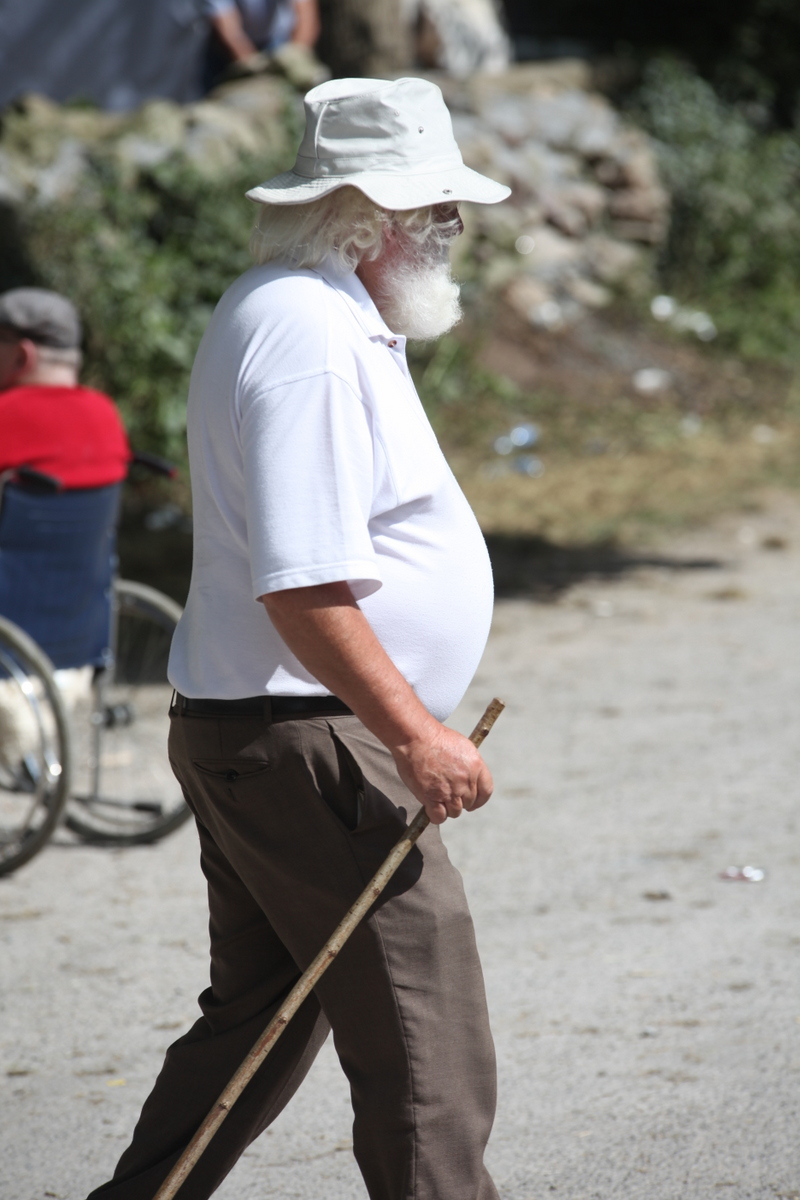
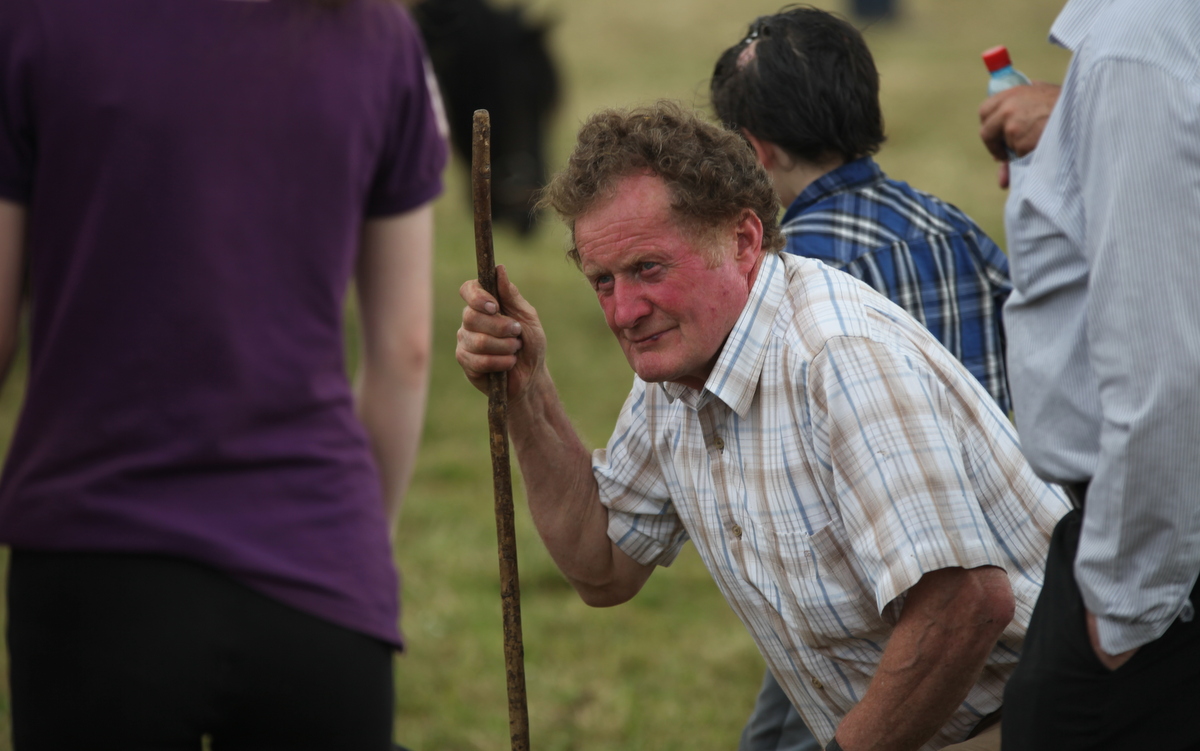
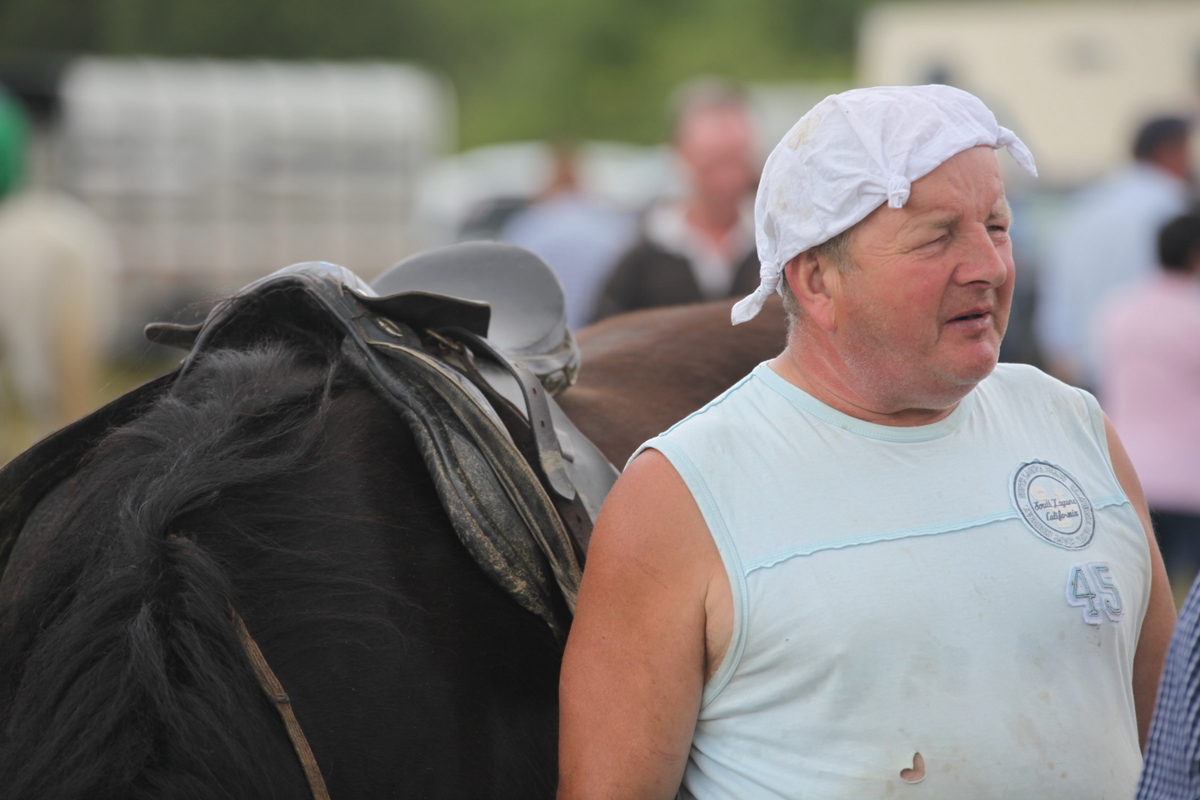
It is like stepping back to an older Ireland way before the Celtic Tiger pounced and even before the motor car. A world of horses, donkeys and chickens, of blackthorn sticks and buggys. There are obvious changes of course with everyone seemingly on the end of a mobile phone and burgers and curry chips the standard fare at the Fair.

I had been warned by numerous people to watch out because of the travelling people but I didn’t have any problems. Not that I would recognise one from us ‘stationary’ people.

The original song has the following verse.
“It being on the twenty third of June, the day before the fair,
Sure Erin’s sons and daughters, they all assembled there.
The young, the old, the stout and the bold, they came to sport and kill,
What a curious combination, at the Fair of Spancilhill. “

There seems some confusion as to the date but the fair is always on the 23rd unless it is a Sunday in which case it is the next day. Hence the “day before the fair” as the song relates event that occurred on the sabbath.

I’ve attached some photos which I hope capture a bit of the “curious combination at the Fair of Spancilhill”.

IMG_6007 IMG_6011

IMG_6037 IMG_6038 IMG_6052 IMG_6058 IMG_6060 IMG_6073 IMG_6081 IMG_6084 IMG_6086 IMG_6092 IMG_6096 IMG_6103 IMG_6108 IMG_6112 IMG_6122 IMG_6128 IMG_6130 IMG_6132 IMG_6136 IMG_6139 IMG_6142 IMG_6143 IMG_6146 IMG_6157 IMG_6159 IMG_6165 IMG_6170 IMG_6186 IMG_6189 IMG_6193 IMG_6194 IMG_6200 IMG_6208 IMG_6212 IMG_6217 IMG_6222 IMG_6224

Categories: Real Ireland | Tags: , , , , , , | 7 Comments

Blog at WordPress.com.