Posts Tagged With: Clare

A Musical Week in Clare, Ireland

I have lived for the past 2½ years on the coast near Spanish Point in County Clare. There has been a constant stream of visitors during this time. Some were family, some good friends but some were strangers. Some stayed for a night, some for more than a week. All leave as life long friends.  I have hosted 76 guests, many more than once.

They are all people I meet through music, or the music session, or during my travels in Ireland. They have come from Ireland, Australia, France, Germany, Switzerland, Spain, United States, UK, Canada, Japan, Brazil, Denmark and Czech Republic and each has a story. Every single one of them has enriched my time here and it has been a joy to have met, enjoyed their company and shared a shared passion for things Irish.

IG3C7323

French Windows


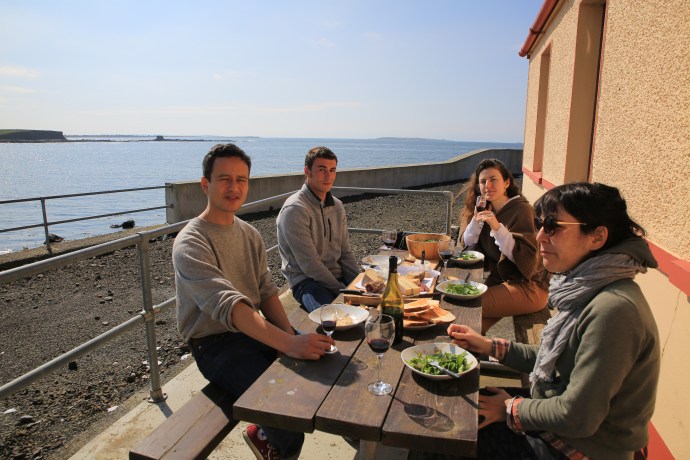
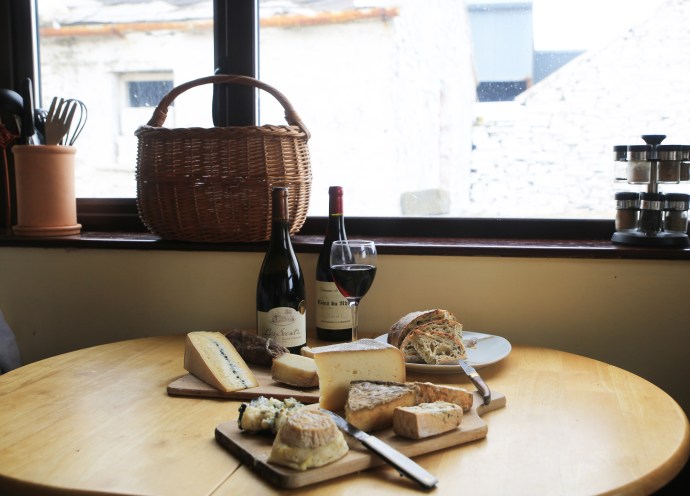
Just last week I hosted three wonderful friends, Julie, Romain and Anna from Carcassone in the south of France. Of course we played tunes, that’s what they came for, but we cooked, imbibed, sampled cheese (sorry, fromage!), and exchanged stories.

IG3C7715

The sun came out on the last day.  Lunch on the porch.

IG3C6964a

Cheese, wine and bread from Carcassone.  View from Caherush. 

IG3C7044


It didn’t matter that it rained. I am grateful that we were able to experience an ideal slice of Clare music and musicians in the week they were here. This is what is so special about this place. So many memorable moments, but come next week and it will be the same, but completely different.

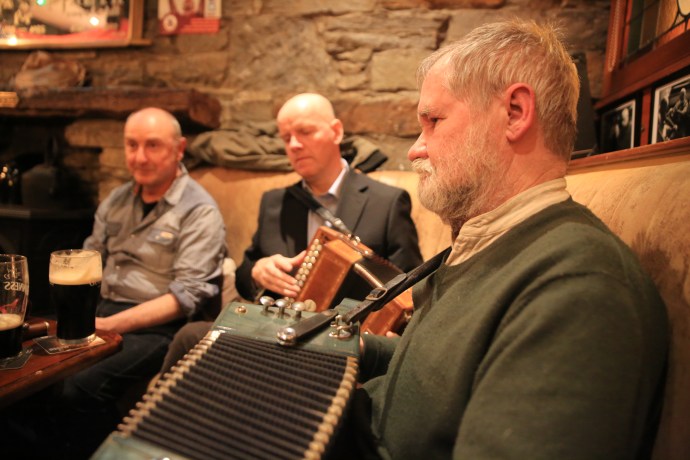
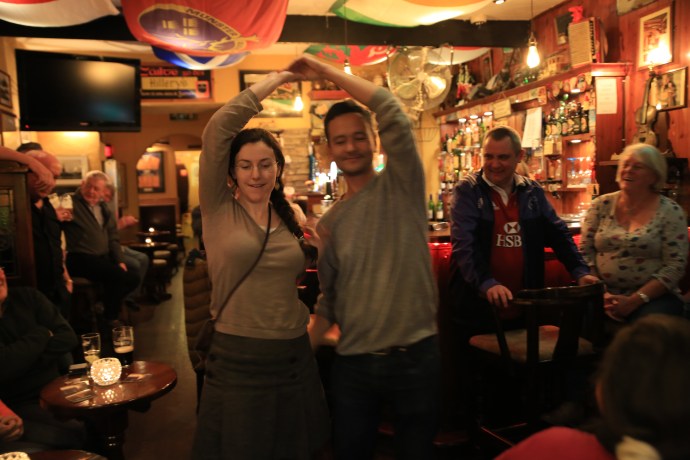
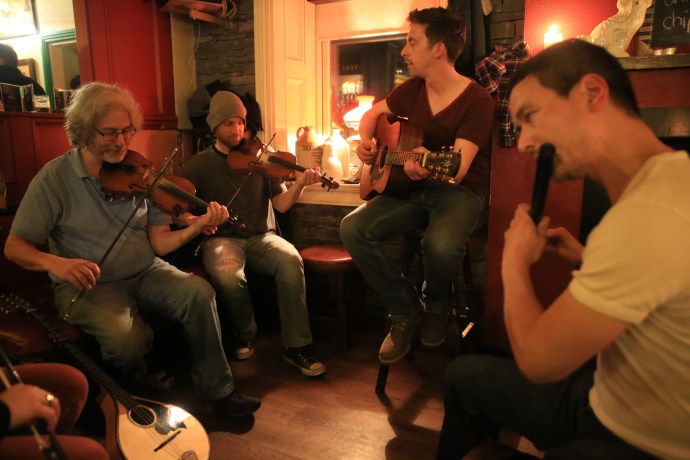
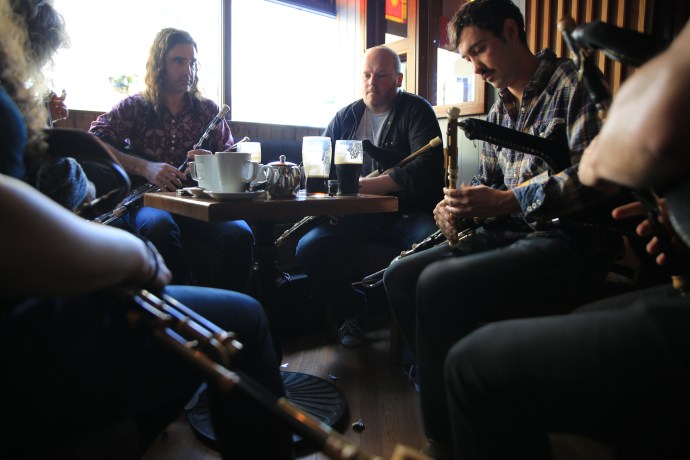
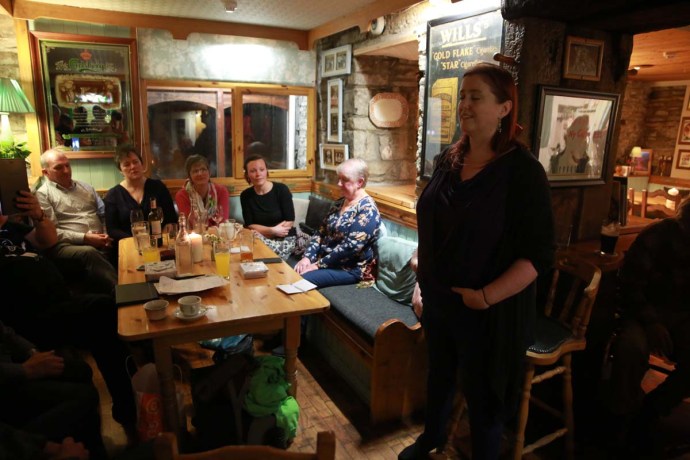
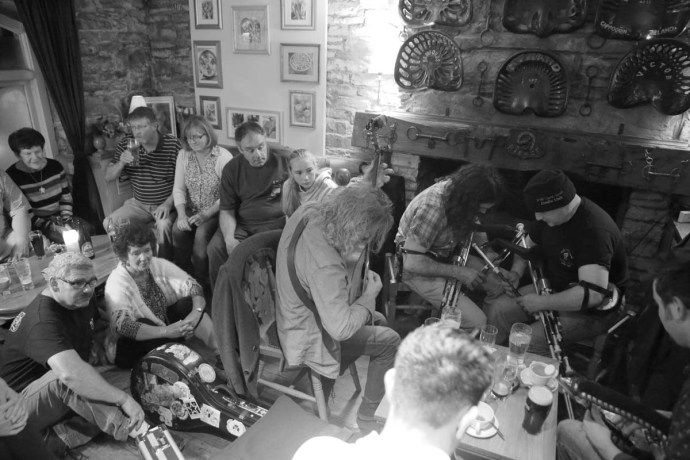
So many highlights. Sunday. A pub session in Miltown Malbay at Hillery’s with Conor Keane and Jackie Daly firing on all cylinders, Julie and Romain brought some elegance to the proceedings as they danced a mazurka, French style. Monday.  Fitz’s Bar in Doolin, Tuesday. The cosy Cooley’s House in Ennistymon. On Wednesday a trip to Ennis – a chilled out session at Brogans did little to prepare my guests for the madness of Moroney’s in Ennis where the victorious young Clare hurling team were in full voice and there was some fiery sean nos style dancing from Canada, US and Ireland. A visit to the Burren Thursday and sharing some tunes stories, songs and poems in the kitchen of the irrepressible Oliver O’Connell . And they joined in on my regular Thursday house session with some local West Clare musician friends. The craic went until 4am.  Situation normal.  Oh and what a way to finish! A phalanx of pipers led by Blackie at the Friday Piping Heaven Piping Hell session in Ennis.

IG3C6600

Sunday.  Jackie Daly, Conor Keane and Dave Harper at Hillery’s Bar in Miltown Malbay.


IG3C6580

Sunday. A French mazurka in an Irish pub.

IG3C6792

Monday.  Tunes in Fitz’s Doolin.  Photo Anna. 

IG3C6875

Monday.  Fitz’s

IG3C7173

Tuesday.  Cooley’s House.  Ennistymon.  Photo.  Anna.

IG3C7224

Wednesday.  Eoin O’Neill, Brid O’Gorman, Jon O’Connell.  Brogan’s Ennis

IG3C7283

Wednesday.  Anne Marie McCormack, Marcus Moloney and a member of the young Clare hurling team.  Moroney’s Ennis.

IG3C7606

Thursday.  Joining Oliver O’Connell in his kitchen.  Photo Anna.

IG3C7694

Thursday.  House session at Caherush.  With John Joe Tuttle, Ciaran McCabe and J-B Samazan. 

IG3C7721

Friday.  Piping session, Blackie O’Connell, Tom Delaney and friends.  O’Connell’s Bar, Ennis,


For me these musical experiences are enhanced immeasurably when I am joined by those who approach the music with the same ardor as me. It is my privilege indeed to host such people.

IG3C7340

New friends.

IG3C6692

Blue and green. 


Categories: My Journey, Sessions | Tags: , , , , , , , , , , , , , , , , , | 1 Comment

Kilkee, Co Clare. The Rhythm of the Waves.


IG3C4933IG3C5849IG3C4912

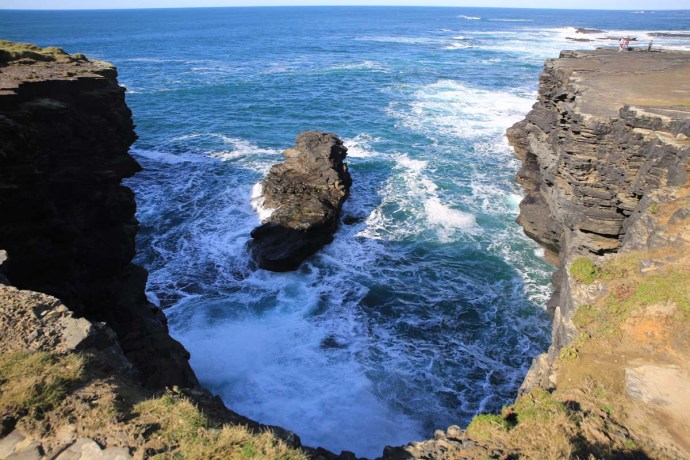
Kilkee is a small resort town on the west coast of Clare. One of its major attractions are the cliff walks. Every bit as dramatic as the more famous Cliffs of Moher but no Interpretive Centre and no entry fee! If you take the walk west from the Diamond Rocks Cafe along the coastal trail you are rewarded with striking cliff vistas and easy access, with concrete stairs, to the rock platform in a number of places; something you can’t do at the other Cliffs.

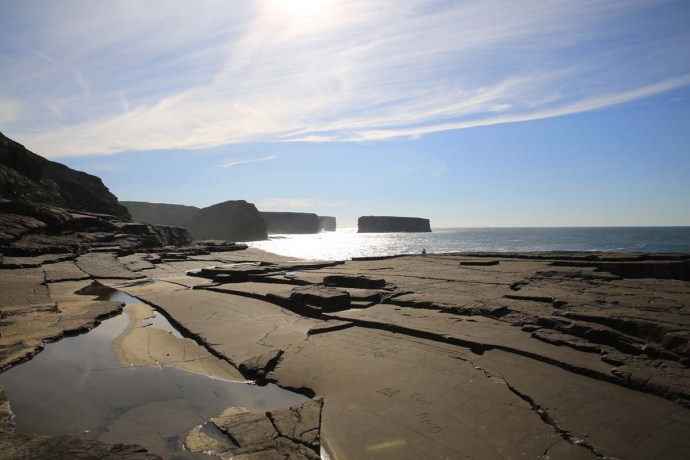
One glorious March day I visited with my camera. I descended one of these stairways towards the shore. There was much of interest. A ‘blow hole’ where you could see the swirling ocean underneath through a hole in the rock layers, perfectly preserve ripple marks reminding us this was once an ancient shallow sea in the Carboniferous. And of course spectacular views in all directions. If you keep walking west on this massive and smooth ledge you come to a point you can go no further. I’ll call this Valda’s Rock.

IG3C5228IG3C5237

I met Valda there. She was sitting on the edge where it drops off into the sea. I could tell she wasn’t a tourist and she had that look that she was waiting for something. I have learnt a lot by taking my cues from locals, so a polite distance away I sat and watched and waited too.

It was a perfectly calm day. There was nothing breaking the surface of the ocean. It sparkled with the glint of the sun bouncing off the ripples. Together but separately we waited and watched. IG3C5245


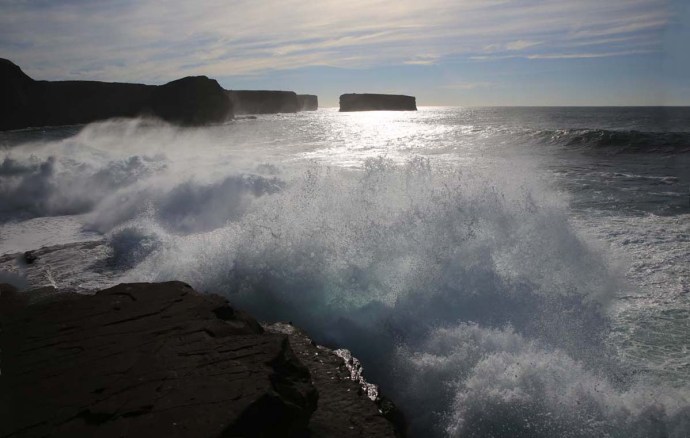
Then without warning a series of waves arrived and the ocean came alive. You couldn’t predict where they would arrive from or where they would break and they had me turning this way and that. There were waves reflected from the cliffs and this added extra complexity. Some would smash against the rocks and the spray would ride up, at least on one occasion sending some foolhardy visitors scurrying. It would only last a couple of minutes and then the energy dissipated and all was calm again. She snapped photos on her phone, while I clicked away on my beast making full use of the burst function. Then she plugged her earphones in and went back to her waiting. After a while though I disturbed her peace and we struck up a conversation.

IG3C5336aIG3C5617IG3C5623IG3C5518IG3C5665aIG3C5701IG3C5679


She had grown up in Kilkee though now lives and works in the ‘City’, as she called it (Limerick), but returns home every weekend and comes down to this very spot regularly. She told me she had been watching these waves since she was a little girl. She talked about what she called ‘the rhythm’. You wait and the big waves come. Not regular but they come. Interrupting our chat was the next big set.


Each set was uniquely different and some were well into ‘Wow’ territory. You just couldn’t leave as you wanted to see what the next one would bring.


But she did leave. After all it was Mother’s Day and she was supposed to cook dinner.


I had enjoyed meeting Valda but I stayed. Another hour. I tried to pick a pattern but there was nothing obvious. There must, I thought, be something driving this. It’s like the earth’s beating heart sets off mini tsunamis somewhere in the distant Atlantic and they pulse into waves that eventually funnel into this bay at Kilkee; the kinetic content released explosively as it meets land for the first time.


So thanks Valda for introducing me to this very special place.

IG3C5161a


Categories: My Journey, Real Ireland, Wild Ireland | Tags: , , , , , , , , , , | 4 Comments

All is not what it seems. A little story from the Wild Atlantic Way on the west coast of Clare.

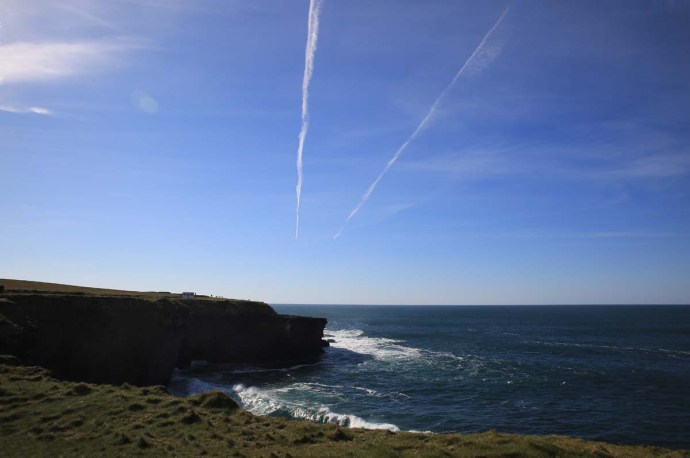
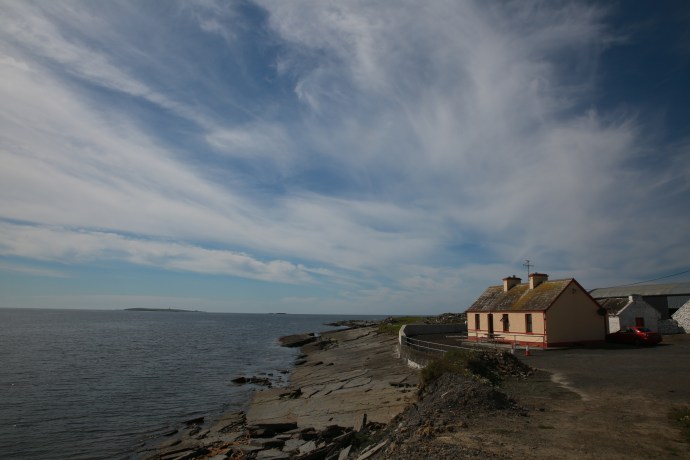
I live in a remarkable spot and I have written of it and photographed it many times. Point Caherush lies between Quilty and Spanish Point along the spectacular west coast of Clare.  Indeed it was spectacular before it became part of the Wild Atlantic Way but now of course it is legitimately spectacular because it has a label with the word ‘wild’ in it. Anyway I live at the end of a one kilometre long boreen known locally as the Clogher Road. My front door looks out over Quilty and Mutton Island. Here’s a reminder.

ig3c5962

My little cottage nestled on the rocks at Pt Caherush


The rocks at my feet though are similar to the rest of the West Clare coastline from Loop Head to Doolin, and comprise shallowly dipping interbedded sandstones and shales.  For the whole time I have lived here I assumed that I was living at the edge of a wilderness (that’s the ‘wild’ in Wild Atlantic Way!). A thin strip of pristine land beyond the rolling green that is everywhere so heavily moulded by man.  I surmised, somewhat romantically, that only the hand of the sea had sculpted the shore. Despite this I was troubled by some observations I could not explain. Perfectly circular holes in the rock sometimes with radial joint patterns around them were disturbingly reminiscent of what I had seen in open cut mines. This made no sense. There was nothing to mine in these barren sandstones.

But I didn’t think of the sandstone itself.

ig3c6883

Perfectly circular holes and radial joint patterns on the rock platform at Point Caherush


One day I was chatting to Mikey Talty, a resident of this place all his long life. I have written about that day in a previous blog, when three generations of the Talty family were harvesting kelp from the bay. Mikey is full of wonderful stories but he really got my attention when he mentioned working as a young man in the 1950s at a massive quarry operation on the Point. He showed me where the crushing plant was and described how truckloads of rock were carted away to build roads as far away as Kilrush and Kilkee. This mining it would seem had changed the shape of the headland and much of the protection of the bay was lost.

ig3c6799

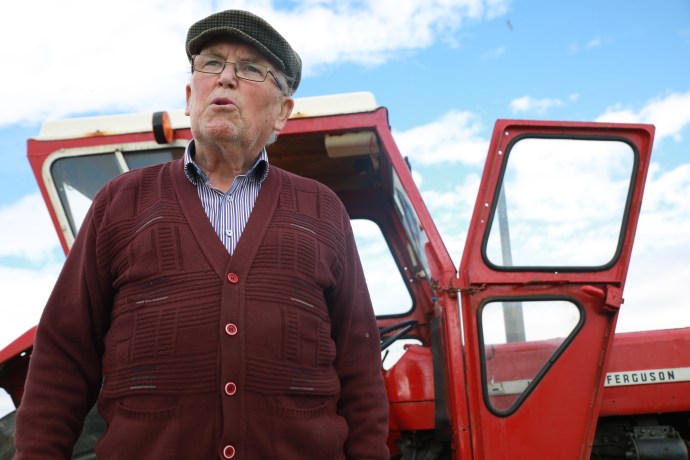
Mikey Talty talks about Caherush in his youth.


With this new knowledge I now see the evidence everywhere in my wanderings. Of course the drill holes were for the explosives, some still showing their perfect shape and probably unexploded, and others with radial shatter patterns showing they did their job. There are rock exposures that are not natural and there is angular rubble strewn, that has yet to be smoothed out by the ocean.

ig3c6873

Blasted face at limit of quarrying

ig3c6913

Quarried rock face and blasted rubble


It is hard now to understand the thinking that would have led to the locating of a quarry here when there would have been plenty of locations away from the coast. I would like to think that in ‘modern’ Ireland it would be impossible to conceive of permission being obtained today for mining on the seashore. Perhaps planning approval wasn’t needed then and certainly priorities would have been different.

I can find nothing in the literature about this operation and maybe the memory of it is only now with those who lived or worked here. But the record will stay in the rocks for hundreds of years and I am sure it will confuse and intrigue future generations of geologists and non-geologists, who wander around Point Caherush, as it did me.

Categories: My Journey, Real Ireland, Wild Ireland | Tags: , , , , , , , , , , , , , , , , , , , , | Leave a comment

The Singing Circle at Kilshanny, Co Clare. Entry to another world.

ig3c9079_1

Early in November I went to my first organised singing session since I came to Ireland. I know that’s a terrible admission especially as my start in Irish music came from my interest in folk singing back in the 60s. It was from singing Bob Dylan and Phil Ochs and Pete Seeger and Ewan McColl, and then traditional Australian songs, that I discovered the original “protest” songs coming from Ireland and Scotland. Of course the fiddle sort of took over but I still love singing and squeeze the odd song into a trad session if I get the nod.  My knowledge of the singing session was scratchy to be sure and probably an entrenched stereotype.   You know; finger in the ear stuff and all 47 verses of Lord Thomas and Fair Eleanor.

So when Mary Butler, proprietor of Kilshanny House near Ennistymon, asked me to come along to the once-a-month Kilshanny Singing Circle, I had no great expectations. It was certainly a world away from the Pub Trad Sessions, my natural habitat.  

ig3c8910_1

Mine hosts,  Aidan and Mary.

A crowd slowly gathered on the chilly November night. Many turned out to be singers but others were just there to listen. Indeed there were at least 25 singers (actually 24 singers and one Singer – sorry that’s an attempt at humour), some sitting in a circle as you would expect in a session but many others just hovering or sitting at the bar in relative anonymity.

ig3c9283_1

ig3c9021_1

Enter a caption

ig3c9046_1ig3c8973_1ig3c9336_1


The night was masterfully run by local Ennis based singer, Noirin Lynch with a velvet glove.

ig3c9071_1

Noirin Lynch

Just an aside. It is the bane of singers in Trad sessions that everyone talks through songs. Sometimes no amount of shushing or whooshing or glass tinkling will shut up the crowd and many a great performance is lost. Not so here. Every person in the pub this Friday had come to listen or sing, so all that was needed were a few gentle reminders. To some this is not the atmosphere they want, and maybe that’s you, but that’s the beauty of Ireland. There are plenty of options; plenty of other pubs where the TV is blaring and you can turn your back to the music. But if you want to hear wonderful singers at their best in total silence then there is no better place than here.

The concept of the Singing Circle is far more democratic than the more ad hoc music session.   Noirin identifies all the singers, in the room,  sees who wants to sing and calls on them to do so at the appropriate time. Always conscious of mixing it up and giving everyone a fair go.  She is constantly roving the room looking for new additions.

ig3c9468_1

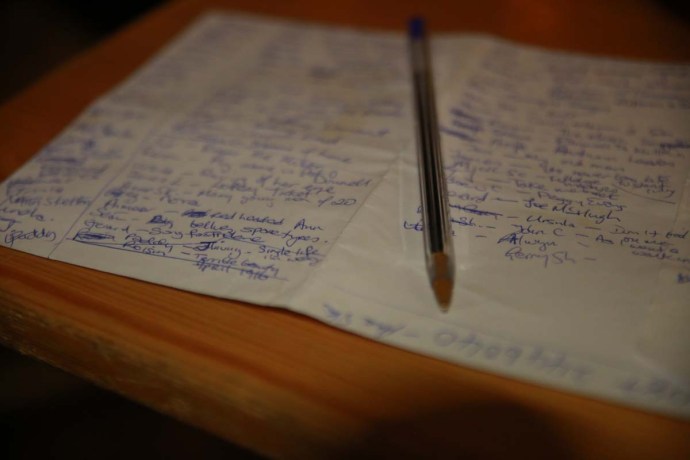
Noirin’s list

These nights of music are a celebration. For me, mainly of the incredible talent that lurks hidden in the cottages of Clare. And I have to say whatever I am exposed to another layer of the culture and performing arts in Clare it comes from deep in the soul of the people here.  Nothing special, it’s just part of their makeup.  In West Clare and North Clare I have many times seen spontaneous sean nos dances from kids of all ages up to 90,  I’ve seen sets and half sets where there shouldn’t have been room and I have heard gems and disasters of songs from people sitting quietly all night waiting to perform their party piece.

While there were many widely known singers from inside and outside Clare here this night,  the majority were just unsung (no pun intended) heroes for whom singing is just part of what they do between selling real estate, farming or driving trucks or bringing up their kids. The special guest for the night was Roisin White from Miltown Malbay (honoured with a Gradam Cheoil for singing in 2015) and she treated us to a wide range of material, strongly and beautifully delivered.  

ig3c8922_1

Roisin White

ig3c9371_1

Roisin White

There were  other visitors, Ciarán O’Maoileoin,  Aoife Caomhnach and the well known, Ann Skelton  from Dublin.  And regular Clare visitor Steve Brown from England and Jan van der Klei from Holland.

ig3c9389_1

Ciaran O’Maoileoin and Aoife Caomhnach

ig3c9139_1

Ann Skelton

ig3c9065_1

Steve Brown

ig3c9394_1

Jan van der Klei

But as I said I was most impressed with the home grown talent.  Noirin Lynch herself set the tone of the evening with the anthemic Nora Daly which she learnt from the singing of Micho Russell and Peggy Macmahon.

My name is Nora Daly from the Parish of Kilmaly

and my father is a farmer and the crossest man in Clare

If he saw you here beside me I’m in fear that he might chide me

so please go down and walk a bit before we reach the fair. 

ig3c8762_1

Noirin Lynch

Everyone sings along with this one.  In fact if you are from Clare, I bet you hummed along as you read it.    There was a preponderance of songs on subjects of local interest. I couldn’t possibly talk about each singer, so let me mention just a few. John Casey, originally from Lisdoonvarna grew up with the travellers and remembered them vividly as a child. Sixty years later he met one of them again and was inspired to write his song “The Tinker” which he sang for us.  John told me later that a cousin from Australia was the extraordinary Father Ted Kennedy who did remarkable work with the Aboriginals in Redfern. When he died in 2005, 1,500 people attended his funeral.  Interesting synchronicity there with the status of Travellers and Aboriginals. 

ig3c9447_1

John Casey


We had Gerry Devitt with that marvellous song about Joseph McHugh’s from Liscannor. And the delightful and much loved John Joe Scanlon from Fanore, who treated us to a wonderful bit of the, almost lost, art of lilting. 

The fantastic songs of Micheal Marrinan got an airing with  Ciarán O’Maoileoin singing Miltown to Sweet Ennistymon and The Binding Twine sung by Steve Brown complete with with prop of a roll of genuine binding twine!

ig3c9313_1

Ciaran O’Maoileoin

ig3c8822_1

Steve Brown and the Bundle of Twine

With the memory of the death of local football legend Anthony Foley still fresh there was a heartfelt and powerful recitation from Michael Scanlan of Killaloe of his own song and, further reflecting the place GAA takes in Irish culture, we had Marian Egan sing ‘Cuchulainn’s Son’  a song about Wexford hurler Nicky Rackard from it’s golden era in the 1950s. It was written by Marian’s late cousin Tom Williams.  Marian is now a Clare woman living in Kilfenora since 1997.

ig3c9411_1

Michael Scanlon

ig3c9358_1

Marian Egan

We had some delightful comic songs;  Sean Maclaghlan with  Big Bellies and Spare Tyres (though I have to say that only with some reluctance did he get the ladies to answer back with the ”spare tyres” bit)  and that old favourite, the Lottery Ticket.  from James Blackwell of Ennistymon. 

ig3c9197_1

Sean Maclaghlan

ig3c9404_1

James Blackwell

The tone of the night was best illustrated with the welcome received by newly arrived Ursula. An occasional singer from Dublin but now living in Kilshanny, she must have been surprised at the warm reception.  She was introduced around and sat down in the inner circle and coaxed into singing a couple of songs which she carried off with aplomb. What better way to welcome someone into your community than to share a song with them.

ig3c8955_1

A warm welcome

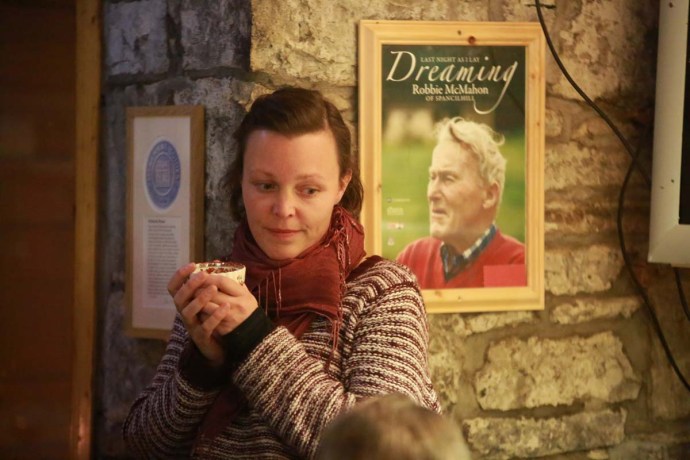
I really like the photo I captured of Ursula with a cup of tea in her hand beside a framed photo of Robbie McMahon of ‘Spancil Hill’ fame. Turns out he is Mary’s uncle.  Don’t you just love the connections in this place. I think I’ll call it The dreamer and the Dreaming

ig3c8865_1

The dreamer and the Dreaming.

And they even had room for some Aussie guy who had the cheek to sing an Irish song about a road that “runs down to the sea”.

There were of course many others and here are some more photos. Singers are difficult to photograph. Always moving unpredictably, eyes closed, bad light. I think though I have captured the mood with these shots.

ig3c9013_1

Almyn Wilson

ig3c9030_1

Joe O’Connor

ig3c9122_1

James Blackwell

ig3c9166_1

Emer Ni Mhaoileoin

ig3c9253_1

Paddy Williams from Kilshanny

ig3c9311_1

Patsy Carrucan from Fanore

Singing Circles as they are called, abound in Clare. They are generally held once a month, but you could easily attend one or two a week if you wanted. The better known ones are in Ennis and Cooraclare and there is also an excellent Sunday singing session at the Crane in nearby Galway.  So if you come to Clare and want to try something different, you can be assured of a warm welcome.

ig3c9129_1ig3c9136_1

I’ll definitely be back to Kilshanny House.

And one final word. Why is respect demanded and given for a song but not always similarly for a tune?

Categories: My Journey, Sessions, Trad Irish Music, Uncategorized | Tags: , , , , , , , , , , , , | 3 Comments

Oliver O’Connell, Man of the Burren and the Track of Tears.

Ireland is a very popular destination with visitors. And for good reasons. I have met so many who have come here for a week and have rushed around to tick Dublin, Dingle, Cliffs of Moher and Galway off their list and happily report back home that they “did Ireland”. Don’t get me wrong most people genuinely enjoy Ireland, in fact love it. What’s not to love? There is of course wonderful scenery, friendly people, ruined castles, trad music, Guinness, bacon and cabbage, sheep on the road. Everything that brings people here. But very few of those short-term visitors would have tapped into the ‘real’ Ireland.  Ireland’s real treasure is its people. It’s through the people of Ireland you discover the Hidden Ireland.

I spent a day recently with one of these people. Oliver O’Connell may be known to some of you. Perhaps if I say he is Blackie O’Connell’s dad that may twig a few responses or the guy who started a session on an Aer Lingis flight last year, the video of which went viral; but really he should be better known as the great-great-great-great-great-great-great-great-great-great grandson of Maurice O’Connell ‘The Transplanted’. I’ll come back to that.

Oliver lives in an extraordinary spot in the middle of the Burren which is the beating heart of County Clare. Ten kilometres  from Corofin. You look out his kitchen window towards Mullaghmore , across a barren, stark tortured, limestone plain and you cannot see a single house. And at night the only light is the faint reflected glow from Galway City way to the north.

ig3c8720

View across the Burren National Park

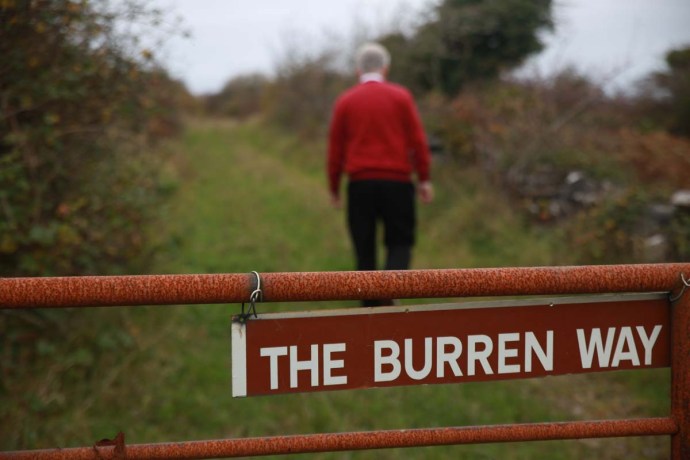
Oliver is as much part of the Burren as the megalithic tombs and glacial erratics that dot the landscape. He took me for a little walk to show me a favourite spot of his; the so-called Famine Road. A little used part of the Burren Way walking trail.

Now I thought I knew what a ‘Famine Road’ was.  The walking tours of The Burren will take you to one and tell you these roadways were built as an assistance scheme to keep people out of the Workhouse.  This may indeed be the case but this one is different as Oliver tells it.  This road was here way before the Famine.  Indeed the 1842 map of Clare shows the route as a road in use and on the exact same line as the satellite image.  So it certainly well predated the Famine.

2016-11-04a

Satellite image of Famine Road.  Shown with red arrow.

2016-11-04-1

1842 Map showing same area as satellite image above.  Famine Road is clearly marked.

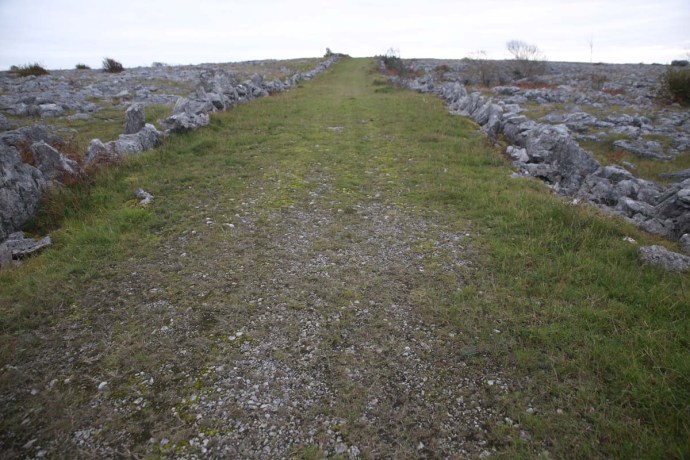
Oliver explained that it is called the ‘Famine Road’ for a very different reason.  The route was used by a number of families attempting to escape the deprivations of those terrible years but many did not survive. They are buried somewhere along the route in unmarked graves. It struck me as unusual that the road fell into disuse even though it would shorten the trip considerable from Corofin to Kinvara.  Oliver thinks the road has been there for perhaps a thousand years.  If this is true then it is a tribute to the engineering capabilities of the early residents.  It is roughly cobbled and raised in places, the summer grasses partly hide it now but its unique stone walls bounding it still stand proud today. They have regularly spaced jagged vertical stones. The road is straight as a die in places  and it traverses the country peacefully and silently.

ig3c8604

The start of the Famine Road near Aughrim.  Part of the Burren Way.

ig3c8716

View to the north along the Famine Road

ig3c8655

Cobbles forming the road base

ig3c8664

Detail of cobbling

2016-11-04-3

Detailed satellite view of portion of the Famine Road

ig3c8710

Jagged rocks standing upright form part of a wall along both edges of the road

So why was it no longer used?

Oliver is a poet. One whose poetry is raw, and highly descriptive.  It is personal and it is heartfelt.  It comes to him quickly almost as a stream of consciousness. He doesn’t massage it and as a result it doesn’t sound the least bit contrived.  In a poem he wrote about this road he describes what he calls the Track of Tears, thus:

Here in this place “bothar na muinne, ait ciunas gan uaigness”.

Where silence screams at you but the spirits of our people radiate a comforting presence as they lie here in peace in their final resting place.

You tread on their footsteps and on their tombstones as you weave your way through sacred structures and vertical stone walls in this land of myth and magic.

(‘bothar na muinne, ait ciunas gan uaigness’ translates to a ‘place of silence without loneliness’)

The silence screams. It quite literally does. Not a bird, no wind, no animals Just the sound of our footsteps and our breathing. It’s as if the Gods with quiet reflectance continue to mourn those who didn’t make it. And it is surrounded with a landscape of harsh but tranquil beauty described so well in Oliver’s poem.

It is perfectly fitting that the road is no longer used and it is tempting to think that this was by design as a memorial to those lost.

I was moved by the story of the road and this window into a distant Ireland.  Distant struggles, yes, but it recalls the many battles endured before and since by the Irish people.

But Oliver has a bigger story to tell.

ig3c8736

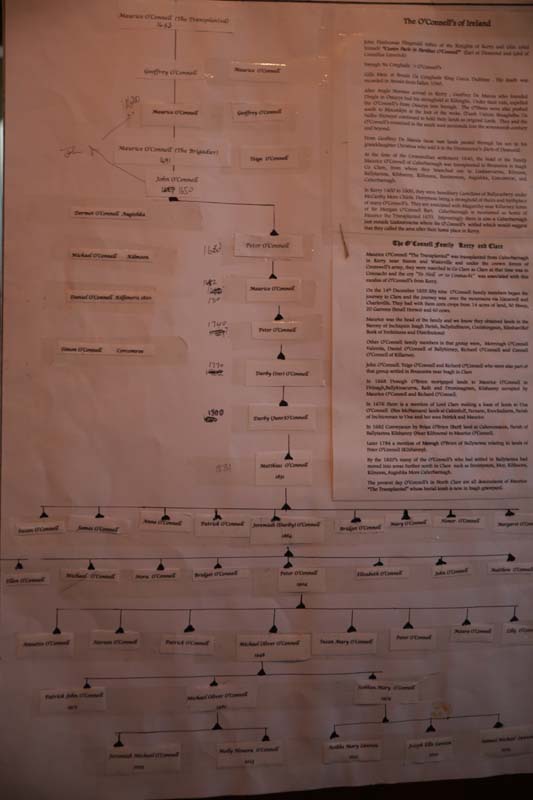
Oliver with the O’Connell Family Tree

ig3c8741

Detail of portion of the Family Tree

He has spent fifteen years trying to unravel it and his journey has as many twists and turns as a good detective yarn.

Oliver’s forebears have been in Clare since 1653. He has been able to trace them back continuously to Maurice O’Connell (The Transported) who led 59 members of his family from their home in Kerry, from where they were expelled by Cromwell. Those who survived resettled near Inagh and Liscannor. Clare was then part of Connacht and the expression To Hell or Connaught comes from that time and relates to this exodus. The barren plains of the Burren was the equivalent of being sent to Hell. But survive they did and Blackie’s children represent the fourteenth generation of O’Connell’s to live in Clare. But it’s even more interesting than that.

Oliver has managed to trace Maurice O’Connell’s antecedents back to 1340 when they were a well connected and important family in Kerry and Limerick and even earlier to Connaill Gabhra, “Connaill of the Swift Horses”, King of Munster, in the 1100s. What a fabulous heritage. Nearly a thousand years!

What is unique about this story is that documentation exists continuously since the 1300s. As Oliver explained most Irish families can only go back to the 1820s. Prior to that records were kept by the British only for Protestants and Military. The O’Connell’s have a long hsitory of military service so the story is still there for those with the patience and energy to root it out.

Oliver as well as being a poet and raconteur is a musician and has links to a generation of musicians sadly disappearing fast. He is full of stories all told with zest and enthusiasm, such as how Blackie started on the pipes, but I will leave that for Oliver to tell sometime as he surely will.

ig3c8753

How else would you end a day such as this but with some tunes, So I sat on a chair in the kitchen, a chair that I’m sure that Oliver’s old friend Finbar Furey would have sat on and it just seemed so perfectly logical that the fiddle and the box together would shatter that Burren silence.

Oliver has invited me back to see this place in a different mood. When the frosts arrive.

Keep me away.

ig3c8649_1

Categories: My Journey, Real Ireland, Wild Ireland | Tags: , , , , , , , , , , , , | 11 Comments

A Visit to Ralahine, Co Clare. A Failed Experiment.

Ireland was a troubled country in the early part of the 19th century. Under the firm rule of the Crown, most Irish land at this time was owned by absentee landlords either in Britain or Dublin. The farms became a hotbed of discontent with tenants living in misery. This prompted organised groups such as the Ribbonmen, who launched deadly attacks on landlords and their tithes. Rural Ireland was not a happy place.

One man decided to try to change this. He believed he could bring peace to the land with a cooperative farm where he would rent the land to the labourers and they would work it under their own authority. This man was wealthy landowner John Vandeleur and a man of considerable influence in Clare.  He had been High Sherriff in 1823.  He found an estate of 638 acres at Ralahine near Newmarket-on-Fergus in County Clare and with socialist backer Englishman Edward Craig running it, started the colony with 40 farmers and their families. They had a school, a laundry and a pooled kitchen. All the capital (buildings, stock etc) was provided by Vandeleur and was communal property. There was no private ownership.  All 4 legged animals, even dogs, were the property of the group.  He charged rent in the form of farm produce.

2016-10-04-5b

Ralahine Estate as shown in the 1842 Survey map.  The location of buildings still standing is marked,

There were strict rules governing the running of the farm. It was no socialist Utopia. New members could only be admitted by ballot. Work was 12 hours per day. There was no gambling and no drinking.  There was however enshrined freedom of expression and religion.  If there was a proposed marriage to someone outside the colony, and the members did not approve, then both were excluded. There was no money. Labour was paid for in Labour Notes which could be exchanged for provisions.

It all seemed to work and the colony expanded after one year to 81. People came from all over the world to see the contented colonists. Then it all came crashing down.

Mr Vandeleur’s wealth was gone. He had lost his fortune, ironically through gambling and drinking. He fled from Ralahine. The arrangement with the members had no legal basis and all the assets were seized and the bold experiment came to an end after two years.

I wanted to see how much of Ralahine was left. It was easy to find; just a short drive out of Newmarket-on-Fergus. I met local farmer Niamh, who pointed out some of the original buildings from 1830 which are still standing. There is the old mill, very much intact and a long whitewashed building, which at first I thought was stables, was the old working mans’ cottages. Each “house” has a single room with a fireplace,  Probably very comfortable for its day. .

ig3c1004

Rear view of the Old Mill

ig3c1148

Front view of the Old Mill


ig3c0993

Workmans’ Cottages


There are a number of other buildings and many walls which also appear to date from the same time but these mostly seem to now be used for storage. And of course looming over it all is the Rathlahine Castle, a previous home of one of the MacNamaras,  possibly looking a little worse for wear now than it did then.

ig3c1064

Ralahine.  View to Rathlahine Castle.


ig3c1143

Rathlahine Castle


The original house, the residence of Vandeleur,  was apparently demolished in the 1940s. Niamh said it was due to the windows tax, but this sounds a little fanciful as the window tax ended in the 1850s.

ig3c1151

Ralahine.  The site of the original Rathlahine House.  Nothing remains. 


I found a few very old apple trees near the mill, laden with fruit and it would be nice to think that these date back to the days of the colony.  So maybe John Vandleleur, if he is looking down on his life’s work from his vantage point above, may take some solace in the fact that among the crumbling ruins of his dream apple trees, his farmers planted 185 years ago, are still bearing fruit.

Categories: My Journey, Real Ireland | Tags: , , , , , , , , , , , , , , | 7 Comments

The Sheela na Gigs of County Clare: An embarassment or a treasure?

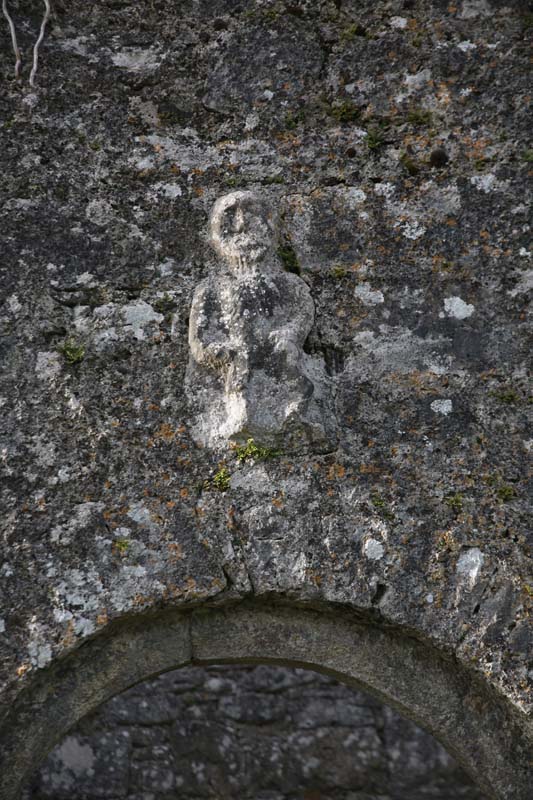
I was shown my first Sheela-na-Gig way back when I first arrived in Ireland. I probably wouldn’t have noticed it if it wasn’t pointed out to me.  High above the entrance door on the ruins of the Kilnaboy Church in North Clare. It was difficult to make out and my guide was perhaps too embarrassed to explain it in detail. However this first exposure aroused  my interest (ha, no pun intended).

Indeed my introduction to the Sheela was perhaps symbolic of the historical ambivalence and difficulty their existence has caused in Irish culture. Embarrassment at talking about them and trying to explain them and tolerance and acceptance of them in very public locations and seemingly incongruous places such as churches and castles.

So what are they?  As in most of these things much is conjecture with theories of their origin falling into two camps.  Firstly it is thought they came from Europe in the 11th or 12th Centuries and were introduced into areas of Ireland conquered by the Normans.  In this case their location on churches and the grotesque features of the figures, even by medieval standards, suggests that they represented female lust as hideous and sinfully corrupting.

An alternative theory is that they may be of pagan origin and represent  Goddess-like figures that are in some way symbolic of fertility and fecundity. They seem to appear in 11th-12th century churches but are reused in structures built much later.  They may even date back further at least to the time of the Irish conversion to Christianity.

The name seems to be Irish (‘Sila’ means girl but can mean Hag or witch) and one translation is ‘Woman of the Breasts’. The name however is modern, probably dating from 1840.  No one is sure what they may have been called contemporaneously.    There is an interesting Australian connection here.  The slang term ‘Sheila’ is a generic term for a woman or girl.  “She was a bonzer Shiela!”.  It is thought to have come over with Irish convicts.

The Sheelas are usually very explicit female exhibitionist figures with legs wide apart and the vulva displayed, sometimes spread by the fingers.  There are similar goddess-like figures in other cultures but here they are unique and identifiably of Celtic/Irish origin.

Why they are placed above doors in churches or castles is not definitively known and it is possible that in medieval times their original significance was lost and they were used simply as a warning against evil and sin.

It is a miracle that some actually remain in situ. Most have been removed to a less public place, or hidden in a back garden, or disposed of or made their way to private collections or a museum. Many are missing.

Clare has nine known Sheelas.  Three are in situ as near as one can tell. One is in the Museum at Ennis, one was relocated into a bridge in 1796, one has been moved to another location in a castle, one has been moved to the back garden of a bank and two are missing.

So that is seven.  I decided to visit all seven.  This little adventure on its own told me a lot about Ireland and the Irish.  So here is the result of my endeavours.

I have already mentioned Kilnaboy.  Kilnaboy is one of the better known and most accessible in situ Sheelas in Ireland.  The parish lies in the heart of the Burren and is close to many well known megalithic monuments including Ireland’s best known portal tomb at Poulnabrone.  The church is highly significant and is said to date back to the 11th-century but was repaired in 1715. It has a number of interesting features including a large Cross of Lorraine in raised stonework on one gable and the ruins of a round tower in the grounds.  The Sheela is located over the arched entrance to the Church.  It is a little worn but complete and in remarkably good condition considering it may have been exposed to the elements for 900 years!  There is no fanfare, no sign and if you  didn’t know about it you could easily miss it.


ig3c5638

Kilnaboy Church. Sheela na gig located over arched entrance
ig3c5639

Kilnaboy. Sheela na gig. Detail.

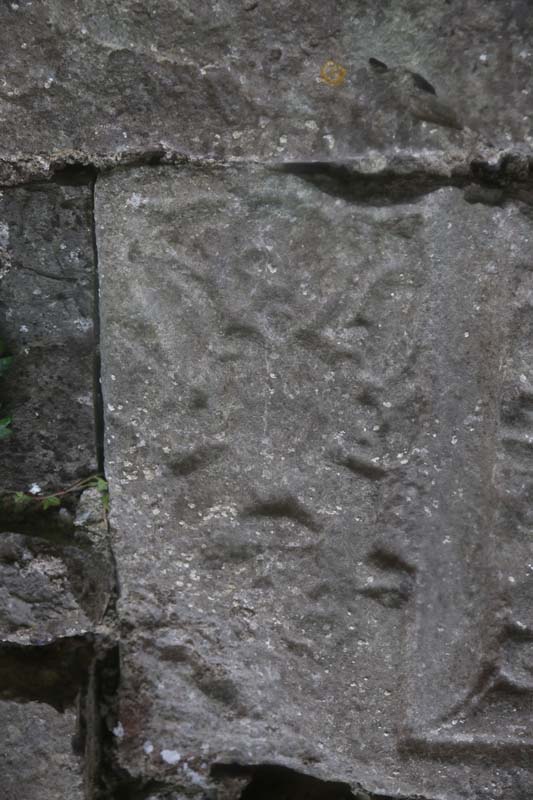
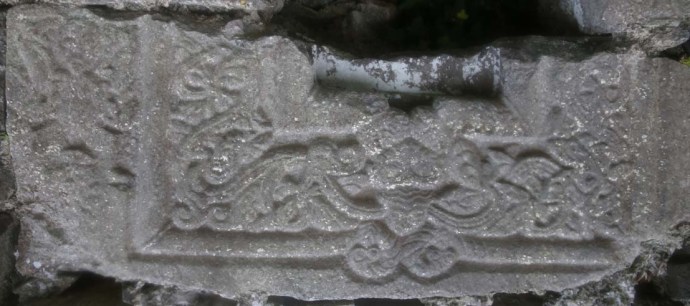
Rath lies between  Ennis and Corofin and is near Dysert O’Dea castle.  Here lie the ruins of a monastic site that dates back to the 6th Century. The current church buildings date from the 15th century but incorporate stonework from the 9th or 10th century. The Sheela na gig is located in a large fragment, originally used as a window sill, and possibly dating from the 12th century. The stone is inserted upside down in a wall of the church and shows a female figure outside the main intricately carved dsign. It is considerably worn but recognisable.

ig3c7287a

Church ruins at Rath

ig3c7299

Carved stonework block in wall of church at Rath.  Block is upside down.  Sheela na gig is on the right side.
ig3c7322a

Detail of carved stonework.  Rotated back to upright.  Sheela na gig is on left

ig3c7281a

Drawing of carved stonework

ig3c7319

Sheela na gig at Rath.  Detail.

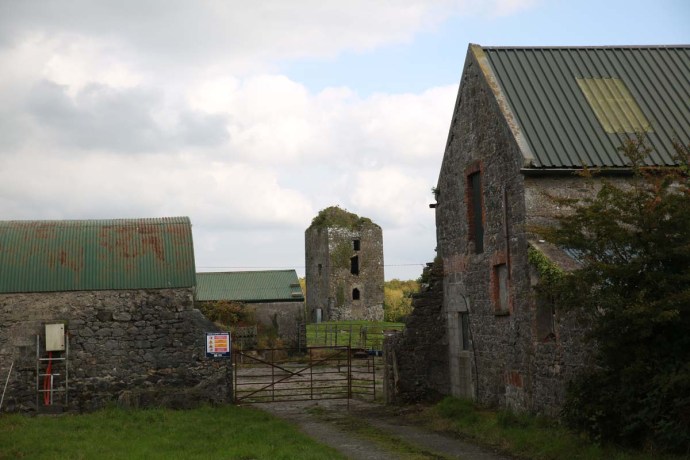
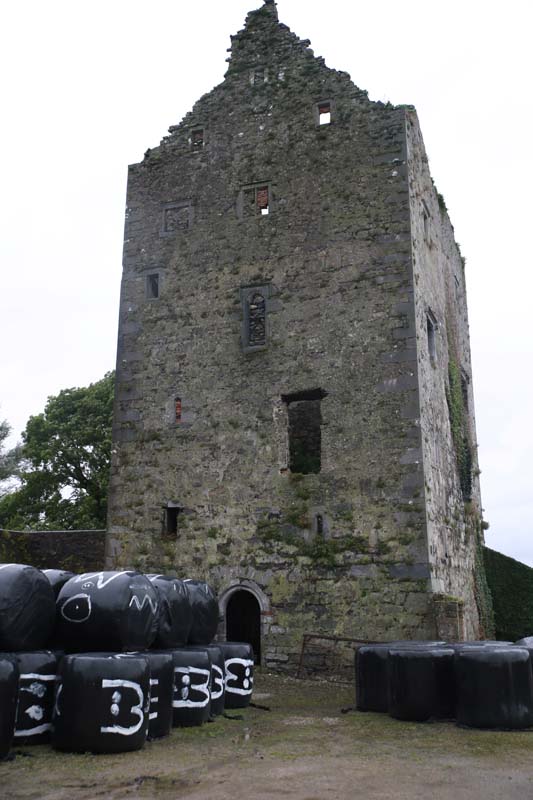
At Clenagh, close to the bank of the River Fergus near Newmarket-on-Fergus is the ruins of the Clenagh Castle. This is a large reasonably well preserved Tower House which was the home of the McMahon family. Date of construction is not clear but it was last occupied 200 years ago. The tower is now surrounded by farm buildings and locked gates and the yard is incongruously used for storage of bales of silage and farm machinery. Luckily on this wet and windy day the gate was unlocked and I could sneak in.

The Sheela wasn’t located where I thought it would be – near the well preserved entrance. It took quite a bit of searching.  I found it close to the ground carved into a quoin at the corner of the structure. There is no way of knowing the date but the style appears unique with spindly legs.  It is reasonably well preserved with a very clear outline but details are worn. There is evidence of rubbing. To me it looks like this is carved in situ into the stone which would make it much younger than the others. But hey I’m no expert.. Again no signage, and definitely no invitation to view.
 

ig3c7240

The castle at Clenagh.  The grounds are used to store silage and farm machinery and it is not open to the public.

ig3c7260

Clenagh Castle.  Sheela na Gig is located on corner of building near a more recent brick wall.

ig3c7262

Clenagh Castle.  Sheela na Gig.  Detail.


Ballyportry is a Tower House from the 15th Century. It is near Corofin. Formerly the seat of the O’Briens. I visited it but as it is privately owned could not gain access. Of course I could have stayed there for 2-3,000 Euros for three nights. But no point really as the Sheela na gig from here is on public display in the Clare Museum. It was found in the castle grounds and removed in 1942. I checked it out. It is very well preserved and has many unusual features. An over large head, teeth being bared, big rounded ears and holding open what appears to be her anus.

img_3540

Ballyportry Castle.  Privately owned.

ig3c7200a

Sheela na Gig from Ballyportry Castle.  Now on display in Clare Museum.

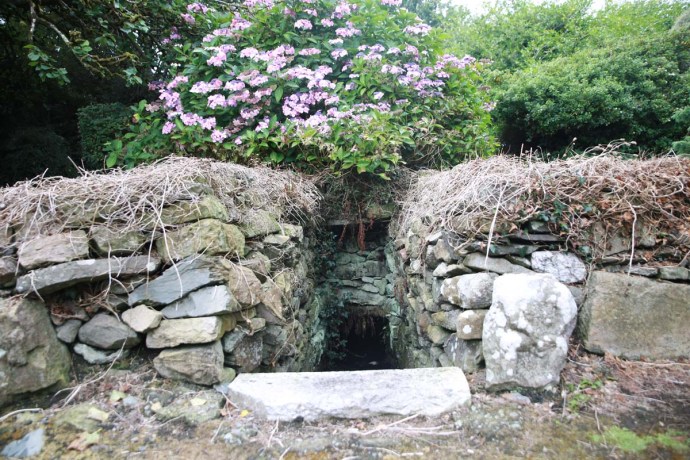
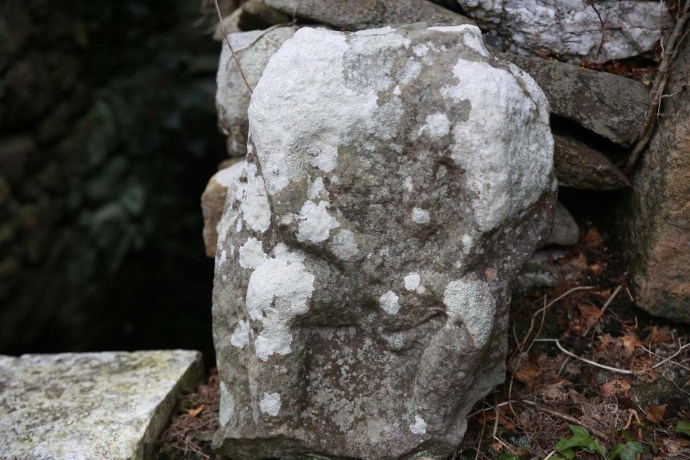
Killaloe sits right on the eastern edge of Clare and is separated from Ballina in Tipperary by the Shannon River.  It is the ancestral birthplace of Brian Boru.  And there is also St Flannan’s Cathedral. Across the road from the Cathedral is the AIB Bank. So what you ask. Well in the back garden of the bank is a Holy Well and next to this, leaning against a stone wall, is part of a Sheela which purportedly came from the Church.

To get access I spoke to Rebecca at the Customer Information desk and after much rooting around she found the key and I was given admittance. No special treatment, just another service offered by the bank. Seriously, I was amused that an historic treasure would be located in the grounds of a bank and that, amazingly, tourists find their way there and are given access. Ireland!

This figure is headless and considerably worn. but large and, depending how you catch the light, quite detailed.


ig3c7059

The AIB bank in Killaloe viewed from the grounds of the church.
ig3c6982

Holy well in the back garden of the AIB Bank, Killaloe.  Sheela na Gig fragment is on the right of the entrance.
ig3c6986

Killaloe Sheela na Gig. Detail.  Head is missing.


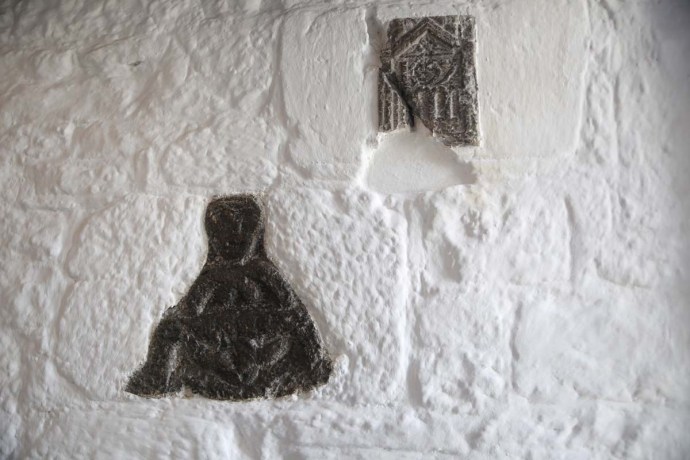
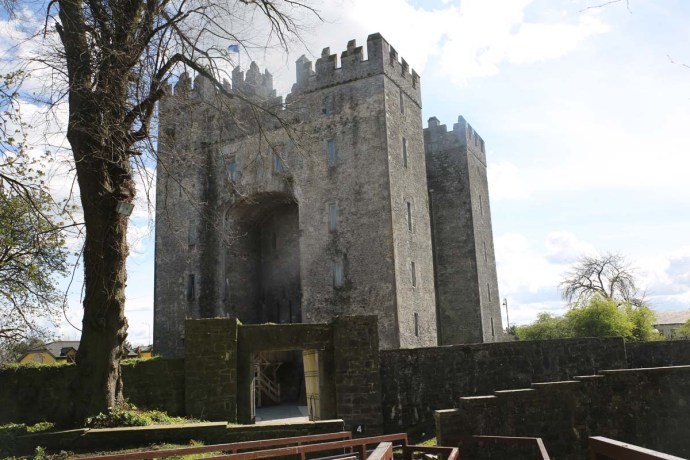
Bunratty is a very well known Castle and Folk Park and a major tourist attraction in Clare not far from Limerick. High up in a wall in the Great Hall of the Castle is a Sheela. It is in good condition but its location is such that it is hard to view. I am guessing it was moved from somewhere, perhaps an earlier castle structure and relocated during the construction of the current Castle to a place where it was not so conspicuous.

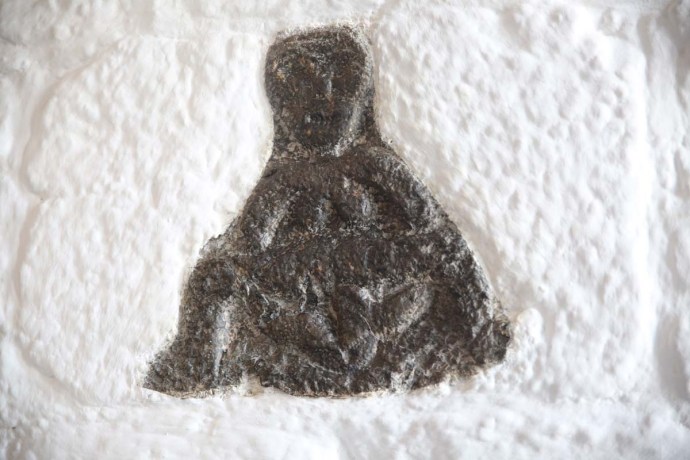
Interestingly the current castle is the fourth on this site and was built in 1425 by the MacNamara’s (again!)  but then greatly expanded by the O’Neills (again!) around 1500. The earliest castle is believed to date to 1251, though the site had been settled since 977. Exactly where the Sheela na Gig fits in is unknown. It is somewhat insensitively painted black and stands out starkly from the lime washed wall so the tourists can see it.  It seems to be in good condition.  This was the most unsatisfying Sheela I saw.  I hated that you had to put a telephoto lens on to see it.  And for feck’s sake – painted black!
 

ig3c9679

Bunratty Castle


ig3c9644

Bunratty Castle.  Sheela na Gig

ig3c9646

Bunratty Castle.  Sheela na Gig.  Detail.

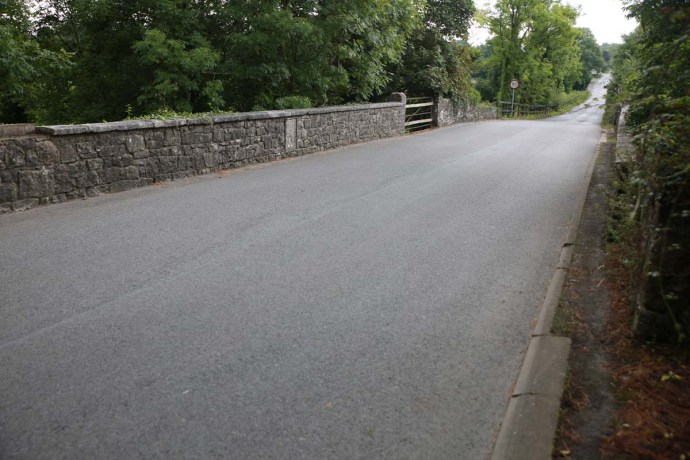
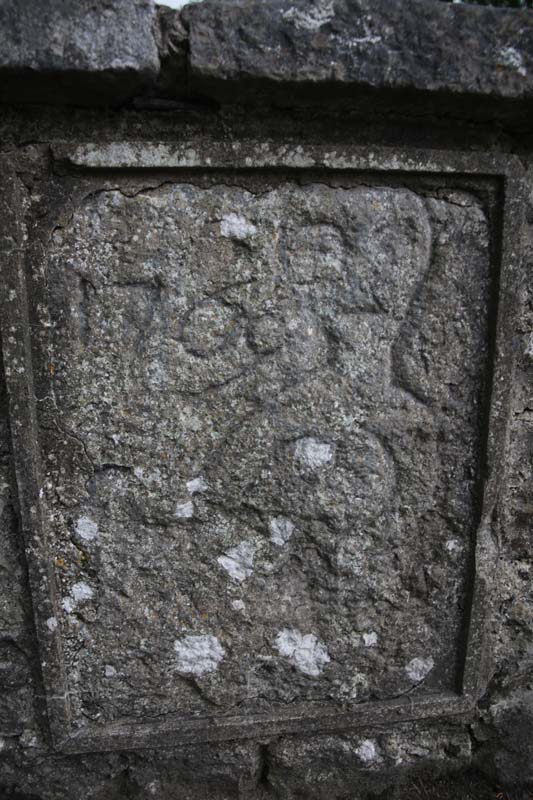
Lastly, there is a doubtful Sheela inserted as a panel into a bridge at Clonlara.  The panel is inscribed ‘1769’ which relates to the date of construction of the bridge.  The Sheela comes from an unknown site and is quite defaced.  Only the head and arms are distinct.
ig3c7196

Bridge at Clonlara

ig3c7188

Clonlara.  Sheela na Gig on stone panel inserted into wall of bridge.


ig3c7061

Clonlara.  Sheela na Gig.  Detail.

A final thought.  I find it fascinating that the Church has placed these extremely confronting figures at their portals for centuries and yet preach a moral purity. It seems a trifle dissembling. But I suppose we should be grateful that this unusual window into medieval and pre-medieval thinking and practice in Ireland has been preserved at least in a fragmentary way.


Anyway Ireland is full of mysteries and Sheela-na-Gigs are another one. I suggest if you come to Ireland you make a point of chasing down your nearest Hag in the Wall.  There’s sure to be one near you.  There are 140 of them.  The search will be as much of an adventure as the discovery.
Categories: My Journey, Real Ireland | Tags: , , , , , , , , , , , , , | 6 Comments

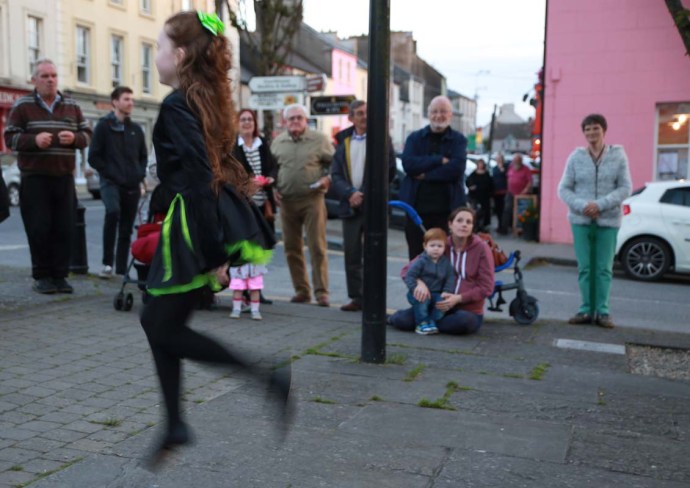
The Legend, the Master and the Pupil. Culture Night. Ennistymon 2016.

So, What’s an Australian blogger doing writing about Irish Culture? Well any culture really. OK Let’s get the jokes over.

What is the difference between yoghurt and Australia?         Yoghurt has a little culture

“I don’t despair about the cultural scene in Australia, because there isn’t one here to despair about.” said the dancer Sir Robert Helpmann in the mid-1960s,

And I could go on.

As of now, though I think Australians punch above their weight in artistic endeavours as we do in sport.   Hollywood and Broadway are filled with Australian actors. I hear Australian music all the time on radio and people don’t even know it is. “Oh are ACDC Aussie?” “Love that classic Irish song Band Played Waltzing Matilda” etc….

So there. I am going to talk about Culture Night here in Ireland anyway.

Culture Night this year was Friday 16th September and it is an annual fixture sponsored by the Irish Government. It’s a terrific innovation. Free events are held all around the country covering all branches of the arts. In fact 3,000 of them in 1,300 venues. I chose to spend the evening in and around Ennistymon in West Clare.

ig3c8160

ig3c8443ig3c8509

Ennistymon is a pretty town hidden in the hills at the southern end of the Burren. The town dates from the 18th century and is built around a bridge crossing of the Cullenagh River and its famed Cascades. It has always been a market town but the famine hit hard with 5,000 dying in its various workhouses in the five years from 1847.  Subsequently it prospered and is now a lively centre of commerce. The “Troubles” came to Ennistymon in 1922 when the British, in reprisal for the ambush at Rineen, near Miltown Malbay (which killed six Black and Tans), burned a number of pubs and houses.  The only troubles now are whether a bridge widening should be permitted at Blake’s Corner.

It is noted for the pretty shop fronts but as in most Irish villages and towns today the struggle for survival in rural Ireland is evident in many of the abandoned shops.

I visited an art exhibition in the Old Court House. It was an exhibition by Clare based artist Martina Cleary. There were really three exhibitions. Each with a different personality. One explored her attempt over ten days to recreate the search in 1926 in Paris by poet and author Andre Breton.  He became infatuated with a girl called Nadja and it became the subject of a book. She has created a number of panels using maps and photographs where she retraces and reinterprets the story. I loved the way she blended her own photos with contemporary photos, mainly old postcards.
This was a theme similarly explored in the exhibition of the photos of Dorothea Lange, a renowned photographer for Life Magazine, who came to Clare in 1954. Martina has revisited the places and themes to create modern versions of these images, many in black and white and many with a suitcase which was her constant companion. She has also cleverly woven her own images with historical images in a number of long collages.

I loved this exhibition. The pieces were quite eclectic and inventive in the use of multimedia, postcards, photographs, rocks, string, paper, books and found objects. One piece I particularly loved was of an open book with the words and images flowing out of it.

ig3c8098

I can’t actually recommend you go see it because it was its last day.  Sorry about that.  but do keep an eye out for her.

I then decided to treat myself to a nice meal at Byrne’s Restaurant overlooking the Falls. I was very impressed. I am a sucker for duck and will order it whenever it is on the menu. This duck confit was one of the best meals I have had in Ireland. Well done to the chef at Byrne’s and others for keeping alive the culinary arts in remote Ireland.

ig3c8292

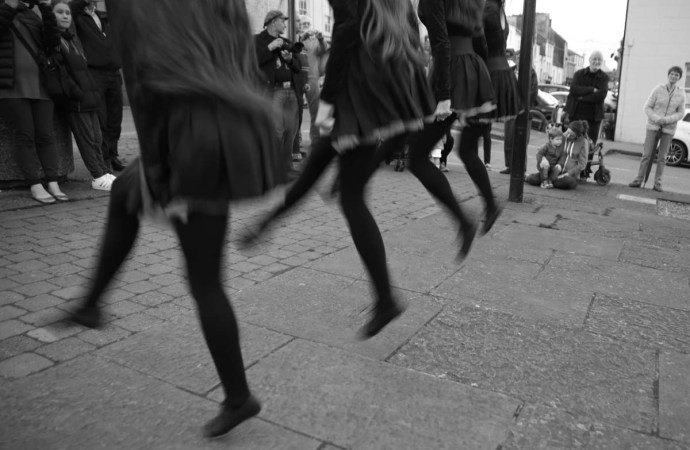
On my walk back to the car I stumbled upon a street session at the market square organised by the local Comhaltas Branch. There were some familiar faces there and I was asked to join. So a quick trip to the car and I had my fiddle, trying to balance it with my camera to get these few shots. I never cease to be amazed by the quality of musicianship and dancing I keep coming across in Clare. This was a classic example of the depth of the musical culture here and how vibrant it is today.

ig3c8547ig3c8606aig3c8634a

But my main destination for the evening was Kilshanny House, so my stay was short. This is a pub on its own in the middle of nowhere just a few kilometres from Ennistymon. These sort of pubs are a dying breed and struggle to survive but fair play to owners Mary and Aidan who have promoted good food and music to attract clientele.

They would have been happy this night. Blackie O’Connell the renowned Ennis based piper and the doyen of the local piping world was hosting Davy Spillane. Davy, a master whistle and piper set the trad world alight with Donal Lunny and Christy Moore and the extraordinary sound of Moving Hearts in 1982.  He provided many solo albums and collaborations since. With massive names such as Kate Bush, Van Morrison, Elvis Costello, Enya, Steve Winwood and Chris Rea. And Riverdance. And that tune Equinox on Bringing it All Back Home from 1991. A huge favourite of mine and almost an anthem for me.

He lives in West Clare but rarely plays publicly now, so this was a chance to see and hear him.  Blackie and Davey were the stars, though a number of other local pipers participated. The word had got out and the pub was nicely full. I saw many fellow musicians in the audience.

From almost the first note without any fanfare you could tell this was going to be different.  It was music from another realm. Fast or slow it didn’t matter. As the night wore on Blackie and Dave entered into a special place. They sat close together, facing each other, their pipes almost physically entwining just as their sublime music did. This music came from inside them and we were allowed to witness it. It was totally absorbing and spellbinding. Energy and fire. Many times, the other musicians just stopped and listened. And then Davy would play that Low Whistle. Extraordinary sound with incredible economy of finger movement. It wasn’t just Davy though. It made you realise what a phenomenal piper Blackie is.  During a break he wowed the crowd with the full version of the Fox Chase. Barking dogs and all.

ig3c8655aig3c8696aig3c8699ig3c8750ig3c8733ig3c8793

Oliver, Blackie’s dad, came over and whispered in my ear at one stage, “have you ever heard anything like this before?” And this wasn’t just a proud dad talking. I know, speaking to Blackie afterwards that it was special for him too.ig3c8775a_1ig3c8781

The two masters were joined for a couple of tunes by Kevin Nunane.  Kevin, didn’t look ten yet and is a student of Blackie’s. This is the future of piping and to have the three generations of pipers there playing was as profound an expression of the depth of Irish Culture as you will ever see. The Legend, the Master and the Pupil.

ig3c8711ig3c8712

I’ll leave it to WB Yeats to have the last word

But he heard high up in the air
A piper piping away,
And never was piping so sad,                                                                                                                                 
And never was piping so gay.


Categories: Concerts, Stories, Trad Irish Music | Tags: , , , , , , , , , , , , , | Leave a comment

Where the ocean kisses Ireland and the waves caress its shore : of seaweed and báirnachs.

Where the ocean kisses Ireland and the waves caress its shore
The feeling it came over me to stay forever more

These words are from a Saw Doctor’s song, The Green and Red of Mayo. OK, they are about Mayo but they could just as easily have been written about Clare. Or about my house which is right there on the rocks; where the ocean kisses Ireland.

IG3C5962

At the moment it is a hive of activity. Seaweed harvesting is in full swing and there are regulars who visit the shore to collect winkles or báirnach (limpets) or drop in a line hoping for a pollock or mackerel.

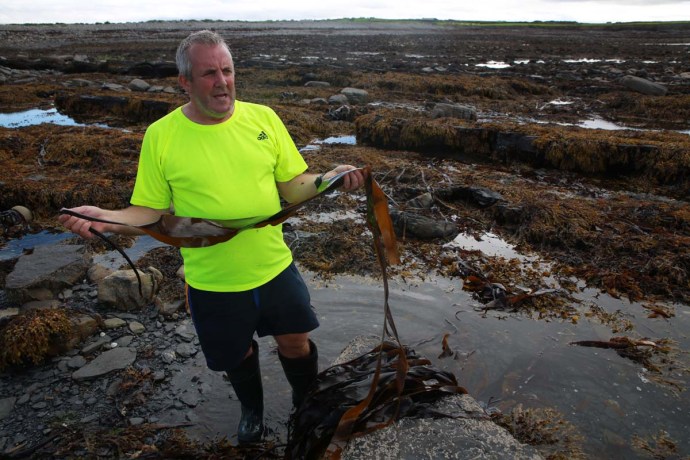
Gerard Talty runs the seaweed farm and his pasture is right at my front lawn. He has developed a thriving business exporting at least a dozen products made from seaweed collected at Caherush and nearby and processed right here on the Clogher Road. Talk about coals to Newcastle, Japan is one of his biggest customers.

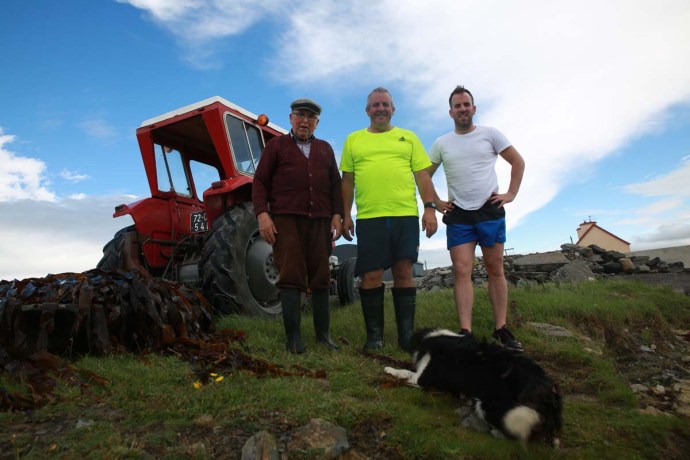
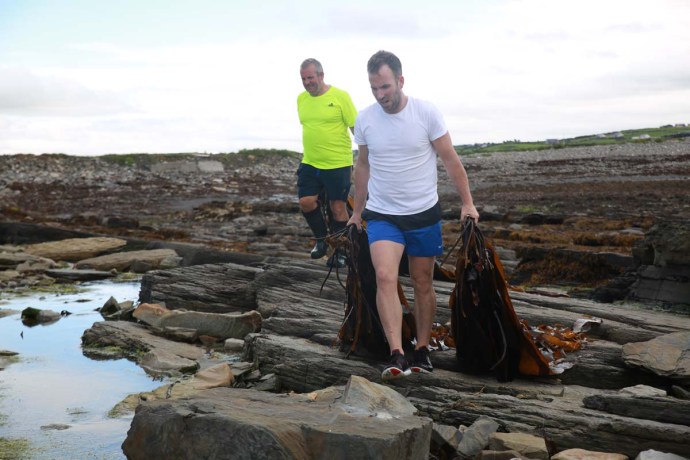
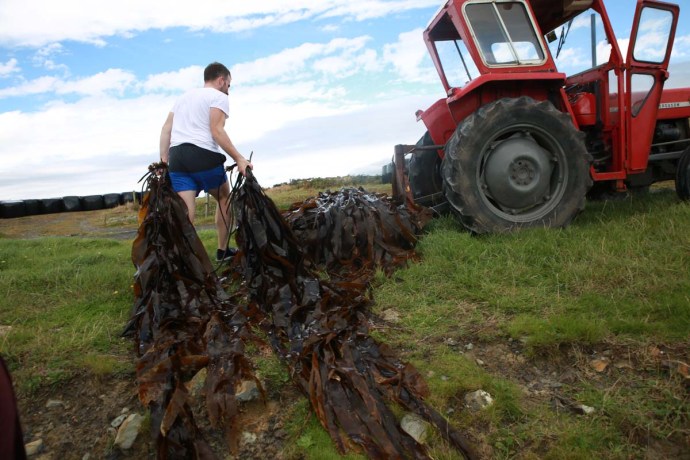
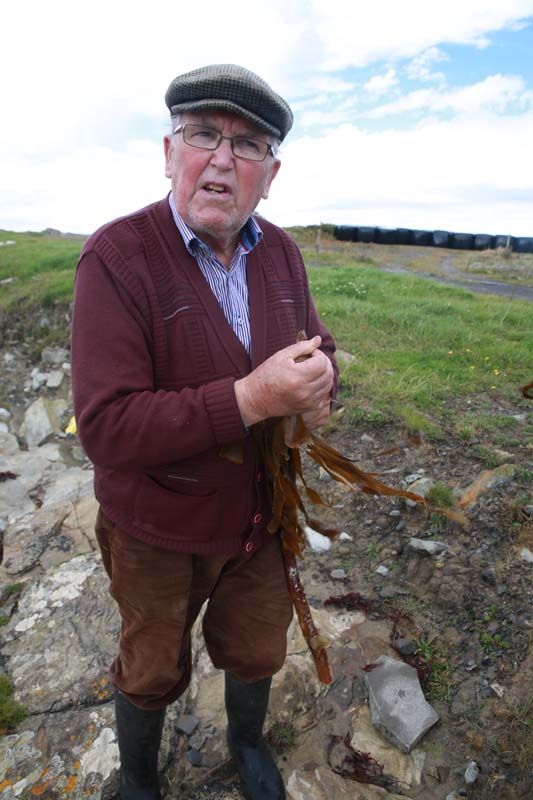
One bright day recently I went out to chat to the guys. There were three generations of Talty’s working the weed. Ger, his father Mikey and son Evan. That in itself is pretty unique.  Currently they are harvesting the kelp. Laminaria.  Ger is a great advocate for seaweed and he extolled the many properties of this particular variety of kelp. It eats cellulite; you can bathe in it; it is rich in magnesium; it has a chemical make-up that is closest to human blood. It is chock full of chlorophyll. Or you can cook any number of delicious things with it. There’s carrageen and dillisk and sea lettuce and all the rest too but today it was about kelp. Something I didn’t know about kelp was that the fifth taste, umami, was recognised in kelp in 1908 though it was nearly a hundred years later before it was given credence as a distinct taste alongside bitter, sweet, salty and sour.  This came with the discovery of umami taste receptors in the tongue and the stomach.IG3C6789IG3C6853IG3C6754IG3C6771IG3C6836

Seaweed farming has a long history in West Ireland. A poem, probably dating from the twelfth century, describes monks harvesting dillisk from the rocks and distributing it to the poor as one of their daily duties. It was used as a food and a medicine, as chewing tobacco, ingested to eliminate worms, and was recommended as a remedy for ‘women’s longing’ whatever that was.  Seaweed manure was particularly important in areas with poor soil, and conflicts were fought over seaweed rights and access.

10550110_1169256223085081_1466736678709842427_o

Ireland’s tradition of kelp harvesting dates back to the seventeenth century. It was burnt in stone kilns, the ruins of which are still visible in places. The ash that remained was used for glazing pottery and for making glass and soap and then later to produce iodine. This latter discovery kept the tradition alive until World War II. Now the tradition is continued by people like the Taltys.

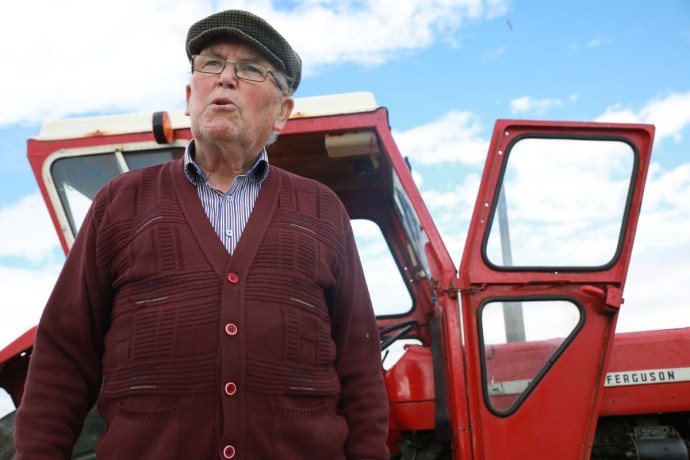
I spoke to Ger’s dad Mikey. A resident on the Clogher Road for 79 years. And still driving the 1969 Massey Ferguson to harvest the weed. He remembers when the tractor replaced the horse and cart. I’ve seen him doing any number of farm chores, including driving the excavator onto the beach to clear drains or transporting silage and of course helping with the seaweed harvest.

IG3C6799IG3C6823

We had just a few minutes before an errant shower interfered with the dialogue but there is nothing Mikey doesn’t know about this bay. He told me the best way to cook báirnach or where I can find evidence of them eating báirnach in the 11th century in the middens of a castle around the point.  And more surprisingly how Point Caherush was a major quarrying operation back in the 50s. This was intriguing and prompted me to investigate further. I will blog on this another time.

So with the tractor loaded and the threat of imminent rain, the operation concluded for the day. Ger told me that this kelp was the best for seaweed baths. Slippery; and hot water brings out the beneficial nutrients. “That’s what you get down at Trump’s” he said, referring to the Donald Trump owned resort at Doonbeg, ten km away.IG3C6867

I think I might go and take a bath.

Categories: My Journey, Uncategorized | Tags: , , , , , , , , , , | Leave a comment

The Last Day of Summer?

Today is 31st August.  The last day of Summer. Well is it? The Irish Met says Summer is June, July and August, but the Irish Calendar says it is May, June and July. Anyway putting that aside, I decided to attempt to cure the PFB’s (post-Fleadh blues) with some natation at Spanish Point. After all three days ago the beach was crowded and it was 20 degrees and this summer I had already swum on Achill Island and at Lahinch.

20160828_152441

Spanish Point August 28th 2016

It couldn’t be that bad, could it?  So rain hail or shine I decided to do it.

Well I woke up this morning and it was neither rain hail nor shine. But it was cool and windy. Just normal West Clare wind. I headed down about 11 am. Pretty different.  Today the beach was nearly empty and the lifesaving flags were having a hard time standing up.

20160831_111215

Spanish Point Beach August 31st 2016

20160831_112506


20160831_112637

But I could feel the love.  Well, subliminal messages written in worm excrement and weed.

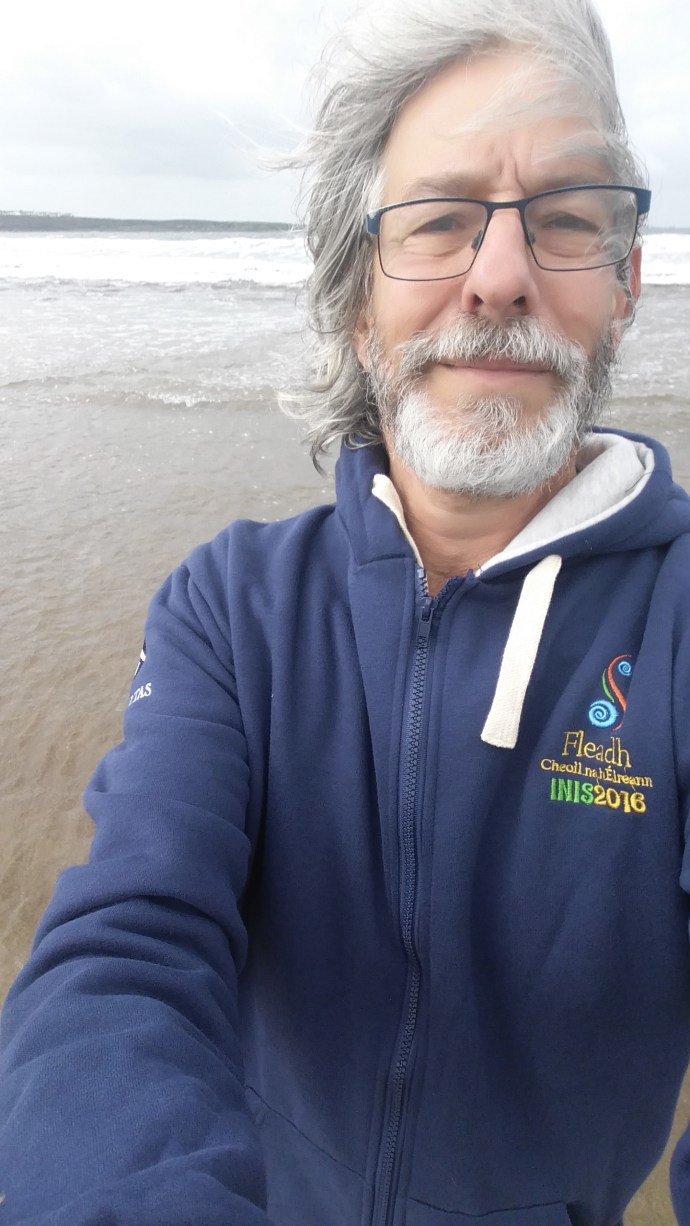
I tested the water but was still wearing my newly acquired Fleadh zippie, so you can guess that my heart wasn’t really in it.  After a wade, a shiver and a nice walk I headed back. Defeated.  Selfie time.

20160831_111738

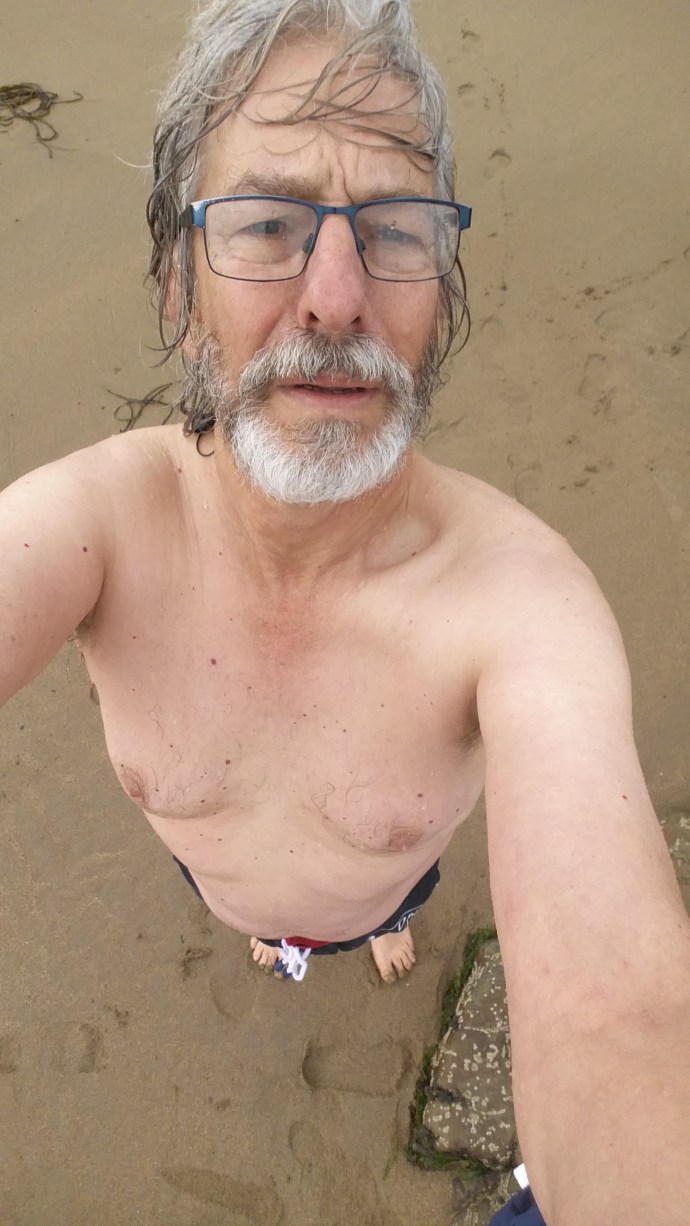
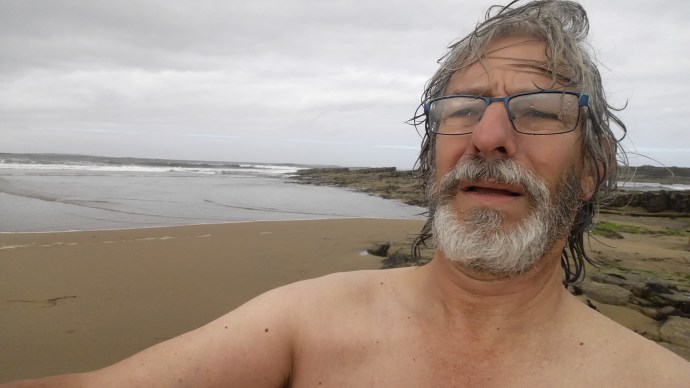
But feck it. I’ve made the effort. Why don’t I just do it. After all the water temperature is probably warmer than the air (well it actually wasn’t!).  So this was my little Everest and for the last time this year I braved the Wild Atlantic. No selfie of me actually in the water. So you’ll have to believe me. But with that one act the SADS disappeared and I was invigorated. Mind you I didn’t stay in that long. There is a limit to bravery or stupidity.

20160831_11381520160831_113849

I can’t believe this is my third summer in Ireland and my first in the water. After all I grew up on the northern beaches of Sydney.  I have an Aussie friend in Galway and she swims every day of the year. I don’t think I’ll go that far but hey, you never know.

Can’t wait for next summer.

Categories: My Journey, Real Ireland | Tags: , , , , , , | 1 Comment

Blog at WordPress.com.