My Journey

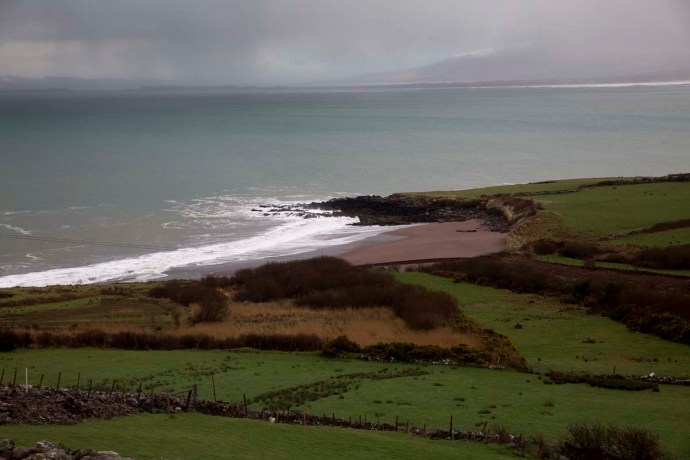
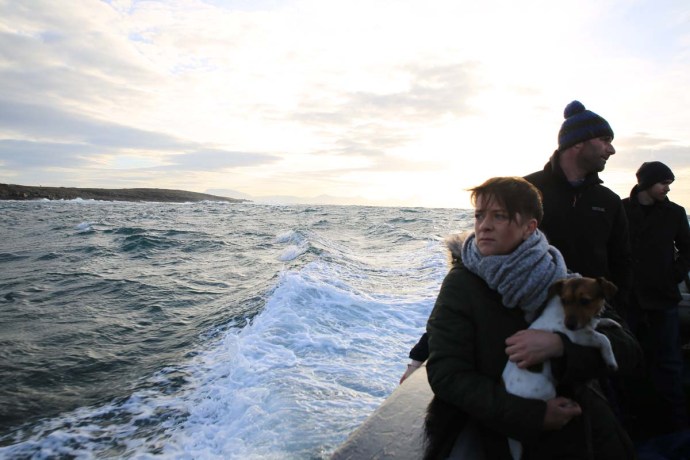
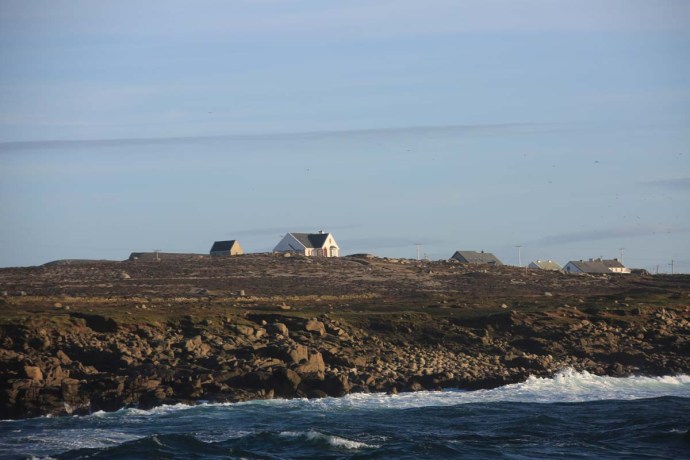
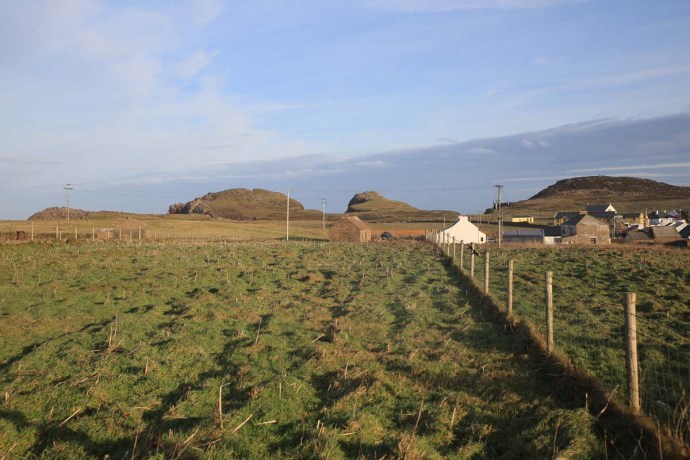
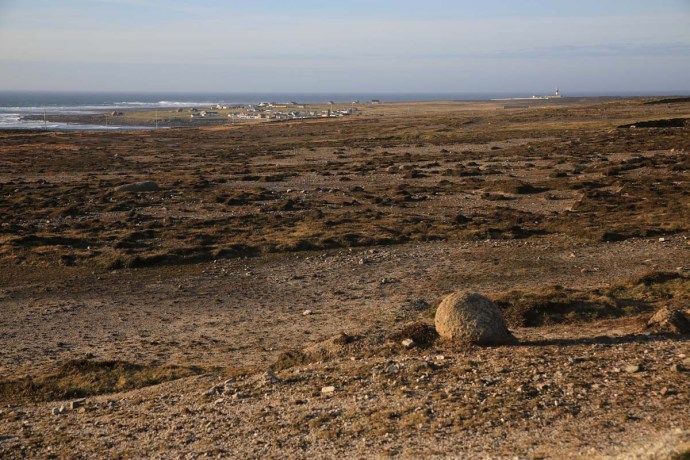
Kilkee, Co Clare. The Rhythm of the Waves.


IG3C4933IG3C5849IG3C4912

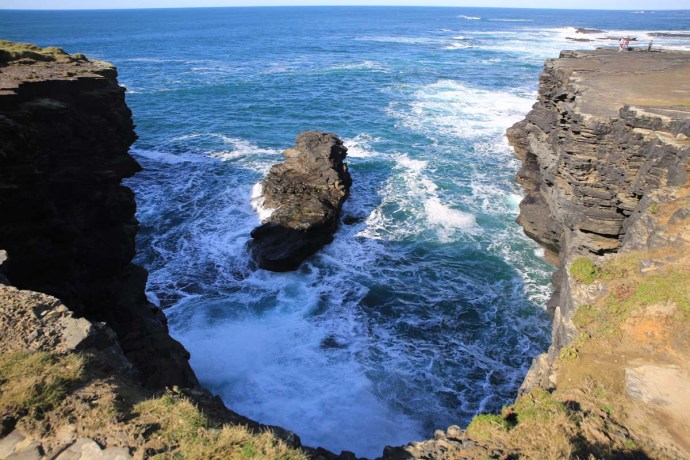
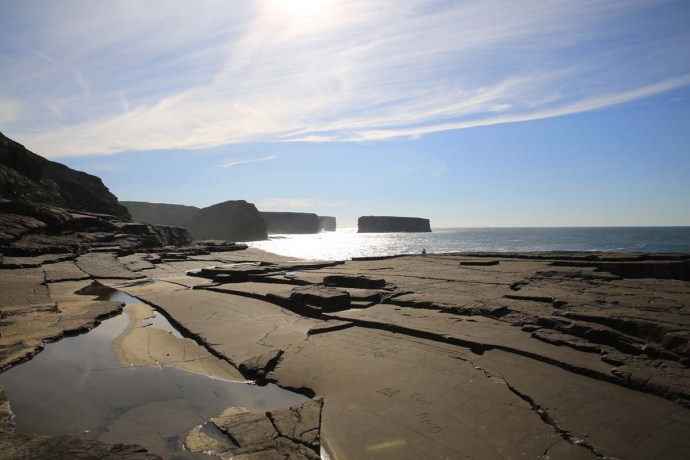
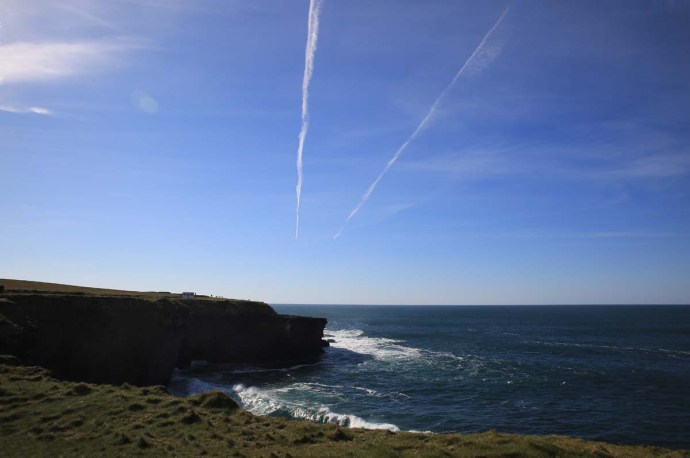
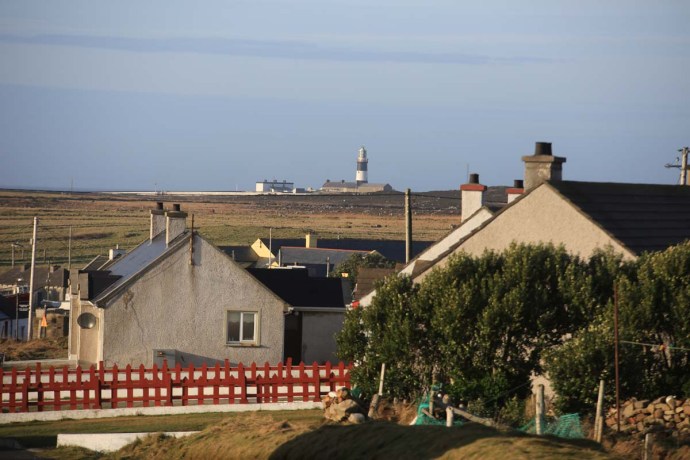
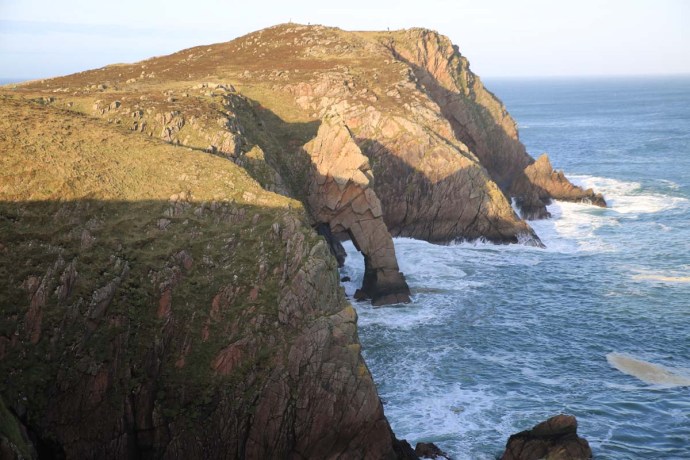
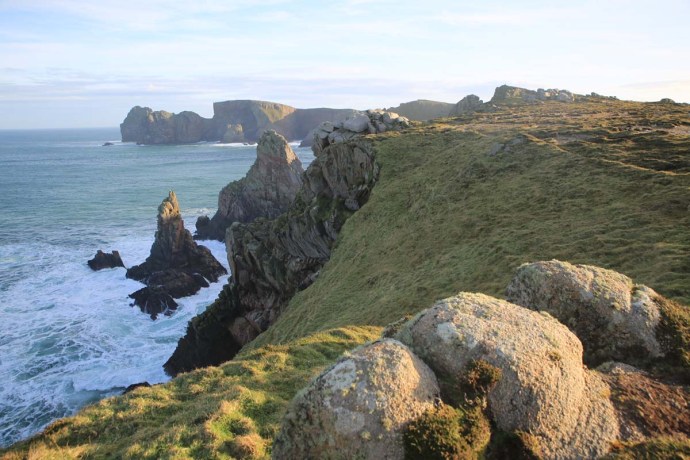
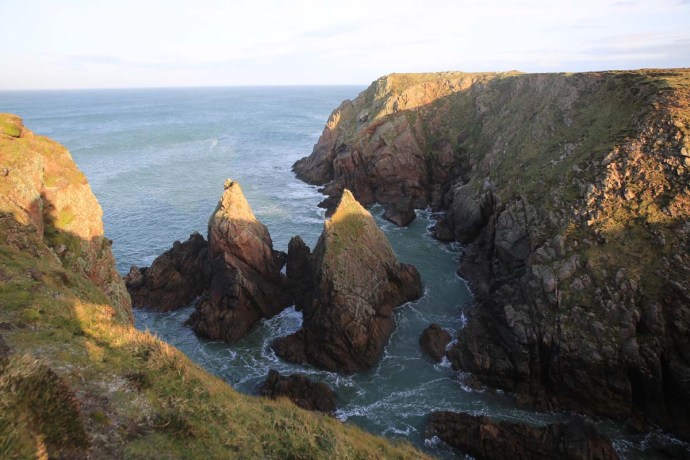
Kilkee is a small resort town on the west coast of Clare. One of its major attractions are the cliff walks. Every bit as dramatic as the more famous Cliffs of Moher but no Interpretive Centre and no entry fee! If you take the walk west from the Diamond Rocks Cafe along the coastal trail you are rewarded with striking cliff vistas and easy access, with concrete stairs, to the rock platform in a number of places; something you can’t do at the other Cliffs.

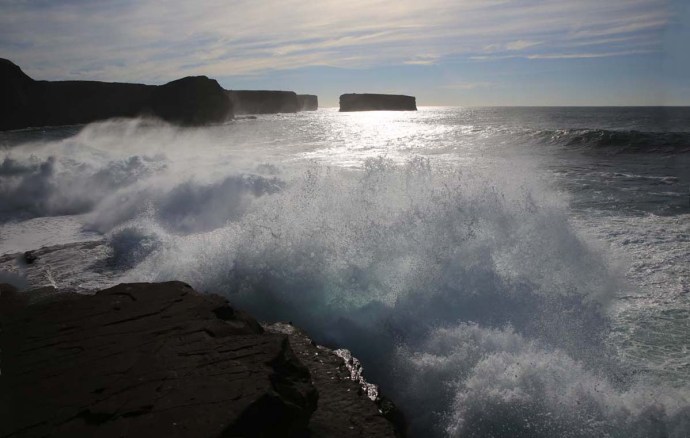
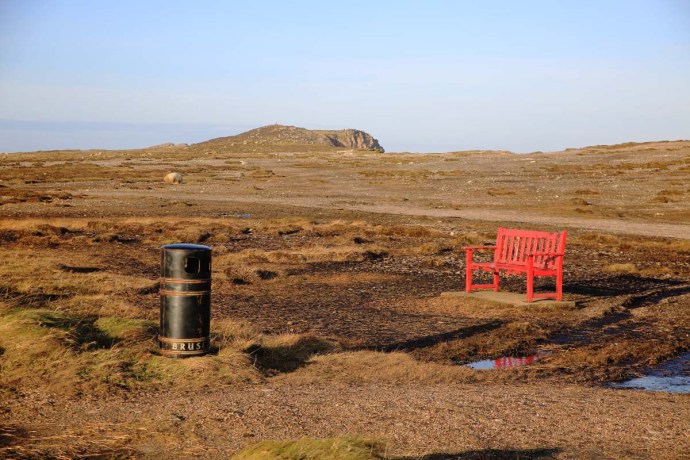
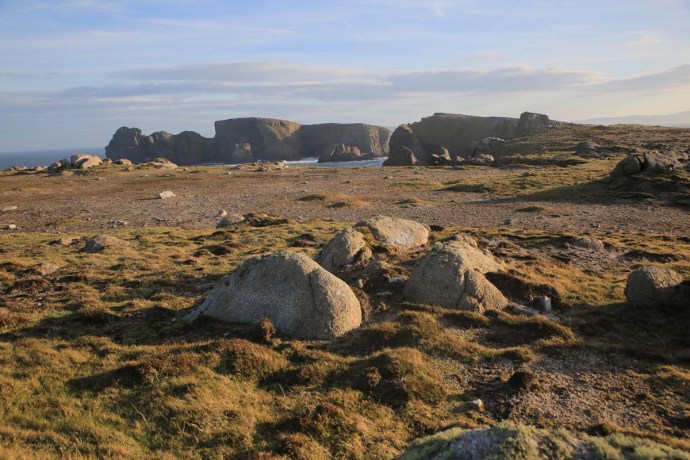
One glorious March day I visited with my camera. I descended one of these stairways towards the shore. There was much of interest. A ‘blow hole’ where you could see the swirling ocean underneath through a hole in the rock layers, perfectly preserve ripple marks reminding us this was once an ancient shallow sea in the Carboniferous. And of course spectacular views in all directions. If you keep walking west on this massive and smooth ledge you come to a point you can go no further. I’ll call this Valda’s Rock.

IG3C5228IG3C5237

I met Valda there. She was sitting on the edge where it drops off into the sea. I could tell she wasn’t a tourist and she had that look that she was waiting for something. I have learnt a lot by taking my cues from locals, so a polite distance away I sat and watched and waited too.

It was a perfectly calm day. There was nothing breaking the surface of the ocean. It sparkled with the glint of the sun bouncing off the ripples. Together but separately we waited and watched. IG3C5245


Then without warning a series of waves arrived and the ocean came alive. You couldn’t predict where they would arrive from or where they would break and they had me turning this way and that. There were waves reflected from the cliffs and this added extra complexity. Some would smash against the rocks and the spray would ride up, at least on one occasion sending some foolhardy visitors scurrying. It would only last a couple of minutes and then the energy dissipated and all was calm again. She snapped photos on her phone, while I clicked away on my beast making full use of the burst function. Then she plugged her earphones in and went back to her waiting. After a while though I disturbed her peace and we struck up a conversation.

IG3C5336aIG3C5617IG3C5623IG3C5518IG3C5665aIG3C5701IG3C5679


She had grown up in Kilkee though now lives and works in the ‘City’, as she called it (Limerick), but returns home every weekend and comes down to this very spot regularly. She told me she had been watching these waves since she was a little girl. She talked about what she called ‘the rhythm’. You wait and the big waves come. Not regular but they come. Interrupting our chat was the next big set.


Each set was uniquely different and some were well into ‘Wow’ territory. You just couldn’t leave as you wanted to see what the next one would bring.


But she did leave. After all it was Mother’s Day and she was supposed to cook dinner.


I had enjoyed meeting Valda but I stayed. Another hour. I tried to pick a pattern but there was nothing obvious. There must, I thought, be something driving this. It’s like the earth’s beating heart sets off mini tsunamis somewhere in the distant Atlantic and they pulse into waves that eventually funnel into this bay at Kilkee; the kinetic content released explosively as it meets land for the first time.


So thanks Valda for introducing me to this very special place.

IG3C5161a


Categories: My Journey, Real Ireland, Wild Ireland | Tags: , , , , , , , , , , | 4 Comments

Dingle Peninsula. The Irish Alps

I have blogged about Dingle quite a few times and posted many photos. Even the name has a delightful ringle to it.  So what else could I possibly say about it?  But. There’s the thing about Ireland. There are always surprises and you can go back time after time and each time it’s like you’re there for the first time.

It was the end of February and my annual pilgrimage to Ballyferriter was completed (I have written about this Festival in previous years and it delivered yet again). It was time to go home. I’d been up that night until 4am playing tunes with wonderful people whose friendship is renewed every year.  That’s what’s great about Festivals.  It’s not just the music.

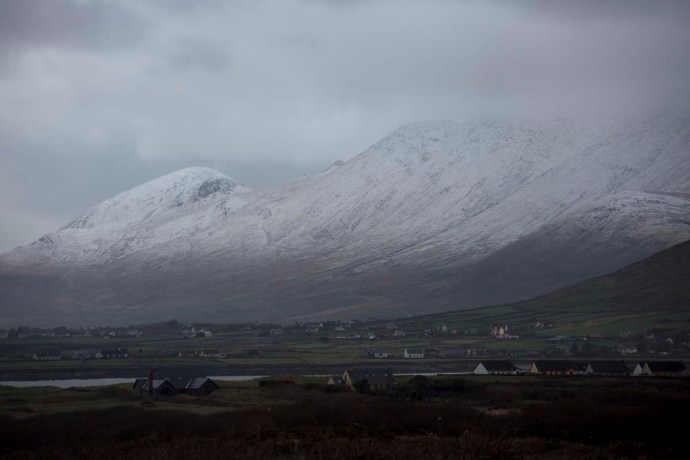
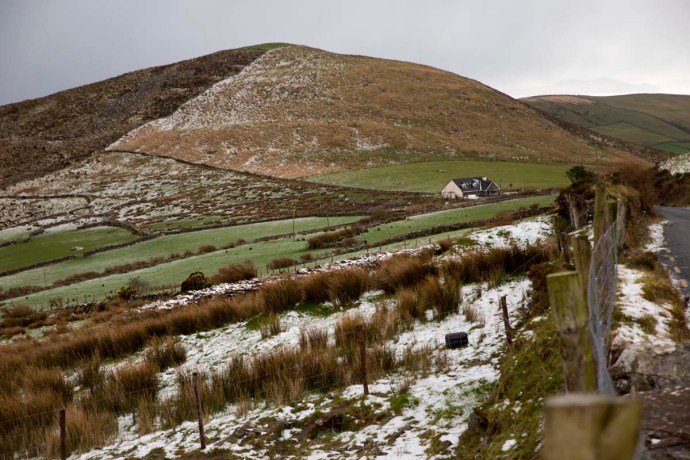
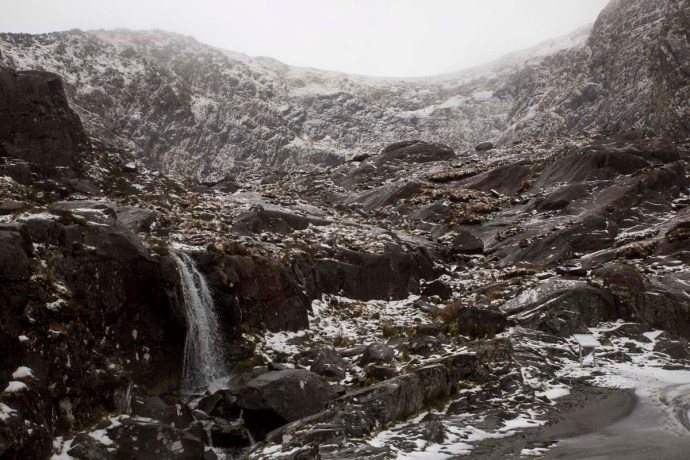
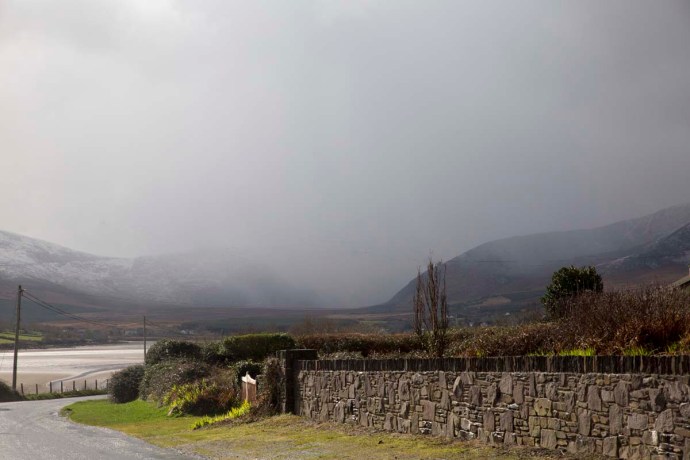
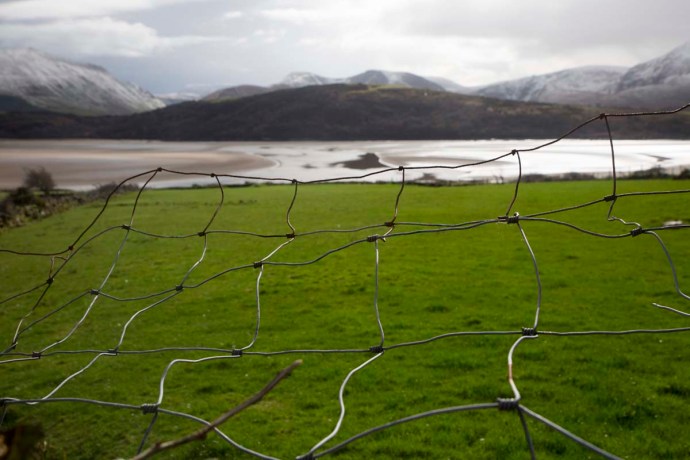
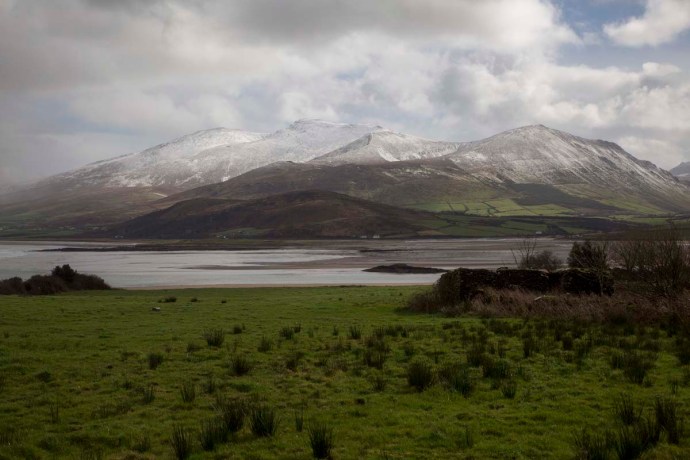
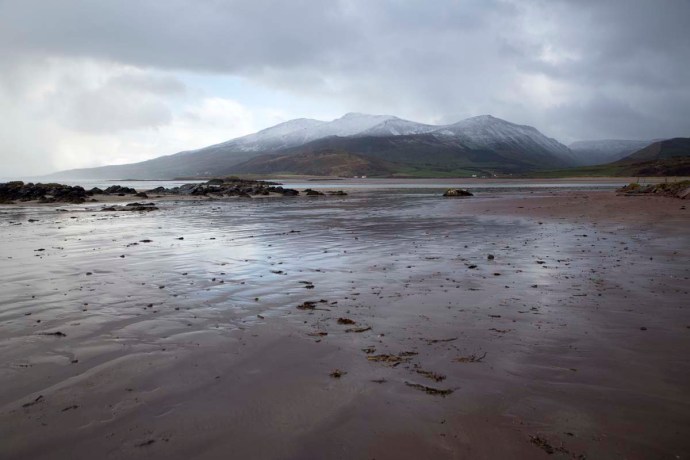
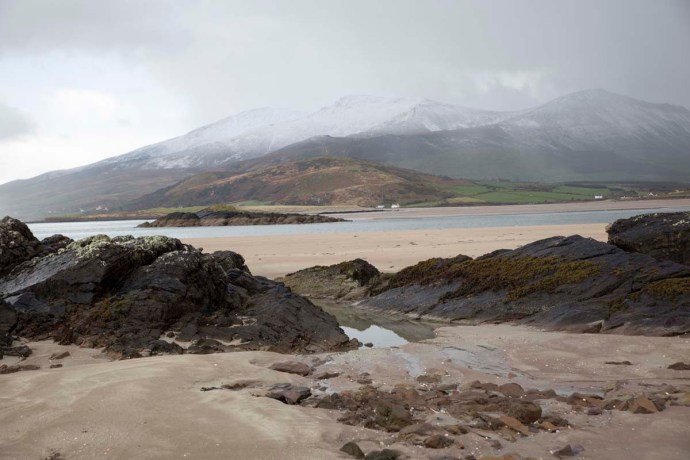
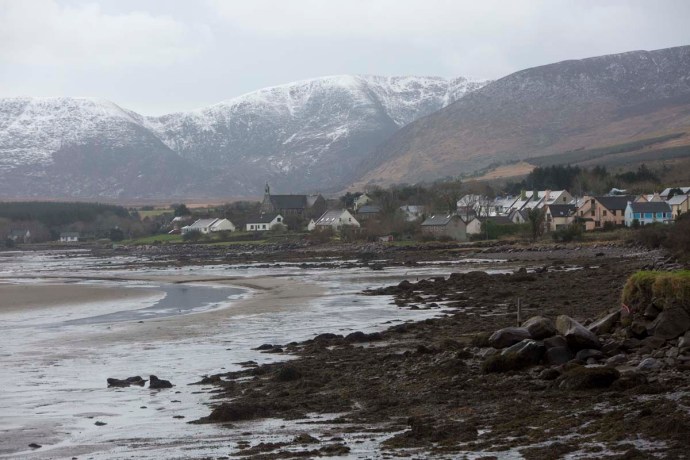
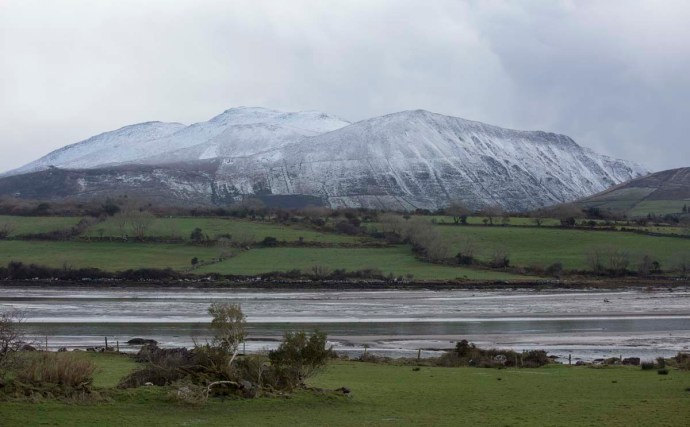
Anyway, during my short time in bed I lay awake listening to the wind lashing and the hail thrashing. A wild night.  Next morning it was calm and there were patches of sun, so I decided to head around the Slea Road back to Dingle, one of my favourite drives. I’d had Aidan Connolly in the cd player all weekend so it was time for a change. I stopped to retrieve a new CD and something made me look back towards Mt Brandon. I was stunned by the view. Completely shrouded in snow with Ballyferriter nestled at the bottom. This is what I saw.

kerry2_154

Mt Brandon, the third highest mountain in Ireland looms over Ballyerriter.

A quick change of plans and I headed the other way making the instant decision to return via Conor Pass.

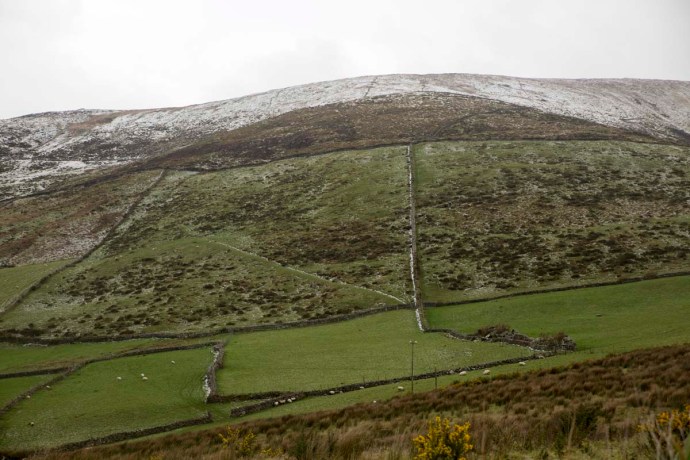
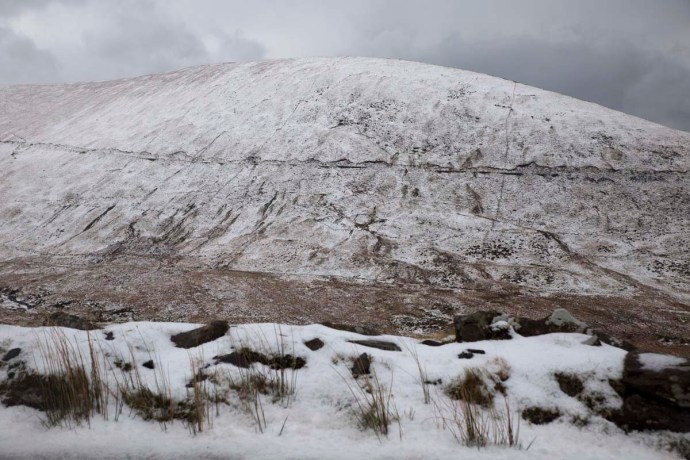
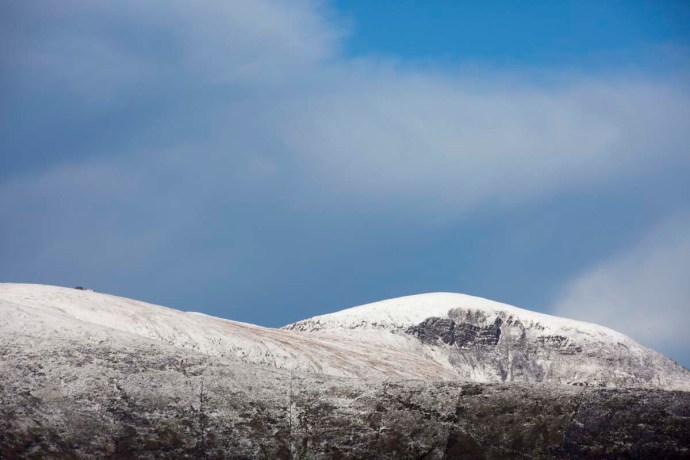
Perhaps a little foolhardy but the weather looked ok and I doubted I would get another opportunity like this. It turned out to be an inspired decision. As I got closer to the pass the patchwork of paddocks gave way to a carpet of white.  The weather came and went in waves as I headed up the hill.   I was greeted at the top by another snowfall. But also enough sun to revel in the alpine glory. I was in the heart of the Kingdom and I had been granted admission to the Palace. I was lost for words and I really can’t describe the feeling I had immersed in this wilderness.

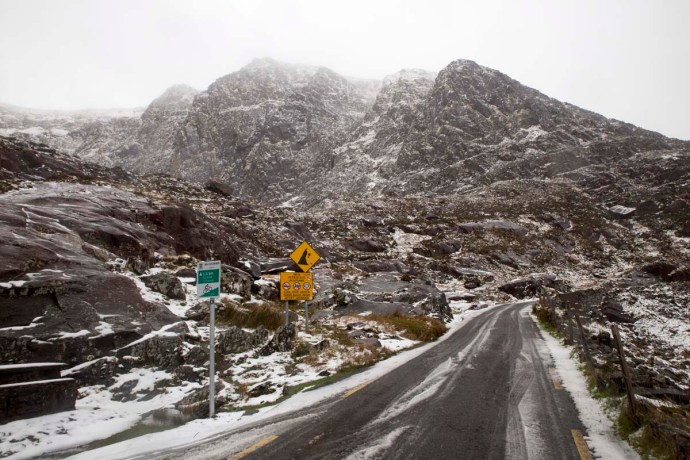
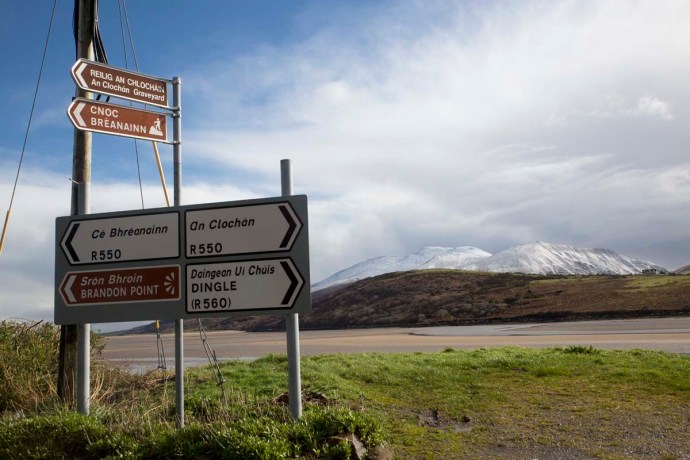
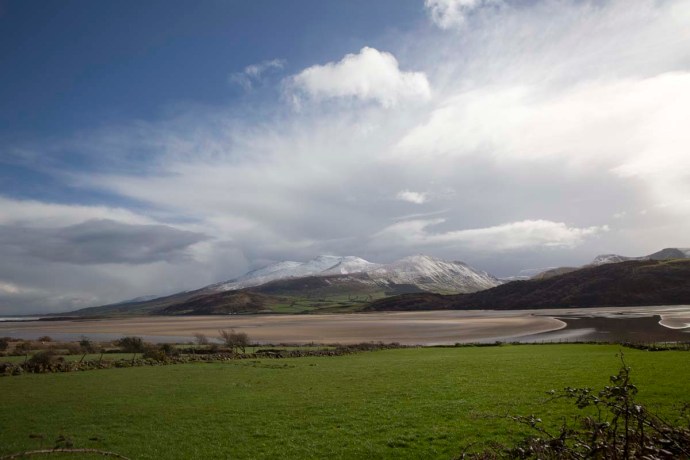
On this occasion I will let the camera talk. And talk it will. Loudly. Driving over the top and down Conor Pass, there were surprises with every turn in the road . I headed to the villages of Cloghane and Brandon and out to Brandon Point and then returned along the coast to Aughacasla. All the time snow clad ranges framed the views.

Please enjoy these photos of an Ireland rarely seen.

kerry2_157

The green fields of Kerry on the road up the Conor Pass, from Dingle, turned progressively whiter,

kerry2_160

and whiter,

kerry2_159

and whiter,

kerry2_167

and whiter.

dingle-4

The view from the top.

kerry2_172

Heading down the mountain

kerry2_2

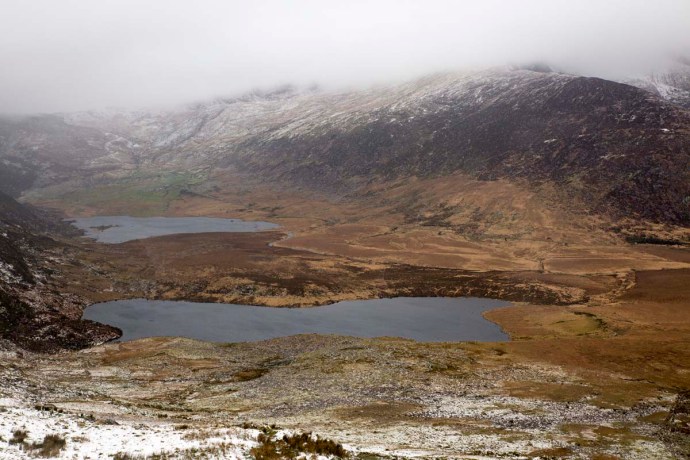
Corrie lakes in the glacial valley

kerry2_10

The start of the steep bit! Or the end if you’re coming down.

kerry2_13

kerry2_14

And then…..

kerry2_18

It started to snow.

kerry2_26

It’s not easy to photograph snow.

kerry2_30

At the bottom of the pass is this view towards Mt Brandon.

dingle-1

And the light kept changing.

kerry2_34

This is still Ireland.

kerry2_38

The Irish Alps

kerry2_41

Slieveanea from the base of the Pass

kerry2_51

Approaching Cloghane

kerry2_55

A view of Mt Brandon near Cloghane

kerry2_56

Cloghane with Mt Brandon.

kerry2_57

Mt Brandon looms above Cloghane Church

kerry2_61

Mt Brandon

kerry2_66

The sun shone

kerry2_69

The road from Cloghane to Brandon

kerry2_70

looking across the bay to Beenoskee

kerry2_72

And then it was raining

kerry2_75

Fenced in

kerry2_78

The mountain disappears in the mist

kerry2_85

View from the pier at Brandon

kerry2_86

The pier at Brandon

kerry2_89

kerry2_90

Another view across the bay towards Beenoskee

kerry2_92

Incongruity.  Surfers in the bay.

kerry2_100

Colours.

kerry2_105

The village of Brandon

kerry2_109

kerry2_115

Cappagh Strand near Brandon village

kerry2_116

View across Brandon Bay and Cappagh Strand

kerry2_126

Cappagh Strand

kerry2_131

View from Cappagh Strand back towards Mt Brandon

kerry2_139

The village of Cloghane

kerry2_142

Cloghane or have I been teleported to Switzerland?

kerry2_147

The hills are alive with the sound of……

kerry2_150

A last view of Mt Brandon.

Categories: My Journey, Wild Ireland | Tags: , , , , , , , , , , , , , , , , , | 1 Comment

Life Wasn’t Meant to be Easy Part 2. The Search for St Ruth’s Bush.

I recently blogged on my troubles finding the Bealin Cross. Well not wanting to labour a point but on the same day I had a similar interesting experience trying to find St Ruth’s Bush.

Really I knew nothing about St Ruth’s Bush, except that it is the name of a lovely reel.  Of course in my ignorance I imagined it was referring to a Saint in the mould of St Brigid.  Perhaps the Patron Saint of Gardening.  But I made no enquiries.  Well I was wrong.  Not only was Saint Ruth not a Saint but she wasn’t a she!  I’ll come back to that in a moment but first a bit of Irish History.

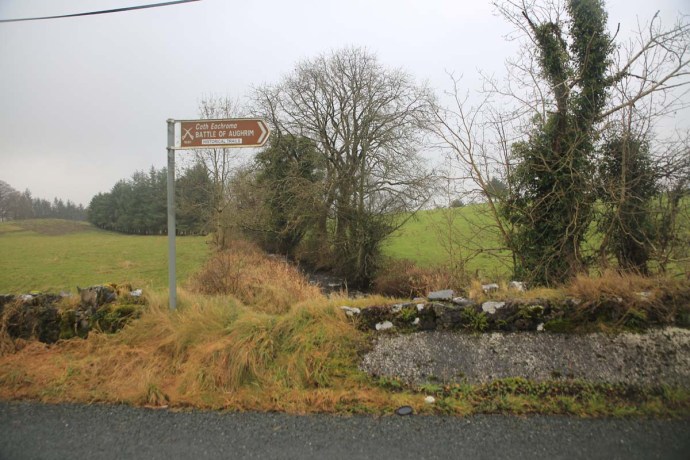
Driving in Ireland I like to travel off the motorway as much as possible so coming home from the North on a recent road trip, just past Balinasloe in Co Galway, I saw a turnoff to Aughrim.  Aha my chance to visit the site of the Battle of Aughrim.  Another tune name but to my shame I knew nothing about this battle.  In fact it was the definitive battle of the War of the Kings, the battle between the Jacobites, supporting Catholic James II and the English/Dutch backed Williamites.  The battle was fought on July 12th 1692 and ended badly for the Irish and their French allies.  A total of 7,000 were killed in the worst massacre on Irish soil. Ironically, the battle was going well for the Irish until fate intervened. Firstly they had been supplied with the wrong musket balls which didn’t fit their guns, but even worse their leader was decapitated by a stray and fortuitous canon ball. Leaderless, the Irish disintegrated and the battle was lost.

Their leader was Charles Chalmont,  The Marquis de St Ruth.  Saint Ruth.

This defeat led to a series of devastating events for Ireland. The surrender at Limerick, The Treaty of Limerick, the repudiation of that Treaty by the Protestant dominated Irish Parliament, and the subsequent penal laws and centuries of British domination of Ireland.

So back to St Ruth and his Bush.  The Bush was planted in an open field and reputedly marks the spot where St. Ruth fell from his horse after his head was blown off.  I was determined to find this bush.  It was marked on the self guided battle tour and referred to in all the guide books.  No problem I thought.

So I get myself to the right area and find a sign adjacent to a field.  This must be it.  Looking for some guidance I saw none but started wandering aimlessly across the paddock.  Looking for a bush.  Not looking promising as I was rescued by a voice from an adjacent house.  “Can I help you?”

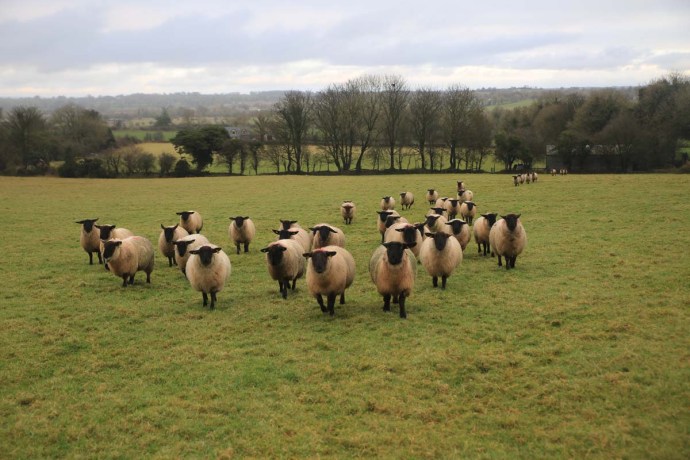
“Oh  you won’t find St Ruth’s Bush there.  It’s too boggy.  No one goes that way.”  She directed me back up the road I had come to a yellow house and told me to walk through an adjacent gate and across the paddock.  So I did this.  Mind you there was no signage here but there was a beautiful steel stile,  which took me into an empty paddock.  In the distance I saw another stile, so I headed that way.  No bush anywhere.  Now I was joined by a flock of friendly sheep very keen on following my progress.  Across that stile I was in another empty paddock.  No signs and no bush.  I walked to the other end of the paddock.  Nothing.  My companions were no help.  I was perplexed and retraced my steps.  I then caught a glimpse of a stile in a side fence and this proved to lead to the holy grail.

ig3c2763_1

My friendly companions


Here there was a sign.  However this was just a viewing platform and in the middle of the paddock in the distance was a fenced off compound surrounding some very unimpressive weeds.  I had found it.  The memorial to this pivotal event in Irish History and the worst military disaster in the country was some straggly undergrowth in the middle of a boggy field.

ig3c2780

ig3c2782

St Ruth’s Bush


Sorry but the photo is just as unimpressive.  It was raining and as it got heavier, I hurriedly retreated.  With a mixture of satisfaction though that I had found it and sobering reflection on its significance.  There are a number of other sites to visit in the vicinity and each in its own way takes you back to the horrible events of that day and the devastating significance to the Irish people.  A lonely bridge, a ruined castle and empty paddocks all tell a sordid but sad story.

ig3c2797

Attibrassil Bridge

ig3c2738

Ruins of Aughrim Castle


When I play the evocative tune The Battle of Aughrim now, it is hard not to think of those 7,ooo souls and the millions who suffered as a consequence.

Categories: My Journey, Real Ireland | Tags: , , , , , , , , , , , | Leave a comment

Life Wasn’t Meant to be Easy Part 1. Finding the Bealin Cross

ig3c2635

Life wasn’t meant to be easy.

These were the infamous words of a former Opposition leader of Australia, Malcolm Fraser, back in 1975 as he engineered the dismissal of the Labour Government of Gough Whitlam and had himself installed.  That’s not really important here but his words came to me as I scoured up and down the wet, foggy hills of Westmeath looking for a High Cross.

I had no particular reason to seek out this cross and I knew nothing about it but my trusty road atlas has a spot marked called Twyford Cross and it wasn’t much of a detour so I thought I would visit.

First though, it is nowhere near Twyford.  It was closer to Baylin on the map, so I went there to start my search. Google Maps has no mention of it so I was in the dark but I thought the gods were with me because as I approached the village there was one of those nice brown signs for naïve tourists like me which said Baylin Cross.

That’ll do. I headed down the lane until it stopped abruptly at two locked gates, after just a few hundred metres. No sign of anything that resembled a High Cross. How could I have missed it? I drove back and forth a couple of times. There was nothing that would indicate a cross.  This was just a rural, suburban street.

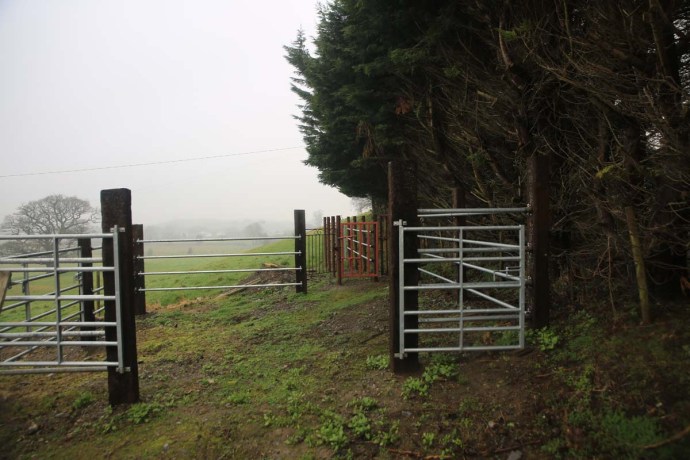
Ok time to Google it. I found a couple of brief descriptions of the Bealin Cross, which I assumed was the same. One seemed helpful. It described at length, how this guy went on a goose chase looking for it until he asked someone, who told him to cross a stile and it was on a hill behind the houses. This guy found it, why couldn’t I?  I went up and down a couple more times looking for a stile. No stile. It was wet and foggy and miserable (have I already mentioned that?) and I saw no one around to ask. Not wanting to give up I pulled off the road to have a think. In front of me was a spanking new cattle drenching pen and a bright red gate to the side. Cattle drenching pen? Stile? Just maybe!

ig3c2694

The access point for the High Cross.  Through the red gate.

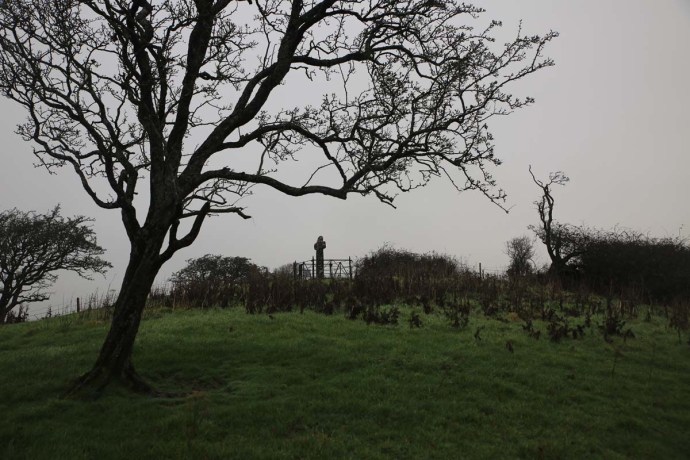
So on a hunch I went in there. Round the corner and aah there’s a hill. Fifty metres further walking I saw the cross.

ig3c2641

I know I have been long winded but I just wanted to stress that sometimes if you want to find something in Ireland, it can require persistence and a dose of luck. I love it that there is heritage everywhere. Megalithic monuments, ring forts, dolmens, ruined castles, abbeys and crosses. That of course is one of the reasons to visit Ireland. The Irish have preserved these monuments and are generous with access to them. Many are on the major tourist itineraries and have bold signage, car parks, interpretive centres and entrance fees. Many do not. These are the ones I like to visit. But as in the case of the Bealin Cross it can be a challenge. It almost seems to me that while farmers and the ‘authorities’ are happy to allow you access, they are not going to make it easy for you by telling you where it is; so no parking, no signs and definitely no interpretive centres.

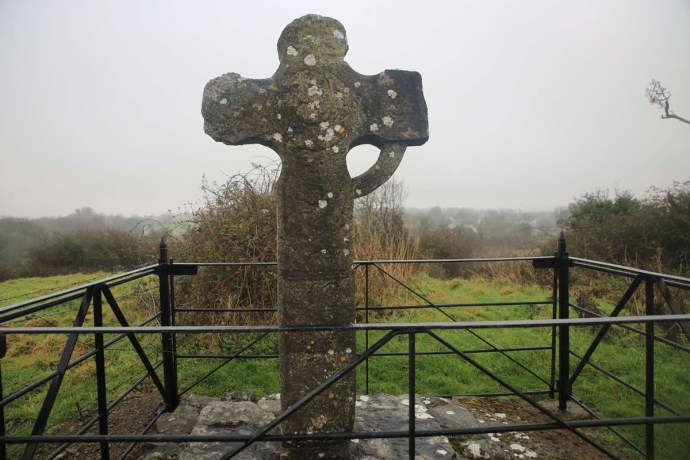
So Bealin Cross. Was it worth the effort? It is called the Bealin (Baylin) Cross because it was once in Baylin but it was moved to the townland of Twyford. It is around 2 metres high it is beautifully decorated though somewhat worn. After all it is believed to have been constructed in around 800AD. Yes I haven’t left a ‘1’ off the front. It is 1,200 years old. It is thought to have been built originally for nearby Clonmacnoise.  There are interlaced creatures with birdlike heads running up the East side and a stunning celtic knot at the centre.

Though they are hard to make out other images include a hunting scene with a dog biting a deer’s leg. Each side has different images.

ig3c2667

Personally I find it remarkable that it still exists and sits on a hill exposed to the elements. Not hidden away in a museum or church but in its ‘natural’ environment for anyone to discover and enjoy (if they have suitable orienteering skills).

The photos are pretty ordinary as was the weather and once I found it, my time there was short as the heavens opened up.

Of course it was worth it but on this occasion perhaps the journey was more interesting than the destination.

Categories: My Journey, Real Ireland | Tags: , , , , , , , , | Leave a comment

The Waves of Tory

ig3c0890

Magheroarty Beach, where the ferry departs to Tory Island


Tory Island. Those two words resonate loudly in my ears.

Back in the late 70s and early 80s when I played in Bush Bands in various remote parts of Australia, one of the favourite dances was the Waves of Tory. Well our version of it. With that lovely descriptive name reflecting the motion of the dancers with high potential for total chaos yet at the same time conjuring up romantic notions of a windswept wild wasteland in the North Atlantic.

As far away from the beautiful windswept wild wasteland of the Australian desert as could be.

ig3c1778

Waves of Tory


Well now I have ridden the Waves of Tory and the imagined and fanciful has become real. It is wild and it was windy and those waves were something to behold but it was not a wasteland. It is surprisingly different to the other inhabited islands I have visited here such as Achill, the Aran Islands and Sherkin.  It is stunningly beautiful.

ig3c0773

Tory Island as seen from Magheroarty Beach

Tory Island, or just plain Tory, lies about  14km off the coast of Bunbeg in western Donegal. On the day I decided to go the ferry had already left from Bunbeg but I had time to drive to Magheroarty and catch the 11:30am.


I picked my day and was lucky. The forecast was spot on with sun predicted all day because I really wanted to photograph it in a clear light. But I forgot to check the ocean conditions and boy was there a mighty swell which made for a very rough trip.

We were warned to be back at the boat by 2pm, much earlier than scheduled,  and if we didn’t get it we would be there for at least four days as storm conditions were expected to prevent the boat sailing for that time. This gave me about 1 ½ hours on the Island . I was disappointed but it is amazing how much I could see in that time, albeit fleetingly.

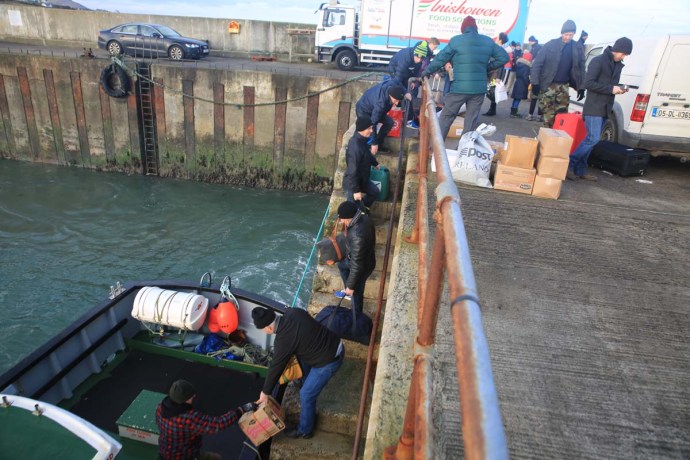
So back to the Waves Of Tory. We took the smaller of the boats, the romantically named Whispering Dawn, that usually do this run and it was filled with returning residents, with their shopping and all sorts of oddments that can only be got on the mainland. There was plenty of Guinness and whiskey and a massive birthday cake. Well that was what I guessed it was by its shape and the way they were carrying it, and a big bag of helium filled balloons which said 40th.  So many things to plan for with life on a remote outpost. Goods were passed down the steps in a human chain, as they probably were since the boat started sailing there.

ig3c0935

Everyone joins in to load the boat.


So the boat was packed finally, though a few late comers forced us to turn around after we had already headed out to sea. Wouldn’t happen with the Manly Ferry! When we finally got going it was rough. we were tossed around like one of those toy boats in a bathtub that Hollywood used to simulate a violent storm.  Except this was real. Waves would swamp the deck as we listed first one way then the other.  The Captain doing a marvellous job to turn the boat into the massive waves to avoid them hitting us broadside. Photography was pretty difficult with salt on the camera and the cameraman, but I got a few. Remarkably I didn’t get sea sick.

ig3c1124

Ploughing through the waves on the way to Tory

ig3c1146

All kinds of passengers


The Island loomed into view so slowly. The eastern end looked rugged and mountainous while the western seemed more topographically restrained. We pulled into the wharf with some relief and the passengers disappeared into their little slice of this Island world.

ig3c1556

I knew Tory had a King.  The current king is local artist and musician, Patsy Dan Mac Ruaíri.  Elected by popular vote of the Islanders he has ruled since 1993. I was expecting to be met by him and his accordion.   Every account of a visit to Tory talks about the King. Well not this one, because he just wasn’t there.  Perhaps he was engaged on other official duties.  I can only assume that it was of the gravest urgency to have kept him from meeting the boat and welcoming me.

The Island is fringed with granite boulders and slopes gently up from the seashore with a treeless plain that heads off to the horizon where there are a few rocky knolls.

ig3c1219

There is a cluster of houses which is the main village and in the distance I could see other smaller clusters with only a few scattered houses in between. Much of the land seems barren and empty but you are drawn to explore.

ig3c1423

The village is just a lovely higgledy piggledy jumble. Nothing is straight. The main road snakes around and the houses are built at different angles to each other. One suspects people here over time have just done what they pleased. Many vacant and ruined houses sit next door to beautifully painted and maintained cottages. In the centre of it all is the remains of a round tower, a bell tower from the 7th century and the only remaining part of a Monastry founded by St Columcille as a sort of getaway from the no doubt stressful life of being a saint. Prominent in the town is a generator and you are reminded of what it must be like to live here.  Especially in winter.  Indeed, in 1974 a massive storm cut the island off for two months.  The response of the Government was to attempt to resettle the 130 residents on the mainland, but the islanders resisted and won the right to remain.  A pyrrhic victory as there are virtually no facilities remaining.

ig3c1159

The 6th Century bell tower is the only remains of the original monastery


ig3c1492

ig3c1235

ig3c1507

Boats share the main street with houses


It’s maritime connection is never far away. Old boats are scattered through the village most unlikely to see their hull in water again, now part of the permanent streetscape.

They must be a special breed, the people who live here.

I loved the feel of the place. The hand painted signs, the unpretentiousness. The rawness reflecting a life that this particular day’s relatively benign weather temporary masked.

I had less than an hour left and I had no idea what the Island had to offer. I could see a light house in the distance but no time to go there.  I should have done my homework I suppose but I went there on a whim. After walking through the town I kept seeing those knolls and ridges in the distance; so I headed across the bare paddocks.

ig3c1449

A view towards the lighthouse


ig3c1345ig3c1430a

Wind assisted. When I got there the ground suddenly dropped away into preciptious cliffs. I had to work hard to avoid being blown off into the Atlantic. The view was stunning.

ig3c1350

ig3c1297

Land bridge in quartzite cliffs

ig3c1360


Stunning, sublime, arresting, breathtaking.  Substitute any other hyperbolic synonymy and you still won’t be able to describe it adequately. Some of the cliffs were of granite and some were of quartzite. And they were different to each other and to the cliffs of Clare. The granite cliffs were smoother, more rounded and with boulders perched precariously. Those of quartzite which formed the high cliffs of the northern end of the island were jagged and irregular with many offshore stacks and islands and even a land bridge. I continued to walk along the cliff edge and each corner would reveal another spectacular vista of rugged bays and pinnacles.

ig3c1395ig3c1406ig3c1334

A quick look at the time and I had twenty minutes left to make it back to the boat. Got there no problem but disappointingly no sign of King Patsy to say goodbye to me and reluctantly just a handful of us embarked for the mainland.

But the trip back was not very pleasant. We had a bigger boat (Turasmara ) which seemed to handle the waves better but the sensible Islanders remained behind, ensconced in their homes in front of their warm fires while the few of us returning to ‘civilisation’ struggled with effects of the Rolling Waves. Some lost the battle. I fully expected to be a victim but somehow by standing outside in the open and clinging to a door handle with my legs braced against each wave and my eyes fixed on the receding Tory I rode it out

Forty five minutes later with heavy clouds moving in as if on cue, to announce the end of the journey, we were back somewhat unsteadily on land.

With my legs regaining their function I left the Kingdom of Tory behind and it was back to Bunbeg for a warm fire, a settling whiskey and a tune.

Two hours was definitely not enough. Next time I will stay and explore this remarkable place at my leisure. Definitely overnight.

Maybe I’ll even get a royal audience.

Categories: My Journey, Uncategorized | Tags: , , , , , , , , , , , | 2 Comments

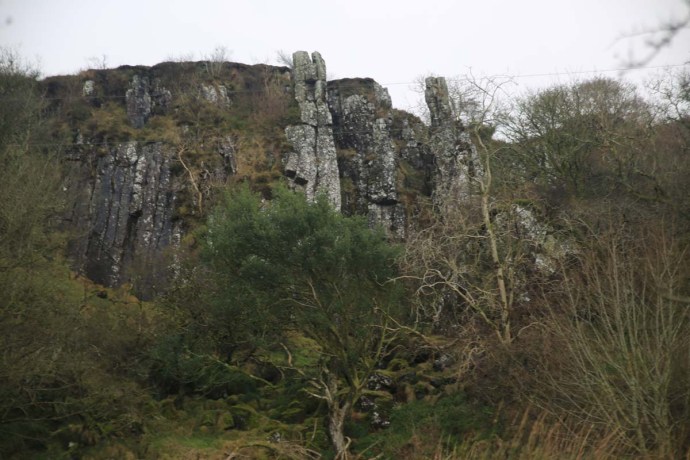
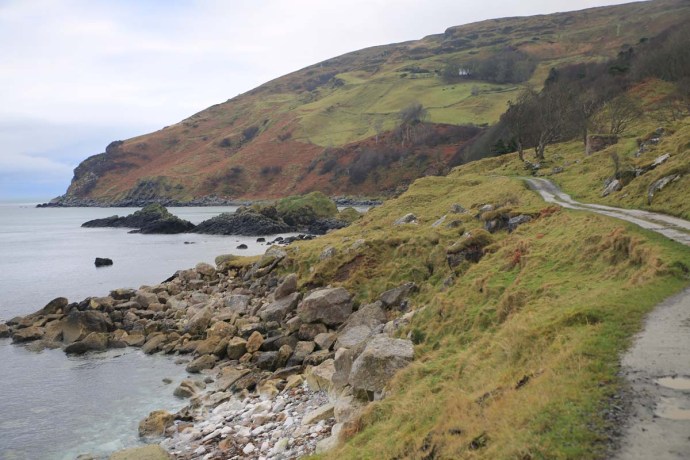
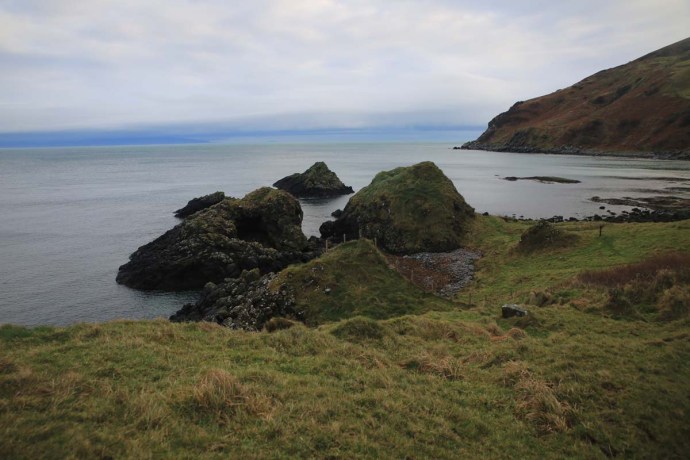
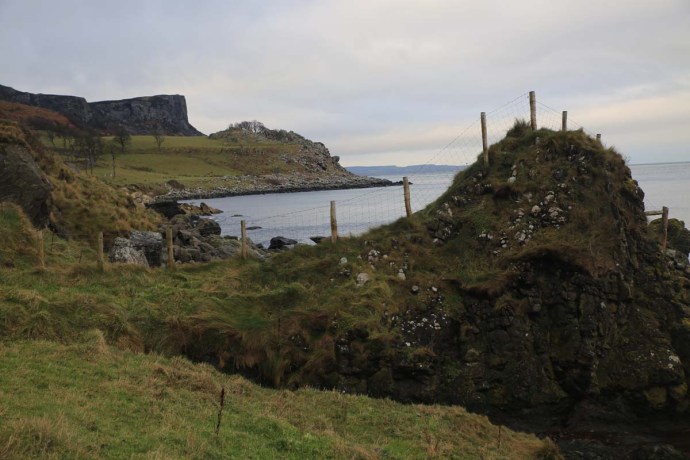
The Torr Road Drive, Co Antrim. Lime Kilns, Game of Thrones and sublime beauty.

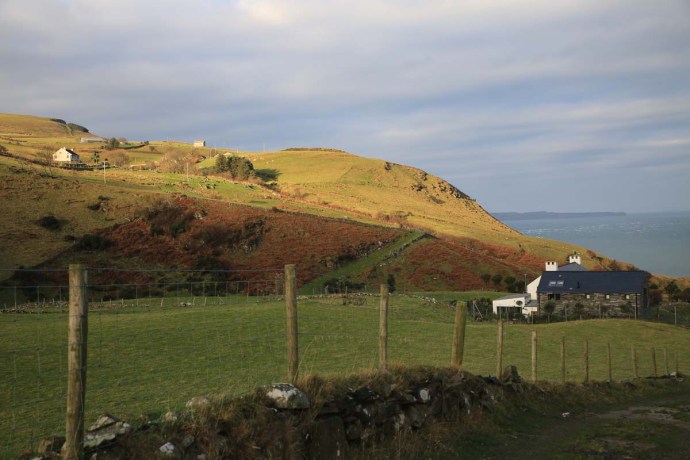
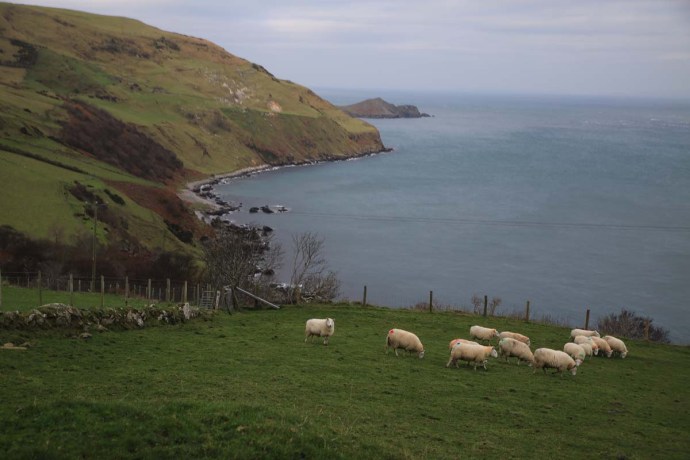
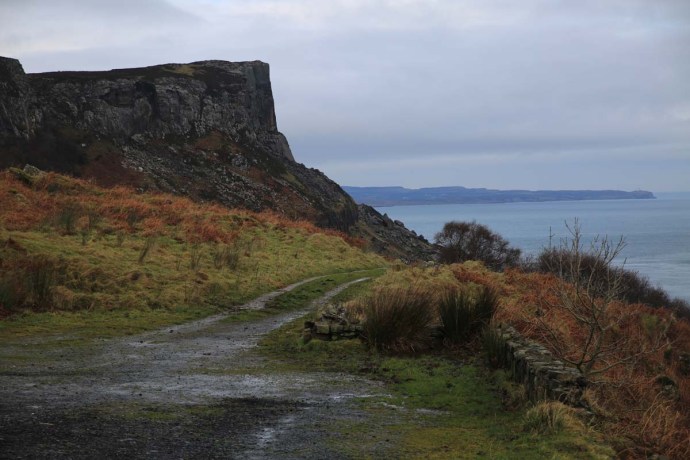
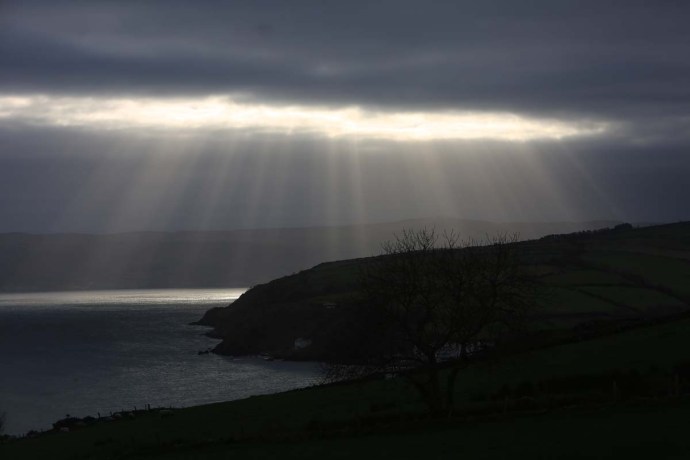
Travelling by car along the north coast of Antrim is spectacular to say the least. As seems to be the way of the world the drive has to have a label. So this is the Causeway Coastal Route because it features the Giant’s Causeway. I will blog on this and other places in due course because they warrant attention. But after Ballycastle, if you are heading east, the Causeway Coastal Route turns inland (away from the Coast – go figure!) towards Cushendun and Cushendall.  So most travellers miss a little pocket of Antrim that is staggeringly beautiful. This is the Torr Road which hugs the coast to Cunshendun.  Ireland is noted for its green of course but in many parts that green turns brown and red in winter.  Not here.  In this part of Antrim you seem to get the Forty Shades all year.

ig3c1463

View from the Torr Road, Antrim

ig3c1475

Green and gold.  Just add sunshine.  Torr Road.  Antrim

ig3c1607a

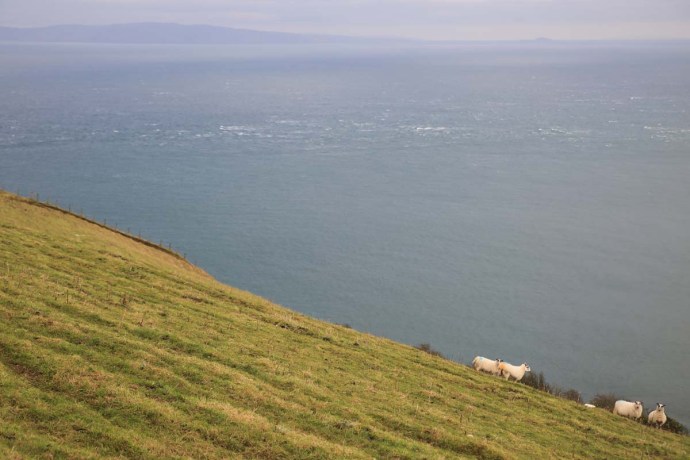
Green slopes that run down to the sea.  Torr Road, Antrim. That current looks pretty treacherous.  Scotland is visible on the horizon.

ig3c1616

Coastal view, Torr Road.

ig3c1670

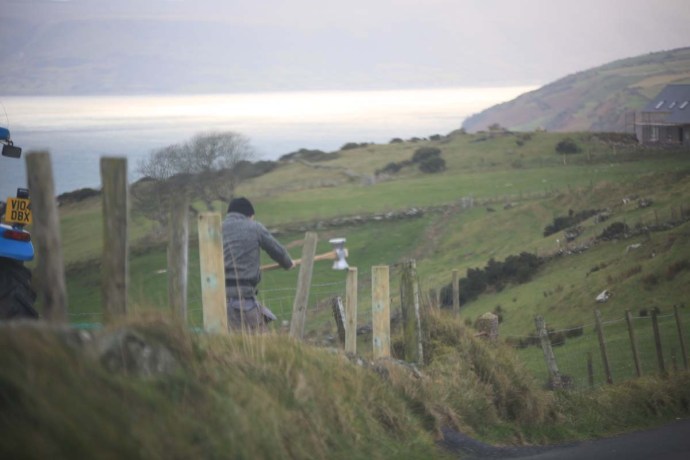
Fences need repair whatever the weather.  Torr Road, Antrim.

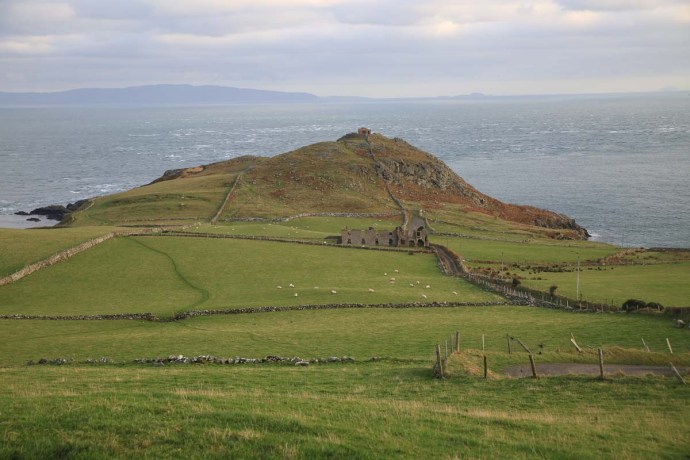
Of course the road leads to Torr Head.  This is the closest point to Scotland and from here you look across to the Mull of Kintyre.  It was very cold this morning, so I resisted the temptation to climb to the top. At the top of the headland is a tower which watches over the Sruth na Maoile (Straits of Moyle), a former haunt for privateers, and acted as a signal tower, passing on messages of ship movements to Lloyds of London.  There is also a now ruined, customs station which was abandoned in 1922. Its stark ruin brings an evocative supernal element to the gorgeous views both along the coast and back towards the hinterland.  Awaiting you, at the end of this drive at Cushendun, is the gateway to the Glens of Antrim, but that’s another story.

ig3c1484

Torr Head.

ig3c1518

Ruined Customs House, Torr Head.  Antrim.

ig3c1500

Ruins of Customs House, Torr Head

ig3c1493

ig3c1576

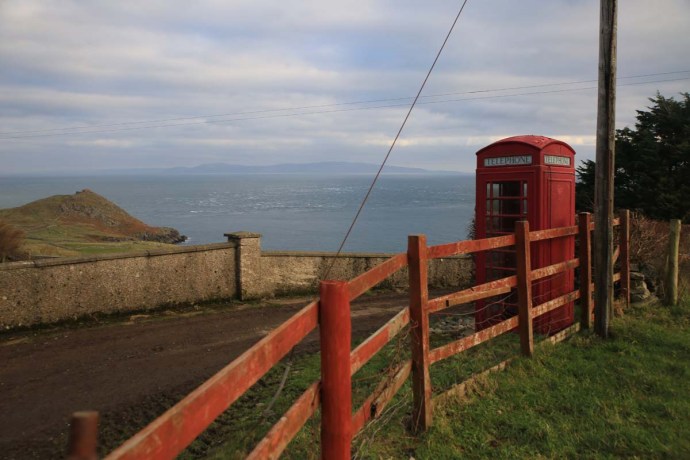
Phone Box looking towards, Torr Head.

On my first drive along this road I went past a turn off to Murlough Bay. It was an inconspicuous sign and nothing drew my attention to it. If it hadn’t been for my B&B hosts that night at Teach an Cheol, just out of Ballycastle then I would have missed this little gem entirely. They insisted I go back there before leaving Antrim. Thank you  Micheál and Catherine.

The single lane road to Murlough Bay snakes off the Torr Road across brilliant green paddocks, and then suddenly drops off the plateau winding both perilously and picturesquely down to the sea. Remarkable views open up.

ig3c2107

Limestone cliffs at Murlough Bay.

ig3c2129

ig3c2412

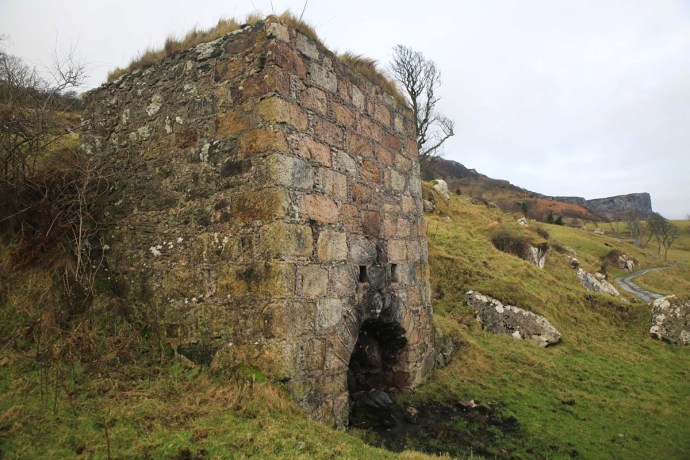
I passed a solid stone structure which intrigued me, so I dragged my eyes away from the view.  It was like nothing I had seen before and I later discovered it was a lime kiln where broken limestone rock was melted to produce quicklime. This was used for mortar or for agriculture. It was a thriving industry wherever limestone and coal (for fuel) was found.

ig3c2080

Lime kiln near Murlough Bay.  Front view.

ig3c2093

Lime Kiln from above.  Showing hole where lime and coal are loaded.

ig3c2388

Limestone cliffs

A little simple chemistry.  Limestone with the application of heat breaks down to lime with the release of carbon dioxide gas as in the following reaction

CaCO3 + heat → CaO + CO2

The reaction requires about 1000 °C. They were extremely common around Ireland and Britain, indeed in the mid 1800s there were believed to be 23,000 in Cork alone. There was plenty of limestone here with the surrounding cliffs. I’m guessing there was also a good supply of coal nearby too. I am always impressed by the beauty and solidity of the industrial architecture I come across here in Ireland. The stone work of the multiple arches over the air intake is stunning.

ig3c2128

So continuing down towards the coast I see a sign reminding me that this area was used to film episodes of Game of Thrones that hugely successful television series, still running. Of course you can see why. Film tourism has always been a big thing in Ireland what with The Quiet Man, Ryan’s Daughter, Father Ted, PS I Love You, and it continues with Game of Thrones and Star Wars.

Murlough bay is a place of singular beauty. You leave the car and walk along the track which follows the coast to a whitewashed cottage with the most perfect location in Ireland. There is a second small abandoned cottage; padlocked but in reasonable condition. A peek in the window and I can see some bottles of disinfectant and cloths suggesting a level of optimism by the owner. What a place for a holiday batch. Nearby there is another lime kiln.

This place is everything that makes Ireland beautiful. Cliffs, washing waves on rocky shores, boulder beaches, jagged headlands, green fields rolling into the sea, craggy islands, little coves. The surprising variety of landscape is a result of a rich geological melange which I might talk more about at another time, but I saw metamorphosed schist and gneisses, basalts, sandstone and conglomerate, limestone and of course the ever-present carpet of bog over it all. A geological history of 600 million years on display in this little bay.  Again a sign tells us a little cove here was used in another episode of GOT.

ig3c2137

Distant view of Murlough Bay

ig3c2165

Murlough Bay looking east.

ig3c2184

Murlough Bay looking west.

ig3c2192

Basalt outcrops forming islands and bays

ig3c2211

Murlough Bay.

ig3c2264

Murlough Bay.  Sandstone rock platform with narrow bands of conglomerate.

ig3c2279

Murlough Bay.  This view has sandstone, basalt, gneiss and limestone.  A geological melange.

ig3c2294

Murlough Bay.  Abandoned cottage on the shore.

ig3c2178

Another lime kiln on the beach at Murlough Bay.

Again a sign tells us a little cove here was used in another episode of GOT.

It is hard not to use clichés in describing this spot. I was the only one there and it was so quiet and so still. the only activity was a fishing boat, way out in the channel and the only noise was the ripples lapping the shore and the occasional squawk of a gull. There was an undisturbed equanimity and you could feel tension disappearing with the tide. Just me and my thoughts. I didn’t want to leave. I have been to so many beautiful places in Ireland, but not felt this way before. Surrounded by natural beauty, yet somehow otherworldly.

Extraordinary.

ig3c2323

ig3c1741

Categories: My Journey, Wild Ireland | Tags: , , , , , , , , , , , , , , , , , , | 1 Comment

All is not what it seems. A little story from the Wild Atlantic Way on the west coast of Clare.

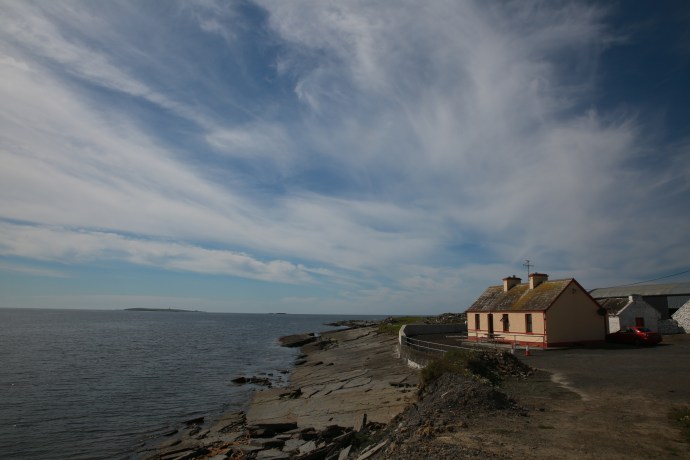
I live in a remarkable spot and I have written of it and photographed it many times. Point Caherush lies between Quilty and Spanish Point along the spectacular west coast of Clare.  Indeed it was spectacular before it became part of the Wild Atlantic Way but now of course it is legitimately spectacular because it has a label with the word ‘wild’ in it. Anyway I live at the end of a one kilometre long boreen known locally as the Clogher Road. My front door looks out over Quilty and Mutton Island. Here’s a reminder.

ig3c5962

My little cottage nestled on the rocks at Pt Caherush


The rocks at my feet though are similar to the rest of the West Clare coastline from Loop Head to Doolin, and comprise shallowly dipping interbedded sandstones and shales.  For the whole time I have lived here I assumed that I was living at the edge of a wilderness (that’s the ‘wild’ in Wild Atlantic Way!). A thin strip of pristine land beyond the rolling green that is everywhere so heavily moulded by man.  I surmised, somewhat romantically, that only the hand of the sea had sculpted the shore. Despite this I was troubled by some observations I could not explain. Perfectly circular holes in the rock sometimes with radial joint patterns around them were disturbingly reminiscent of what I had seen in open cut mines. This made no sense. There was nothing to mine in these barren sandstones.

But I didn’t think of the sandstone itself.

ig3c6883

Perfectly circular holes and radial joint patterns on the rock platform at Point Caherush


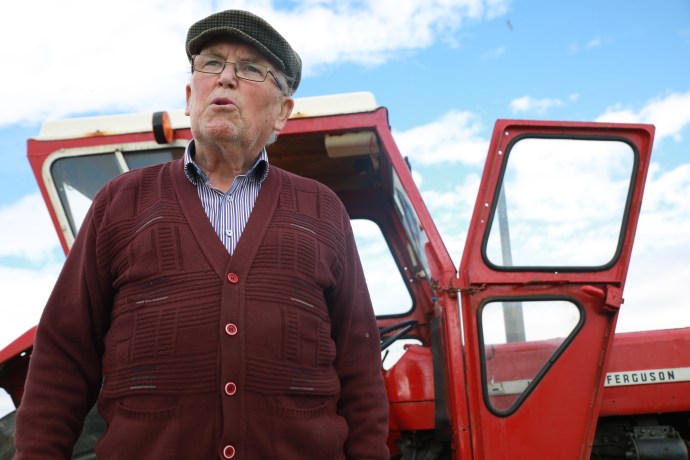
One day I was chatting to Mikey Talty, a resident of this place all his long life. I have written about that day in a previous blog, when three generations of the Talty family were harvesting kelp from the bay. Mikey is full of wonderful stories but he really got my attention when he mentioned working as a young man in the 1950s at a massive quarry operation on the Point. He showed me where the crushing plant was and described how truckloads of rock were carted away to build roads as far away as Kilrush and Kilkee. This mining it would seem had changed the shape of the headland and much of the protection of the bay was lost.

ig3c6799

Mikey Talty talks about Caherush in his youth.


With this new knowledge I now see the evidence everywhere in my wanderings. Of course the drill holes were for the explosives, some still showing their perfect shape and probably unexploded, and others with radial shatter patterns showing they did their job. There are rock exposures that are not natural and there is angular rubble strewn, that has yet to be smoothed out by the ocean.

ig3c6873

Blasted face at limit of quarrying

ig3c6913

Quarried rock face and blasted rubble


It is hard now to understand the thinking that would have led to the locating of a quarry here when there would have been plenty of locations away from the coast. I would like to think that in ‘modern’ Ireland it would be impossible to conceive of permission being obtained today for mining on the seashore. Perhaps planning approval wasn’t needed then and certainly priorities would have been different.

I can find nothing in the literature about this operation and maybe the memory of it is only now with those who lived or worked here. But the record will stay in the rocks for hundreds of years and I am sure it will confuse and intrigue future generations of geologists and non-geologists, who wander around Point Caherush, as it did me.

Categories: My Journey, Real Ireland, Wild Ireland | Tags: , , , , , , , , , , , , , , , , , , , , | Leave a comment

The Singing Circle at Kilshanny, Co Clare. Entry to another world.

ig3c9079_1

Early in November I went to my first organised singing session since I came to Ireland. I know that’s a terrible admission especially as my start in Irish music came from my interest in folk singing back in the 60s. It was from singing Bob Dylan and Phil Ochs and Pete Seeger and Ewan McColl, and then traditional Australian songs, that I discovered the original “protest” songs coming from Ireland and Scotland. Of course the fiddle sort of took over but I still love singing and squeeze the odd song into a trad session if I get the nod.  My knowledge of the singing session was scratchy to be sure and probably an entrenched stereotype.   You know; finger in the ear stuff and all 47 verses of Lord Thomas and Fair Eleanor.

So when Mary Butler, proprietor of Kilshanny House near Ennistymon, asked me to come along to the once-a-month Kilshanny Singing Circle, I had no great expectations. It was certainly a world away from the Pub Trad Sessions, my natural habitat.  

ig3c8910_1

Mine hosts,  Aidan and Mary.

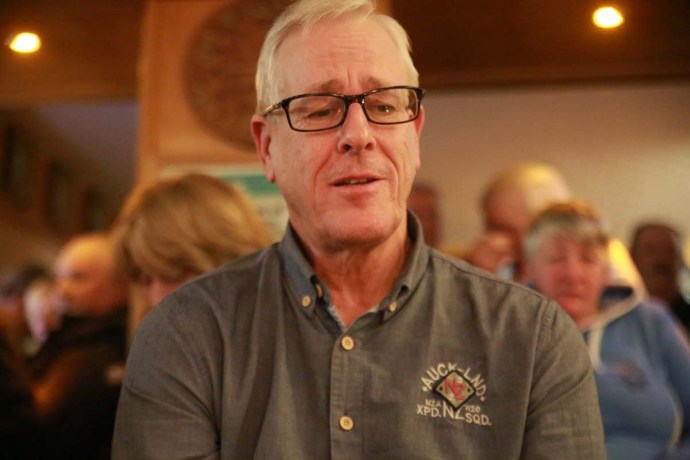
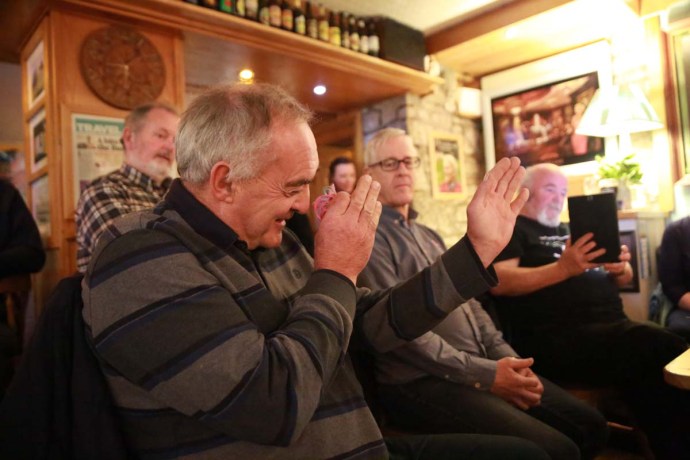
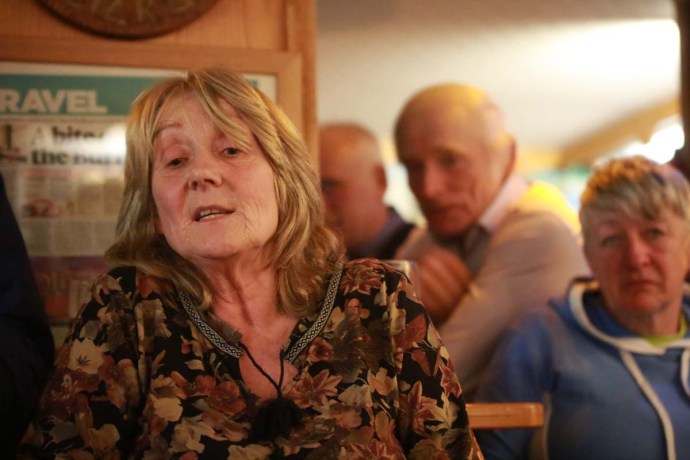
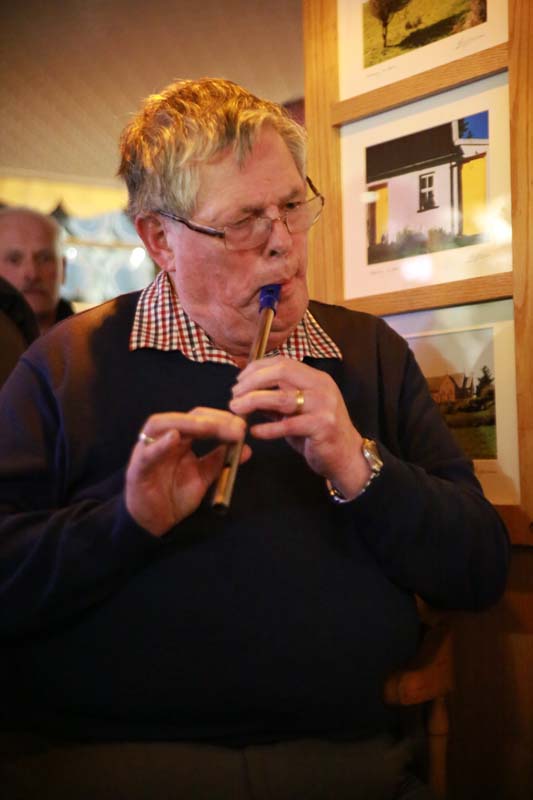
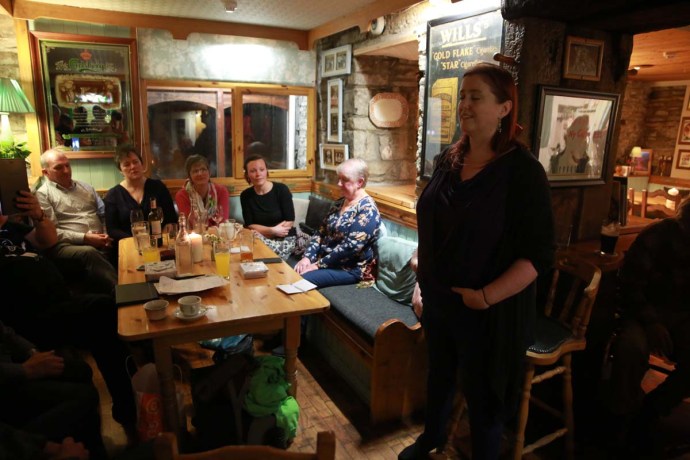
A crowd slowly gathered on the chilly November night. Many turned out to be singers but others were just there to listen. Indeed there were at least 25 singers (actually 24 singers and one Singer – sorry that’s an attempt at humour), some sitting in a circle as you would expect in a session but many others just hovering or sitting at the bar in relative anonymity.
ig3c9283_1

ig3c9021_1

Enter a caption

ig3c9046_1ig3c8973_1ig3c9336_1


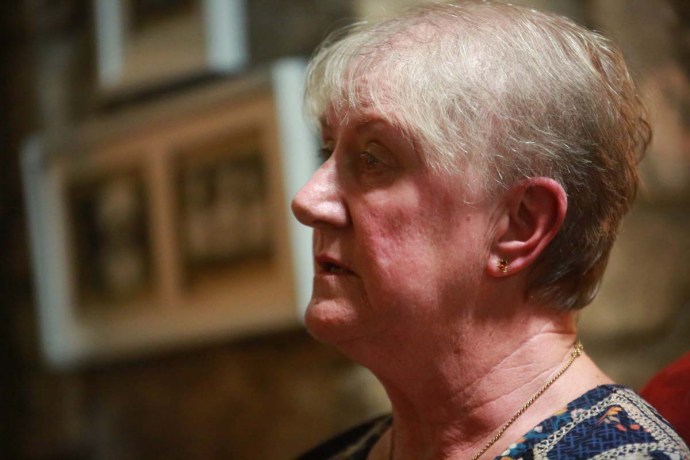
The night was masterfully run by local Ennis based singer, Noirin Lynch with a velvet glove.

ig3c9071_1

Noirin Lynch

Just an aside. It is the bane of singers in Trad sessions that everyone talks through songs. Sometimes no amount of shushing or whooshing or glass tinkling will shut up the crowd and many a great performance is lost. Not so here. Every person in the pub this Friday had come to listen or sing, so all that was needed were a few gentle reminders. To some this is not the atmosphere they want, and maybe that’s you, but that’s the beauty of Ireland. There are plenty of options; plenty of other pubs where the TV is blaring and you can turn your back to the music. But if you want to hear wonderful singers at their best in total silence then there is no better place than here.

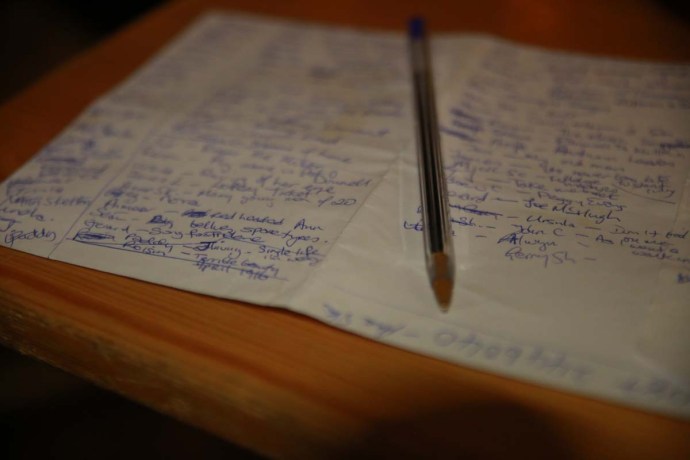
The concept of the Singing Circle is far more democratic than the more ad hoc music session.   Noirin identifies all the singers, in the room,  sees who wants to sing and calls on them to do so at the appropriate time. Always conscious of mixing it up and giving everyone a fair go.  She is constantly roving the room looking for new additions.
ig3c9468_1

Noirin’s list

These nights of music are a celebration. For me, mainly of the incredible talent that lurks hidden in the cottages of Clare. And I have to say whatever I am exposed to another layer of the culture and performing arts in Clare it comes from deep in the soul of the people here.  Nothing special, it’s just part of their makeup.  In West Clare and North Clare I have many times seen spontaneous sean nos dances from kids of all ages up to 90,  I’ve seen sets and half sets where there shouldn’t have been room and I have heard gems and disasters of songs from people sitting quietly all night waiting to perform their party piece.

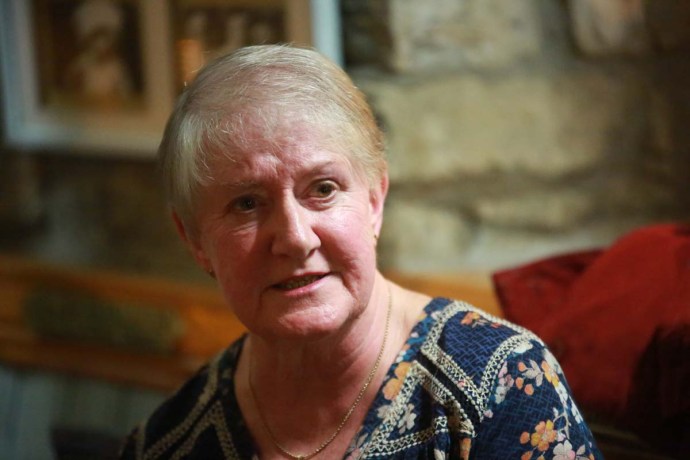
While there were many widely known singers from inside and outside Clare here this night,  the majority were just unsung (no pun intended) heroes for whom singing is just part of what they do between selling real estate, farming or driving trucks or bringing up their kids. The special guest for the night was Roisin White from Miltown Malbay (honoured with a Gradam Cheoil for singing in 2015) and she treated us to a wide range of material, strongly and beautifully delivered.  
ig3c8922_1

Roisin White

ig3c9371_1

Roisin White

There were  other visitors, Ciarán O’Maoileoin,  Aoife Caomhnach and the well known, Ann Skelton  from Dublin.  And regular Clare visitor Steve Brown from England and Jan van der Klei from Holland.

ig3c9389_1

Ciaran O’Maoileoin and Aoife Caomhnach

ig3c9139_1

Ann Skelton

ig3c9065_1

Steve Brown

ig3c9394_1

Jan van der Klei

But as I said I was most impressed with the home grown talent.  Noirin Lynch herself set the tone of the evening with the anthemic Nora Daly which she learnt from the singing of Micho Russell and Peggy Macmahon.

My name is Nora Daly from the Parish of Kilmaly

and my father is a farmer and the crossest man in Clare

If he saw you here beside me I’m in fear that he might chide me

so please go down and walk a bit before we reach the fair. 
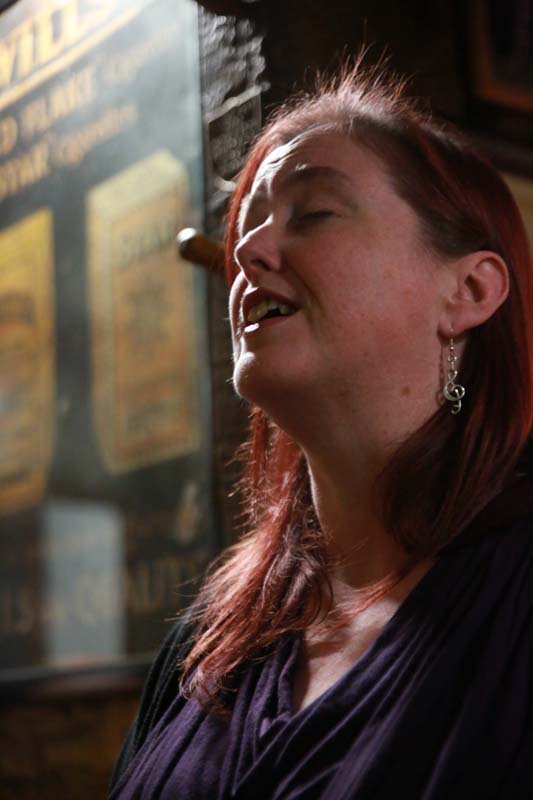
ig3c8762_1

Noirin Lynch

Everyone sings along with this one.  In fact if you are from Clare, I bet you hummed along as you read it.    There was a preponderance of songs on subjects of local interest. I couldn’t possibly talk about each singer, so let me mention just a few. John Casey, originally from Lisdoonvarna grew up with the travellers and remembered them vividly as a child. Sixty years later he met one of them again and was inspired to write his song “The Tinker” which he sang for us.  John told me later that a cousin from Australia was the extraordinary Father Ted Kennedy who did remarkable work with the Aboriginals in Redfern. When he died in 2005, 1,500 people attended his funeral.  Interesting synchronicity there with the status of Travellers and Aboriginals. 

ig3c9447_1

John Casey


We had Gerry Devitt with that marvellous song about Joseph McHugh’s from Liscannor. And the delightful and much loved John Joe Scanlon from Fanore, who treated us to a wonderful bit of the, almost lost, art of lilting. 

The fantastic songs of Micheal Marrinan got an airing with  Ciarán O’Maoileoin singing Miltown to Sweet Ennistymon and The Binding Twine sung by Steve Brown complete with with prop of a roll of genuine binding twine!

ig3c9313_1

Ciaran O’Maoileoin

ig3c8822_1

Steve Brown and the Bundle of Twine

With the memory of the death of local football legend Anthony Foley still fresh there was a heartfelt and powerful recitation from Michael Scanlan of Killaloe of his own song and, further reflecting the place GAA takes in Irish culture, we had Marian Egan sing ‘Cuchulainn’s Son’  a song about Wexford hurler Nicky Rackard from it’s golden era in the 1950s. It was written by Marian’s late cousin Tom Williams.  Marian is now a Clare woman living in Kilfenora since 1997.

ig3c9411_1

Michael Scanlon

ig3c9358_1

Marian Egan

We had some delightful comic songs;  Sean Maclaghlan with  Big Bellies and Spare Tyres (though I have to say that only with some reluctance did he get the ladies to answer back with the ”spare tyres” bit)  and that old favourite, the Lottery Ticket.  from James Blackwell of Ennistymon. 
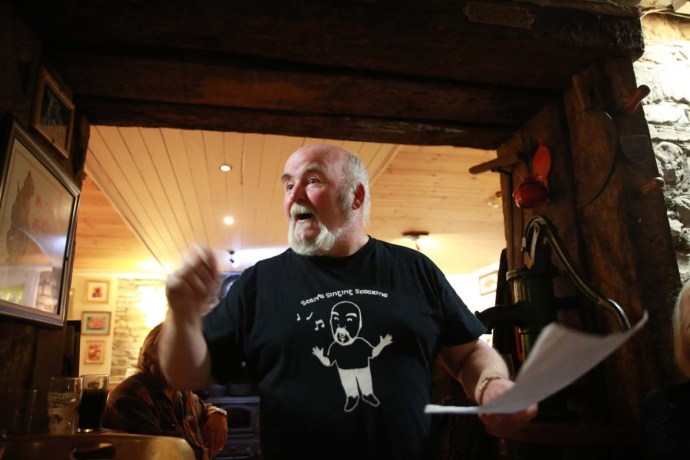
ig3c9197_1

Sean Maclaghlan

ig3c9404_1

James Blackwell

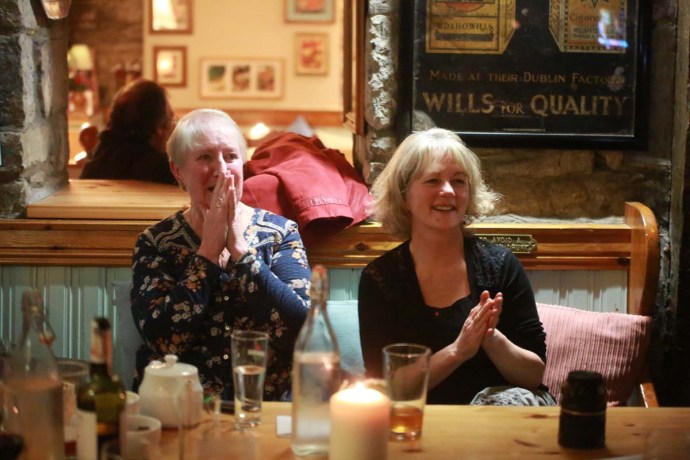
The tone of the night was best illustrated with the welcome received by newly arrived Ursula. An occasional singer from Dublin but now living in Kilshanny, she must have been surprised at the warm reception.  She was introduced around and sat down in the inner circle and coaxed into singing a couple of songs which she carried off with aplomb. What better way to welcome someone into your community than to share a song with them.
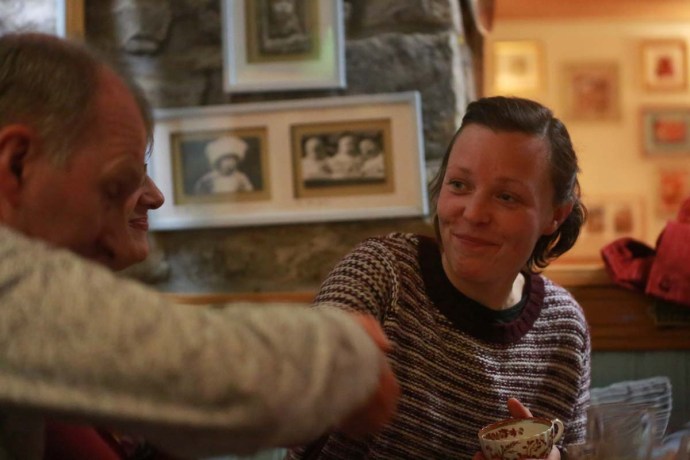
ig3c8955_1

A warm welcome

I really like the photo I captured of Ursula with a cup of tea in her hand beside a framed photo of Robbie McMahon of ‘Spancil Hill’ fame. Turns out he is Mary’s uncle.  Don’t you just love the connections in this place. I think I’ll call it The dreamer and the Dreaming
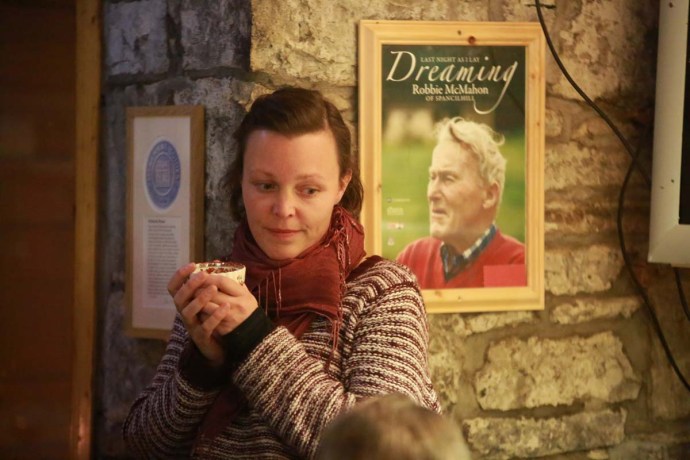
ig3c8865_1

The dreamer and the Dreaming.

And they even had room for some Aussie guy who had the cheek to sing an Irish song about a road that “runs down to the sea”.

There were of course many others and here are some more photos. Singers are difficult to photograph. Always moving unpredictably, eyes closed, bad light. I think though I have captured the mood with these shots.
ig3c9013_1

Almyn Wilson

ig3c9030_1

Joe O’Connor

ig3c9122_1

James Blackwell

ig3c9166_1

Emer Ni Mhaoileoin

ig3c9253_1

Paddy Williams from Kilshanny

ig3c9311_1

Patsy Carrucan from Fanore

Singing Circles as they are called, abound in Clare. They are generally held once a month, but you could easily attend one or two a week if you wanted. The better known ones are in Ennis and Cooraclare and there is also an excellent Sunday singing session at the Crane in nearby Galway.  So if you come to Clare and want to try something different, you can be assured of a warm welcome.
ig3c9129_1ig3c9136_1

I’ll definitely be back to Kilshanny House.

And one final word. Why is respect demanded and given for a song but not always similarly for a tune?
Categories: My Journey, Sessions, Trad Irish Music, Uncategorized | Tags: , , , , , , , , , , , , | 3 Comments

Oliver O’Connell, Man of the Burren and the Track of Tears.

Ireland is a very popular destination with visitors. And for good reasons. I have met so many who have come here for a week and have rushed around to tick Dublin, Dingle, Cliffs of Moher and Galway off their list and happily report back home that they “did Ireland”. Don’t get me wrong most people genuinely enjoy Ireland, in fact love it. What’s not to love? There is of course wonderful scenery, friendly people, ruined castles, trad music, Guinness, bacon and cabbage, sheep on the road. Everything that brings people here. But very few of those short-term visitors would have tapped into the ‘real’ Ireland.  Ireland’s real treasure is its people. It’s through the people of Ireland you discover the Hidden Ireland.
I spent a day recently with one of these people. Oliver O’Connell may be known to some of you. Perhaps if I say he is Blackie O’Connell’s dad that may twig a few responses or the guy who started a session on an Aer Lingis flight last year, the video of which went viral; but really he should be better known as the great-great-great-great-great-great-great-great-great-great grandson of Maurice O’Connell ‘The Transplanted’. I’ll come back to that.

Oliver lives in an extraordinary spot in the middle of the Burren which is the beating heart of County Clare. Ten kilometres  from Corofin. You look out his kitchen window towards Mullaghmore , across a barren, stark tortured, limestone plain and you cannot see a single house. And at night the only light is the faint reflected glow from Galway City way to the north.

ig3c8720

View across the Burren National Park

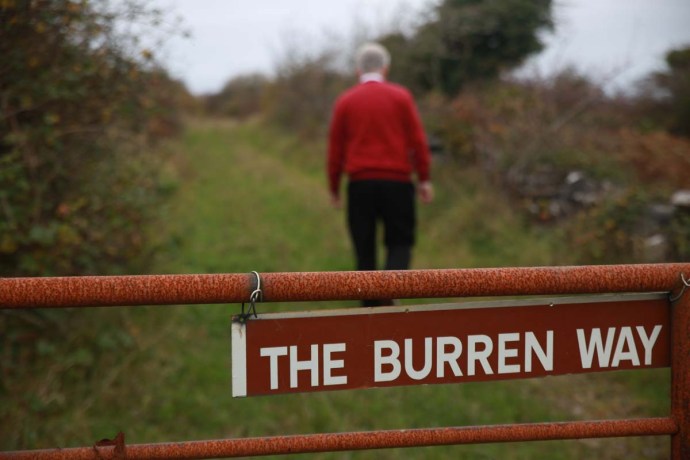
Oliver is as much part of the Burren as the megalithic tombs and glacial erratics that dot the landscape. He took me for a little walk to show me a favourite spot of his; the so-called Famine Road. A little used part of the Burren Way walking trail.

Now I thought I knew what a ‘Famine Road’ was.  The walking tours of The Burren will take you to one and tell you these roadways were built as an assistance scheme to keep people out of the Workhouse.  This may indeed be the case but this one is different as Oliver tells it.  This road was here way before the Famine.  Indeed the 1842 map of Clare shows the route as a road in use and on the exact same line as the satellite image.  So it certainly well predated the Famine.

2016-11-04a

Satellite image of Famine Road.  Shown with red arrow.

2016-11-04-1

1842 Map showing same area as satellite image above.  Famine Road is clearly marked.

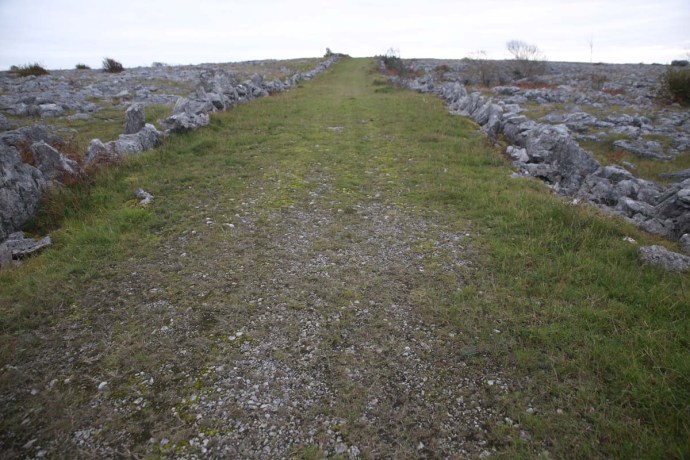
Oliver explained that it is called the ‘Famine Road’ for a very different reason.  The route was used by a number of families attempting to escape the deprivations of those terrible years but many did not survive. They are buried somewhere along the route in unmarked graves. It struck me as unusual that the road fell into disuse even though it would shorten the trip considerable from Corofin to Kinvara.  Oliver thinks the road has been there for perhaps a thousand years.  If this is true then it is a tribute to the engineering capabilities of the early residents.  It is roughly cobbled and raised in places, the summer grasses partly hide it now but its unique stone walls bounding it still stand proud today. They have regularly spaced jagged vertical stones. The road is straight as a die in places  and it traverses the country peacefully and silently.

ig3c8604

The start of the Famine Road near Aughrim.  Part of the Burren Way.

ig3c8716

View to the north along the Famine Road

ig3c8655

Cobbles forming the road base

ig3c8664

Detail of cobbling

2016-11-04-3

Detailed satellite view of portion of the Famine Road

ig3c8710

Jagged rocks standing upright form part of a wall along both edges of the road

So why was it no longer used?

Oliver is a poet. One whose poetry is raw, and highly descriptive.  It is personal and it is heartfelt.  It comes to him quickly almost as a stream of consciousness. He doesn’t massage it and as a result it doesn’t sound the least bit contrived.  In a poem he wrote about this road he describes what he calls the Track of Tears, thus:

Here in this place “bothar na muinne, ait ciunas gan uaigness”.

Where silence screams at you but the spirits of our people radiate a comforting presence as they lie here in peace in their final resting place.

You tread on their footsteps and on their tombstones as you weave your way through sacred structures and vertical stone walls in this land of myth and magic.

(‘bothar na muinne, ait ciunas gan uaigness’ translates to a ‘place of silence without loneliness’)

The silence screams. It quite literally does. Not a bird, no wind, no animals Just the sound of our footsteps and our breathing. It’s as if the Gods with quiet reflectance continue to mourn those who didn’t make it. And it is surrounded with a landscape of harsh but tranquil beauty described so well in Oliver’s poem.

It is perfectly fitting that the road is no longer used and it is tempting to think that this was by design as a memorial to those lost.

I was moved by the story of the road and this window into a distant Ireland.  Distant struggles, yes, but it recalls the many battles endured before and since by the Irish people.

But Oliver has a bigger story to tell.

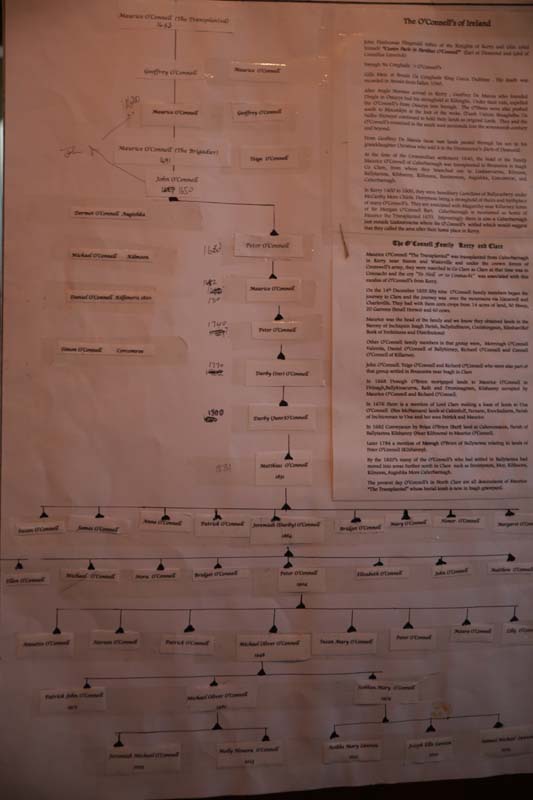
ig3c8736

Oliver with the O’Connell Family Tree

ig3c8741

Detail of portion of the Family Tree

He has spent fifteen years trying to unravel it and his journey has as many twists and turns as a good detective yarn.

Oliver’s forebears have been in Clare since 1653. He has been able to trace them back continuously to Maurice O’Connell (The Transported) who led 59 members of his family from their home in Kerry, from where they were expelled by Cromwell. Those who survived resettled near Inagh and Liscannor. Clare was then part of Connacht and the expression To Hell or Connaught comes from that time and relates to this exodus. The barren plains of the Burren was the equivalent of being sent to Hell. But survive they did and Blackie’s children represent the fourteenth generation of O’Connell’s to live in Clare. But it’s even more interesting than that.

Oliver has managed to trace Maurice O’Connell’s antecedents back to 1340 when they were a well connected and important family in Kerry and Limerick and even earlier to Connaill Gabhra, “Connaill of the Swift Horses”, King of Munster, in the 1100s. What a fabulous heritage. Nearly a thousand years!

What is unique about this story is that documentation exists continuously since the 1300s. As Oliver explained most Irish families can only go back to the 1820s. Prior to that records were kept by the British only for Protestants and Military. The O’Connell’s have a long hsitory of military service so the story is still there for those with the patience and energy to root it out.

Oliver as well as being a poet and raconteur is a musician and has links to a generation of musicians sadly disappearing fast. He is full of stories all told with zest and enthusiasm, such as how Blackie started on the pipes, but I will leave that for Oliver to tell sometime as he surely will.

ig3c8753

How else would you end a day such as this but with some tunes, So I sat on a chair in the kitchen, a chair that I’m sure that Oliver’s old friend Finbar Furey would have sat on and it just seemed so perfectly logical that the fiddle and the box together would shatter that Burren silence.

Oliver has invited me back to see this place in a different mood. When the frosts arrive.

Keep me away.

ig3c8649_1

Categories: My Journey, Real Ireland, Wild Ireland | Tags: , , , , , , , , , , , , | 11 Comments

In search of the Nyah. A Fiddle Workshop with Brendan Mulkere.

In my time in Ireland over the last 2½ years I have been privileged to have listened to and played with so many wonderful musicians. I have also been to many workshops and had fiddle instruction from some of the greats. These have included one-on-ones and group lessons with top fiddlers such as Martin Hayes, Siobhan Peoples, Tola Custy, Yvonne Casey, Zoe Conway, Brid Harper, Gerry O’Connor, James Kelly, Paddy Glackin, Caoimhín Ó Raghallaigh, Jesse Smith, Dylan Foley, Eileen O’Brien, Yvonne Kane, Paddy Ryan, John Carty, Manus Maguire, Liam O’Connor, Aiden Connelly and heaps more.

I’m certainly not going to rank them. Each is a master of their art and I learnt something from every single one of them. As I have said before, my own level of playing is my own fault, not that of the many people who have assisted me along the way.

ig3c7519a

But nothing prepared me for the workshop I attended at the Cooley-Collins Festival in Gort, Co Galway, last week. It was given by Brendan Mulkere. Of course I had heard of him and had met him briefly once or twice, but truth is I knew nothing about him. I knew he was based in London but recently he has moved back to his homeland of County Clare. So I found out what I could despite the lack of information on the man on the Interweb.

As I say he is from Clare. He moved to London in the 70s and started teaching Irish music.  His school became very successful with hundreds of students.  He taught everything as he himself plays fiddle, box, banjo, whistle and God knows what else. His music school became legendary for producing many outstanding players who went on to professional careers, such as John Carty, John Whelan, John Blake, Niall Keegan, Claire Egan and many who didn’t but nevertheless soaked up his extraordinary passion and love of Irish music.  He promoted Irish music, bringing all the top bands of the day, such as the Bothy Band and DeDannan to London before they were well known. And for all this, I believe he has never issued a solo or group recording other than with the highly regarded Thatch Ceili Band in the 70s. This says a lot about the man.

He has given up teaching now, so this was a rare opportunity and I expected a lot of interest.

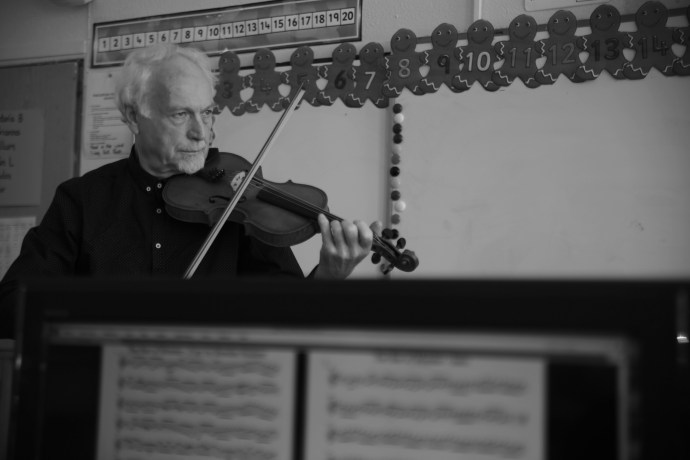
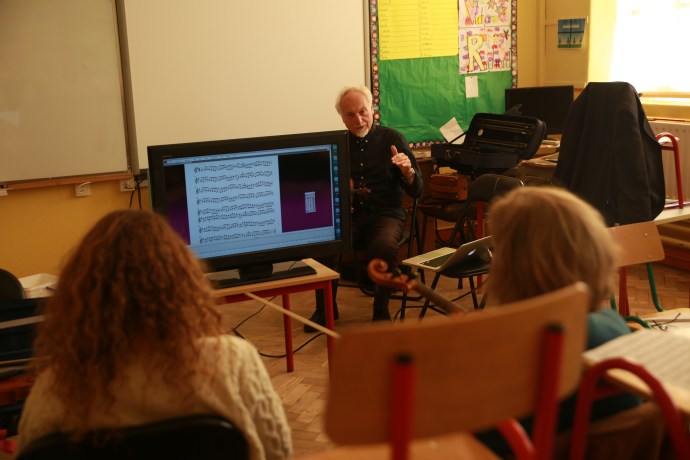
We assembled in the Gort Convent School on the Saturday morning of the three day weekend . There were three of us. Only three! There was a former student of his from the 70s now living in Ireland and a young girl from nearby. And me.

ig3c7531

We strapped on our seatbelts and for eight hours over the three days he took us on a musical journey like nothing I have ever been on. There have been many different approaches in the Schools I have attended. Many are attended by young prodigies or wanna-be’s, desperate for new tunes  that no one else knows . Some are quite different though, like those of Martin Hayes for instance, you hardly touch your fiddle as he shares his wisdom and insights and maybe teaches one tune. Or  James Kelly,  who focusses on getting fundamentals right. We spent a whole day on rolls and another day on triplets. Or Caoimhín Ó Raghallaigh who talked about dynamics and extending the voicing capabilities of the fiddle.  Others may give you an insight into local traditions such as at Donegal with Brid Harper or in Ballyferriter where Aiden Connelly gave the best explanation yet of how to play a polka.

Brendan was different to all of these. There was a whirlwind of tunes, most of them common. He deliberately targeted tunes such as the Kesh and Star of Munster and tunes that most of us already knew. But he didn’t care if we did or didn’t.  We could learn them in our own time.  There was no instruction on technique or tone or intonation. It was about reinventing the tunes to get to that place where the music is coming from the heart. He has strong opinions, about the quality of much of the music played in sessions and decries the influence that pub session has on the sound and delivery of traditional music. He focussed on harmonic variation and constantly stressed the need to keep surprising the listener and yourself. It’s about keeping interest by taking the tune somewhere unpredictable.

ig3c7066

He played us tunes showing his variations and we motored through tune after tune. Slowing down and repeating bits and dwelling just long enough for us to understand what he was doing – dropping to the G string, adding a chord, inverting the triads, varying the bowing, slurring or not slurring, articulation, changing to the 2nd position; all of this without actually laboriously repeating phrases until we got it in the traditional way. We then got mountains of homework, with his variations notated and scored. Enough to keep me busy for the next 2½ years. Not mind you so we can just ape him but as the first step in understanding how to put our own stamp on a tune.

I could rave on for ever, but what a generous man. Generous with his knowledge, with his life’s work and with his friendship.

I have hardly put the fiddle down since I came home.

Why did I call this ‘In search of the Nyah’? The Nyah is that indefinable thing that makes Irish music ‘real’. I think it encompasses terms such as feel, soul, groove, heart, swing, draoicht. It’s the title of my proposed book.
But when you hear the nyah you know it.  I thought it was just the rhythm, so I spent a lot of time on that and it has taken me closer but still the search continued. Or maybe it was ornamentation, so I worked on that. Of course it is all of this and much more.

Brendan has given me a window into it and I will open that window as wide as I can.

ig3c7083

Categories: My Journey, The Fiddle | Tags: , , , , , , , , , , , | 11 Comments

Blog at WordPress.com.