Trad Irish Music

The Music House Returns to Doolin

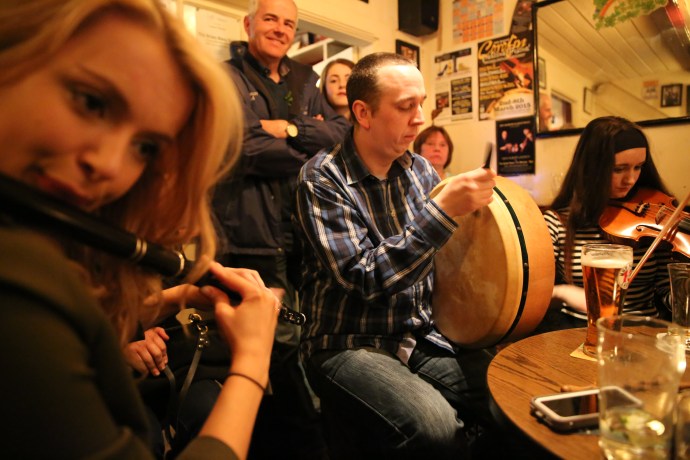
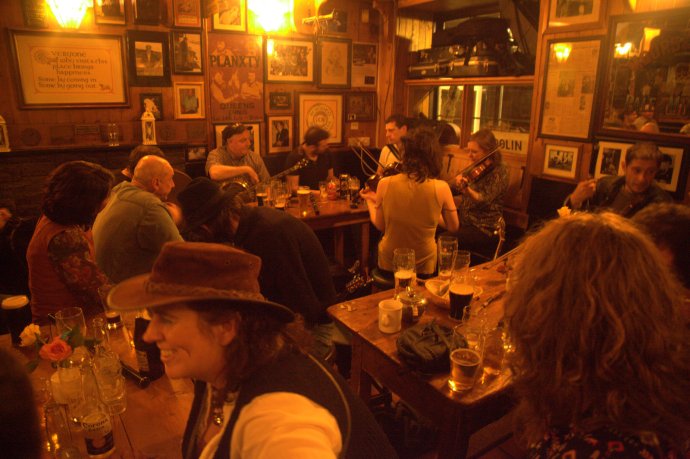
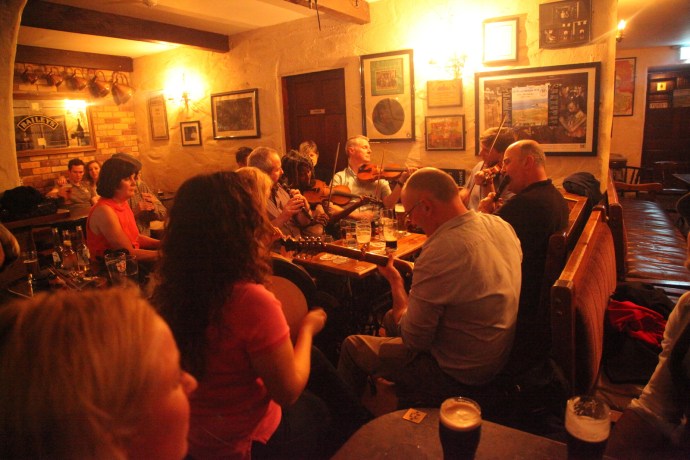
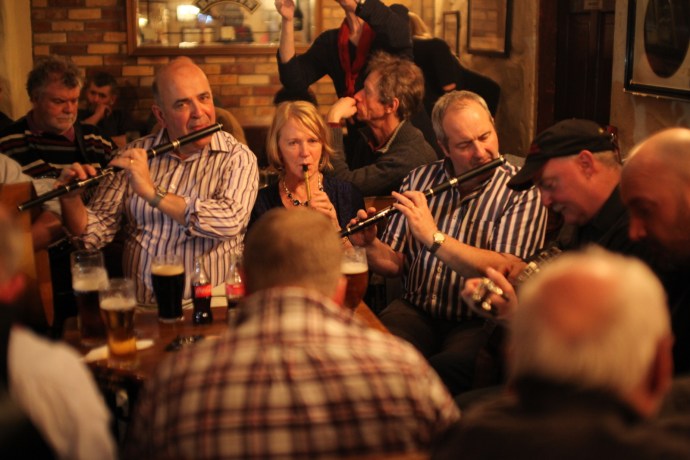
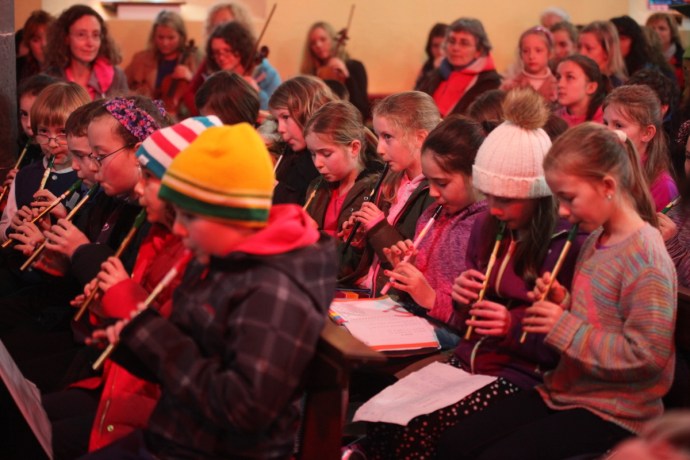
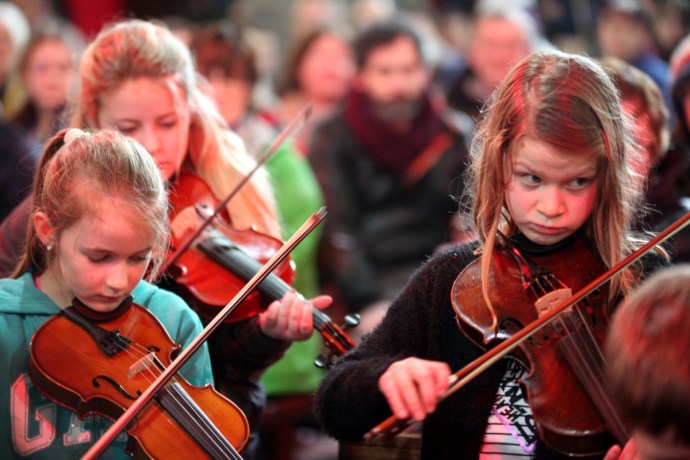
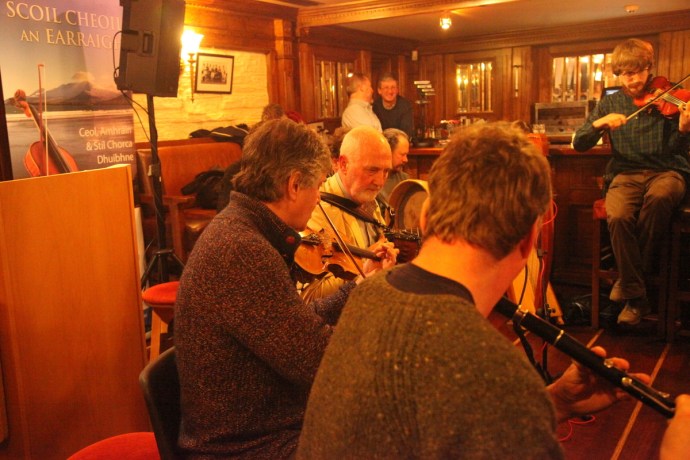
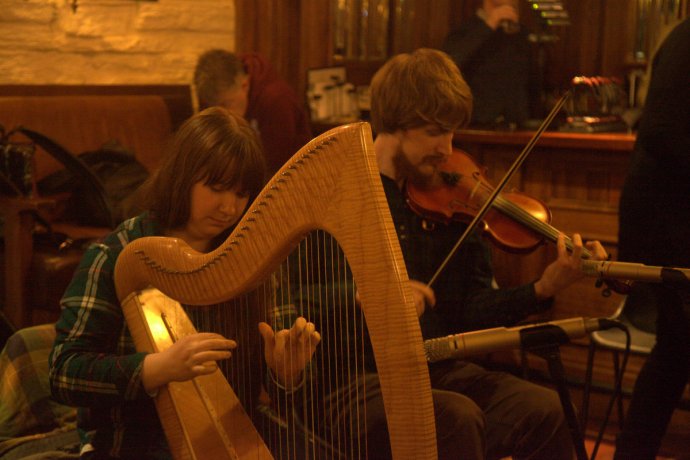
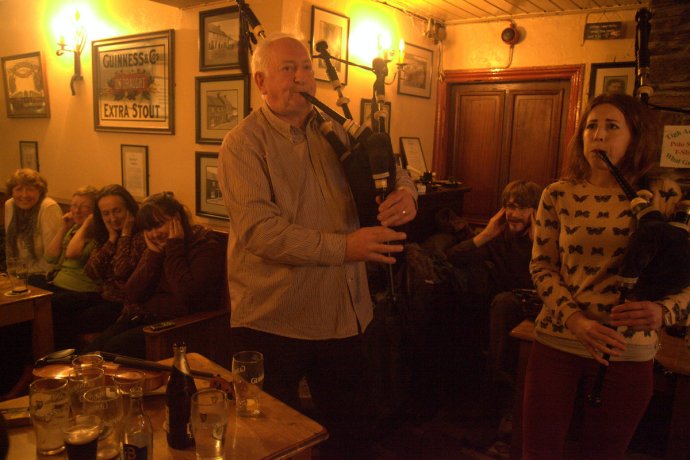
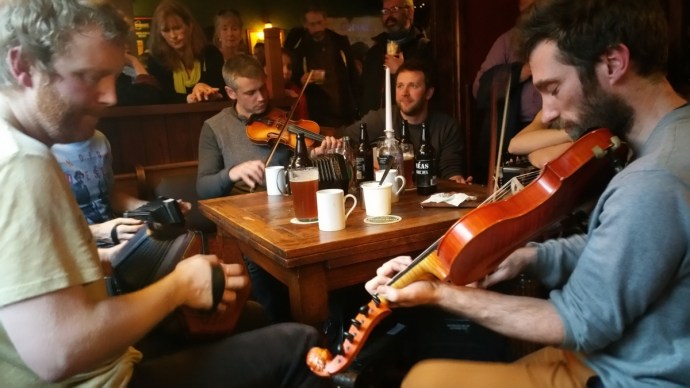
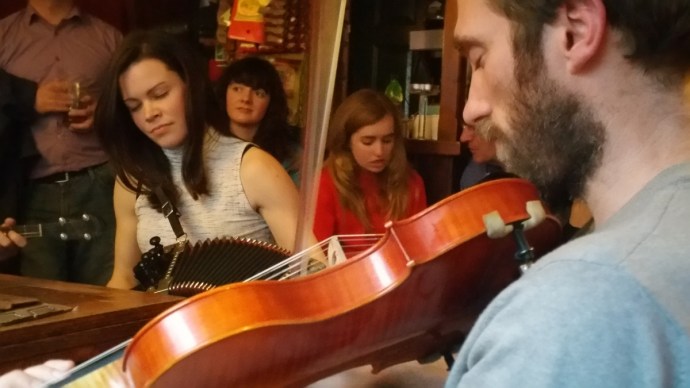
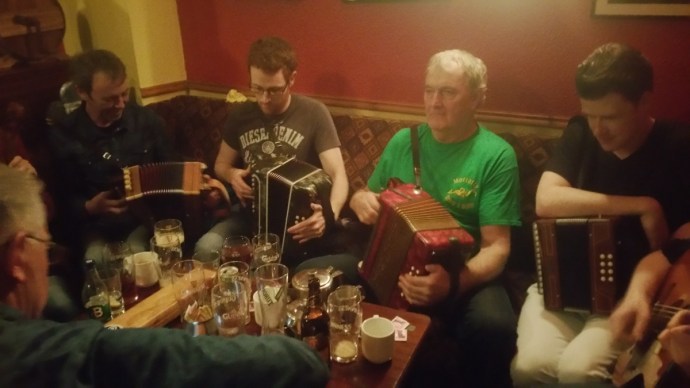
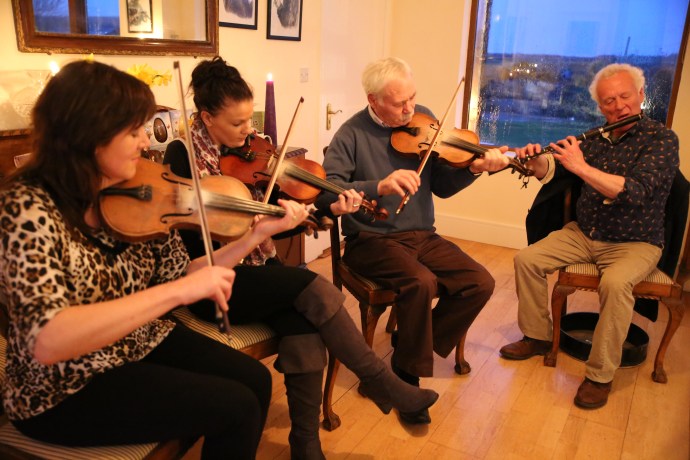
Though the pub session is now considered to be the customary gathering place for playing Irish traditional music it is actually a recent innovation.  Probably dating from the 50s and 60s when expatriate musicians gathered in London pubs to share the tunes they played back home.  Many returned home and the pub session took off in Ireland  and it became the centre of musical life.  Before this most music was played in the home.   Some houses would be well known as music houses and musicians, local and visitors, would gather there to share tunes or the kitchen table would be pushed aside and a set would be battered out on the slate floor.

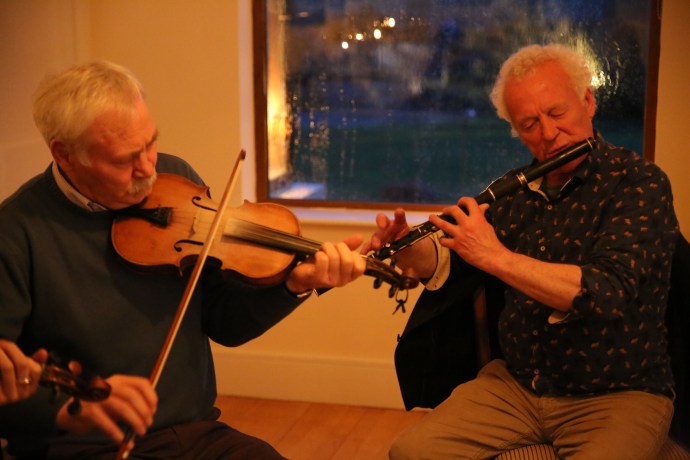
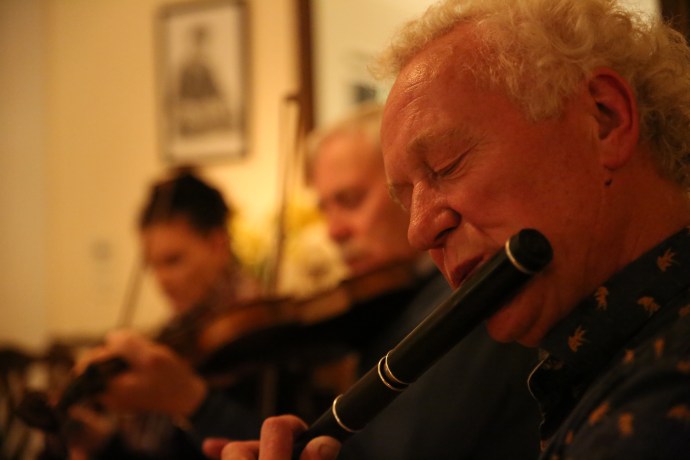
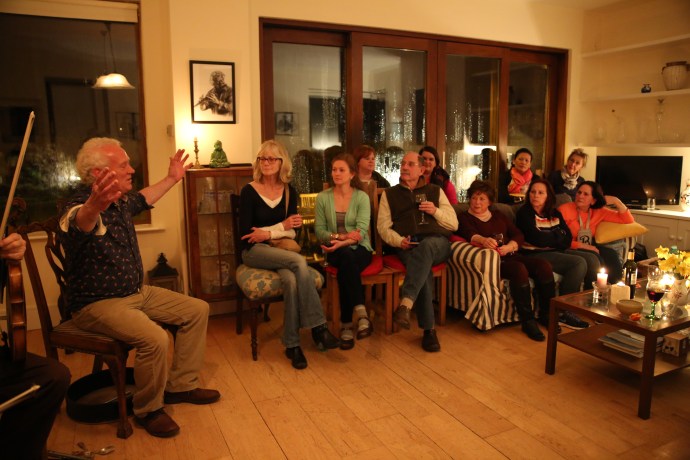
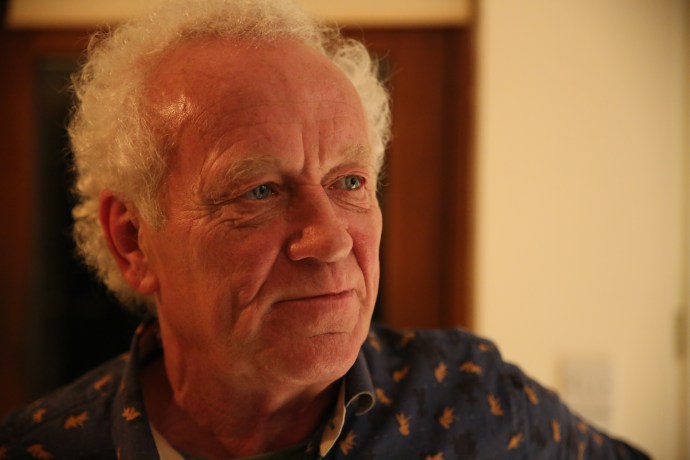
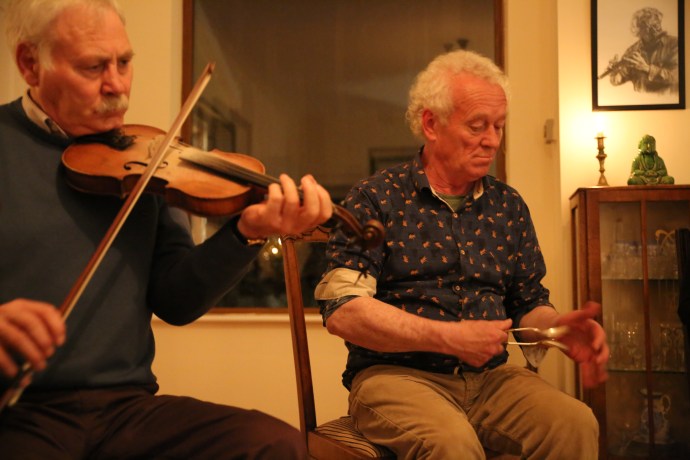
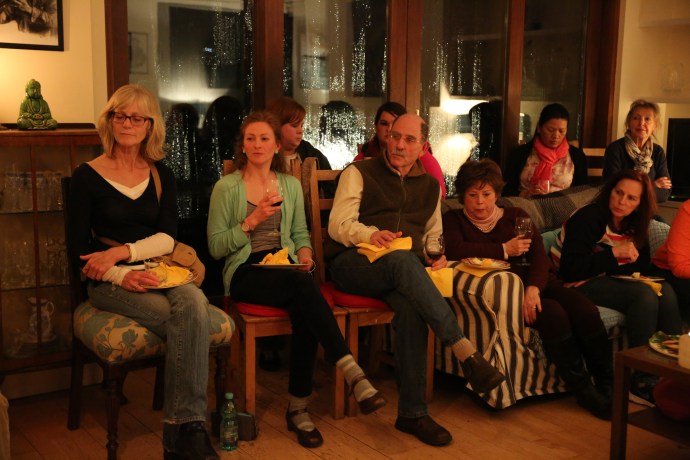
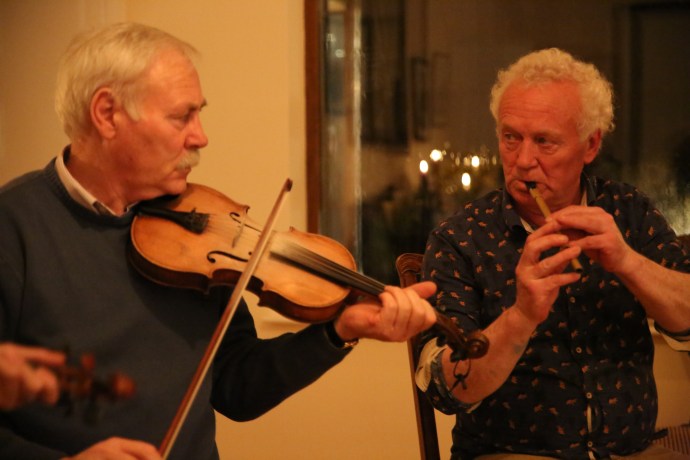
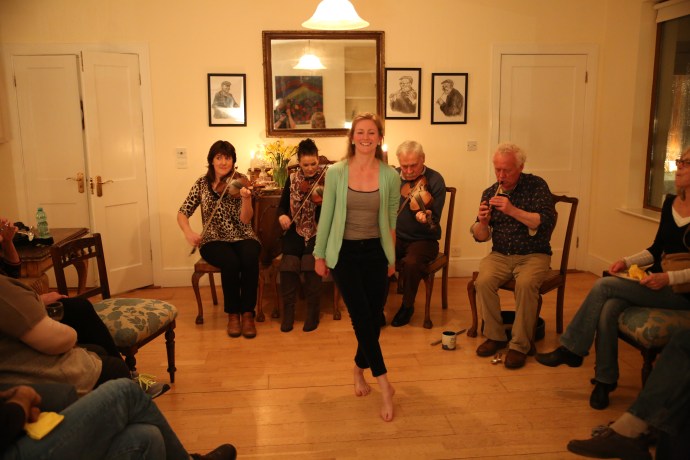
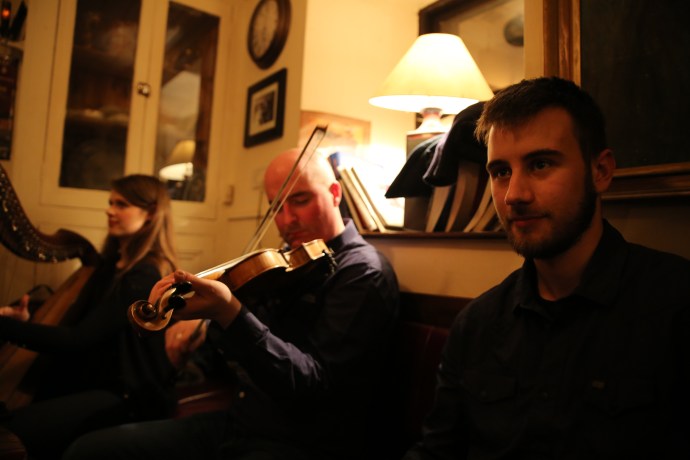
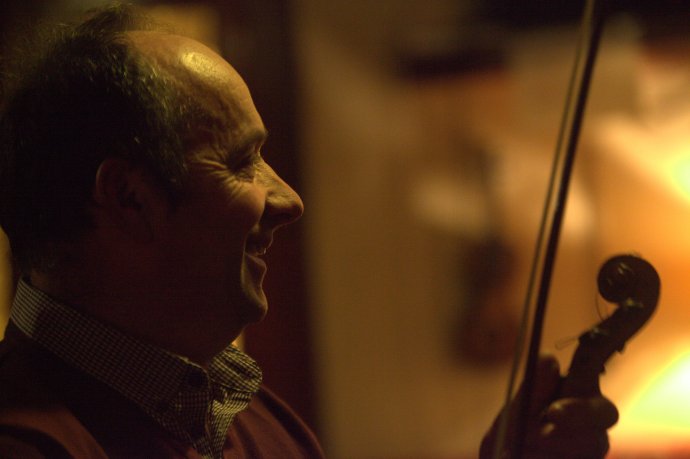
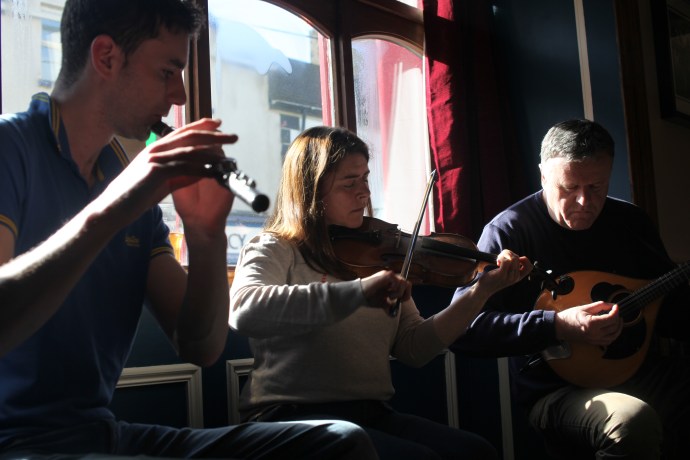
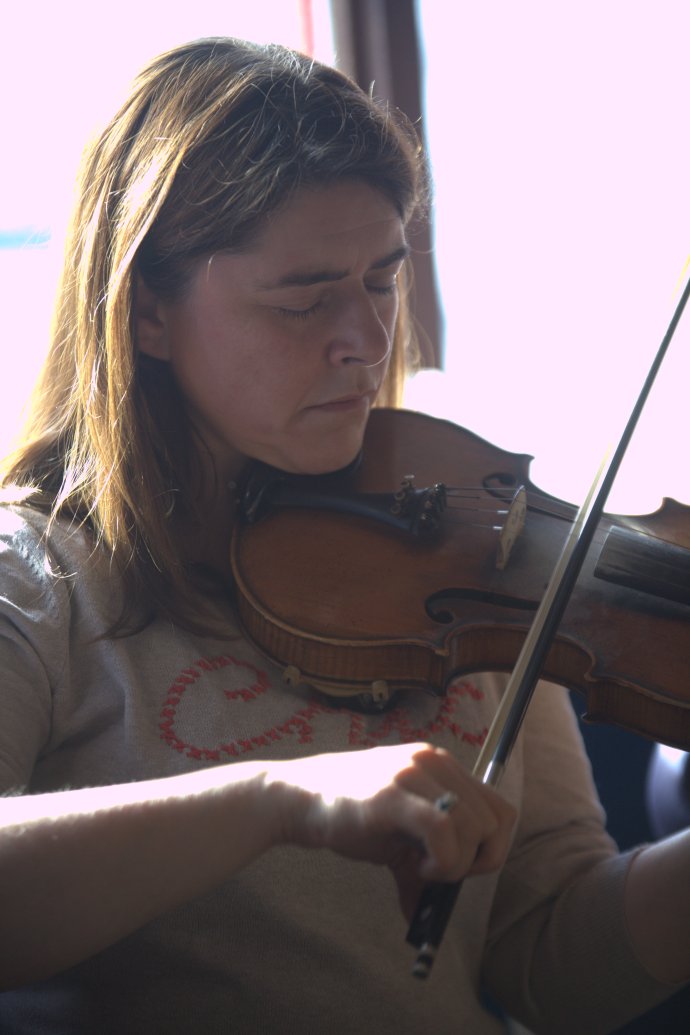
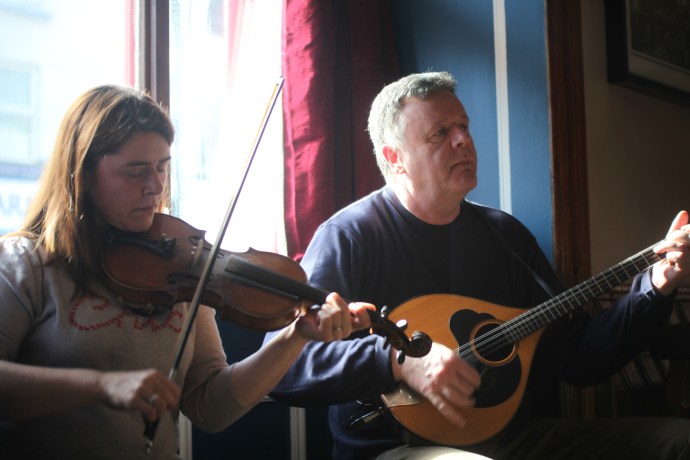
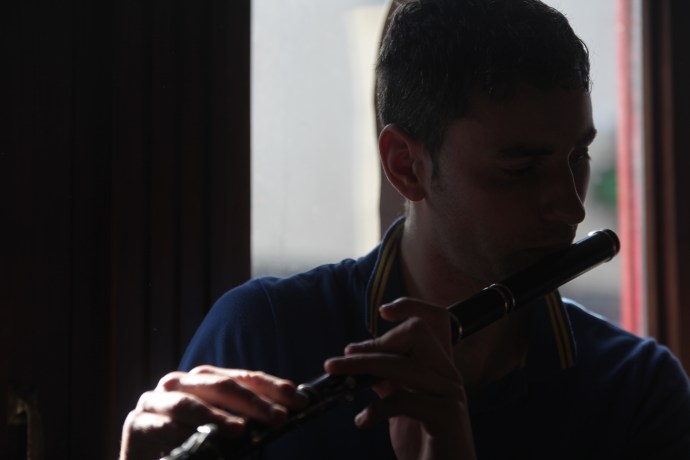
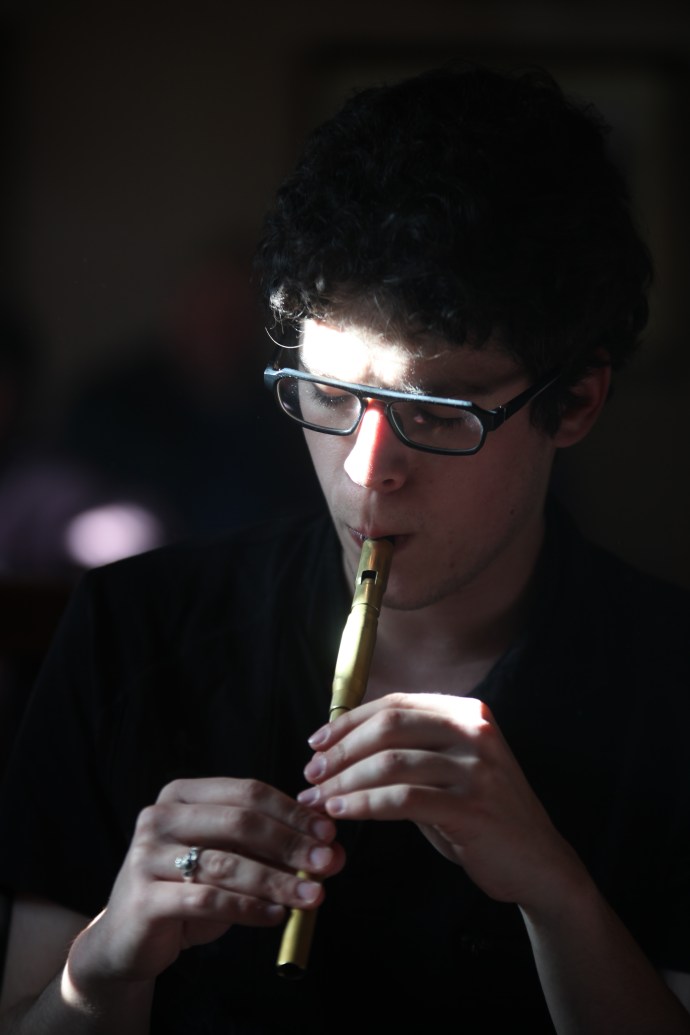
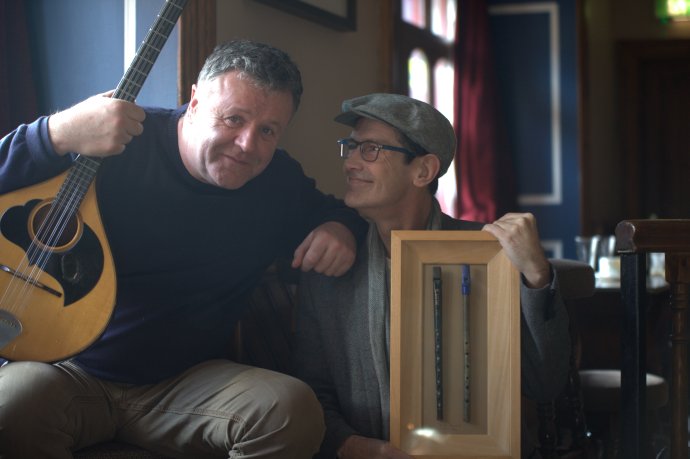
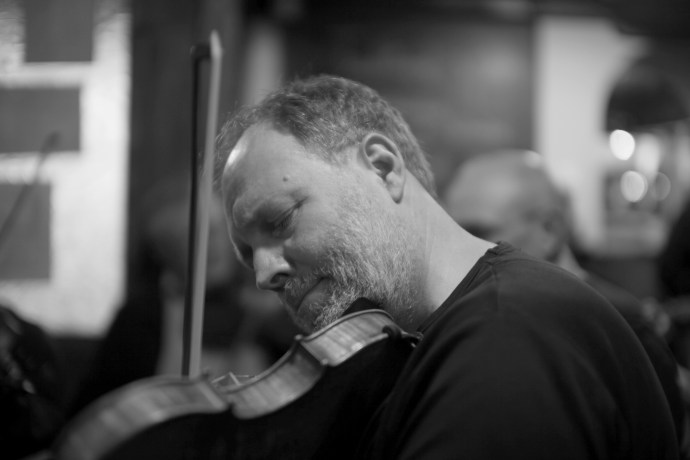
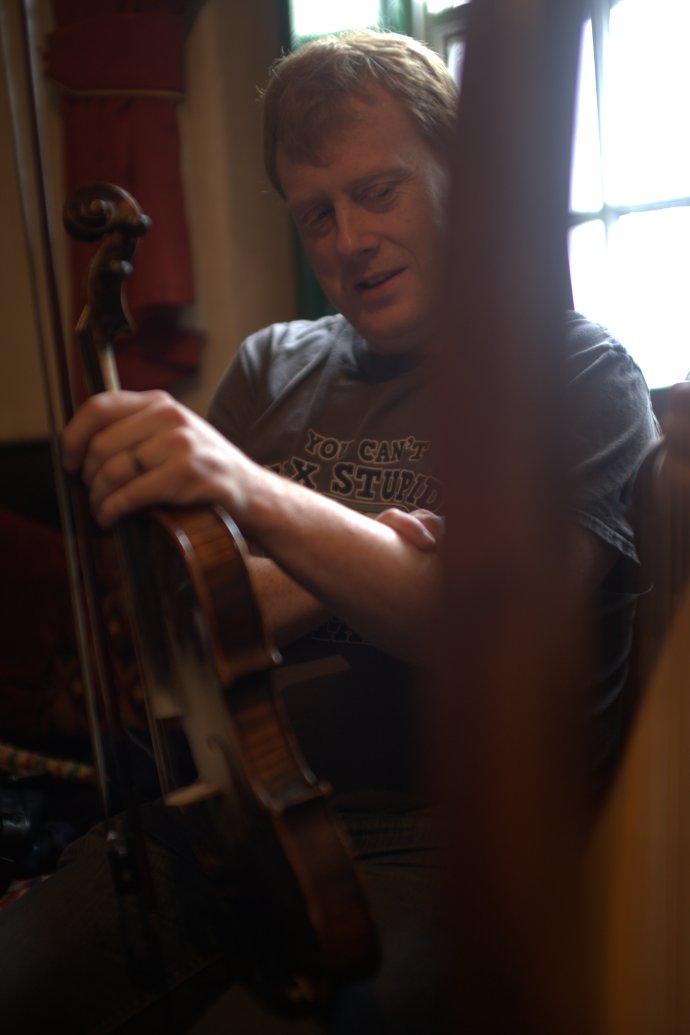
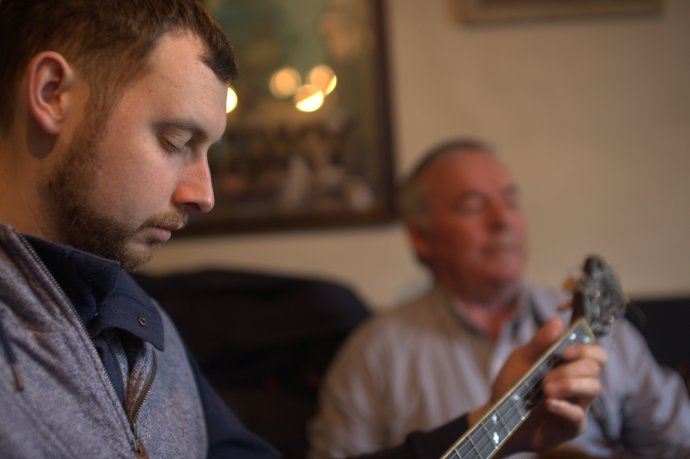
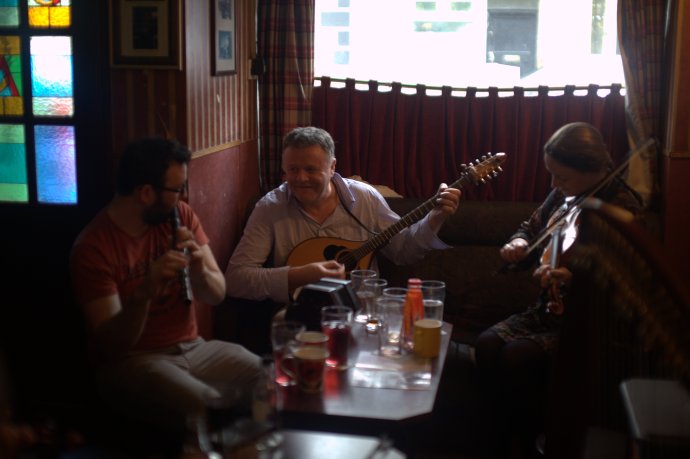
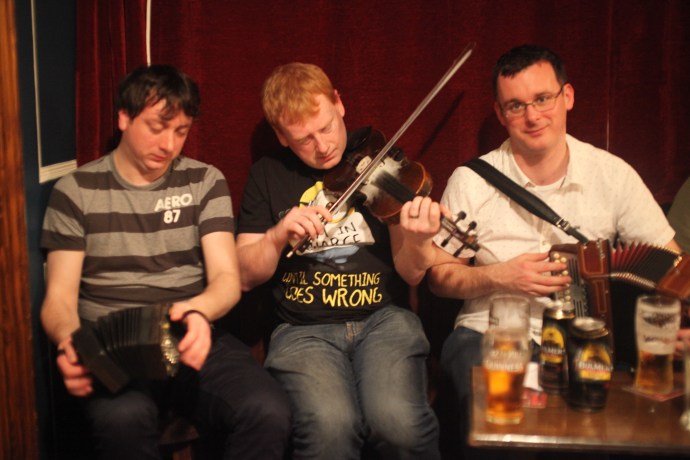
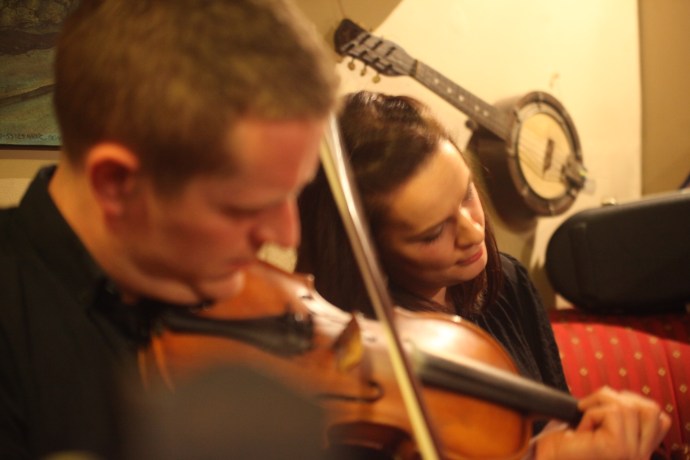
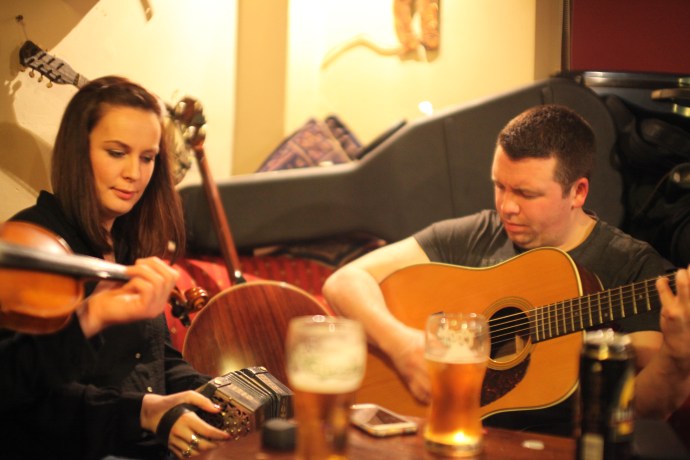
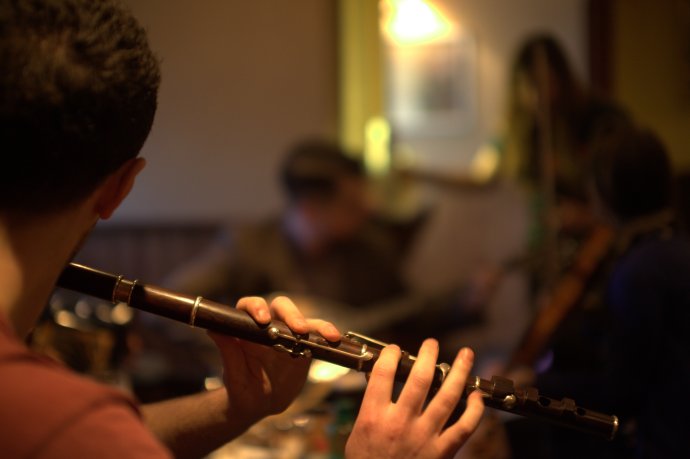
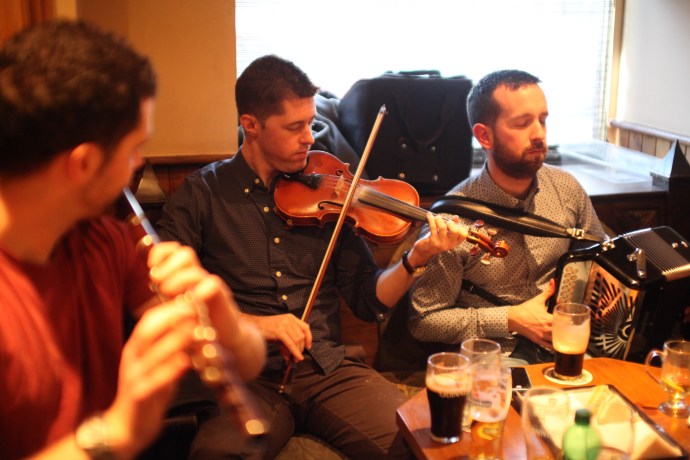
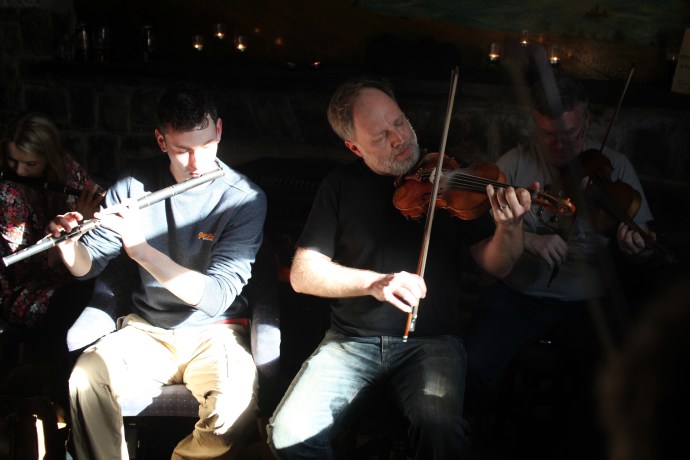
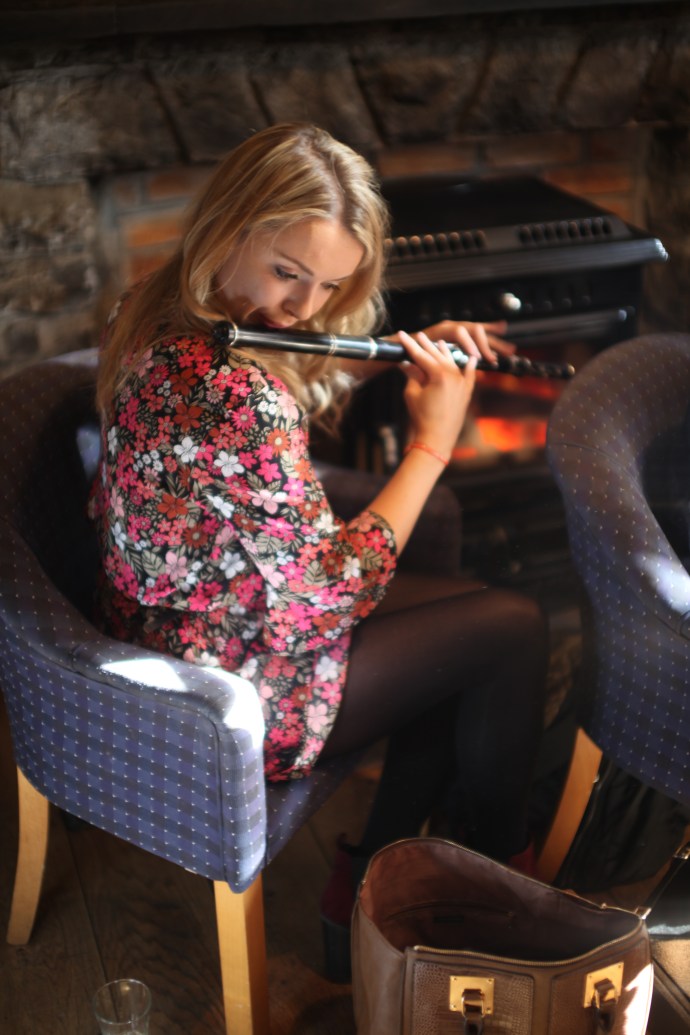
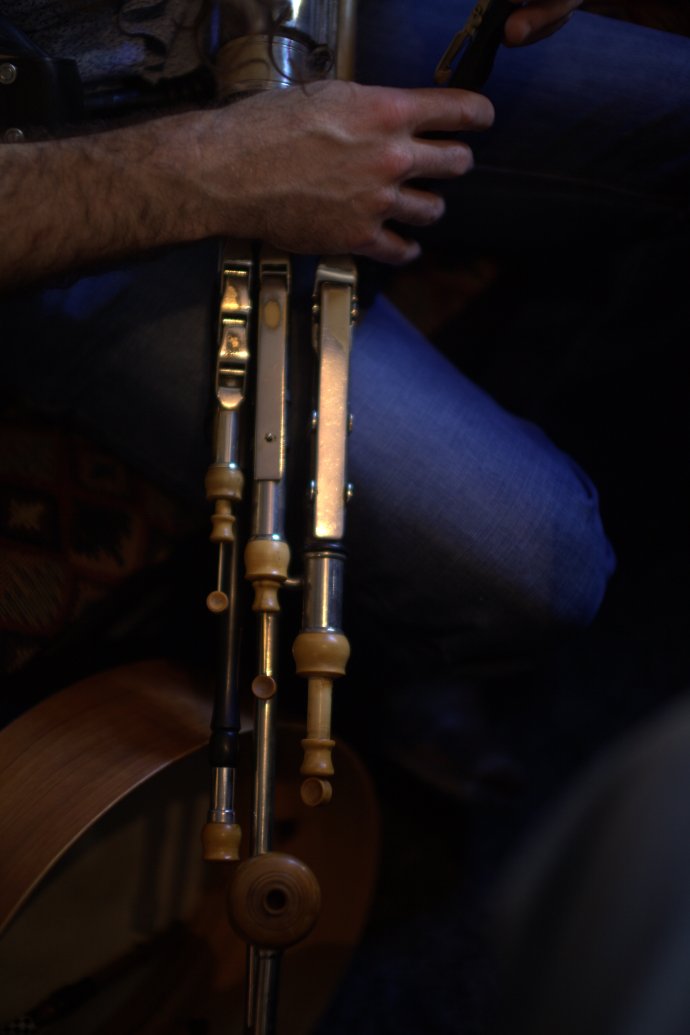
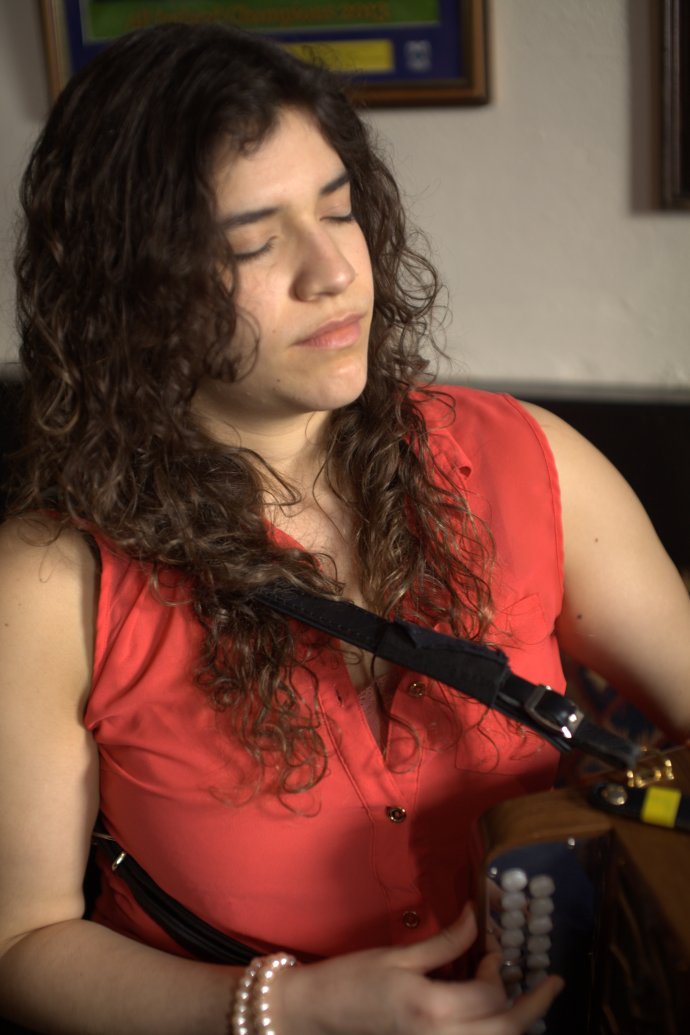
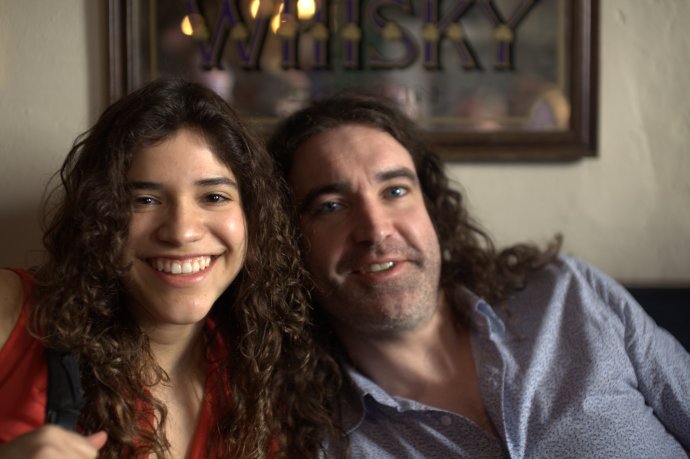
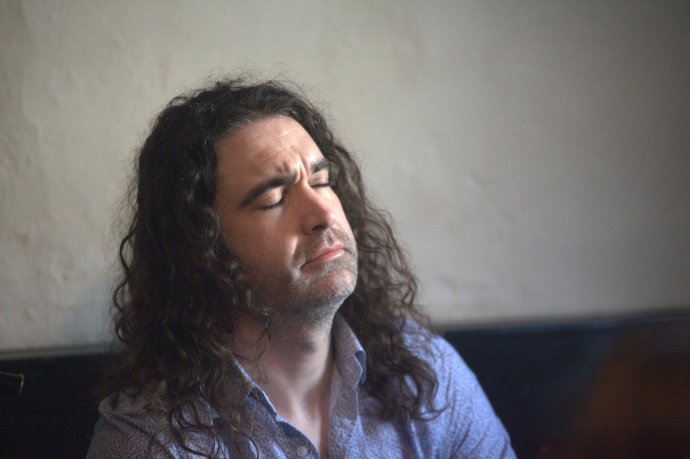
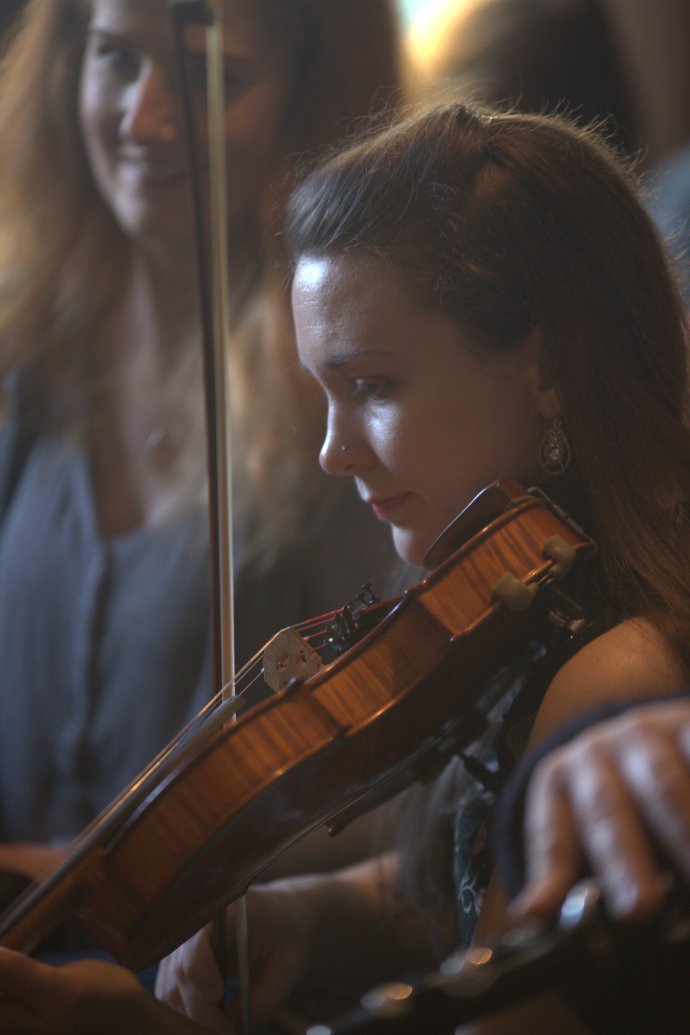
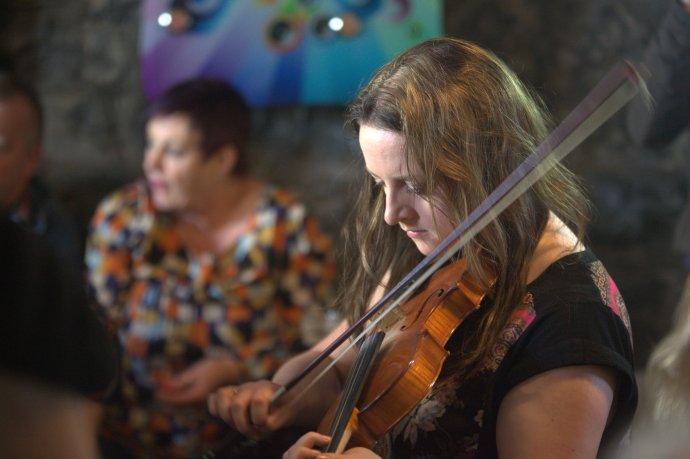
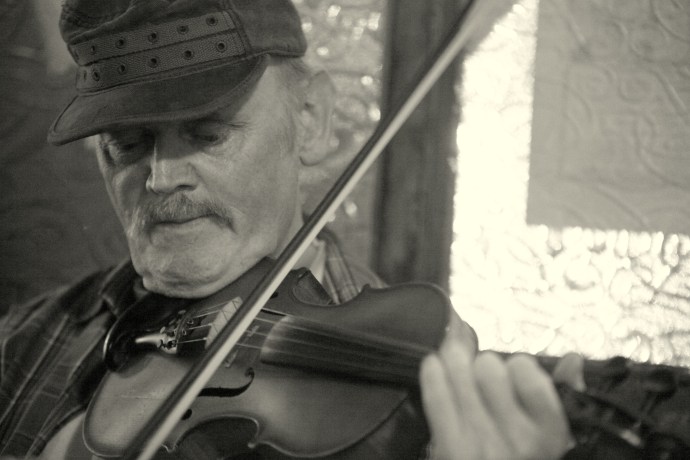
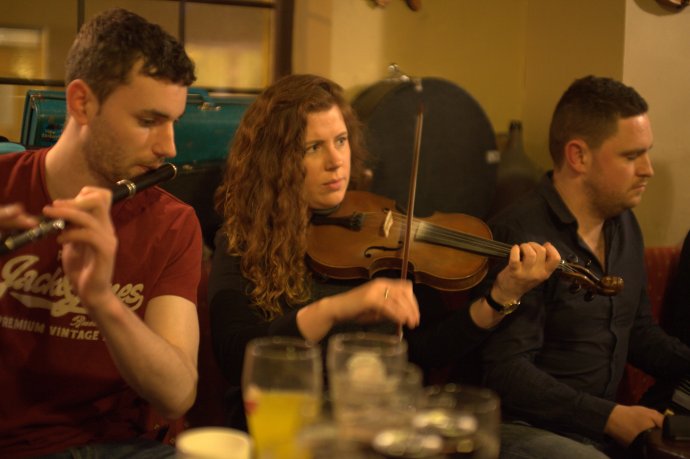
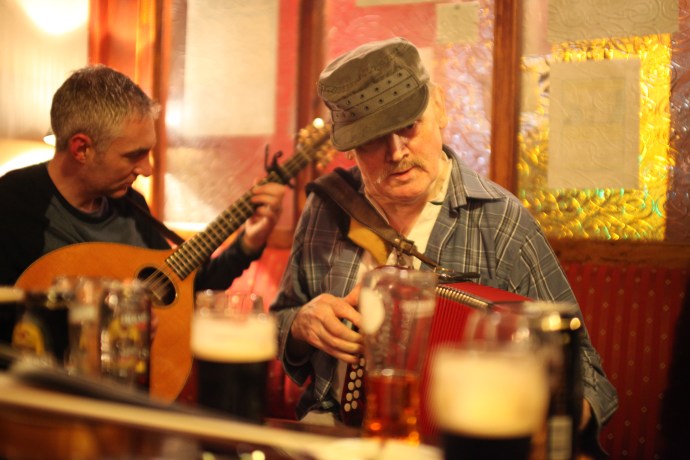
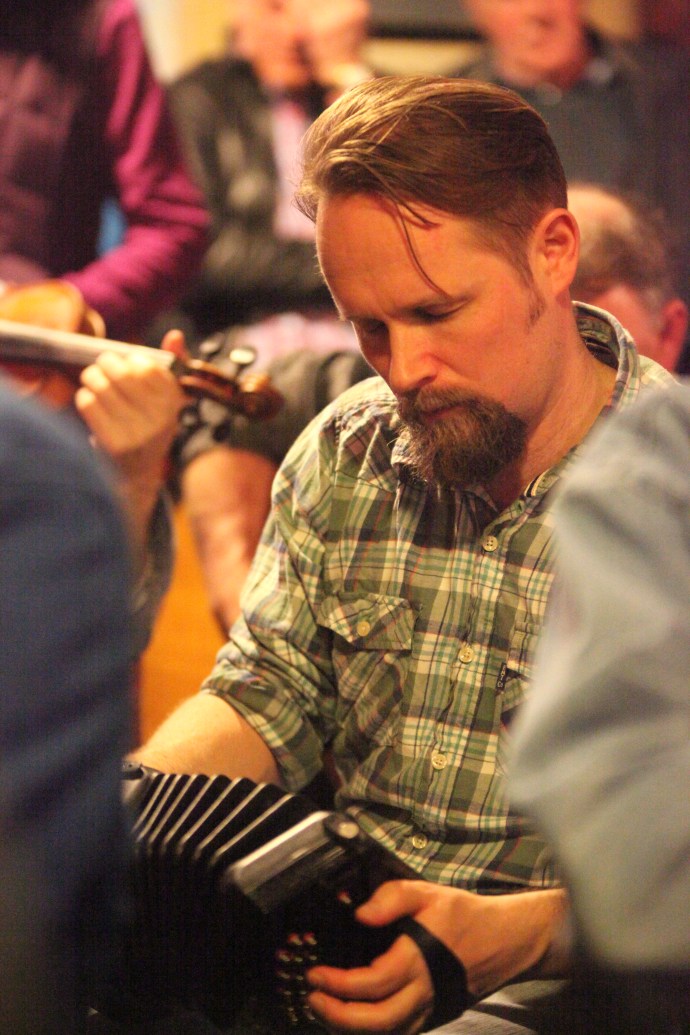
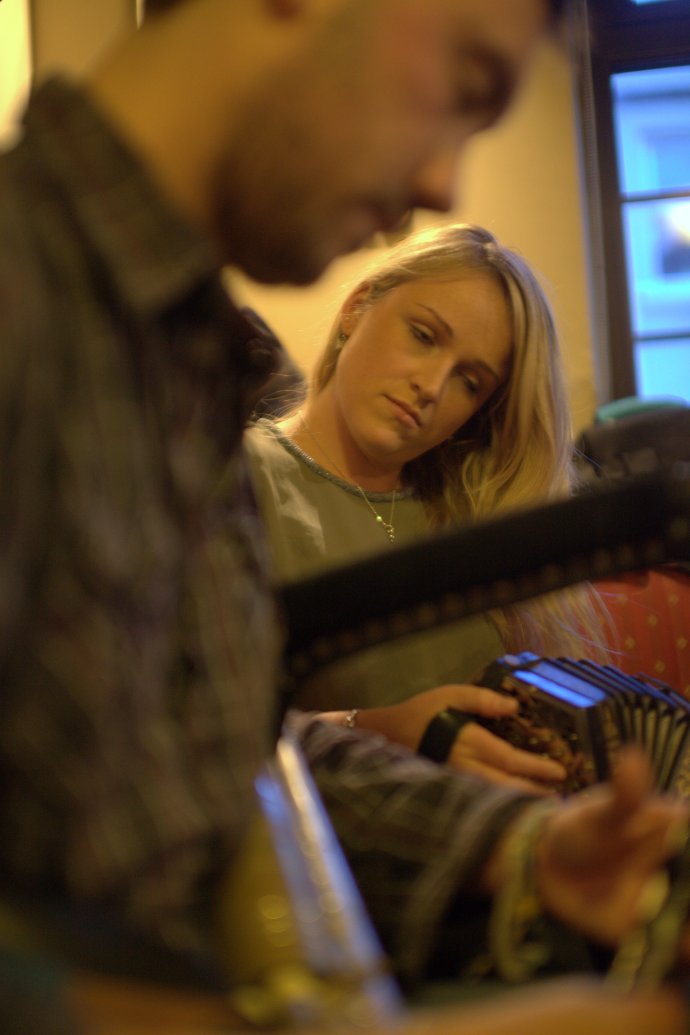
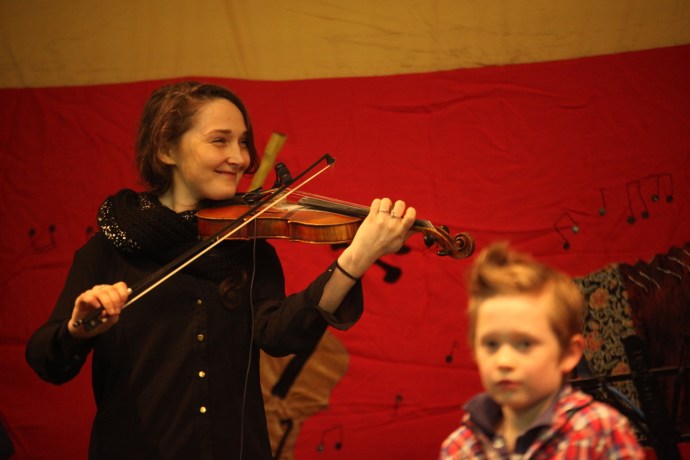
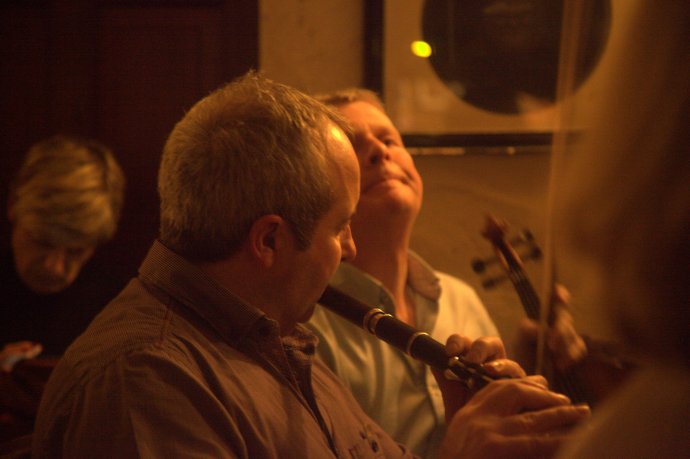
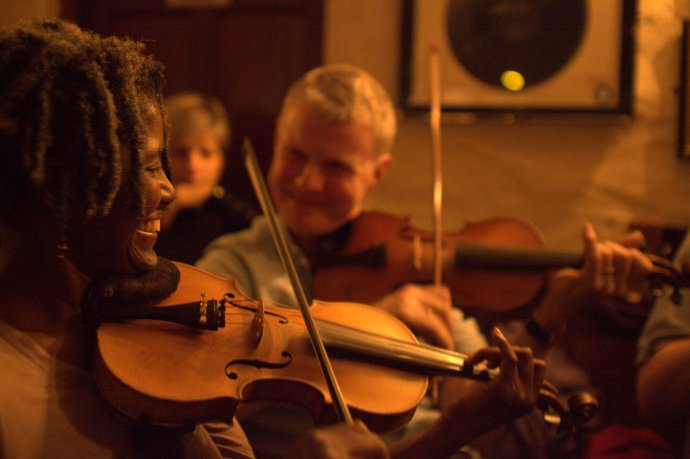
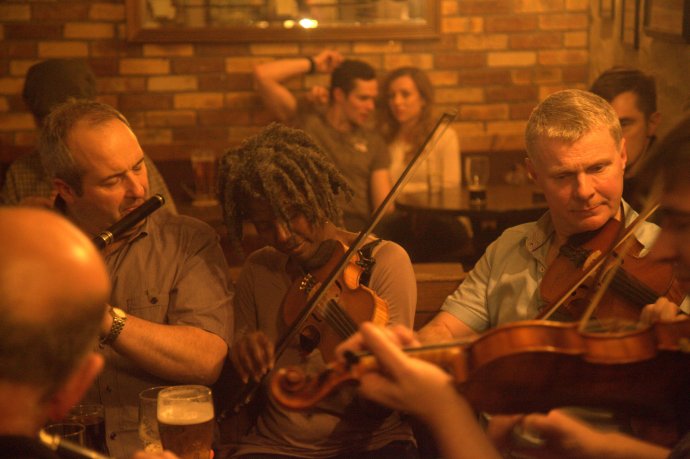
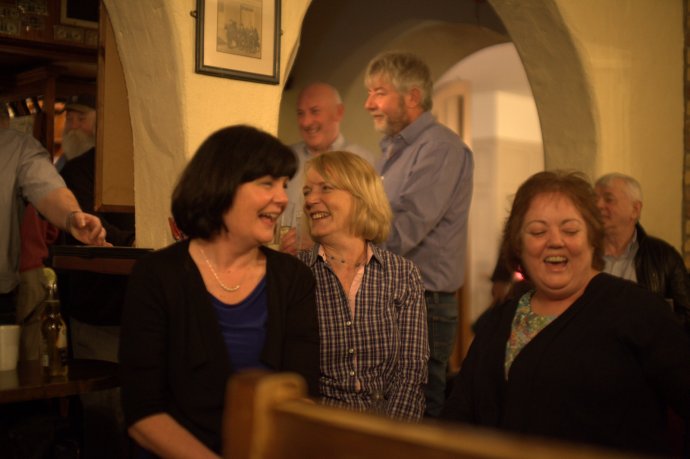
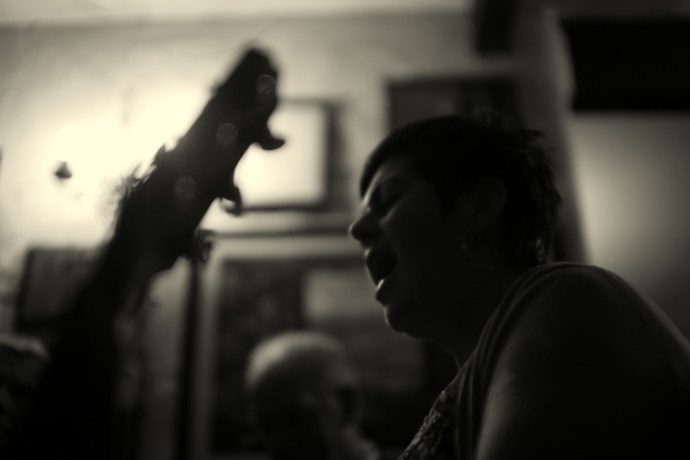
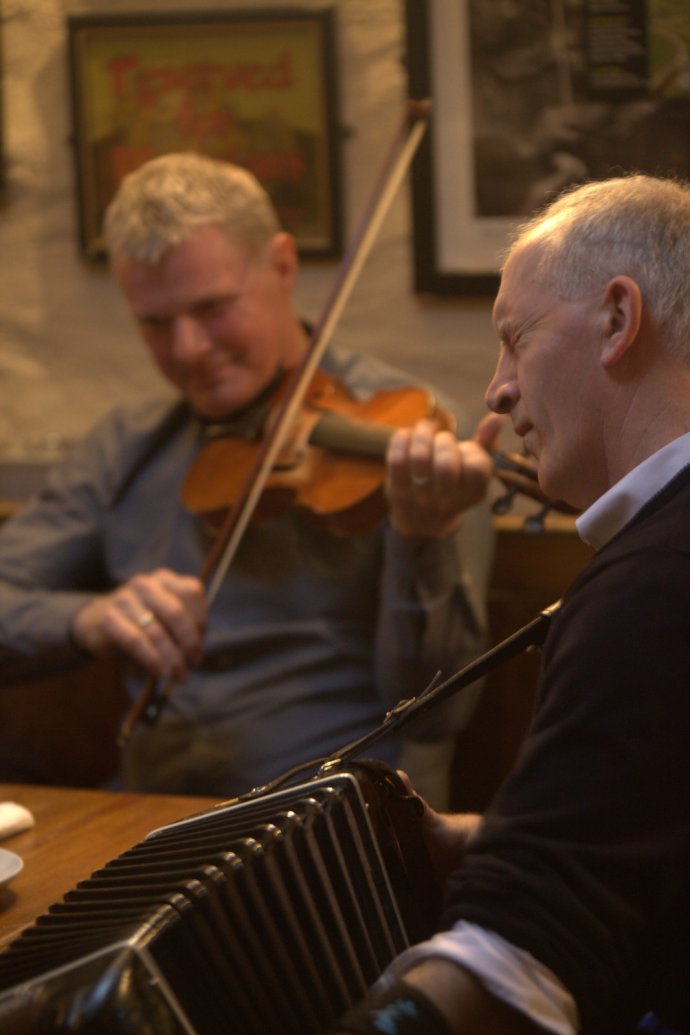
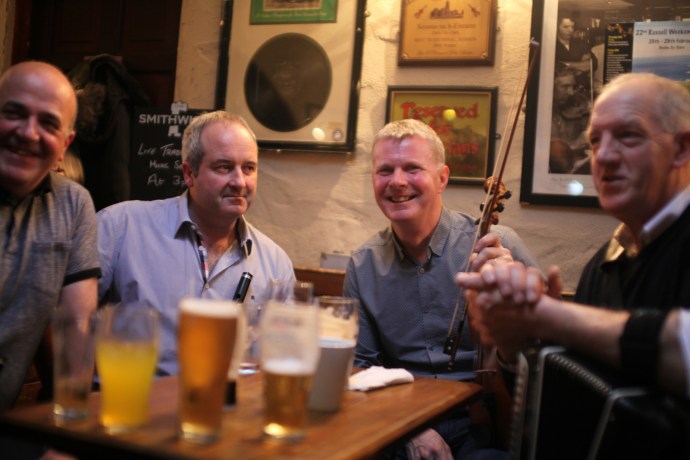
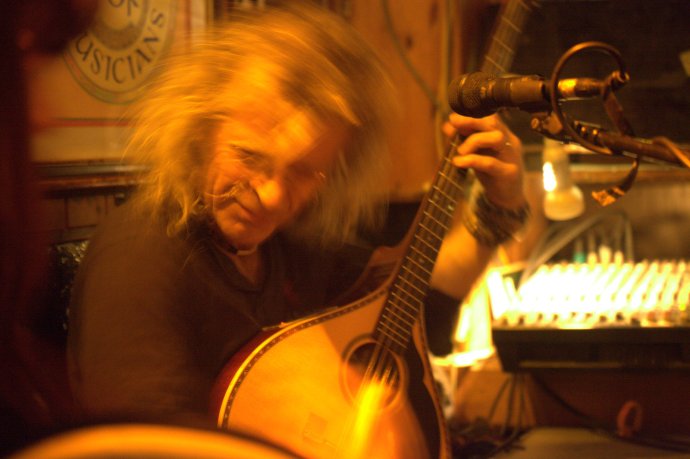
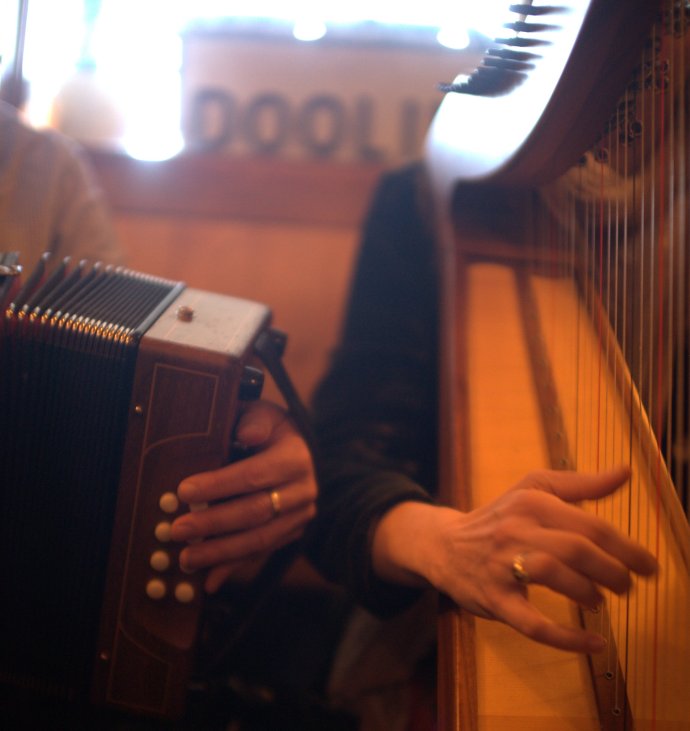
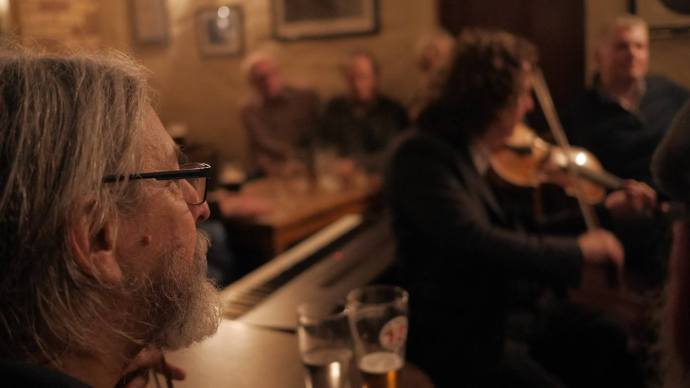
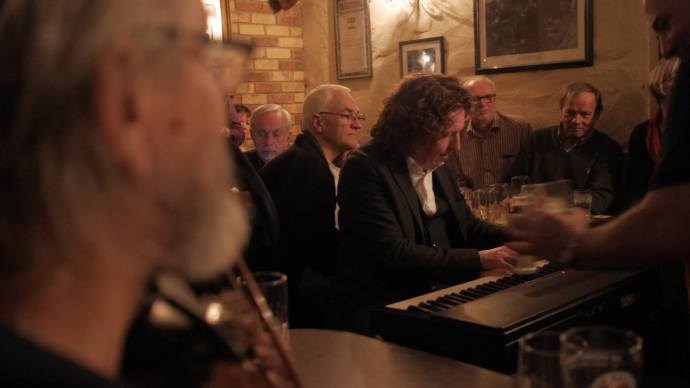
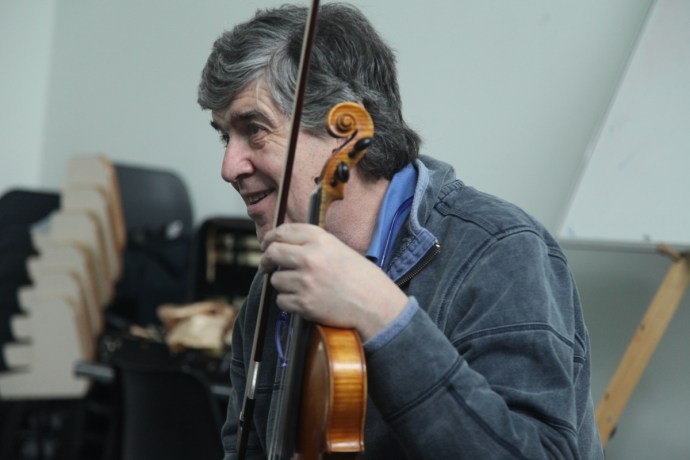
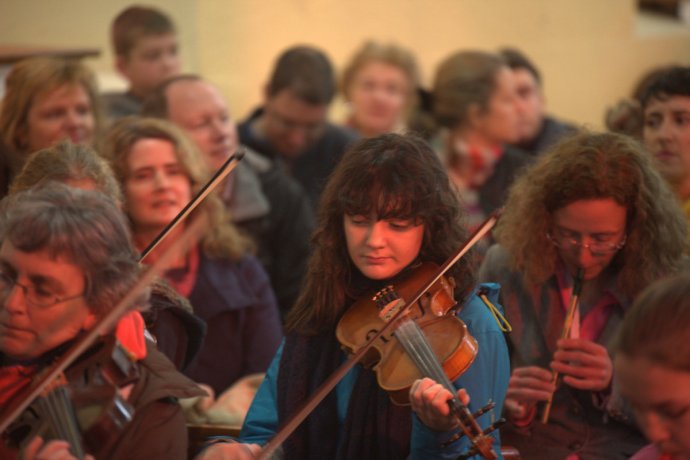
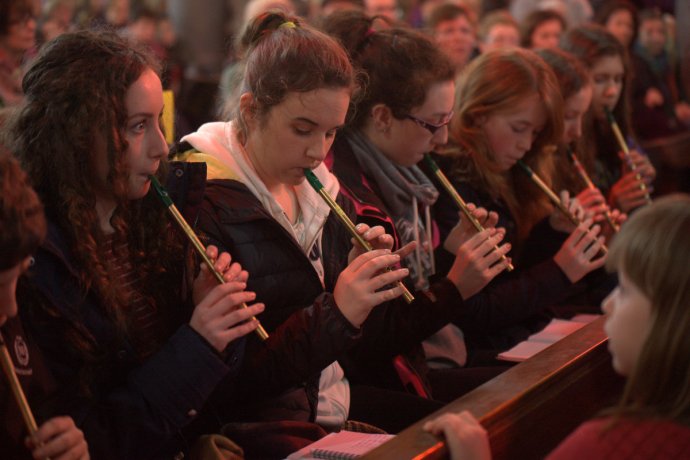
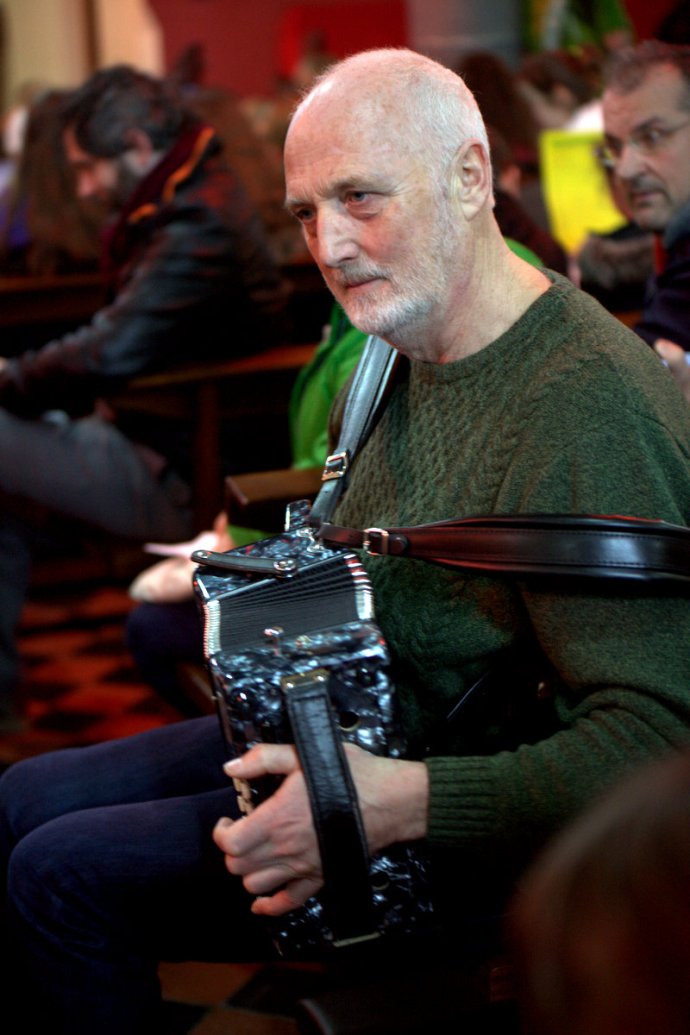
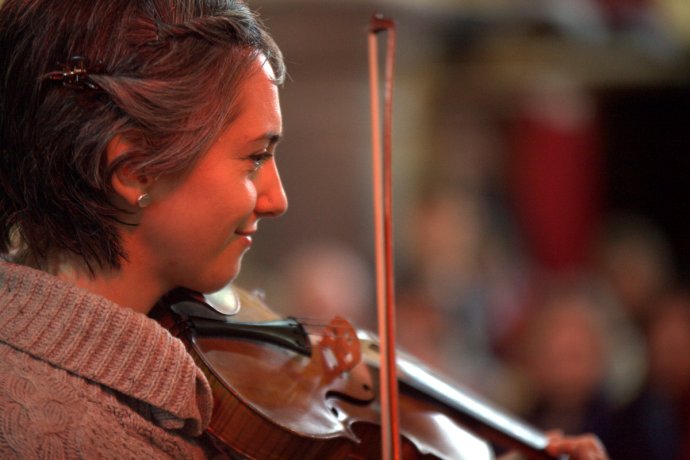
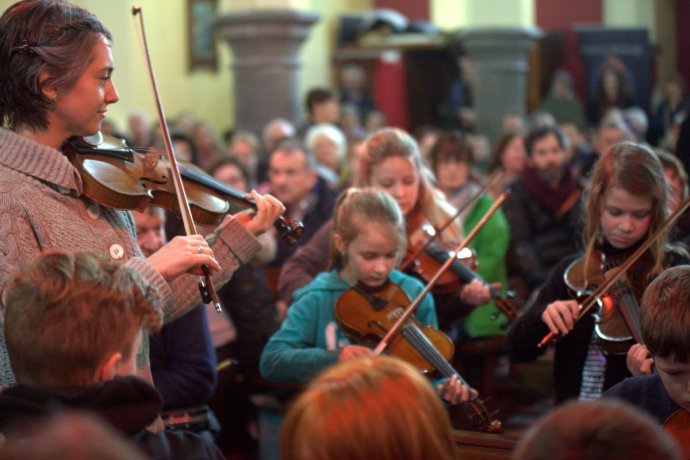
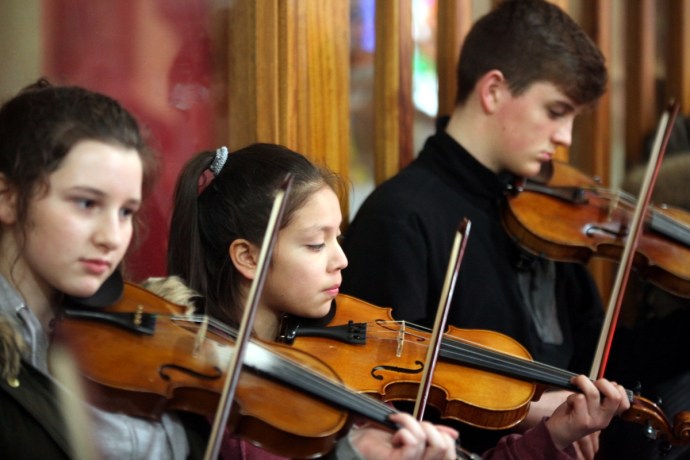
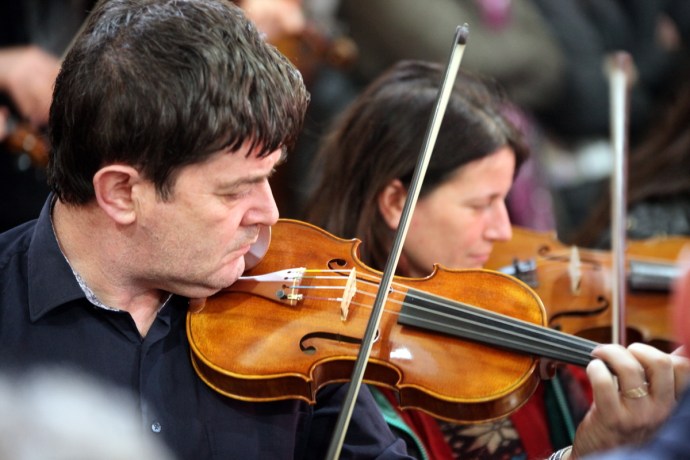
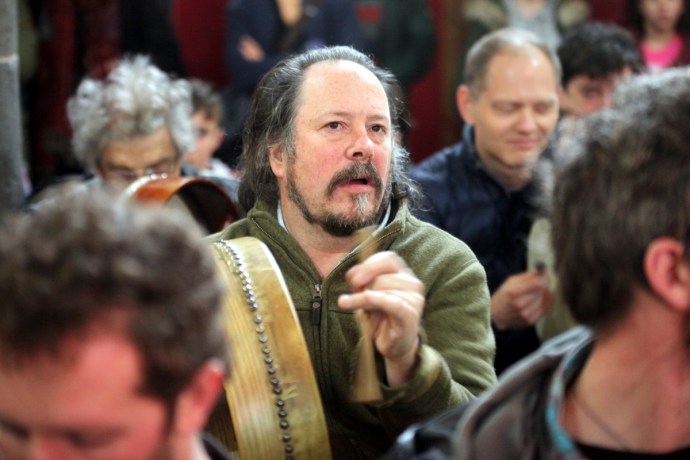
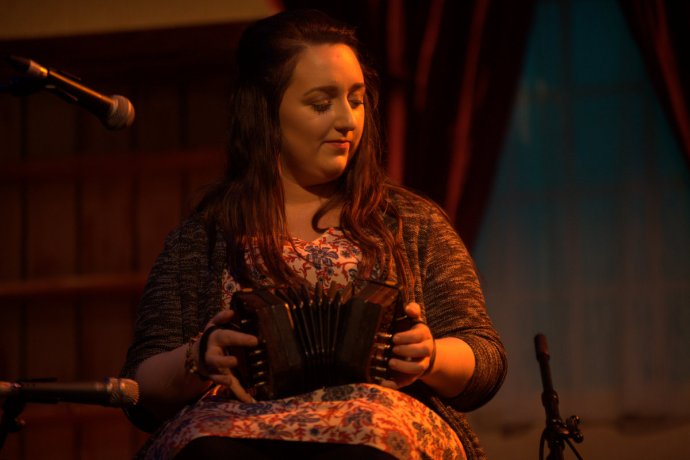
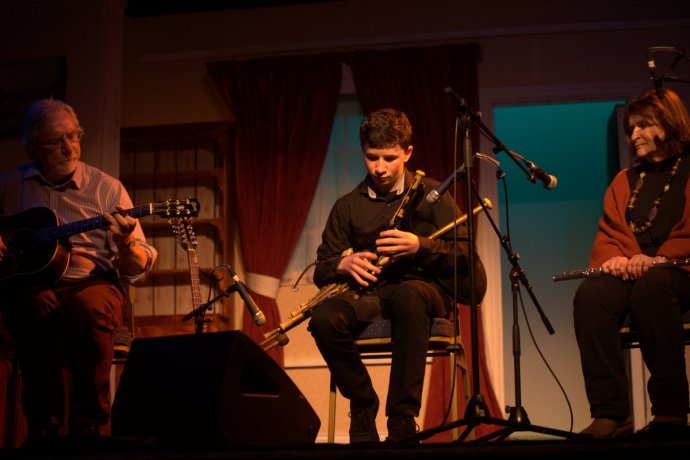
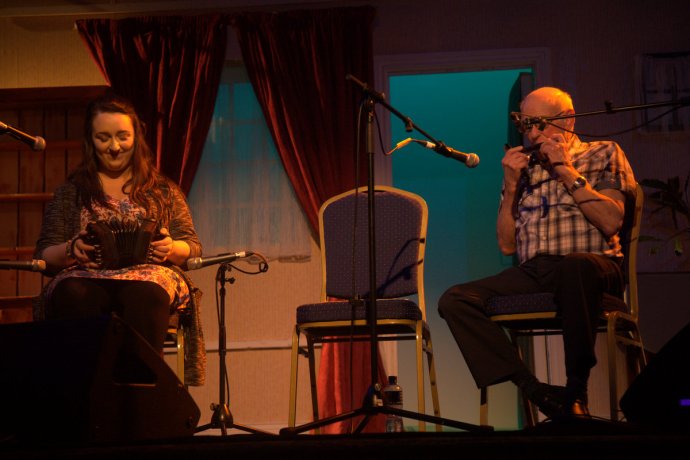
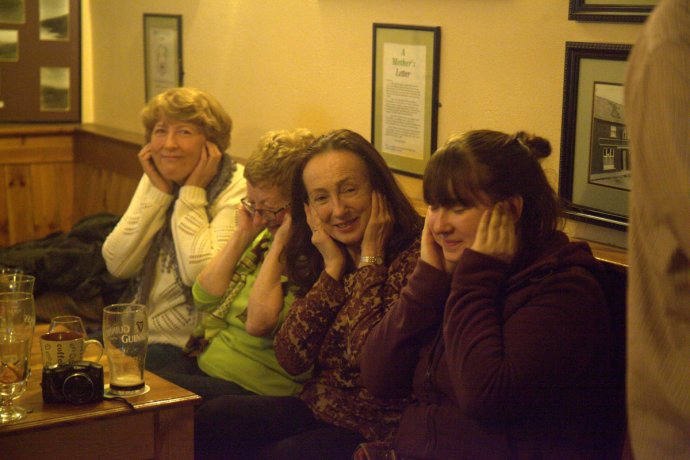
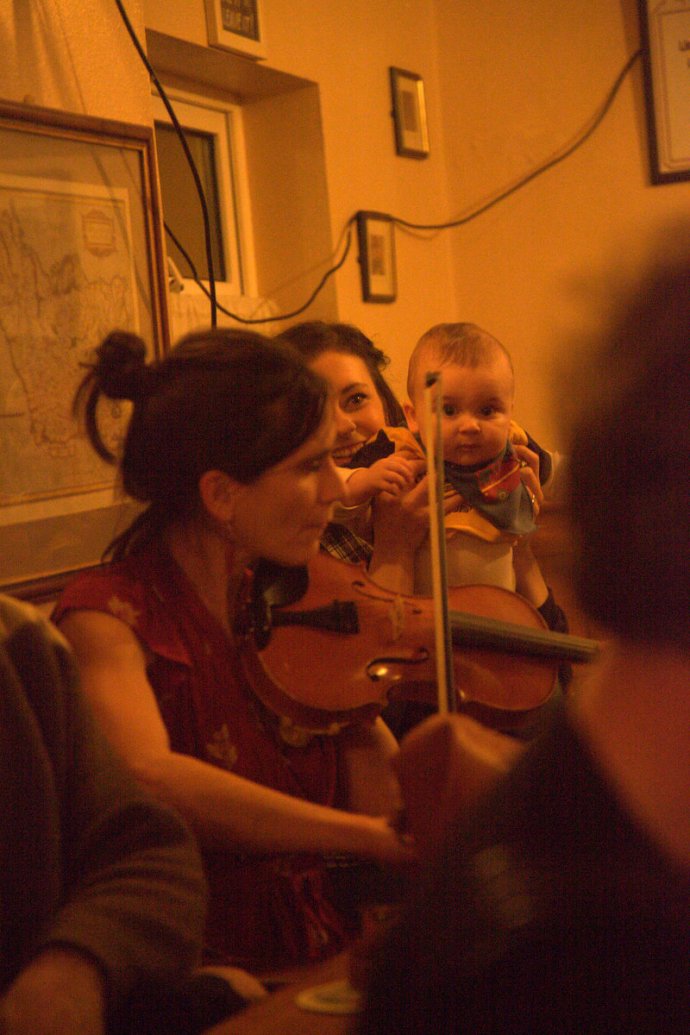
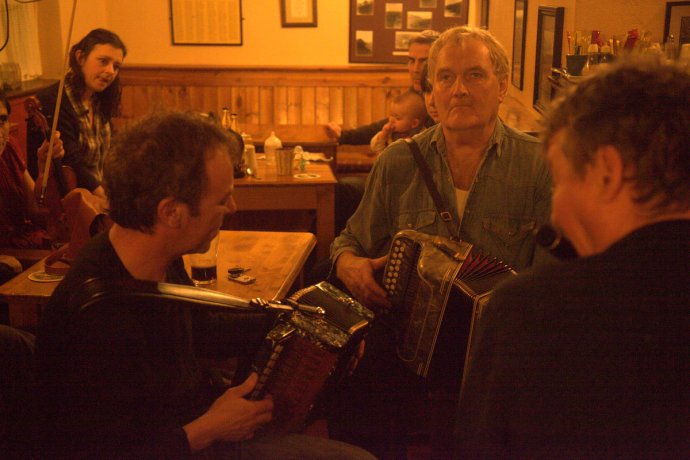
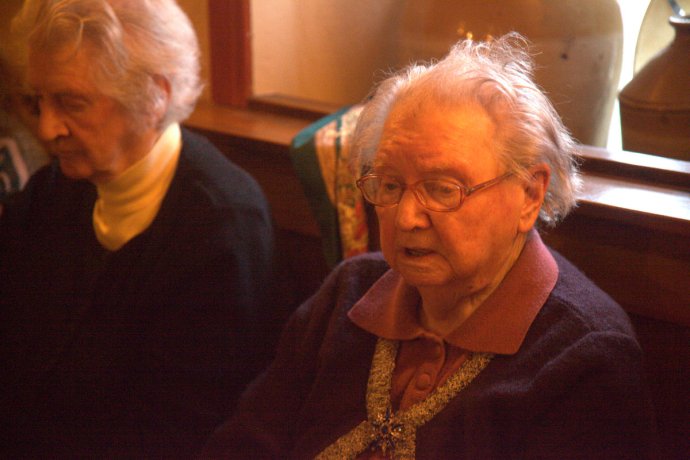
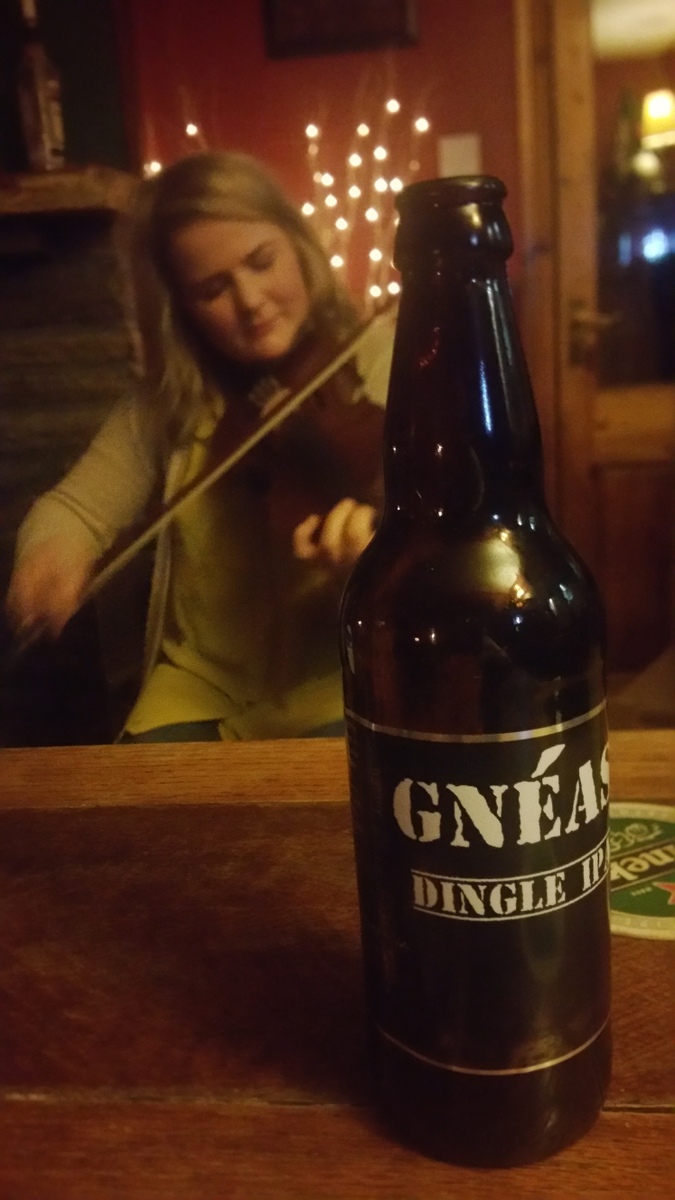
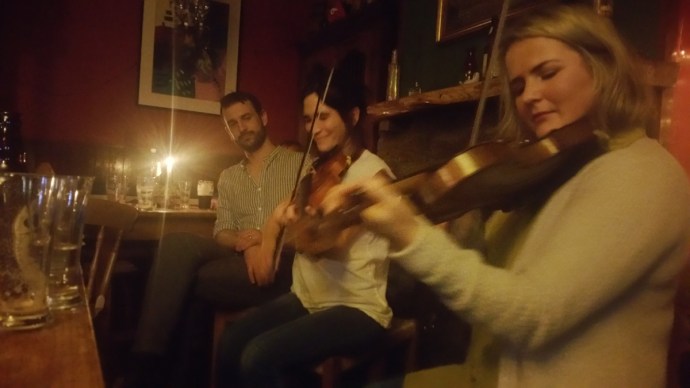
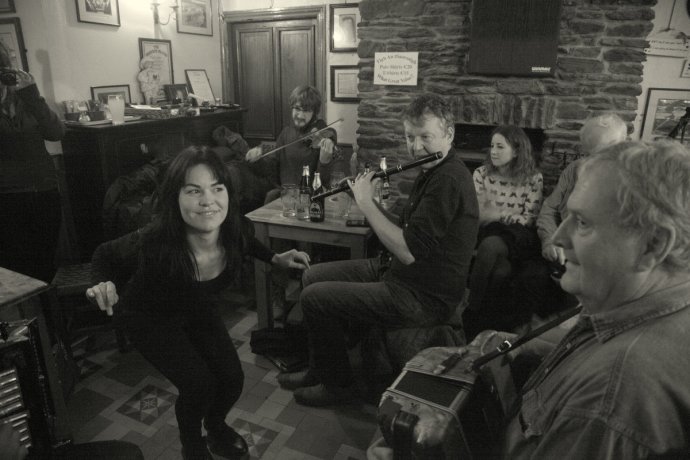
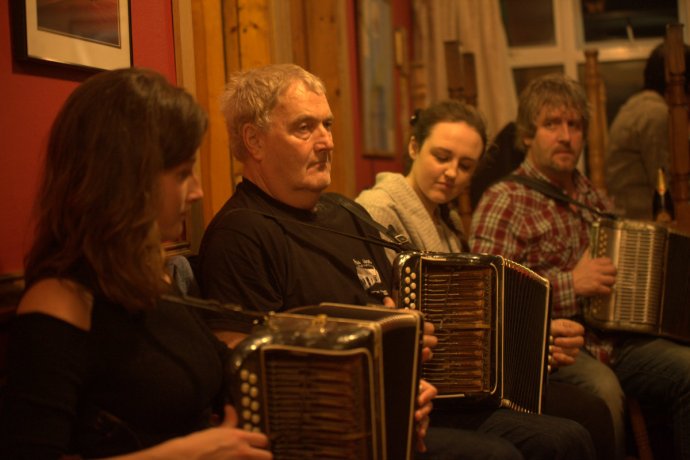
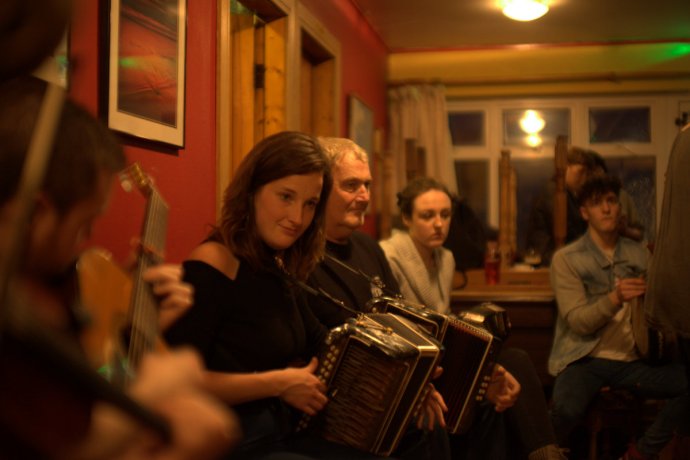
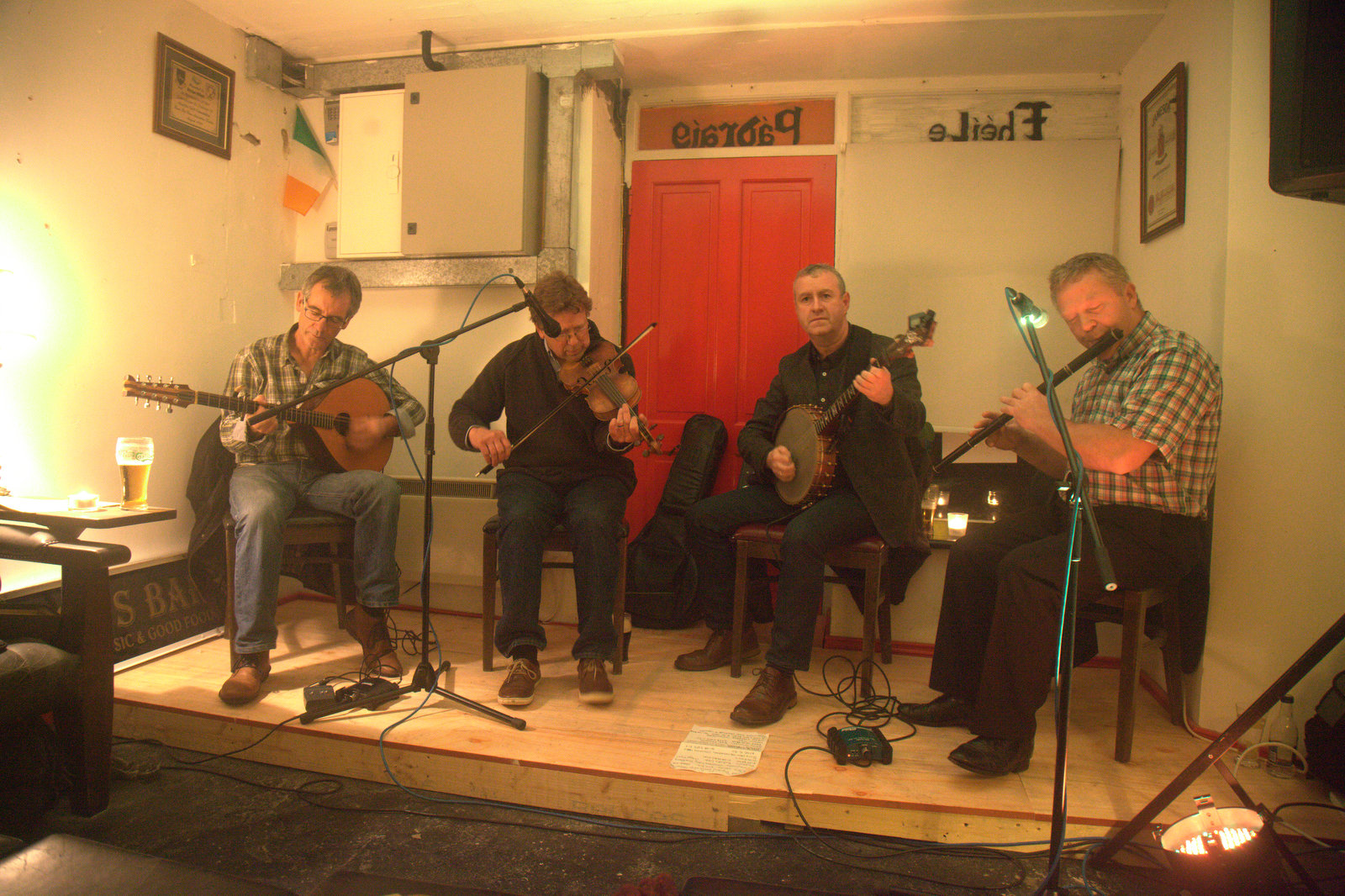
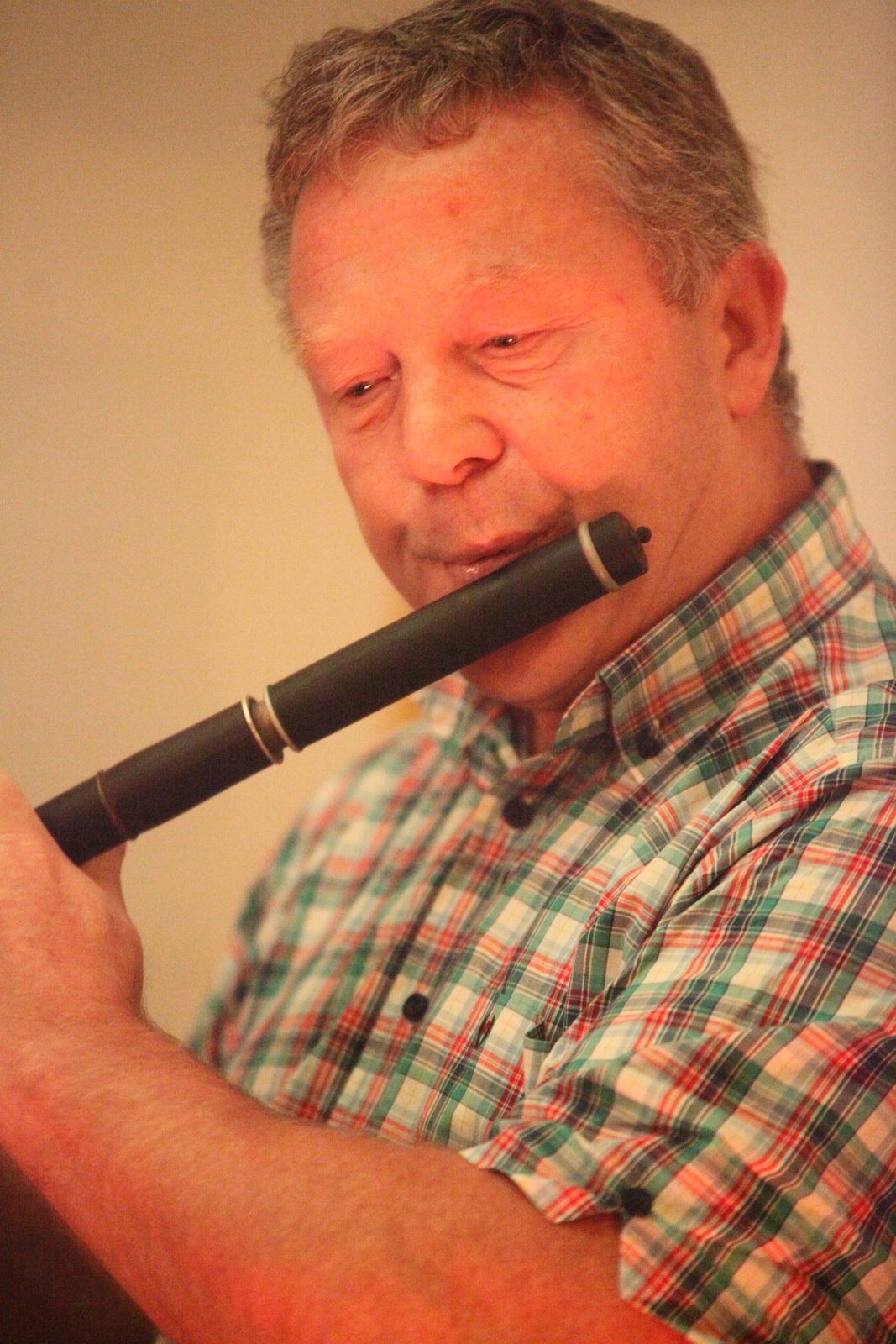
Well known Doolin flute, whistle and spoons player, Christy Barry is trying to bring back this tradition by opening his house to guests to share his tunes and stories.  I was lucky enough to attend the one of these nights when Christy and his wife Sheila entertained 18 guests in his cosy living room and, with the help of some fiddler friends,  kept the crowd of mostly Americans enthralled for almost two hours and served some delicious local cheese, smoked salmon and a glass of wine.

Christy is a direct link to the Doolin of the 70s.  He personally knew and played  with all those whose portraits hung on his living room wall including Willie Clancy and the Russells.  And he spoke fondly of them.  Christy’s monologues between tunes could go anywhere and that is part of the charm of nights like this.  They are not scripted and you could go again on Monday and I am sure it would be very different.

The concept of the ‘house concert’ has become popular particularly in the States but also in Australia and I am sure elsewhere,  where a home owner brings an international performer into their home,  does all the organising  and the artist gets all the proceeds.  This is different.  This is Christy and Sheila sharing  their home with visitors  but the formula has all the signs of being a great success.  With initial recommendations through the B&B’s the numbers at this Good Friday event surprised Christy.  Perhaps the lack of alcohol anywhere else in Doolin (or the whole of Ireland for that matter) was a factor but I think the chance to hear Christy and friends play music and talk about his life, the people and the music was the main inducement and it will continue to draw people.

Christy was very generous in inviting people to join him for a song or dance and many stayed on afterwards to linger and chat.

It was a memorable night for those who were there and visitors to Doolin now have an alternative to packing into a noisy pub to hear Irish music. The intention is to do this three times a week, so if you are in Doolin during the Summer, check it out.


IG3C4518IG3C4526IG3C4610IG3C4697IG3C4717IG3C4761IG3C4786IG3C4816IG3C4870IG3C4922IG3C4982IG3C5004IG3C5012IG3C5065IG3C5135

Categories: Real Ireland, Sessions, Stories, Trad Irish Music, Uncategorized | Tags: , , , , , , , , , , , , , , | 5 Comments

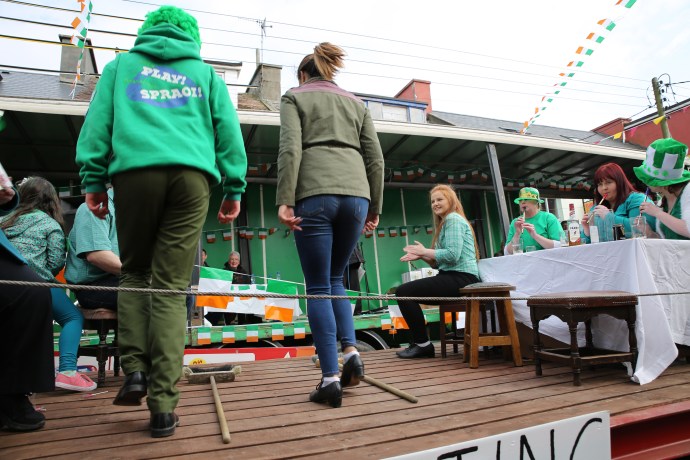
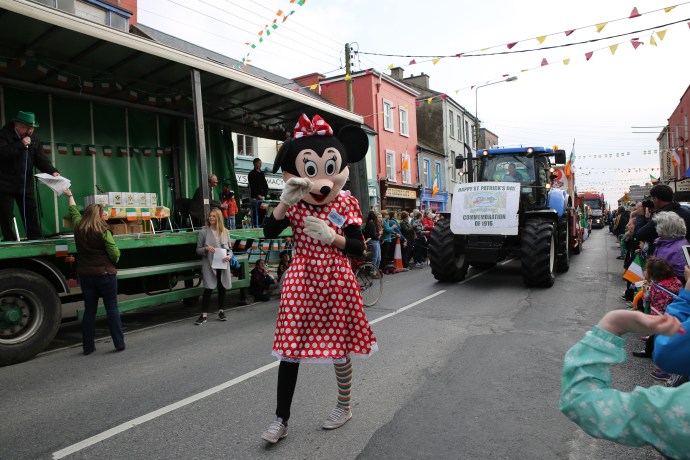
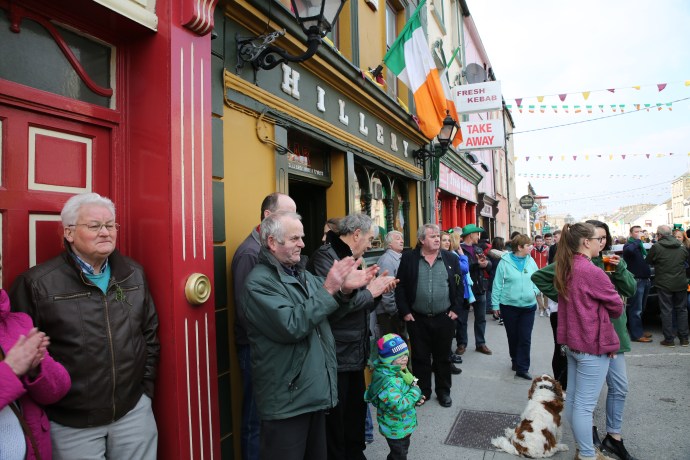
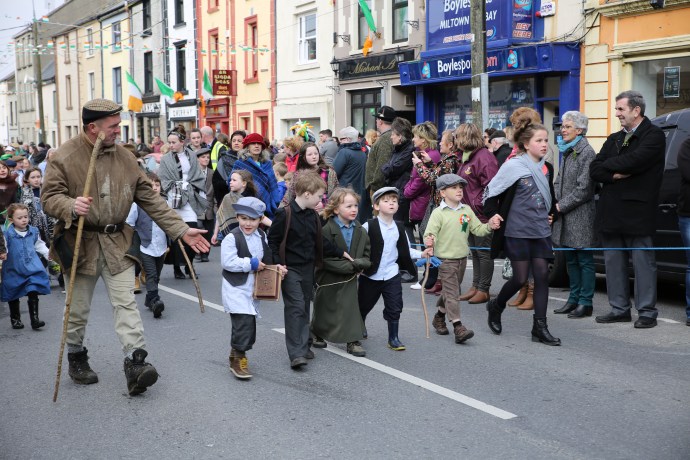
St Patrick’s Day, Miltown Malbay 2016

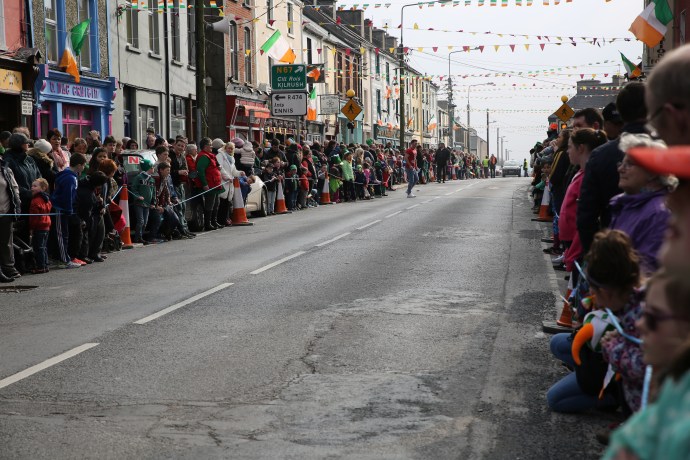
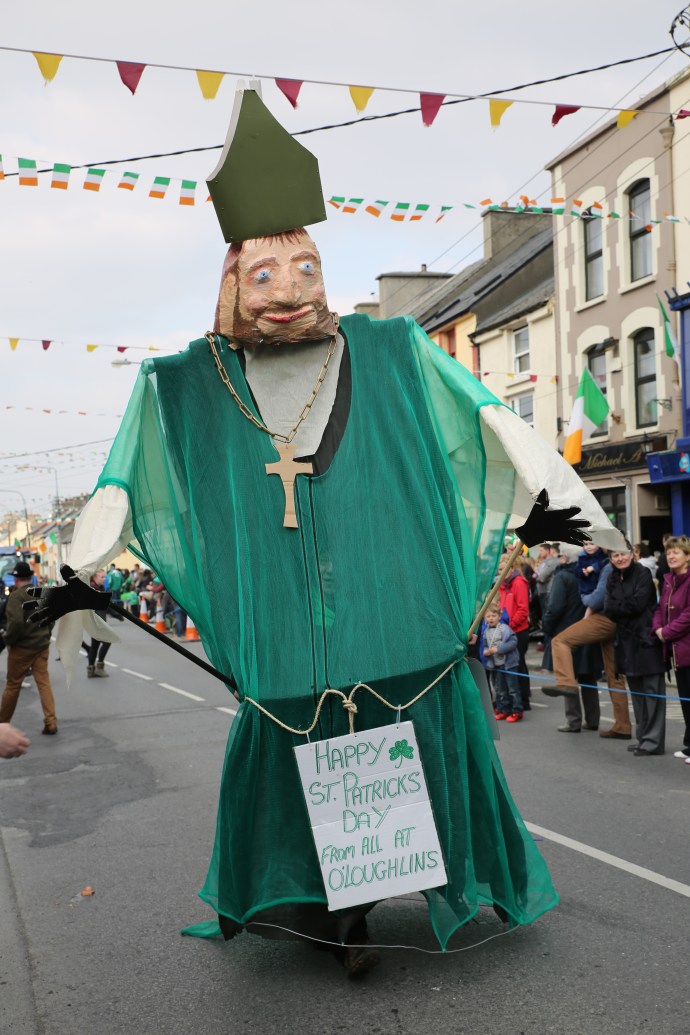
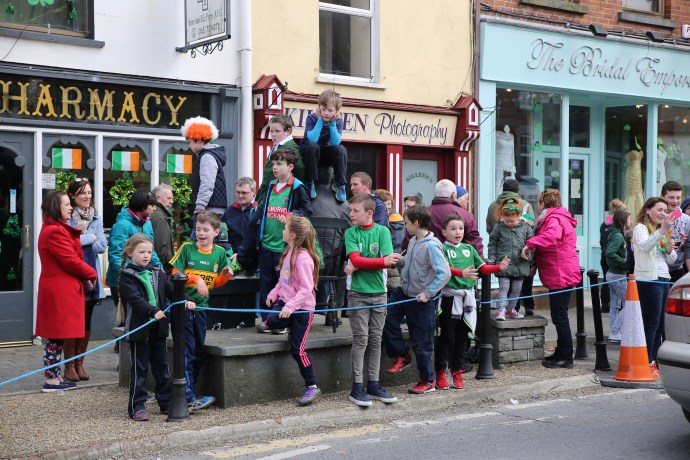
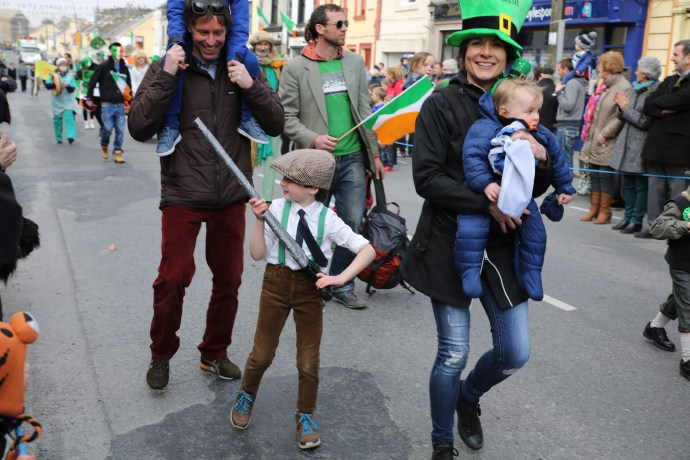
Last year I wrote about the St Patrick’s day parade in Ennis.  This year I decided to stay local and I’m glad I did.  This was the real St Patrick’s Day.  Not jam packed with ‘Irish-for -the-day’, green Guinness- hatted parodies that you see in Sydney or New York but this was the Irish celebrating their culture on their soil on their day.

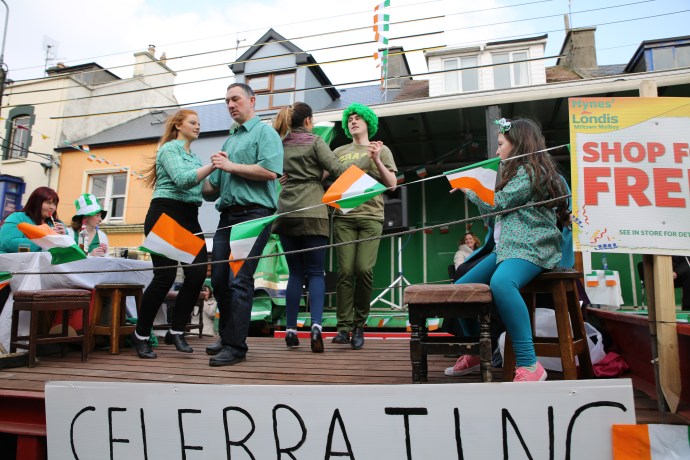
OK, there were green beards and flags and the like but it was Irish men, women and children dressing up so that somehow seemed OK and less jingoistic than in Australia on Australia day when it is just an excuse to get drunk and carry on like a pork chop.

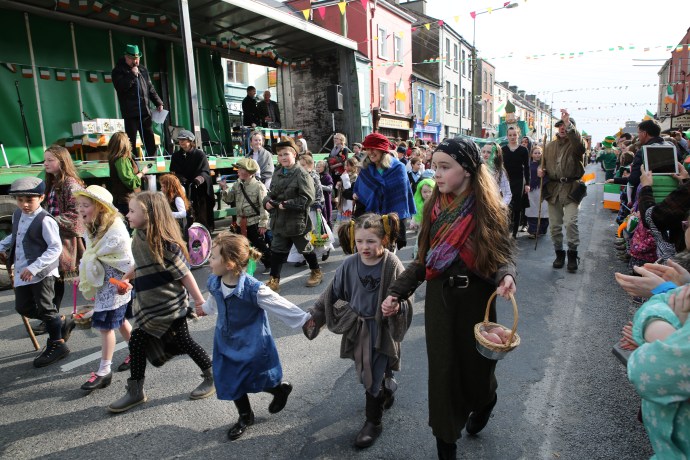
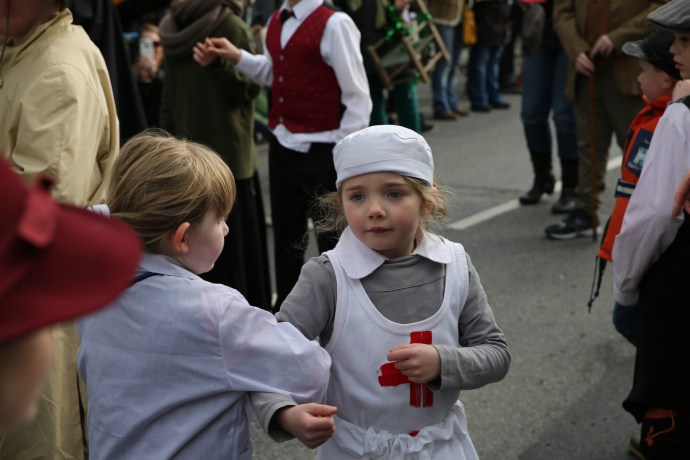
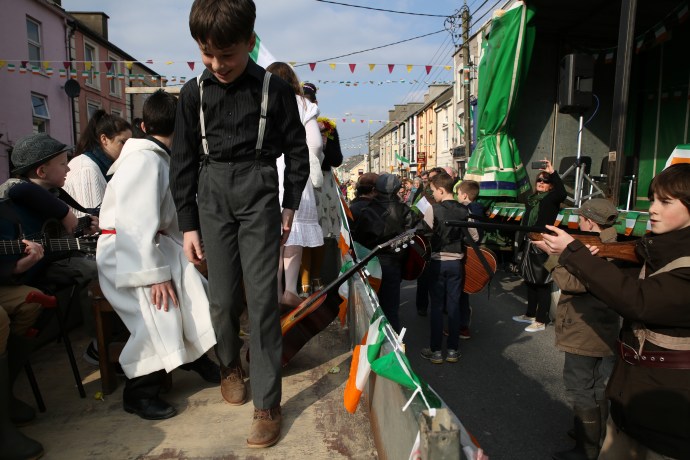
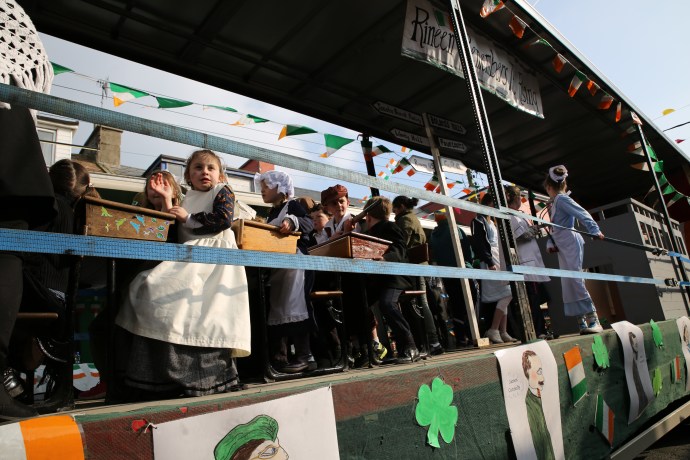
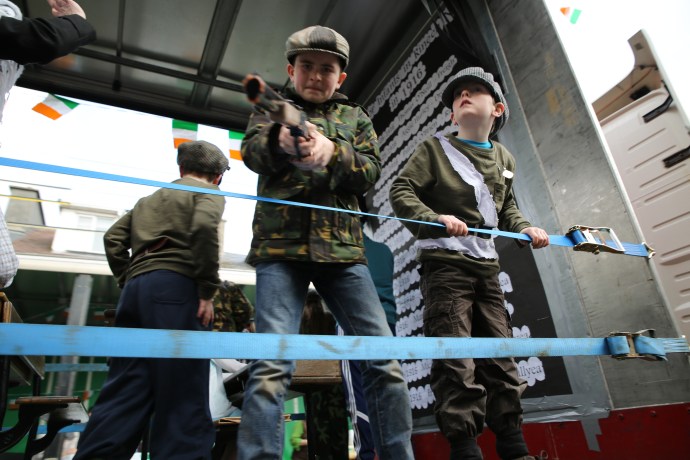
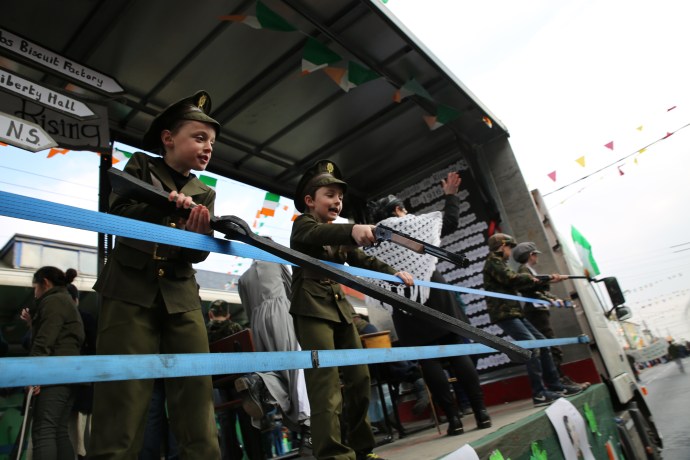
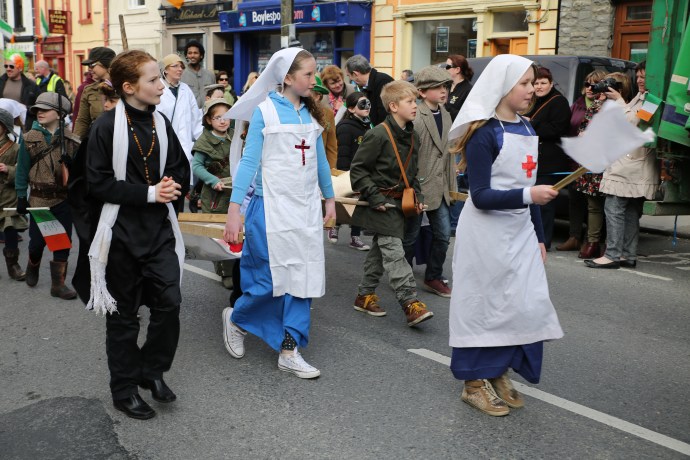
There was something real about it, perhaps it was the rural setting of Miltown Malbay closer to the ‘real’ Ireland than Dublin or even Ennis.  And boy did they go to a lot of trouble.  All the local schools had floats with the obvious theme of 1916. All were dressed in costumes of the day and re-enacting significant events.  There were farmers, soldiers, nurses, politicians and it was so good to see the kids and adults throw themselves into it with gusto. Oh and plenty of guns.   There were vintage cars and there was around a dozen bikes.  Now that’s something you wouldn’t see in Oz,  with the hysteria around bikie gangs, but they got a giant cheer as they roared their bikes in unison drowning out the tin whistles and mandolins.

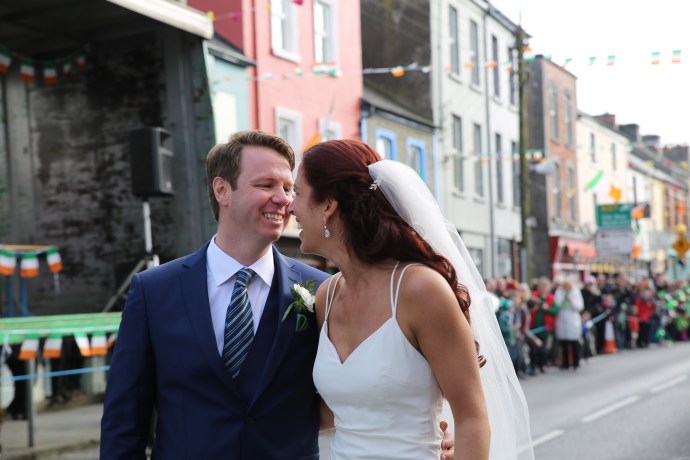
A couple due to get married at the Armada, one hour after the start of the parade at 3pm, became part of the festivities.  It was great craic and I am sure gave plenty of memories to take back to the States.  I’ve included a few photos.  By the way I was told they flew over from New York with 100 friends for the weekend!

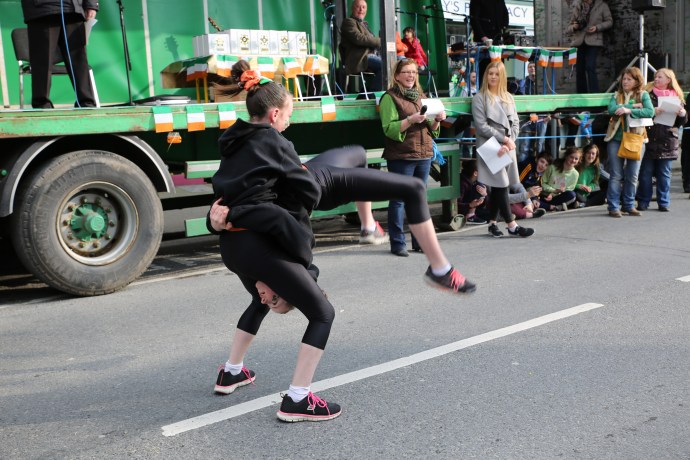
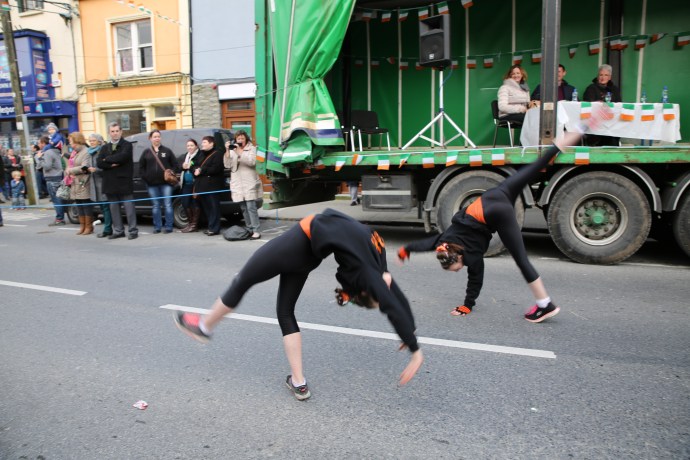
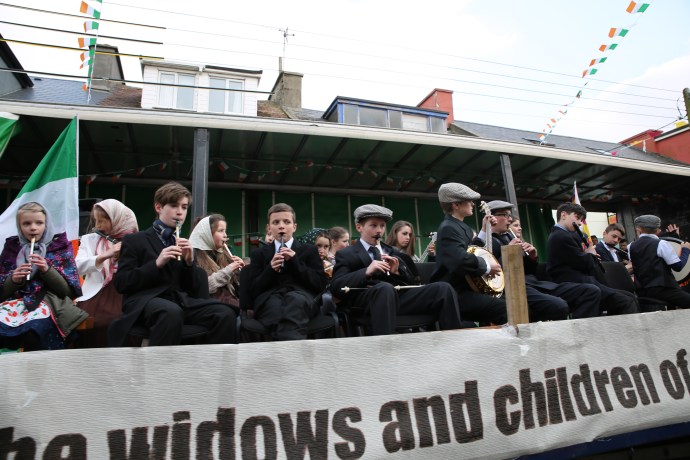
Did I mention there were guns?  And  tractors!  Many of the pubs had a float as did many of the local businesses, the GAA, and some of the community organisations.  And there was plenty of Irish trad accompanying them.  Most of the pubs had musicians, there was music on the ‘gig rig’,  there was the guitar school and the students from Brid O’Donoghue’s music school smartly dressed and proudly playing.  Brid herself leading a flock of youngsters ‘clothed-all -in-green-ho-ho’,   like a modern day Pied Piper.  There were set dances, a brush dance, two fabulous gymnasts and songs and recitations.  What more could you want?

The weather was kind as we basked in one of those rare sun-waves (four days in a row!), though chilly, at the end of it there was welcome warmth in Friel’s Pub where I joined in the session with the music of Aiden McMahon and Frances Cunningam playing to a packed throng.

The pub was already getting noisy and chaotic by the time I left after 7 so that was it for me.  Rather than join the festivities , which I have no doubt would stretch to the small hours I headed home, well satisfied, for an early night!

IG3C0351

Miltown Malbay waits for the parade to start

IG3C0341

Entertainment from the gig rig

IG3C0372

A bridal party stops the parade.  A couple of those groomsmen are a little nervous.

IG3C0368

It’s a long way from there (New York) to Clare

IG3C0361

This has to be better than the parade in New York

IG3C0432

Miltown’s Marvels?

IG3C0454IG3C0505

IG3C0508

Guns, whistles and shamrock.

IG3C0601

IG3C0613

Guns and guitars

IG3C0626

Rineen school brings the whole class, desks and all.

IG3C0684

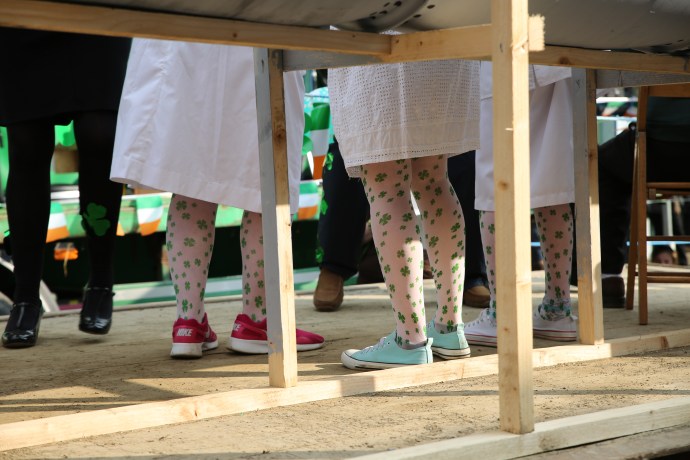
Legs and shamrocks

IG3C0727

IG3C0773

What would a St Patricks Day parade be without tractors?

IG3C0791IG3C0813IG3C0856IG3C0884IG3C0953IG3C0961IG3C0970

IG3C0976

IG3C0999

IG3C1004IG3C1041IG3C1063IG3C1152

IG3C1169

The Pied Piper

IG3C1179

Poor Willie

IG3C1184IG3C1214IG3C1191


Categories: Real Ireland, Sessions | Tags: , , , , , , , , , | Leave a comment

Immersion Therapy, Part 1.

IG3C1258

Part 1: The path to being a better fiddler?

OK so this is my 100th blog.  It’s hard to believe that I have pressed that Publish button 100 times since I’ve come to Ireland.

I wondered what I should write about for this centennial event and really the answer was pretty obvious.  I came here specifically to immerse myself in Irish music and to learn to play the fiddle ‘properly’.  To catch up on all the lost years when near enough was good enough for Aussie Bush Music and to learn from players steeped in the tradition. I realise that this may not be of great interest to many of my blog readers, so sorry about that, but I know there are many musician friends who would love to do what I have done and might be interested in the results.

So has it worked?  Am I a ‘better’ fiddler?

This is hard for me to write because there is no absolute here.  I can only talk about how I feel.  For me ‘better’ is ‘am I sounding more like I want to sound?’, not ‘am I technically better?’.  So I thought I would approach it first by talking about the process.  It has been fascinating for me learning how to learn; learning how to listen and the whole process of getting inside the music.

I’m not the first to do this of course and there is a school of thought that adult foreigners can never really learn to play Irish music because they didn’t grow up with it.  It’s not in them.  Well there are plenty of top-notch musicians based all around the world who play Irish music at a high level so the jury’s out on that one.

Despite playing on and off for forty years I came here as a beginner.  Since my arrival I have wrapped myself in the music.  I have been to dozens of Festivals and concerts and I have attended hundreds of sessions.  I have done workshops, private lessons and seen and played with so many musicians of quality.  Something should have rubbed off.

I know it’s a cliché but this is truly a journey. As I progressed there have been some clear stages in the process.  While this is obviously just based on my own experience and it may or may not apply to others setting out on the same voyage, I, nevertheless, think there are some fundamentals here worth sharing with those who have learnt their Irish music elsewhere but are serious about improving their understanding of the music and lifting their playing to another level.

I have recognised six stages in this Immersion process.  The process is naturally a continuum but it is helpful to think of it in stages.  Maybe all stages are not applicable to all however, especially if they may have been lucky enough to have had lessons from, or played with class trad players.   If not then they have picked up their music from books, CDs and local sessions, like me.

This is not rigid.   The stages can overlap and you may go back occasionally but I think each stage is a fundamental precursor to the next.  You can’t jump ahead.  If nothing else it will put some context around the difficulties adults have in learning Irish Music.

IG3C1235

Stage 1.  Delusion

Many when they arrive here are deluded that they can actually play Irish music.  This is soon put into stark reality anywhere in Ireland, but particularly here in Clare, where the standard of musicianship is so high. You come to Ireland with your packet of tunes and firstly no one plays them or you are playing with the wrong rhythm, and when you start one you find yourself often without support.  Undaunted you play on and wonder why the session comes to a halt.  Or you come into the session with your pile of tune books and turn to page 11 and play the set to a largely disinterested pub (I have seen this on a number of occasions!).  Most people realise pretty quickly that there is a problem here and back off but unfortunately some don’t.  They don’t read the signs and plough on regardless getting nothing out of being there.  Hopefully one moves out of the Delusion stage quickly.  In fairness some people may skip this stage either because they realise they can’t play and that’s why they’re here or they are truly advanced players.

Stage 2.  Confusion

Delusion transitions into Confusion.  You have realised you can’t cut it but you are unsure of the way forward.  There are hundreds of tunes you have never heard, you can’t even recognise the ones you know and when you do you can’t play along because the rhythm is different or it’s too fast.  You realise that the countless hours you spent learning tunes back in Australia is pretty much irrelevant.  You sit endlessly waiting for a tune you know and trying to join in, keep up.   It is hard not to avoid being a bit star-struck when you realise who you are playing with and you freeze when asked to play a tune.  In fact after a while you are grateful just not being asked to leave.   You hear a tune you like and if you are lucky enough to get someone who knows a name you look it up on The Session or Tunepal and learn it. Weeks later you find you have a different version or it sounds nothing like you thought it did.  At this point you feel sometimes like opting out. The danger here is that Confusion can lead to Disillusion and then it’s all over.  Unfortunately for many short-term visitors, this is where it ends. They go home, not really having learnt anything and confused about the way forward and then fall back into the comfort of playing with their musician friends back home and contented in their mediocrity.

If they are lucky this process ends soon enough; but for me it was at least six months.  But the fiddle has that pull and you can’t stop.  You keep going to sessions.  Gradually you are starting to recognise tunes even if you can’t play them.  You are now entering the next Stage.

Stage 3.   Absorption

It is hard to know when you have passed out of Confusion to Absorption but one of the fundamental triggers is a realisation that it is actually OK if you don’t play on every tune.  That it is OK to just sit and listen.  And it is also accompanied by a change in the way you listen.  I’ve been listening to Irish music since I was in my 20s but I was never really ‘listening’.  I was hearing it yes.  Listening involves feeling it and catching little nuances, all the different layers and the way the sound works. It means hearing the structure of the tune, recognising the patterns in the tune and how they are put together rather than just focusing on the notes.   And then listening to it again and again.  I remember some wise words at a lesson from Siobhan Peoples, telling me to lie out on the grass (when it wasn’t raining) and just listen, eyes shut, to the sounds: dogs, birds, cattle, tractors, insects, wind, cars in the distance.  It is amazing how much the brain automatically filters out and we have to retrain it.

With this listening skill, comes recognition of tunes and gradually an understanding of the structure of the tunes: chords, arpeggios, links, turnarounds, ornamentation and dynamics and this then flows on to improved bowing, tone and intonation.  Along with this comes the ability to pick up tunes by ear, something I was never very good at, needing the music in front of me.  And then you find yourself playing tunes that you don’t actually remember learning.  This is a wonderful time.  It’s when the music starts to grow inside you and your whole body becomes at one with the tune and the conscious and the subconscious start to work together as your fingers automatically find the notes. The breakaway from the dots and the skill of picking up the music by ear is absolutely essential and there is the realisation that until you can do this you won’t be able to play.

Stage 4.  Consolidation

Then comes the Consolidation.  You can now listen and truth is you are starting to play along with maybe 60, 70, 80% of tunes in a session.  But you still don’t ‘know’ them.  You can’t play most of them alone if asked.  This is the exciting stage but you are still not a musician.  You can’t start a tune for the life of you but you play along with hundreds.  Don’t be fooled that you can play Irish music because you still can’t.  But what’s also happening parallel with this is you are developing a style.  Whether you consciously have chosen to play in a certain way or not your own style is developing.  This comes from listening and remembering the bits you liked; subconsciously.  And soon your fingers are doing it automatically.  And all those hours you spent on bowing patterns and ornamentation is paying off, you are doing it without thinking.  Development of your style also comes from the choices we make of which sessions to go to.  If you like the ‘East Clare’ style (whatever that is) then you will be drawn to those players and will make intuitive stylistic choices on that basis.  Maybe you’ve found that nyaah you’ve been searching for.

Practice at this time becomes a joy.  You play along with CD’s or recordings and eschew the printed versions.  This helps reinforce the learning process.  It is a feeling like no other when you play a tune that a couple of months ago would have been impossible.  But you can’t get carried away with yourself and who knows how long this Consolidation phase will last.  I have spent the majority of my time at this stage and but I think I am still quite a way from entering  the next Stage.  At least I know what I have to do to get there.

Stage 5 Explosion and Stage 6 Exploration

The last two stages Explosion and Exploration are theoretical at this point as I haven’t reached them yet.  To me they seem the logical extension of the first four stages.  Arguably when you reach the Explosion stage you are a fiddler. I use this term because by this time you have hundreds of tunes in your head bursting to get out.  You are listening to new tunes all the time outside the session situation and learning them off CDs and taking them back to sessions.  You are rapidly picking up new tunes at sessions.  Maybe playing them after hearing them a couple of times and remembering them next time they are played.  You are starting sets you haven’t planned and effortlessly  launching into tunes because it seems right not because this one always follows that.   If asked you could lead a session.

Technically, you have sorted your problems of tone and intonation.  You play with feeling.  You have your own style and tempo that works for you but you can readily adapt to a session that is fast or slow if required.  You can change key if required or if someone starts the tune in G minor instead of E minor.  Many will be happy to rest here.

The last stage I imagine is when you explore the boundaries of your fiddle playing.  Try different things, maybe reinterpret tunes your way.  Play music from different traditions. This is not to say you have to become a virtuoso but it is about exploring your own capabilities and that of the instrument.

Hopefully you hover between Exploration and Explosion for the rest of your playing days.

I look forward with eagerness to these last two stages.
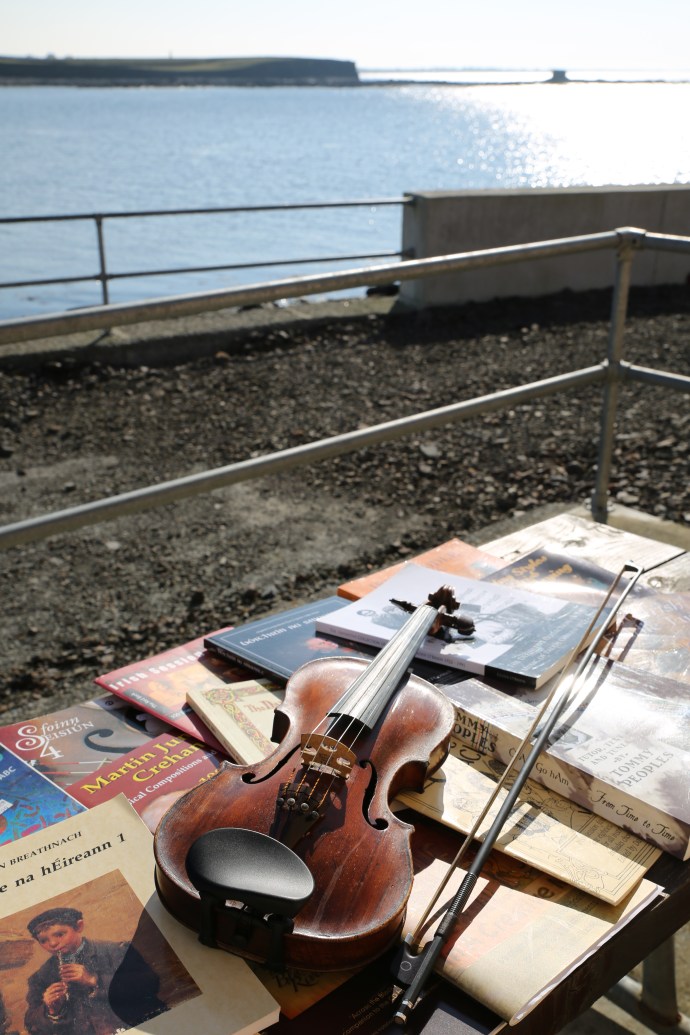
IG3C1248

Anyway that’s it.  I stress again that this is how it seems to be working for me.  Maybe it’s not the same for everyone but the sooner you realise you can’t just jump from Beginner to Player by attending a few session the better

The problem for many is that most can’t do what I have done.  They can’t give up two or more years of their lives.  So they learn in tiny increments.  I’m not saying you can’t become an Irish Fiddler but immersion with loads of practice can shortcut a process that would otherwise take many, many years.

So where am I now as a player?

I have already said that I feel I am still in the Consolidation Stage but striving  to enter the Explosion phase.  Initially I was obsessed with not knowing the tunes and trying to build up a repertoire, but I wasn’t improving as a fiddler so of late I have been practicing tunes I know and playing them over and over until they sound how I want them to sound.  Of great value to me were the words of Yvonne Casey, “Love every note; feel every note”.  And that has become my mantra.  Caoimhin O’Raghallaigh was also inspirational in showing me how many choices are available when we play a note and not to be afraid to experiment in terms of dynamics and bowing.  And how could I forget Martin Hayes who spoke with so much wisdom about being clear on the sound we want to make even singing it out.

The greatest buzz I get from playing Irish music is with others and creating a sound together.  That means listening to them and listening to yourself and ensuring your playing is both sympathetic and empathetic. Often this can’t be achieved in a large session.

So here’s the bottom line. For the first time in my playing life, I like the sound I make.  I am getting closer to how I want to sound.  So at the risk of sounding immodest, Yes I think I am a ‘better’ fiddler.

Part 2 will look at some specific things that I have found over the last two years that have helped my playing.I will address this in a future blog.
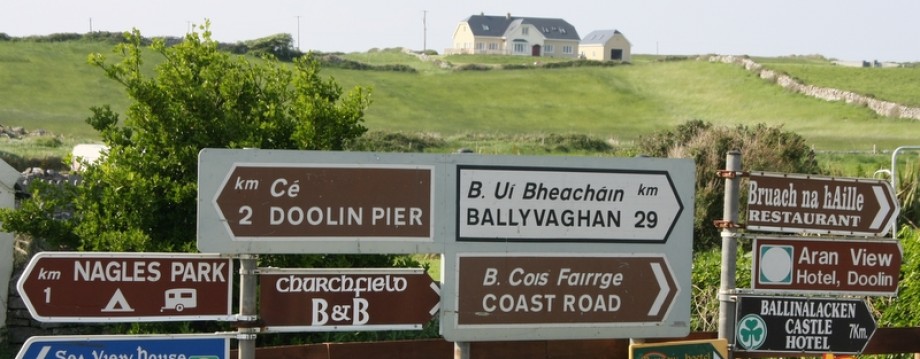
Categories: My Journey, Stories, The Fiddle, Trad Irish Music | Tags: , , , , , , , , , , , , , | 9 Comments

Monday, Monday. Corofin Trad Fest 2016

I spent last weekend at the Corofin Trad Fest.

This is one of those Festivals that after fifteen years, the organisers have got absolutely right.  Corofin is twenty minutes from Ennis in County Clare and like all the good Irish music festivals attracts a loyal band of followers from all around the world .  And why do they come.  It’s not for the concerts, even though they are of a high standard (the venue only holds around 100 people so they sell out very quickly);  it’s not for the workshops, though they have top notch tutors;  it’s not for the dancing (because there is none);  it’s not for the singing (though the odd song crept into a couple of sessions).

It’s all about the tunes.  That’s why the musicians flock here and that’s why the pubs are packed.

The organisers Damien and Padraic O’Reilly very cleverly select musicians to ensure a uniformly high standard.  Not the same-old-same-old that you get in many festivals but if you want to hear new musicians this is the place.  There are also some really interesting pairings.  Musicians that have never met, let alone played together. And sometimes the results are electric.  I still cherish the memory from last year’s festival when Claire Egan was paired up with Derek Hickey.  Wow.  All the pubs are close by and this year there was an extra venue with the reopening of Daly’s.

I didn’t go to any of the concerts so I can’t report on those but I attended sessions on Friday night and all day Saturday and Sunday.  I won’t go into detail.  There’s no real point.  I can only think of one session where I was disappointed but I won’t dwell on that.  The music everywhere was sensational and the crowded pubs were testament to this.

So I ask you to look at the photos and if you strain your ears you might even hear  some of that wonderful music filtering through the ether.  If not then book now for the first week in March of 2017.

But actually I wasn’t going to talk about any of this at all.    Nevertheless I was totally exhausted by the time Sunday night came around.  I had been playing for nearly 12 hours each day and I was suffering with a cracked rib and the last vestiges of a cold.  I was more than ready to head home first thing Monday, with the rest of the throng.

Facebook to the rescue.  A post from Eoin O’Neill, well known Clare bouzouki player and broadcaster, saying he would be at Daly’s for a session from 1:30.  OK I’ll stay.  So I had three hours to fill in.  A stroll along Bridge Street looking for breakfast was interrupted by the sound of my name echoing down the empty street.  It was Eoin O’Neill himself sitting in the entrance of the local supermarket at a laminex table with a cup of black coffee.  I joined him.  And as so often happens we were then joined by one of those characters that make Ireland the treasure that it is.

Mrs O’Brien from the Burren came in and instead of walking past us to pick up the milk and despite having her son sitting in the car outside, she stopped and chatted and stayed for nearly half an hour.  We learnt a lot about Mrs O’Brien but it was one of the most delightful half hours I have spent in Ireland.  She was 82 and sharp as a tac.  She had ten children, she has tinnitus and her husband had died many years ago.  We talked about the music.  Eoin is a master at engaging people and there was an instant rapport, especially when he said she only looked 76.  Touching Eoin’s arm she leaned over and quietly told us there were three things that she loved in life: “music, a bowl of porridge and the hurling and football”.  So we talked about the football.  Full of wisdom, meeting Mrs O’Brien set me up for the day.

And then I had the biggest breakfast ever at Bofey Quinns.

The three hours magically disappeared and I found myself in Daly’s Pub at 1:30 tuning the fiddle.  Just me and Eoin.  And did I mention Brian O’Loughlin and Siobhann Peoples and Blackie O’Connell?  And 22 very lucky people. I counted them.   It was fast.  It was tight and it was brilliant to be part of.  As if that wasn’t enough there was another session after this at Mack’s with Blackie joined by Cyril O’Donghue and and Hugh Healy.  I did a lot more listening than playing.  None of this was in the programme.  When I asked about that, the response was:  “Oh it happens every year”.  I could so easily have missed it.

That was the end of the Corofin Festival but it wasn’t the end of my Monday.  On then to a packed Fitz’s Bar in Doolin for the regular Wild Atlantic Session with the satisfying sound this night of a half a dozen fiddles.

Who said Mondays were a drag?

IMG_3387IMG_3412IMG_3419IMG_3469IMG_3473IMG_3480IMG_3497IMG_3504IMG_3551IMG_3557IMG_3564IMG_3592IMG_3622IMG_3642IMG_3676IMG_3706IMG_3721IMG_2763IMG_3370IMG_3343IMG_3321IMG_3318IMG_3308IMG_3300IMG_3297IMG_3294IMG_3283IMG_3276IMG_3268IMG_3259IMG_3233IMG_3225IMG_3208IMG_3207IMG_3204IMG_3185IMG_3183IMG_3159IMG_3152IMG_3149IMG_3137IMG_3108IMG_3099IMG_3085IMG_3080IMG_3076IMG_3068IMG_3054IMG_3040IMG_3022IMG_3018IMG_3008IMG_2999IMG_2927IMG_2908IMG_2870IMG_2864IMG_2852IMG_2833IMG_2831IMG_2827IMG_2821IMG_2812IMG_2801IMG_2769

Categories: Festivals, Sessions, Trad Irish Music | Tags: , , , , , , , , , , | 5 Comments

There is a God and He was in Doolin last weekend

The Devil went down to Georgia apparently but God was in Doolin last weekend. And I don’t mean Frankie Gavin, though he was there too!

It was the Russell Memorial Weekend, an event held in honour of members  of the Russell family since the untimely and tragic death of Micho Russell in 1994.

There are concerts and there are workshops but it’s about the sessions.  They go all day and night from around 2pm and all four pubs are buzzing.  The opening concert is a showcase of young local talent and always impresses and there is a headline concert this time featuring Frankie  and DeDannan, which I didn’t get to.

Nevertheless there were plenty of highlights for me.  A quiet session with Dermot Byrne and Eoin O’Neill and Quentin Cooper in Fitz’s,  with Dermot again and Floriane Blanke  in McGann’s, a mighty session with Frankie Gavin, James Cullinan and a host of others at O’Connors that lifted the roof off,  playing with Blackie O’Connell and Cyril O’Donoghue, singing a couple of songs myself and watching  a future star – young Seannai McMahon work the audience at McGanns, with his infectious songs.

Not much more to say really.  Here are a few photographs which I think tell the story. Thnks to Melanie Nolley for the ones of me and Frankie.

Oh, one more thing.  Let me tell you why I think God was in Doolin; and that He/She must be a lover of Irish trad music.   It was Saturday night I had been playing music all day and was suffering with a cold and a cracked rib (long story).  It was 9ish and the pubs were packed and you could hardly move and I had had enough.  So I was ready to go home via a few quiet tunes at the Roadside in Lisdoonvarna.  When I got in the car however I discovered I had no petrol.  Warning lights were flashing and the trip computer said 0 km remaining! I couldn’t risk the 30km home.  So I looked for an hostel room which I eventually found.  Stuck in Doolin now with no transport I called in to O’Connor’s and lucked in to a session with a fired up Frankie Gavin, Noel O’Donoghue,  James Cullinan, Michael Queally, Seanie Vaughan and many more. To sit next to Frankie and play a few tunes was a real buzz.

See what I mean?  IMG_1494IMG_1755IMG_1636IMG_1496IMG_1714IMG_2132IMG_2135IMG_2150IMG_2188IMG_2206IMG_2226IMG_2219IMG_2261IMG_2254IMG_2284IMG_2273IMG_2321IMG_2690IMG_2695IMG_2706IMG_2650IMG_2639IMG_2647IMG_2616IMG_2535IMG_2538IMG_2533IMG_2522IMG_2504IMG_2486IMG_2418IMG_2471IMG_2430IMG_2415IMG_2404IMG_2384IMG_2335IMG_2338

12788663_10154001687069322_608513658_o (1)12789750_10154001686109322_1257590642_o

12809828_10154001688784322_960560899_o

Categories: Festivals, Sessions, Trad Irish Music | Tags: , , , , , , , , , , , , , , , , | 5 Comments

Scoil Cheoil an Earraigh 2016, Ballyferriter, Co Kerry

This is my second time at Scoil Cheoil an Earraigh, held in February at Ballyferriter on the beautiful Dingle Peninsular.  I said in my blog a year ago that it was one of the best and nothing has happened to change that view.

What was different though was that this year the Festival lost its funding from the Arts Council .  This was a heavy blow and there was some doubt about how the quality of the festival would be affected.   The organisers however redoubled their efforts and raised the extra money from various sources so there was no real visible evidence of the funding cuts.

it was great to catch up with the many familiar faces that make an annual pilgrimage to this Festival and the quality of the musicians attracted to the Festival remained outstanding.

The Scoil is actually two distinct events.  There is of course the school which runs for three days and finishes with the traditional performances in the Church  on Saturday at lunch time and parallel to this is concerts and events with a strong Irish cultural focus centred around the West Kerry music and dance tradition.  And there is the bonus of the sessions which are legendary.

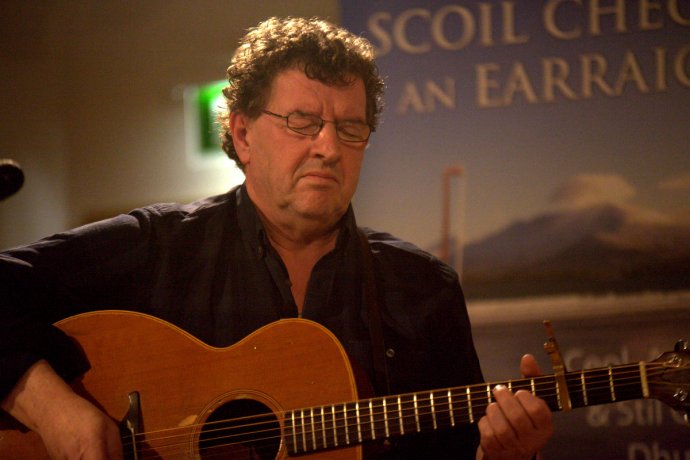
I will say a few words about the School.  I had Caoimhín Ó Raghallaigh as my tutor.  He is an inspirational character and for three days we explored the fiddle and what it was capable of.  how to discover new ways of expressing ourselves.  So many variables that come in to play and the many choices we can make in playing each note.  He has made me think quite differently about my approach.  I also had a master class from Paddy Glackin.  This was a nerve wracking experience as we were each asked to play a tune which he then proceeded to critique.  It was a bit of a buzz for me spending a couple of hours with Paddy.  His album with Jolyon Jackson, which I have on vinyl is one of my all time favourites.

I only went to a couple of events this time.  I enjoyed immensely  a presentation of songs, poetry and music which told the story of 1916 written and performed by Mike Hanrahan and Breanndán Ó Beaglaoich.   And the concert on the Saturday night was a cracker though I was not familiar with any of the acts other than Dermot Byrne and Florianne Blancke.  This led to some wonderful surprises.  The standard was incredibly high and included a virtuoso performance of Scottish fiddle from Ian MacFarlane.

Mark my words Ballyferriter is different.  It is a festival where everyone comes away happy.  Musicians, singers, dancers, listeners.  It is a festival for the locals and they embrace it and it is a festival for the loyal visitors who come year after year.  The sessions are never so crowded that you can’t find a seat and there is huge respect for the music.  The Irish language is everywhere  and many times announcers would forget (?) to translate.  It didn’t matter.  It is in a spectacular location; though other than the first Wednesday there was no sunshine until the Monday when everyone had Ieft.  More than anything else for me though, it was the quality of the sessions and accessibility of the musicians.  Leading by example the Begleys were everywhere.  Breandann, Seamus, Maibh, Cormac, Neil;  as were the headline acts who all participated.  There was no session trail and sessions popped up organically.   The four venues were all so close you could check them in a minute or two and decide where to settle.

This one is a permanent fixture on my Calendar.  We have a year to work on the Arts Council to restore funding to make it bigger and better.

Congratulations Breandann and Niamh and team.

IMG_9135IMG_9230IMG_9215

IMG_9274IMG_9281IMG_9296IMG_9567IMG_9482IMG_9541IMG_9430IMG_9538IMG_9521IMG_9589IMG_9425IMG_9366IMG_9369IMG_9383IMG_9393IMG_9400IMG_9345IMG_9549IMG_9462IMG_9472IMG_9503IMG_9388IMG_9498IMG_9454IMG_9418IMG_9445IMG_9324IMG_9307IMG_9470IMG_9395IMG_9436

IMG_9123IMG_9102

IMG_9177IMG_9180IMG_9820IMG_9835IMG_9837IMG_9844IMG_9924IMG_9912IMG_9917IMG_9938IMG_9865IMG_9861IMG_9842IMG_9929IMG_9887IMG_9856

IMG_9920

IMG_9156IMG_9614

IMG_9629

Not everyone likes the bagpipes

IMG_9808IMG_9681IMG_9794IMG_9732IMG_9788IMG_000820160219_16454220160219_172652IMG_998820160219_174008IMG_912620160221_02023420160220_01345720160220_011844IMG_9713IMG_9728IMG_0212IMG_0170

20160218_14193420160219_011432

20160221_020820

Hands and hearts.  

IMG_9748

Categories: Concerts, Festivals, Sessions, Trad Irish Music | Tags: , , , , , , , , , , , , , , , | Leave a comment

Kevin Burke in Concert, Ennis 2016

IMG_8420

As a young geologist my first job was in the far west of New South Wales in outback Australia at a place called Cobar.  It was a small mining town of 5,000 in the middle of nowhere.  A highlight was a regular three hour drive to Dubbo for a shopping trip.  Sydney was 8 hours away.  This was 1979 and I was already heavily into the fiddle so as often as I could I would drive down to Sydney and head straight to Folkways Record Shop in Paddington.  There I would check the latest imports from Ireland and buy most of them on spec.  This is how I discovered Kevin Burke.  And right through the 80’s he was my inspiration.  From the solo If the Cap Fits to Promenade and Portland recorded with Mícheál Ó Domhnaill and then the collaborations with Jacky Daly and Andy Irvine and Patrick Street.

Fast forward to February 2016 and I am sitting in the back bar of Lucas Bar in Ennis.  I have never been here before and the place is not renowned for music.  Indeed this is a first for the Pub.  A small but enthusiastic crowd had gathered to hear Kevin play. Solo. No distractions.   Just the clear clean sound of a fiddler on his own.    I looked around.  There were many well-known fiddlers in the room and they treated the master with absolute respect and reverent silence.  It was hard to believe that nearly forty years after discovering him I was hearing him live for the first time.

Burke’s playing has both breadth and depth.  His interpretation of traditional Irish music is rooted in the Sligo tradition but has absorbed so many influences from his days in London and the US. Personally I love the fiddle on its own.  Nothing wrong with ensemble playing and his many collaborations are testament to his skill at that but a masterful player such as Burke can bring out the internal rhythm of the tunes without the need for other instruments or backing.    He displayed this virtuosity with over 90 minutes of reels, polkas, slides, jigs and airs.  And we also got some bluegrass, some Yiddish music (via Sweden), some Quebecois and some musette.

It was a captivating and rewarding performance.  The tunes were linked together with some delightful stories and restrained banter and perhaps the biggest cheer was reserved for his song about his days in London.  There were many highlights for me though.  An outstanding rendition of Maudabawn Chapel, the haunting Frielach, and the wildness of the Boys of Malin and Stenson’s reels stand out.

Kevin is in Ireland to receive the Gradam Ceoil for 2016, the Irish Musician of the Year award from TG4.  What a worthy recipient,  having given us four decades of inspirational fiddle music.  Thanks.

IMG_8415IMG_8417

Categories: Concerts, My Journey, Trad Irish Music | Tags: , , , , , , , , , , , | Leave a comment

Surprising Belfast

I hadn’t planned to go to Belfast.  After the glorious weather at the Carlingford Festival in February 2015 (check blog here) I decided to head up to the Glens of Antrim in Northern Ireland but, as I travelled up the motorway, the mist set in and it seemed rather pointless, as I was hoping to do some photography, so I diverted into the city.  I had never been to Belfast.  On my first visit to Ireland in the mid-90s we had given Belfast a wide berth. Travel warnings and all it wasn’t considered safe then.

This time I drove into the city with no plans and virtually no knowledge.  I stopped at the first hotel I found, which happened to be Jurys and they had a special rate – not that much pricier than a B&B.  It was right in the centre of town and within walking distance of all the major attractions including the session bars.  So that was lucky.

40-IMG_2266.jpg

Before I had even entered the lobby of the hotel I became best friends with Bobby who it turned out runs a taxi guided tour and before I knew it I had agreed to go with him.  So without even finding my bearings I ended up in the back of the Belfast version of a London cab.  This turned out to be an inspired choice.  He called it a ‘political’ tour and despite his ‘green’ (as distinct from ‘orange’) credentials, which came through occasionally, it was presented in a dispassionate way with both sides of the argument presented as we visited both the Catholic and Protestant hot spots.  I learnt a lot, given that most of what I knew was picked up on Australian television via the ABC or BBC (and presumably ‘managed’ so not necessarily reflecting reality).  Even so I back then I had been detached from it and it is surprising how being there on Falls Road or seeing the Wall or the memorial garden or the segregated living areas puts it all in context.  Not being Irish I don’t think I will ever fully understand it but Bobby was able to give me a lot of the background.

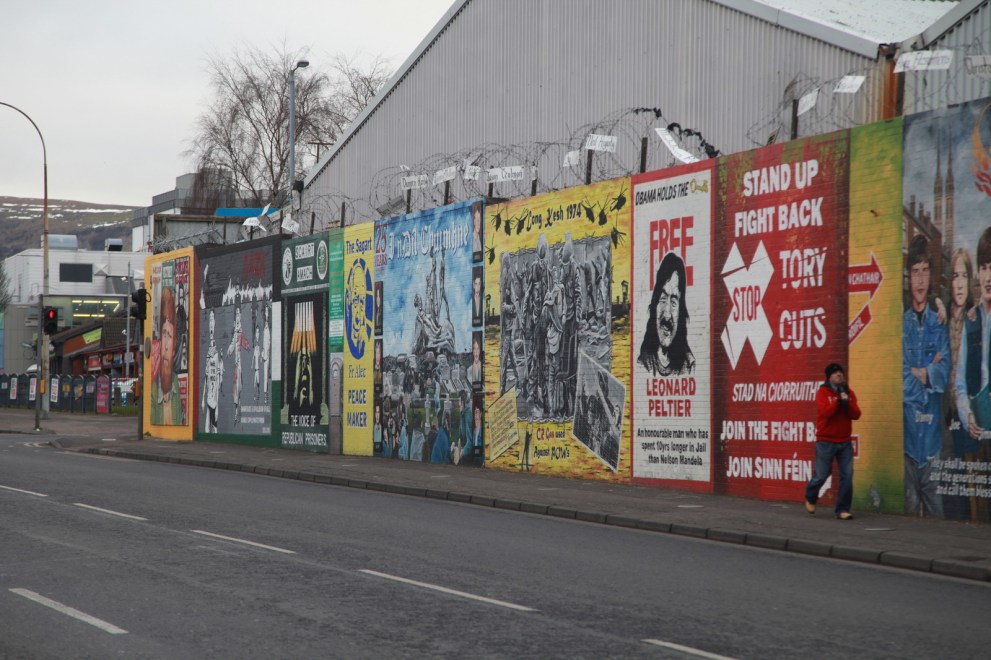
We drove up Falls Road where the murals depict episodes important to the Republican struggle.  I got detailed explanations of each of these including the gassing of Long Kesh, the dirty protest which turned into the hunger strike at Maze Prison, the rights of  travellers,  The Titanic “built by Irishmen and sunk by an Englishman”, the killings at Ballymurphy, the Falls Road taxi killings, the Gibraltar Killings and the Milltown massacre.

There ar01-IMG_1803.JPGe also more recent murals depicting incidents or struggles that resonate with Republican sentiment. I heard about the shipyards which employed up to 35,000 people; all Protestants.  And the Linen Mills with separate gates for Catholic and Protestant workers

02-IMG_1808.JPG


We visited the Sinn Fein office in Sevastopol Street with the famed mural of Bobby Sands. He died in 1981 after 66 days on hunger strike and his story still causes rancour with many.  His legacy remains however and he is credited with inspiring a new generation to take up the Irish language, something that Sands and his fellow prisoners did in the tortuous conditions of H Block.

03-IMG_1827.JPG

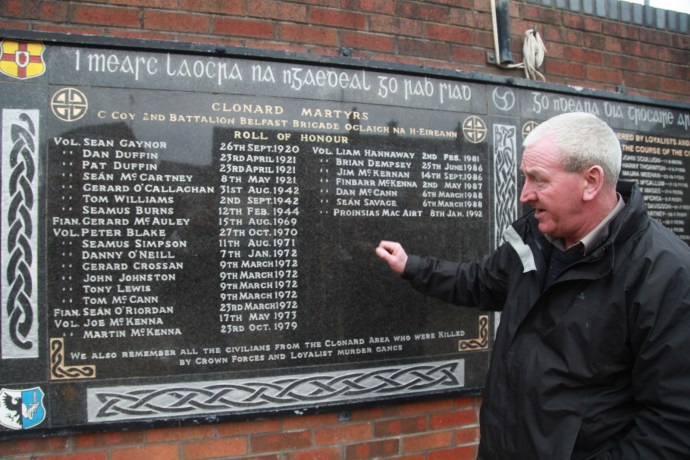
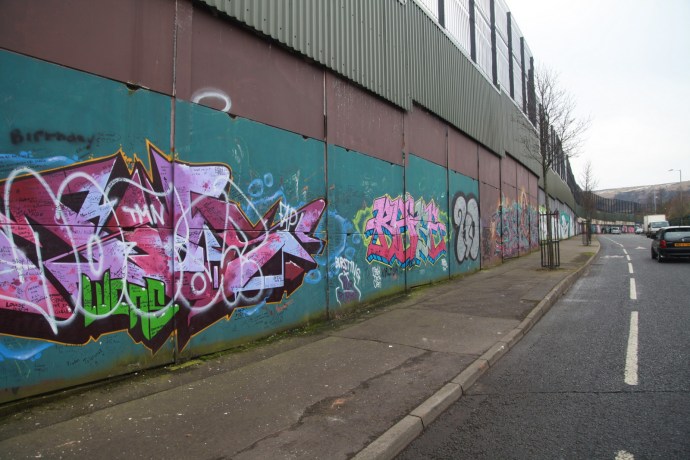
Particularly moving also was a visit to the Clonard Martyrs Memorial Garden.  This is a very simple walled space located at the spot where the troubles really kicked off with the burning of catholic houses.  A few hanging pots and some benches in a paved area allow quiet contemplation. The names of victims of the Struggle are listed on plaques and there are images of some of the fallen. What struck me was the extraordinary youth of many of the dead.  Most in their 20s and 30s but some as young as 16.   The memorial is adjacent to the dividing wall which looms overhead and the houses backing up against the wall have cages which used to protect them against grenades and other objects lobbed over the fence before the Peace deal.

05-IMG_1889.JPG

06-IMG_1875

On the protestant side I signed the Wall, along with thousands of others, with a felt pen thoughtfully provided by Bobby.  This seems to have become something of a ritual and names and messages from all over the world are dotted among the graffiti.

07-IMG_1907.JPG

08-IMG_1912.JPG

We visited Shankill, an exclusively Protestant area  where I walked around the incredibly quiet streets.  Presumably everyone was at work or school but the place seemed deserted.  Murals on the end walls of rows of tenement houses are a feature and these depict events significant from the Union side.  There are recent murals celebrating individuals such as Stevie ‘Topgun’ McKeag who died in 2000 and is credited with a dozen killings, and William Bucky McCullough who became a martyr after being killed in an internal dispute in the UDA.

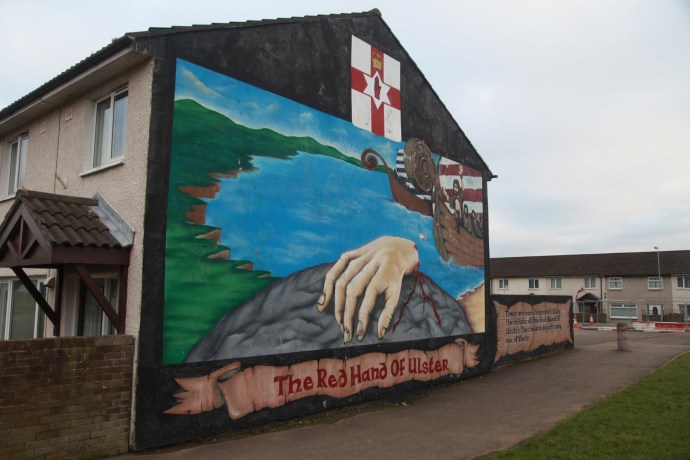
There is another celebrating the formation of the Ulster Defence Union in 1893 and the Ulster Defence Association in 1972.  For reasons unknown to me there is one depicting the Bloody Battle of 1809 in which Napoleon secured victory over the Austrians,  More obviously there is one remembering the founding of Belfast in 1609 and others celebrating legendary hero and defender of Ulster, Cuchulainn, and a somewhat gory depiction of the Red Hand of Ulster among many others.

10-IMG_1991.JPG

11-IMG_2022.JPG

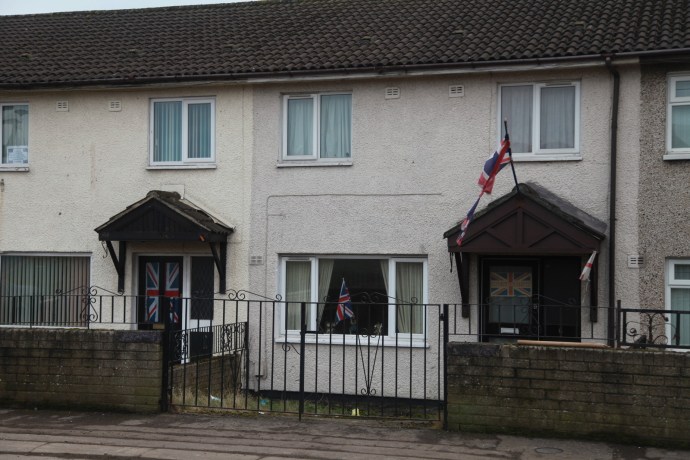
Houses here proudly fly the Union Jack.

13-IMG_2037.JPG

The tour was good value and highlighted to me the many injustices and the essential futility of it all.  The song ‘There were Roses’ was going around in my head.  It also made me reflect on the extraordinary achievement of Peace in Northern Ireland after so long.  The protracted negotiations through the 90s that led to the Good Friday Agreement in 1998, the subsequent massive endorsement at the referenda in both the North and the Republic,  the decommissioning of the IRA’s weapons in 2005 and the ultimate end of the Process with the elections of 2007.  Many however appear to hold on to their part in the Struggle.  There is massive progress but I think there is still a lot of work to be done with 93% of kids in Northern Ireland going to segregated Catholic or Protestant schools.

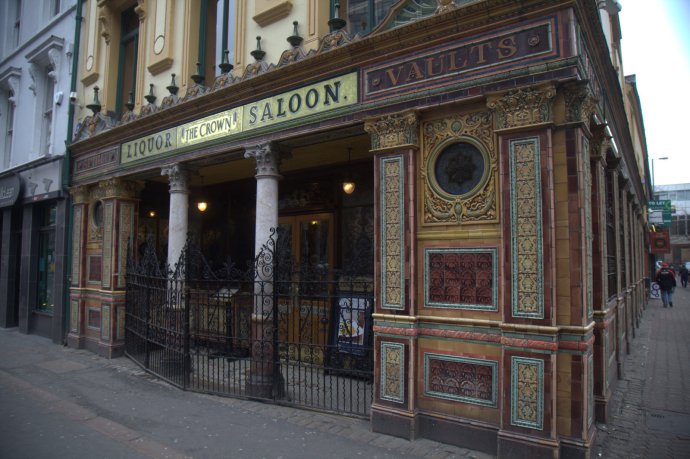
By now I had my bearings and in the evening I continued my unguided walk and found myself at the Crown.  A truly extraordinary bar.  I have seen nothing like it. It is owned now by the National Trust.  The bar was renovated in its current form in 1885 by Michael and Patrick Flanigan and then restored in 1980 and again in 2007. Things that drew my attention include the amazing tiled façade and stained glass windows, a massive granite topped bar with heated footrest, ten snugs with a bell system so ladies could call for their drinks without going out, plates to strike matches,  a mirror damaged by a bomb blast and since restored, a wonderful mosaic at the front door showing a crown (said to have been installed there so patrons could walk all over the crown!) and incredible carved woodwork finials, a magnificent ceiling.  I could go on and on.  Just marvellous.  I had a very enjoyable lamb shank pie there (and a Guinness of course) and indeed went back there for every meal.

35-IMG_2213.jpg

Belfast3

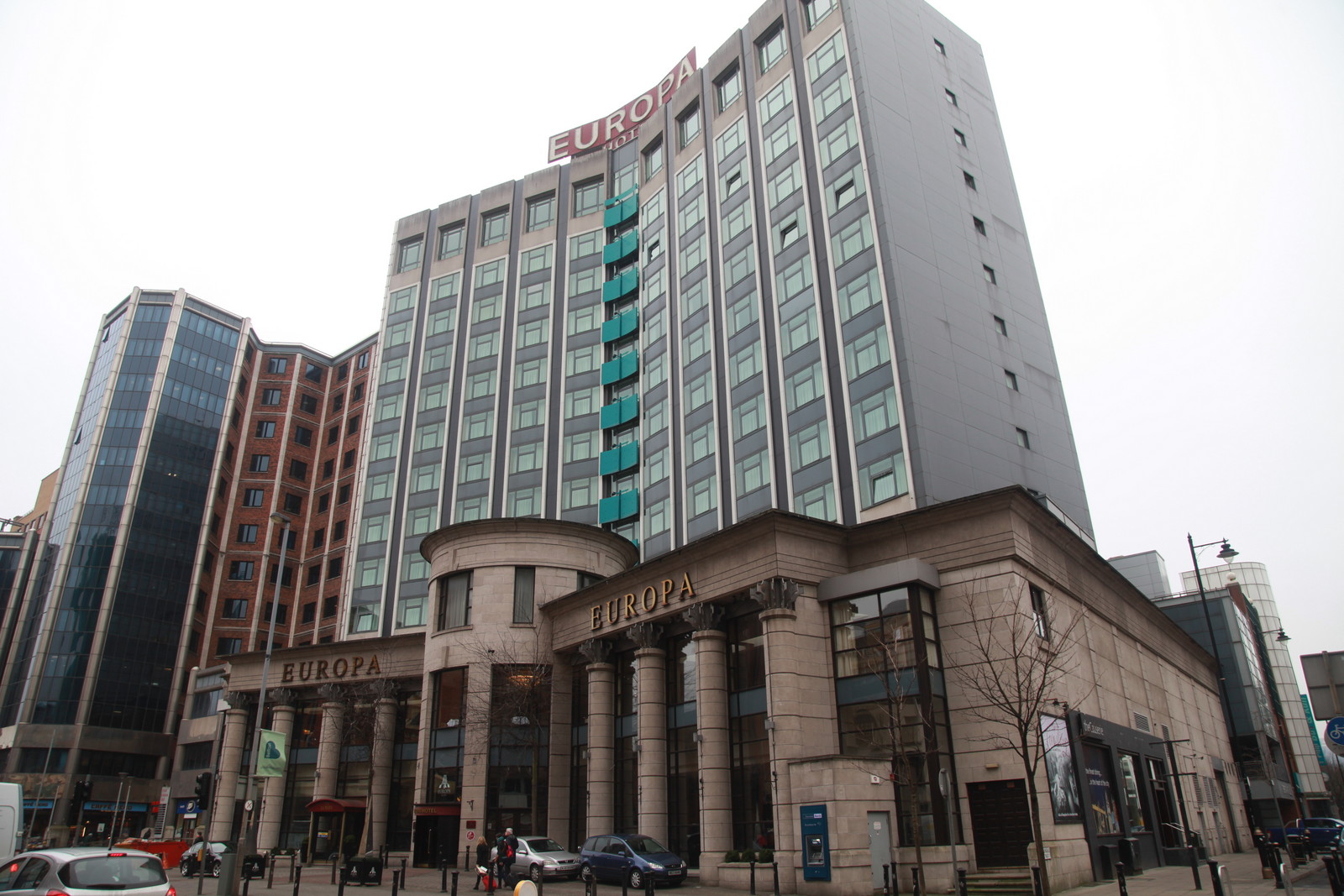
Opposite the Crown is the Europa Hotel.  During the Troubles it was damaged 33 times by IRA bombs including one massive explosion which wounded 20, punched a hole in the side of the adjacent Grand Opera House, shattered virtually every window in the Hotel and caused extensive damage over a wide area of the city center.

32-IMG_2201 31-IMG_2174

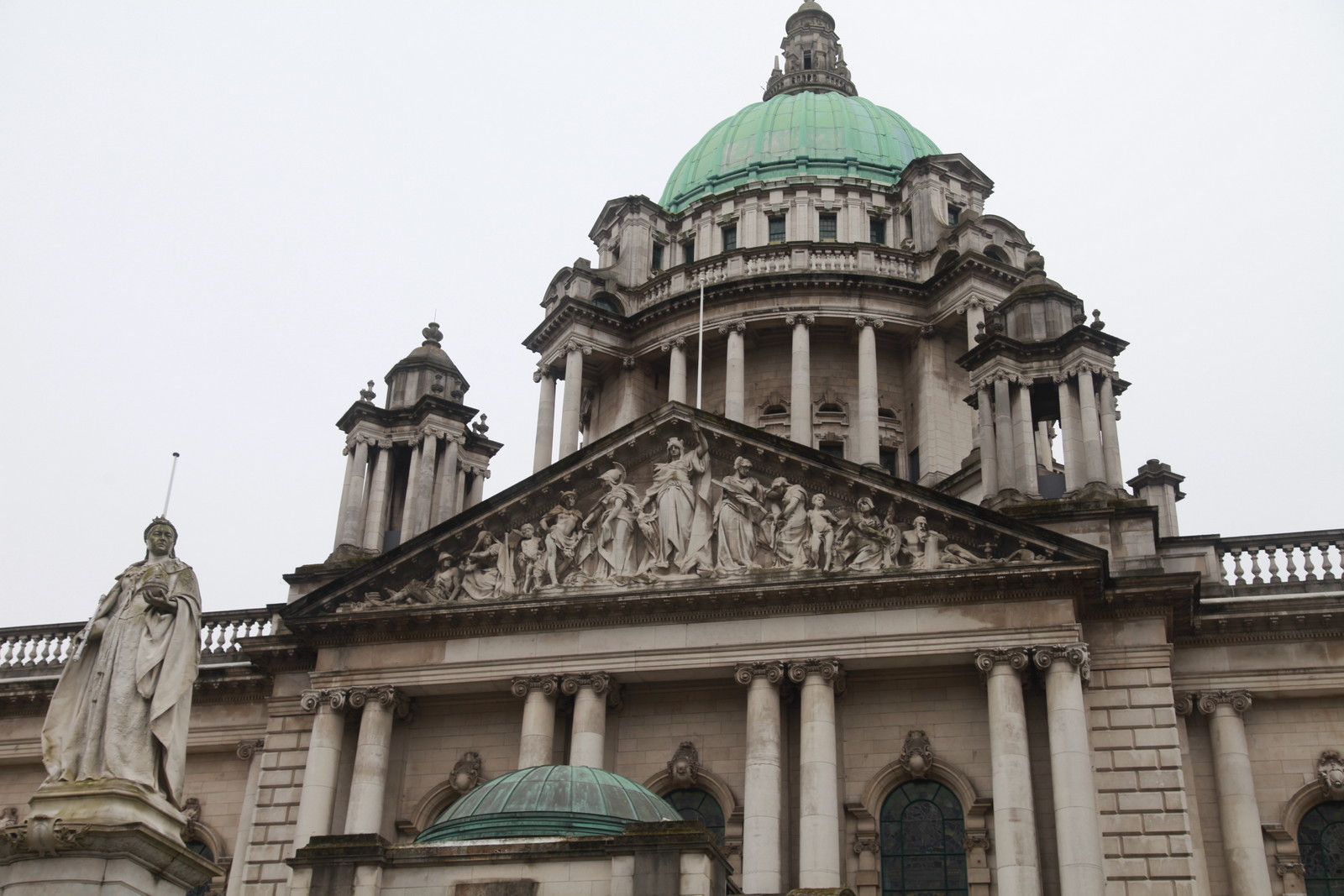
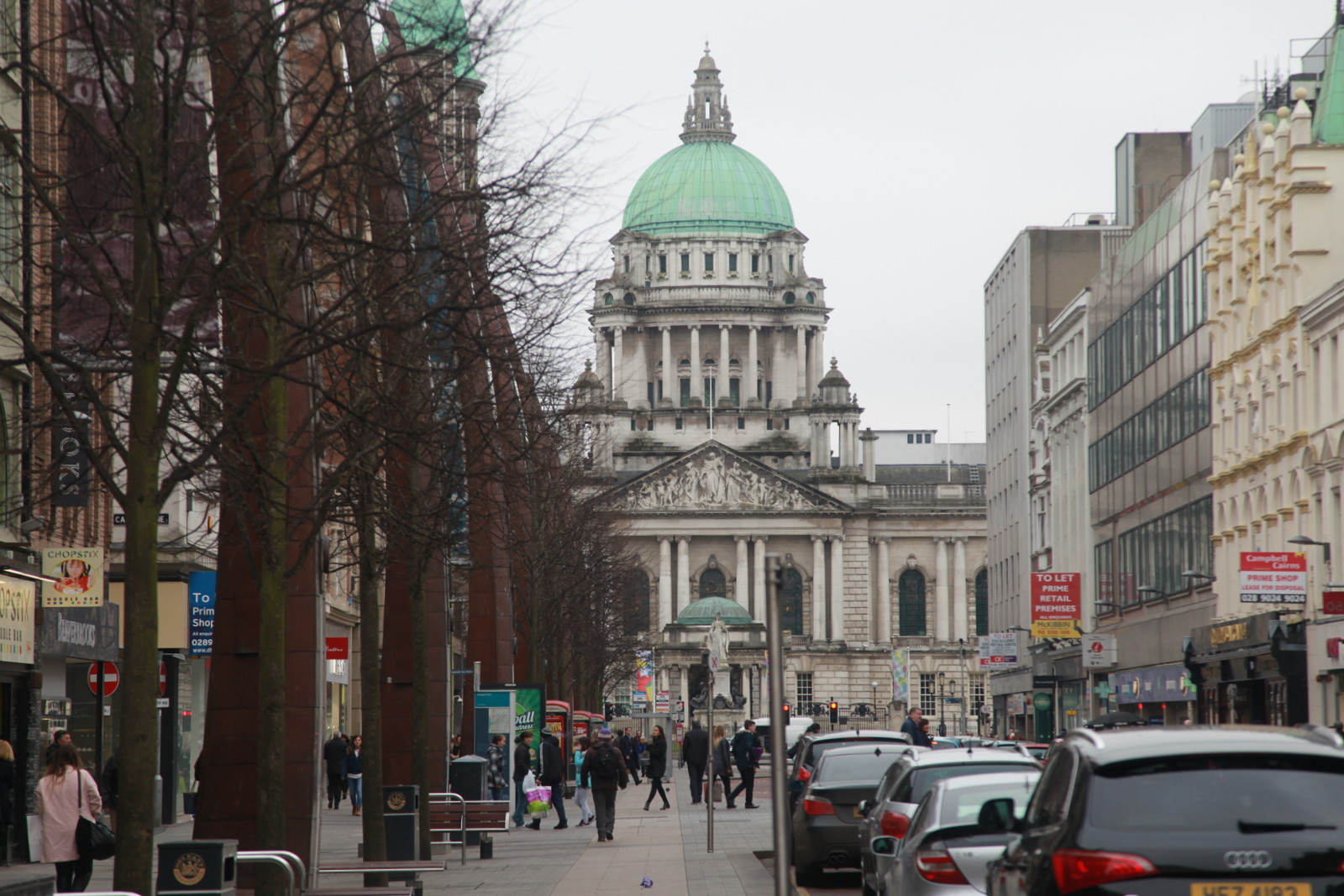
The city itself is full of remarkable architecture and is great to just walk around and soak up.  Many of the buildings date from Victorian times and reflect the wealth brought to Belfast by the ship building and engineering industries and the linen and tobacco trades.  This includes the outrageously ostentatious City Hall built in 1906.  This building was considered more befitting of the City’s status than the previous modest building.  It cost £396,000 to build, an enormous sum, perhaps the equivalent of £150 million today. It was funded by two years’ profits from the City’s gasworks!

45-IMG_2315 41-IMG_2280 46-IMG_2321

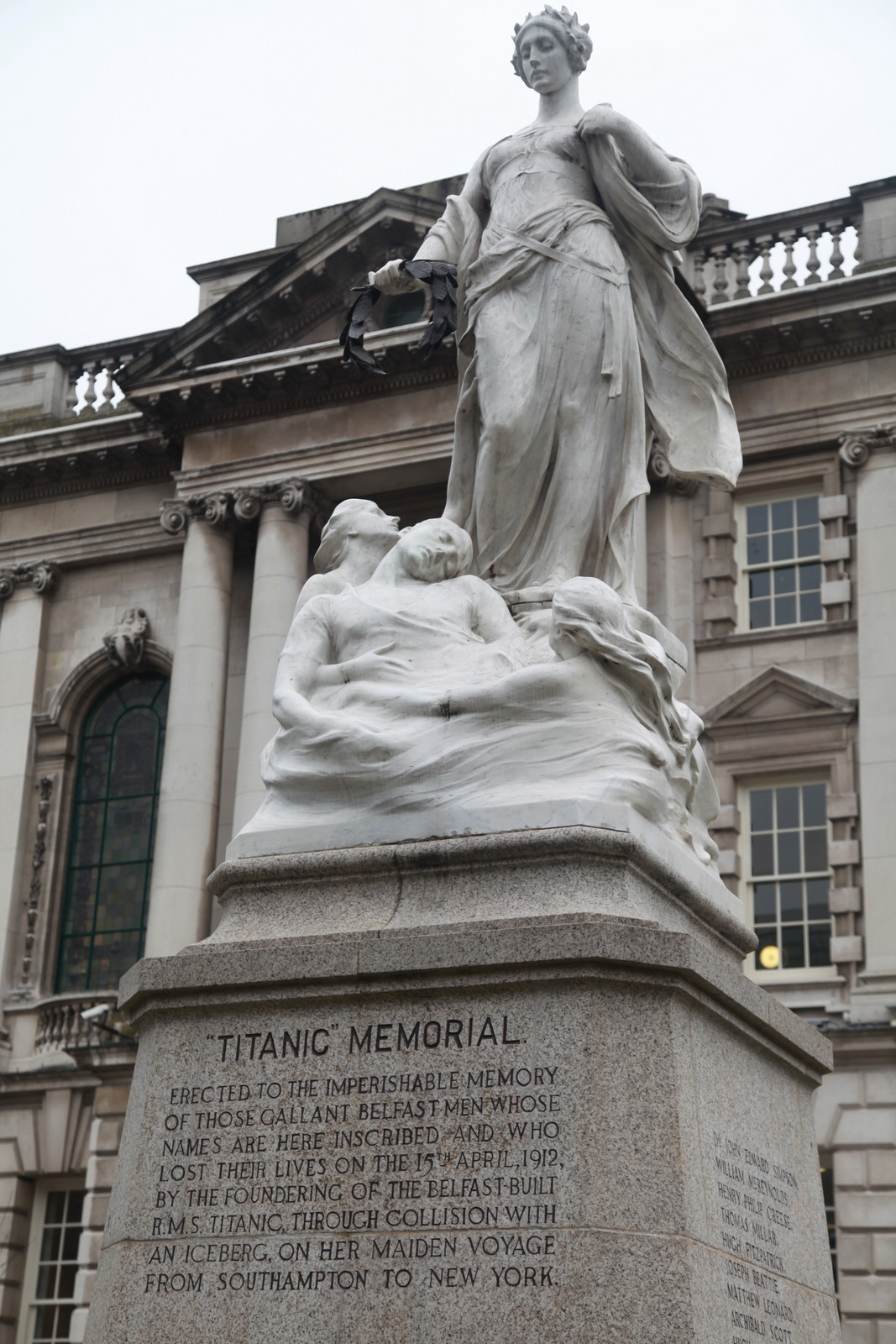
I did not go inside; but having read about it later I have put that on the list for my next trip.  Many statues dot the gardens including a memorial to the Titanic which includes the names of all those lost.

49-IMG_2354 48-IMG_2345

The City Hall lies at the end of Donegall Place one of the main thoroughfares, Along one side of this avenue are a series of sculptures of uniform design reminiscent of a sail, depicting the great ships built in Belfast.  Included of course is the Titanic, the largest ship ever built at the time and which was sunk on its maiden voyage in 1912.  It figures greatly in the psyche of the city and is a major attraction to visitors.

54-IMG_2417 78-IMG_2890

Many other fine buildings grace the wide streets.  For the keen observer there are many delights to be had. Largely pedestrianized in its city centre it felt relaxed and uncrowded.  The people were chatty and friendly.  I ended up playing some tunes on a Romanian version of a Stroh viol offered to me by a busker.  My playing was well received and led to the crowd cajoling the busker to play some Irish stuff instead of Romanian folk tunes; good craic.

Belfast architecture Belfast people

Musically my experience was mixed. My timing wasn’t good and the session at Maddens on Monday was definitely not my cup of tea.  It reminded me of that Maori anthem of the 60s – ‘Ten Guitars’ because, no exaggeration, that’s what we had, along with a harp a couple of banjos and a fiddle.  It was all songs and while the craic was good it was not for me.  Then next night I heard it was ‘real’ trad at Errigle Inn, a little bit out of town. So a short taxi ride there and immediately I saw I wouldn’t be disappointed.  Great music, great craic and some familiar faces from my festival travels.  This went a long way to supporting what I had been told that Belfast had some of the best traditional music in Ireland at the moment.  It was fast and enthusiastic and inclusive; a fine way to end my short stay.

79-IMG_2936 80-IMG_2950 82-IMG_2975 84-IMG_2996

When I visit a city I rarely go to the tourist hot spots.  I walk around and try and soak up the atmosphere.  So I can’t tell you about galleries, museums or the Titanic Experience.  I’m sure they are brilliant and there are plenty of places you can get that information. But I really enjoyed Belfast.  The rich history both old and very recent, the great architecture, surprisingly friendly people and most importantly for me, good music if you look, make it a top spot to visit.  I’ll certainly be back.

If you are of the same bent then you might be interested in the offerings of GPSmyCity (google it!) They have an app for IOS and Android that provides detailed city walks.   They have kindly offered to give away to my readers some prizes of a free download of one of these.  You choose.  No Belfast, but plenty of others to choose from.  A list of all the cities they have guides for is here  http://www.gpsmycity.com/user/static_sfg.html     Here’s what you have to do to win one of the promo codes (unfortunately Apple IOS only…sorry about that)

I am soon to set off on a road trip to discover parts of Ireland I’ve yet to see.  I’m looking for suggestions of places in Ireland that you think I should visit or that you would like to see me blog on.  Just respond in the comments to this blog.  That’s all.  One of the city app prizes to the first 20. Oh and don’t forget to nominate the city you wish to receive the free app for.

Take care in your travels.

Categories: My Journey, Real Ireland, Sessions, Trad Irish Music | Tags: , , , , , , , , , , , , , | Leave a comment

What a Year!

Another calendar year on my Irish adventure has ended.  And as I look forward to the next 12 months it is also a good time to look back.  Although hamstrung for the last four months due to my visa and driving licence problems I have still managed to take in an enormous amount of music.  I posted a collage the other day on Facebook with a selection of my photos of musicians from the past year.  I thought I would repost it here for my blog followers who are not on Facebook.  These are people I saw in concert or played with in sessions.  To many of my readers there will be a lot of familiar faces and I got great joy from seeing and playing with them as I did with the lesser known but often equally talented musicians I came across every day.

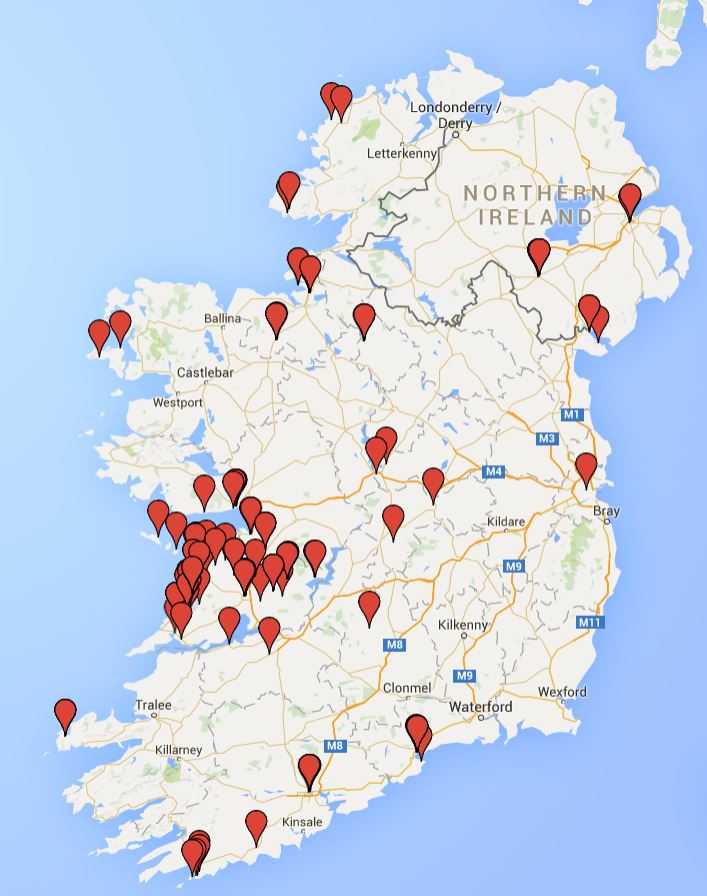
I thought it would also be an interesting exercise to plot the locations of the pubs where I have played in sessions since I have been here.  Unfortunately a few have escaped my memory but the accompanying map shows 144 pubs.  Not a bad sample.  I surprised myself with the spread across Ireland but also with the gaps.  I still have plenty of Ireland to discover.

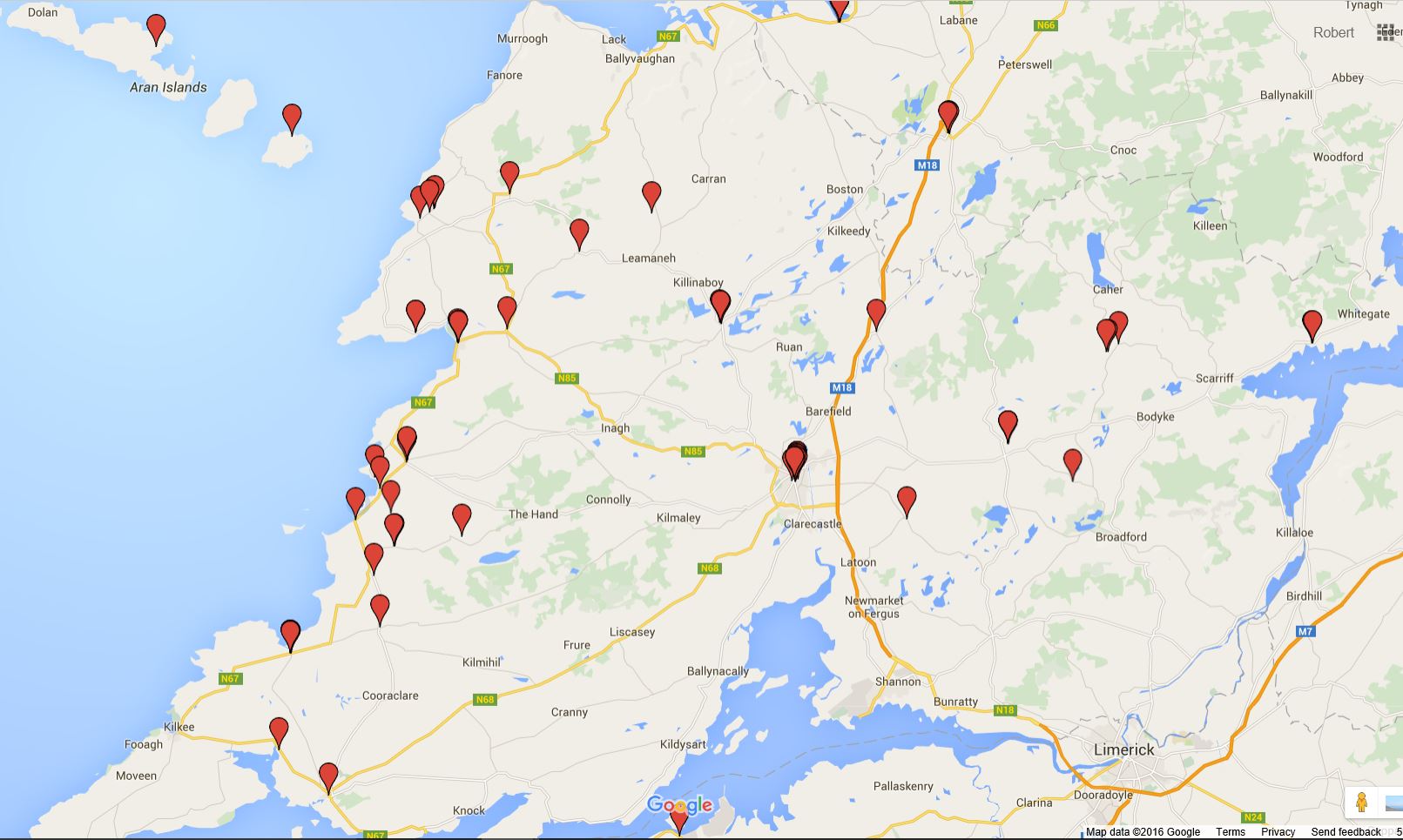
What hits the eye though is the obvious concentration in County Clare.  This is of course partly an artefact given that I live in Clare and visit a pub every night but it is also a reflection of the reality that there is music everywhere in the county.  In the tiniest village or the largest towns.  I didn’t see this elsewhere.  If you look closer though it is West and North Clare.  Session pubs are thin on the ground in East Clare.  If its music you want come to Clare.

I have put some screenshots here

Sessions Pub Map Sessions Pub Map Clare

and a link to the Google map

Session Pubs Map

where you can zoom in and see the names of the pubs.

Collages7

I would like to take the opportunity to wish all my followers a Happy New Year and may it be filled with new experiences, new joys and new music.


Categories: My Journey, Sessions, Trad Irish Music | Tags: , , , , , , | 3 Comments

The Good Mixer – Music from a London Pub in West Clare

Talk about a wild night.  I stepped outside in the wind and it blew me into Friel’s pub last night.  That was mighty lucky as Noel O’Grady (bouzouki), Henry Benagh (fiddle), John Carty (banjo) & Marcus Hernon (flute) were there launching their album “The Good Mixer”.  And what a good mix it was.  The title of the album references The Good Mixer pub in  Camden Town in London where these four guys lived in the 1980s.  For five years this pub was the go-to place for Irish music both among locals and Irish visitors alike.  And this CD gives us an inkling as to why.  The recordings were made one afternoon in 1989, in the home of John Carty, as the sessions were coming to an end.  Essentially live to tape.  And it is surprisingly good.  The band has got back together to do four low-key launches in the home towns of each of the members,  Henry is from Miltown Malbay (hence Friel’s), next stop is Galway, then Matt Molloy’s in Westport and finally in Roscommon, John’s home.

The CD contains a terrific selection of lively tunes and I love it but to hear and see the musicians in the flesh was a real treat.  Even though they had not played together for over 25 years it was tight and energetic with a fresh, original sound.  But the boys soon got sick of playing on the stage and adjourned to the middle bar of Friel’s where they were joined by John’s daughter Maggie and some of the local musical talent in Miltown including Liam O’Brien, Therese McInerney and Bernadette McCarthy who had played piano on some of the tracks on the recording.  Interestingly this was the first time Bernadette and Marcus had met for 27 years.  It was a great night and a privilege for me to play with them and we were totally unaware of the storm raging outside until we staggered into the night at 1:30.
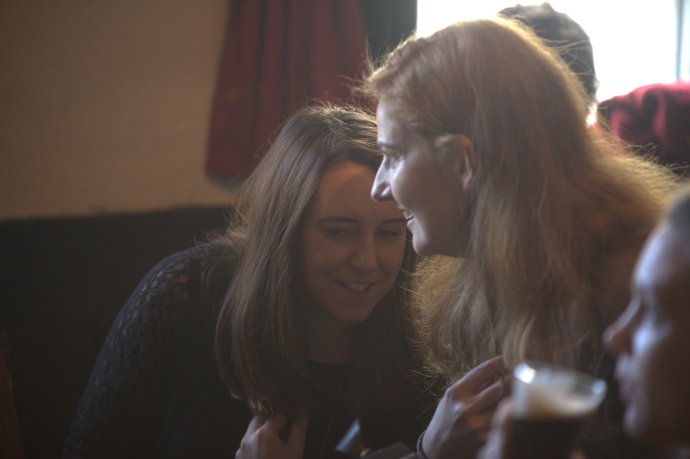
If you get the chance try and catch them or failing that keep an eye out for some video I will post in the next few days.

1-IMG_5983

6-IMG_6019 5-IMG_6003 4-IMG_6007 2-IMG_5990 3-IMG_5996

20151205_000734_resized

20151205_005124_resized 20151205_000806_resized

Categories: Concerts, Sessions, Trad Irish Music | Tags: , , , , , , , , , , , , , , , , , | Leave a comment

Blog at WordPress.com.