My Journey

The Green Fields of America. Part 1

It’s been quite a while since I blogged. That’s not because I’ve done nothing worth talking about. Quite the opposite. I returned this week from a visit to the US.  My first, other than a brief business trip to Arizona, over twenty years ago.

I had three weeks. Hardly enough time to see America. Well not all of America. But New York, Boston, Philadelphia and Los Angeles, the Grand Canyon and Las Vegas were definites. And then the idea of going to Portland, Oregon, popped up. This might seem a strange selection but the first three were because I wanted to experience Irish Music there and then LA because my son lives there.

I can’t possibly do justice to this county in a single blog and in any case anyone interested in finding out about New York or LA won’t look in my humble part of the blogosphere. So this blog is about some of my experiences and my impressions of the people and the country. Sort of like opening the window in a new house and taking in the smells and sounds for the first time. Most of my activities centred around Irish music of course but I won’t dwell on that for the moment . I have written about some of these experiences on Facebook already and will compile into a blog later.

I have made a lot of friends in Ireland through music and many of these live in far flung places. Some in America and these provided the fulcrums for my adventures. Firstly I owe my visit to New York to Kira, who lives at the eastern end of Long Island. She invited me over and kindly offered to coordinate my visits to East Coast attractions.

I was picked up at the airport by Kira. And I got my first distant view of the skyline of New York from the roof of the carpark at JFK. Like some Crocodile Dundee clone I snapped away excitedly to the incredulity of my host. But it was my first day.

IG3C0192

IG3C0369

We headed out to Kira’s home on the end of Long Island – North Fork. Not the posh end of the Hamptons but a gorgeous place to live, two hours drive from Manhattan.

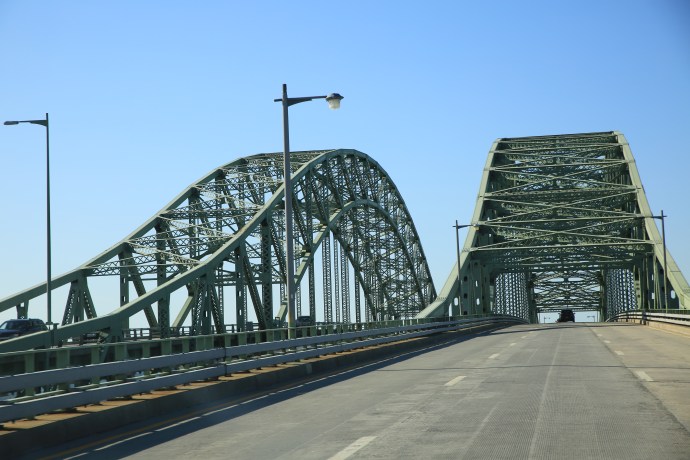
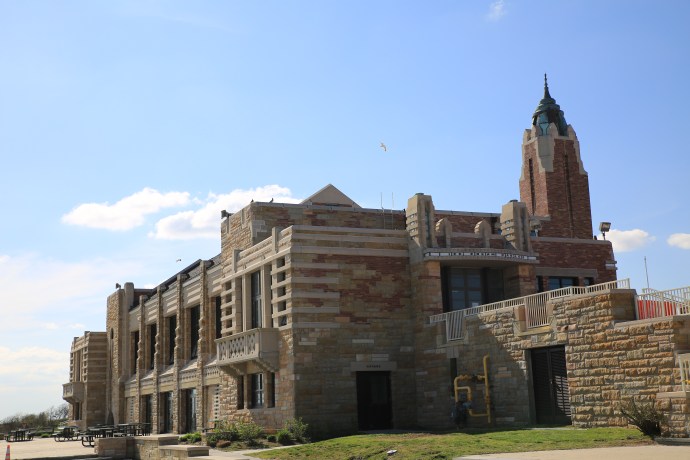
New York had welcomed me with glorious blue skies and so we stopped at the iconic Jones Beach on the way. I did not think my first experience of New York would be getting sand in my toes! It is a very wide beach stretching for 10 km with clean white sand. It has all the facilities of a theme park and I can imagine it packed during the heat of the New York summer. Indeed it is the most popular beach on the East Coast of the US with 6 million visitors a year . Conceived in the 20s the area was reclaimed from bogs and marshes and turned into a summer playground.  There is a boardwalk and many fine art deco buildings such as bath houses and pavilions and a wonderful water tower, recently resotored.

IG3C0212IG3C0254IG3C0282IG3C0270

IG3C0318

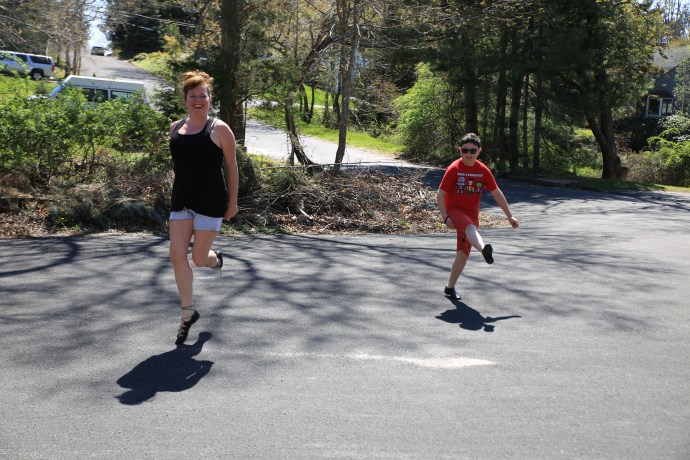
Kira had organised a little house session to welcome me and there was even Dancing in the Streets. But this was very much the entrée. New York City proper awaited me. That will be the subject of Part 2.IG3C0398

IG3C0388

Categories: America, My Journey | Tags: , , , , , , | Leave a comment

Immersion Therapy, Part 1.

IG3C1258

Part 1: The path to being a better fiddler?

OK so this is my 100th blog.  It’s hard to believe that I have pressed that Publish button 100 times since I’ve come to Ireland.

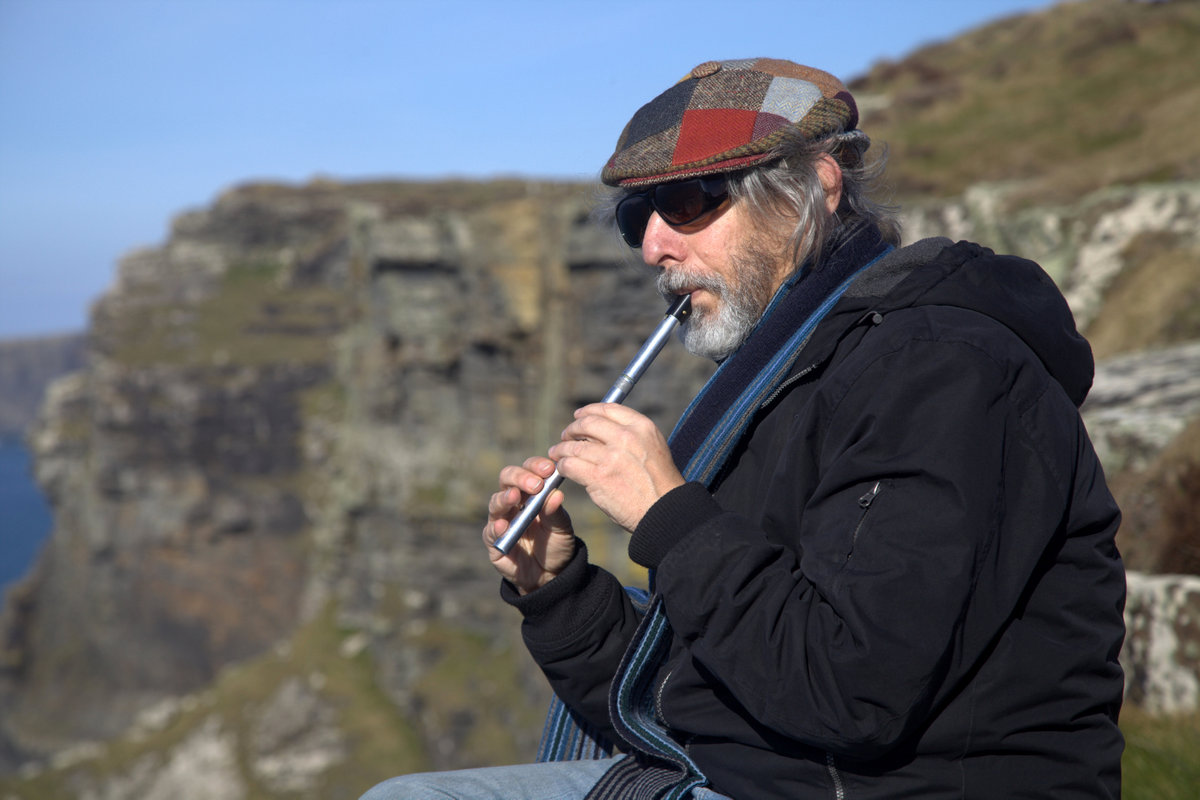
I wondered what I should write about for this centennial event and really the answer was pretty obvious.  I came here specifically to immerse myself in Irish music and to learn to play the fiddle ‘properly’.  To catch up on all the lost years when near enough was good enough for Aussie Bush Music and to learn from players steeped in the tradition. I realise that this may not be of great interest to many of my blog readers, so sorry about that, but I know there are many musician friends who would love to do what I have done and might be interested in the results.

So has it worked?  Am I a ‘better’ fiddler?

This is hard for me to write because there is no absolute here.  I can only talk about how I feel.  For me ‘better’ is ‘am I sounding more like I want to sound?’, not ‘am I technically better?’.  So I thought I would approach it first by talking about the process.  It has been fascinating for me learning how to learn; learning how to listen and the whole process of getting inside the music.

I’m not the first to do this of course and there is a school of thought that adult foreigners can never really learn to play Irish music because they didn’t grow up with it.  It’s not in them.  Well there are plenty of top-notch musicians based all around the world who play Irish music at a high level so the jury’s out on that one.

Despite playing on and off for forty years I came here as a beginner.  Since my arrival I have wrapped myself in the music.  I have been to dozens of Festivals and concerts and I have attended hundreds of sessions.  I have done workshops, private lessons and seen and played with so many musicians of quality.  Something should have rubbed off.

I know it’s a cliché but this is truly a journey. As I progressed there have been some clear stages in the process.  While this is obviously just based on my own experience and it may or may not apply to others setting out on the same voyage, I, nevertheless, think there are some fundamentals here worth sharing with those who have learnt their Irish music elsewhere but are serious about improving their understanding of the music and lifting their playing to another level.

I have recognised six stages in this Immersion process.  The process is naturally a continuum but it is helpful to think of it in stages.  Maybe all stages are not applicable to all however, especially if they may have been lucky enough to have had lessons from, or played with class trad players.   If not then they have picked up their music from books, CDs and local sessions, like me.

This is not rigid.   The stages can overlap and you may go back occasionally but I think each stage is a fundamental precursor to the next.  You can’t jump ahead.  If nothing else it will put some context around the difficulties adults have in learning Irish Music.

IG3C1235

Stage 1.  Delusion

Many when they arrive here are deluded that they can actually play Irish music.  This is soon put into stark reality anywhere in Ireland, but particularly here in Clare, where the standard of musicianship is so high. You come to Ireland with your packet of tunes and firstly no one plays them or you are playing with the wrong rhythm, and when you start one you find yourself often without support.  Undaunted you play on and wonder why the session comes to a halt.  Or you come into the session with your pile of tune books and turn to page 11 and play the set to a largely disinterested pub (I have seen this on a number of occasions!).  Most people realise pretty quickly that there is a problem here and back off but unfortunately some don’t.  They don’t read the signs and plough on regardless getting nothing out of being there.  Hopefully one moves out of the Delusion stage quickly.  In fairness some people may skip this stage either because they realise they can’t play and that’s why they’re here or they are truly advanced players.

Stage 2.  Confusion

Delusion transitions into Confusion.  You have realised you can’t cut it but you are unsure of the way forward.  There are hundreds of tunes you have never heard, you can’t even recognise the ones you know and when you do you can’t play along because the rhythm is different or it’s too fast.  You realise that the countless hours you spent learning tunes back in Australia is pretty much irrelevant.  You sit endlessly waiting for a tune you know and trying to join in, keep up.   It is hard not to avoid being a bit star-struck when you realise who you are playing with and you freeze when asked to play a tune.  In fact after a while you are grateful just not being asked to leave.   You hear a tune you like and if you are lucky enough to get someone who knows a name you look it up on The Session or Tunepal and learn it. Weeks later you find you have a different version or it sounds nothing like you thought it did.  At this point you feel sometimes like opting out. The danger here is that Confusion can lead to Disillusion and then it’s all over.  Unfortunately for many short-term visitors, this is where it ends. They go home, not really having learnt anything and confused about the way forward and then fall back into the comfort of playing with their musician friends back home and contented in their mediocrity.

If they are lucky this process ends soon enough; but for me it was at least six months.  But the fiddle has that pull and you can’t stop.  You keep going to sessions.  Gradually you are starting to recognise tunes even if you can’t play them.  You are now entering the next Stage.

Stage 3.   Absorption

It is hard to know when you have passed out of Confusion to Absorption but one of the fundamental triggers is a realisation that it is actually OK if you don’t play on every tune.  That it is OK to just sit and listen.  And it is also accompanied by a change in the way you listen.  I’ve been listening to Irish music since I was in my 20s but I was never really ‘listening’.  I was hearing it yes.  Listening involves feeling it and catching little nuances, all the different layers and the way the sound works. It means hearing the structure of the tune, recognising the patterns in the tune and how they are put together rather than just focusing on the notes.   And then listening to it again and again.  I remember some wise words at a lesson from Siobhan Peoples, telling me to lie out on the grass (when it wasn’t raining) and just listen, eyes shut, to the sounds: dogs, birds, cattle, tractors, insects, wind, cars in the distance.  It is amazing how much the brain automatically filters out and we have to retrain it.

With this listening skill, comes recognition of tunes and gradually an understanding of the structure of the tunes: chords, arpeggios, links, turnarounds, ornamentation and dynamics and this then flows on to improved bowing, tone and intonation.  Along with this comes the ability to pick up tunes by ear, something I was never very good at, needing the music in front of me.  And then you find yourself playing tunes that you don’t actually remember learning.  This is a wonderful time.  It’s when the music starts to grow inside you and your whole body becomes at one with the tune and the conscious and the subconscious start to work together as your fingers automatically find the notes. The breakaway from the dots and the skill of picking up the music by ear is absolutely essential and there is the realisation that until you can do this you won’t be able to play.

Stage 4.  Consolidation

Then comes the Consolidation.  You can now listen and truth is you are starting to play along with maybe 60, 70, 80% of tunes in a session.  But you still don’t ‘know’ them.  You can’t play most of them alone if asked.  This is the exciting stage but you are still not a musician.  You can’t start a tune for the life of you but you play along with hundreds.  Don’t be fooled that you can play Irish music because you still can’t.  But what’s also happening parallel with this is you are developing a style.  Whether you consciously have chosen to play in a certain way or not your own style is developing.  This comes from listening and remembering the bits you liked; subconsciously.  And soon your fingers are doing it automatically.  And all those hours you spent on bowing patterns and ornamentation is paying off, you are doing it without thinking.  Development of your style also comes from the choices we make of which sessions to go to.  If you like the ‘East Clare’ style (whatever that is) then you will be drawn to those players and will make intuitive stylistic choices on that basis.  Maybe you’ve found that nyaah you’ve been searching for.

Practice at this time becomes a joy.  You play along with CD’s or recordings and eschew the printed versions.  This helps reinforce the learning process.  It is a feeling like no other when you play a tune that a couple of months ago would have been impossible.  But you can’t get carried away with yourself and who knows how long this Consolidation phase will last.  I have spent the majority of my time at this stage and but I think I am still quite a way from entering  the next Stage.  At least I know what I have to do to get there.

Stage 5 Explosion and Stage 6 Exploration

The last two stages Explosion and Exploration are theoretical at this point as I haven’t reached them yet.  To me they seem the logical extension of the first four stages.  Arguably when you reach the Explosion stage you are a fiddler. I use this term because by this time you have hundreds of tunes in your head bursting to get out.  You are listening to new tunes all the time outside the session situation and learning them off CDs and taking them back to sessions.  You are rapidly picking up new tunes at sessions.  Maybe playing them after hearing them a couple of times and remembering them next time they are played.  You are starting sets you haven’t planned and effortlessly  launching into tunes because it seems right not because this one always follows that.   If asked you could lead a session.

Technically, you have sorted your problems of tone and intonation.  You play with feeling.  You have your own style and tempo that works for you but you can readily adapt to a session that is fast or slow if required.  You can change key if required or if someone starts the tune in G minor instead of E minor.  Many will be happy to rest here.

The last stage I imagine is when you explore the boundaries of your fiddle playing.  Try different things, maybe reinterpret tunes your way.  Play music from different traditions. This is not to say you have to become a virtuoso but it is about exploring your own capabilities and that of the instrument.

Hopefully you hover between Exploration and Explosion for the rest of your playing days.

I look forward with eagerness to these last two stages.
IG3C1248

Anyway that’s it.  I stress again that this is how it seems to be working for me.  Maybe it’s not the same for everyone but the sooner you realise you can’t just jump from Beginner to Player by attending a few session the better

The problem for many is that most can’t do what I have done.  They can’t give up two or more years of their lives.  So they learn in tiny increments.  I’m not saying you can’t become an Irish Fiddler but immersion with loads of practice can shortcut a process that would otherwise take many, many years.

So where am I now as a player?

I have already said that I feel I am still in the Consolidation Stage but striving  to enter the Explosion phase.  Initially I was obsessed with not knowing the tunes and trying to build up a repertoire, but I wasn’t improving as a fiddler so of late I have been practicing tunes I know and playing them over and over until they sound how I want them to sound.  Of great value to me were the words of Yvonne Casey, “Love every note; feel every note”.  And that has become my mantra.  Caoimhin O’Raghallaigh was also inspirational in showing me how many choices are available when we play a note and not to be afraid to experiment in terms of dynamics and bowing.  And how could I forget Martin Hayes who spoke with so much wisdom about being clear on the sound we want to make even singing it out.

The greatest buzz I get from playing Irish music is with others and creating a sound together.  That means listening to them and listening to yourself and ensuring your playing is both sympathetic and empathetic. Often this can’t be achieved in a large session.

So here’s the bottom line. For the first time in my playing life, I like the sound I make.  I am getting closer to how I want to sound.  So at the risk of sounding immodest, Yes I think I am a ‘better’ fiddler.

Part 2 will look at some specific things that I have found over the last two years that have helped my playing.I will address this in a future blog.
Categories: My Journey, Stories, The Fiddle, Trad Irish Music | Tags: , , , , , , , , , , , , , | 9 Comments

Trip to Ballyferriter. Over the Conor Pass.

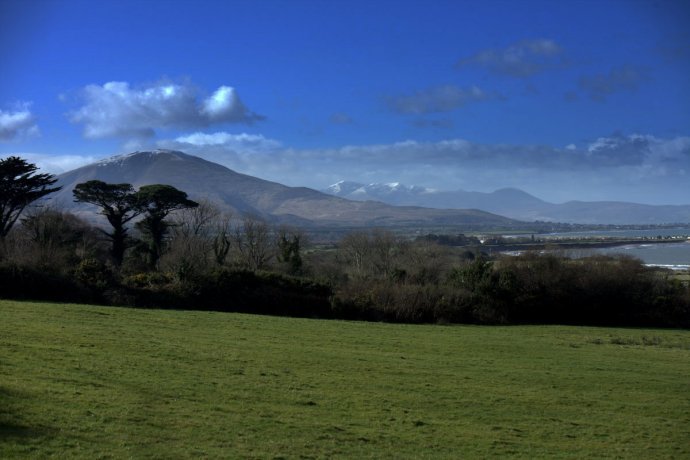
I had  been to the Dingle Peninsular three times before and each time the weather was so bad I was warned off crossing Conor Pass.  Not this time.  I am off to a music festival in Ballyferriter and as I crossed the water to Kerry via the ferry from Kilimer there was glorious sunshine.  And then there was rain.  And then sunshine.

I could see the Slieve Mish mountains and they were snow-capped and so enticing I decided to risk the Conor Pass.   I pulled into a garage to fuel up and the guy behind the counter in a rich Kerry brogue says,  “So where are you headed?”  “Dingle”.  “Ahh.  You’ll be going over the mountain then.” I could only agree.

IMG_8555IMG_8561IMG_8607IMG_8628IMG_8635

The Pass is the highest in Ireland.  It is a winding,  often single lane road and  buses are banned.  At one point the road climbs continuously for over five kilometres.

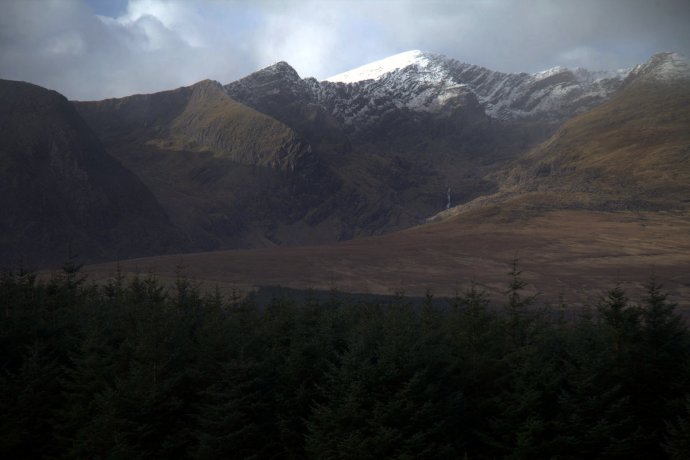
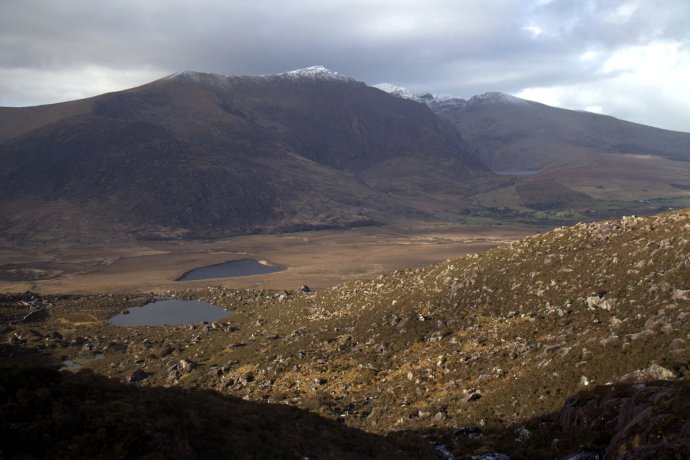
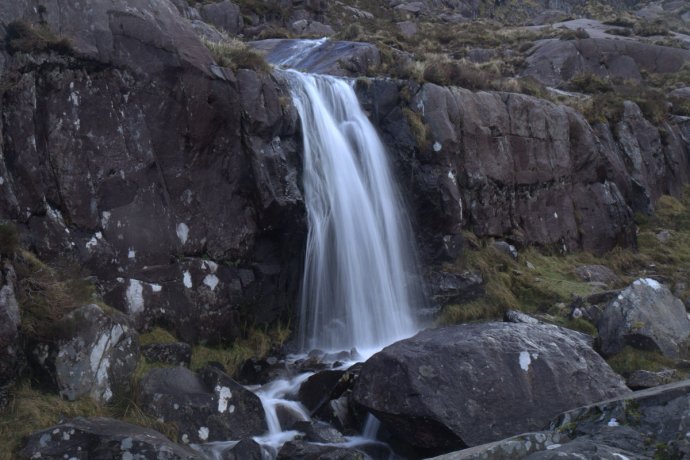
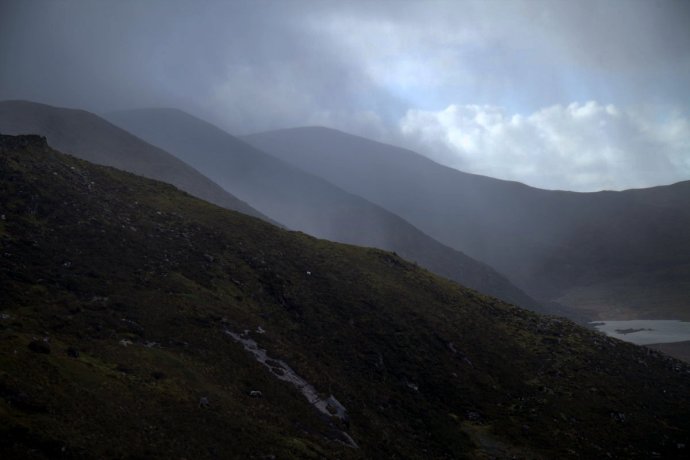
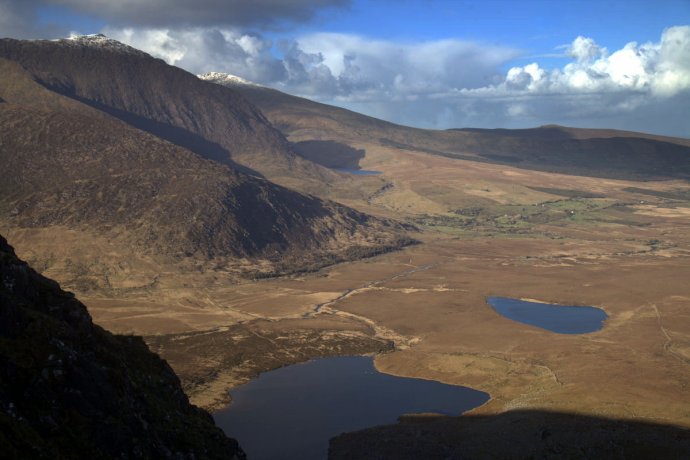
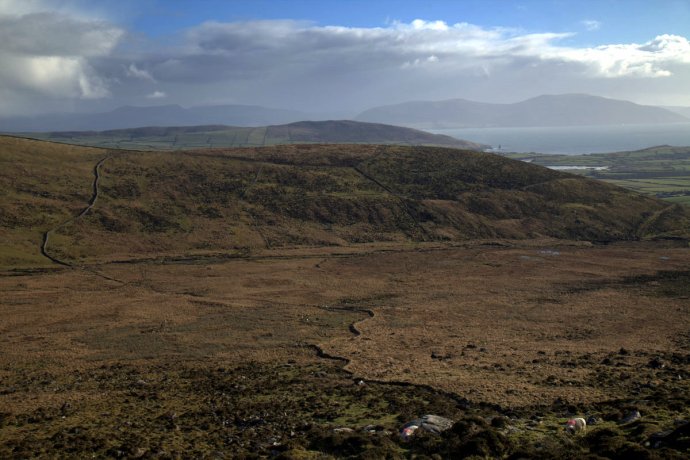
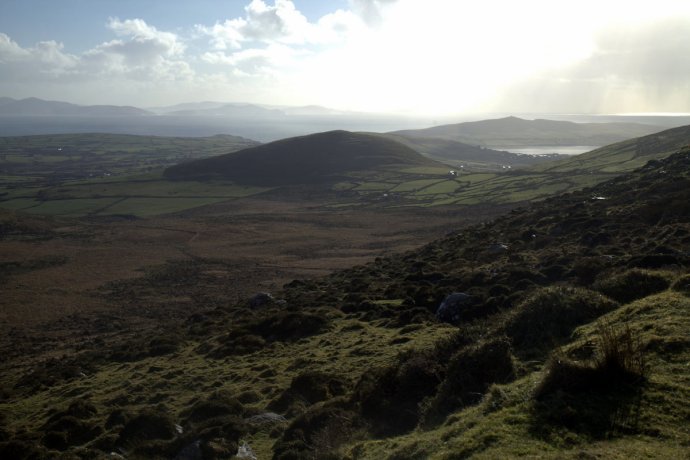
It didn’t take long for the cloud to descend and by the time I reached the Pass it was snowing.  Just light wonderful flakes drifting hither (and thither).  Not enough to settle.  My fingers were numb but I clicked away furiously.  It was around 1oC but I was charmed by the beauty.    The landscape had been scoured by glaciers in the most recent Ice Age and all the features I had learnt about at Rock School were there.  U-shaped valleys, tarns (or as they are known here corrie lochs), a string of them in fact (called a paternoster) and moraines and deposits of glacial till.  One corrie sits well above the valley floor in a perched valley (cirque).  There was a perfect glacial pavement with striations caused by the scraping of rocks carried along the bottom of the glacier.   Check the photos. Aside from being a geological wonderland it was a place of extraordinary beauty.  The one lane road crept up the mountain to the top of the pass where to the north I could see Castlegregory and across to the Blaskets and to the south Dingle stretched before me.

IMG_8668

Conor Pass.  Glacial moraine in the foreground.

IMG_8676IMG_8732

IMG_8775

Glacial pavement with striations, Conor Pass

IMG_8809

Corrie lakes, U shaped valley, cirques.  Conor Pass

IMG_8834

Top of Conor Pass

IMG_8874

How hard is it to build a straight wall?

IMG_8887

View towards Dingle from the top of the Conor Pass


On to Ballyferriter and I was greeted by an intense hailstorm .  Just a couple of minutes but enough to create a temporary whiteout.  Four seasons in one day.  Was I in Melbourne?

I will talk about the music festival that took me to Ballyferriter in my next blog.
Categories: My Journey, Wild Ireland | Tags: , , , , , , , , , | Leave a comment

Kevin Burke in Concert, Ennis 2016

IMG_8420

As a young geologist my first job was in the far west of New South Wales in outback Australia at a place called Cobar.  It was a small mining town of 5,000 in the middle of nowhere.  A highlight was a regular three hour drive to Dubbo for a shopping trip.  Sydney was 8 hours away.  This was 1979 and I was already heavily into the fiddle so as often as I could I would drive down to Sydney and head straight to Folkways Record Shop in Paddington.  There I would check the latest imports from Ireland and buy most of them on spec.  This is how I discovered Kevin Burke.  And right through the 80’s he was my inspiration.  From the solo If the Cap Fits to Promenade and Portland recorded with Mícheál Ó Domhnaill and then the collaborations with Jacky Daly and Andy Irvine and Patrick Street.

Fast forward to February 2016 and I am sitting in the back bar of Lucas Bar in Ennis.  I have never been here before and the place is not renowned for music.  Indeed this is a first for the Pub.  A small but enthusiastic crowd had gathered to hear Kevin play. Solo. No distractions.   Just the clear clean sound of a fiddler on his own.    I looked around.  There were many well-known fiddlers in the room and they treated the master with absolute respect and reverent silence.  It was hard to believe that nearly forty years after discovering him I was hearing him live for the first time.

Burke’s playing has both breadth and depth.  His interpretation of traditional Irish music is rooted in the Sligo tradition but has absorbed so many influences from his days in London and the US. Personally I love the fiddle on its own.  Nothing wrong with ensemble playing and his many collaborations are testament to his skill at that but a masterful player such as Burke can bring out the internal rhythm of the tunes without the need for other instruments or backing.    He displayed this virtuosity with over 90 minutes of reels, polkas, slides, jigs and airs.  And we also got some bluegrass, some Yiddish music (via Sweden), some Quebecois and some musette.

It was a captivating and rewarding performance.  The tunes were linked together with some delightful stories and restrained banter and perhaps the biggest cheer was reserved for his song about his days in London.  There were many highlights for me though.  An outstanding rendition of Maudabawn Chapel, the haunting Frielach, and the wildness of the Boys of Malin and Stenson’s reels stand out.

Kevin is in Ireland to receive the Gradam Ceoil for 2016, the Irish Musician of the Year award from TG4.  What a worthy recipient,  having given us four decades of inspirational fiddle music.  Thanks.

IMG_8415IMG_8417

Categories: Concerts, My Journey, Trad Irish Music | Tags: , , , , , , , , , , , | Leave a comment

Surprising Belfast

I hadn’t planned to go to Belfast.  After the glorious weather at the Carlingford Festival in February 2015 (check blog here) I decided to head up to the Glens of Antrim in Northern Ireland but, as I travelled up the motorway, the mist set in and it seemed rather pointless, as I was hoping to do some photography, so I diverted into the city.  I had never been to Belfast.  On my first visit to Ireland in the mid-90s we had given Belfast a wide berth. Travel warnings and all it wasn’t considered safe then.

This time I drove into the city with no plans and virtually no knowledge.  I stopped at the first hotel I found, which happened to be Jurys and they had a special rate – not that much pricier than a B&B.  It was right in the centre of town and within walking distance of all the major attractions including the session bars.  So that was lucky.

40-IMG_2266.jpg

Before I had even entered the lobby of the hotel I became best friends with Bobby who it turned out runs a taxi guided tour and before I knew it I had agreed to go with him.  So without even finding my bearings I ended up in the back of the Belfast version of a London cab.  This turned out to be an inspired choice.  He called it a ‘political’ tour and despite his ‘green’ (as distinct from ‘orange’) credentials, which came through occasionally, it was presented in a dispassionate way with both sides of the argument presented as we visited both the Catholic and Protestant hot spots.  I learnt a lot, given that most of what I knew was picked up on Australian television via the ABC or BBC (and presumably ‘managed’ so not necessarily reflecting reality).  Even so I back then I had been detached from it and it is surprising how being there on Falls Road or seeing the Wall or the memorial garden or the segregated living areas puts it all in context.  Not being Irish I don’t think I will ever fully understand it but Bobby was able to give me a lot of the background.

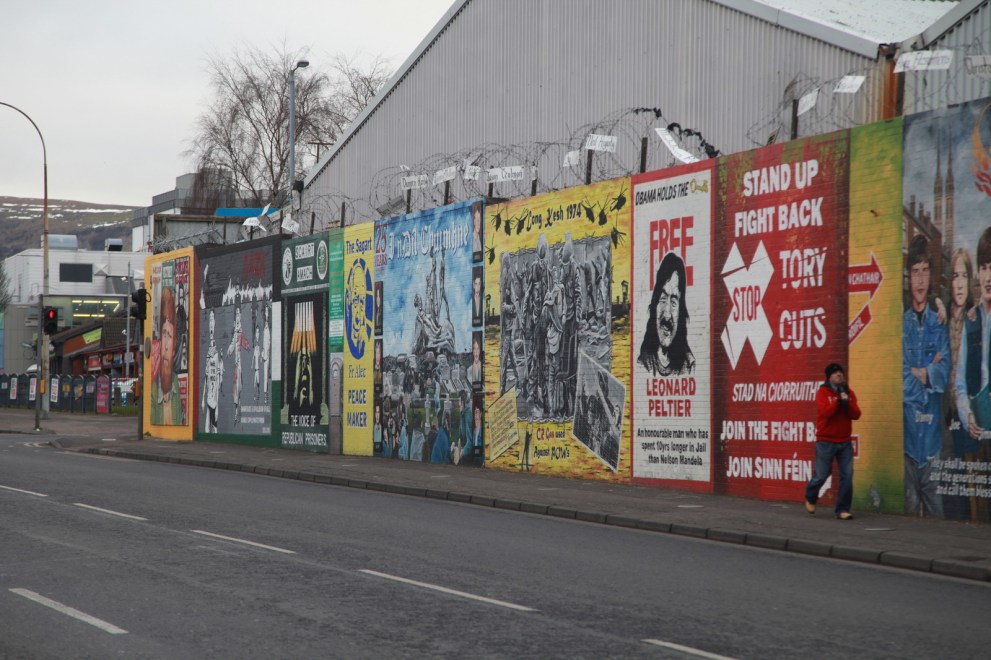
We drove up Falls Road where the murals depict episodes important to the Republican struggle.  I got detailed explanations of each of these including the gassing of Long Kesh, the dirty protest which turned into the hunger strike at Maze Prison, the rights of  travellers,  The Titanic “built by Irishmen and sunk by an Englishman”, the killings at Ballymurphy, the Falls Road taxi killings, the Gibraltar Killings and the Milltown massacre.

There ar01-IMG_1803.JPGe also more recent murals depicting incidents or struggles that resonate with Republican sentiment. I heard about the shipyards which employed up to 35,000 people; all Protestants.  And the Linen Mills with separate gates for Catholic and Protestant workers

02-IMG_1808.JPG


We visited the Sinn Fein office in Sevastopol Street with the famed mural of Bobby Sands. He died in 1981 after 66 days on hunger strike and his story still causes rancour with many.  His legacy remains however and he is credited with inspiring a new generation to take up the Irish language, something that Sands and his fellow prisoners did in the tortuous conditions of H Block.

03-IMG_1827.JPG

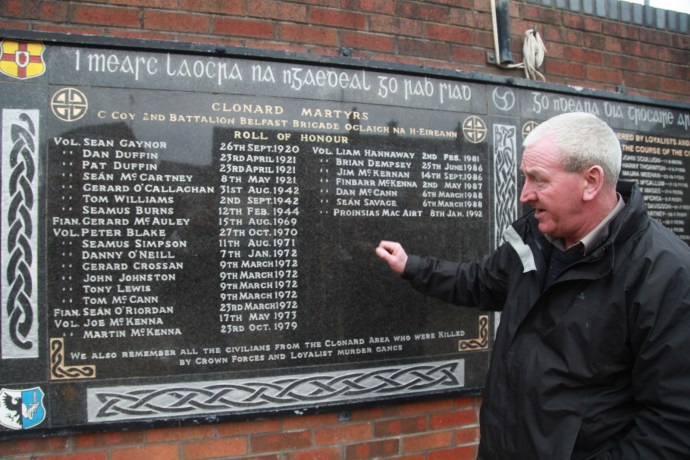
Particularly moving also was a visit to the Clonard Martyrs Memorial Garden.  This is a very simple walled space located at the spot where the troubles really kicked off with the burning of catholic houses.  A few hanging pots and some benches in a paved area allow quiet contemplation. The names of victims of the Struggle are listed on plaques and there are images of some of the fallen. What struck me was the extraordinary youth of many of the dead.  Most in their 20s and 30s but some as young as 16.   The memorial is adjacent to the dividing wall which looms overhead and the houses backing up against the wall have cages which used to protect them against grenades and other objects lobbed over the fence before the Peace deal.

05-IMG_1889.JPG

06-IMG_1875

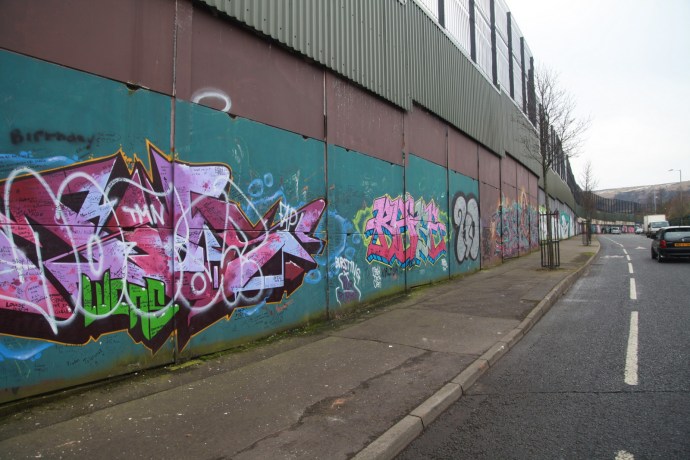
On the protestant side I signed the Wall, along with thousands of others, with a felt pen thoughtfully provided by Bobby.  This seems to have become something of a ritual and names and messages from all over the world are dotted among the graffiti.

07-IMG_1907.JPG

08-IMG_1912.JPG

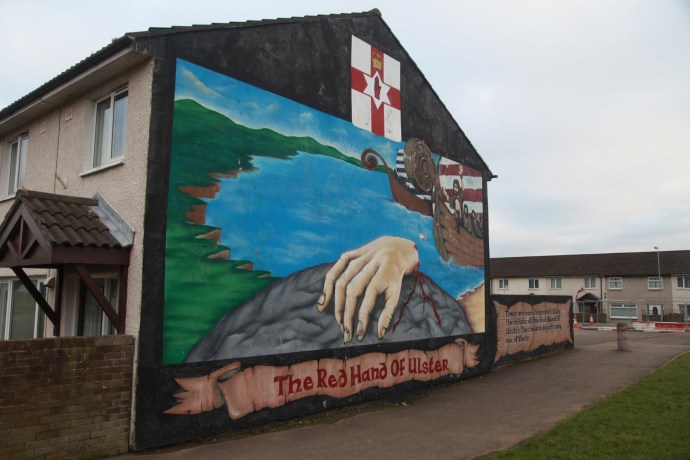
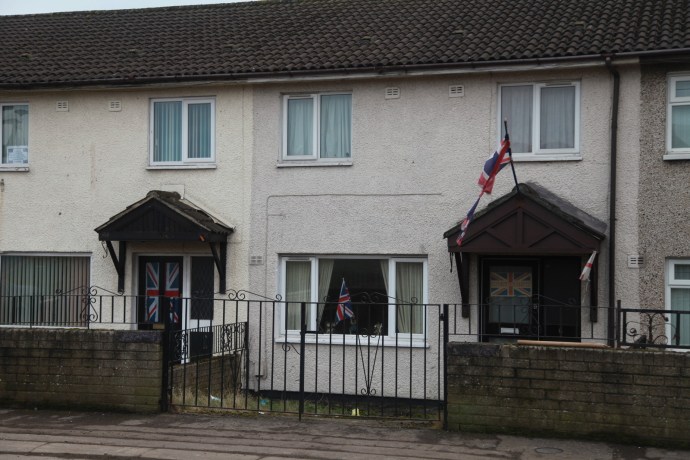
We visited Shankill, an exclusively Protestant area  where I walked around the incredibly quiet streets.  Presumably everyone was at work or school but the place seemed deserted.  Murals on the end walls of rows of tenement houses are a feature and these depict events significant from the Union side.  There are recent murals celebrating individuals such as Stevie ‘Topgun’ McKeag who died in 2000 and is credited with a dozen killings, and William Bucky McCullough who became a martyr after being killed in an internal dispute in the UDA.

There is another celebrating the formation of the Ulster Defence Union in 1893 and the Ulster Defence Association in 1972.  For reasons unknown to me there is one depicting the Bloody Battle of 1809 in which Napoleon secured victory over the Austrians,  More obviously there is one remembering the founding of Belfast in 1609 and others celebrating legendary hero and defender of Ulster, Cuchulainn, and a somewhat gory depiction of the Red Hand of Ulster among many others.

10-IMG_1991.JPG

11-IMG_2022.JPG

Houses here proudly fly the Union Jack.

13-IMG_2037.JPG

The tour was good value and highlighted to me the many injustices and the essential futility of it all.  The song ‘There were Roses’ was going around in my head.  It also made me reflect on the extraordinary achievement of Peace in Northern Ireland after so long.  The protracted negotiations through the 90s that led to the Good Friday Agreement in 1998, the subsequent massive endorsement at the referenda in both the North and the Republic,  the decommissioning of the IRA’s weapons in 2005 and the ultimate end of the Process with the elections of 2007.  Many however appear to hold on to their part in the Struggle.  There is massive progress but I think there is still a lot of work to be done with 93% of kids in Northern Ireland going to segregated Catholic or Protestant schools.

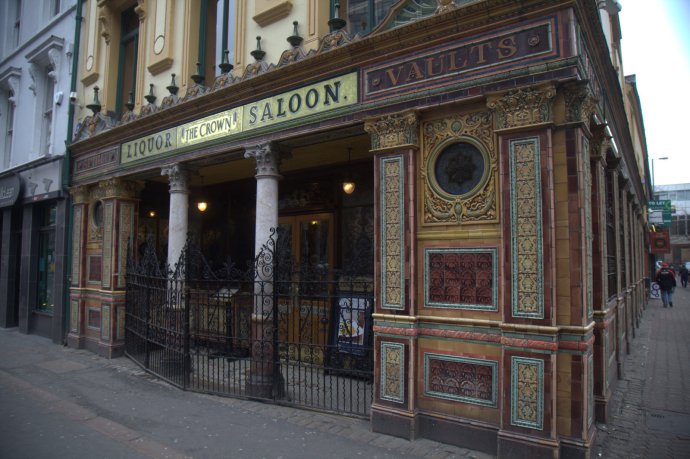
By now I had my bearings and in the evening I continued my unguided walk and found myself at the Crown.  A truly extraordinary bar.  I have seen nothing like it. It is owned now by the National Trust.  The bar was renovated in its current form in 1885 by Michael and Patrick Flanigan and then restored in 1980 and again in 2007. Things that drew my attention include the amazing tiled façade and stained glass windows, a massive granite topped bar with heated footrest, ten snugs with a bell system so ladies could call for their drinks without going out, plates to strike matches,  a mirror damaged by a bomb blast and since restored, a wonderful mosaic at the front door showing a crown (said to have been installed there so patrons could walk all over the crown!) and incredible carved woodwork finials, a magnificent ceiling.  I could go on and on.  Just marvellous.  I had a very enjoyable lamb shank pie there (and a Guinness of course) and indeed went back there for every meal.

35-IMG_2213.jpg

Belfast3

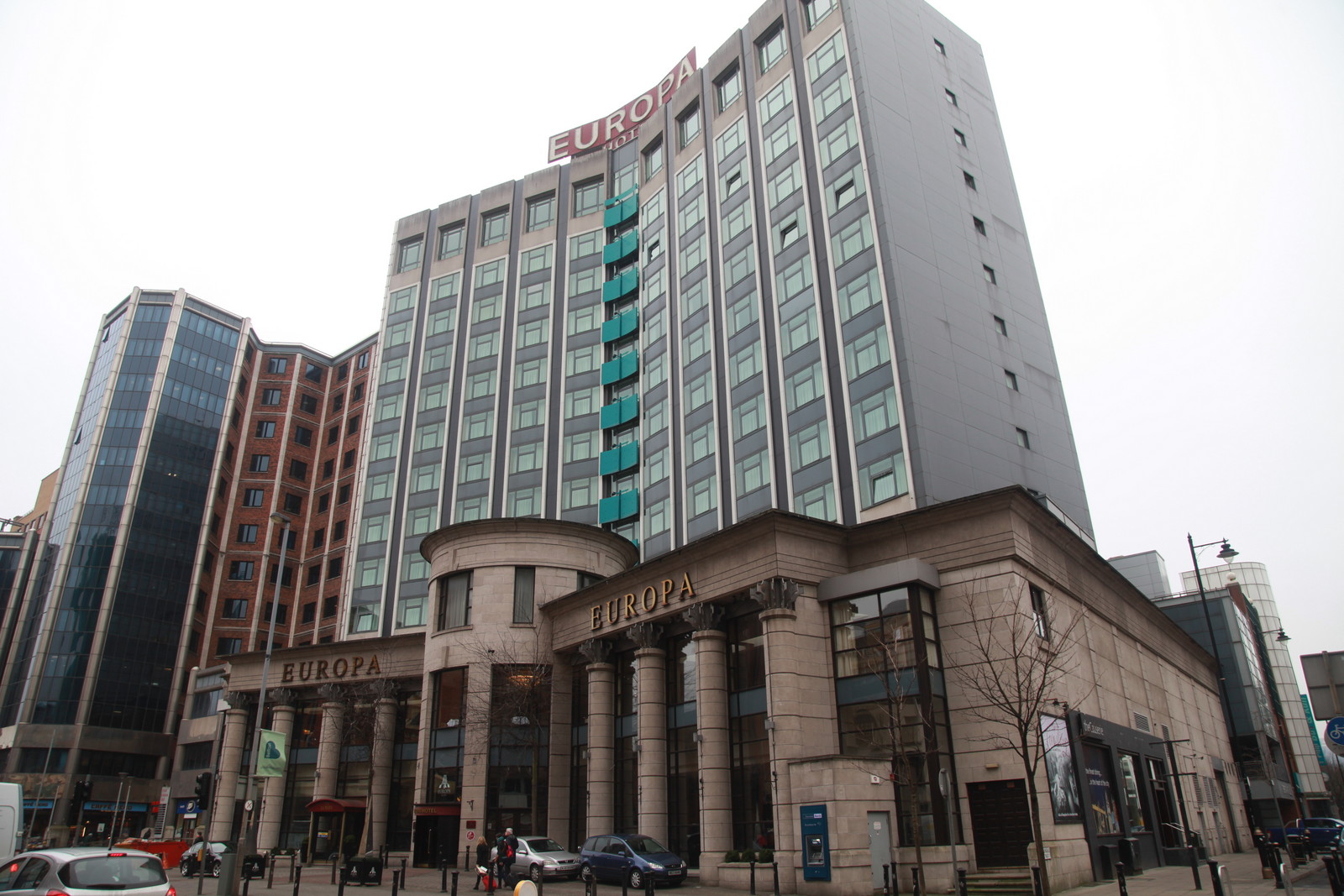
Opposite the Crown is the Europa Hotel.  During the Troubles it was damaged 33 times by IRA bombs including one massive explosion which wounded 20, punched a hole in the side of the adjacent Grand Opera House, shattered virtually every window in the Hotel and caused extensive damage over a wide area of the city center.

32-IMG_2201 31-IMG_2174

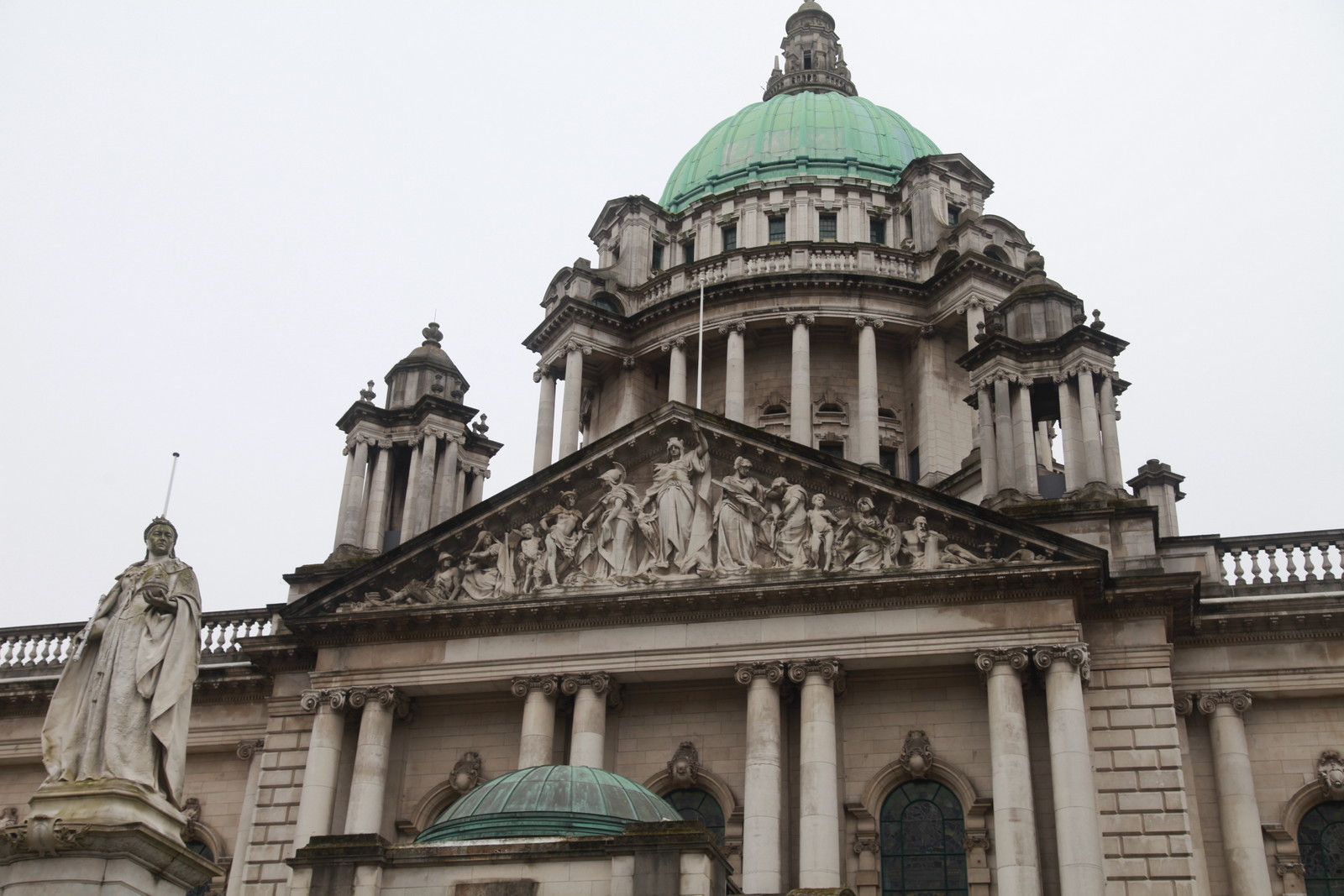
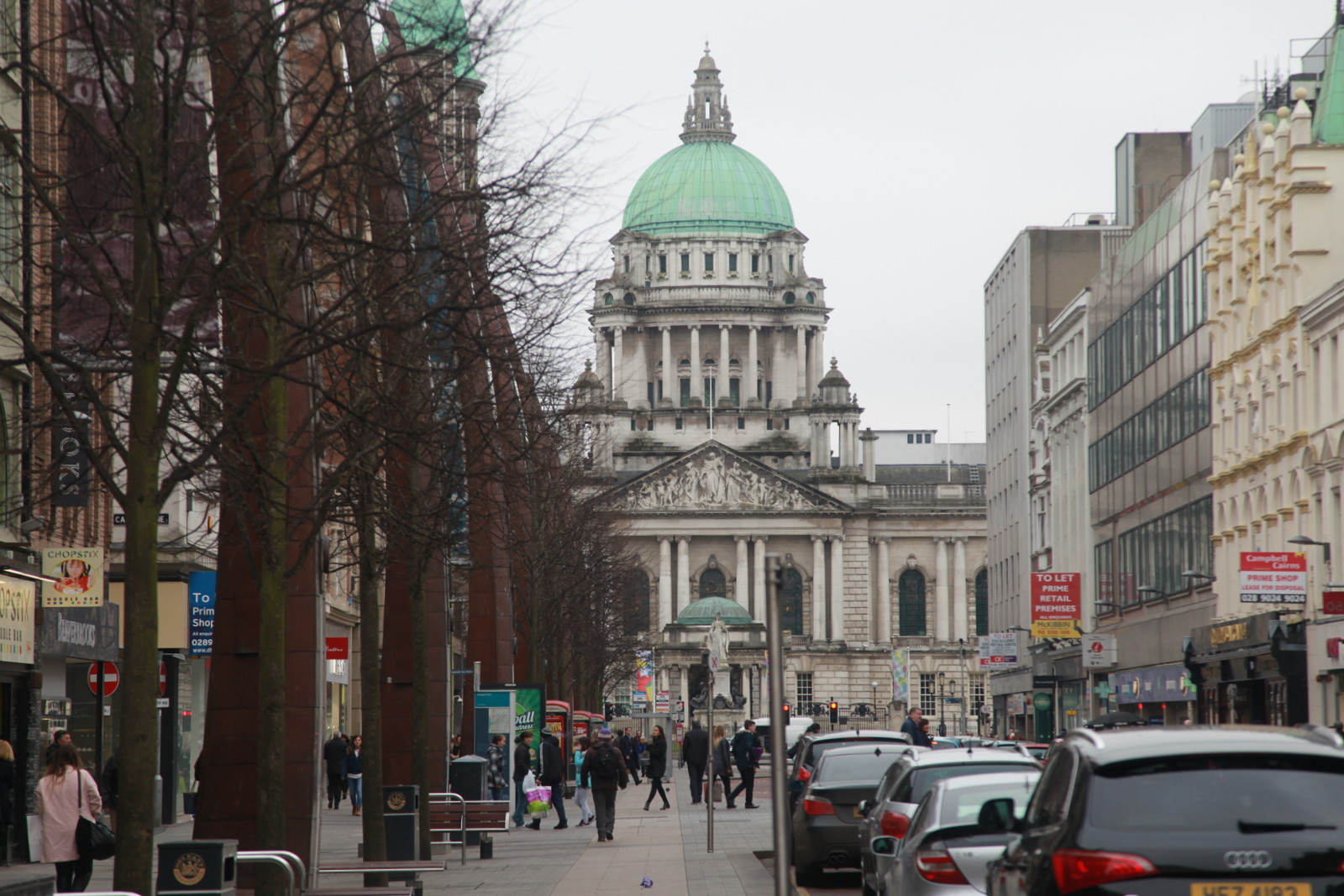
The city itself is full of remarkable architecture and is great to just walk around and soak up.  Many of the buildings date from Victorian times and reflect the wealth brought to Belfast by the ship building and engineering industries and the linen and tobacco trades.  This includes the outrageously ostentatious City Hall built in 1906.  This building was considered more befitting of the City’s status than the previous modest building.  It cost £396,000 to build, an enormous sum, perhaps the equivalent of £150 million today. It was funded by two years’ profits from the City’s gasworks!

45-IMG_2315 41-IMG_2280 46-IMG_2321

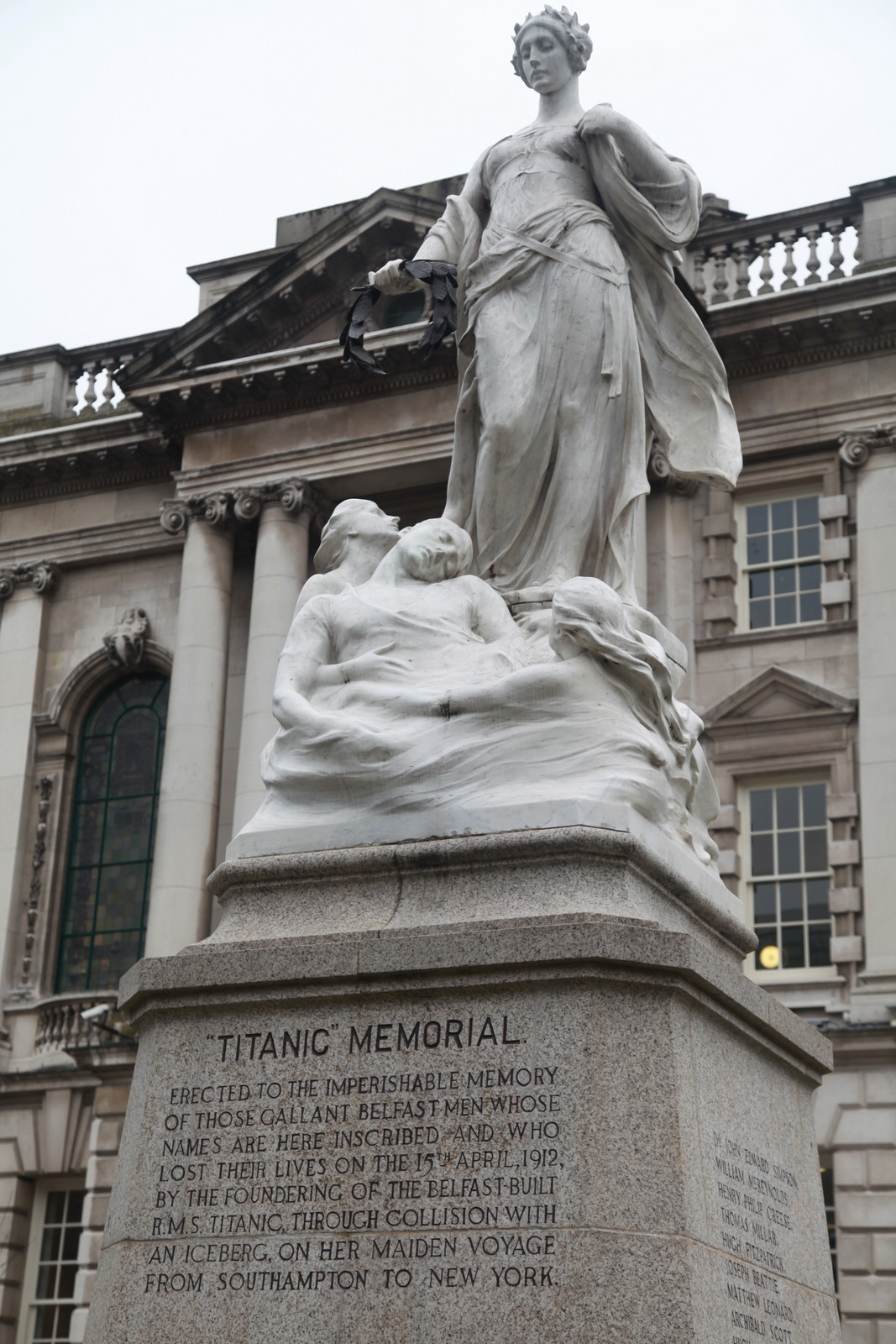
I did not go inside; but having read about it later I have put that on the list for my next trip.  Many statues dot the gardens including a memorial to the Titanic which includes the names of all those lost.

49-IMG_2354 48-IMG_2345

The City Hall lies at the end of Donegall Place one of the main thoroughfares, Along one side of this avenue are a series of sculptures of uniform design reminiscent of a sail, depicting the great ships built in Belfast.  Included of course is the Titanic, the largest ship ever built at the time and which was sunk on its maiden voyage in 1912.  It figures greatly in the psyche of the city and is a major attraction to visitors.

54-IMG_2417 78-IMG_2890

Many other fine buildings grace the wide streets.  For the keen observer there are many delights to be had. Largely pedestrianized in its city centre it felt relaxed and uncrowded.  The people were chatty and friendly.  I ended up playing some tunes on a Romanian version of a Stroh viol offered to me by a busker.  My playing was well received and led to the crowd cajoling the busker to play some Irish stuff instead of Romanian folk tunes; good craic.

Belfast architecture Belfast people

Musically my experience was mixed. My timing wasn’t good and the session at Maddens on Monday was definitely not my cup of tea.  It reminded me of that Maori anthem of the 60s – ‘Ten Guitars’ because, no exaggeration, that’s what we had, along with a harp a couple of banjos and a fiddle.  It was all songs and while the craic was good it was not for me.  Then next night I heard it was ‘real’ trad at Errigle Inn, a little bit out of town. So a short taxi ride there and immediately I saw I wouldn’t be disappointed.  Great music, great craic and some familiar faces from my festival travels.  This went a long way to supporting what I had been told that Belfast had some of the best traditional music in Ireland at the moment.  It was fast and enthusiastic and inclusive; a fine way to end my short stay.

79-IMG_2936 80-IMG_2950 82-IMG_2975 84-IMG_2996

When I visit a city I rarely go to the tourist hot spots.  I walk around and try and soak up the atmosphere.  So I can’t tell you about galleries, museums or the Titanic Experience.  I’m sure they are brilliant and there are plenty of places you can get that information. But I really enjoyed Belfast.  The rich history both old and very recent, the great architecture, surprisingly friendly people and most importantly for me, good music if you look, make it a top spot to visit.  I’ll certainly be back.

If you are of the same bent then you might be interested in the offerings of GPSmyCity (google it!) They have an app for IOS and Android that provides detailed city walks.   They have kindly offered to give away to my readers some prizes of a free download of one of these.  You choose.  No Belfast, but plenty of others to choose from.  A list of all the cities they have guides for is here  http://www.gpsmycity.com/user/static_sfg.html     Here’s what you have to do to win one of the promo codes (unfortunately Apple IOS only…sorry about that)

I am soon to set off on a road trip to discover parts of Ireland I’ve yet to see.  I’m looking for suggestions of places in Ireland that you think I should visit or that you would like to see me blog on.  Just respond in the comments to this blog.  That’s all.  One of the city app prizes to the first 20. Oh and don’t forget to nominate the city you wish to receive the free app for.

Take care in your travels.

Categories: My Journey, Real Ireland, Sessions, Trad Irish Music | Tags: , , , , , , , , , , , , , | Leave a comment

What a Year!

Another calendar year on my Irish adventure has ended.  And as I look forward to the next 12 months it is also a good time to look back.  Although hamstrung for the last four months due to my visa and driving licence problems I have still managed to take in an enormous amount of music.  I posted a collage the other day on Facebook with a selection of my photos of musicians from the past year.  I thought I would repost it here for my blog followers who are not on Facebook.  These are people I saw in concert or played with in sessions.  To many of my readers there will be a lot of familiar faces and I got great joy from seeing and playing with them as I did with the lesser known but often equally talented musicians I came across every day.

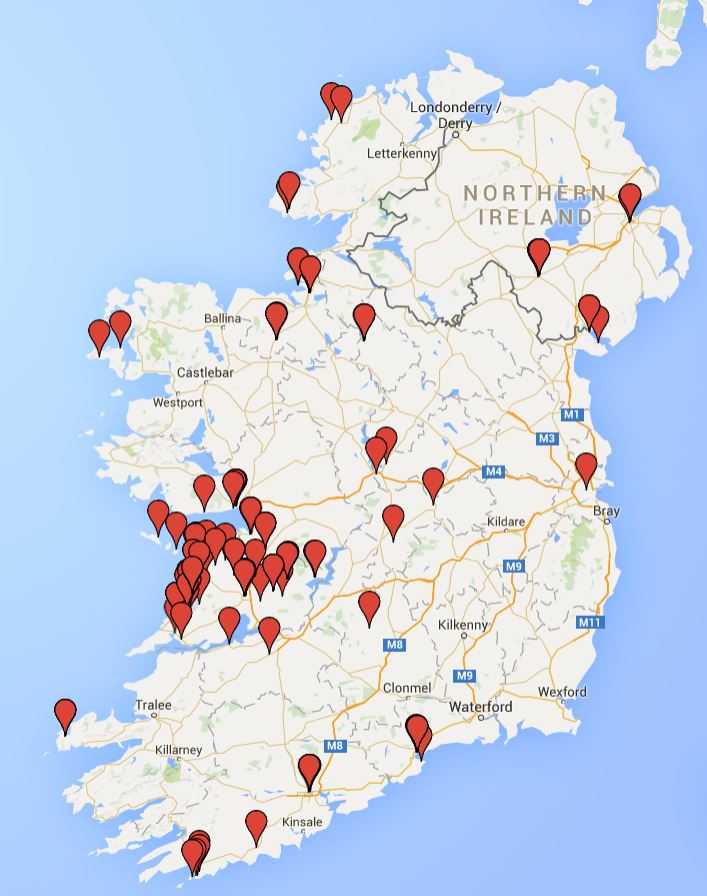
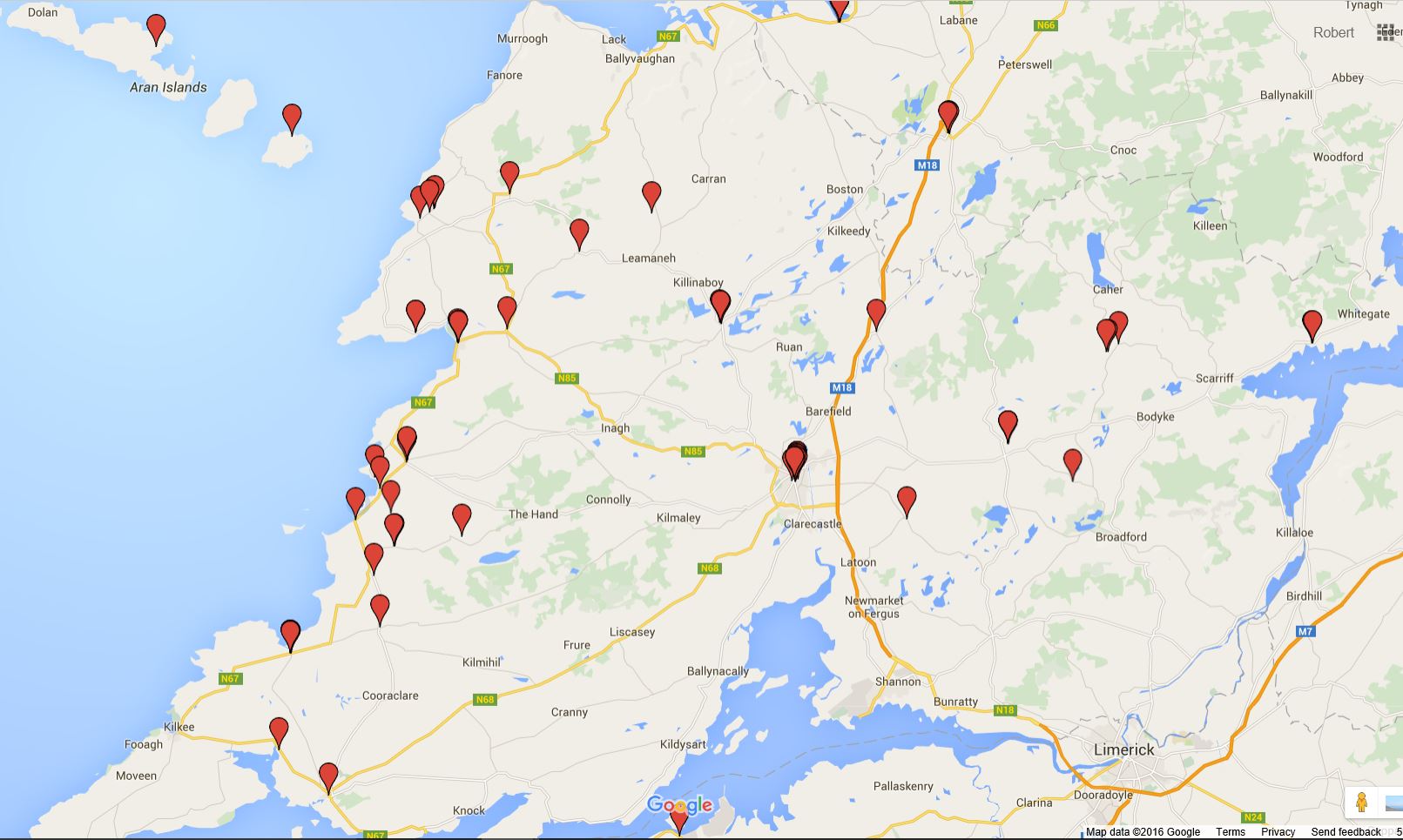
I thought it would also be an interesting exercise to plot the locations of the pubs where I have played in sessions since I have been here.  Unfortunately a few have escaped my memory but the accompanying map shows 144 pubs.  Not a bad sample.  I surprised myself with the spread across Ireland but also with the gaps.  I still have plenty of Ireland to discover.

What hits the eye though is the obvious concentration in County Clare.  This is of course partly an artefact given that I live in Clare and visit a pub every night but it is also a reflection of the reality that there is music everywhere in the county.  In the tiniest village or the largest towns.  I didn’t see this elsewhere.  If you look closer though it is West and North Clare.  Session pubs are thin on the ground in East Clare.  If its music you want come to Clare.

I have put some screenshots here

Sessions Pub Map Sessions Pub Map Clare

and a link to the Google map

Session Pubs Map

where you can zoom in and see the names of the pubs.

Collages7

I would like to take the opportunity to wish all my followers a Happy New Year and may it be filled with new experiences, new joys and new music.


Categories: My Journey, Sessions, Trad Irish Music | Tags: , , , , , , | 3 Comments

Ireland – The Next Chapter

I’ll start this blog with some good news. Those of you who follow me on Facebook will already know that my application to remain in Ireland has been accepted and I can stay another 12 months.  The wait has been interminable. Over four months without a word and without any response to enquiries.  Everyone I spoke to about it seemed to think that was pretty normal and that I just had to wait.  Meanwhile my visa had expired and my life was on hold.  My inability to prove residency and obtain an Irish driving licence led to refusal to re-insure my car and so for three months I have been unable to drive.  It will still be a couple of months before that is rectified.

I wonder why some countries make it so difficult for people to come and live.  I am sure Australia is just as bad with people wanting to reside there.  I just don’t get it though.  I am self-sufficient, I have met all the requirements, I accept that I can’t work or run a business but still I have to go through all these hoops and am met with a wall of silence when I try to find out what’s going on.  In Ireland, the hundreds of millions of people in the Eurozone can come and go as they please but the few thousand Aussies who want to make Ireland home (even for a short while)  find that to stay longer than 90 days is laced with any number of difficulties.   A country looking to recover from an economic catastrophe should be welcoming anyone who wants to come here and spend money.

Anyway I am undaunted because I am not ready to go home.  Over the next year I will explore ways of obtaining longer terms of residency to continue on my musical journey.  But Ireland has become much more than that to me.  It has etched its way into my being.  With a few exceptions, which I won’t dwell on, I have been welcomed here with open arms and open hearts.  It is such a contrast to the anonymity of Australian suburbia where you can live for years and never be recognised by your neighbours. Here I live in a small community and people take you as you are.  I am often greeted by strangers “with a warm and kind hello” as in the lyrics of the song “The Clogher Road”.  I have had many offers of lifts to do my shopping or get coal as people became aware of my predicament.  And in my cycles around West Clare I am often tooted with recognition or waved at by people who obviously know me even if I don’t recognise them.

And I feel part of the wider community also, throughout Clare and beyond.  Facebook and this blog have allowed me to keep in contact with the hundreds of people I have met through music in Ireland and around the world.  And to share my experiences and images.  I have received a terrific response to my posts and it seems to me that the Irish and followers of Irish music around the world love to read about and see what’s happening around the country.   Many of my overseas friends tell me they live a little vicariously through my blogs until they can actually get here themselves.

So I will continue to write and photograph.  I will of course play music.  Both in sessions and at home.  I can feel myself improving and want that to continue.  Perhaps I won’t go to sessions every night – I will speak about that in another blog.  I want to explore more of this country and as soon as I can drive I want to revisit some of my favourite places (such as Connemara, Aran Islands and Donegal,) and to find new favourite places, especially in the remotest parts of Ireland to discover the people and music there.

So please stay with me on my blog and follow me on the next stage of my journey…

Here are some of my favourite pictures from the past year or so, which may help you understand why I don’t want to go home.

8-IMG_3426

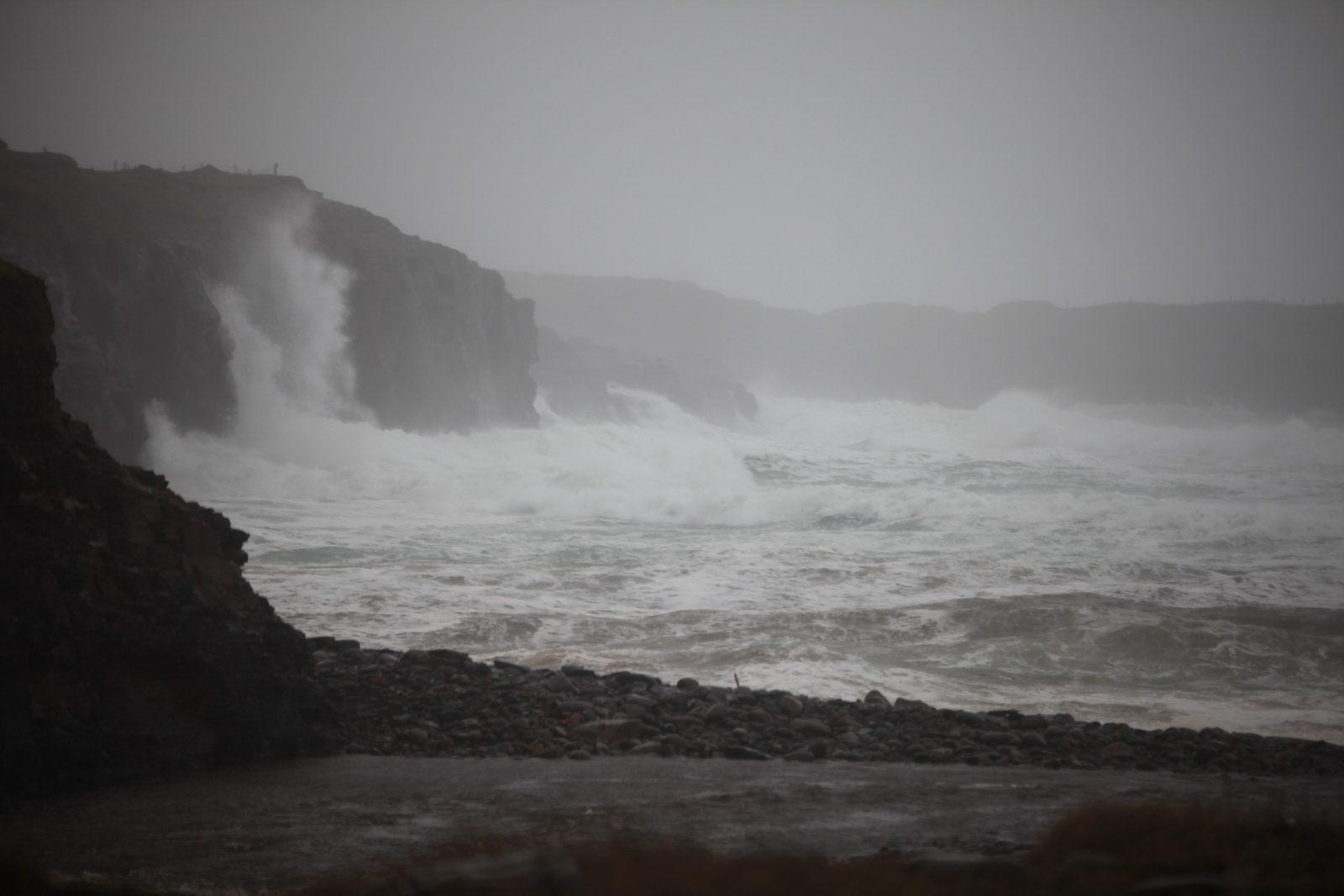
A stormy day near Spanish Point, Co Clare

9-IMG_3545

The last day at the old Brogan’s Pub in Ennis.

1-IMG_1046

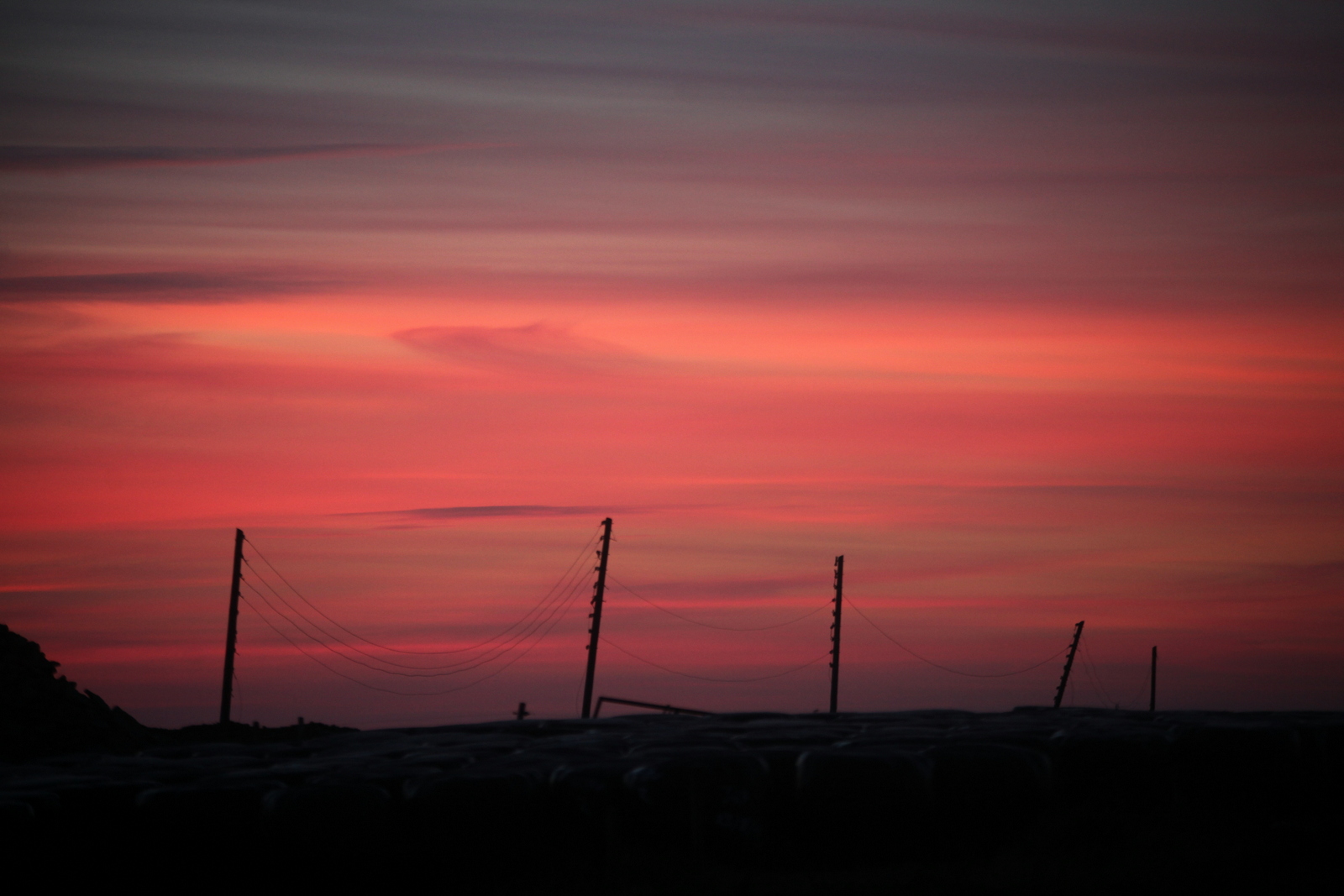
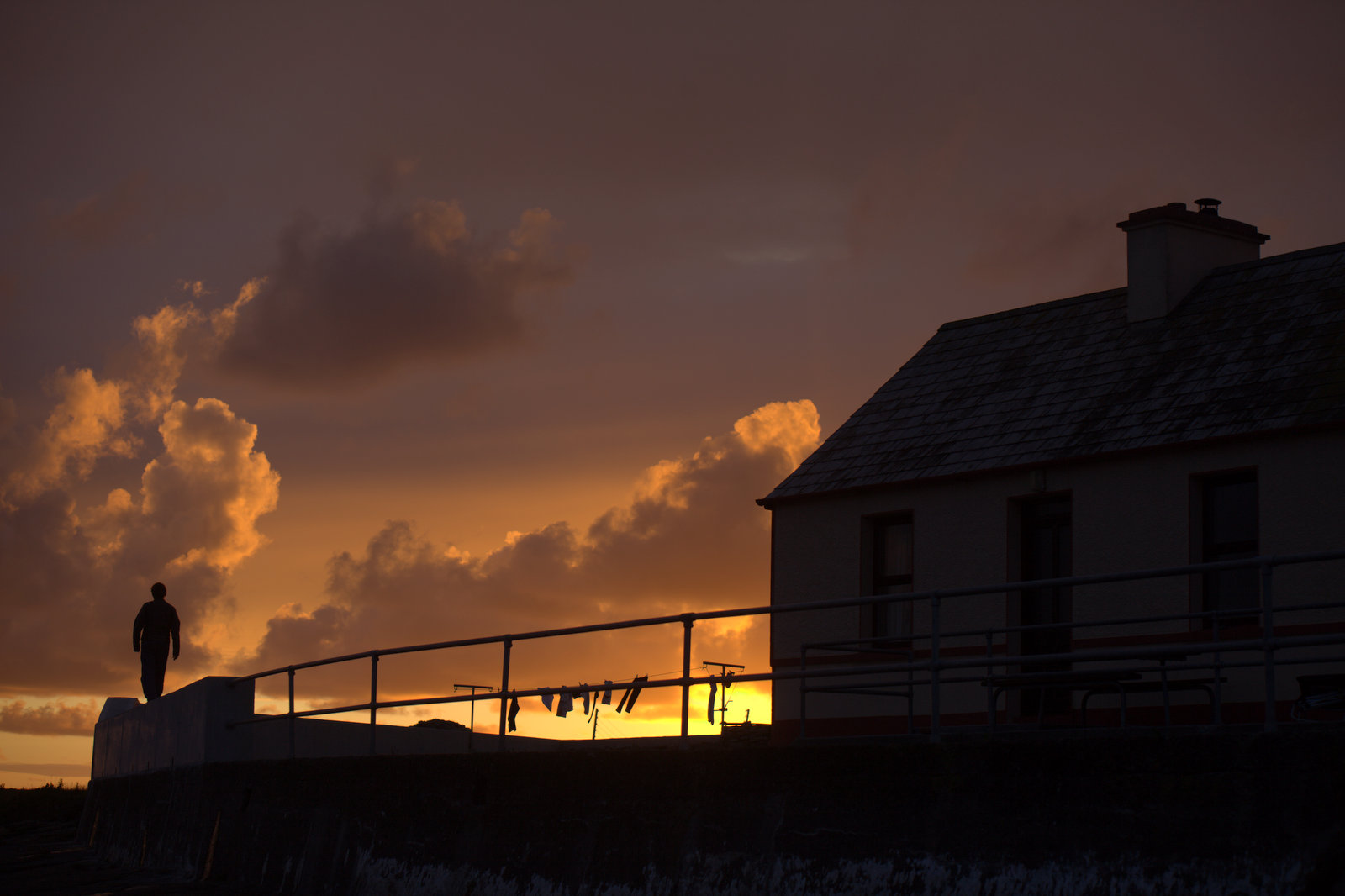
Sunset at Caherush, Co Clare

2-IMG_6408

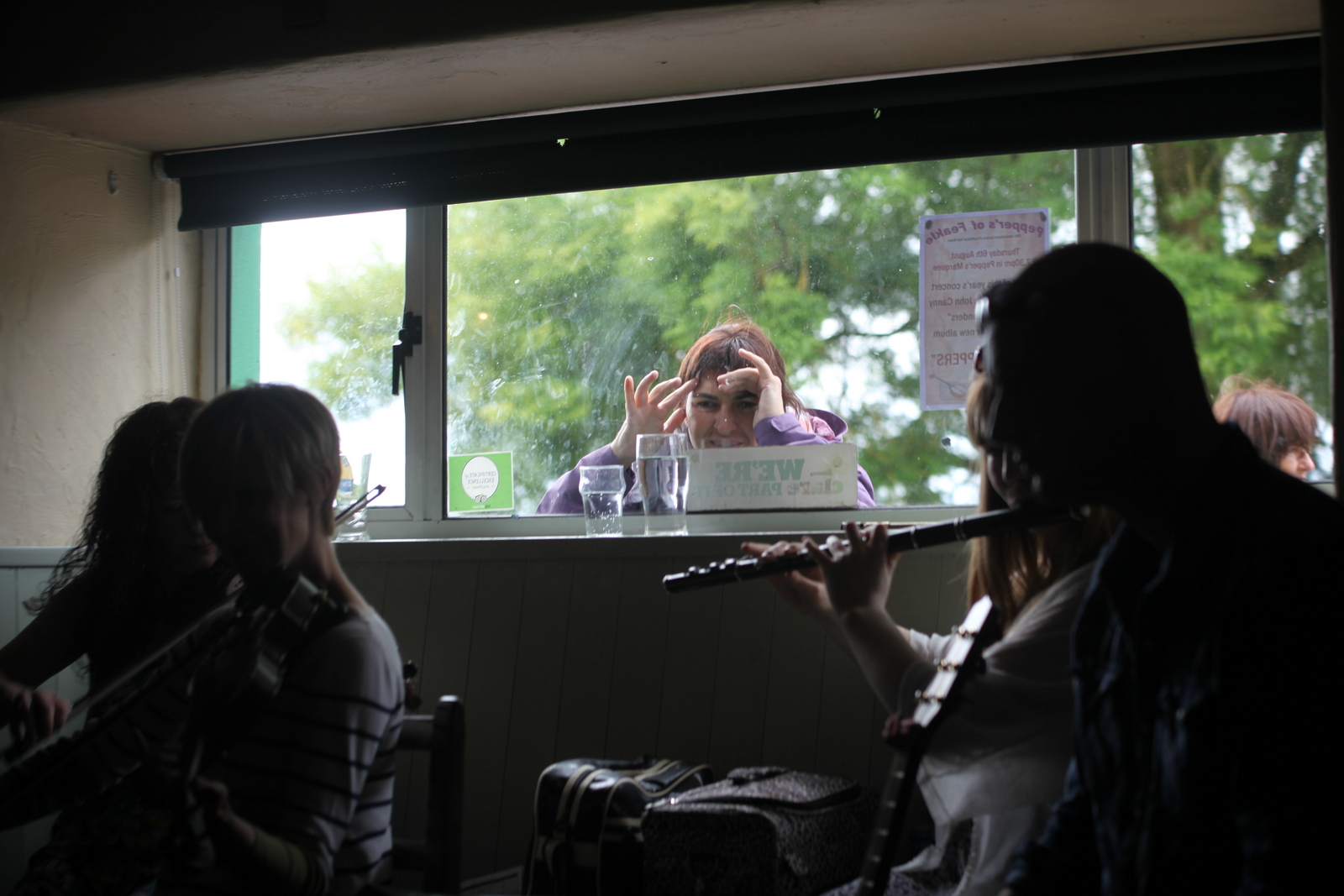
A peek into a session at Pepper’s Pub, Feakle, Co Clare

4-IMG_5954

My cottage in Clare

5-IMG_0336

Near Mullaghmore, Co Sligo

6-IMG_5579

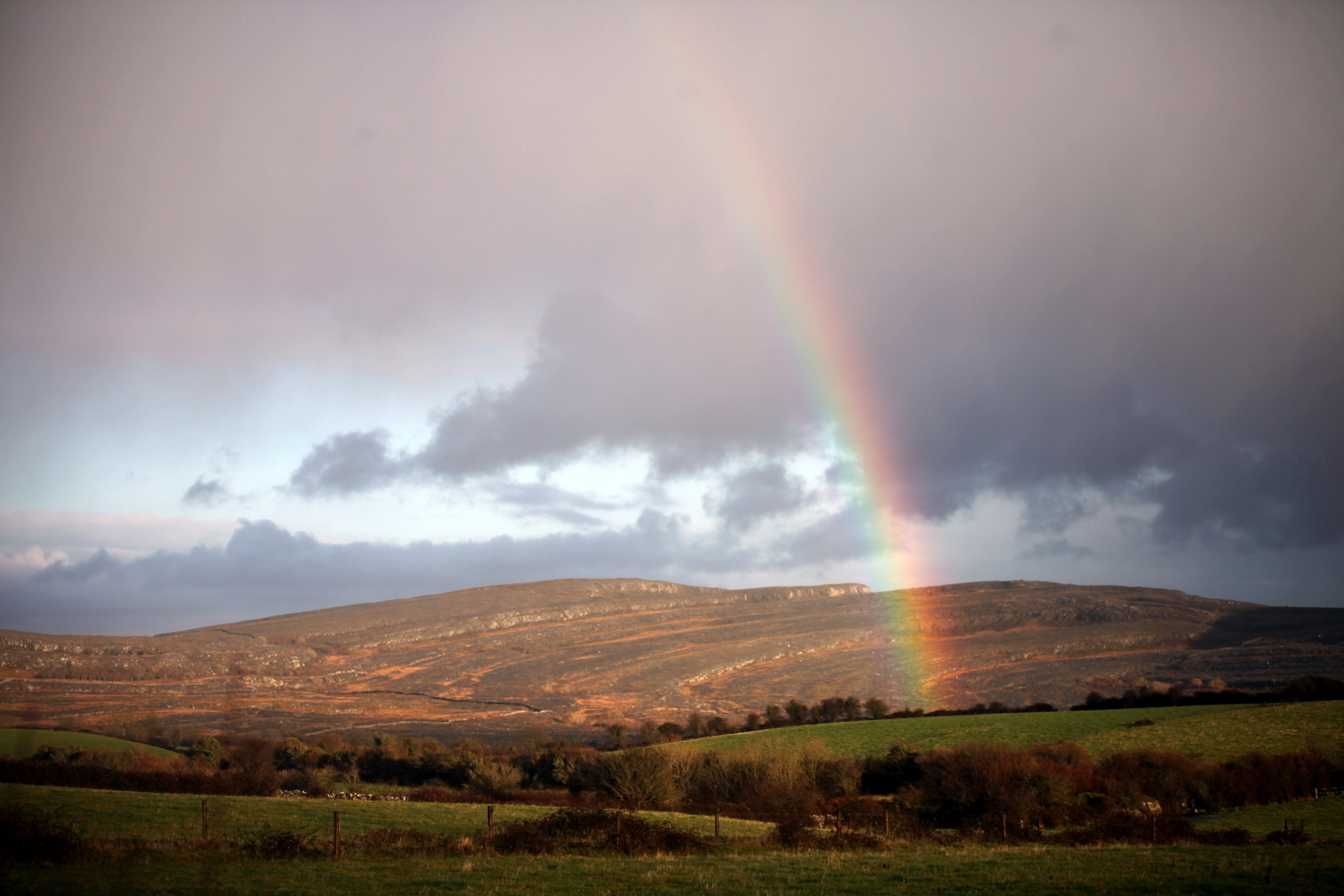
The Burren bathed in golden light

7-IMG_5387

The magical Mount Errigal, Co Donegal.

Categories: My Journey, Real Ireland | Tags: , , , , , , , , , , , , , , , , | 4 Comments

Irish Celebration. Music at the Heart of it.

Maybe I live in an unreal world but I went to two events in the past week which have highlighted for me the hugely important place traditional Irish music has at the centre of Irish culture and celebration.

One was a funeral and one was a birthday party.

For a birthday party fair enough, but you may think ‘celebration’ is a strange choice of word for a funeral.  Let me try and explain.

All of Ennis and the broader Clare and Irish Music communities were saddened by the untimely death of Dympna O’Sullivan.  A noted concertina player and stalwart of the Ennis music scene, I met her briefly and played in a couple of sessions with her last year.  You could not fail to like her and to be inspired by her playing.   I attended her funeral mass at Lissycasey on Sunday 22nd November.  I had not been to a Funeral in Ireland and, though I knew they were a big part of the Irish fabric, I was unsure what to expect.

What I saw when I arrived was a village choked with cars and the spacious church filled to capacity.  Family and friends included many musicians and many brought their instruments.    The traditional mass was interspersed with not-so-traditional traditional Irish Music.  And it made for a wonderful service at times moving and reverential and then stirring.  This brings me back to the ‘celebration’ word.  Yes it was truly a celebration of a wonderful joyous musical life and there was no incongruity in the long line of mourners queuing to pay respects to the relatives while friends and fellow musicians played spirited jigs and reels.  At least thirty musicians played in the packed church and their contribution made for a unique send off.  Later at the graveside a solo accordion player from the village played a haunting air which lingered in the cool crisp winter air.  I can’t think of a better way to remember a life.

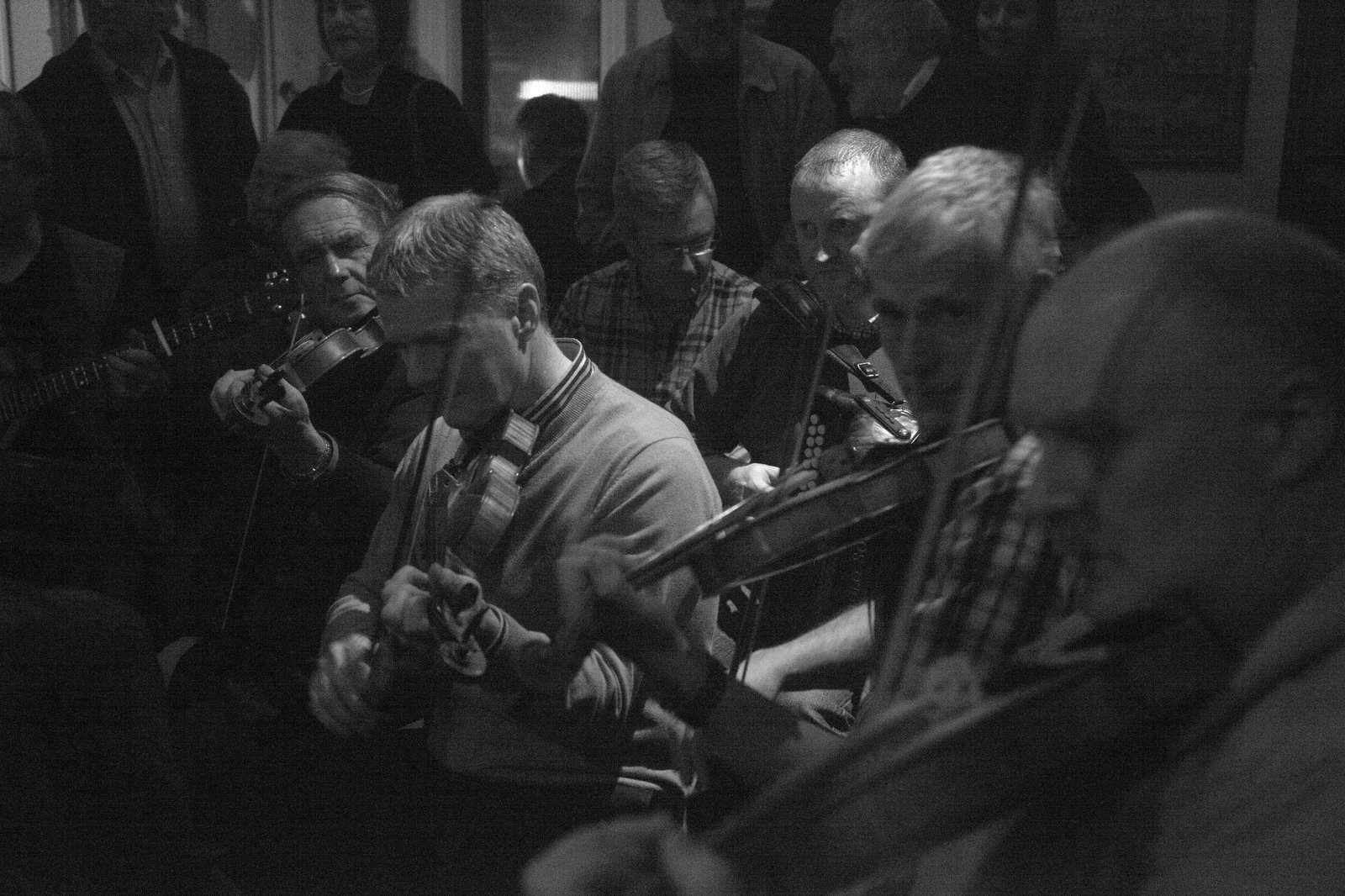
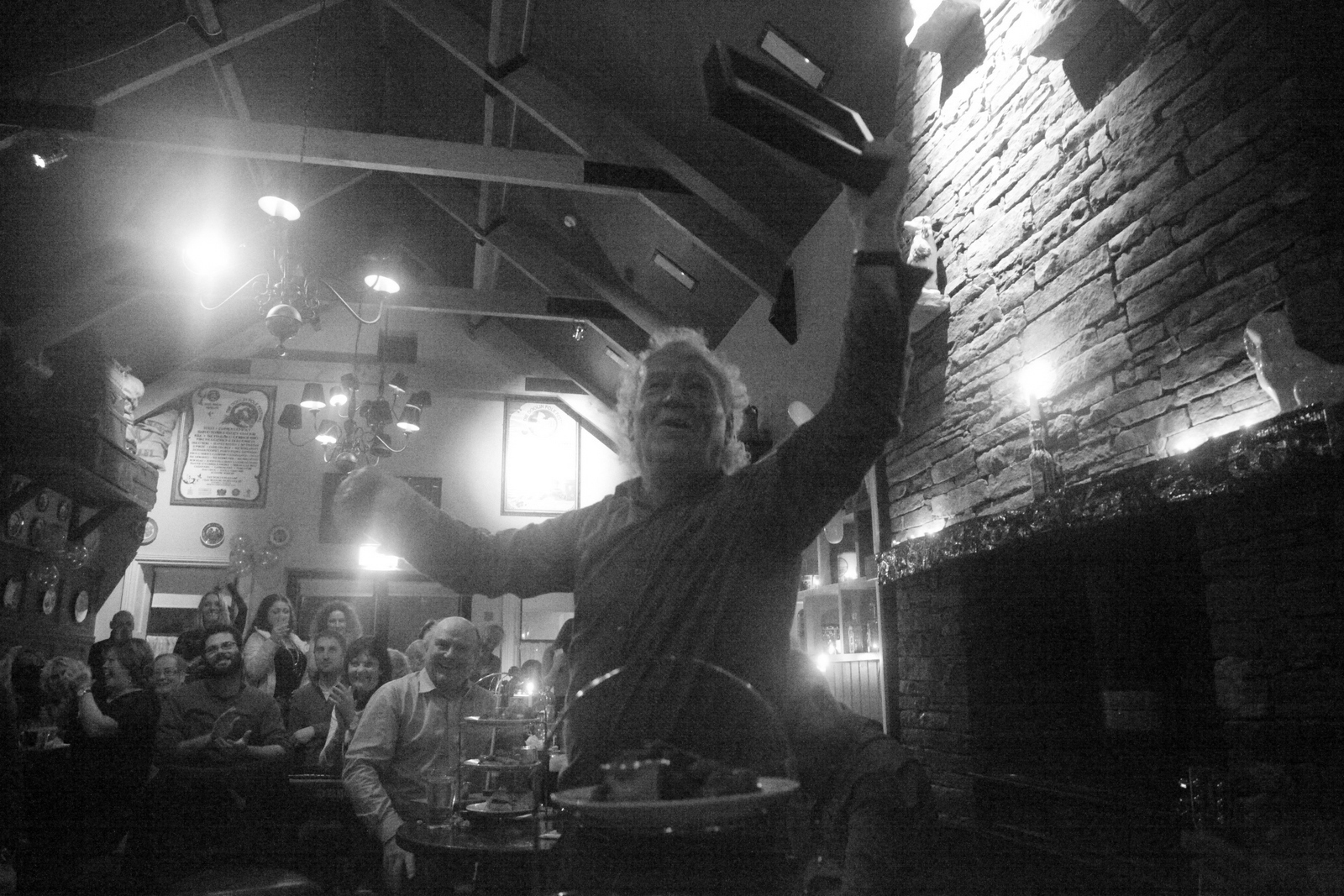
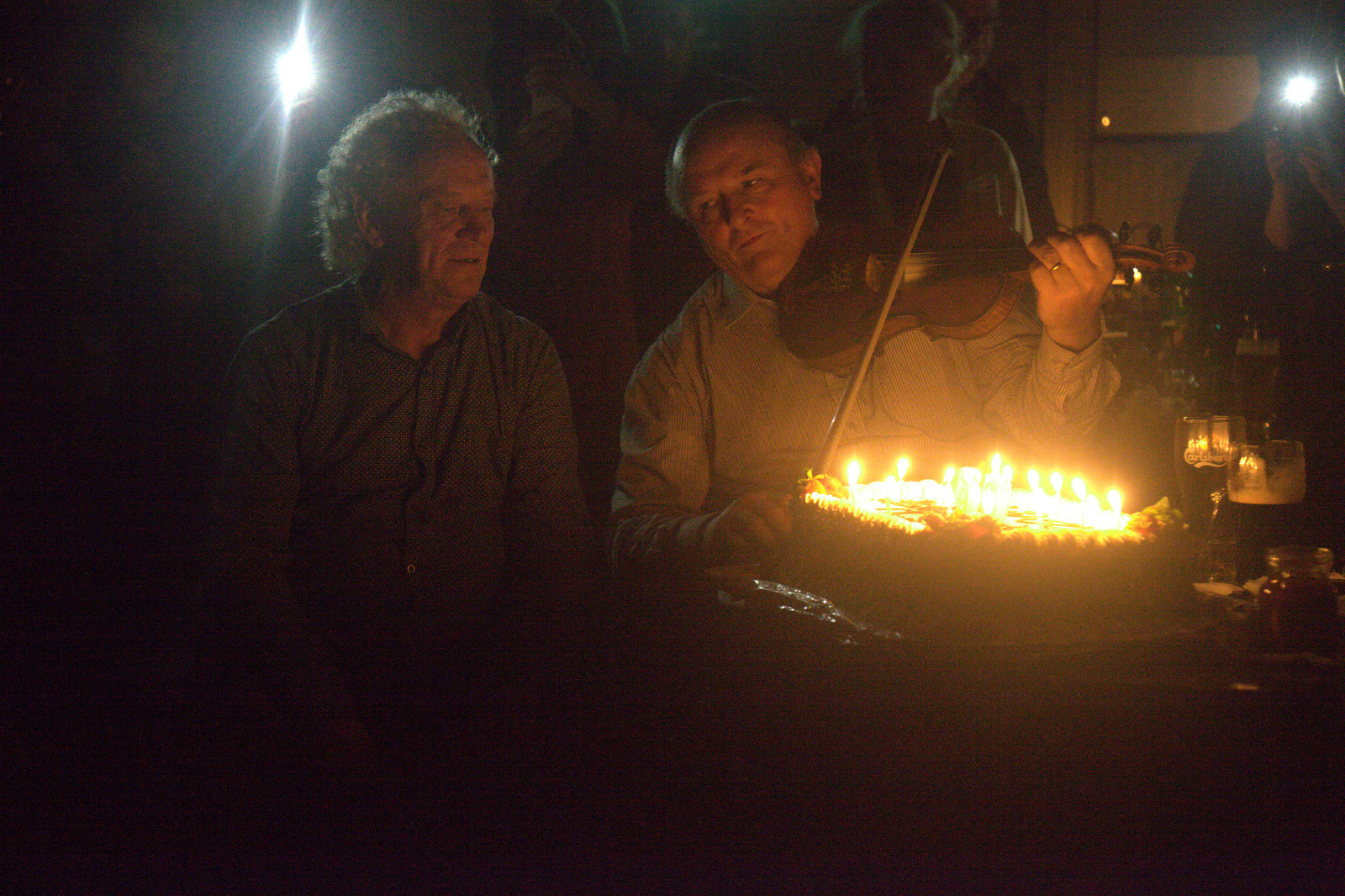
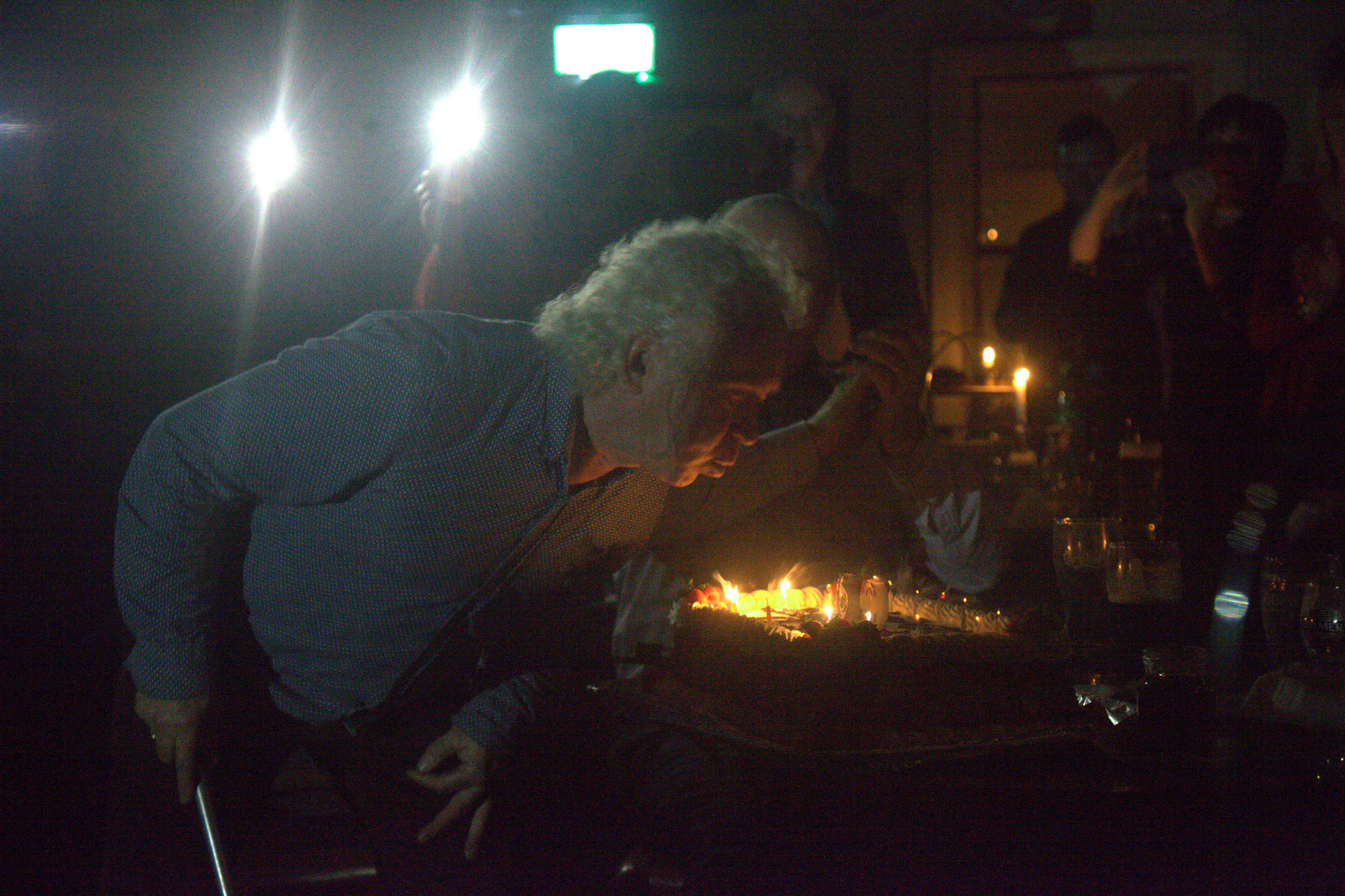
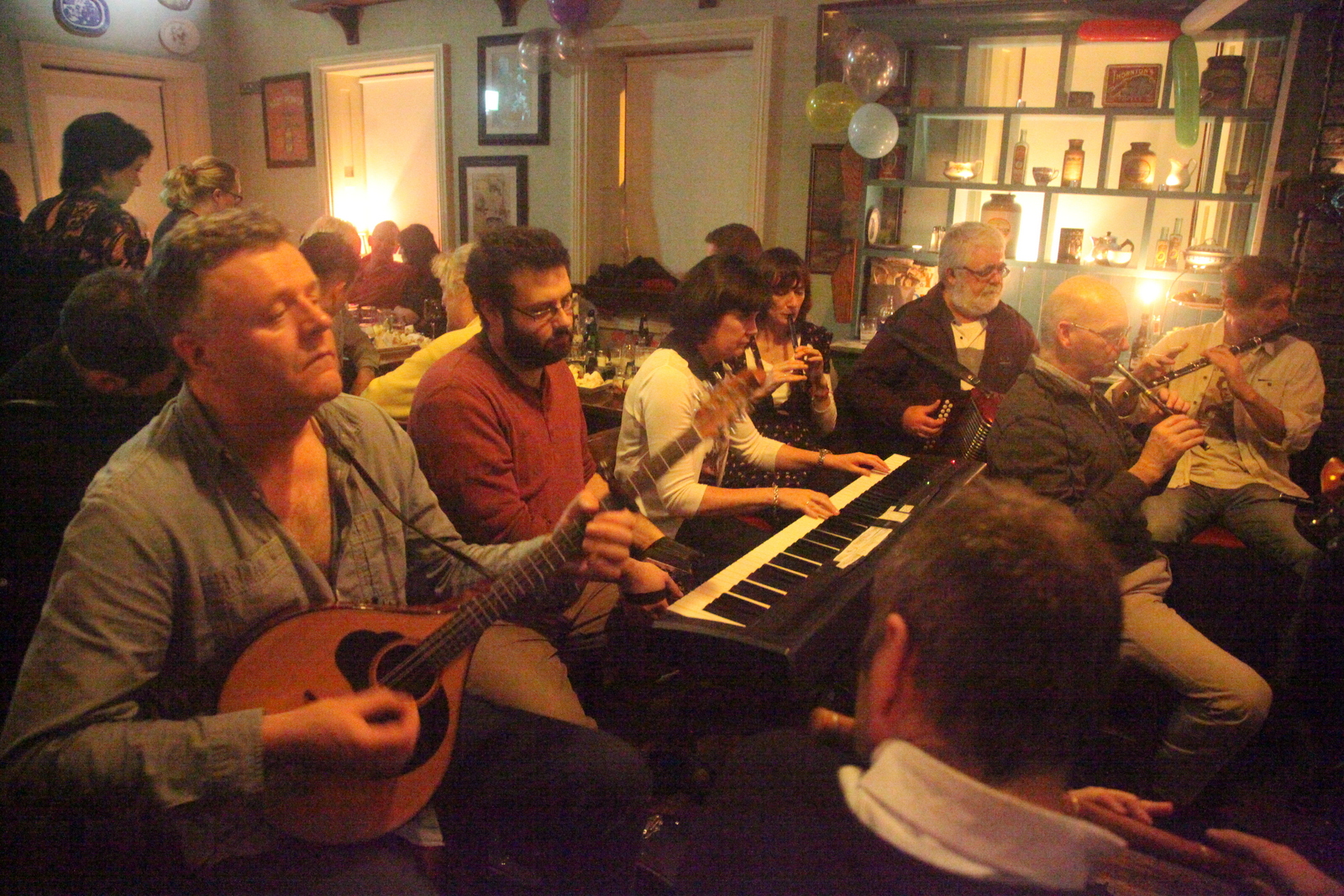
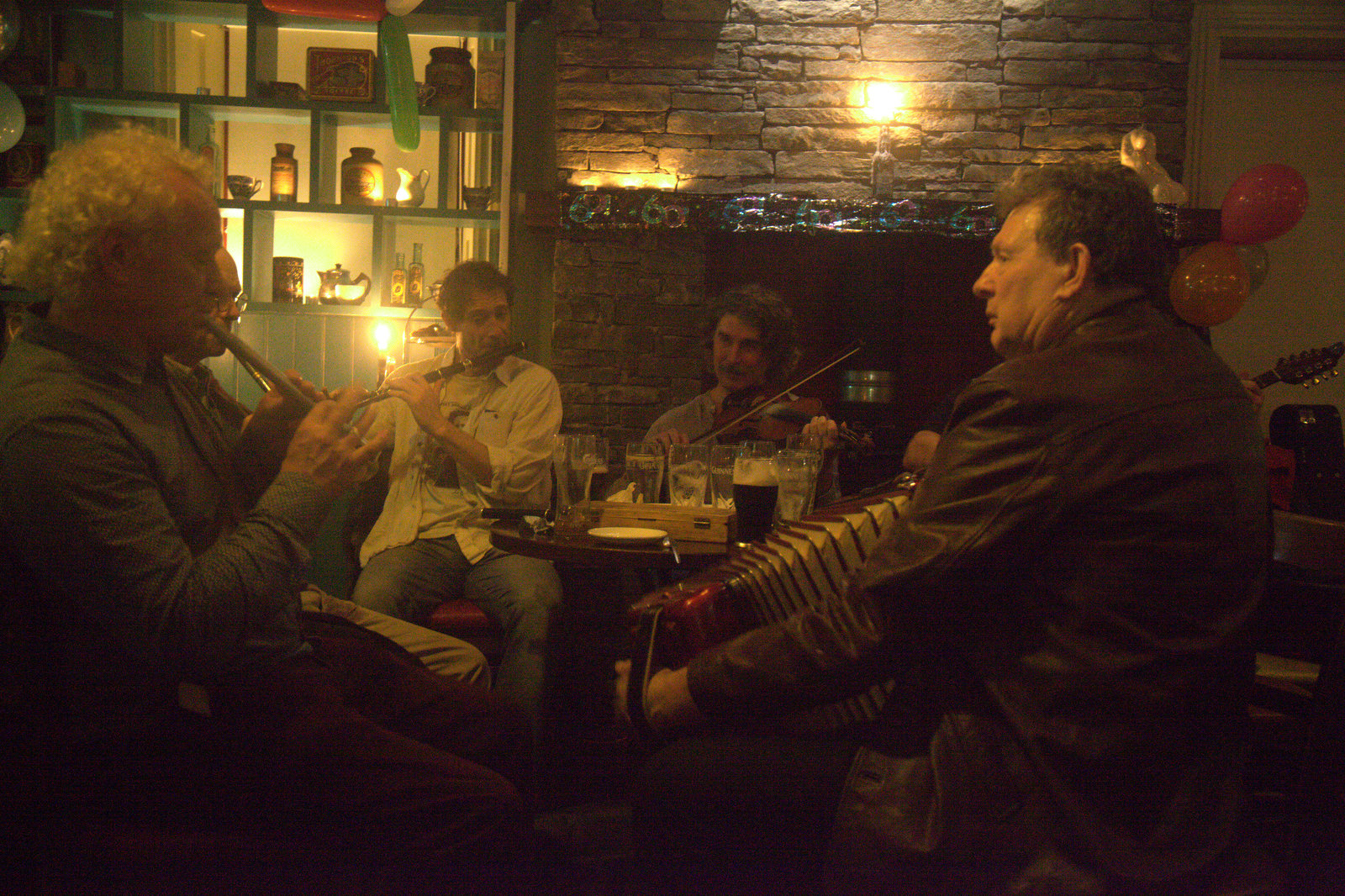
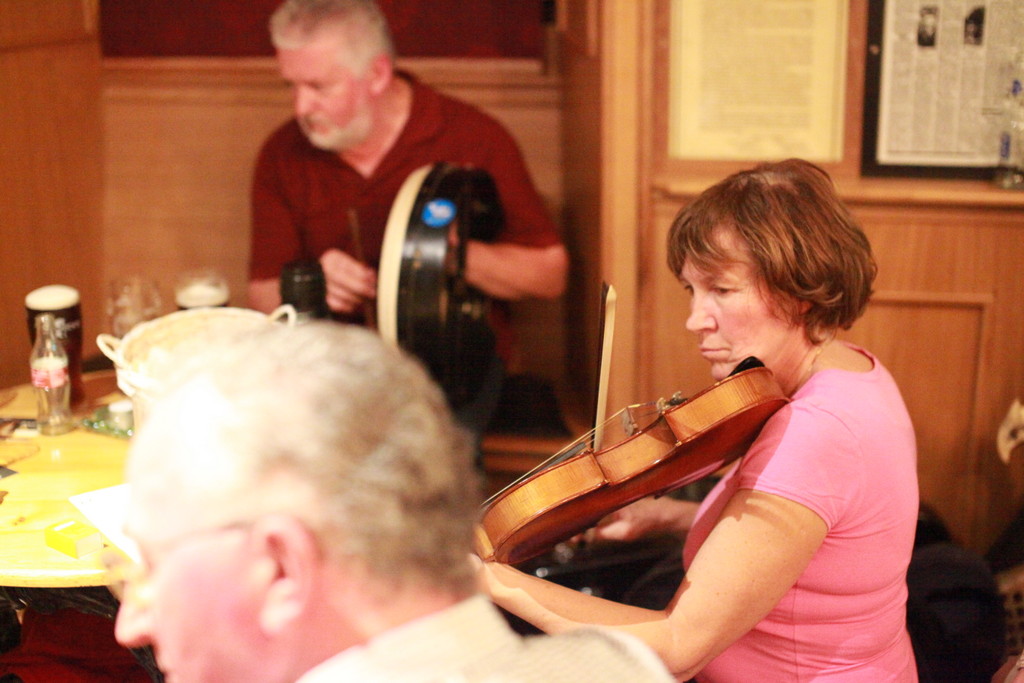
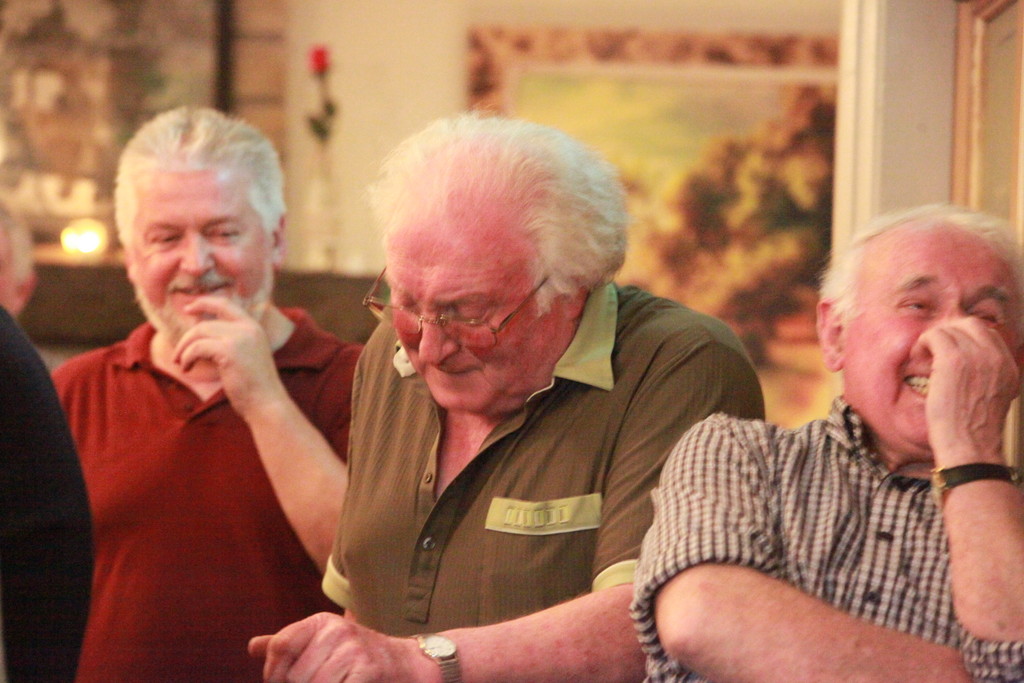
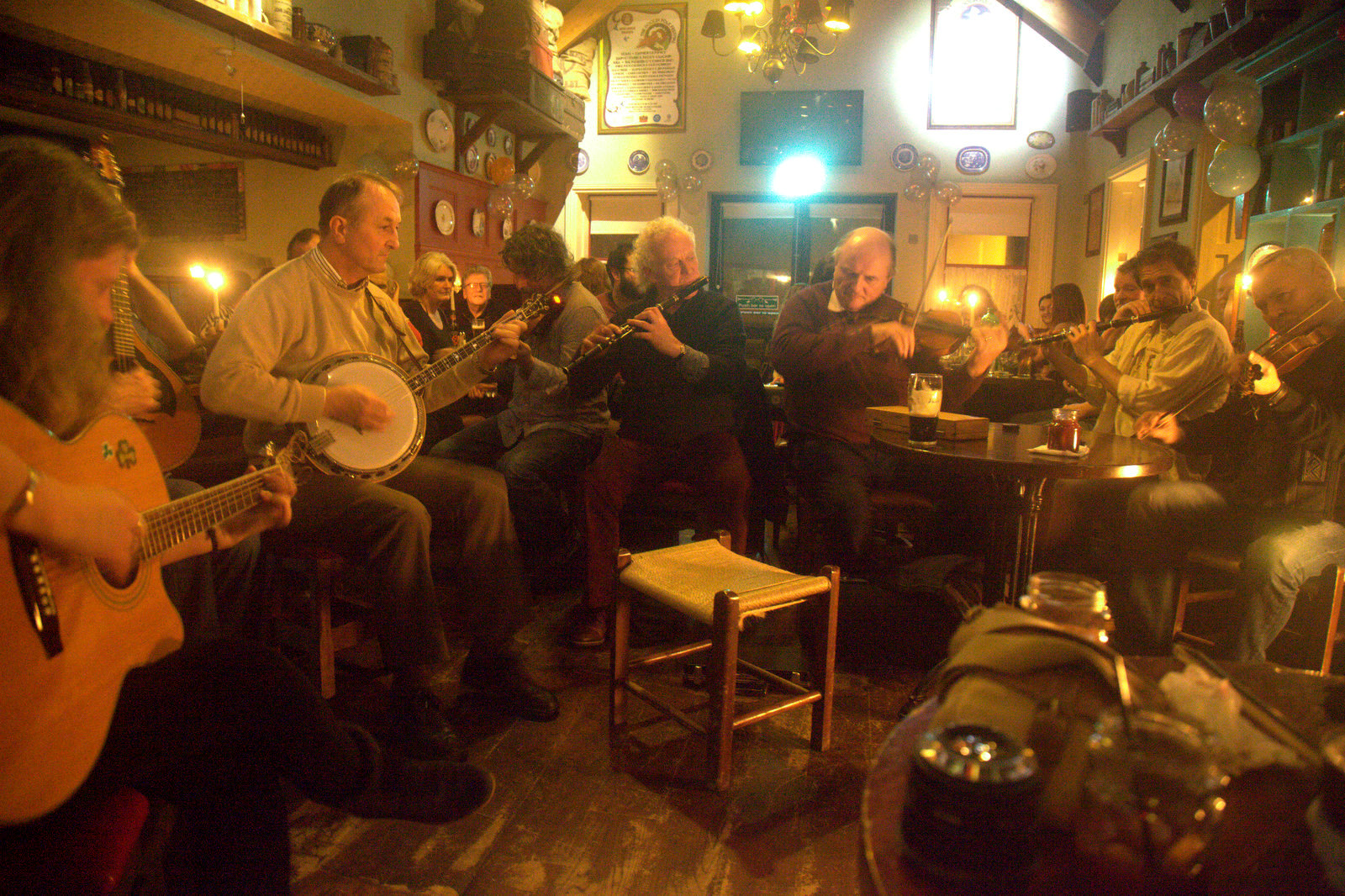
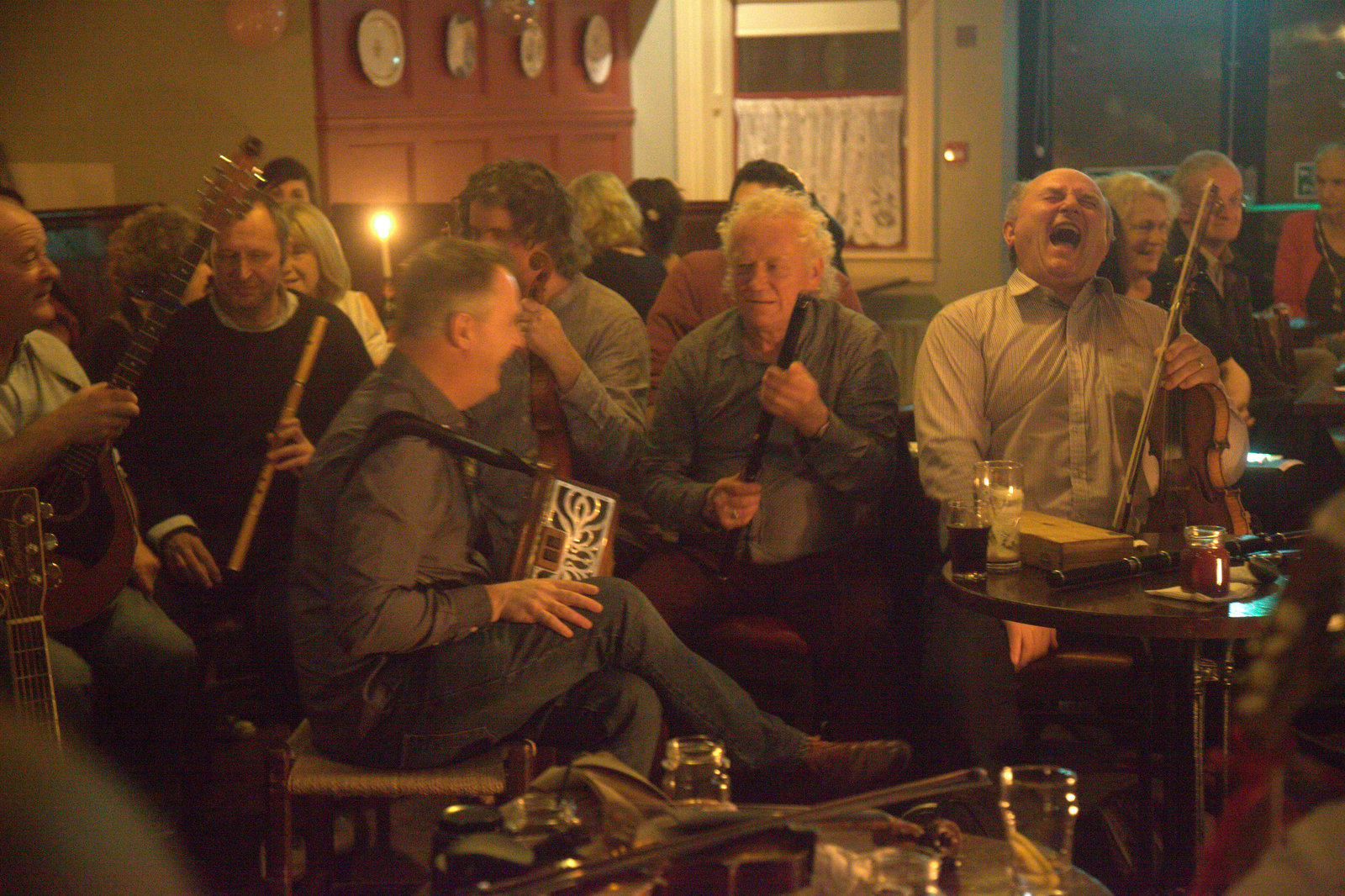
The other event was a 60th birthday party for Christy Barry.   Christy is one of Ireland’s most respected flute and whistle players.  He spent much of his life in the States but for some time has lived back home in County Clare.  His birthday party filled the function room in Fitz’s bar in the Hotel Doolin with family coming from all round the world.  This was more than a birthday party though. The gathering was an excuse for a mighty session.  The word was out and upwards of forty musician friends of Christy’s turned up.  The music continued with hardly a break from around 8 until I left at 1.30 am.  Christy was at the centre of it driving many of the sets whether he was on the flute, whistle or spoons. At the same time he found the time to welcome and embrace every new arrival.  The session ebbed and flowed as musicians came and went.  One minute Christy was leading a set with half a dozen whistles and flutes.  Then the fiddles took over, including James Cullinan, Joe Rynne, Michael Kelleher and Paul Dooley, and then there was a duet with Christy and John King and then there were forty musicians belting out Lucy Campbell.  There were songs interspersed and of course some impromptu dancing.  This was true craic.  Christy also formally received his delayed Lifetime Achievement Award from the Doolin Folk Festival to rousing applause.  A well-deserved accolade.

As I said Irish music was at the centre of both events.  This was not a pub session or a concert  or something laid on for the tourists but this was real; an integral part of life and living.

I really don’t have the words this time to explain the connection adequately.  Maybe these photos from Fitz’s will help.  But you have to experience it to understand.


01-01-IMG_5243 02-03-IMG_5253 03-05-IMG_5272 04-08-IMG_5281 05-06-IMG_5274 06-10-IMG_5295 07-11-IMG_5311 08-14-IMG_5333 09-16-IMG_5339 10-15-IMG_5361 11-17-IMG_5364 12-19-IMG_5382 13-21-IMG_5401 14-23-IMG_5479 15-24-IMG_5499 16-25-IMG_5513 17-26-IMG_5528 18-28-IMG_5544


Categories: My Journey, Real Ireland, Stories, Trad Irish Music | Tags: , , , , , , , , , , , , , , , , , | 1 Comment

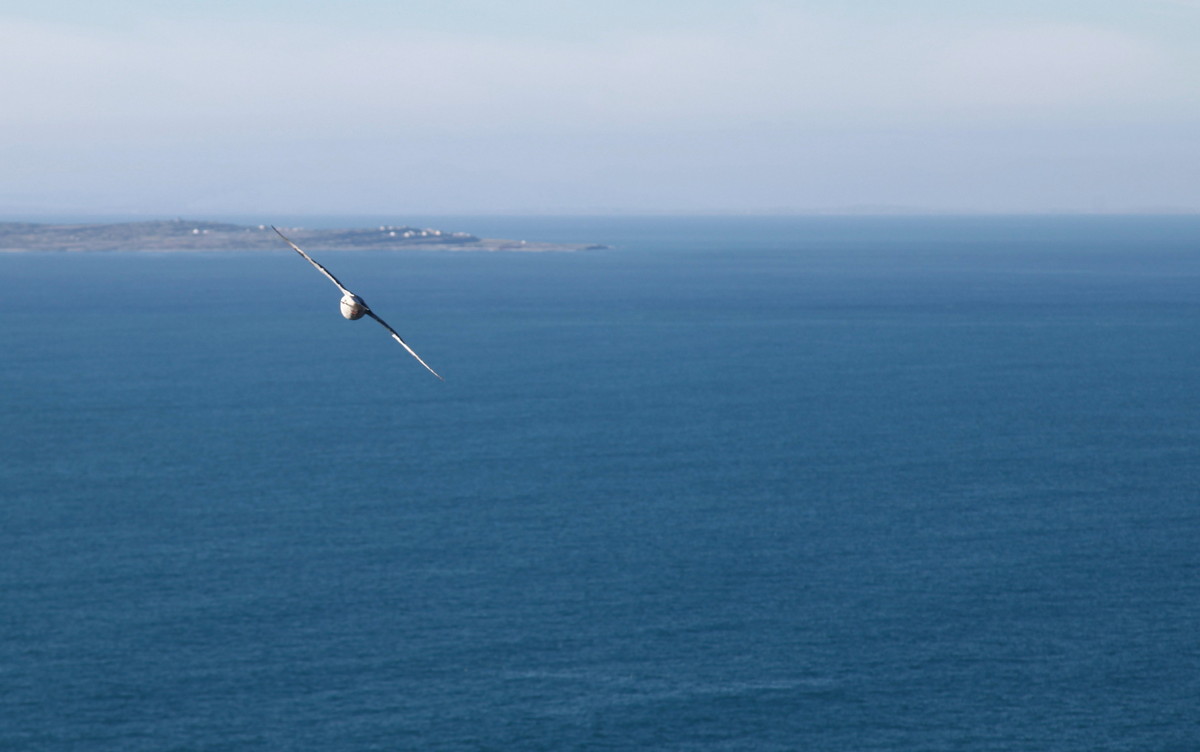
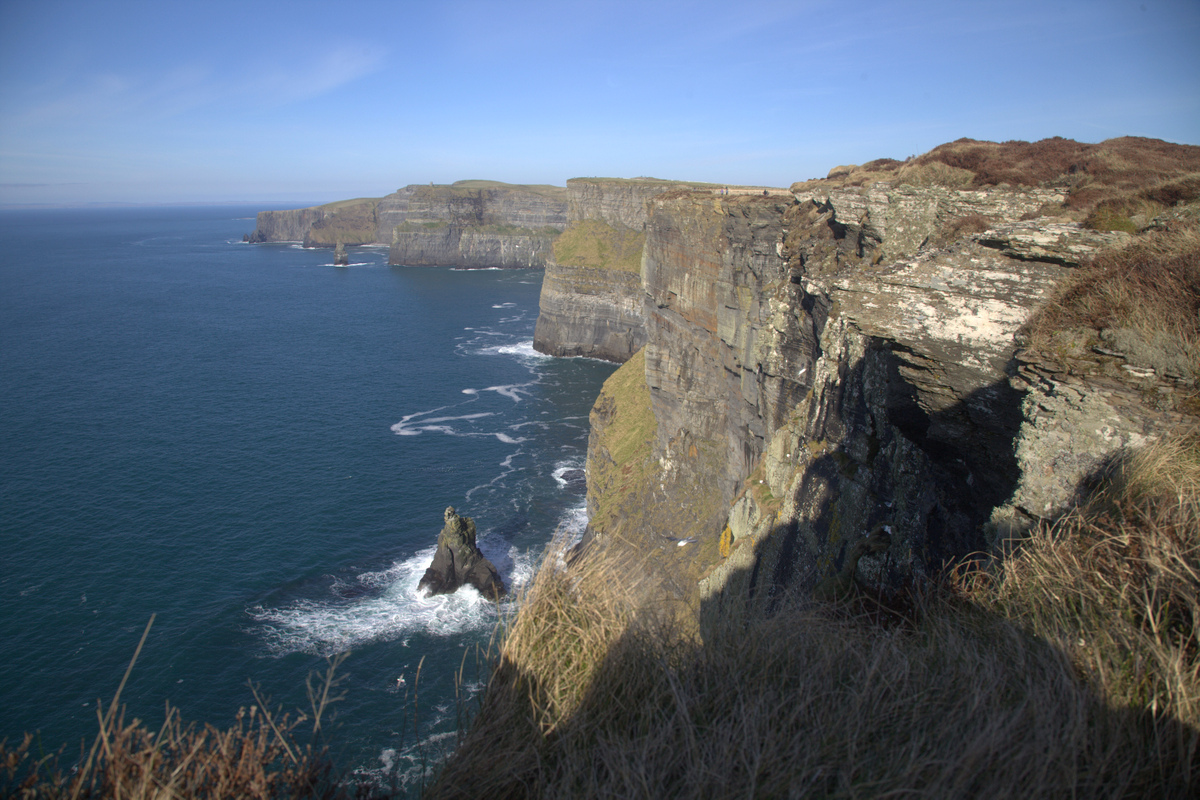
The Cliff Walk. Cliffs of Moher

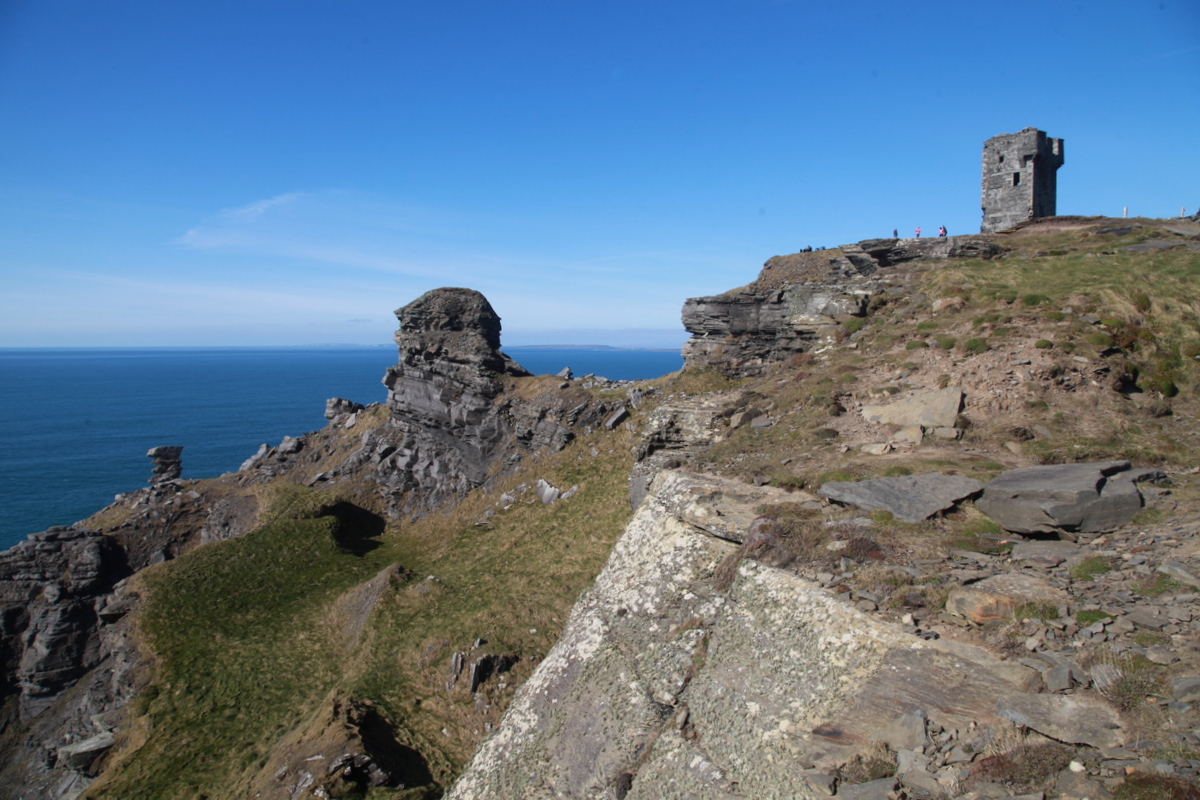
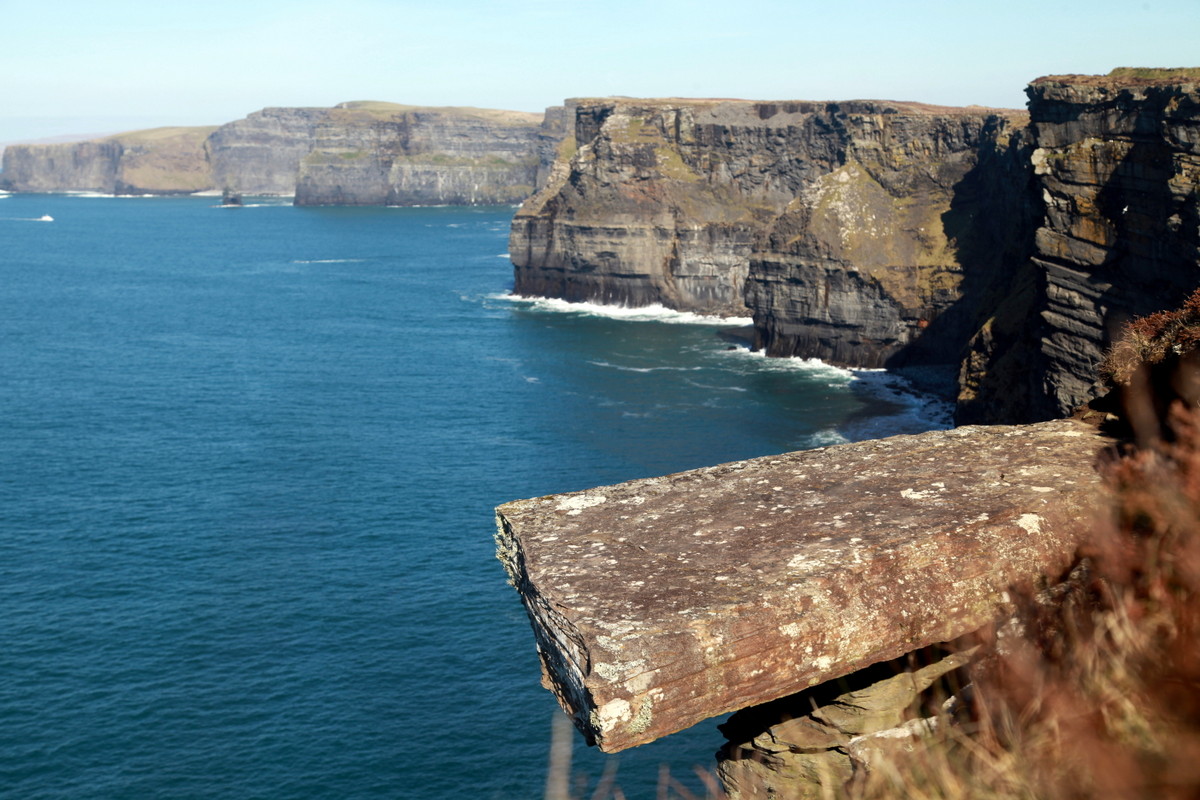
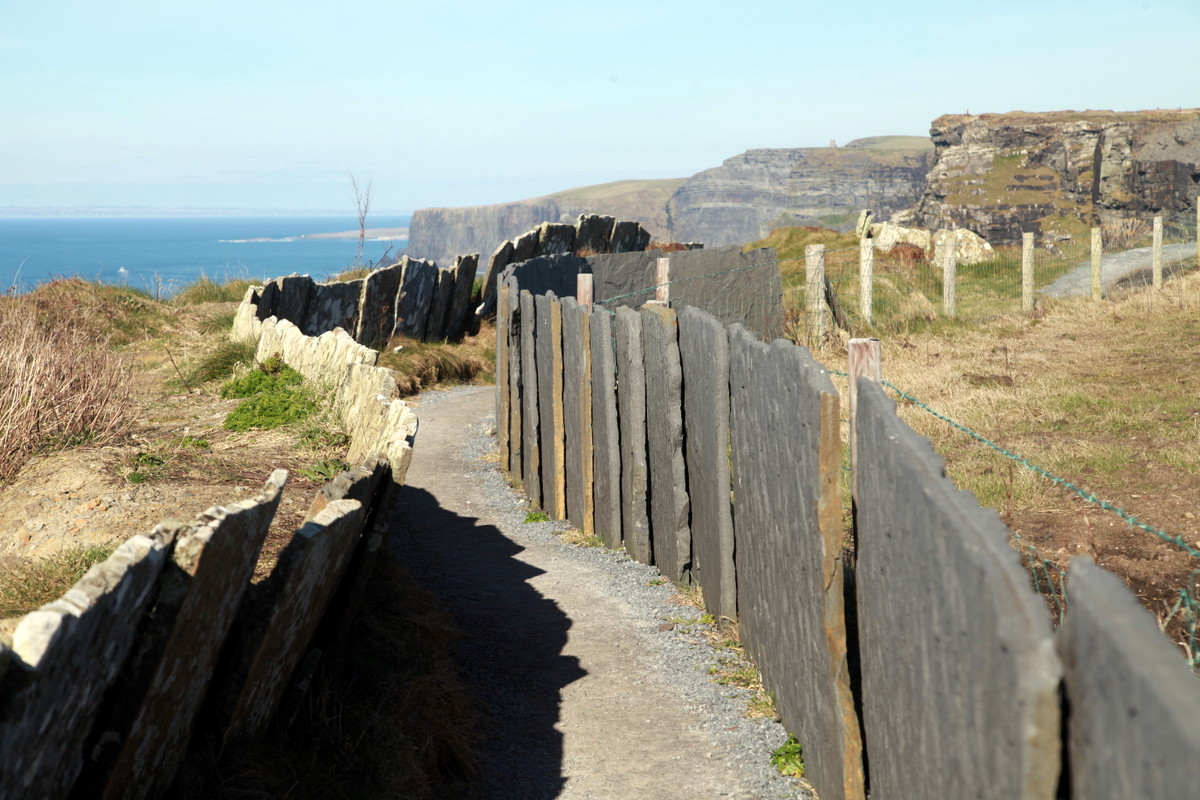
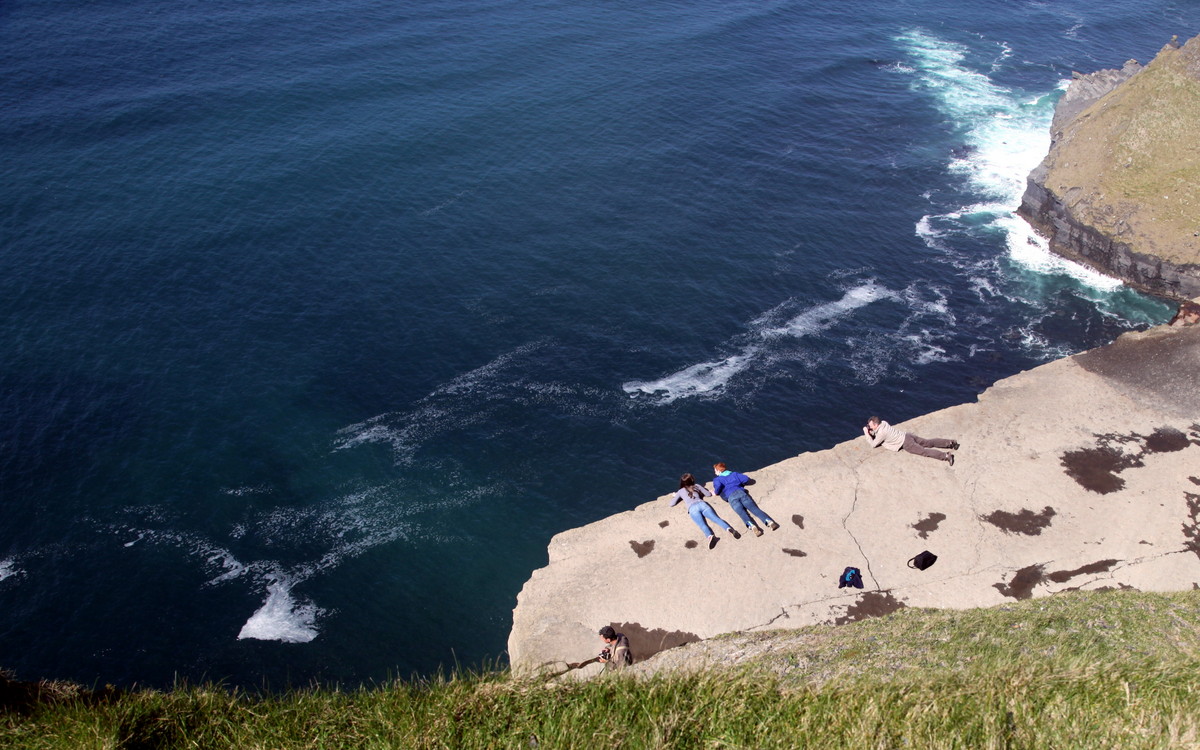
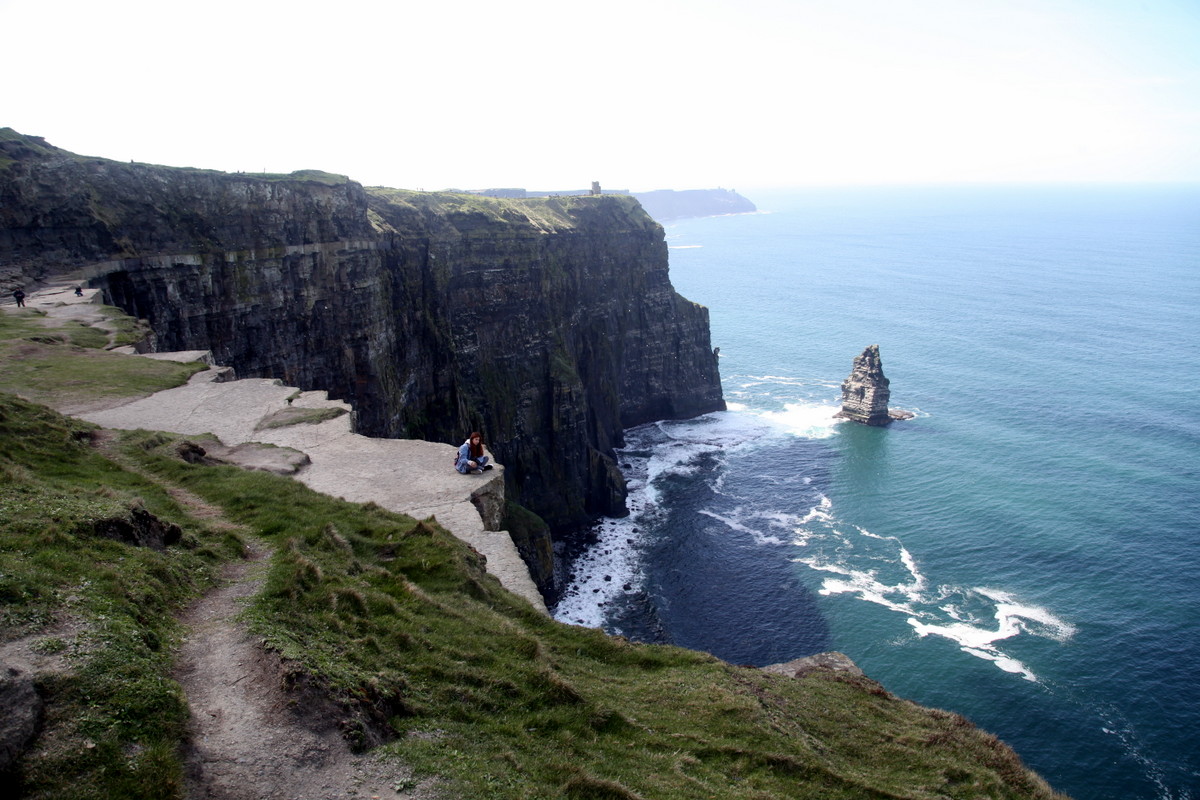
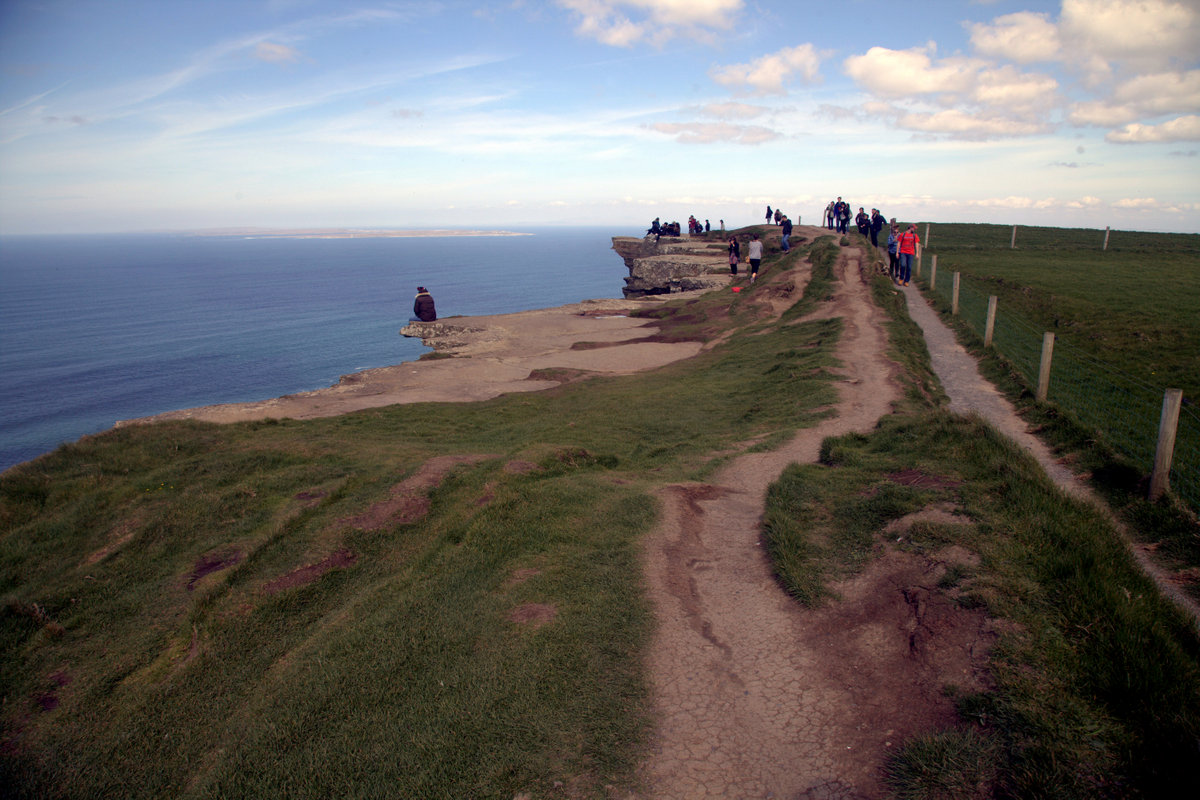
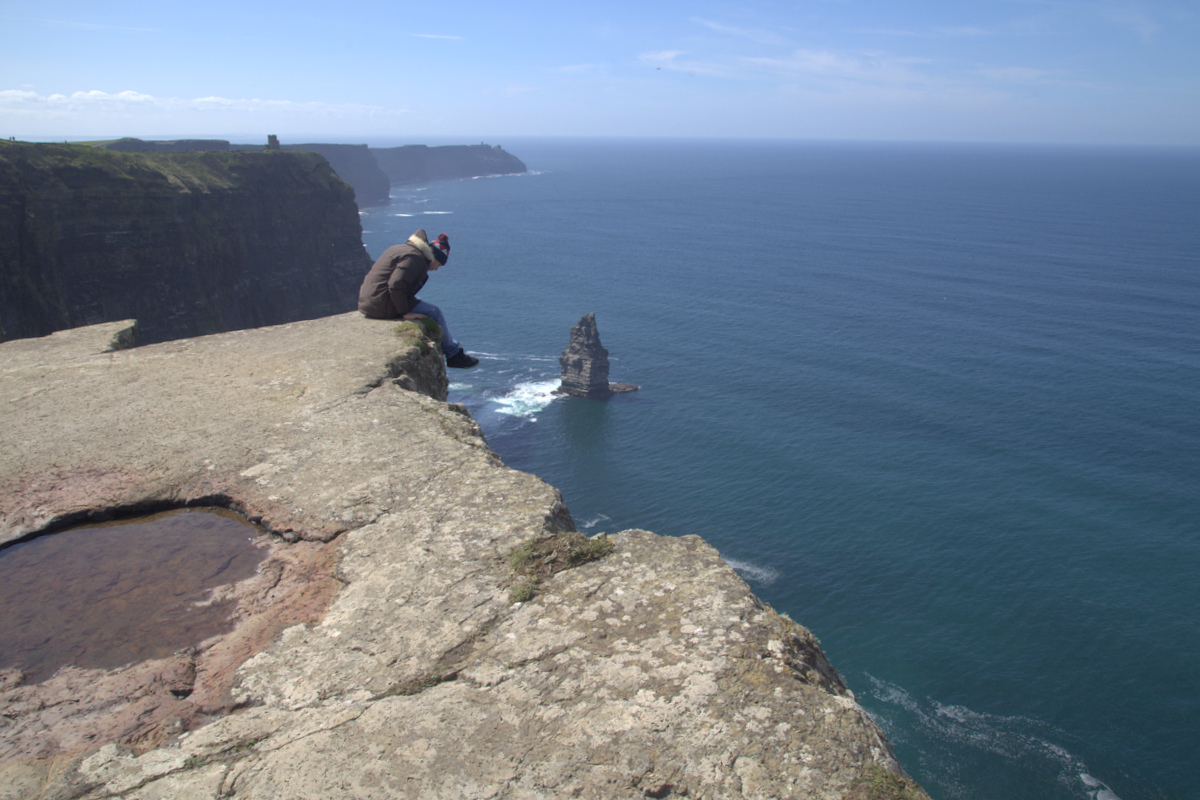
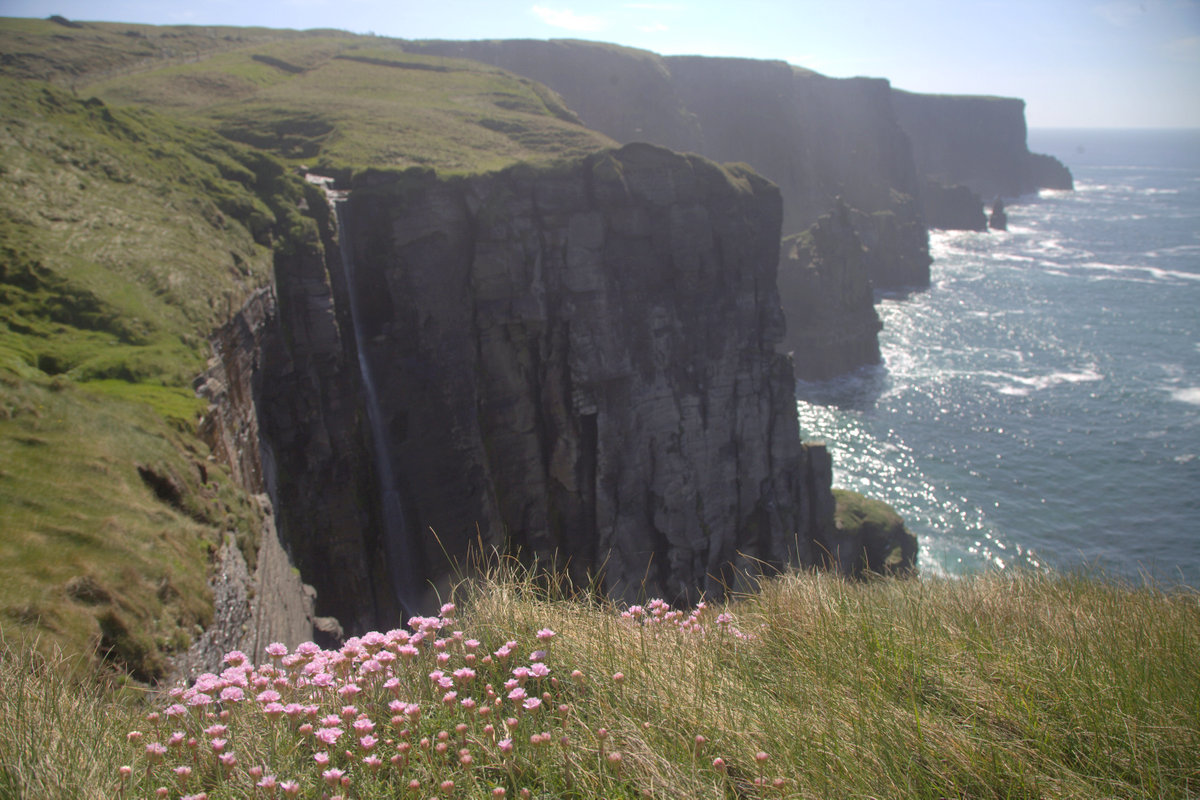
On two separate days in March and April 2015 I completed the Moher Cliff Walk. There and back was too much for one day so I did the southern half (Liscannor to the Visitor’s Centre and back) (12km) on 22nd March and the northern half  one way from the Visitor’s Centre to Doolin (8km) on 16th April. On both days we were blessed with glorious sunshine. Considering how many people visit the Cliffs – it was surprisingly quiet and you could go for kilometres without seeing anyone once you were away from the Visitors Centre.

They scare a lot of people away I think with descriptions on their web site such as “a remote, challenging and demanding trail with no barriers, handrails or seaward fencing”; “exposed cliff top path, steep ascents and descents and narrow and/or steep flagstone steps” and “The trail is suitable only for experienced walkers with a reasonable fitness level”

Hell. It really wasn’t that bad as I managed it easily, though I was totally exhausted at the end of both days.

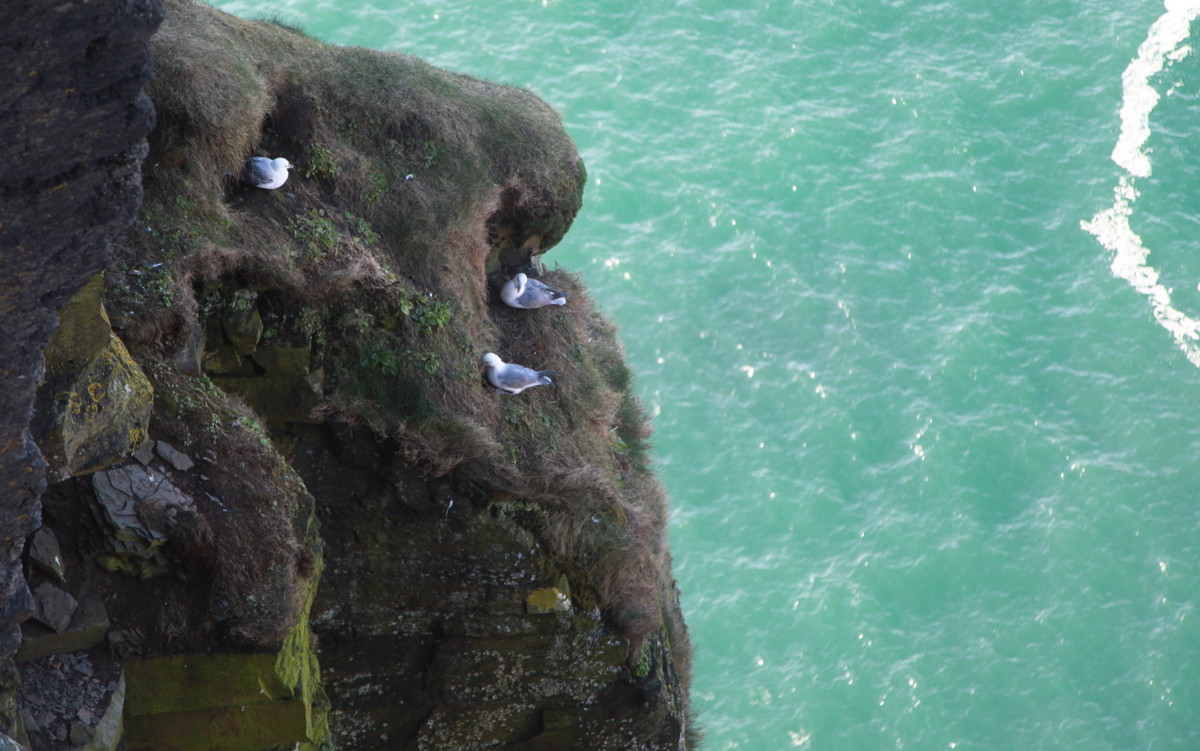
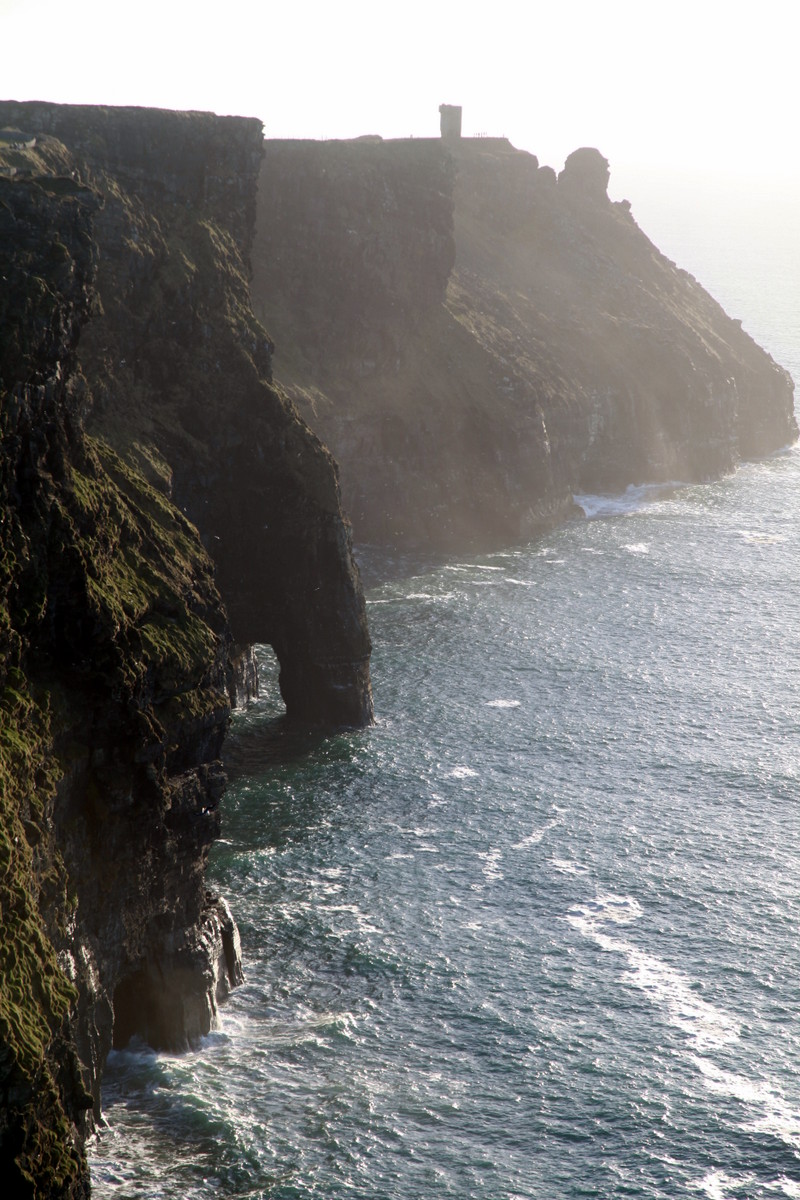
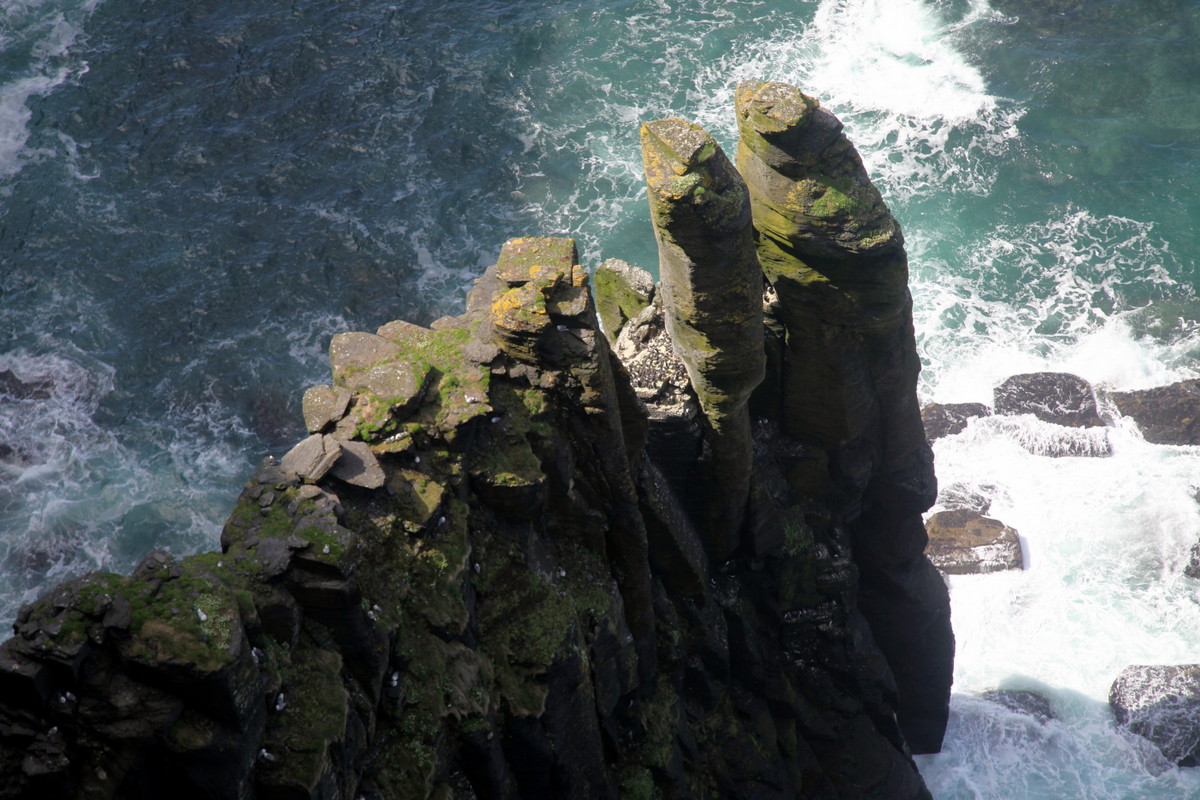
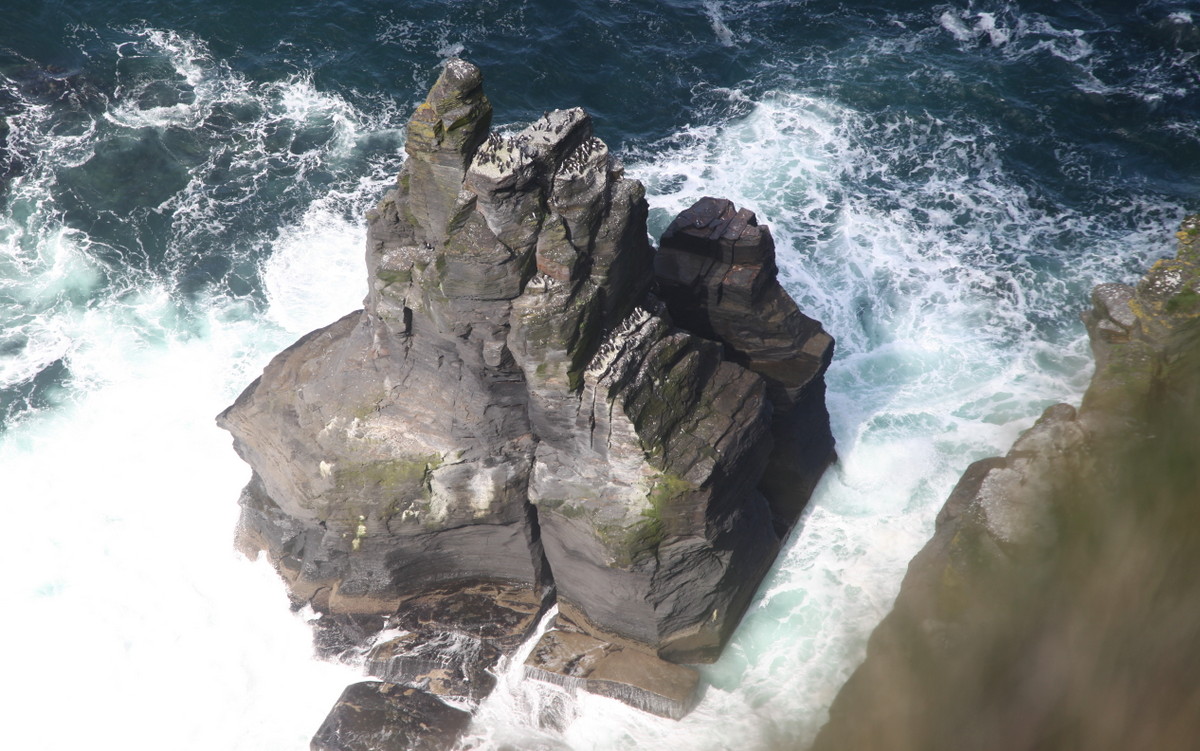
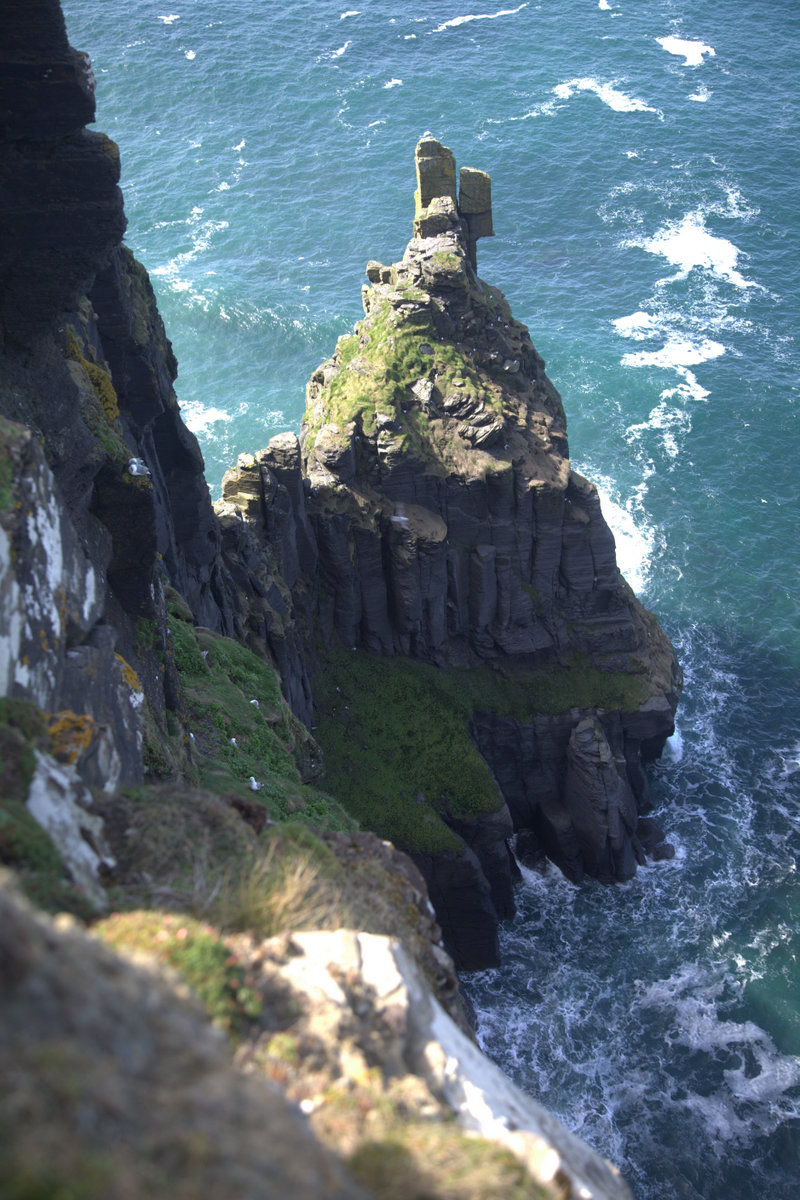
There is not really much to say as it has to be experienced. It is breathtaking. If you can’t get there soon I have taken some photos to whet the appetite.

By the way if you walk it you should hang around until the sun sets. The cliffs change colour from the dull grey/purple of daytime to fiery reds and oranges to match the sky.

IMG_0212 IMG_0273 IMG_0285 IMG_0305 IMG_0323 IMG_0372 IMG_0381 IMG_0493 IMG_0514 IMG_0539-001 IMG_0555 IMG_0566 IMG_0576 IMG_0582 IMG_0599 IMG_0698 IMG_0736 IMG_0756 IMG_0762 IMG_0851-001 IMG_0969-001 IMG_1023 IMG_1026 IMG_1111-001 IMG_1181 IMG_4343 IMG_4345 IMG_4354 IMG_4362 IMG_4390 IMG_4415 IMG_4440 IMG_4455 IMG_4461 IMG_4469 IMG_4473 IMG_4538 IMG_4583 IMG_4595 IMG_4612 IMG_4618 IMG_4625 IMG_4665 IMG_4682 IMG_4685 IMG_4761 IMG_4894 IMG_4927 IMG_4928 IMG_4947 IMG_4957

Categories: My Journey, Wild Ireland | Tags: , , , , , , , , | 1 Comment

Off to Offaly. What’s it Offer Me?

The Midlands of Ireland gets a bad rap. It comprises the counties of Laois, Longford, Offaly and Westmeath. Major towns are Athlone, Mullingar and Tullamore.  The whole Midlands is unfairly seen as a cultural backwater, dreary and nothing but boring bog land.  Author and Irish Times columnist Michael Viney has described the Midlands as “a wearily protracted obstacle between Dublin and the west … a slow ticking-off of dull little towns on a lot of flattish land drained by sluggish rivers”.

At the invitation of a friend, Christina,  who owns a B&B in Kinnitty,  Co. Offaly.  I spent a few days seeing for myself.

And I say this characterisation is unfair. Yes there is plenty of bog land but in my four days, mainly in Offaly,  I found music every night, discovered the Slieve Bloom Mountains, enjoyed a fine meal at Castle Kinnitty, absorbed the Georgian architecture in Birr and walked through a sculpture park in Lough Boora. I met plenty of lovely people as I have everywhere in Ireland.  Offaly had plenty to offer me!

I stayed at beautiful Ardmore House.  This elegant grand house, now a B&B, was built in 1840 by the Bernards who lived in the nearby Kinnity Castle. More on that later.  It was used as a doctors’ surgery and residence until the 1970s.  It had various owners after that and was bought in a run-down state over 20 years ago by Christina who has restored it in a  labour of love.  Set in lovely formal grounds and with huge bedrooms fitted with period furniture.  There is a wonderful ambience about the place and views from every window over the rolling hills on the edge of town and beyond to the Slieve Blooms.   http://www.kinnitty.com/about.html.
This was my base from which to explore Offaly. And I didn’t have to go far.  Across the road near the Church is a stone pyramid, a mausoleum for members of the Bernard Family.  It was built in 1834 and houses the remains of six people including one bitten by a rabid dog.  The stone work is wonderful with blocks laid at an angle to get the pyramid shape.  The  mortar pattern is etched through the steel door which gives a great senses of unity.  The last internment was in 1905.
Ardmore House, Kinnity

Ardmore House, Kinnity

Elegant Georgian architecture.  Ardmore House, Kinnity

Elegant Georgian architecture. Ardmore House, Kinnity

Bernard's Pyramid, Kinnitty.

Bernard’s Pyramid, Kinnitty.

Bernard's Pyramid, Kinnitty

Bernard’s Pyramid, Kinnitty

Anyway I digress. The main reason I came of course was to play music.  Wednesday nights sees a regular session in this part of the county.  It is led by the talented Kinsella family and rotates between four pubs in surrounding villages.  This night saw the music at Bergin’s at Killoyn (pronunced ‘Killine’).  Other nights are at the Slieve Bloom in Kinnitty, Burton’s at Ballybritt and Dempsey’s at Cadamstown.

This is one of those sessions that exists soley for the community.  The pub was packed with regulars who were there just for the music. If there are tourists then they either come by accident or they are directed here by their hosts.  I am told that on other nights this pub is nearly empty.  This is a clear sign that the music is strong here and that people are into it.  While the quality of the music may be better in Clare you can’t argue with the enthusiastic way it is played and the reception it receives.   There were about fifteen musicians of all ages but as the night wore on many more singers were coaxed from the crowd. The tunes were well led by gifted box player Padraig Kinsella, and members of his family.  It is worth commenting here that the perception that Offaly is a backwater is belied by its successes in the All Ireland Fleadhs.  Players from Offaly including Padraig have won the All Ireland for button accordion eleven times, significantly more than from any other county.  I certainly didn’t appreciate this.  There was a lot of singing but no shortage of tunes and even after most of the musicians had packed up soon after midnight more singers came out of the crowd and we left at 2am with the session still in full swing.
IMG_2685 IMG_2690

IMG_2635 IMG_2644

IMG_2640 IMG_2707

IMG_2671 IMG_2720

As my readers would know I attempt to play music every night.  So when we discovered there was a session in Eugene Kelly’s on Thursday off we went.  What I had forgotten, until I got there, was that this was the first place I had played music in Ireland, when I had arrived in May 2014.  I remembered meeting concertina player, Aoife Greene (another All Ireland winner) there that night and she was here again.  She recognised me even though I now have a beard and long hair.  Some great tunes followed and plenty of songs though the session was somewhat throttled by one member of the audience who insisted on sitting in the circle and making her presence well and truly felt.  Though in fairness she could sing.

IMG_3002 IMG_3023

On the last night Christina had organised a house session at Ardmore. Some of the musicians who I had met at Bergin’s were there and others, friends of Christina, had come from as far away as Westport in Mayo as well as some locals.  It was a privilege to be part of this.  Great tunes and songs, excellent food, fine whiskey and a turf fire. Only thing missing was some dancing and you could have been at a house session a hundred years ago.

IMG_3505 IMG_3506

IMG_3524 IMG_3529IMG_3532IMG_3533

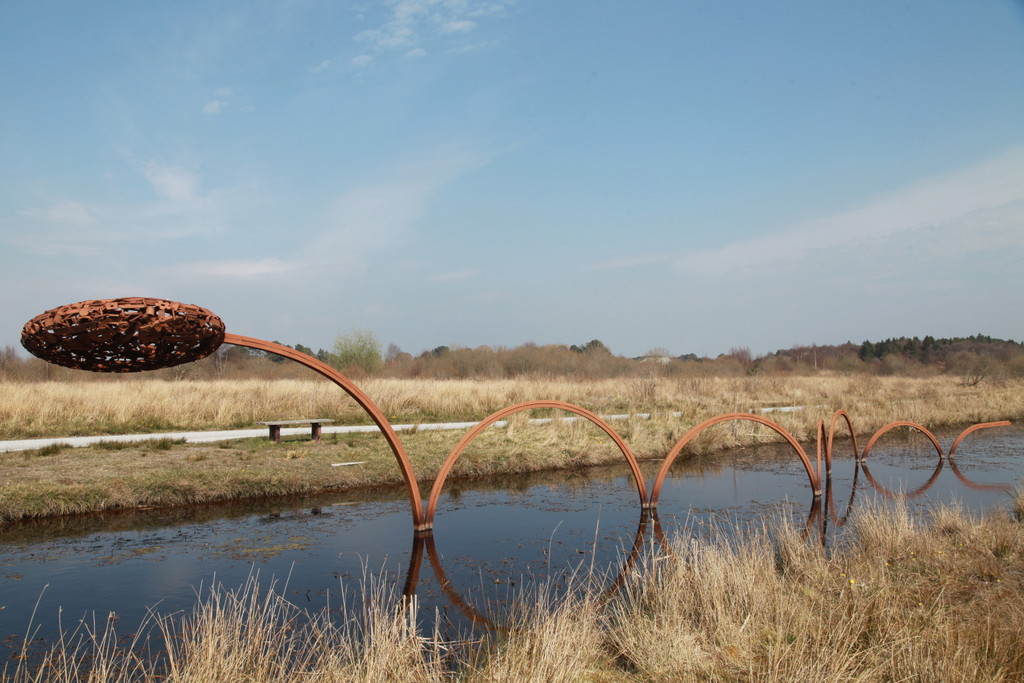
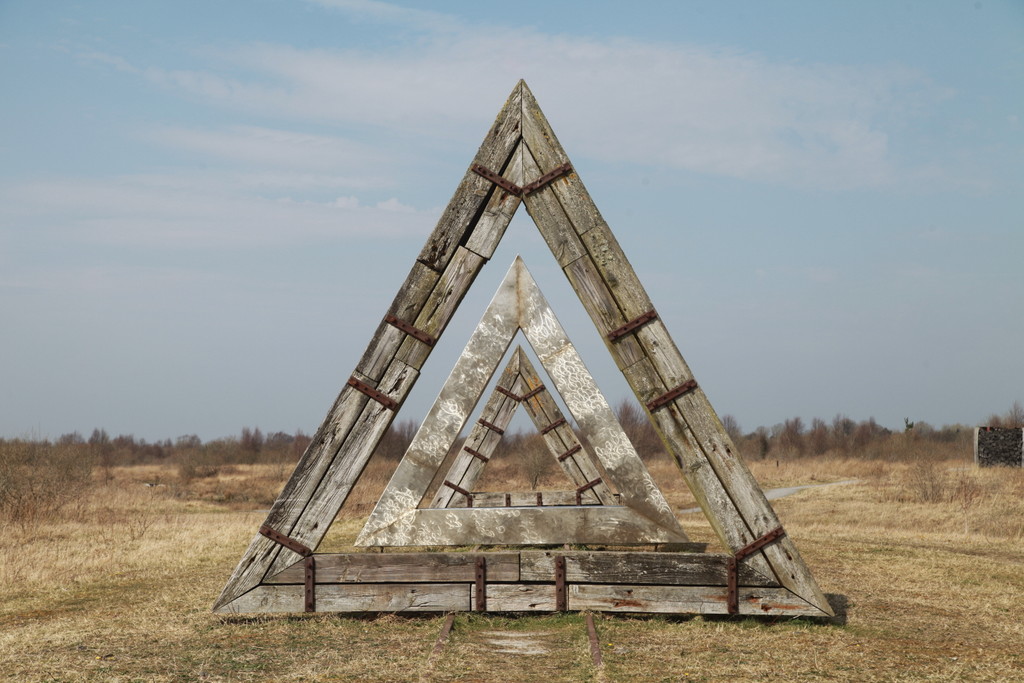
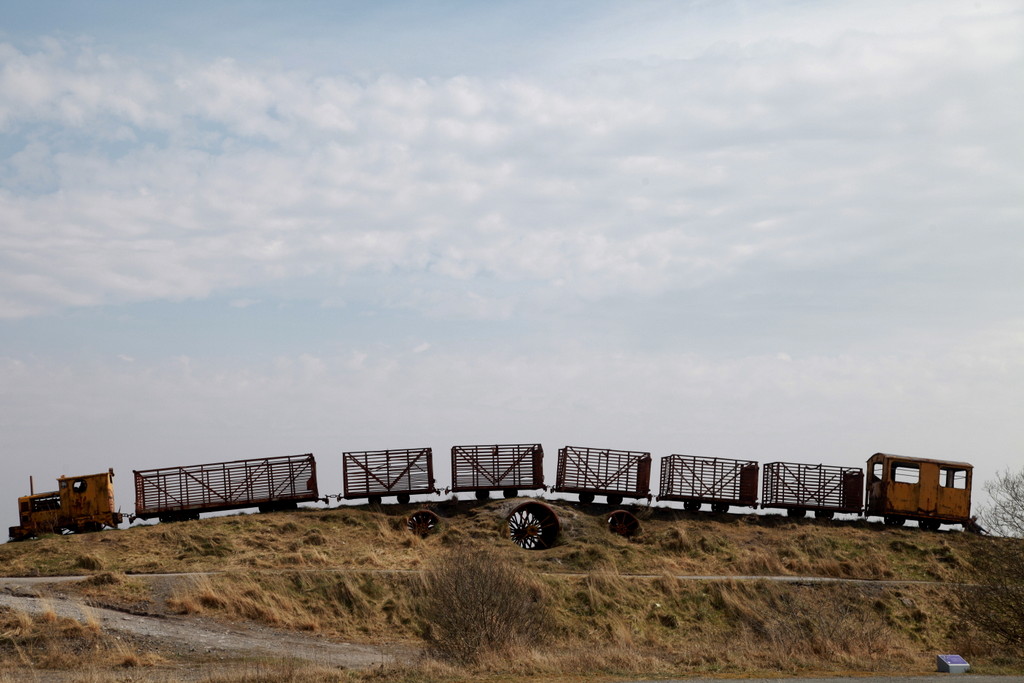
In between these sessions I got out and about.  The weather was stunning.  Clear blue skies and around 18 degrees.  County Offaly has the earliest evidence of human habitation in Ireland dating from 6500 BC at Lough Boora just down the road. There would have been lakes there then, long since turned into bogs and subsequently mined out by Bord na Móna (the company created in 1946 to exploit bogs mainly in the Midlands)  Here at Lough Boora however it is now returned to lakes and a nature reserve.  I visited there and took a short walk was through a sculpture park.  All the installations were inspired by the unique land and the bog and its history of mining.  I was very impressed.  Great opportunity for some photos a little different from what I was used to.  I really enjoyed trying my hand at something different.

IMG_1133

IMG_3294 IMG_3268 IMG_3234 IMG_3226 IMG_3219 IMG_3216 IMG_3215 IMG_3198 IMG_3191 IMG_3185 IMG_3159 IMG_3148 IMG_3136 IMG_3124

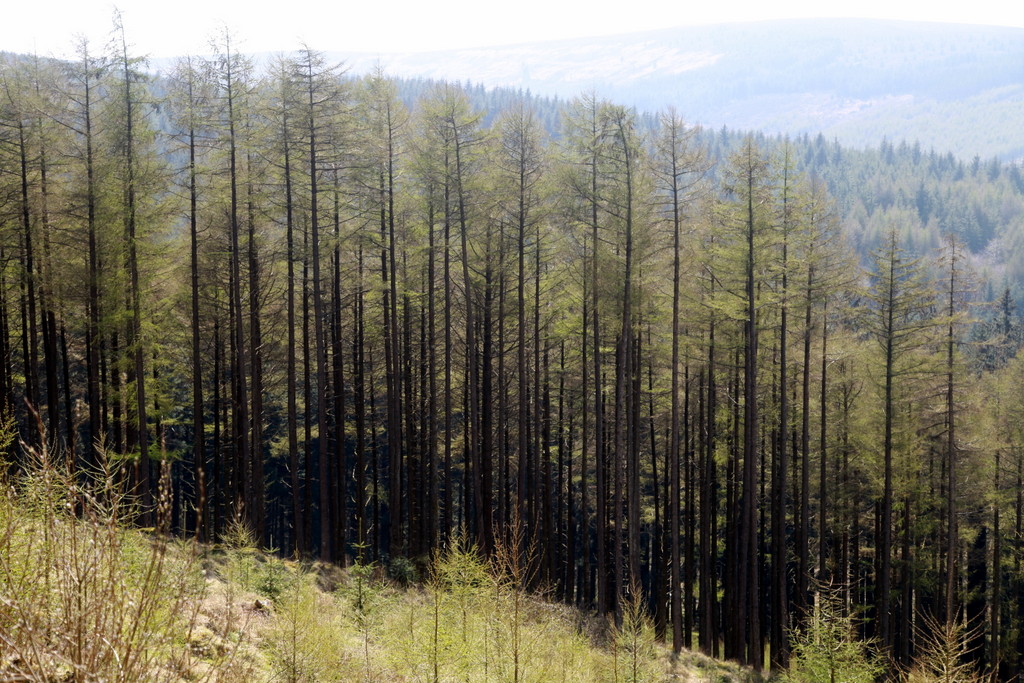
There was also the Slieve Bloom Mountain range.  More low hills actually but there were expansive views of the countryside .  It is renowned as the birthplace and early home of legendary Finn MacCool but I was more taken with the forests of pine and beech, just breaking out with the spring growth.  It was at that wonderful point where the trees still have that winter nakedness but there is a tinge of bright green from the new shoots.

IMG_2756 IMG_2772 IMG_2777 IMG_2782 IMG_2799 IMG_2810 IMG_2817 IMG_2852 IMG_2869

IMG_2822

IMG_2829 IMG_2831

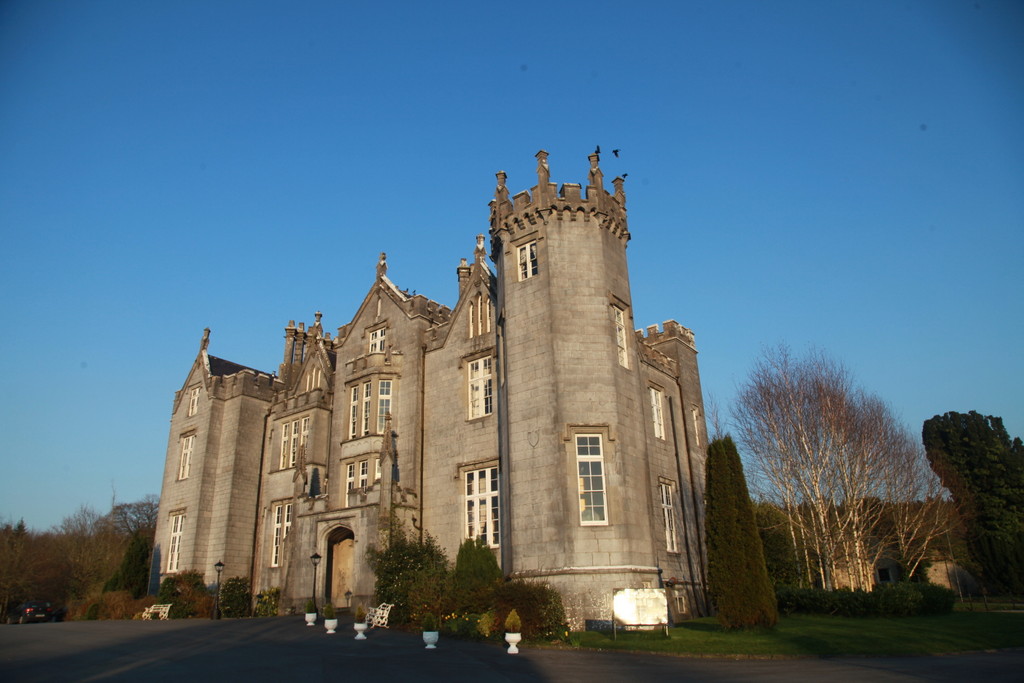
Kinnitty Castle has had a chequered history.  It’s current predicament is at least as bad as anything it has faced since the site was first settled.  It is worth relating briefly as reflects a lot of the story of Ireland.

The site was known to be an ancient druid ceremonial ground; it was a monastery in the 6th century with links to Clonmacnoise along with which it was a major learning centre in Europe at the time.  It was raided by the Vikings and then rebuilt by the Normans with a castle and Abbey.  It became the stronghold of the O’Carrolls around the 11th Century through to the 17th century.  A new castle was built by the O’Carrolls in 1630 and confiscated by the English in 1641.  In 1664 it was granted to an English officer Thomas Winter. It was sold by the Winter family to the Bernards family in 1764 and became known as Castle Bernard.  The current look of the castle was a result of work commissioned in 1811.  The work was carried out by the Pain Brothers who built Dromoland and is a wonderful example of neo gothic architecture.

In 1922, the Castle was burned down by the Republican forces.  Rebuilt in 1928 by the Bernard family who lived there until 1946 when it was sold to Lord Decies who in turn sold it to the State in 1951. It became run down but was purchased by the Ryan family in 1994 and renovated and transformed into a luxurious 37 bedroom hotel.

The castle was forced into receivership by the KBC Ireland Bank and despite a number of attempts to sell it is still being run by the receivers as a going concern.  It is popular for weddings, understandably, and I have to say the steak was delicious.  The hotel is full of amazing period furniture, most of it huge and befitting the grand proportions of the house.  The bank seized all this along with the hotel but the Ryans claim that the effects are their own personal assets.  It is all very messy with legal action and accusations flying everywhere and as of now you could buy this special castle for a mere seven million euros and make the bank go away.

IMG_2957


IMG_2953 IMG_2985 IMG_2998 IMG_2965

IMG_2990

The English heritage is apparent in nearby Birr also.  Birr also has a magnificent castle which is the family home of the current Earle of Rosse, but goes back to the O’Carrrols again who had one of their castles there in the 15th Century.  In 1620 it was granted to a Sir Laurence Parsons in the course of the Stuart plantation, c. 1620. Sir Laurence Parsons built most of the structure of the present castle. But this was not the main attraction for me.

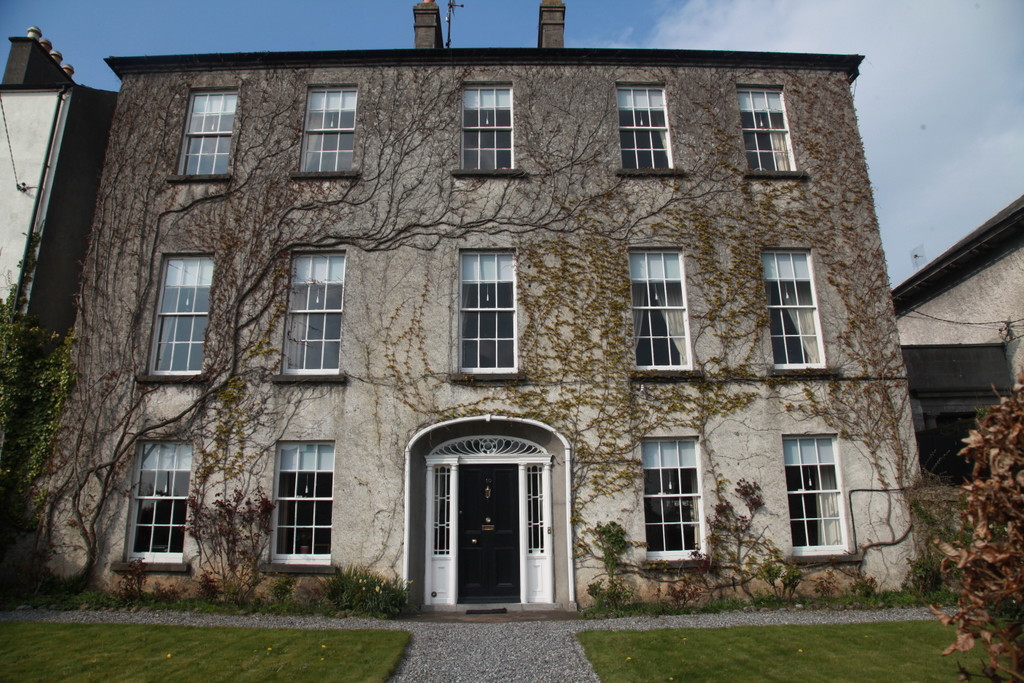
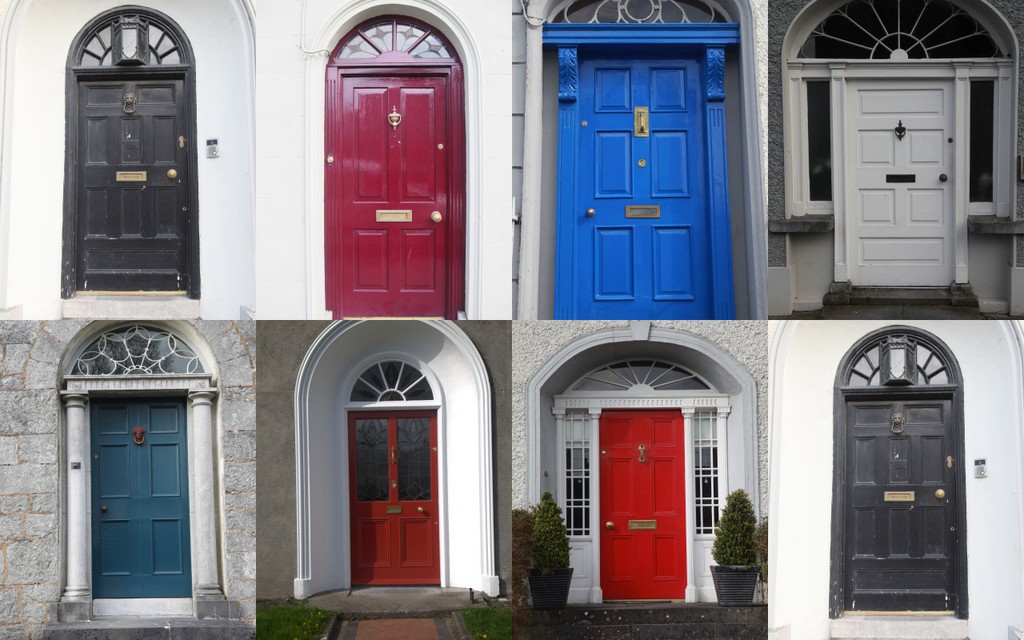
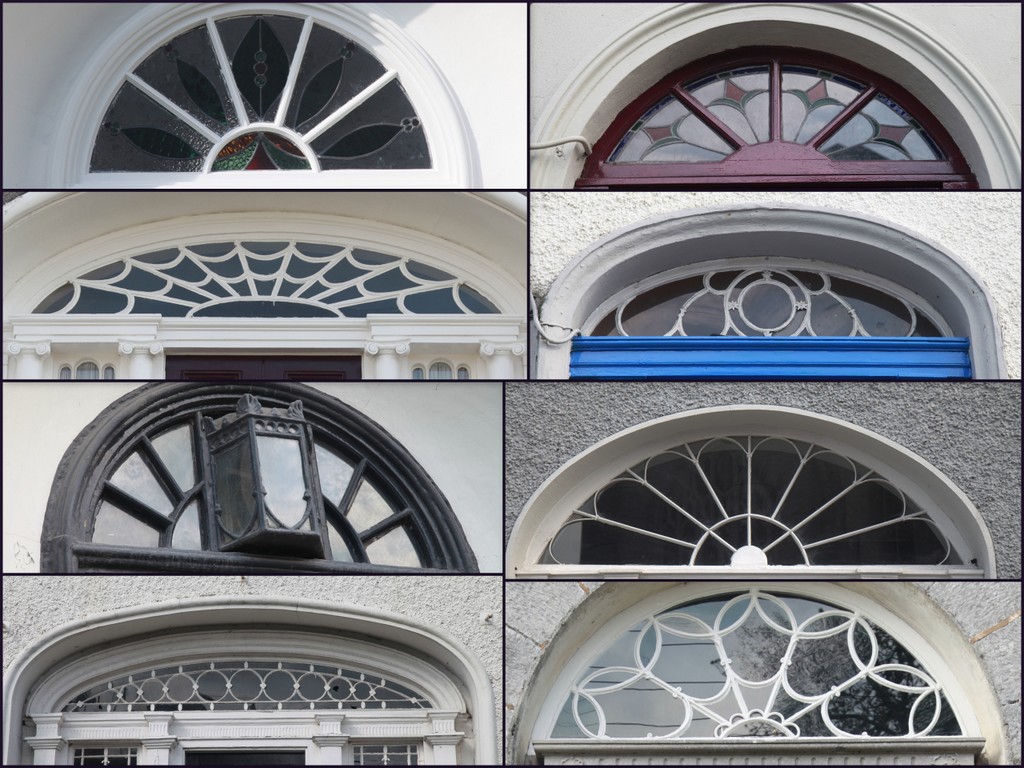
The town is well regarded for the excellence of the preservation of the Georgian architecture.  A walk down the main thoroughfare of Emmett Street (formerly Cumberland Street) and the Oxmantown Mall and St John’s Mall give ample evidence of this.  I was taken with the elegance of the buildings and the unity of streetscape which was a defining characteristic of Georgian city planning There were simple family homes and there were clearly more ornate, but still conforming to the same simple elegant ethos, homes of the wealthy.  I loved the arched door treatments, the fanlights above the doors, the beautifully proportioned multi-paned windows and some of the less noticeable details such as the cast iron gate handles.

I was walking down Oxmantown Mall photographing the front of a blue doored two story mansion when the owner came out.  We got chatting and retired vet, Sam Glendinning took me through the archway which accessed the back and showed me his formal walled garden.  He was in the process of renewing it as it had become overgrown but there was enough to see what a marvelous space it was. A magnolia in flower was a feature with a central lawn and garden beds and trees around the boundary.  It was so quite; not a noise though we were right in the middle of town.  I was entranced.  Sam said it may be for sale if he could convince his wife to move into something smaller but he wouldn’t name a price.  Out of my league I would think.

Other claims to fame of this town are the largest telescope in the world built by the then Earl of Rosse in 1845.  (Why build a telescope in Ireland where there averages up to 225 days of rain a year?), the world’s first auto fatality when Mary Wood was thrown out of the steam car she was a passenger in as it rounded a corner on Cumberland Street and an Australian connection where Dame Nellie Melba sang from the balcony of Hotel Dooley, an event remembered today with Melba’s Nightclub


IMG_3460 IMG_3411 IMG_3412Collages County Offaly visit1 County Offaly visit2IMG_3497 IMG_3498 IMG_3386 IMG_3403

I left Offaly on the Saturday and as if to say goodbye the weather broke.  I enjoyed my time there and thanks Christina for your hospitality.  It didn’t take long though and Saturday night I was back in the swing of things with tunes at Friels in Miltown with Yvonne Casey, Josephine Marsh and John Joe Tuttle.

Categories: My Journey, Sessions, Trad Irish Music | Tags: , , , , , , , , , , , , , , , , , , , , , | 6 Comments

Blog at WordPress.com.