Wild Ireland

Home

Well it has been a month since I have posted and a lot has happened. I have kept telling myself I will catch up when winter arrives but it never did. We have had an amazing warm September and the first couple of weeks of October with more blue skies.  That all camne to an end last week and we have had our first taste of winter.  I am ready for it!

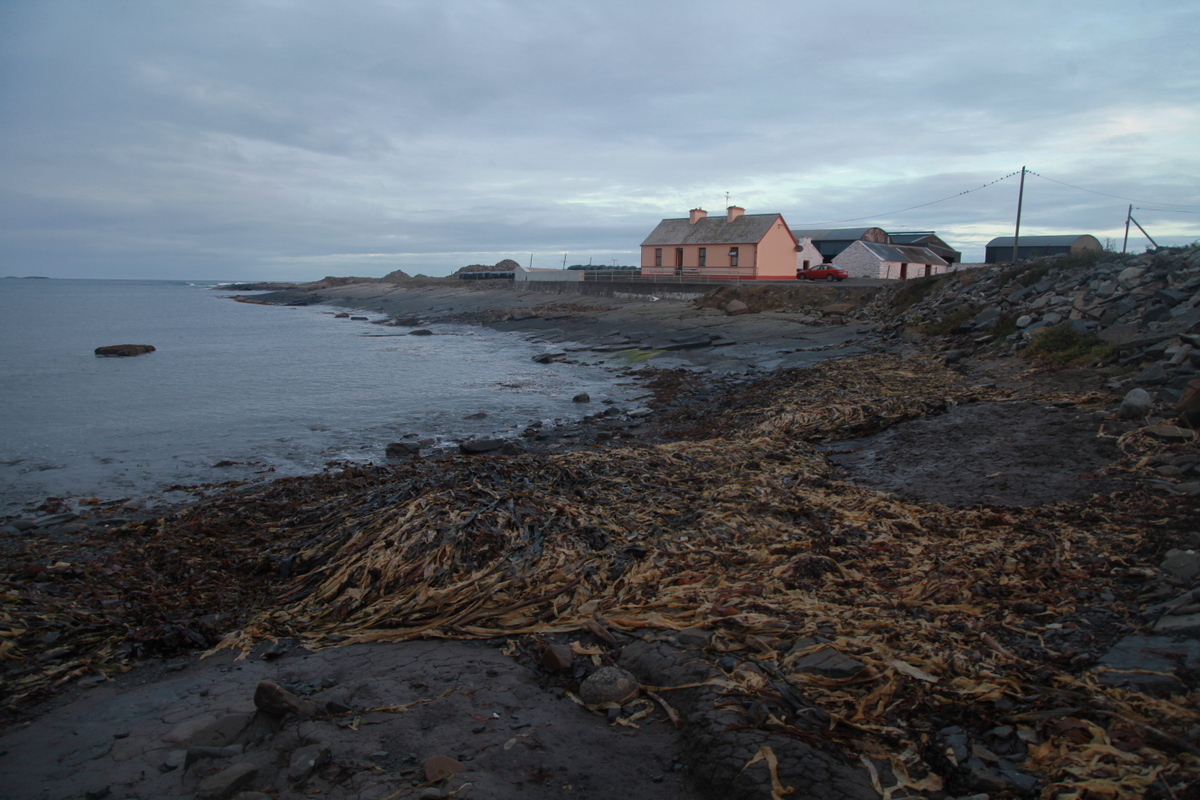
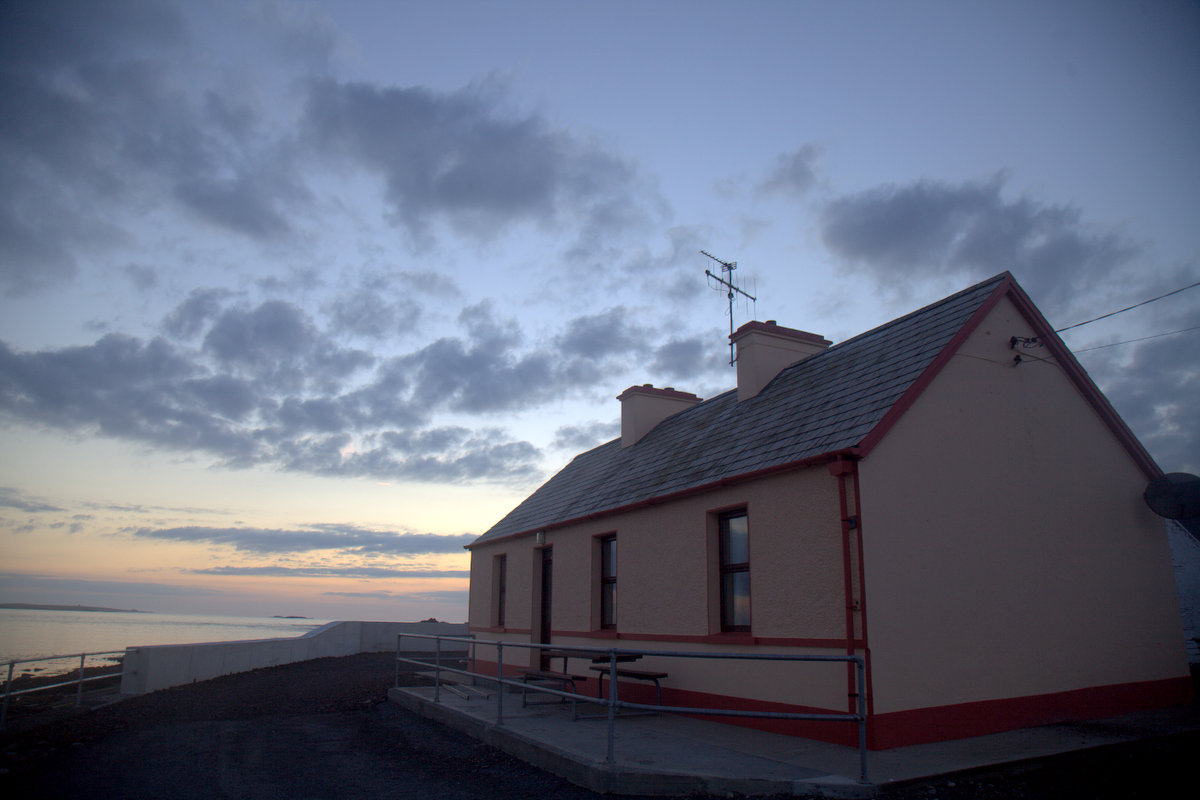
Those of you following me on Facebook will know that I have found a house to rent. I can’t believe where I have ended up. A magic place on the water between Spanish Point and Quilty near Miltown Malbay in west Clare.

My cottage is at the end of a row of houses that stretches along the Clogher Road to Point Caherush. It is situated on the edge of the land where it meets the rocky shore. Surrounded by gravel and a high wall there is no softening green garden but the starkness somehow seems appropriate. Adjacent is an old whitewashed stone shed with a slate roof and behind that are large domed sheds that constitute the operations base for my landlord’s extensive farmland, which stretches beyond in all directions to the sea. Everyone here talks about nothing but the storms last January and the damage done by the high tides, but I am assured by the owner that the new seawall will keep the ocean out.

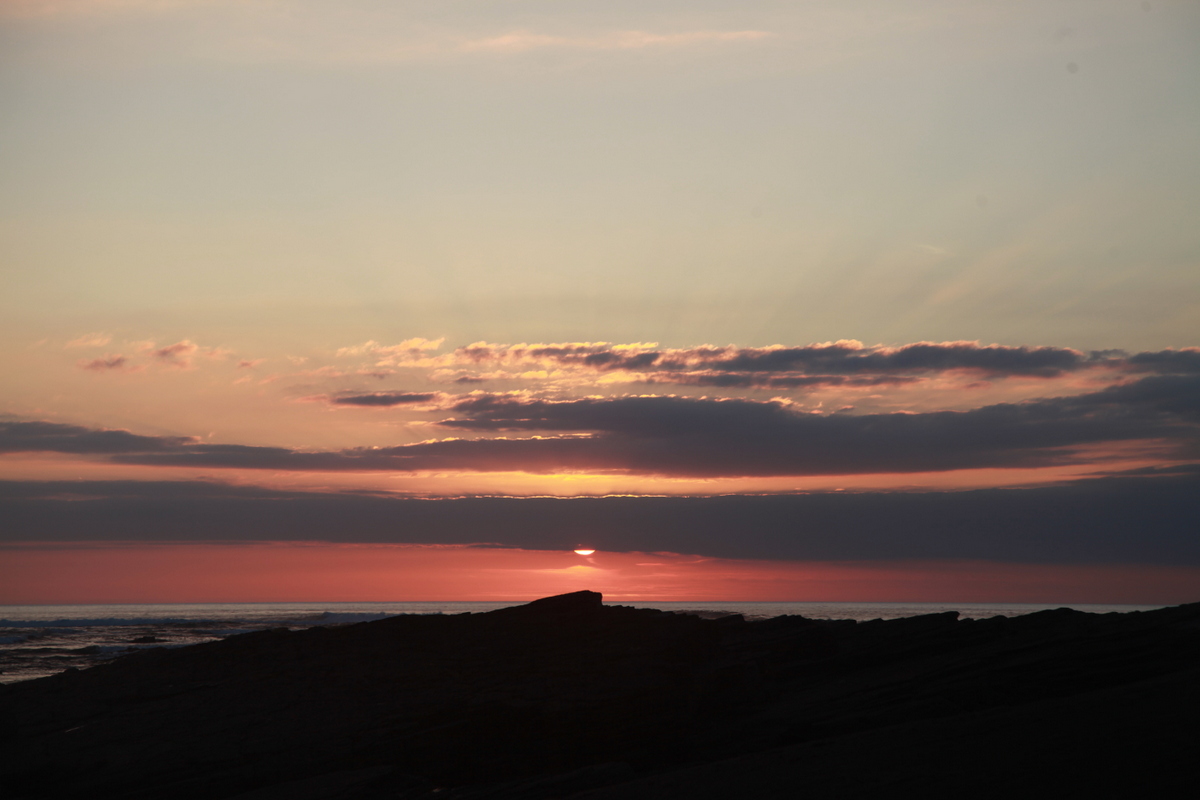
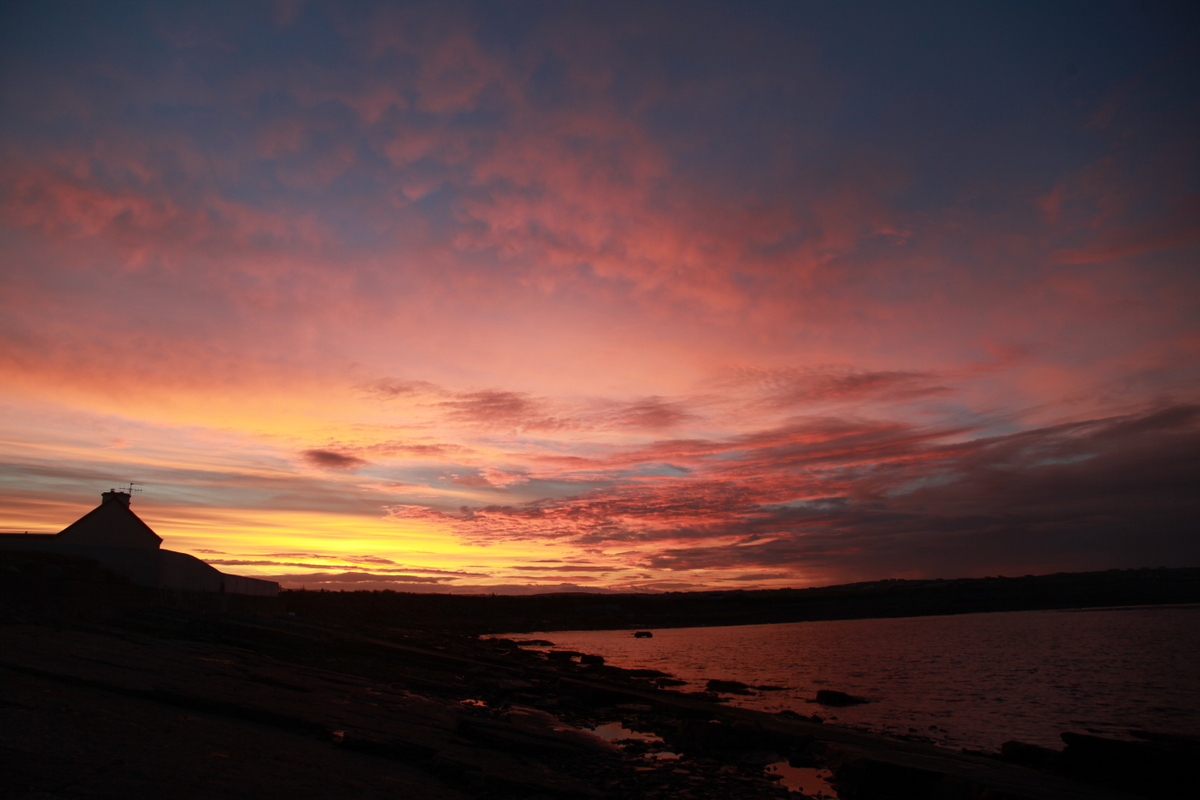
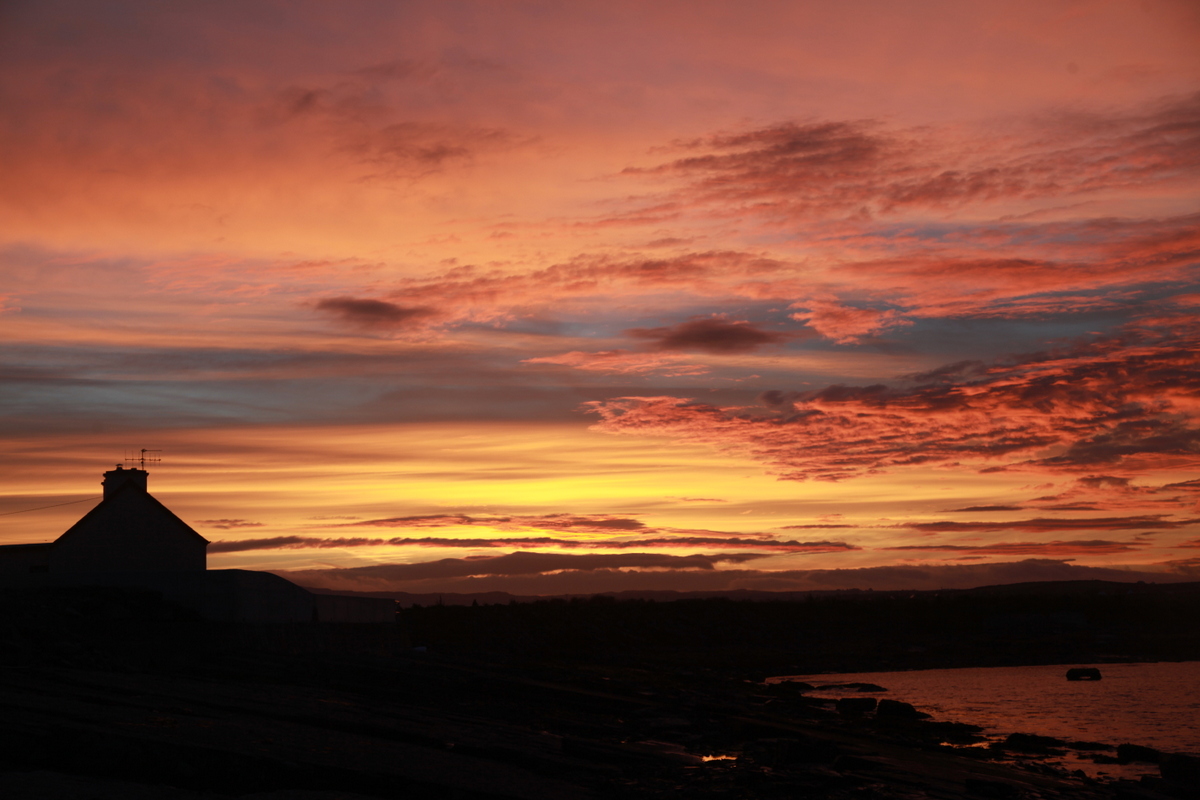
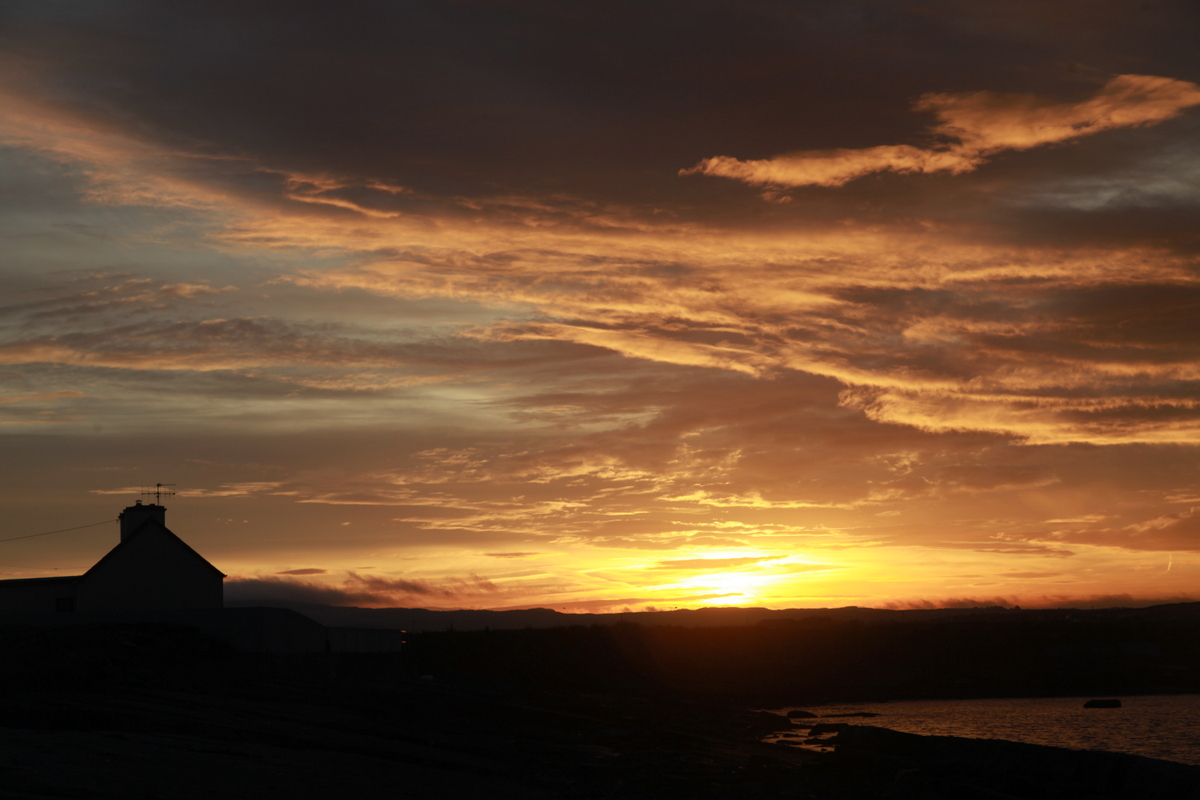
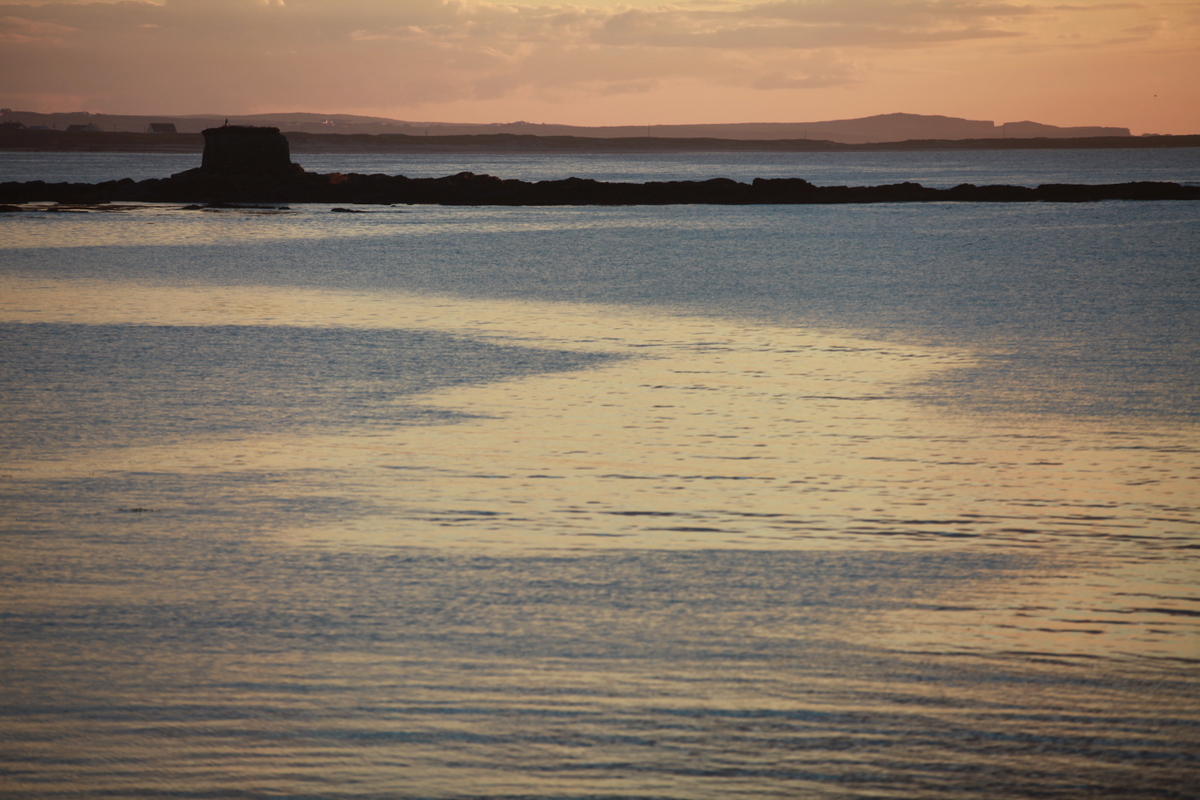
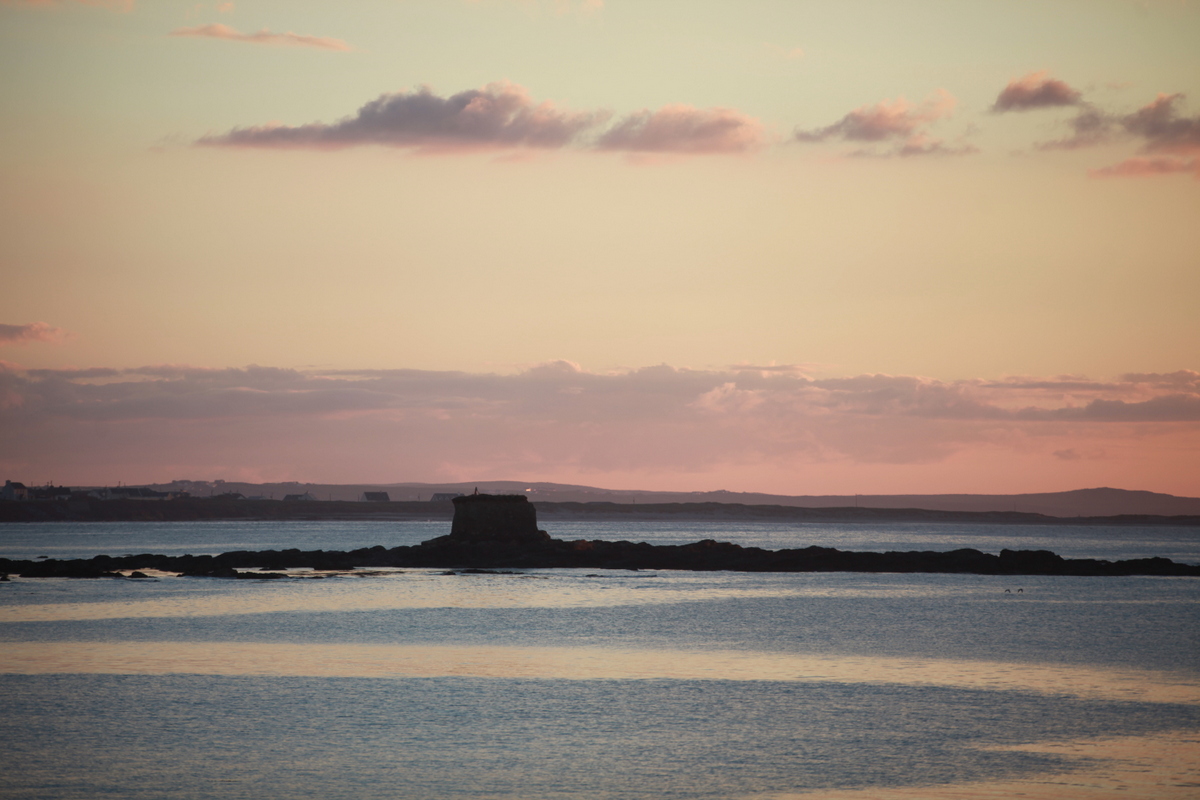
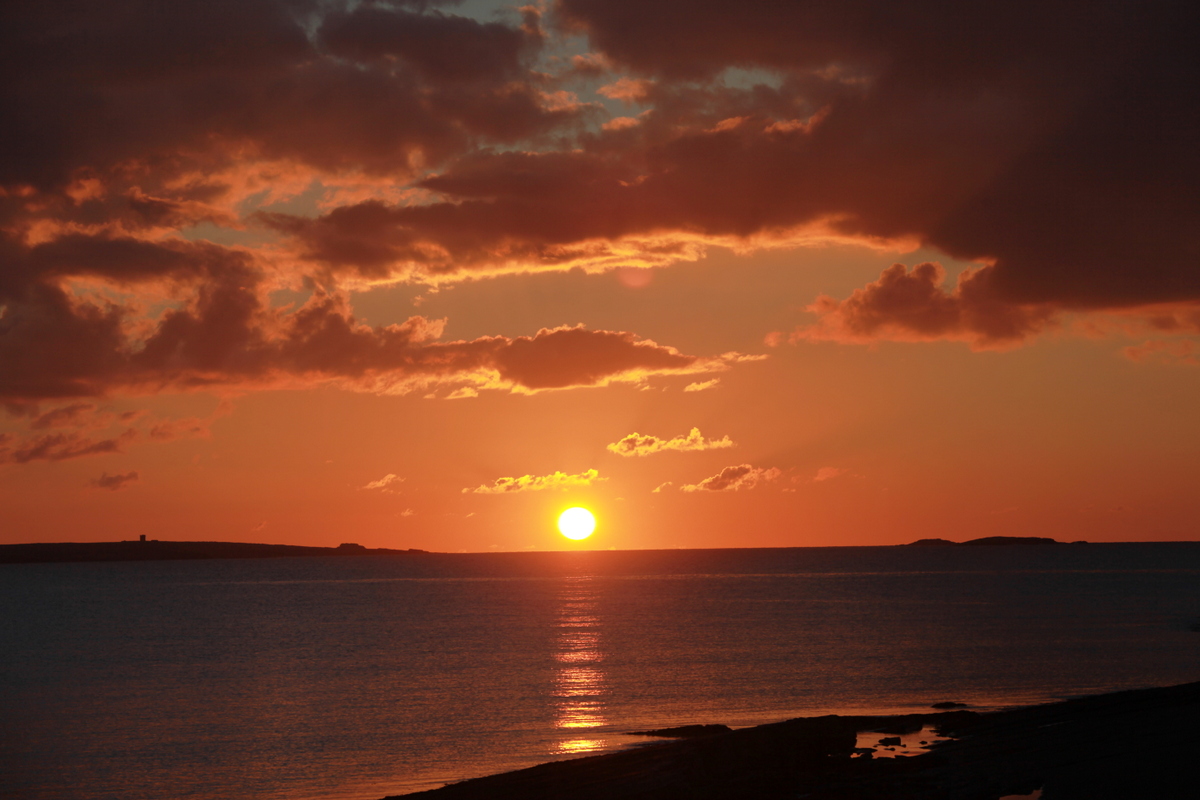
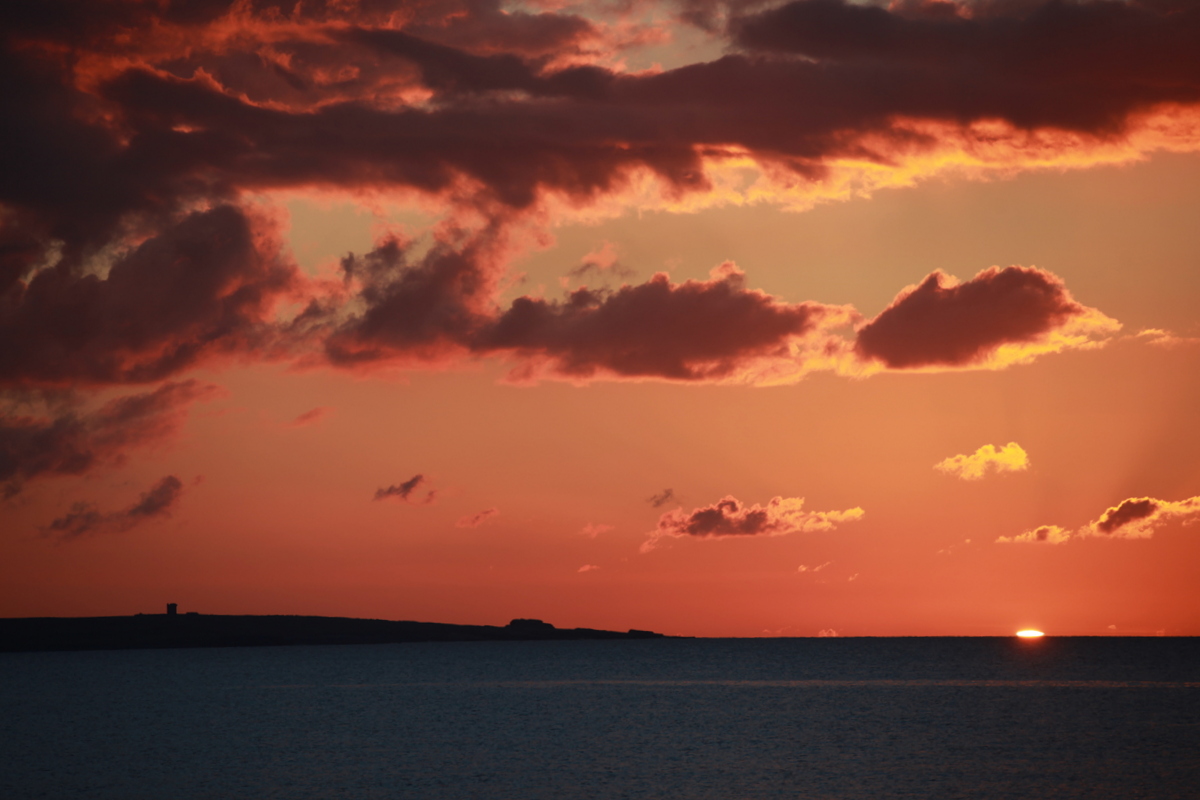
The house looks directly south across a shallow bay and to the treeless plains and hills that are so characteristic of this part of West Clare. In the distance I can see Quilty and the round tower of its church poking above the horizon. And out beyond the now calm ocean is the uninhabited Mutton Island only accessible by boat. I have a table and benches, like those provided at picnic sites, outside my front door and from here I can see the sun rise over the hills to my left and watch it all the way to where it disappears into the Atlantic Ocean on the right. The last month has provided glorious clear blue skies and amazing sunrises and sunsets. For most of the day the sun streams invitingly into the house filling it with light.

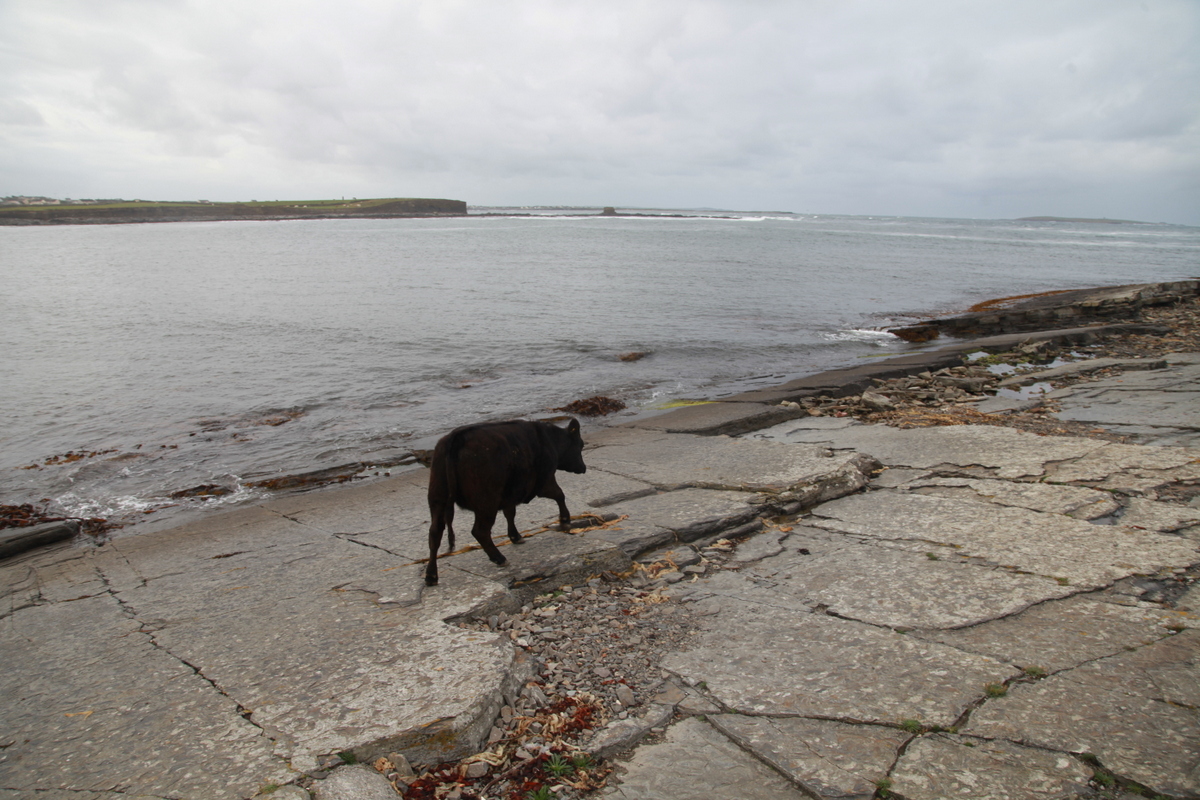
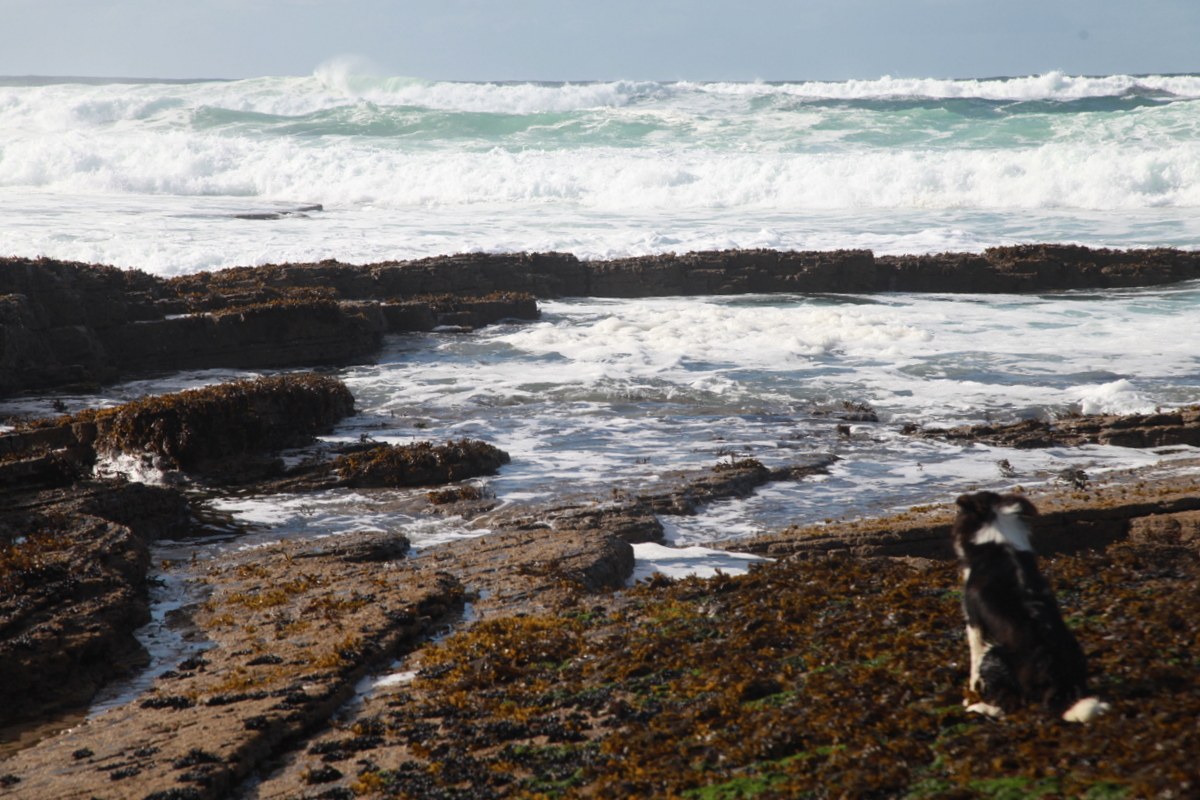
The bay is forever changing moods. At low tide the ocean floor is exposed across its entire width. Rocks and seaweed predominate with pools of water left behind temporarily. It is not what is conventionally regarded as appealing. At high tide the rocks are completely covered and though there is no pristine white sandy beach, just boulders and kelp and various flotsam bordering the calm waters, the scene has a raw beauty that is captivating. There are very few people. Occasionally I will see someone collecting periwinkles or the landlord’s brother collecting and drying seaweed for his business or the occasional walker or a mother pushing a pram but for the most part there are just the sea birds, which provide plenty of movement and interest and there is Valdo, the neighbour’s border collie who spends all day chasing them.

Just a handful of steps and I am on a rock platform that stretches along the northern side of the bay to the end of the point. The rocks dip largely to the south at about 20 degrees and the sandstone and shale layers provide a series of steps which one seems to be forever climbing. At low tide you can walk all the way around the point. At the end of the point the calmness of the bay gives way to breakers which hint at the power that the Atlantic can unleash. For now though it is has been mostly peaceful but I have had a little taste of its power last weekend. There are some spectacular folds in the rock layers and the dip changes from the south to the north and back to the south providing plenty of geological interest. If I walk the other way I walk across the boulders and weed best negotiated at high tide. There is an exposed layer of peat just above the high tide mark. It provides a fascinating insight into the formation of this unique part of the Irish landscape as abundant, partially decomposed trees, branches and roots protrude from the ground. Further round the point towards Quilty is a cliff face formed of jagged, loosely consolidated boulders that appears to be a glacial moraine and the weathering of this cliff contributes to the mix of irregular and rounded boulders seen on the shore.

I am seeing it at its absolute best but I already love this place. It is not the Ireland I expected to live in but I finally have a sense of place and I am so looking forward to spending the next year here.

To cap all this off the house has a rich musical heritage. It was the home of JC Talty, who played pipes and flute with the Tulla Ceili Band for 35 years, until his death in 2006. He was mates with Willie Clancy, Paddy Canny and Leo Rowsome among others. It is inspiring to think that these guys may well have played music in this house. It was also a favourite place for his niece Brid O’Donoghue the well-known Miltown whistler who came here after school regularly to learn her craft from her uncle.

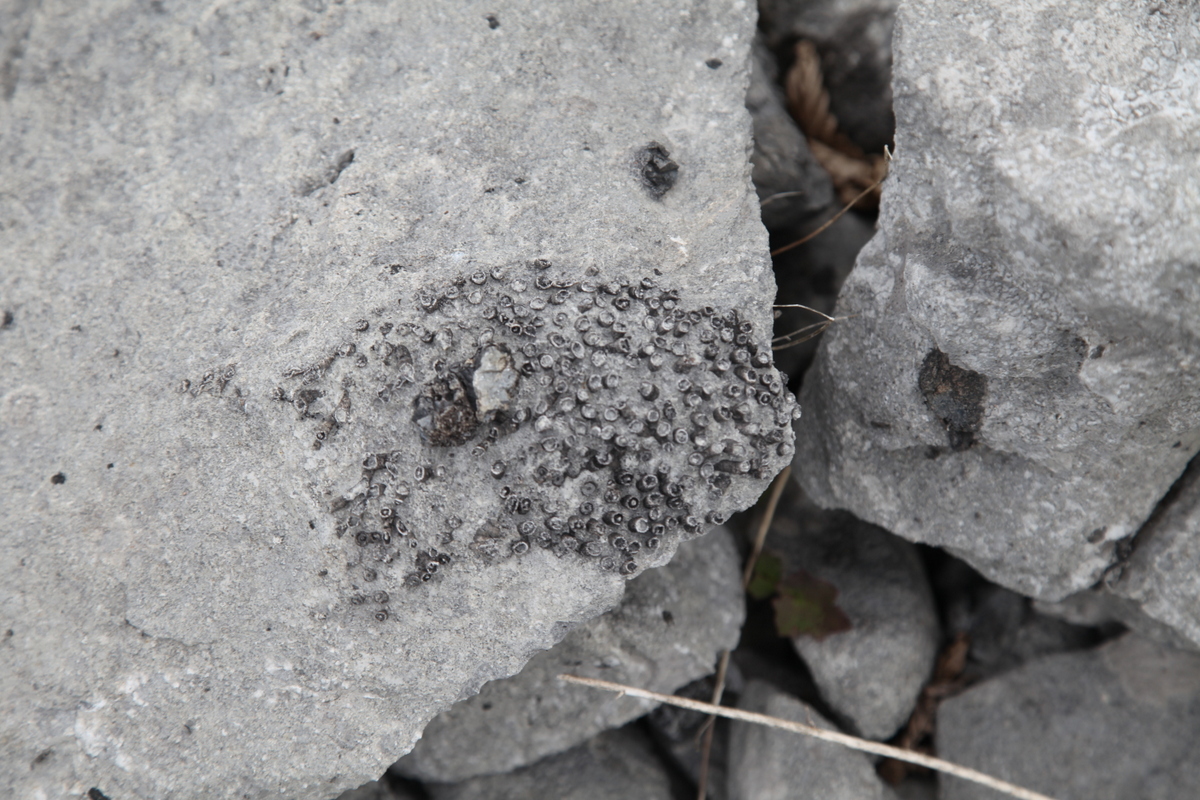
As I said the place has many moods. I have tried to capture this with some of these photos from my first month here.

I will soon get to posting some of my thoughts and adventures from a truly wonderful summer.
IMG_5107

IMG_4972

IMG_4941

IMG_6363

IMG_5050

IMG_5038

IMG_5063

IMG_6112

IMG_6229

IMG_6268

IMG_6272

IMG_6340

IMG_6320

IMG_6289

IMG_6355

IMG_6360

IMG_6385

IMG_6428

IMG_6986

IMG_6996

IMG_7010

IMG_7021

IMG_7031


IMG_7060

IMG_7081

IMG_7093

IMG_7098

Categories: My Journey, Wild Ireland | Tags: , , , , , , , , , , | 3 Comments

The Burren, Again.

The Burren in the north of Clare has an indefinable pull.  I can’t stay away.

When Geraldine, schoolteacher friend, asked me if I wanted to accompany her and the kids from her school at Doora near Quin on a hike through the Burren, I was a bit unsure. Didn’t sound all that exciting but I have made it a rule not to say no to anything since I’ve been here. So I agreed. I’m really glad I did.

The day did not start out too promising. I met Geraldine after a couple of false starts at 11:00am and four carloads of kids from 5th and 6th class with a handful of parents and teachers met at Crag Road, the start of our linear hike. We had hoped to use the National Park free bus service but times did not work so some cars were dropped over to Coolorta Cross, the end of the hike. By 11:45am we were on our way!

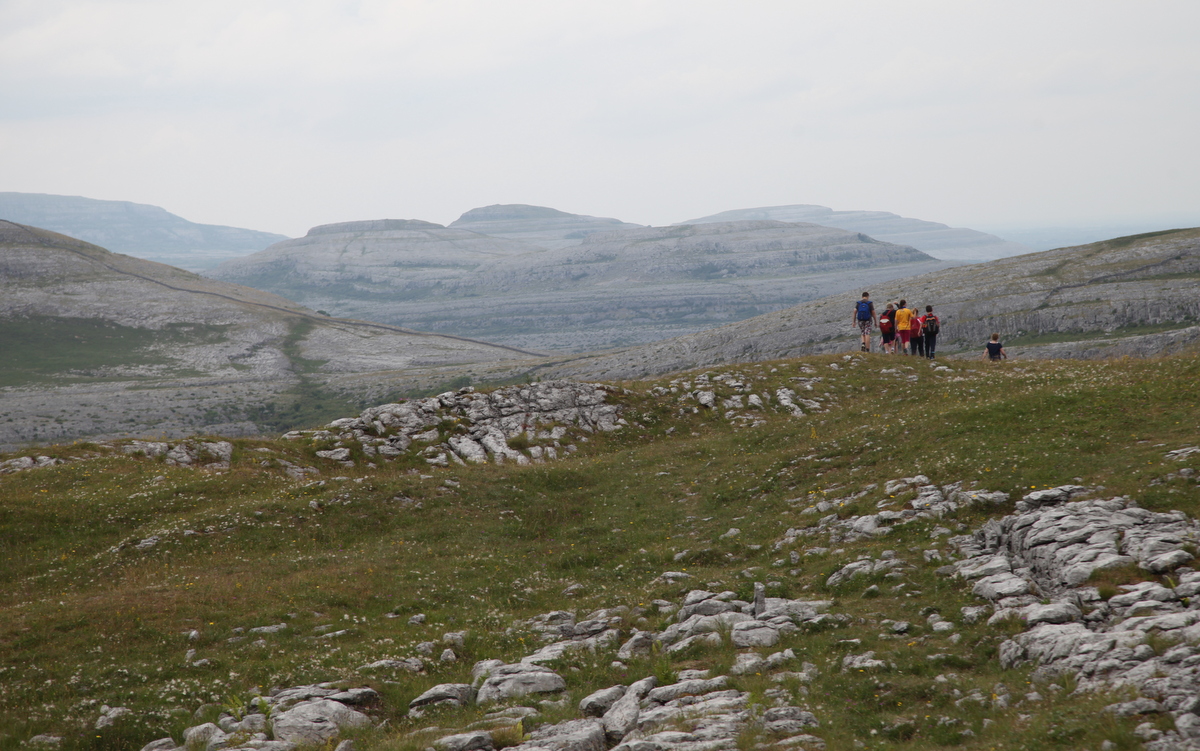
The weather was overcast but dry though rain was predicted (of course). The plan was to head up to Mullaghmore and then across to the next mountain (well they are technically hills) knows as Sliabh Rua. Wasting no time the kids headed out along the trail leaving me and a couple of stragglers in their wake. We caught up eventually (well I think they waited for me) and with barely time to catch my breath I found myself giving a talk on the unique geology that is the Burren.  After a month in Clare I was an expert on the Burren geology. Well the kids thought so. Some of them were surprisingly up to speed while others hadn’t even stepped foot on the Burren before.

We continued the climb along the ridge beneath the first cliff and I kept stopping to look at the amazing fossils and rock formations and to take photographs so of course we got further behind. By this time I was left with just one boy who delayed me further as I stopped to answer the non stop stream of questions and comments about what he was seeing. It was great to see this unbridled curiosity and his eyes opening to what was around him. Eventually we rejoined the group.

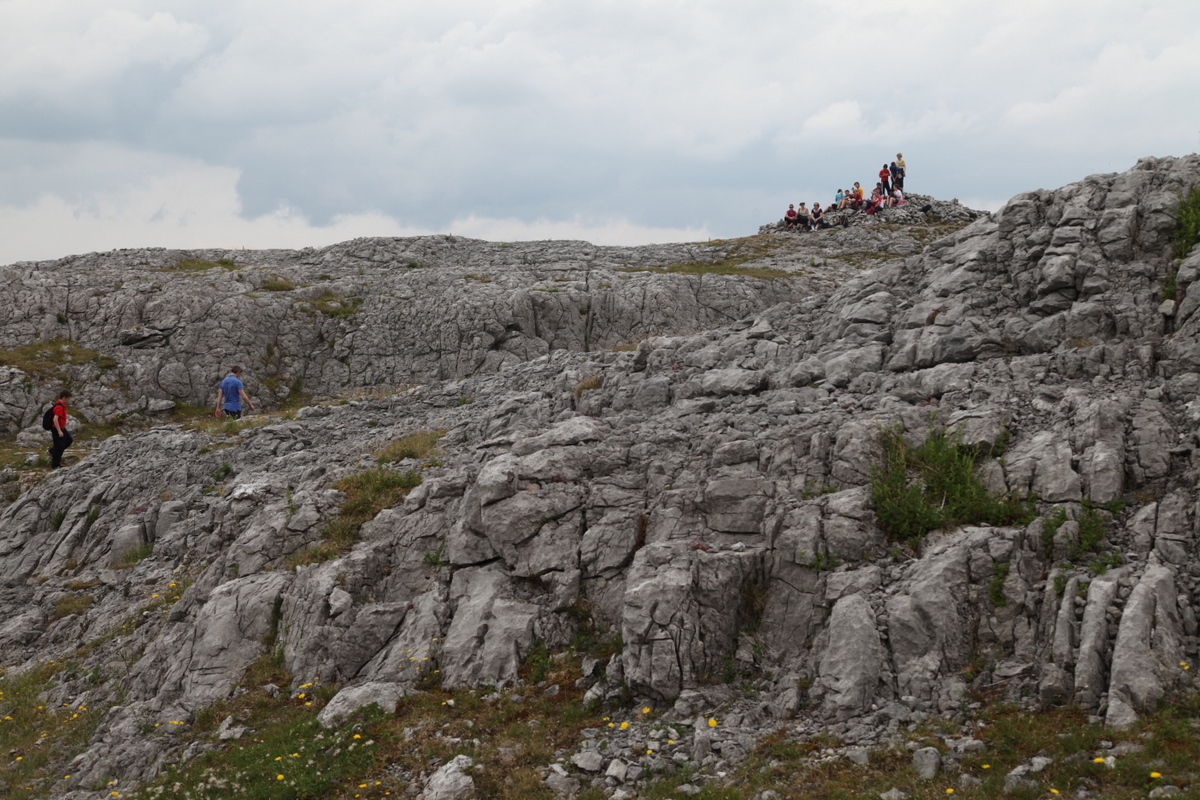
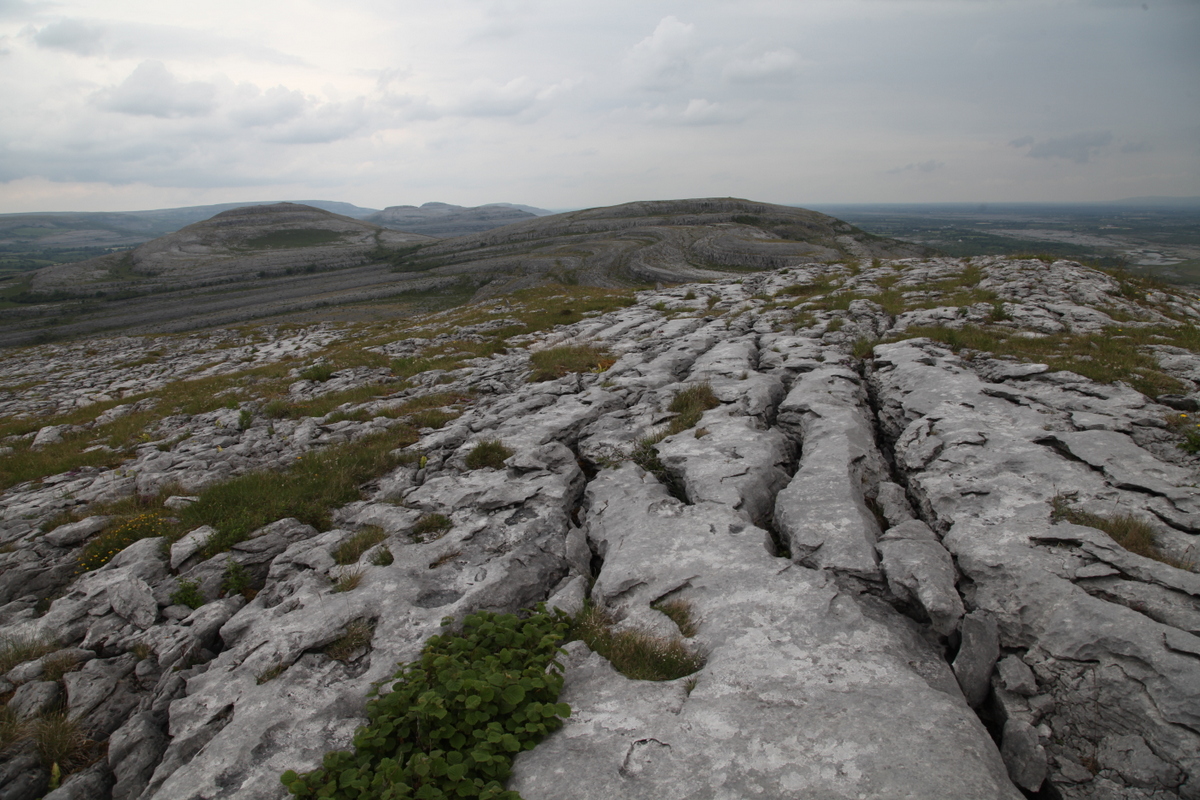
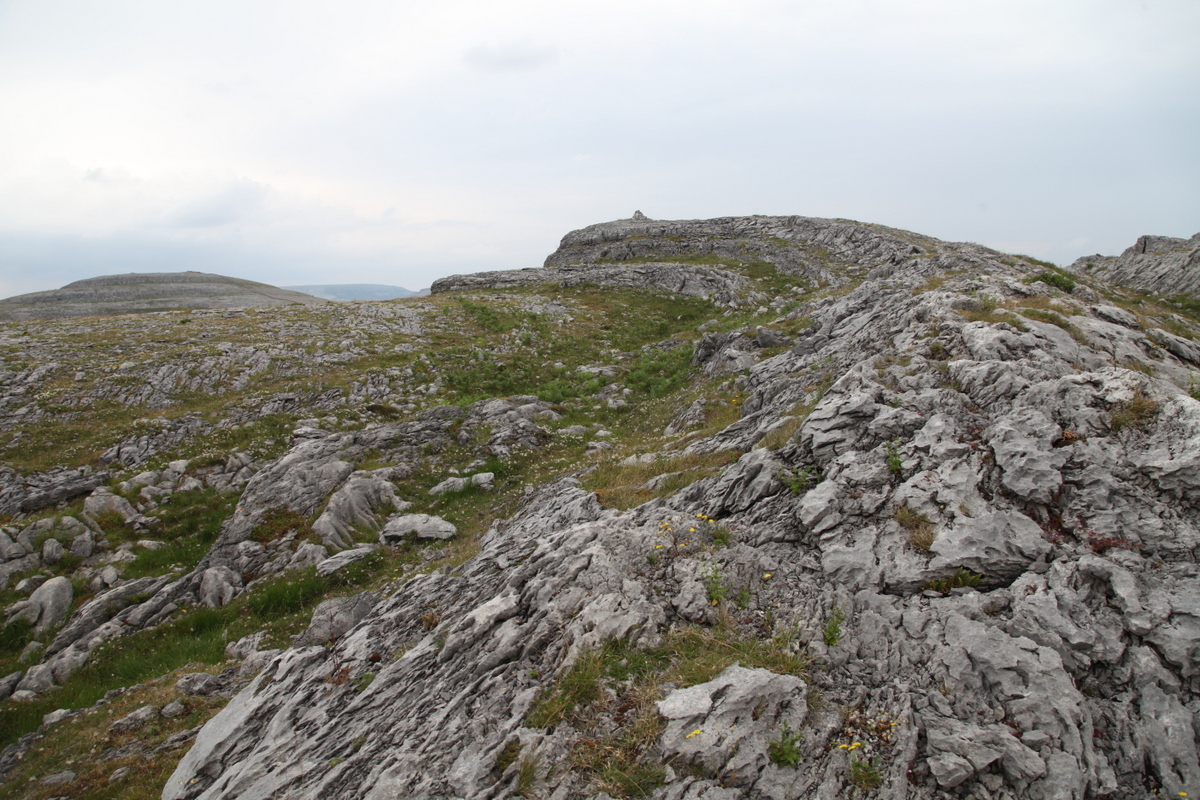
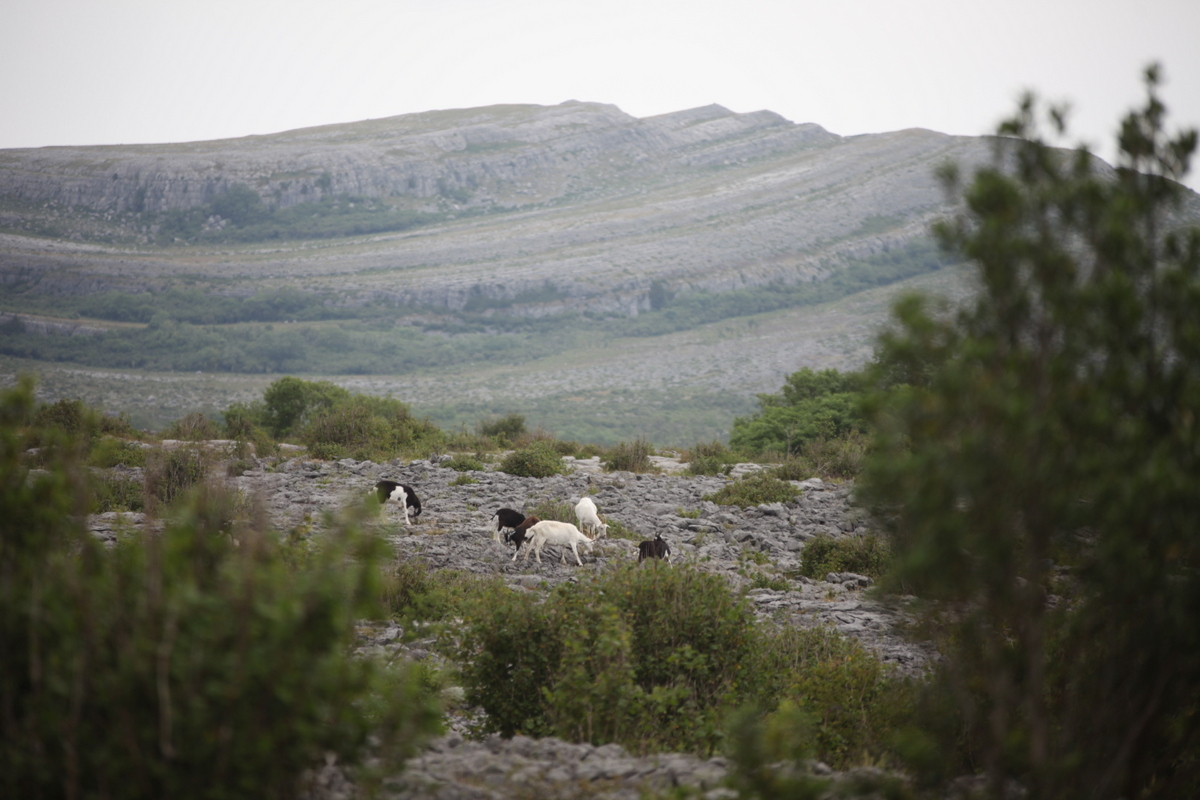
As we were on a deadline and I was slowing them down, we agreed they would go ahead and I proceeded at my own pace. I was in awe of the scenery at the top. Limestone bands twisted into gentle folds ran in sinuous waves across the barren treeless landscape. With the dull light it had a mysterious mystical quality reinforced by the clarity of the eerie silence. Truly a breathtaking place. In the distance I could see the group had reached the top of Sliabh Rua and were now proceeding down so I followed the contours around the mountain and attempted to re-join them. Distances are deceptive up here. It was a fairly treacherous descent over boulders and scree formed from jagged limestone. Every foot had to be carefully placed so there was no rushing. I would stop often to breathe in the view. A new vista around every corner. I never did catch them and I arrived at the cars about half an hour after the rest. We were lucky. The rain had held off.

I was mightily impressed with the whole day. The kids behaved impeccably and were a credit to their school.

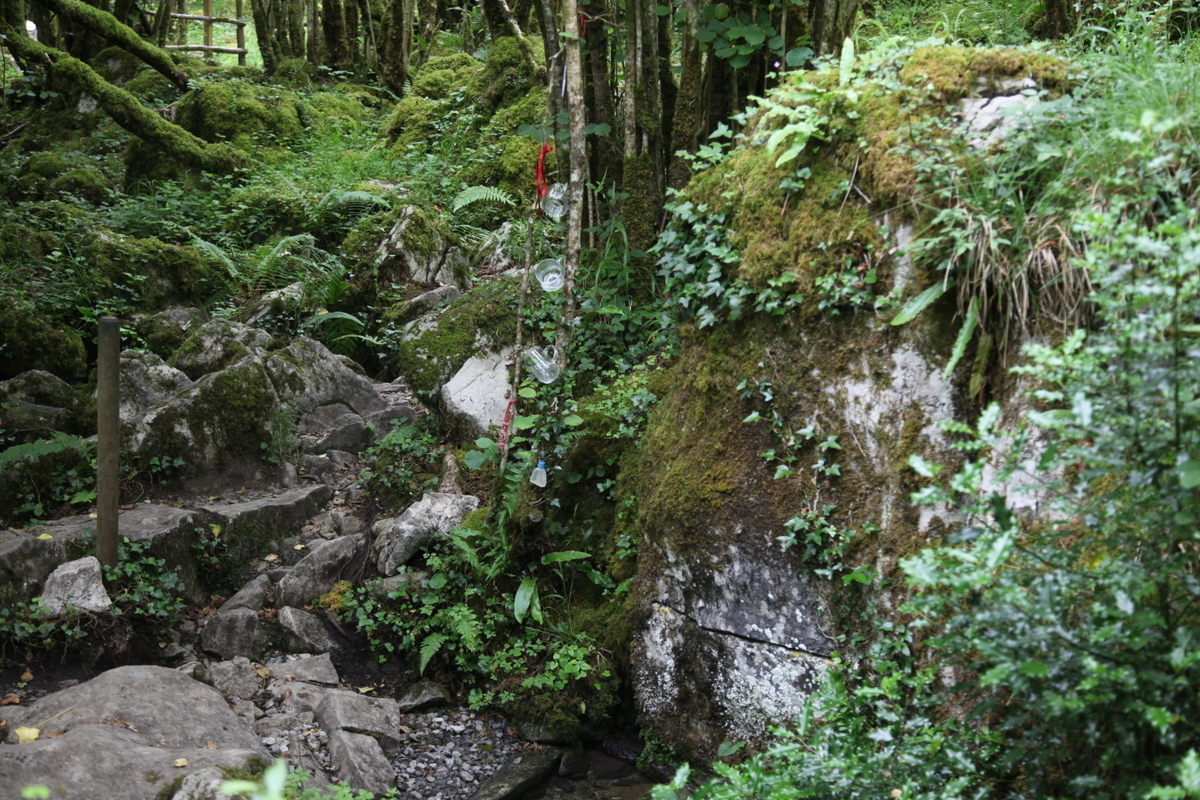
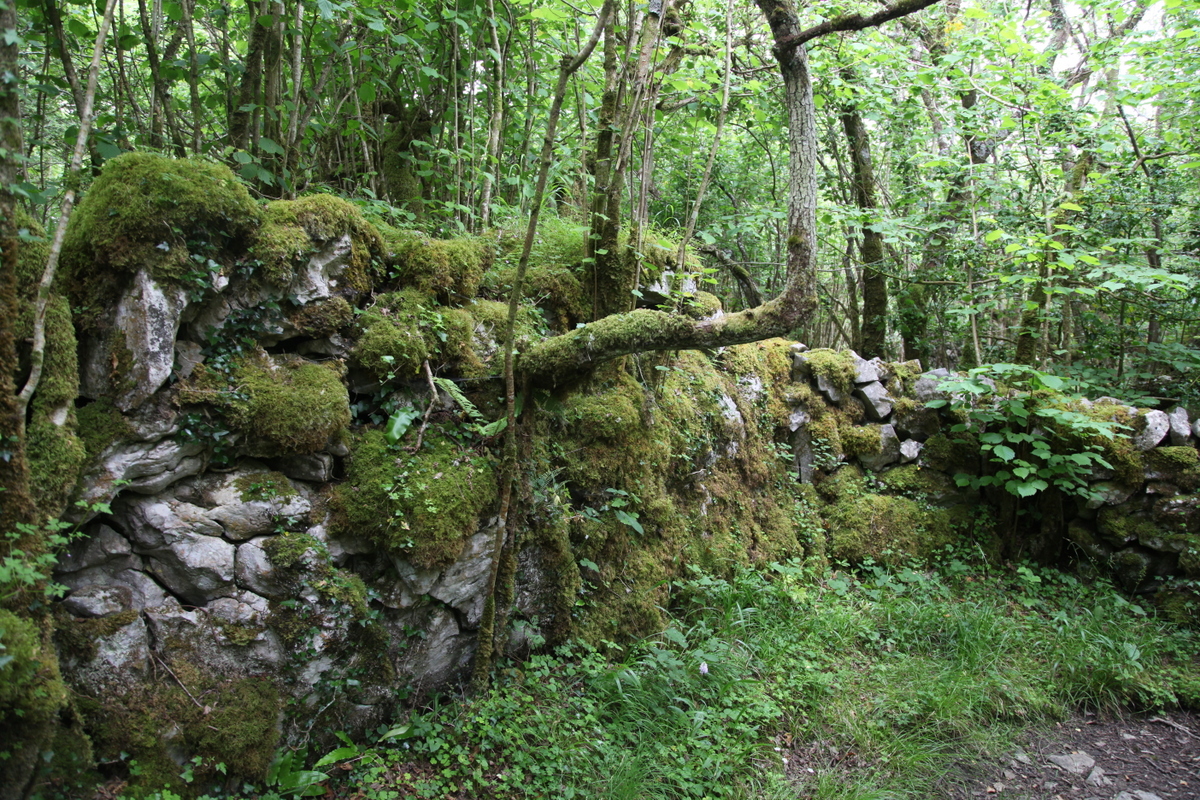
Once they had left, Geraldine wanted to show me more of the Burren, a place she clearly loves, so we headed along another track to a Holy Well. I had never seen one before. This was a natural spring coming out of the base of a moss covered rock. Nestled in a dark cool glade which felt as ancient as it probably was. It would not have surprised to see fairies darting about!  There were cups hanging from a string inviting you to partake and there were ribbons hanging from nearby branches, perhaps some sort of offering.   An elliptical walled area a few metres across was apparently an ancient bath which was used for ritual bathing. It takes a while to get one’s head around the fact that this place may have been used by our predecessors up to 5,000 years ago.

The magic of the place was having an effect. We walked back along the track to see a car driving up the lane. I did not recognise the occupants but Geraldine did. There was P.J. Curtis (the eminent writer/record producer/broadcaster/historian) and Maurice Lennon (fiddling legend from Stockton’s Wing). I was introduced to them and they couldn’t have been nicer. We ended up back in P.J.’s house in Kilnaboy (built in 1770, the year Cook landed in Australia) listening to Maurice play tunes from ‘Light in the Western Sky’ (one of my favourite albums) and then some gorgeous airs including one of his own on his Viola. I had to keep pinching myself. P.J. gave us a tour of his Forge which was full of original equipment. It was the conclusion to a wonderful day.

If you go with the flow in this extraordinary country then extraordinary things happen.


IMG_6374

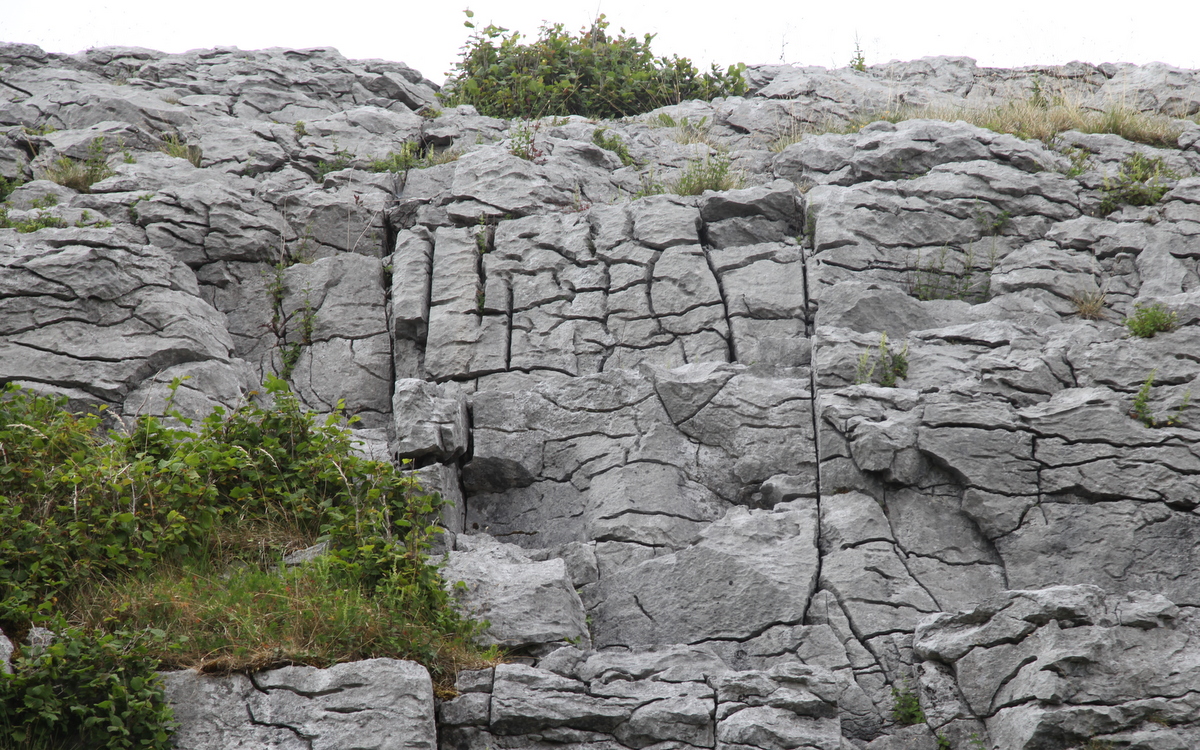
Burren Limestone with fossil coral

IMG_6383

Some of the wildlife in the Burren

IMG_6384

Geometric patterns etched in the cliff face. The Burren

IMG_6386

A large fossil coral colony. The Burren

IMG_6394

On the way up to Mullaghmore

IMG_6396

Pausing for a breather.

IMG_6397

the view from the top

IMG_6404

Heading across to Sliabh Rua

IMG_6413

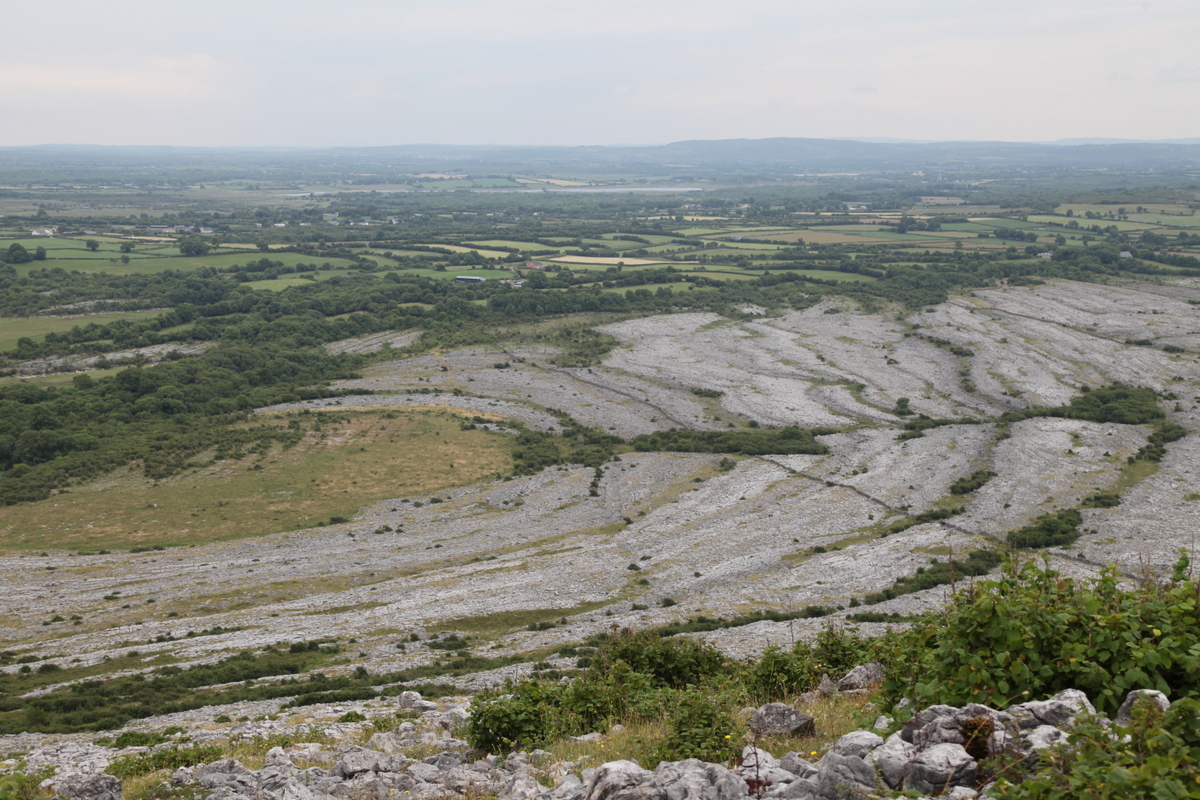
Spectacular landforms that make up the Burren

IMG_6420

Twists and contortions in the limestone layers on Mullaghmore

IMG_6424

One last cliff on the ascent of Sliabh Rua

IMG_6433

Looking back from Mulalghmore

IMG_6435

Gentle folds in limestone, Mullaghmore

IMG_6449

Cairn, Mullaghmore, the Burren

IMG_6460

The descent from Mullaghmore

IMG_6467

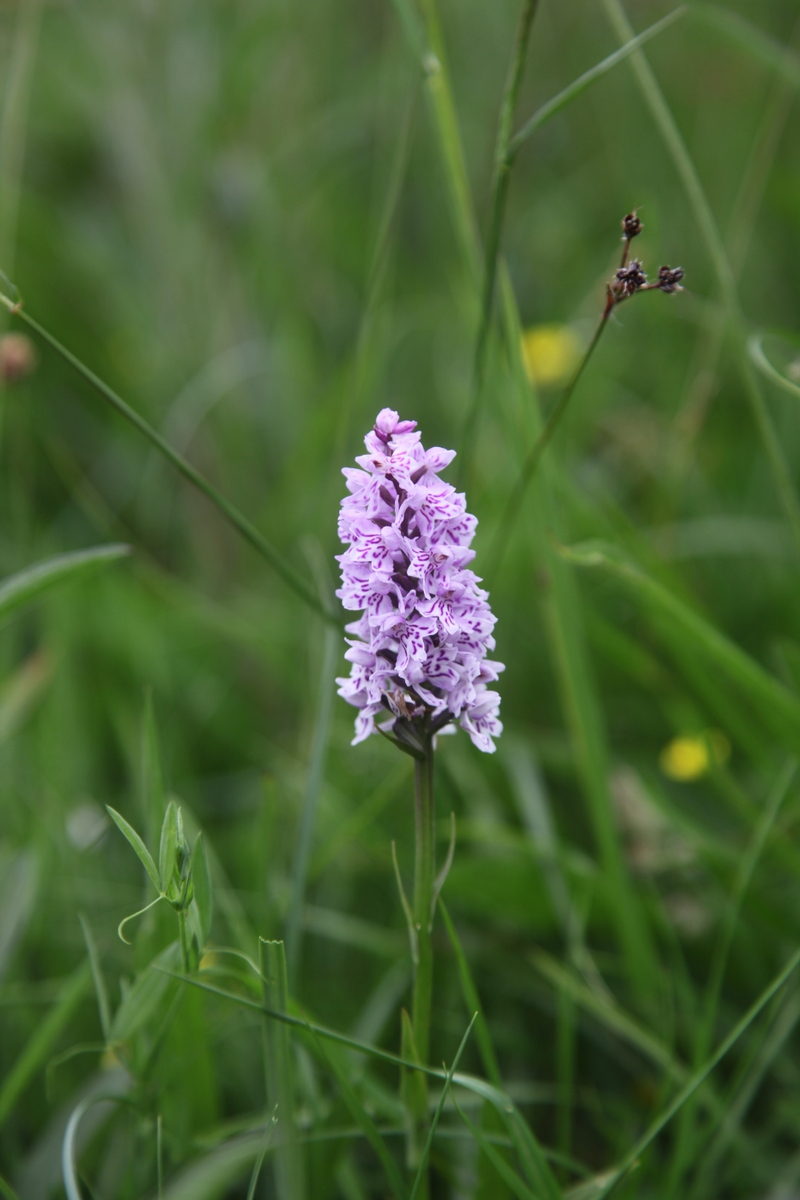
Native orchard, the Burren

IMG_6473

Limestone plain at the foot of Mullaghmore

IMG_6478

Returned safely

IMG_6493

Holy Well, the Burren

IMG_6495

Moss covered walls of an ancient bath, Holy Well, the Burren

IMG_6509

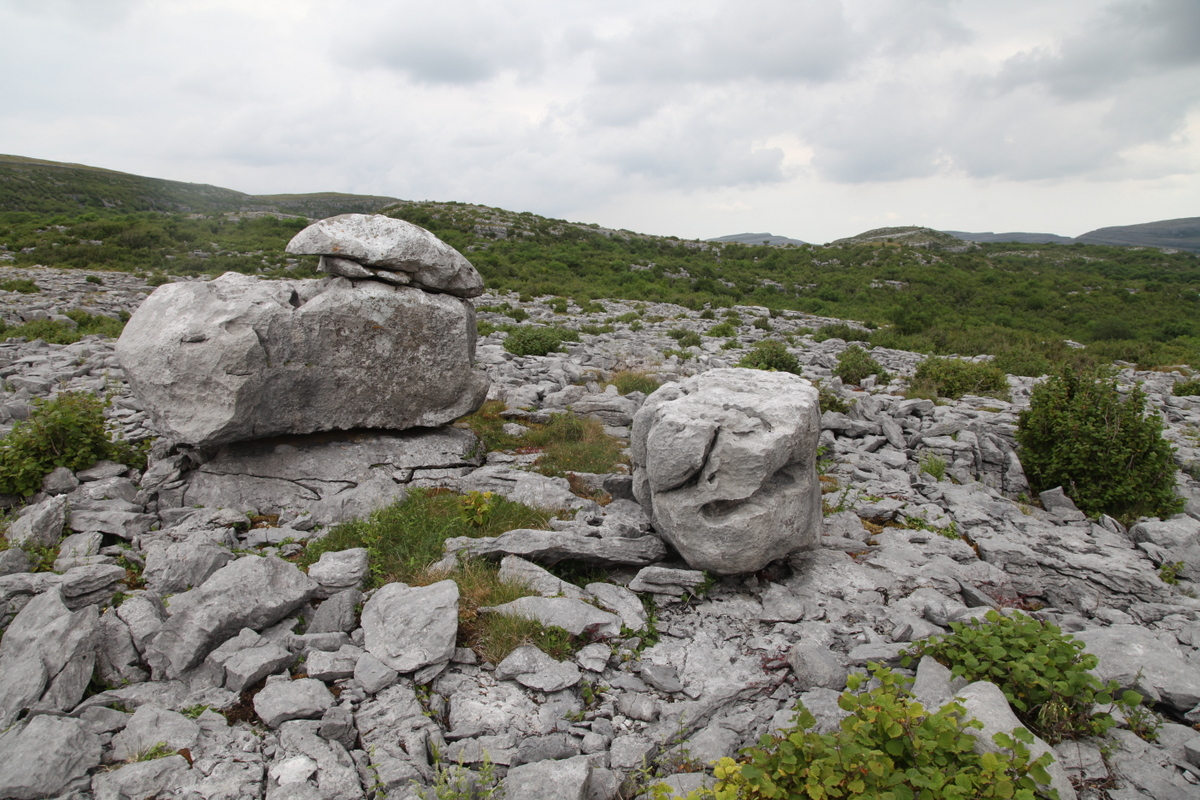
Glacial erratics, dumped at the end of the last ice age. The Burren

IMG_6530

Meeting Maurice Lennon in the middle of nowhere

IMG_6539

Mullaghmore. A distant view

IMG_6565

PJ Curtis outside the Old Forge at Kilnaboy


Categories: Wild Ireland | Tags: , , , , , , , | 6 Comments

The Burren

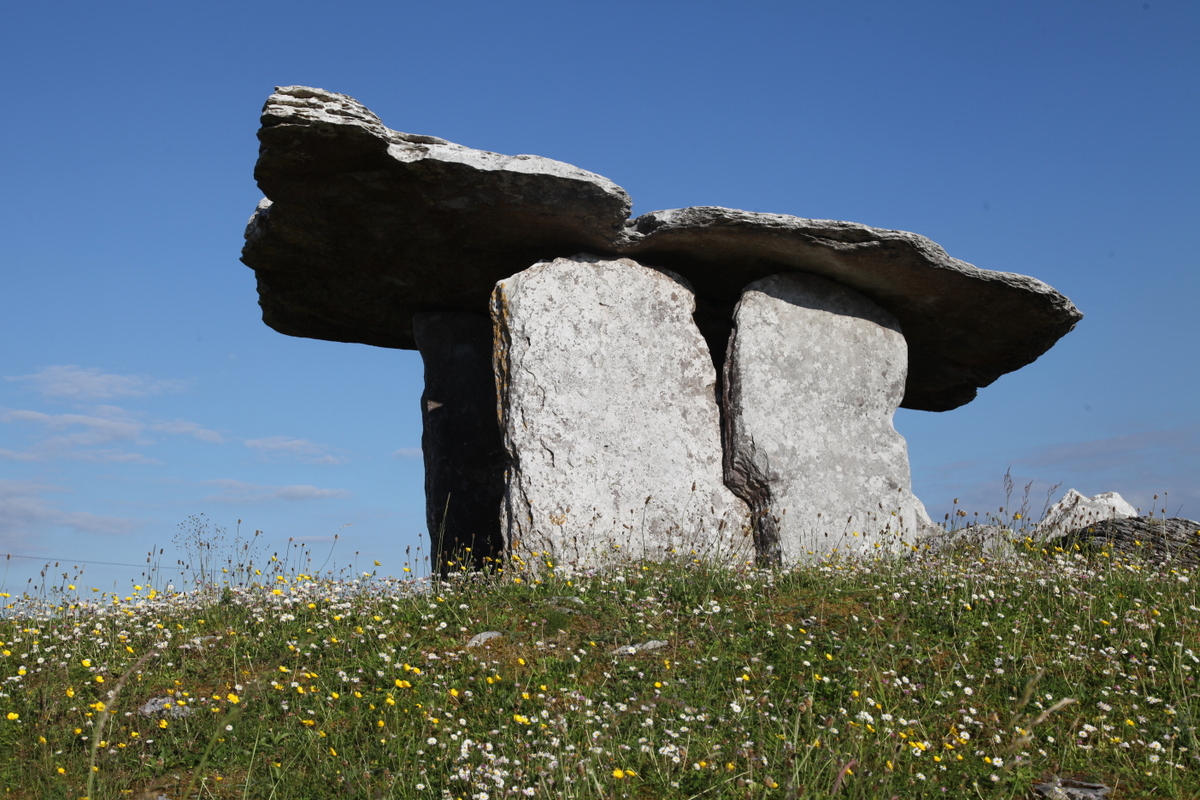
I just love the Burren – maybe even my favourite place on earth.  It is a limestone plateau in the north west of Clare comprising an amazing and varied landscape with a unique scientific and cultural stamp that sets it apart from anywhere else.  As a geologist in my former life I can appreciate the insight into geological process involved with limestone deposition and karst weathering that are usually not seen due to climatic and geological impediments or the impact of man.  I won’t go into the detail here but it is worth chasing up on google as the geological history is fascinating (well to me anyway)

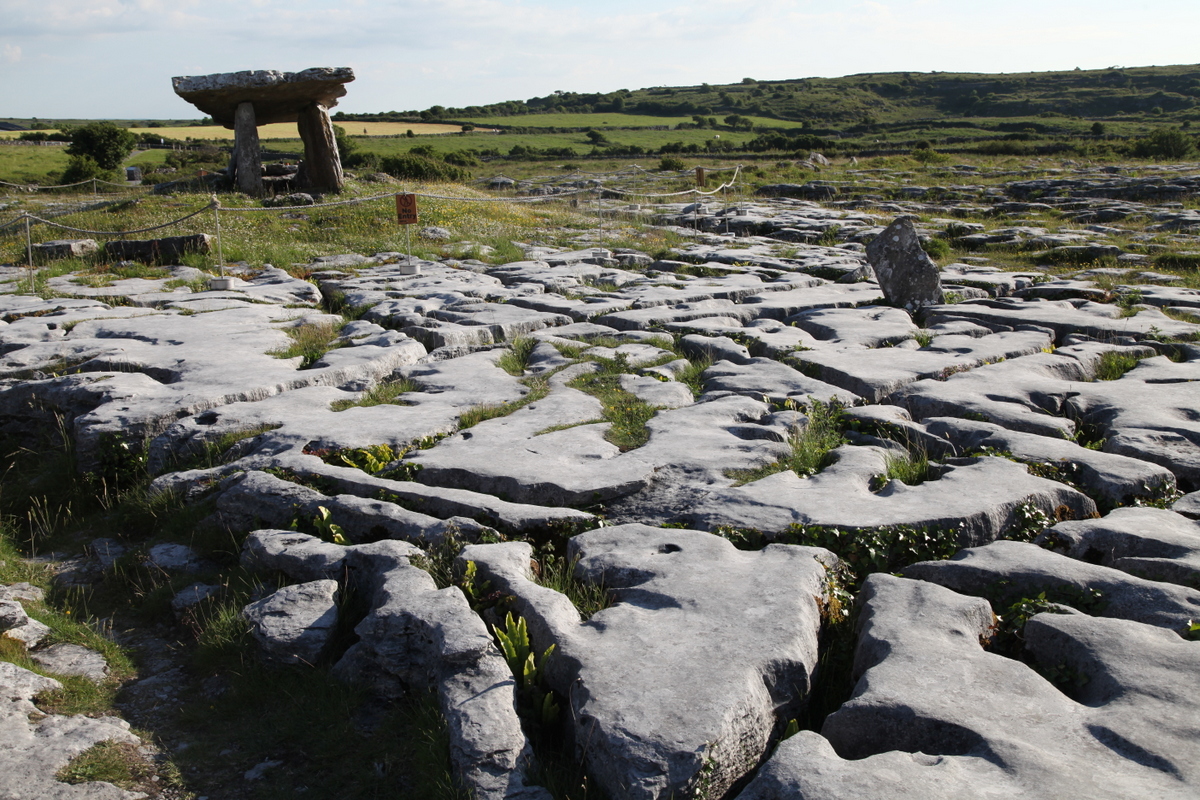
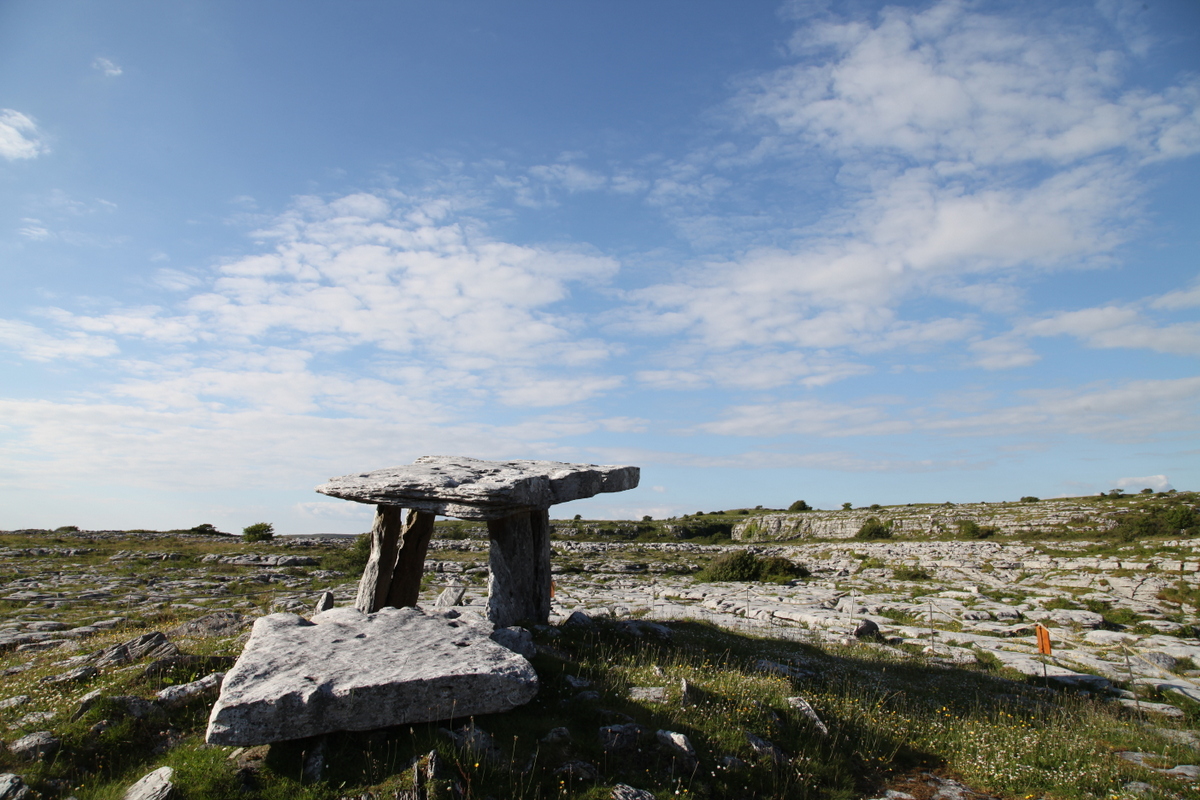
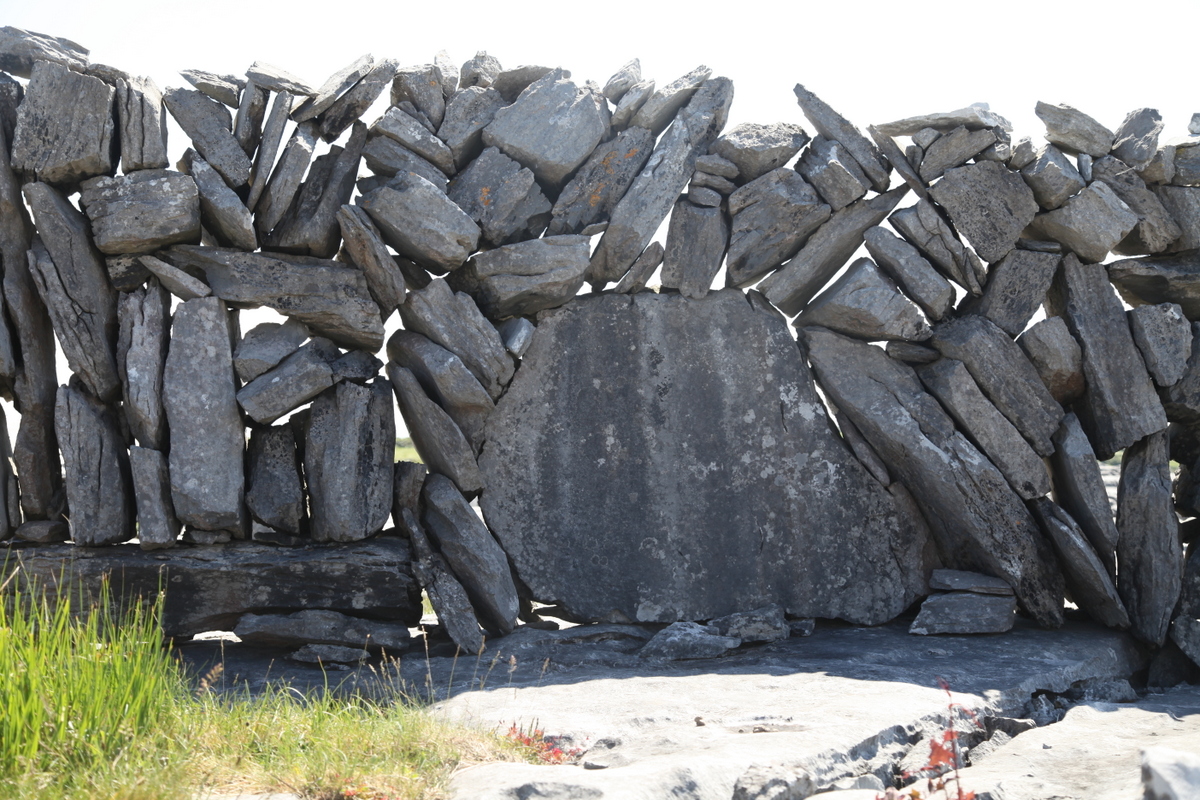
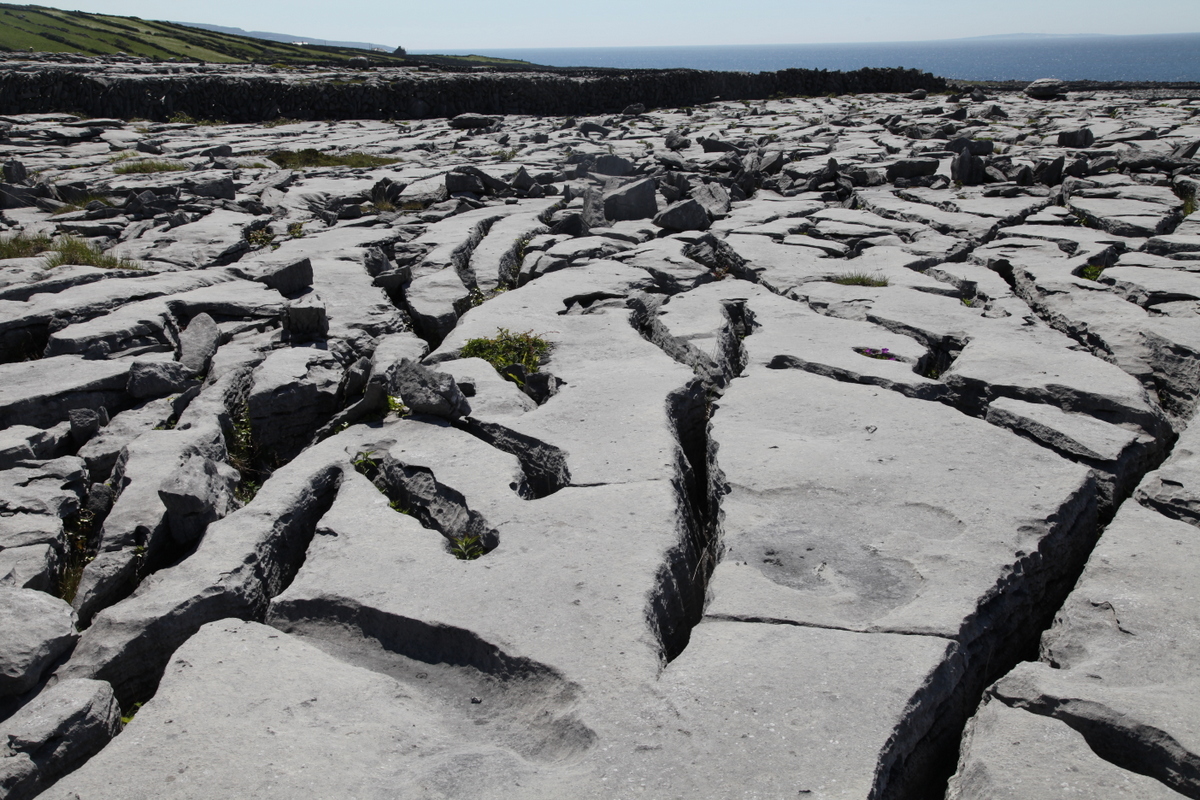
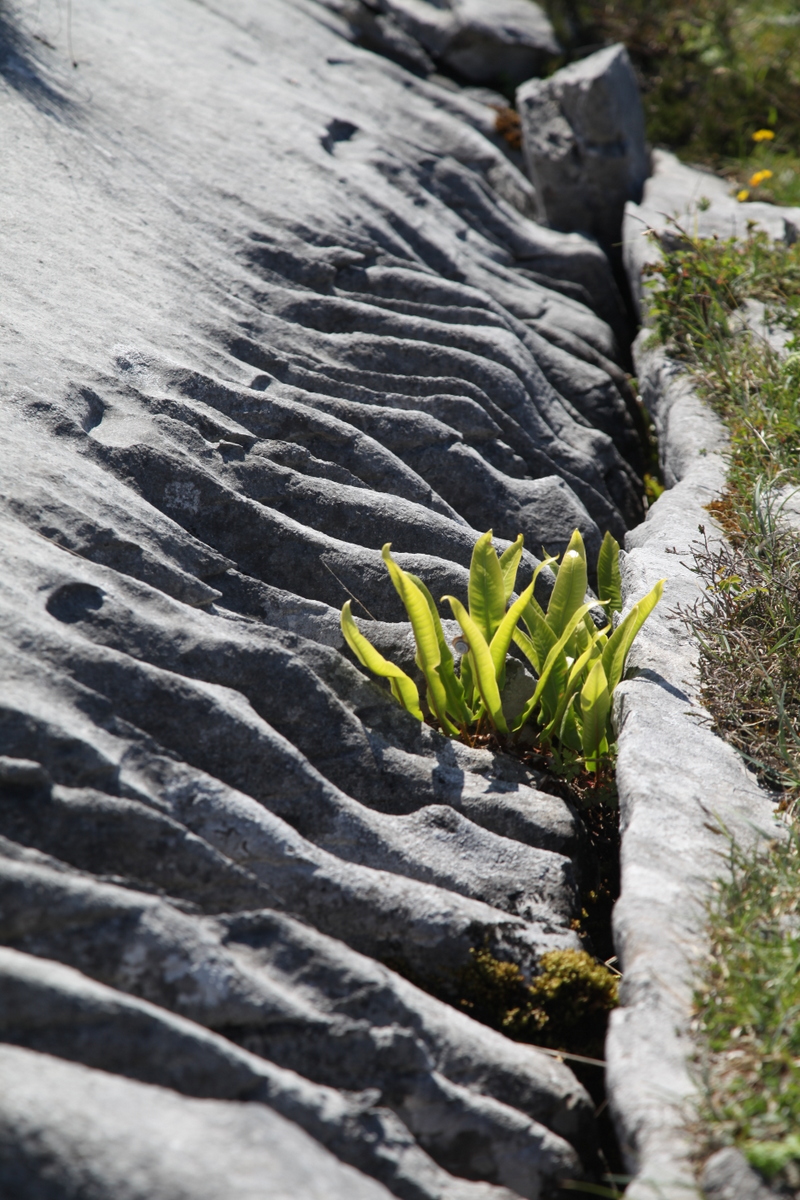
The Burren is a remarkable terrain and it is amazing how farmers eke out a living in such a place.  I love the hostile beauty of its rocky pavements and the jagged cracks and crevices (grikes and clints) and where tiny plants hang on to a precarious existence.  I love the intricate patterns (fluting and rinnenkarren) caused by the slightly acid water etching the exposed rock or the ripple marks caused by the lapping waters of an ancient sea, 320 million years ago or the trace fossils left on the sea floor by some antediluvian worm.  It is hard not to be in awe of the power of the massive glacier that ripped off the overlying cover rocks and created this majestic landscape 10,000 years ago, evidenced by giant erratics deposited from the melted ice. I love the human heritage going back to Megalithic times 5,000 years ago wth the area dotted with tombs, dolmen, ring forts and other archaeological sites to the stone walls of today marking the boundary of one seemingly useless barren field from his neighbours.

I have been there three times so far on this trip and seen its various moods and I have no doubt I will go there many more times but I thought I would post some images that hopefully capture something of the place.

Poulnarbrone Dolmen.  The Burren

Poulnarbrone Dolmen. The Burren

Poulnarbrone Dolmen.  The Burren

Poulnarbrone Dolmen. The Burren

Poulnarbrone Dolmen.  The Burren

Poulnarbrone Dolmen. The Burren

Poulnarbrone Dolmen.  The Burren.  Clints and Grikes in the foreground

Poulnarbrone Dolmen. The Burren. Clints and Grikes in the foreground

The Burren.  Flowering plant

The Burren. Flowering plant

The Burren.  Flowering plant

The Burren. Flowering plant

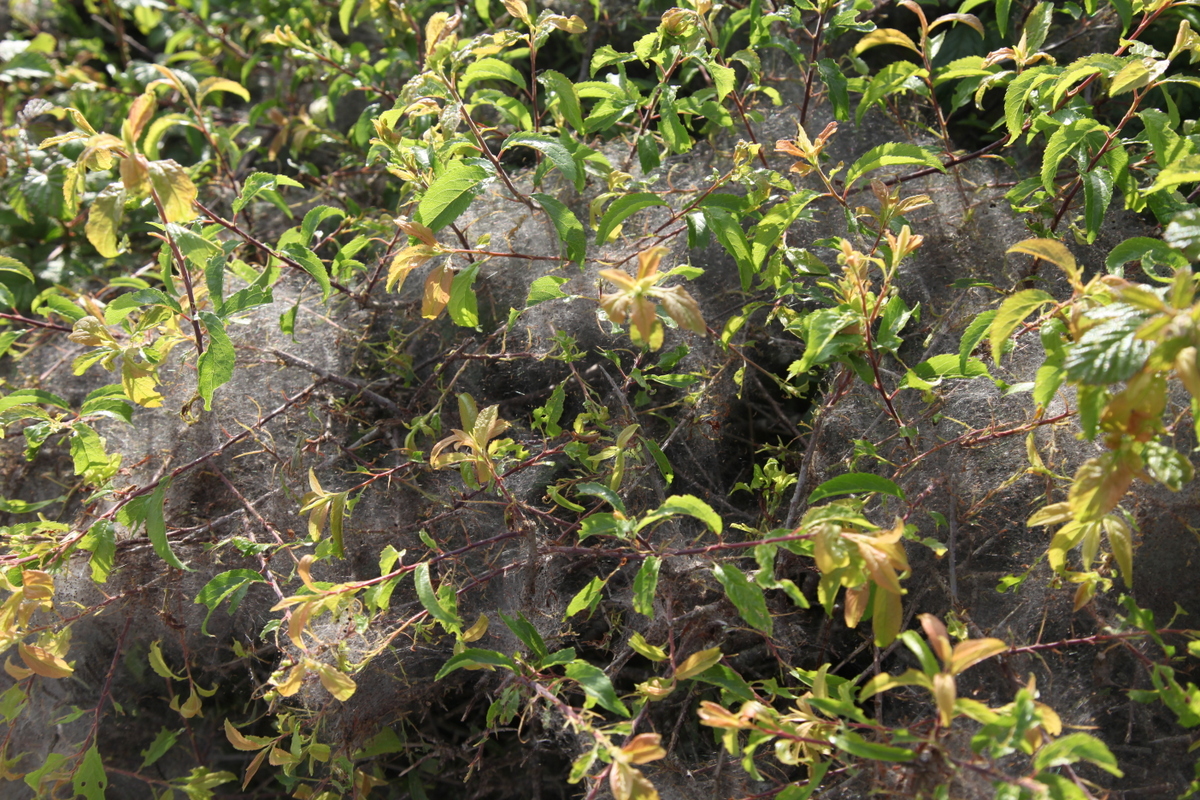
The Burren.  Fine spiders web on flowering bush

The Burren. Fine spiders web on flowering bush

Poulnarbrone Dolmen.  The Burren

Poulnarbrone Dolmen. The Burren

The Burren.  Stone fence

The Burren. Stone fence

The Burren.  Flowering plant growing in grike.

The Burren. Flowering plant growing in grike.

Limestone pavement with clints and grikes.

Limestone pavement with clints and grikes.

Limestone pavement. The Burren

Limestone pavement. The Burren

The Burren.

The Burren.

The Burren.  Cottage near Mullaghmore.

The Burren. Cottage near Mullaghmore.

The Burren.  Stone fences.

The Burren. Stone fences.

The Burren.  Fern growing in rinnenkarren near Fanore.

The Burren. Fern growing in rinnenkarren near Fanore.

Driving into the Burren

Driving into the Burren

The Burren

The Burren

The Burren. Dry stone wall

The Burren. Dry stone wall

The Burren.  Looking towards Mullaghmore.

The Burren. Looking towards Mullaghmore.

Rural landscape.  THe Burren

The Burren. Fern growing within rillenkarren.

Categories: Wild Ireland | Tags: , , , , , | 5 Comments

Humours of Ennistymon Revisited


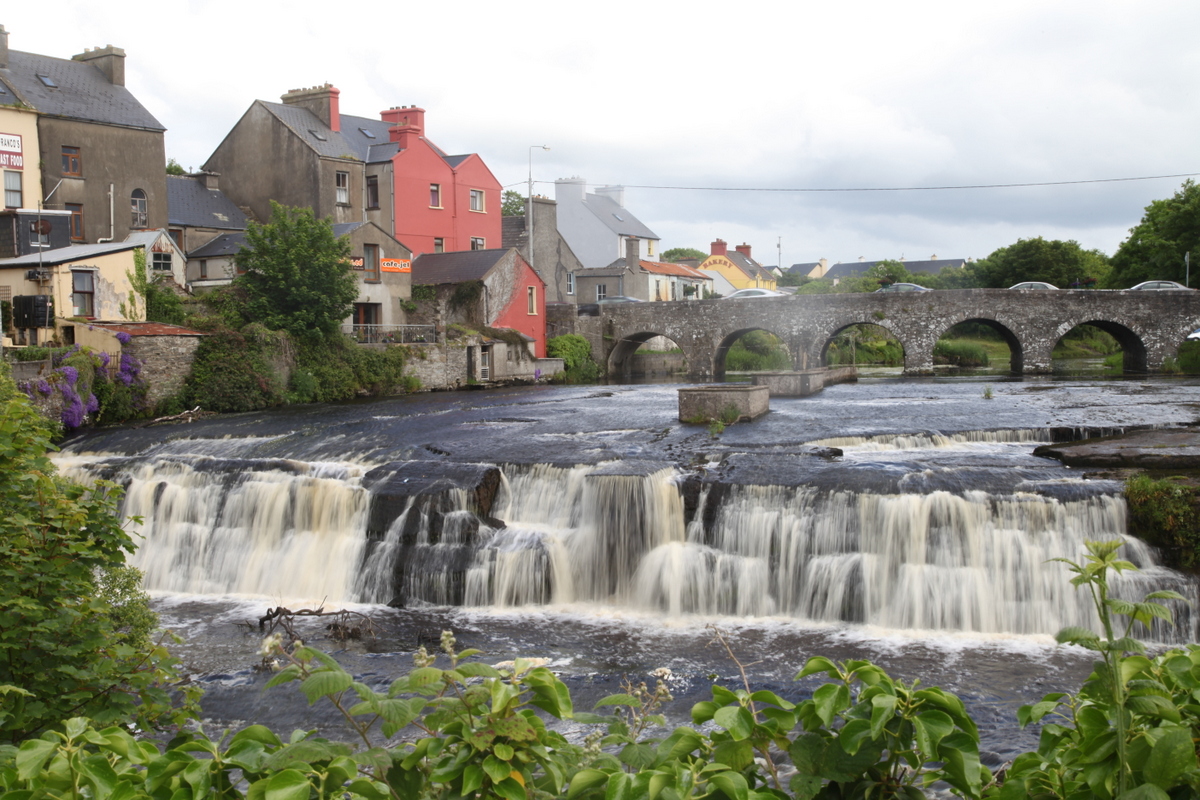
You might recall I posted last week on Ennistymon and the magical falls on the Inagh River. Well late yesterday evening I was coming home through Ennistymon again and noticed the scene had changed considerably.  What a difference a week makes.  Here is a before and after shot and a couple of other photos. It was really weird to see donkeys grazing in the Clare sunshine where last week was a raging torrent.

IMG_3286IMG_5521IMG_5544 IMG_5562

Categories: Wild Ireland | Tags: , , , , | 1 Comment

Humours of Ennistymon

IMG_3277

Cascade on the Inagh River at Ennistynmon

IMG_3284

The Inagh River at Ennistymon

IMG_3303

Another view of cascades on the Inagh River at Ennistymon

IMG_3314

The Inagh River and the Falls Hotel.

IMG_3332

Reed beds on the Inagh River at Ennistymon

IMG_3342

Detail from the wall of a stone bridge on the Inagh River at Ennistymon

IMG_3345

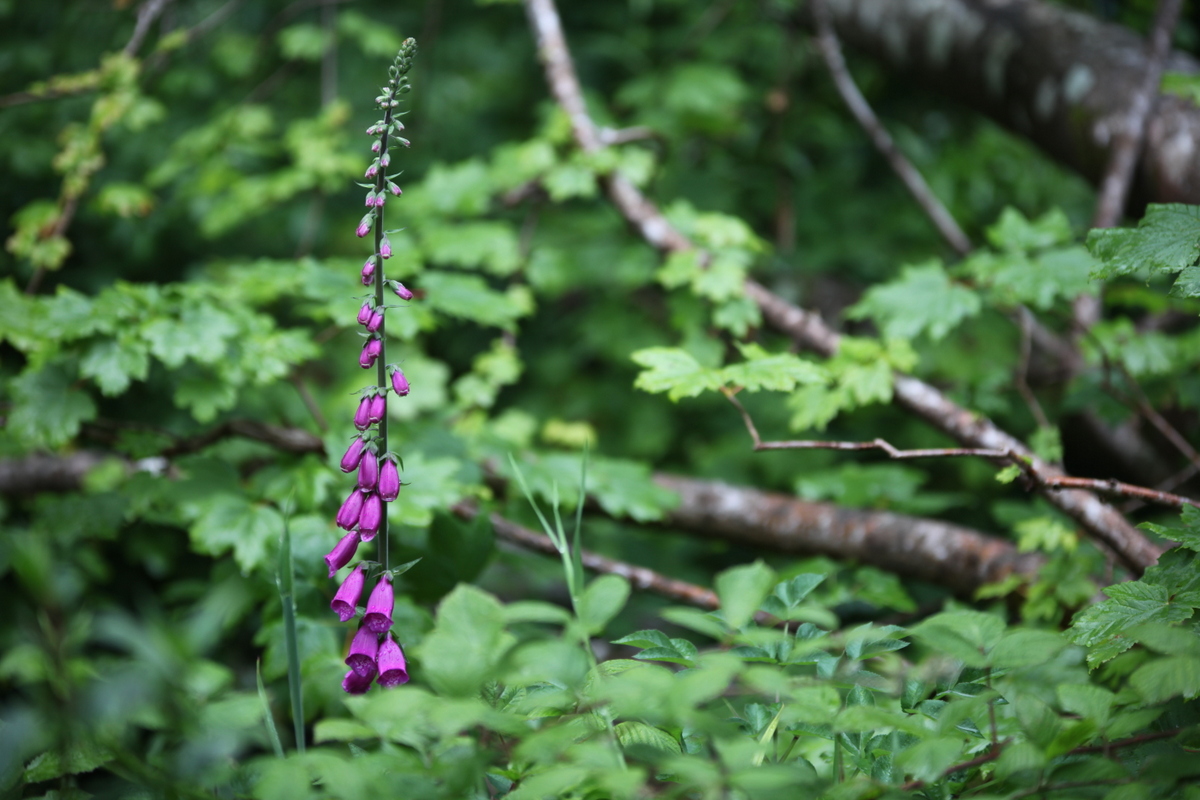
Lonely foxglove in the forest near Ennistymon

IMG_3365

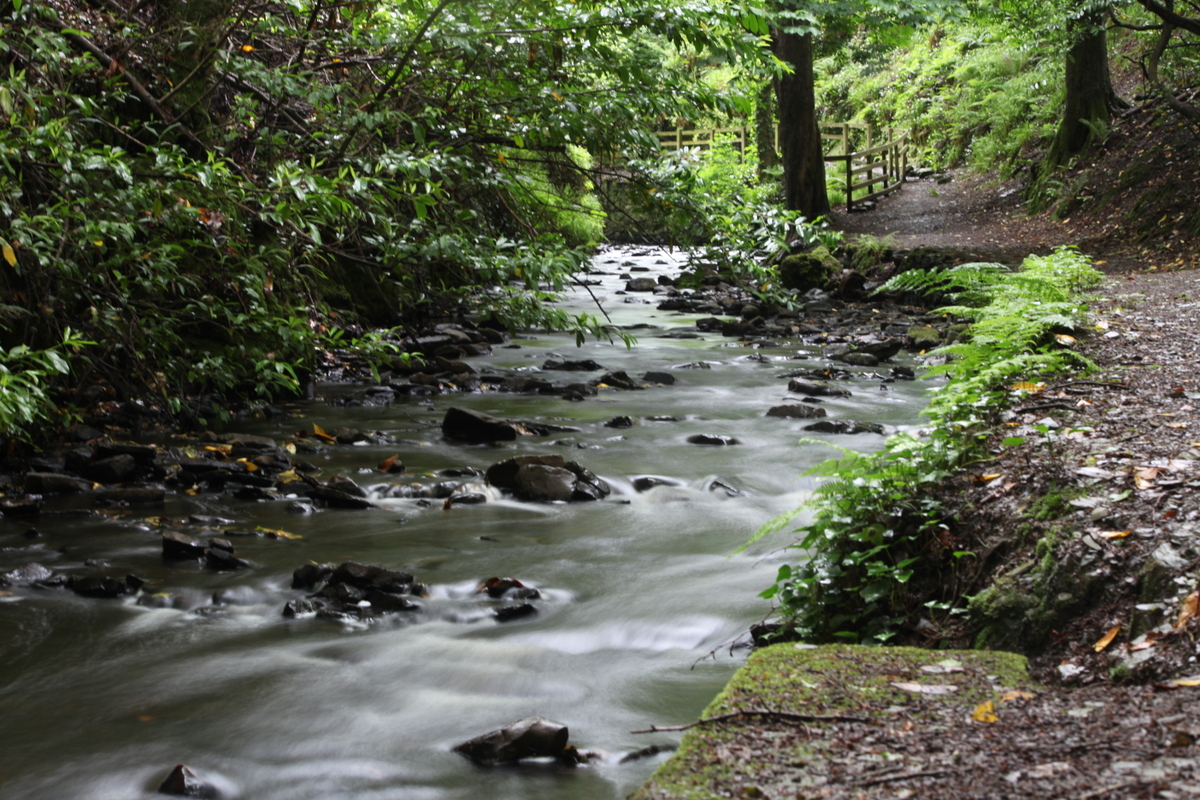
Creek near Ennistymon

IMG_3401

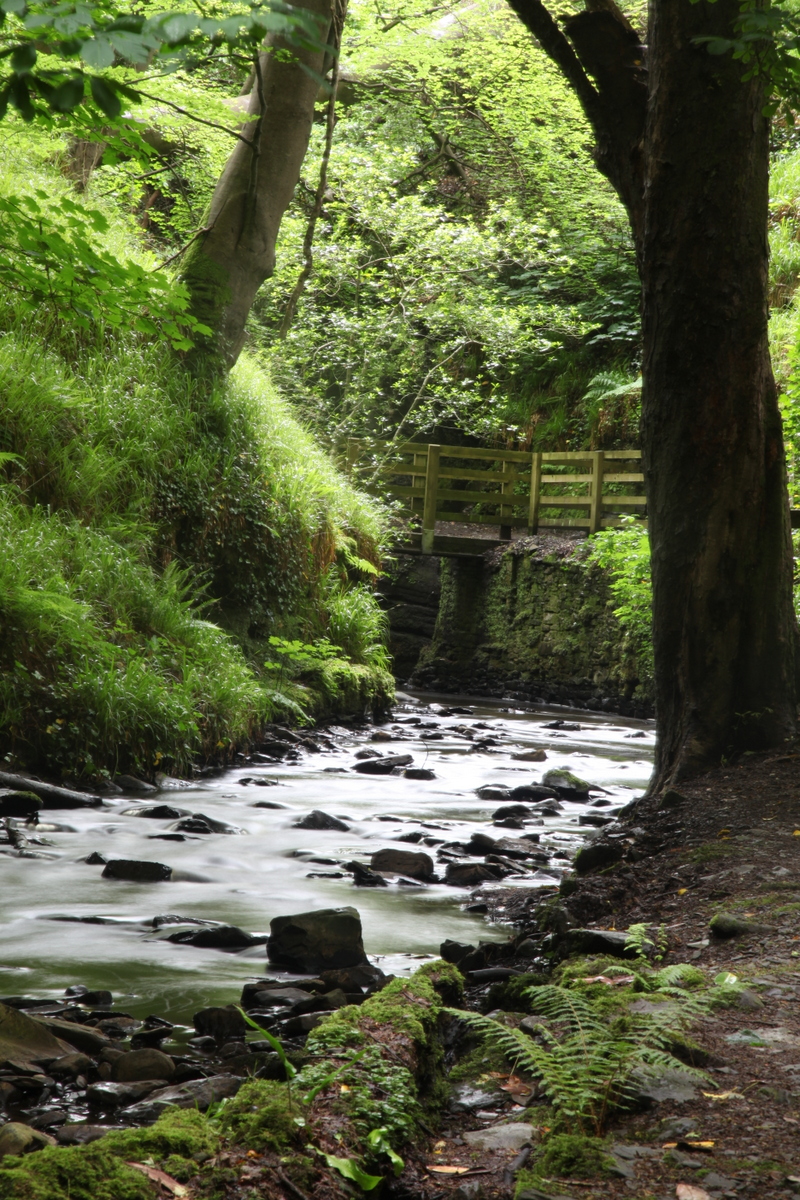
Creek near Ennistymon

IMG_3409

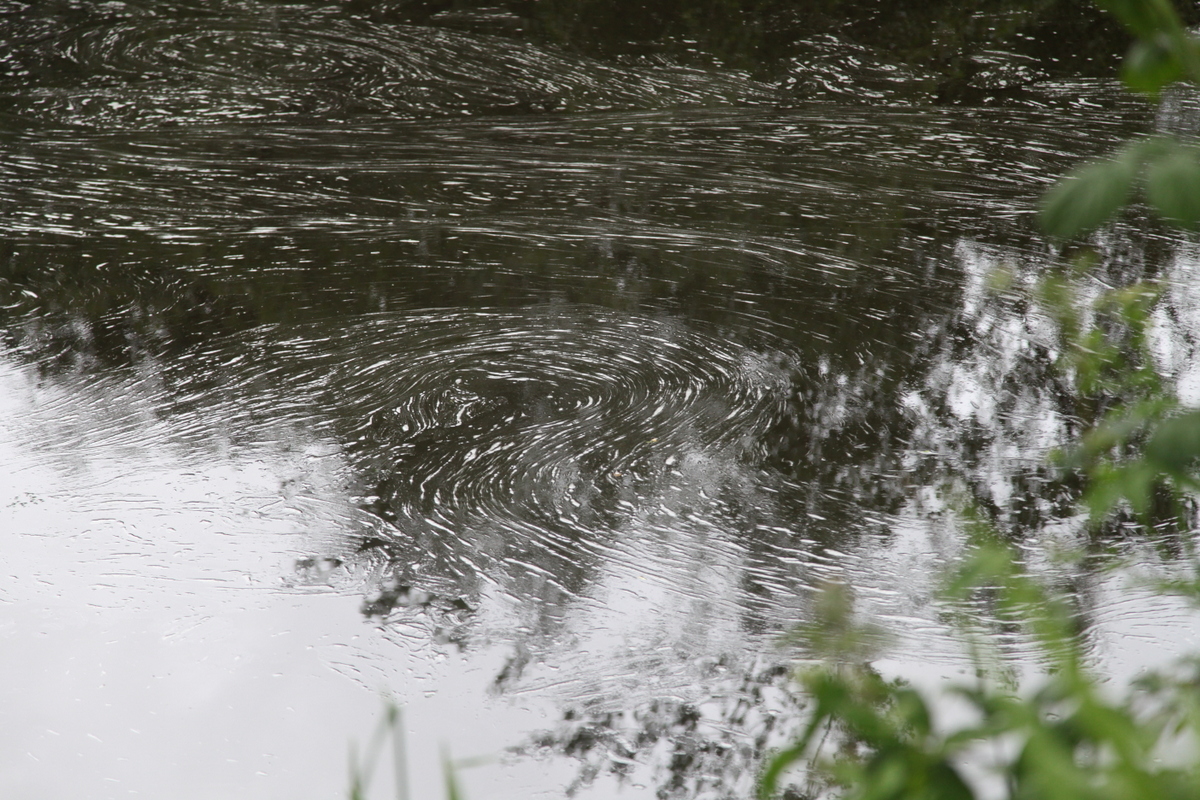
Foam traces of swirls and eddies in the Inagh River Ennistymon, after heavy rain

IMG_3414

Tranquil Inagh River just below the falls at Ennistymon

IMG_3272

Another view of the Falls at Ennistymon

Here I am in the village of Ennistymon. Or is is Ennistimon? They can’t seem to make up their minds. Most of the shops including the Post Office (who you’d think would know) spell it with a ‘y’. Pretty much all the road signs spell it with an ‘i’. This confusion about spelling of the town names in Clare is everywhere. Is it Lahinch or Lehinch, Corrofin or Corofin, Ballyvaughan or Ballyvaghan. Maybe it’s all over Ireland and not just Clare. I don’t know. I’ll report back on this another time. Anyway I digress.

The Humours of Ennistymon is one of my favourite jigs and as I say I am here in Ennistymon. There seems to be some confusion about the definition of the ‘Humours’ common in numerous tune names referring to places. I like the definition that it relates to the ‘vibe’ of a place and in particular the waters as they refer to the medieval concept of ‘humours’ or fluids, the balance of which make up life. I spent a few hours yesterday experiencing the ‘vibe’ or the ‘Humours’ of Ennistymon.

Sisters and fiddle players, who live locally, Yvonne and Caroline Casey, both independently said I must do this walk. So when there was a sufficient break in the weather I headed for Ennistymon. There had been torrential rain earlier in the day so this meant there was plenty of water flowing in the Inagh River on the banks of which the pretty town is situated.

“Just head past the bridge, through the arch and past the Falls Hotel” so that’s what I did. I was rewarded with a lovely vista as the river cascaded over giant flat steps eroded from the interbedded sandstone and shale. I followed the trail through a dripping rainforest with moss covered banks, occasional giant trees, thick lush scrub (as we would call it), some of which I recognised such as holly and ivy (they do grow together as in the song), ferns, epiphytes and flowering plants such as daisies, buttercups, lilies and foxglove. The swirling waters generated a froth which when it hit the calmer water spread out and formed thin lines which traced the eddies and swirls in the now calm river. I have not seen this before.  The river flowed gently past the Falls Hotel, a Resort and Spa Hotel built around a Georgian Mansion from the 1740s and run as an hotel since the 1930s. The forest opened out as the river entered a thick reed bed. I turned to follow a path up a tributary with its water bubbling over rocks from its source deep within the forest.

I spent hours experimenting with my Canon 5D looking for the perfect shot of, first the falls, and then the creek, taking care not to ignore the many photographic opportunities of the surrounding forest. Of course there is no such thing as the ‘perfect’ shot but I am happy enough with the results.  I have attached some of what I think are my better shots. Hope you like them.

Categories: Wild Ireland | Tags: , , , , | Leave a comment

Cliffs of Moher

ImageImageImageImageImageImageImageImageImageImageImageImage

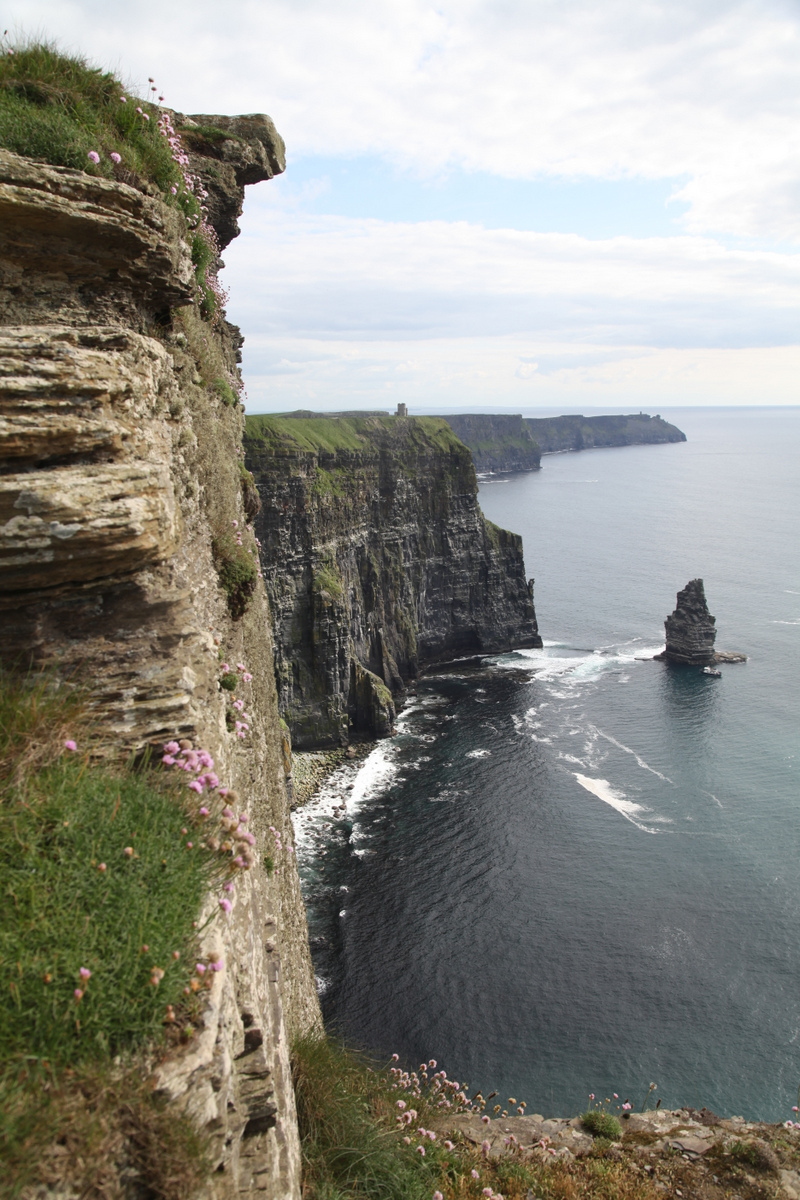
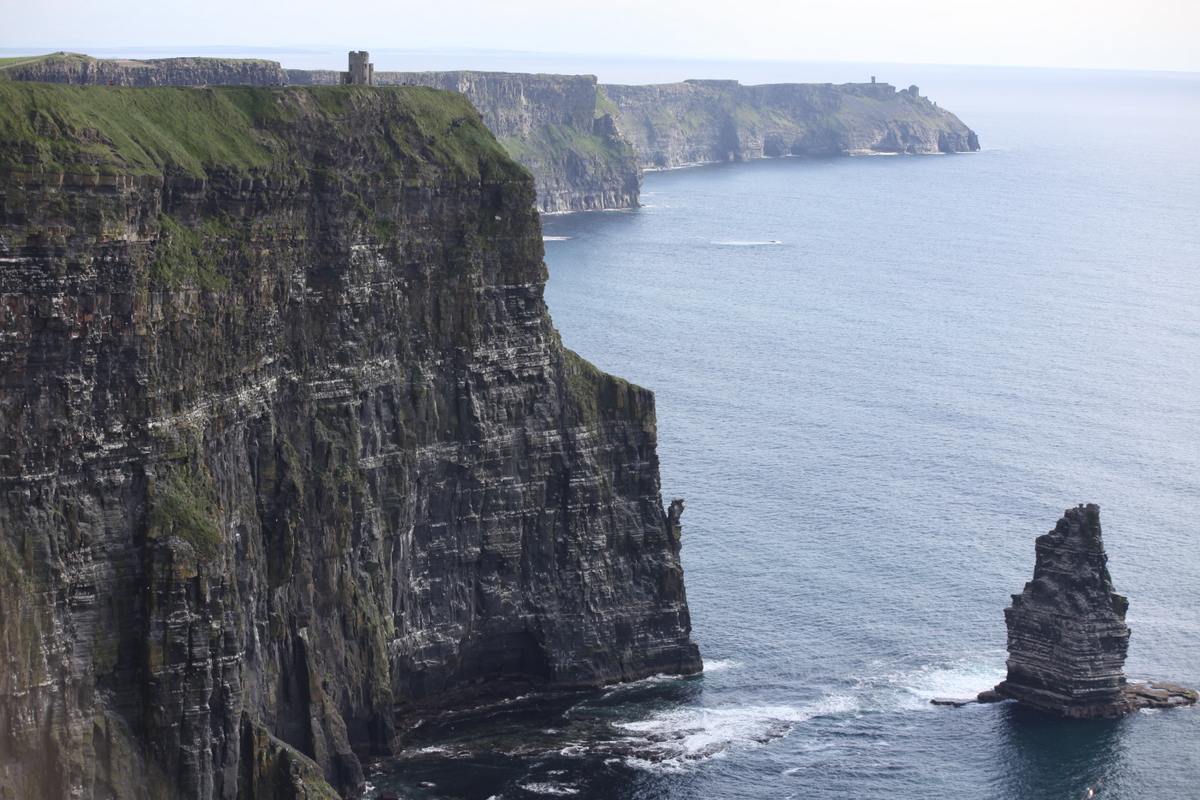
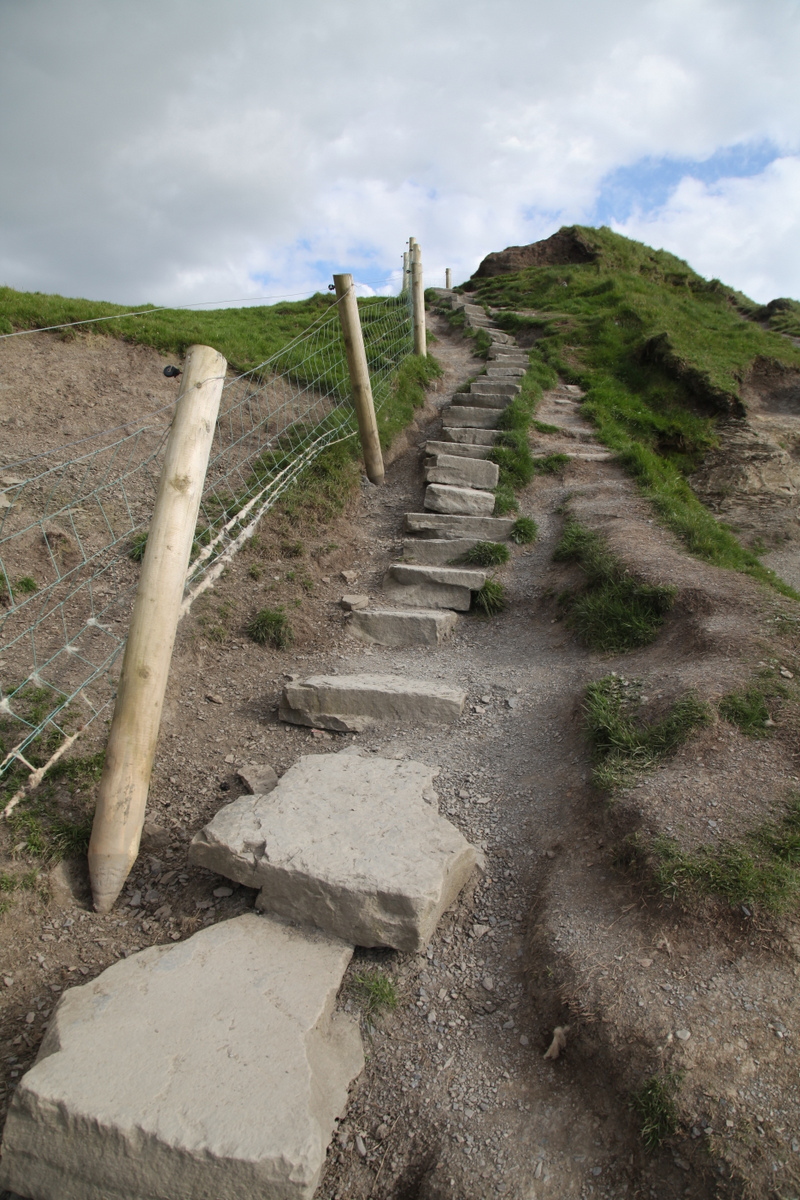
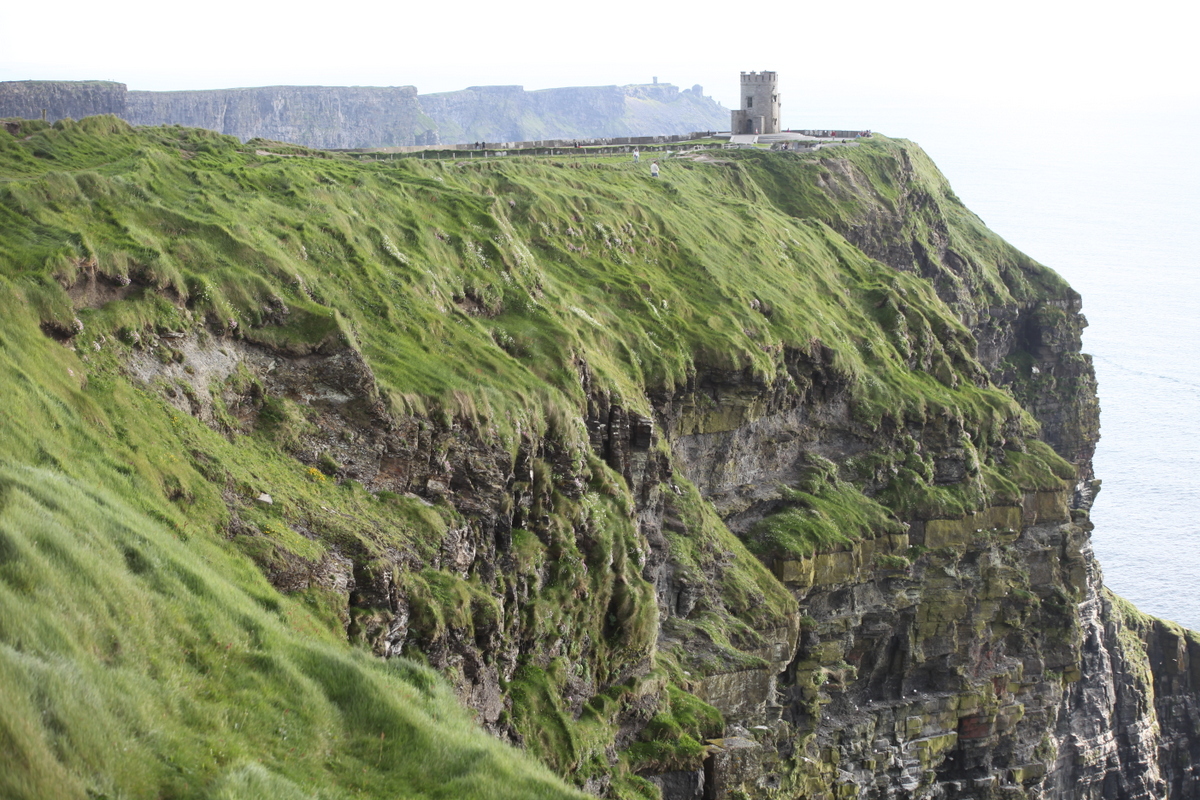
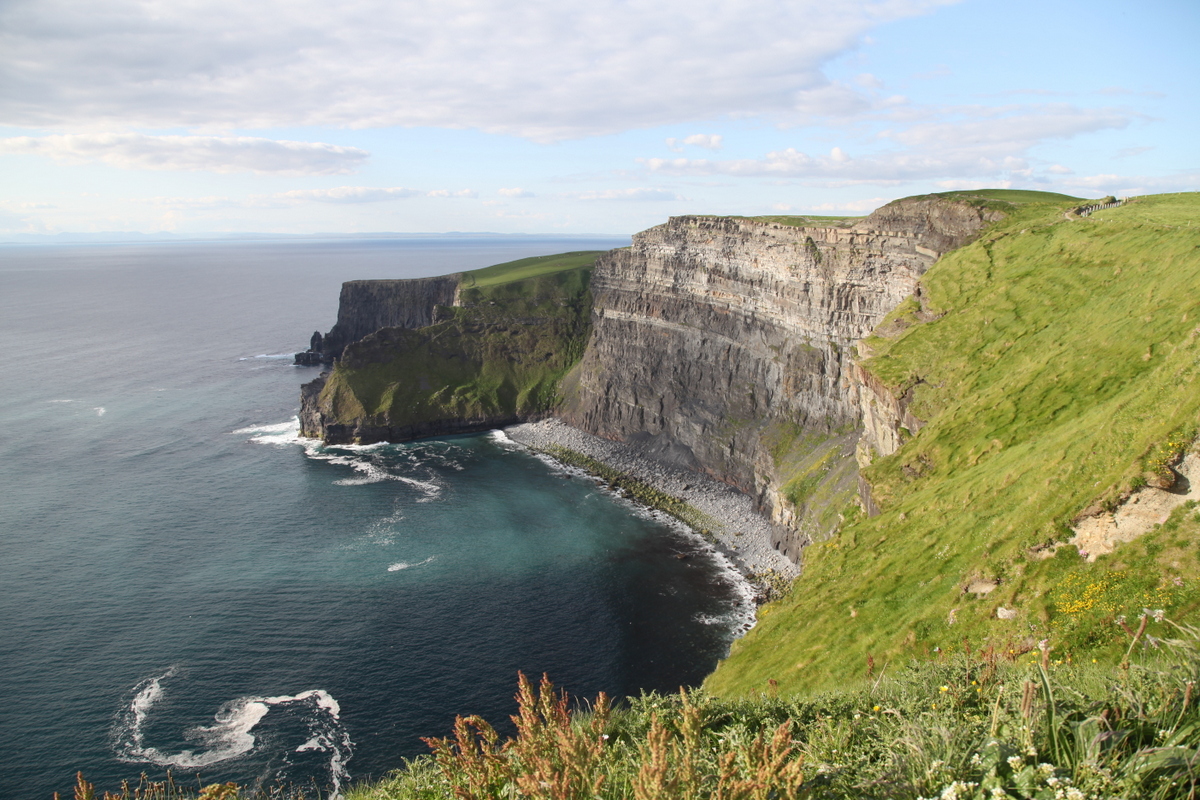
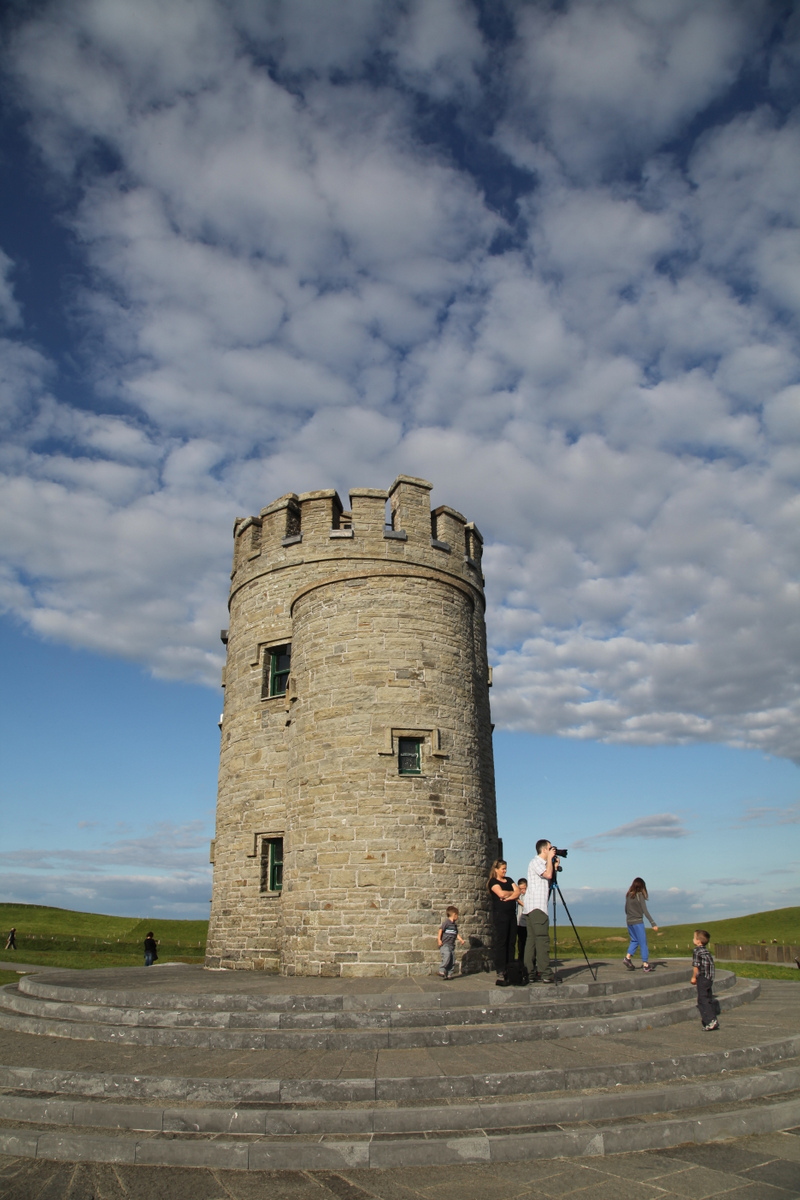
How many ways can you photograph the Eiffel Tower and make it look interesting or original? This is the problem I had the other day at the Cliffs of Moher. I had resisted going because I took lots of photos last time and wanted to avoid the crowds, but the day was fine with patches of sunshine so I headed out there one afternoon about 3.00, It was a memorable afternoon. I walked past O’Briens tower and around the cliffs towards Doolin getting perspectives that were unfamiliar.

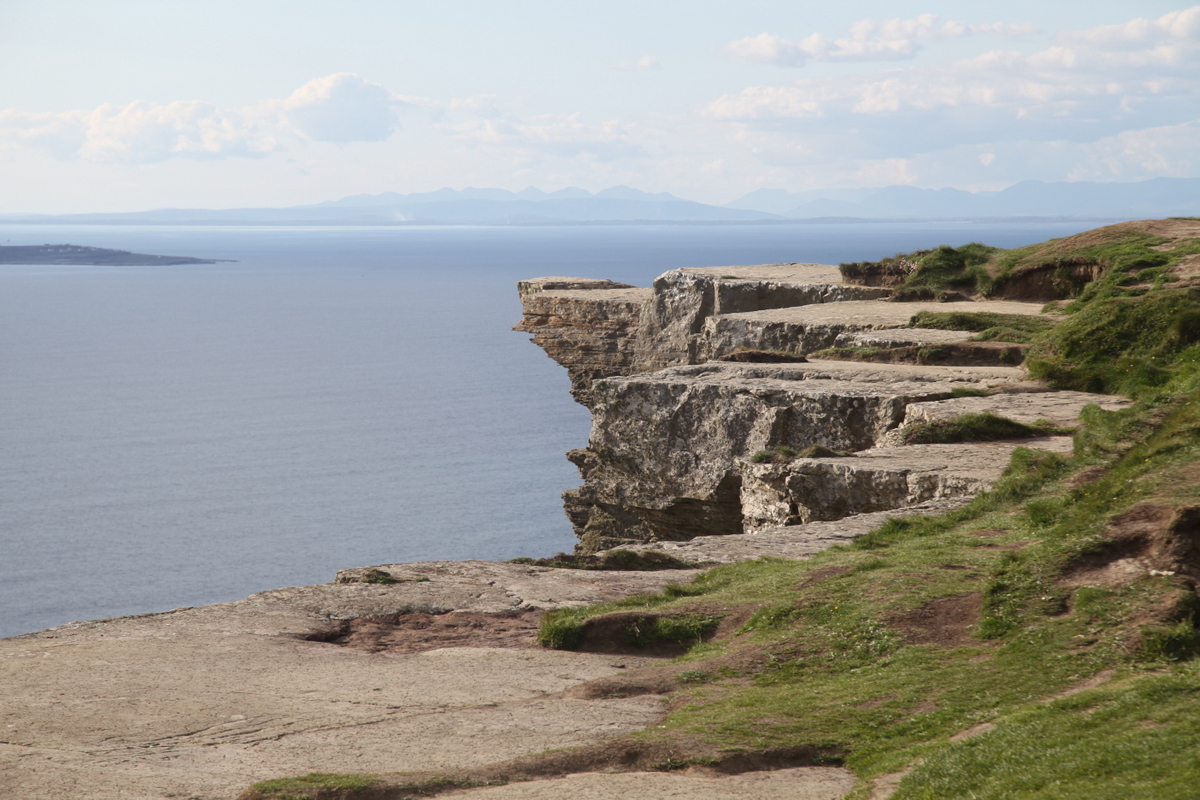
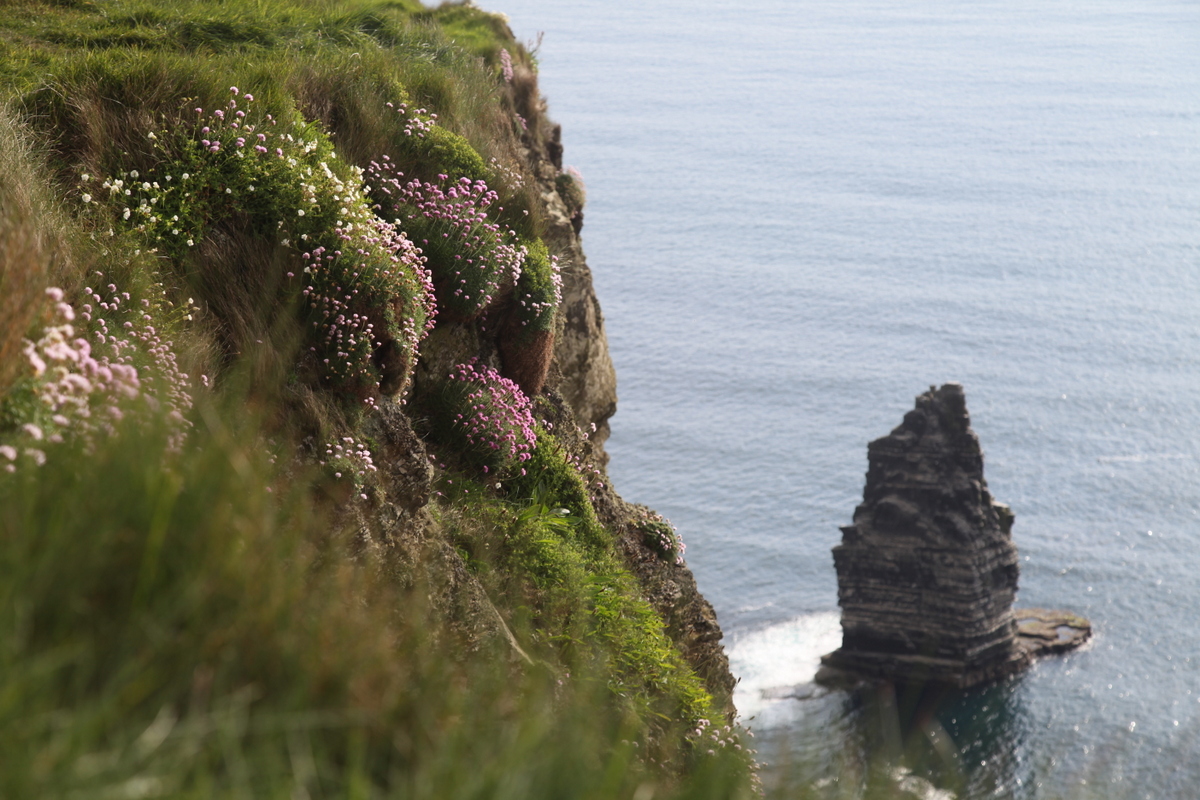
The Cliffs are a special place.  I love the way you can walk out unrestricted onto overhanging rock platforms and stare down at the swirling ocean hundreds of feet below. Back home we would have railing fences preventing you getting near the cliff edge but here there is just an incomprehensible pictogram which seems more concerned with the welfare of the grass and the birds and the phone number of a suicide help line. I love the lush green blanket that drapes over the cliff edge sometimes going half way down the slope until the alternating bands of sandstone and shale eventually assert their dominance, And as at Loop Head sea birds nesting precariously on tiny rocky ledges where along with a dozen others they seem to have reached a harmonious arrangement. 

The light was iffy and didn’t help the photography but I stayed until 8pm. At this time I was pretty much on my own. The evening chill meant the tourists were back in their B&Bs though it would be still light until 10.30. I should have stayed but unfortunately I had a session to go to!

Categories: Wild Ireland | Tags: , , , , | Leave a comment

Loop Head Co Clare

IMG_1896

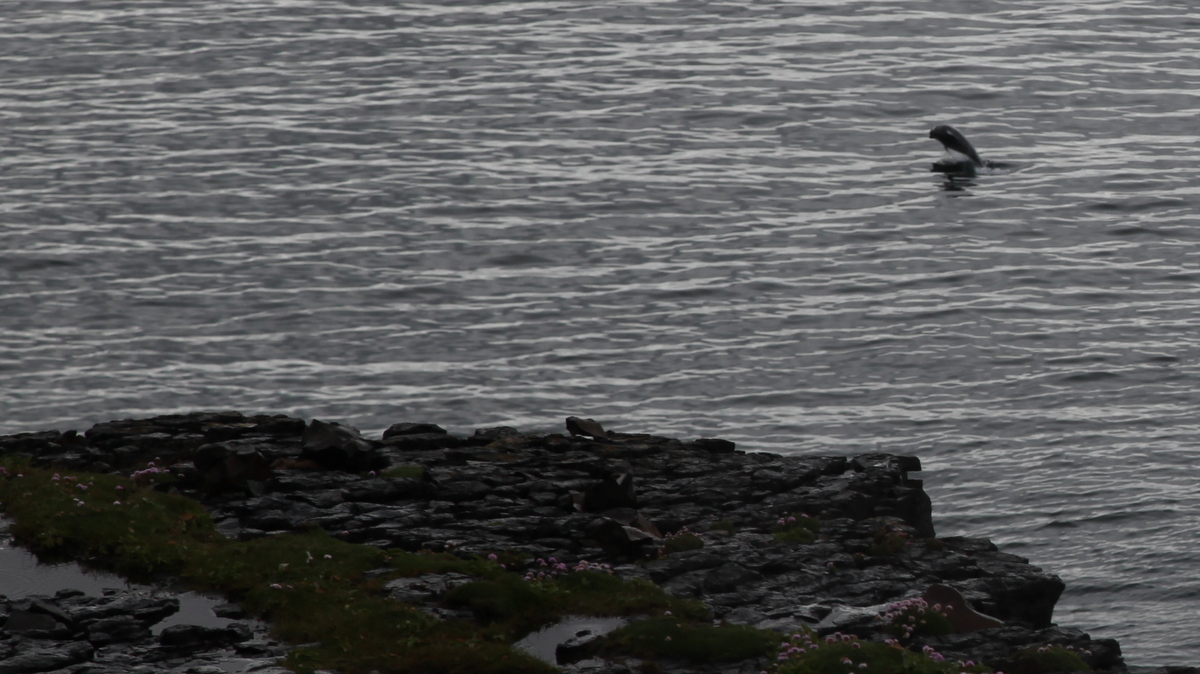
Dolphin at Loop Head

IMG_1922

Loop Head

IMG_1935

Loop Head

IMG_1938 IMG_1816 IMG_1829 IMG_1839 IMG_1842 IMG_1847 IMG_1853

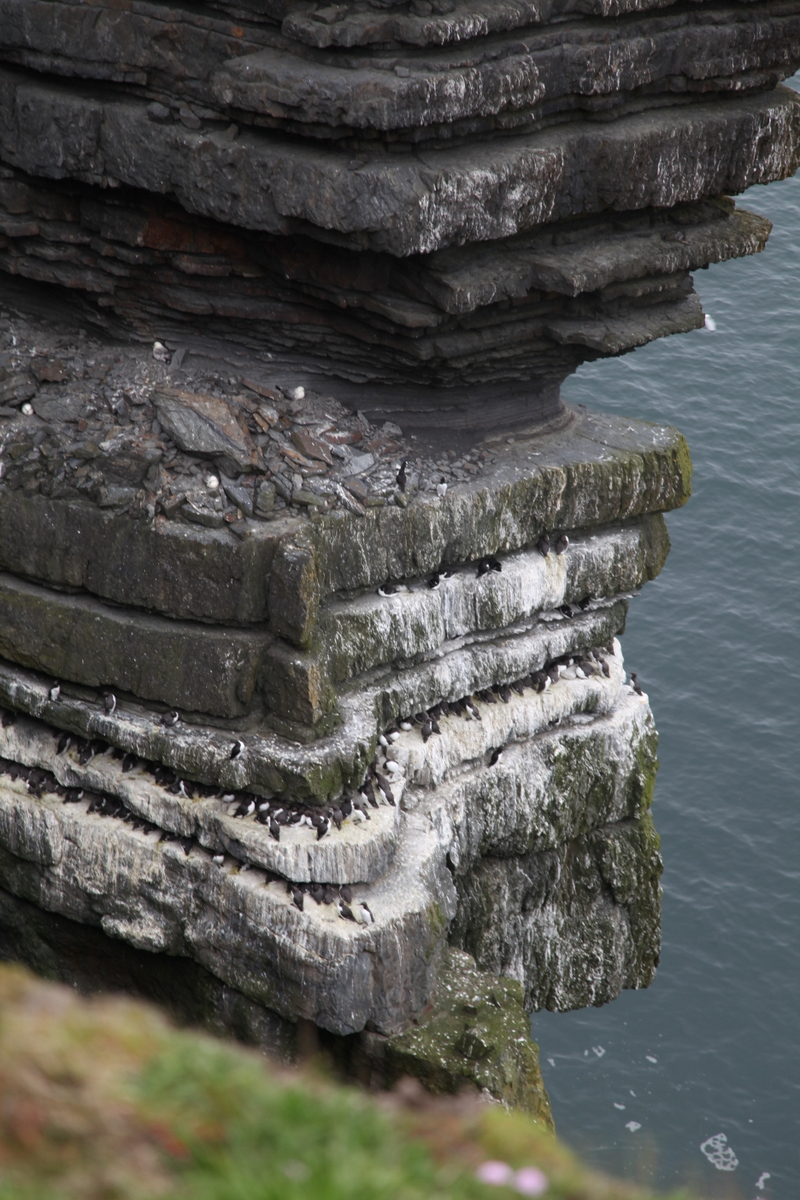
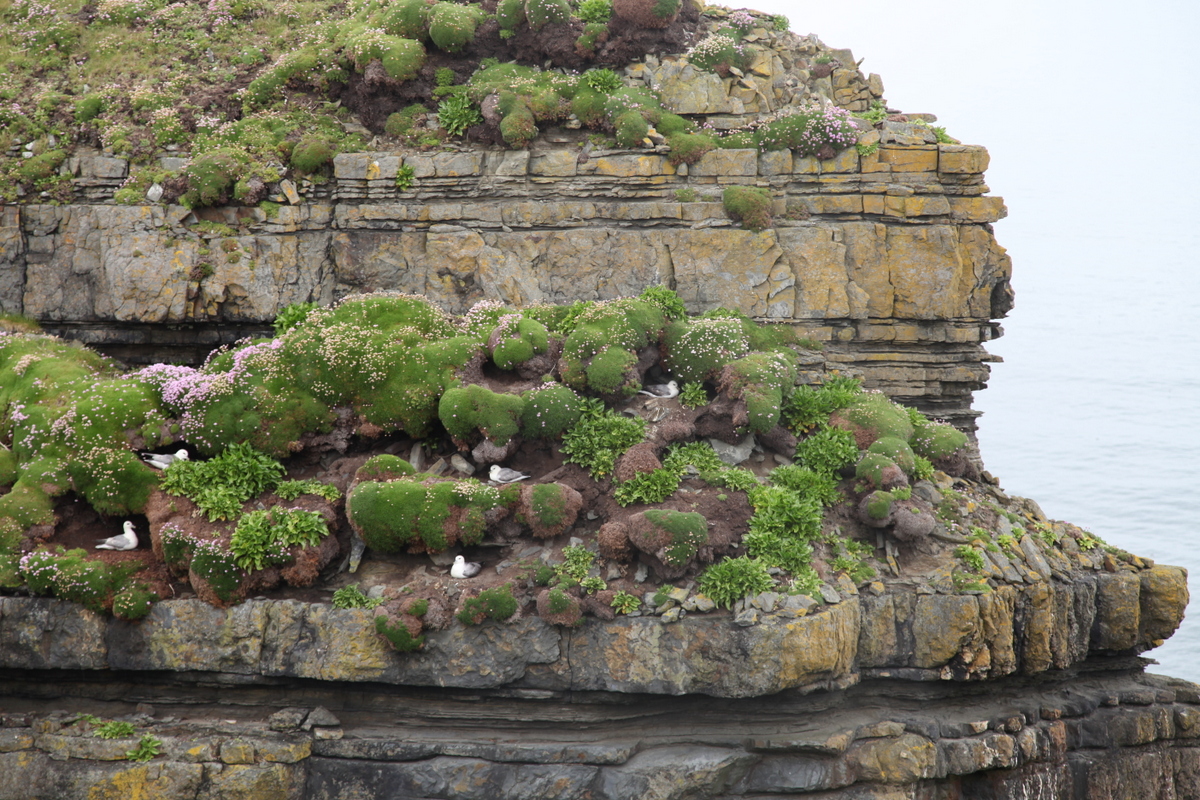
It was only by chance that I ended up here.  Loop Head is the most westerly point of Clare and is not far from the town of Kilrush.  I went to Kilrush one day last week (an hour away from Ennis) because the Internet said there was a session on Tuesday nights at Crotty’s. We always believe what we read on the Internet don’t we? Well when I enquired of the publican the response was “Oh that only happens in the Summer”.  Apparently June does not count as Summer.  “Anyway since you’ve come this far” he says “why don’t you go out to Loop Head”.  So I did.  There was light rain (what the locals here call mist) but not unpleasant.    There was a light house but they charged to see that so I just explored the cliff edges and was rewarded with breeding colonies of seabirds, dolphins playing in the water around the precipitous cliffs, carpets of fluffy pink flowers, squishy bog like mosses and only the odd German tourist.  Here are some photos I took.  They don’t really do the place justice.
Categories: Wild Ireland | Tags: , , , , , | 1 Comment

Blog at WordPress.com.